- English
- French
- German
- Portuguese
- Spanish
- Russian
- Japanese
- Korean
- Arabic
- Greek
- German
- Turkish
- Italian
- Danish
- Romanian
- Indonesian
- Czech
- Afrikaans
- Swedish
- Polish
- Basque
- Catalan
- Esperanto
- Hindi
- Lao
- Albanian
- Amharic
- Armenian
- Azerbaijani
- Belarusian
- Bengali
- Bosnian
- Bulgarian
- Cebuano
- Chichewa
- Corsican
- Croatian
- Dutch
- Estonian
- Filipino
- Finnish
- Frisian
- Galician
- Georgian
- Gujarati
- Haitian
- Hausa
- Hawaiian
- Hebrew
- Hmong
- Hungarian
- Icelandic
- Igbo
- Javanese
- Kannada
- Kazakh
- Khmer
- Kurdish
- Kyrgyz
- Latin
- Latvian
- Lithuanian
- Luxembou..
- Macedonian
- Malagasy
- Malay
- Malayalam
- Maltese
- Maori
- Marathi
- Mongolian
- Burmese
- Nepali
- Norwegian
- Pashto
- Persian
- Punjabi
- Serbian
- Sesotho
- Sinhala
- Slovak
- Slovenian
- Somali
- Samoan
- Scots Gaelic
- Shona
- Sindhi
- Sundanese
- Swahili
- Tajik
- Tamil
- Telugu
- Thai
- Ukrainian
- Urdu
- Uzbek
- Vietnamese
- Welsh
- Xhosa
- Yiddish
- Yoruba
- Zulu
If you’ve been scrolling through health accounts lately, you’ve probably noticed beetroot powder cropping up everywhere from morning smoothie bowls to pre-workout elixirs. This gorgeous ruby-red super beet root powder has earned its shine for good cause and it’s more important than ever to identify a trustworthy source. That’s where NT Biotech comes in. NT Biotech are leading the way in plant based nutrition and have produced their premium Super Beet Root Powder using the latest cold press technology that provides optimal nutritional density. Unlike other beet powders that are weakened after processing, NT Biotech’s recipe includes the full range of body-loving betalains, nitrates and antioxidants. If you’re an athlete seeking peak performance, a busy professional requiring steady energy or simply someone wanting to inject more plant-powered life into their daily routine, understanding beet powder may provide amazing health benefits.
The Nutritional Powerhouse: What Makes Super Beet Root Powder Special?
In less than a decade beet powder has transformed from a side ingredient in a juicer to a bulk supplement aisle. When you drain the water, a teaspoon of beet has much of what a fresh beet has: carbs, fiber, folate, potassium, vitamin C, and the pigments that give beet its color. The powder provides shelf life and dosage accuracy, and a way for formulators to distribute one ingredient across product lines.
Two compound classes account for the majority of interest. Betalain pigments are responsible for the ruby-red color of beet and act as antioxidants in cell models (Kanner et al., 2001; Clifford et al., 2015). Dietary nitrates are reduced via the enterosalivary route to nitrite and subsequently to nitric oxide, a vasodilator having significant effects on blood pressure and oxygen cost of exercise (Hord et al., 2009; Bailey et al., 2009).
Betalain Pigments and Antioxidant Action
Betalains are water-soluble nitrogenous pigments, classified as red betacyanins (with betanin as major species) and yellow betaxanthins. In preclinical studies on betanin showed scavenging of peroxyl radicals and prevention of lipid peroxidation at micromolar concentrations (Kanner et al., 2001). A 2015 study in Nutrients found that betalains consistently demonstrate action in cell models, with human evidence confined to tiny pilot studies (Clifford et al., 2015).
Be careful of promises of 'anti-ageing' or 'detox'. The greatest claims you can make for a completed product using a quality super beet root powder are connected to nitrate-fueled cardiovascular and exercise results (discussed in the following section), with betalain-fueled antioxidant claims presented as supporting, not primary.
Natural Nitrates for Circulation
Beet is one of the greatest sources of inorganic nitrate in the food. After consumption, nitrate is converted to nitrite by oral bacteria on the tongue . Nitrite is further reduced to nitric oxide in the acidic stomach and circulation . Nitric oxide causes relaxation of the smooth muscle in the walls of the vessels, reducing peripheral resistance and facilitating blood flow (Hord et al., 2009; Hobbs et al., 2012).What this means in practice is that the cardiovascular story for super beet root powder sits on the nitrate–nitrite–NO axis, not on the antioxidant axis. The two stories are additive: betalains handle oxidative stress, nitrates handle vascular tone. A specification sheet that reports both betacyanin content and nitrate concentration is more honest than one that reports only one. Across red beetroot varieties, betalain content and profile vary roughly two-fold, with peel carrying the highest concentration (Sawicki et al., 2016).
Essential Vitamins and Minerals
Folate is approximately 100-150 µg per 100 g of ordinary beet powder. Potassium is roughly 2500-3000 mg and vitamin C concentration relies almost completely on whether the drying process was kept below 45 °C. A little quantity of iron is found. Micronutrients enhance immunological function, bone metabolism and energy metabolism, but that is not the headline; the headline is betalains and nitrate.
Fiber and Digestive Support
Whole-food beet fiber is a combination of soluble and insoluble fractions. Unlike separate fiber powders, it is packaged with the beetroot's natural polyphenols and colors. Most individuals will have a smoother, slower fermentation in the colon and are less likely to have bloating with pure inulin. If your customers are sensitive to fermentable fibers start with 1 tsp per day and build up.
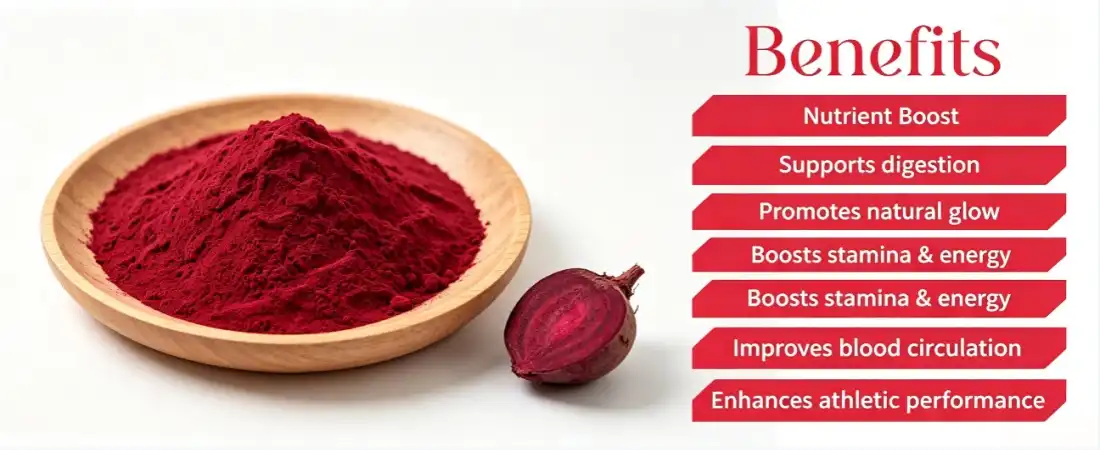
Health Benefits Backed by Science
What follows is from human research, not extrapolation from cell work. The three reproducible human data outcomes are blood pressure, exercise efficiency, and brain perfusion. The remainder is all supporting or preliminary.
If you’re thinking about what outcomes to display on a product label or landing page, the table below connects the best human evidence to the formulation aim.
Cardiovascular Health and Blood Pressure
Randomized crossover experiments have shown a mean reduction in systolic blood pressure of 22 mmHg and 18 mmHg in diastolic blood pressure at the peak (2–3 hours) after a single dose of 500 g of beet juice in normotensive individuals (Hobbs et al., 2012). A meta-analysis of 16 trials from 2013 (Siervo et al., 2013) suggested a pooled decrease in systolic BP of roughly 4.2 mmHg across dosages and durations, with greatest results in studies utilizing larger nitrate loading. A truthful claim for a completed product would be "helps preserve healthy blood pressure already in normal range'.
Sample size in several of these studies is limited (n=14 to 68) and most were performed in healthy people . Don't over-claim. Effects are less and delayed in medicated hypertensive people.
Enhanced Exercise Performance and Stamina
Bailey et al. (2009) demonstrated that 6 days of 500 mL/day beet juice decreased the oxygen cost of moderate activity by ~19% and increased time-to-exhaustion during intense exercise by 16%. Lansley et al. (2011) expanded this to performance: trained cyclists increased 4 km time-trial power production ~ 2.8% after 6 days with no change in placebo .The mechanism is the same NO pathway: nitrite reduction in contracting muscle improves mitochondrial efficiency. For athletes, timing matters more than dose: 2–3 hours pre-exercise to align with plasma nitrite peak, then 6–15 days of daily loading for the chronic adaptation.
Brain Health and Cognitive Function
Presley et al. (2011) investigated older persons (mean age 75) on a high-nitrate diet and assessed brain perfusion using arterial spin labeling MRI. Global cerebral blood flow was unaffected, but regional perfusion increased in the white matter of the frontal lobe, notably in the area between the dorsolateral prefrontal cortex and anterior cingulate cortex, which are involved in executive function. suggestive, not conclusive.
Liver Detoxification and Natural Cleansing
The beet is one of the greatest dietary sources of betaine, an osmolyte that enhances liver function and lipid metabolism. Betaine research have looked at decreasing homocysteine, not “detoxification” as a marketing word. If you use that frame, relate it to betaine’s real biochemistry, and don’t suggest any liver “cleanse” that is not substantiated.The table below summarises the four outcomes above, with the studies cited elsewhere in this article.
| Outcome | Representative study | Participants | Dose / duration | Effect size |
|---|---|---|---|---|
| Blood pressure | Hobbs et al., 2012 (Br J Nutr) | 18 normotensive men | 500 g beetroot juice, single dose | −22/−18 mmHg systolic/diastolic at 2–3 h |
| Blood pressure (pooled) | Siervo et al., 2013 (meta-analysis) | 16 trials, n ≈ 254 | 70–500 mL juice/day, 1 day–4 weeks | ≈ −4.2 mmHg pooled systolic reduction |
| Exercise economy | Bailey et al., 2009 (J Appl Physiol) | 8 men, recreationally active | 500 mL/day × 6 days | ≈ 19% reduction in O₂ cost during moderate cycling |
| Cycling time trial | Lansley et al., 2011 (Med Sci Sports Exerc) | 9 trained cyclists | 500 mL/day × 6 days | ≈ 2.8% improvement in 4 km TT mean power |
| Cerebral perfusion (older adults) | Presley et al., 2011 (Nitric Oxide) | 14 adults, mean age 75 | High- vs low-nitrate diet, 24 h | Increased regional CBF in frontal white matter; no change globally |
Choosing the Right Super Beet Root Powder Supplier
Not all beet powders are created equal. The difference between a quality product and a cheap product comes down to three things: how the beet is produced, how it is dried and what the paperwork really states. All three may be inspected. If you’re establishing a private-label line, none of these are up for negotiation.
Why Source and Processing Method Matter
Beet takes up nitrates and minerals from the soil, therefore you need to start out with clean raw material. The best method to keep that heavy-metal panel clear is to source from locations with strong agricultural control and validated pesticide-residue testing. The most important processing parameter is drying temperature: over 50 °C heat-sensitive betacyanins and vitamin C start to be lost. NT Biotech employs a low temperature dehydration (less than 42 °C) which is the most we would suggest for a premium super beet root powder.
NT Biotech's Quality Commitment
NT Biotech sources from contracted growers with traceable origin, dehydrates at controlled low temperatures, and runs a vertically integrated manufacturing line so incoming raw material and finished Super Beet Root Powder stay under the same quality system. To verify any of these claims rather than take them on faith, request the current CoA and HPLC fingerprint before your first purchase.
Certifications and Third-Party Verification
Each batch is accompanied by a Certificate of Analysis reporting betacyanin content (HPLC), nitrate concentration (UV-Vis or ion chromatography), heavy metals (complete ICP-MS panel), microbiological limits and moisture. Quality management is to ISO 9001 what... Upon request we may provide batch level documentation for kosher and halal markets.
NT Biotech’s specification stack is shown below side-by-side with average industry values. These are supplier-side figures and not clinical criteria – interpret them as what you get and not a health claim.
| Parameter | Industry range (typical) | NT Biotech specification (as supplied) |
|---|---|---|
| Betacyanin content | 0.4–0.6% w/w | ≥ 0.8% by HPLC |
| Nitrate (NO₃⁻) | 1.5–2.0% w/w | ≥ 2.5% w/w |
| Moisture | < 8% | < 6% |
| Heavy metals (Pb / Cd / Hg / As) | Basic screening | Full ICP-MS, batch-specific |
| Microbial limits (TPC) | < 10,000 CFU/g | < 1,000 CFU/g |
| Certifications | Variable | ISO 9001; kosher and halal on request |
Optimal Dosage Guidelines for Different Goals
Dosage is the difference between a product that works and one that wastes the customer’s money. The ranges below are from the human trials mentioned above and are for the powder itself. If your end result is a juice, sachet or capsule double the powder mass by your extraction or dilution factor.
General Wellness and Daily Nutrition
1–2 tablespoons per day (about 5–10 g of the powder) is sufficient to significantly increase nitrate and betacyanin intakes without surpassing what most persons can tolerate long-term. If your consumer is utilizing the powder as part of a daily greens regimen, and not targeting a particular performance objective, then this is the dosage to suggest.
Athletic Performance and Pre-Workout Use
Athletes usually take 10-20 g 2-3 hours before training/competition. Set expectations with your consumers. Nitrate builds up and it takes 6-15 days of daily loading before you see the increases in performance. Most exercise-economy investigations have employed a paradigm of daily chronic loading in combination with an acute preexercise dosage.
Cardiovascular Support
Trials that showed blood pressure reductions typically used 5–7 g/day for 2–4 weeks. Pairing the dose with vitamin C-rich foods (orange, kiwi, bell pepper) supports the nitrate-to-nitrite conversion in the stomach and is a simple upgrade to print on the label or include in the insert.
Timing and Consumption Tips
The optimum time to take beet powder is in the morning, on an empty stomach or with a light breakfast, 30-60 minutes before any scheduled exercise for a consistent daily habit. Plasma nitrite peaks 2–3 hours after consumption, hence the window for athletes to align with training or competition is the 2–3 hour mark. If the patient complains of gastrointestinal pain, change to with food; the pharmacokinetics are slightly altered but the long term impact is maintained.
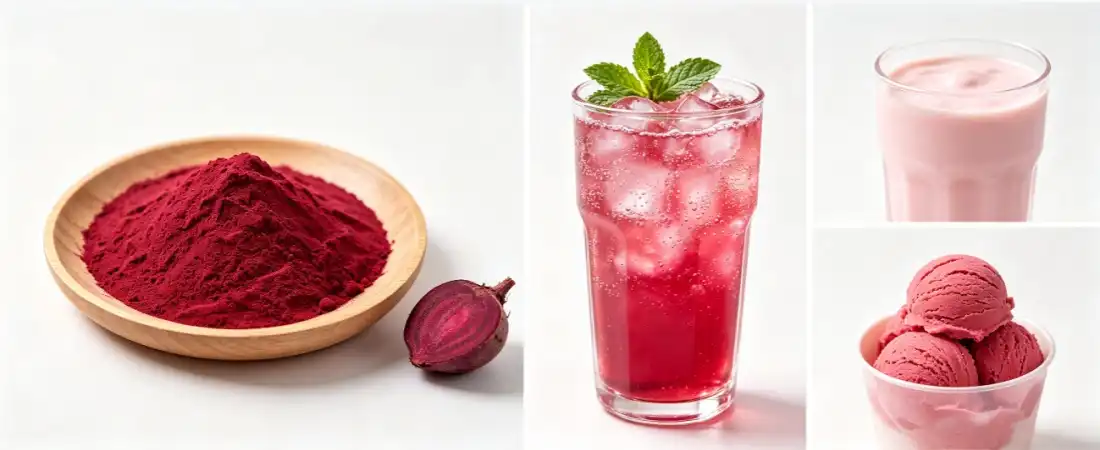
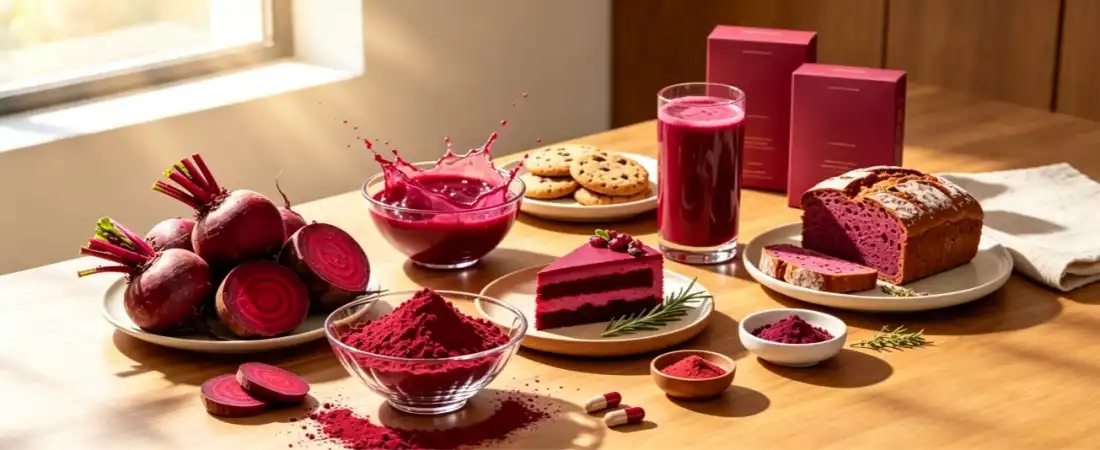
Creative Ways to Incorporate Super Beet Root Powder Into Your Routine
Think of beet powder as a colour-plus-nutrient ingredient, not a supplement you swallow, and the best way to use it in regular cooking is to add it to your food. Here’s a rundown of a few layouts that perform dependably for both home customers and formulators developing a ready-to-mix SKU.
Morning Smoothies and Juice Blends
1–2 tablespoons in a smoothie with berries, banana and coconut water hides the earthy undertone and gives the drink a recognizable color. If you are developing an SKU of RTD this is the easiest bench test for flavor compatibility.
Energy Balls and No-Bake Snacks
2–3 teaspoons each batch incorporated into date-and-oat bases offers a recognizable red hue without altering the texture. These forms are portable and popular with the same population that buys beet powder in the first place.
Colorful Culinary Creations
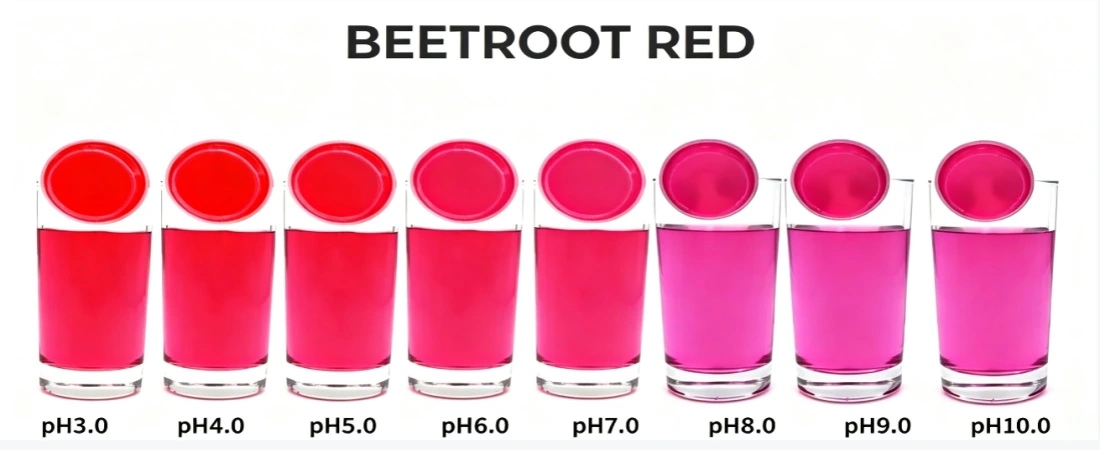
Beet powder provides a solid natural red to pasta dough, hummus and icing — generally 0.5-2% of wheat weight. Heat tolerance is the limit: keep your bake temps below 180 degrees C if you want the color to survive.
Pre-Workout Performance Shots
Mix 10–15 g powder with a little sour cherry juice, a sprinkle of salt and water for a strong shot. This is the closest domestic version of the protocols used in the above exercise-economy experiments and it travels nicely in a 60 mL shaker.
Below is a fast reference table for a formulator or content writer matching common meal forms with powder quantity and complementing ingredients.
| Format | Powder amount | Pairs well with | Best timing |
|---|---|---|---|
| Smoothie / juice | 1–2 tsp (3–6 g) | Berries, banana, mango, citrus | Morning, 30 min before activity |
| Energy balls / no-bake | 2–3 tbsp per batch | Dates, cacao, almond butter, oats | Pre- or post-workout snack |
| Overnight oats | 1 tsp | Cinnamon, honey, walnuts, yoghurt | Meal prep, breakfast |
| Salad dressing | ½ tsp | Lemon, tahini, garlic, olive oil | Lunch, paired with iron-rich foods |
| Latte / hot drink | 1 tsp | Coconut milk, vanilla, maple syrup | Afternoon, 60–90 min pre-workout |
| Pre-workout shot | 10–15 g | Tart cherry juice, pinch of salt, water | 2–3 h before training or competition |
Potential Considerations and Who Should Exercise Caution
Most healthy individuals handle beet powder well, but it’s good to be precise about who should talk to a healthcare physician before beginning it. These assertions are not medical advice. See the source beneath each point for a particular group.
Medication Interactions
Nitrate–NO route reduces blood pressure. In persons on antihypertensive medicines (especially ACE inhibitors, ARBs and PDE5 inhibitors) the combination may increase the impact. Compounds from beet may potentially interact with warfarin and other anticoagulants via the platelet-NO pathway. Encourage patients on these drugs to get supplements cleared with their doctor.
Kidney Stones and Oxalates
Beet is rich in oxalate. For persons who have had calcium-oxalate kidney stones, persistent high intake is a risk factor; moderation and a chat with a renal dietician are prudent.
Beeturia: A Harmless Side Effect
Beeturia—red or pink urine after eating beetroot—is safe and reflects individual heterogeneity in betalain metabolism. The most often quoted published estimate of the prevalence in healthy people is around 10–14% (Eastwood and Nyhlin, 1995; Watts et al., 1993). This is not a symptom of bleeding and does not mean you should stop taking the supplement.
Blood Sugar Considerations
Beet powder is naturally sweet and has a modest glycemic effect. Those with diabetes should include it in their carbohydrate allowance and monitor reaction like any other root-vegetable powder.
Conclusion
Beet powder has made its way into the bulk- supplement market for one key reason: the human findings on blood pressure and exercise economy are repeatable, and the process is physiologically consistent. The best formulations will be those that preserve both nitrate and betalain levels from raw material to final product and offer a specification the customer can verify.If you are sourcing for a private-label line, a sports-nutrition SKU, or a functional food application, NT Biotech's super beet root powder is built for these exact requirements: low-temperature processing, batch-level documentation, and the flexibility to support both finished product and bulk ingredient sales. Request a sample and the current specification pack at info@newthingsbiotech.com to start the conversation.
FAQ
1. How long does it take to feel the effects of super beet root powder?
For the cardiovascular and exercise-economy effects, plasma nitrite peaks about 2–3 hours after a single dose. Sustained effects on blood pressure typically build over 2–4 weeks of daily intake (Hobbs et al., 2012; Siervo et al., 2013).
2. Can I take beetroot powder every day?
Yes. Trials of up to 4 weeks at 5–10 g/day show no adverse effects in healthy adults. For long-term use, stay within the dose ranges in the dosage section above and consult a healthcare provider if you are on blood pressure or anticoagulant medication.
3. What's the best time of day to take super beet root powder?
For most users, morning on an empty stomach 30–60 minutes before a workout or other planned activity. The best way to take beetroot powder for an athletic goal is 2–3 hours before training or competition, in line with plasma nitrite pharmacokinetics. For general wellness, a consistent time each day matters more than the specific hour.
4. Does beetroot powder interact with any medications?
It can amplify the effect of antihypertensive drugs and may interact with anticoagulants via the platelet NO pathway. If you are on prescription medication, especially for blood pressure or blood thinning, speak to your prescriber before regular use.
5. How should I store beetroot powder to maintain freshness?
Keep sealed, in a cool dry place away from direct sunlight. Properly stored powder retains betacyanin and nitrate content for 12–18 months from manufacture. Avoid humid environments; moisture is the main driver of microbial growth and pigment loss. For procurement-side questions (MOQ for bulk orders, OEM blends, private-label packaging, certificates of analysis for the destination market), write to info@newthingsbiotech.com and the team will return a written quote with lead time.
Discover the NT Biotech Difference — Your Partner in Premium Plant Nutrition
NT Biotech supplies super beet root powder to formulators, brand owners and ingredient distributors who need a documented, low-temperature-processed beetroot ingredient with the paperwork to back it up. Every shipment carries a CoA with HPLC betacyanin, UV-Vis nitrate, full ICP-MS heavy metals, microbial limits and moisture; kosher and halal documentation is available on request.
To request a sample of NT Biotech's super beet root powder, ask for the current specification pack, or open a conversation about OEM and bulk pricing, write to info@newthingsbiotech.com with your destination country, target format and intended monthly volume. A technical representative will reply with a written quote, lead time and the documentation checklist for your market.
References
1. Hord, N.G., Tang, Y., & Bryan, N.S. (2009). Food sources of nitrates and nitrites: the physiologic context for potential health benefits. American Journal of Clinical Nutrition, 90(1), 1-10.
2. Bailey, S.J., Winyard, P., Vanhatalo, A., et al. (2009). Dietary nitrate supplementation reduces the O2 cost of low-intensity exercise and enhances tolerance to high-intensity exercise in humans. Journal of Applied Physiology, 107(4), 1144-1155.
3. Hobbs, D.A., Kaffa, N., George, T.W., et al. (2012). Blood pressure-lowering effects of beetroot juice and novel beetroot-enriched bread products in normotensive male subjects. British Journal of Nutrition, 108(11), 2066-2074.
4. Clifford, T., Howatson, G., West, D.J., & Stevenson, E.J. (2015). The potential benefits of red beetroot supplementation in health and disease. Nutrients, 7(4), 2801-2822.
5. Presley, T.D., Morgan, A.R., Bechtold, E., et al. (2011). Acute effect of a high nitrate diet on brain perfusion in older adults. Nitric Oxide, 24(1), 34-42.
6. Wiczkowski, W., Romaszko, E., Szawara-Nowak, D., & Pachołek, B. (2016). Chemical stability of betalains during thermal processing and storage. Food Chemistry, 196, 1106-1112.