- English
- French
- German
- Portuguese
- Spanish
- Russian
- Japanese
- Korean
- Arabic
- Greek
- German
- Turkish
- Italian
- Danish
- Romanian
- Indonesian
- Czech
- Afrikaans
- Swedish
- Polish
- Basque
- Catalan
- Esperanto
- Hindi
- Lao
- Albanian
- Amharic
- Armenian
- Azerbaijani
- Belarusian
- Bengali
- Bosnian
- Bulgarian
- Cebuano
- Chichewa
- Corsican
- Croatian
- Dutch
- Estonian
- Filipino
- Finnish
- Frisian
- Galician
- Georgian
- Gujarati
- Haitian
- Hausa
- Hawaiian
- Hebrew
- Hmong
- Hungarian
- Icelandic
- Igbo
- Javanese
- Kannada
- Kazakh
- Khmer
- Kurdish
- Kyrgyz
- Latin
- Latvian
- Lithuanian
- Luxembou..
- Macedonian
- Malagasy
- Malay
- Malayalam
- Maltese
- Maori
- Marathi
- Mongolian
- Burmese
- Nepali
- Norwegian
- Pashto
- Persian
- Punjabi
- Serbian
- Sesotho
- Sinhala
- Slovak
- Slovenian
- Somali
- Samoan
- Scots Gaelic
- Shona
- Sindhi
- Sundanese
- Swahili
- Tajik
- Tamil
- Telugu
- Thai
- Ukrainian
- Urdu
- Uzbek
- Vietnamese
- Welsh
- Xhosa
- Yiddish
- Yoruba
- Zulu
Krill oil has emerged as a niche omega-3 supplement and is a fast growing segment of the global nutraceuticals market. Astaxanthin Content – This is a regular customer interaction. Why do we? Simple. Astaxanthin is the natural preservative that keeps krill oil fresh and the antioxidant that separates a luxury capsule from a commodity one. If you’re a brand owner, contract maker or ingredient buyer looking to find the finest krill oil with highest astaxanthin, this article will explain what the number really means, how to interpret a spec sheet and what commercial grades to shortlist. NT Biotech provides krill oil with high astaxanthin content in a standardised form, phospholipid profile and complete profile of EPA and DHA. ISO 9001, Kosher and Halal certified. CoA on every batch. Free samples. In stock.Email info@newthingsbiotech.com.
Why Astaxanthin Content Is the Headline Spec
This may help explain why this one number dominates the conversation over krill oil quality, before we get into the goodies.
Astaxanthin as a Marker of Freshness
Astaxanthin, a red carotenoid in Antarctic krill (Euphausia superba), protects their lipids against oxidation in the freezing ocean waters. The same ingredient stabilises the krill oil in the softgel . A more natural product of astaxanthin usually indicates fresher raw material, shorter time from capture to processing and more gentle extraction . One of the simplest at-a-glance signals for brand teams that the krill oil has not been degraded in manufacturing is the amount of astaxanthin in the krill oil.
Astaxanthin as a Functional Active
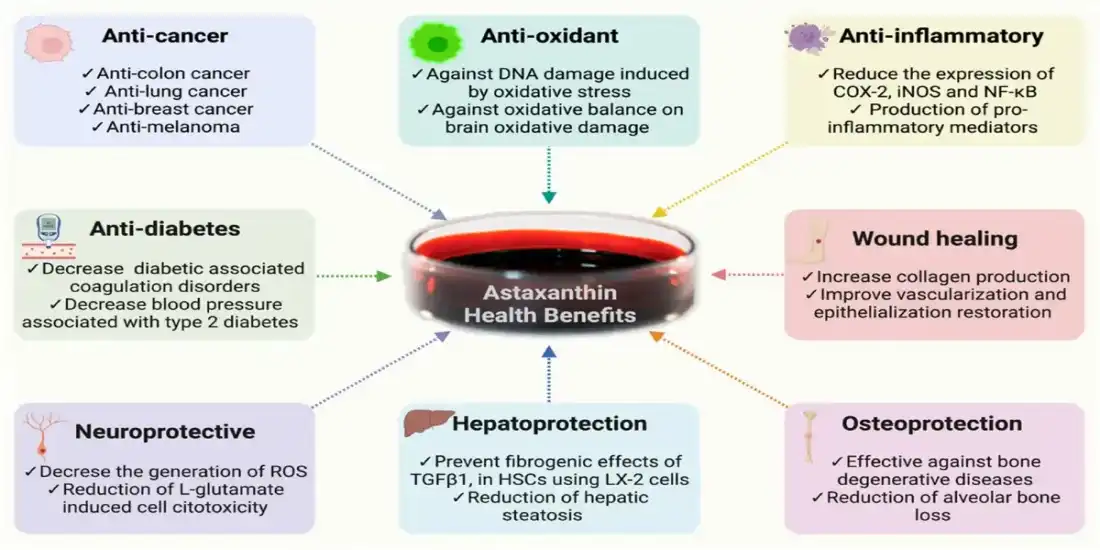
Astaxanthin is a bioactive carotenoid, not only a preservative. Astaxanthin has been shown in peer-reviewed research published in journals such as Marine Drugs and Nutrients to contribute to antioxidant defence, skin photoprotection, eye health, cardiovascular markers and exercise recovery. Plus, the addition of astaxanthin to the phospholipid-bound EPA and DHA that krill oil provides may provide formulators the chance to tell a bigger health story than fish oil alone.
What the Numbers Typically Look Like
Commercial krill oil containing astaxanthin is generally standardised in a predictable range. The table below compares significant industry grades on the important headline specifications.
| Krill Oil Grade | Typical Astaxanthin | Phospholipids | EPA + DHA | Common Use |
|---|---|---|---|---|
| Standard | 100–200 ppm | ≥40% | ≥22% | Mass-market softgels |
| Premium | 300–500 ppm | ≥48% | ≥24% | Branded wellness lines |
| Super high-astaxanthin | 800–1,500 ppm | ≥50% | ≥25% | Premium joint, eye, beauty-from-within |
| Pharmaceutical / high EPA | 150–300 ppm | ≥55% | ≥30% | Cardio-focused clinical formulas |
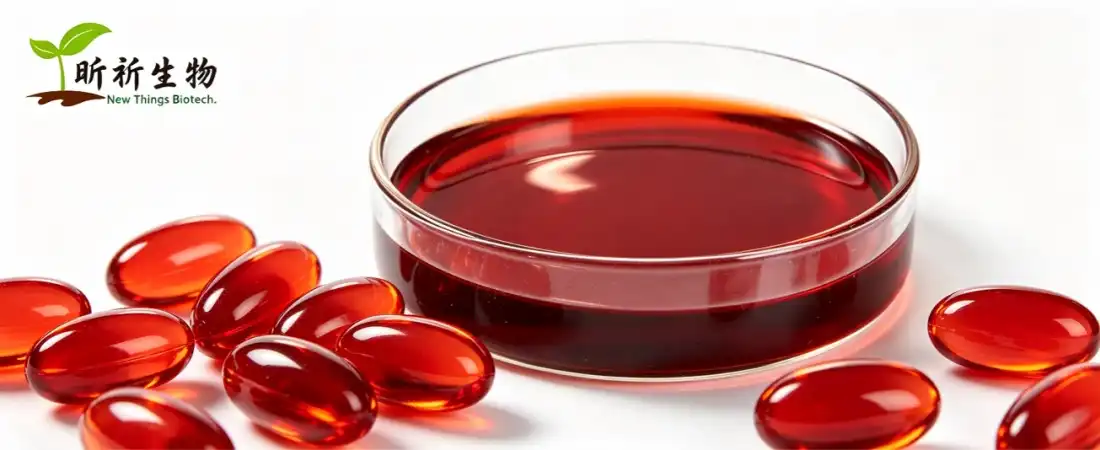
What the Research Says About Krill Oil Astaxanthin Benefits
A buyer's guide to krill oil astaxanthin is only as good as its explanation of why the spec matters to the final user. Here's a quick rundown of what current research supports.
Heart, Cholesterol and Triglyceride Support
Krill oil has been proven to enhance blood lipid profiles in many randomised studies . In a 2018 clinical research published in Nutrition Research, individuals consuming 4 g of krill oil daily saw substantial decreases in triglycerides vs placebo. Omega-3s and astaxanthin bonded by phospholipids in krill oil may be better for heart health than fish oil in triglyceride form, particularly in those with somewhat high lipids.
Joint Comfort and Inflammation
Several studies (including one published in the Journal of the American College of Nutrition) have found decreases in C-reactive protein and improvements in joint stiffness scores among people using krill oil for 7 to 30 days. The astaxanthin component is a substantial part of its anti-inflammatory action and the reason why joint-support companies like to go for a higher-astaxanthin specification.
Skin, Eye and Everyday Wellness
The skin-protective and skin-elasticity advantages of astaxanthin are extensively recognised in the dermatological literature. This is a single ingredient paired with the EPA and DHA in krill oil with maximum astaxanthin that promotes beauty-from-within positioning.” High-astaxanthin krill oil is also used in eye-health lines to complement lutein and zeaxanthin, offering formulators a full carotenoid narrative in one softgel.
How to Read a Krill Oil Spec Sheet
Astaxanthin content is the headline, but a serious consumer will never stop at one figure. These are the specifications you’ll want to review together before you make an order.
Phospholipid Content and Form
The key difference with krill oil is that its omega-3s are in the form of phospholipids rather to the triglycerides seen in fish oil. It is considered that phospholipid-bound EPA and DHA are more easily absorbed into cell membranes. Premium grades are often specified as ≥48% phospholipids, although certain pharma grades are >55%. Always enquire whether ³¹P-NMR is used to test phospholipid content. This is the most dependable approach in the business.
EPA, DHA and Total Omega-3
Krill oil generally has an EPA + DHA content of around 22–30%. If the total omega-3 count appears suspiciously low for a particular astaxanthin claim, then something is probably wrong – either the astaxanthin number is overstated, or the oil has been over-concentrated for colour at the cost of omega-3s. Looking for a specification particular to your SKU? Send your target claims and softgel size to info@newthingsbiotech.com. Our technical staff will contact you within two hours with a suggested grade and provide free samples so that you may start bench work immediately.
Oxidation, Heavy Metals and Sustainability
Low peroxide value and anisidine value are the parameters of oxidation and indicate a fresh oil. Heavy metals, dioxins and PCBs should be present at low levels in any marine element. If sustainability matters to you, look for krill from the Antarctic fishery, which is independently ranked as one of the world's best-managed and is MSC-certified.
Typical Spec Sheet to Compare Against
| Parameter | Premium Benchmark |
|---|---|
| Astaxanthin (esters) | ≥500 ppm |
| Total phospholipids (³¹P-NMR) | ≥48% |
| EPA + DHA | ≥24% |
| Choline | ≥60 mg/g |
| Peroxide value | ≤3 meq/kg |
| Anisidine value | ≤20 |
| Heavy metals (Pb, Cd, Hg, As) | Meets EU/USP limits |
| Microbiology | Meets USP/BP |
| Certifications | ISO 9001, Kosher, Halal; MSC traceable |
Choosing Grades for Different Finished Products
The spec sheet is decoded now. The issue is, what grade genuinely suits your SKU? If you formulate a basic daily softgel with too high an astaxanthin level, you squander money If you develop a premium beauty or recovery product with too low an astaxanthin content, you sell your brand short
Everyday Omega-3 Wellness
For a conventional adult omega-3 capsule for heart and brain support, regular krill oil with astaxanthin containing 100-200 ppm astaxanthin, >=40% phospholipids and >=22% EPA+DHA meets the optimal value point. Clinically supported daily dosages are usually provided in softgels from 500 to 1000 milligrams.
Premium Beauty, Eye and Joint Lines
Higher-astaxanthin grades are good for beauty-from-within, joint comfort and eye health lines. Super high-astaxanthin krill oil (800–1,500 ppm) allows manufacturers to make a valid antioxidant claim without necessitating a separate astaxanthin softgel in the regimen. This is where ‘krill oil with maximum astaxanthin’ positioning truly finds its home on the pack.
Clinical and Pharmaceutical Formats
Formulations for high triglycerides, metabolic health or clinical heart support tend to focus on EPA + DHA amount and phospholipid density rather than astaxanthin amount. If phospholipids are more than 55% and omega-3 concentration is more than 30%, in this case the astaxanthin level of 150-300 ppm is acceptable.
Grade-to-Application Snapshot
| Finished Product | Suggested Grade | Softgel Dose |
|---|---|---|
| Daily heart/brain softgel | Standard (100–200 ppm) | 500–1,000 mg |
| Beauty-from-within | Super high (800–1,500 ppm) | 500 mg |
| Joint comfort | Premium (300–500 ppm) | 1,000 mg |
| Eye-health combo | Super high (800–1,500 ppm) + lutein | 500 mg |
| Cardio-clinical | Pharmaceutical (high PL, high EPA) | 1,000 mg |

Choosing Your Krill Oil with Highest Astaxanthin Supplier
A fantastic spec is just as good as the raw material coming in consistently, pure and on schedule. The astaxanthin source of the krill oil you choose is as critical as the quantity on the spec sheet.
Traceability from Catch to Capsule
Where do they collect the krill ? What vessel system is it? How soon is the oil taken out after the krill is caught? Processing either on board or at the port preserves natural amounts of astaxanthin and minimises oxidation. NT Biotech’s krill oil program will guarantee that freshness from the Antarctic oceans reaches your warehouse.
Documentation That Protects Your Label
Each NT Biotech lot comes with a CoA for astaxanthin, phospholipids, EPA, DHA, oxidation indicators, heavy metals and microbiological. ISO 9001, Kosher and Halal certifications opens the doors to rigorous retail chains. And religion-compliant marketplaces. That means QC teams may have an incoming check in minutes, not days.
Delivery, OEM and Flexibility
| Service Area | NT Biotech Commitment |
|---|---|
| Inquiry response | First reply within 2 hours |
| In-stock grades | Shipment in 1–3 working days after order confirmation |
| Production orders | 3–10 working days, from sourcing to packing |
| Shipping options | Express via FedEx/UPS, air or sea through trusted forwarders |
| Customization | OEM/ODM astaxanthin levels, encapsulation and private-label packing |
| Payment | Flexible options, including the buyer's local currency |
Conclusion
The best krill oil with highest astaxanthin is not merely the one with the greatest figure on the label. It’s the one with astaxanthin, phospholipid, EPA and DHA numbers that fit up with your product positioning, supported by low oxidation indicators, tough heavy metal limitations and a sustainable catch. Match the SKU to the grade, study the whole spec sheet, and work with a supplier that records every batch. Shaanxi New Things Biotech can provide all three. With ISO 9001, Kosher and Halal certification, CoA on every batch, flexible OEM support and delivery in days, it is a reliable partner for your next premium omega-3 launch. Claim your FREE sample now.
FAQ
Q1: What astaxanthin level counts as "high" in krill oil?
A: Anything above 500 ppm is considered high; super-premium grades reach 800–1,500 ppm.
Q2: Why is astaxanthin important in krill oil?
A: It keeps the oil fresh and adds its own antioxidant, skin and eye benefits.
Q3: Which grade is best for a beauty-from-within softgel?
A: Super high-astaxanthin krill oil at 800–1,500 ppm.
Q4: Is NT Biotech krill oil certified?
A: Yes — ISO 9001, Kosher and Halal, with a CoA on every batch.
Q5: How fast can NT Biotech ship?
A: In-stock grades ship in 1–3 working days. Production orders take 3–10 working days.
Launch Your Next Premium Softgel with NT Biotech
Consumers are reading supplement labels more carefully than ever, and astaxanthin content has become one of the first numbers they check. NT Biotech is ready to help you meet that scrutiny. We supply krill oil with highest astaxanthin across standard, premium and super-high-astaxanthin grades, with ISO 9001, Kosher and Halal certification, a full CoA for every batch and a two-hour response promise. Whether you are developing a daily heart and brain softgel, a beauty-from-within capsule, a joint-comfort formula or a clinical cardio product, our team will help you choose the right specification and plan shipping by express, air or sea. Flexible OEM options and payment in your local currency keep every project simple. Email info@newthingsbiotech.com today to request free samples, a technical data sheet and a bulk quotation.
References
1. Berge, K., Musa-Veloso, K., Harwood, M., Hoem, N., & Burri, L. (2014). Krill oil supplementation lowers serum triglycerides without increasing low-density lipoprotein cholesterol in adults with borderline high or high triglyceride levels. Nutrition Research, 34(2), 126–133.
2. Deutsch, L. (2007). Evaluation of the effect of Neptune Krill Oil on chronic inflammation and arthritic symptoms. Journal of the American College of Nutrition, 26(1), 39–48.
3. Ulven, S. M., Kirkhus, B., Lamglait, A., Basu, S., Elind, E., Haider, T., Berge, K., Vik, H., & Pedersen, J. I. (2011). Metabolic effects of krill oil are essentially similar to those of fish oil but at lower dose of EPA and DHA, in healthy volunteers. Lipids, 46(1), 37–46.
4. Ambati, R. R., Phang, S.-M., Ravi, S., & Aswathanarayana, R. G. (2014). Astaxanthin: Sources, extraction, stability, biological activities and its commercial applications – A review. Marine Drugs, 12(1), 128–152.
5. Burri, L., Hoem, N., Banni, S., & Berge, K. (2012). Marine omega-3 phospholipids: Metabolism and biological activities. International Journal of Molecular Sciences, 13(11), 15401–15419.
6. Nicol, S., Foster, J., & Kawaguchi, S. (2012). The fishery for Antarctic krill – recent developments. Fish and Fisheries, 13(1), 30–40.