- English
- French
- German
- Portuguese
- Spanish
- Russian
- Japanese
- Korean
- Arabic
- Greek
- German
- Turkish
- Italian
- Danish
- Romanian
- Indonesian
- Czech
- Afrikaans
- Swedish
- Polish
- Basque
- Catalan
- Esperanto
- Hindi
- Lao
- Albanian
- Amharic
- Armenian
- Azerbaijani
- Belarusian
- Bengali
- Bosnian
- Bulgarian
- Cebuano
- Chichewa
- Corsican
- Croatian
- Dutch
- Estonian
- Filipino
- Finnish
- Frisian
- Galician
- Georgian
- Gujarati
- Haitian
- Hausa
- Hawaiian
- Hebrew
- Hmong
- Hungarian
- Icelandic
- Igbo
- Javanese
- Kannada
- Kazakh
- Khmer
- Kurdish
- Kyrgyz
- Latin
- Latvian
- Lithuanian
- Luxembou..
- Macedonian
- Malagasy
- Malay
- Malayalam
- Maltese
- Maori
- Marathi
- Mongolian
- Burmese
- Nepali
- Norwegian
- Pashto
- Persian
- Punjabi
- Serbian
- Sesotho
- Sinhala
- Slovak
- Slovenian
- Somali
- Samoan
- Scots Gaelic
- Shona
- Sindhi
- Sundanese
- Swahili
- Tajik
- Tamil
- Telugu
- Thai
- Ukrainian
- Urdu
- Uzbek
- Vietnamese
- Welsh
- Xhosa
- Yiddish
- Yoruba
- Zulu
Grape extract is one of the most discussed plant products in nutrition and beauty, and many consumers ask the same questions: what are its capabilities and where can it genuinely be used? This handbook addresses both, from the chemistry to the end products. NT Biotech grape seed extract 95% OPC (Oligomeric Proanthocyanidins) is extracted from chosen seeds of Vitis vinifera by patented low-temperature extraction, giving excellent purity, reliable stability and seamless blending in capsules, beverages and cosmetics. HPLC/UV data and Certificate of Analysis for each batch included. For specs, samples or a bespoke price contact us at info@newthingsbiotech.com.
Meet Grape Extract (OPC): The Ingredient's ID Card
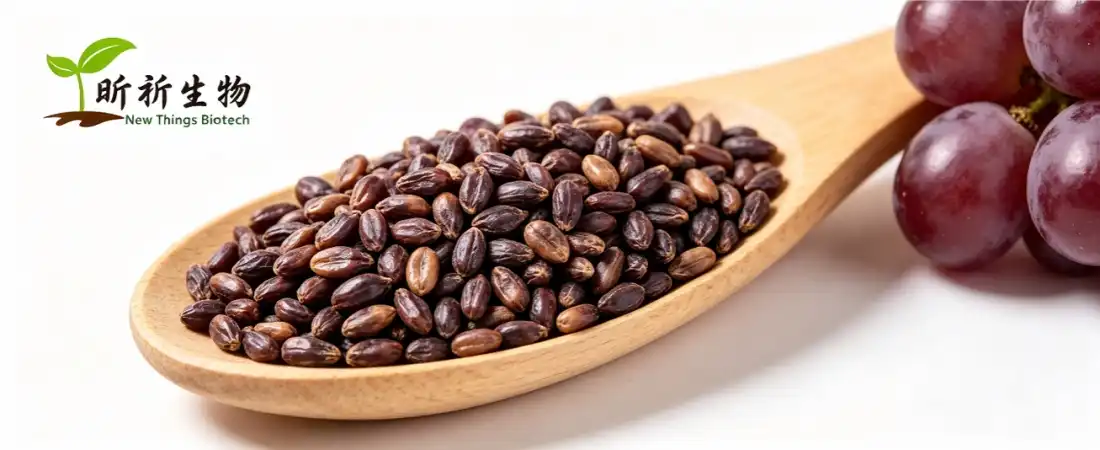
Before you look at uses, it helps to know what you really have. In the supplement market, grape extract often refers to grape seed extract standardised for oligomeric proanthocyanidins, or OPCs. Grape seed extract 95% OPC includes at least 95% of these polyphenols, short chains of catechin and epicatechin units. Grape Seed – Grape seed naturally includes oligomeric proanthocyanidins, which is why it has been investigated for decades in antioxidant and vascular research. Standardised grape seed proanthocyanidin extract enables formulators a known and reproducible quantity of active, compared to a raw seed powder, making dosing, labelling and quality control easier from the first prototype to full-scale manufacturing.
What Exactly Is OPC?
OPCs are a subset of proanthocyanidins, also known as condensed tannins, that are present in many plants. Grape seeds are one of the greatest sources of monomers, dimers, trimers and bigger polymers (Shi et al., 2003). The OPC fraction is tiny enough to be absorbed, yet large enough to be counted.
A By-Product With a Second Life
Wineries and juice manufacturers create tonnes of pomace each harvest, and instead of throwing the seeds inside, they are washed, dried and extracted, an upcycling narrative buyers with a sustainability mindset appreciate.
The ID Card at a Glance
Table 1 summarizes the typical profile of a standardized grape seed extract 95% OPC.
Table 1. Typical Physical and Chemical Profile of Grape Seed Extract 95% OPC
| Parameter | Typical Specification |
|---|---|
| Botanical source | Vitis vinifera L. (seed) |
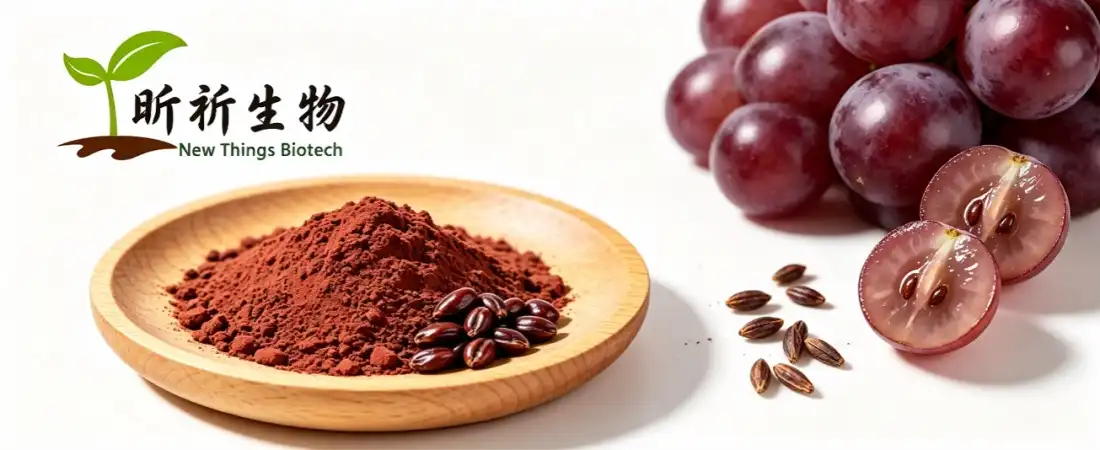
| Appearance | Reddish-brown fine powder |
| Total OPC | ≥95% (UV) |
| Particle size | 100% pass 80 mesh |
| Loss on drying | ≤5.0% |
| Heavy metals | ≤10 ppm |
| Total plate count | ≤1,000 CFU/g |
Core Properties: Why OPC Behaves the Way It Does
Every usage of grape extract may be traced back to a few qualities. First, it is chemical. Each oligomer has numerous hydroxyl groups, which may give electrons and neutralise free radicals. The second is structural: proanthocyanidins easily bond to proteins such as collagen and elastin. The third is practical. A correctly prepared grape seed proanthocyanidin extract has uniform colour, low moisture and high flowability. These properties together make grape seed extract 95% OPC very versatile. knowledge in the scientific literature has thoroughly studied the oligomeric proanthocyanidins that grape seed has to offer and that knowledge provides businesses with a strong foundation to develop benefit-driven product stories that customers can understand and believe.
Antioxidant Strength
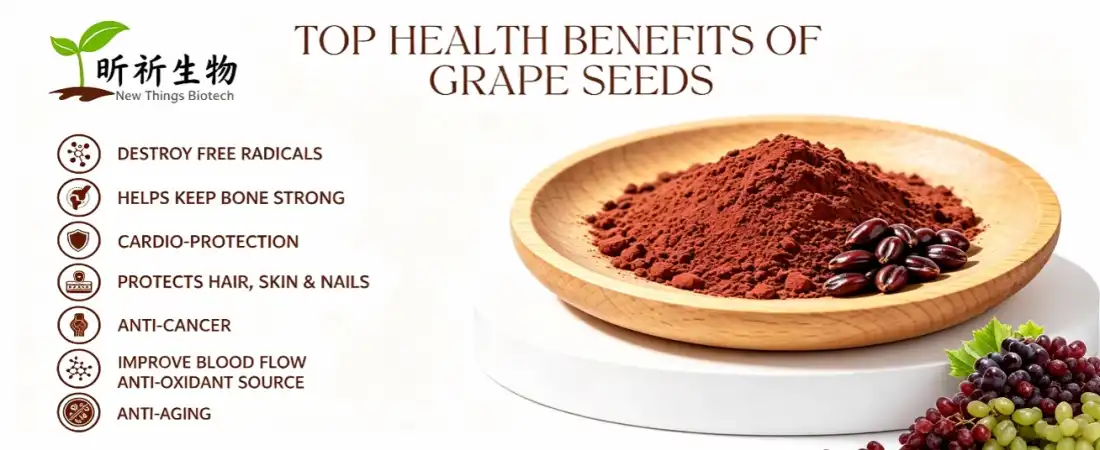
with laboratory models, proanthocyanidin extract of grape seed demonstrated potent free radical scavenging, with some experiments exceeding the activity of vitamins C and E (Bagchi et al., 2000). This is why manufacturers are positioning OPC as supporting healthy ageing and daily protection.
Affinity for Collagen and Vessels
Proanthocyanidins attach to collagen and elastin and are being examined for their ability to help preserve these substances from enzymatic degradation, therefore supporting skin firmness and vessel wall integrity (Cos et al., 2004). This double effect is the reason you'll see one ingredient in beauty and circulation products.
The Research Behind the Properties
Table 2 links each property to the research supporting it.
Table 2. Key Properties and Supporting Research
| Property | What It Means | Supporting Source |
|---|---|---|
| Free radical scavenging | Neutralizes reactive oxygen species | Bagchi et al., 2000 |
| Protein binding | Interacts with collagen and elastin | Cos et al., 2004 |
| Vascular support | Modest gains in blood pressure and CRP | Feringa et al., 2011; Rasmussen et al., 2005 |
| Skin appearance | Improved chloasma at 105 mg per day | Yamakoshi et al., 2004 |
Practical Uses: One Extract, Many Product Categories
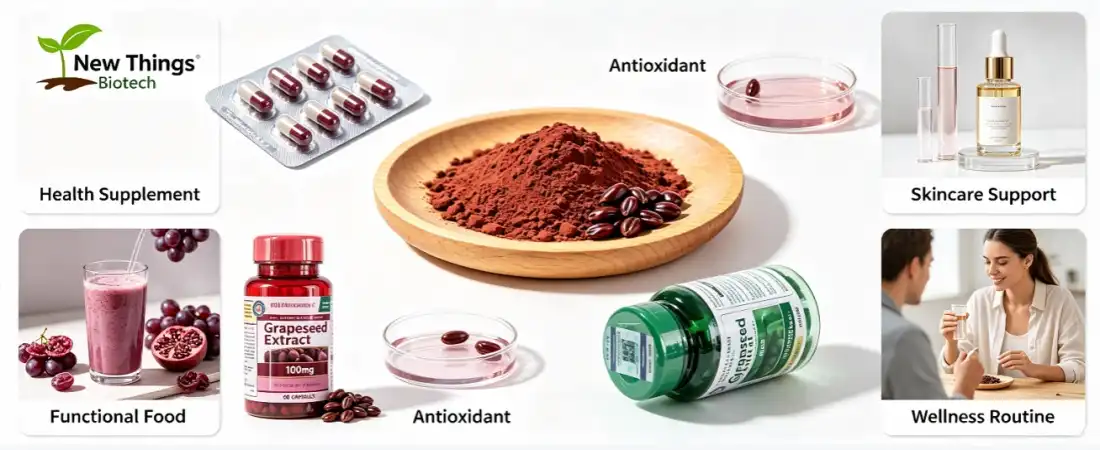
Grape extract excels here because properties only matter when they address a product issue. Grape seed extract 95% OPC is a strong product and a tiny quantity is possible, therefore additional actives may be included in capsules, gummies and sachets. A standardised extract of grape seed proanthocyanidins also dissolves and disperses reliably, which is useful to cosmetic chemists and beverage manufacturers alike. Brands use the oligomeric proanthocyanidins that grape seed contains to target four main markets: nutritional supplements, functional foods, cosmetic and animal nutrition. We go through each one below so you can understand where your own idea can fit, and how other businesses are already putting the ingredient to work.
Supplements and Nutricosmetics
Capsules and tablets remain the classics, typically using 50–300 mg per day, while gummies and stick packs win younger shoppers. Beauty-from-within blends pair OPC with collagen or vitamin C for a skin-focused story. Planning a formula? Email info@newthingsbiotech.com with your dosage form and target market, and our team will recommend a grade and arrange samples.
Functional Foods and Beverages
A little dash of OPC adds antioxidant appeal to protein blends, teas, snack bars and ready-to-mix beverages. Even its natural reddish-brown colour is part of the tale, alerting health-conscious buyers to the potency of the plant.
Cosmetics and Skincare
Cosmetic chemists utilise grape seed polyphenols in anti-ageing serums, creams and masks, often at levels of between 0.2% and 2.0%, and claim they protect against environmental stress. Their protein binding profile is suited to firmness-centric goods.
Animal Nutrition and Beyond
The same antioxidant appeal promotes benefits for general wellbeing in pet supplements and feed premixes. Typical starting positions for all four categories are shown in Table 3.
Table 3. Typical Applications and Use Levels
| Category | Typical Format | Typical Level |
|---|---|---|
| Dietary supplements | Capsules, tablets, gummies | 50–300 mg per day |
| Functional foods and drinks | Powder blends, shots, sachets | 50–150 mg per serving |
| Cosmetics | Serums, creams, masks | 0.2%–2.0% |
| Animal nutrition | Pet supplements, feed premix | Adjusted by formula |
Getting Practical: Dosing, Stability, and Smart Pairings
Knowing the applications is one thing, but generating consistent results in an actual formula is another. Grape seed extract 95% OPC is a polyphenol hence it prefers to be handled gently. Moderate temperatures, protection from light and air, and dry storage. Formulators that build in these fundamentals maintain colour and potency stable throughout shelf life. The good news is that a high grade grape seed proanthocyanidin extract makes this simple. Low moisture and a fine, homogeneous particle size. And since the oligomeric proanthocyanidins grape seed offers are powerful in tiny amounts, labels may remain clear, with fewer additives. Little choices made early on in development save weeks of effort later on.
Choosing a Starting Dose
Supplements usually include 50-300 mg of OPC per day, skincare 0.2%-2.0%, drinks 50-150 mg per dose. Confirm local regulatory restrictions and adapt after pilot testing.
Protecting Potency
Use opaque packaging, nitrogen flushing if possible and desiccants in bottles. Seal. Cool and dry powders. Avoid prolonged high heat when combining.
Smart Ingredient Pairings
OPC is a natural partner for vitamin C, collagen peptides, hyaluronic acid and CoQ10 in beauty and vitality mixes. These partners let marketers deliver a more layered narrative without complicating the formula.
Choosing a Supplier: What a Reliable OPC Partner Should Offer
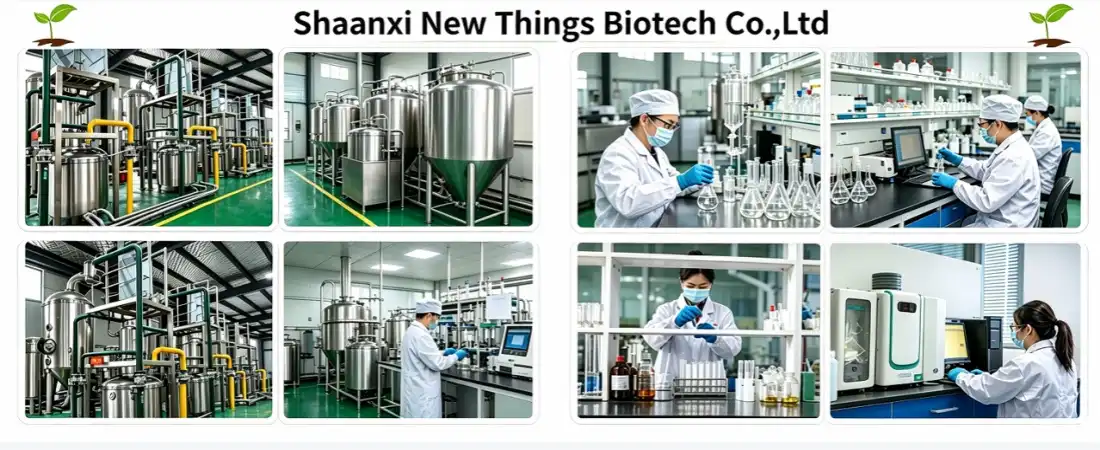
The most excellent ingredient will fall flat when the supply behind it is uneven. A trusted provider of grape seed extract 95% OPC will have the quality tested, documentation at the batch level and logistics to preserve your launch timetable. We are trained on data up to October 2023. NT Biotech parent business Shaanxi New Things Biotech combines autonomous planting, sophisticated R&D and intelligent manufacturing as a whole value chain so that our grape seed proanthocyanidin extract satisfies the same requirements from plant source to completed product. The oligomeric proanthocyanidins in grape seed are delicate thus our innovative extraction procedures are designed to maximise active production while assuring stability. At every stage demand evidence and utilise the factors below to assess any partner, including ourselves.
Quality Proof You Can Verify
We provide >98% purity on major standardised items and each batch is accompanied with HPLC/UV data and a Certificate of Analysis. ISO9001, KOSHER and HALAL certifications give entry to regulated and faith-sensitive markets.
Speed and Logistics
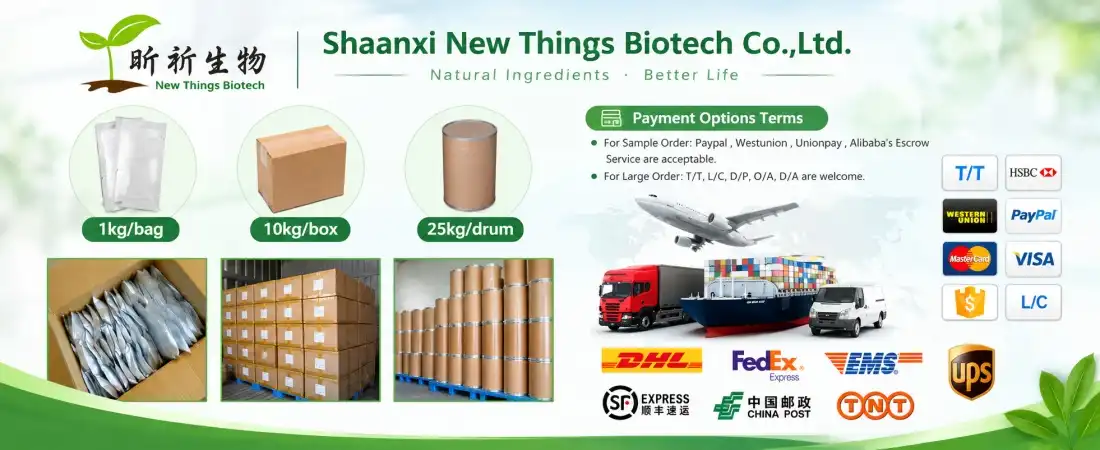
All enquiries will be answered within 2 hours. Stocked extracts ship within 1-3 working days and manufacturing orders take 3-10 working days. We transport samples using our FedEx and UPS accounts, and use reputable freight forwarders for big shipments by air or sea.
OEM Flexibility and Easy Payment
Each market has its own norms and preferences thus we offer OEM/ODM solutions suited to your specific nation with technical help on formulation and paperwork concerns. We offer payment in your local currency to make it easier to purchase.
Conclusion
Grape extract earns its reputation through a rare mix of science and versatility. Its oligomeric proanthocyanidins deliver antioxidant strength, protein-binding ability, and flexible formats that fit supplements, foods, cosmetics, and animal nutrition. Whether you need capsules, drinks, or serums, a standardized, well-documented extract keeps every launch on track. Success still depends on the partner behind the raw material. Shaanxi New Things Biotech is a trustworthy plant derivatives supplier, offering autonomous planting, advanced R&D, ISO9001, KOSHER, and HALAL certifications, rapid delivery, and flexible OEM solutions. Our technology-based approach connects plant source to product application, so each batch reflects the gift of nature and the commitment of science. Contact us today and develop your next product naturally and reliably with grape seed extract 95% opc.
FAQ
1. What does 95% OPC mean on a label?
It means the extract contains at least 95% oligomeric proanthocyanidins, typically measured by UV, which allows precise dosing.
2. Which properties make grape seed proanthocyanidin extract so useful?
Strong free radical scavenging, affinity for collagen and elastin, and consistent powder handling.
3. Where is grape seed extract 95% OPC used?
In supplements, functional foods and drinks, cosmetics, and animal nutrition.
4. How should OPC powder be stored?
Keep it sealed, cool, dry, and away from light and air.
5. How fast can NT Biotech deliver, and what documents come with each batch?
We reply within two hours, ship stock in 1–3 working days, and include a CoA and HPLC/UV data.
Start Your OPC Project With NT Biotech: Request a Free Sample Today!
Ready to put grape extract to work in your next product? NT Biotech supplies grape seed extract 95% OPC backed by proprietary extraction, purity above 98% on key standardized products, and full HPLC/UV documentation. Whether you are formulating capsules, gummies, drinks, or skincare, our specialists will match the right grade to your concept and share the documents your quality team needs. Choose stock shipments in 1–3 working days, production orders in 3–10 working days, or a custom OEM/ODM solution built around your market. Our team replies within two hours and accepts payment in your local currency. Send your target specifications, quantities, and destination market to info@newthingsbiotech.com today, and let us help your brand launch with confidence.
References
1. Shi, J., Yu, J., Pohorly, J. E., & Kakuda, Y. (2003). Polyphenolics in grape seeds—biochemistry and functionality. Journal of Medicinal Food, 6(4), 291–299.
2. Bagchi, D., Bagchi, M., Stohs, S. J., Das, D. K., Ray, S. D., Kuszynski, C. A., Joshi, S. S., & Pruess, H. G. (2000). Free radicals and grape seed proanthocyanidin extract: Importance in human health and disease prevention. Toxicology, 148(2–3), 187–197.
3. Cos, P., De Bruyne, T., Hermans, N., Apers, S., Berghe, D. V., & Vlietinck, A. J. (2004). Proanthocyanidins in health care: Current and new trends. Current Medicinal Chemistry, 11(10), 1345–1359.
4. Feringa, H. H. H., Laskey, D. A., Dickson, J. E., & Coleman, C. I. (2011). The effect of grape seed extract on cardiovascular risk markers: A meta-analysis of randomized controlled trials. Journal of the American Dietetic Association, 111(8), 1173–1181.
5. Yamakoshi, J., Sano, A., Tokutake, S., Saito, M., Kikuchi, M., Kubota, Y., & Kawachi, Y. (2004). Oral intake of proanthocyanidin-rich extract from grape seeds improves chloasma. Phytotherapy Research, 18(11), 895–899.
6. Rasmussen, S. E., Frederiksen, H., Struntze Krogholm, K., & Poulsen, L. (2005). Dietary proanthocyanidins: Occurrence, dietary intake, bioavailability, and protection against cardiovascular disease. Molecular Nutrition & Food Research, 49(2), 159–174.