- English
- French
- German
- Portuguese
- Spanish
- Russian
- Japanese
- Korean
- Arabic
- Greek
- German
- Turkish
- Italian
- Danish
- Romanian
- Indonesian
- Czech
- Afrikaans
- Swedish
- Polish
- Basque
- Catalan
- Esperanto
- Hindi
- Lao
- Albanian
- Amharic
- Armenian
- Azerbaijani
- Belarusian
- Bengali
- Bosnian
- Bulgarian
- Cebuano
- Chichewa
- Corsican
- Croatian
- Dutch
- Estonian
- Filipino
- Finnish
- Frisian
- Galician
- Georgian
- Gujarati
- Haitian
- Hausa
- Hawaiian
- Hebrew
- Hmong
- Hungarian
- Icelandic
- Igbo
- Javanese
- Kannada
- Kazakh
- Khmer
- Kurdish
- Kyrgyz
- Latin
- Latvian
- Lithuanian
- Luxembou..
- Macedonian
- Malagasy
- Malay
- Malayalam
- Maltese
- Maori
- Marathi
- Mongolian
- Burmese
- Nepali
- Norwegian
- Pashto
- Persian
- Punjabi
- Serbian
- Sesotho
- Sinhala
- Slovak
- Slovenian
- Somali
- Samoan
- Scots Gaelic
- Shona
- Sindhi
- Sundanese
- Swahili
- Tajik
- Tamil
- Telugu
- Thai
- Ukrainian
- Urdu
- Uzbek
- Vietnamese
- Welsh
- Xhosa
- Yiddish
- Yoruba
- Zulu
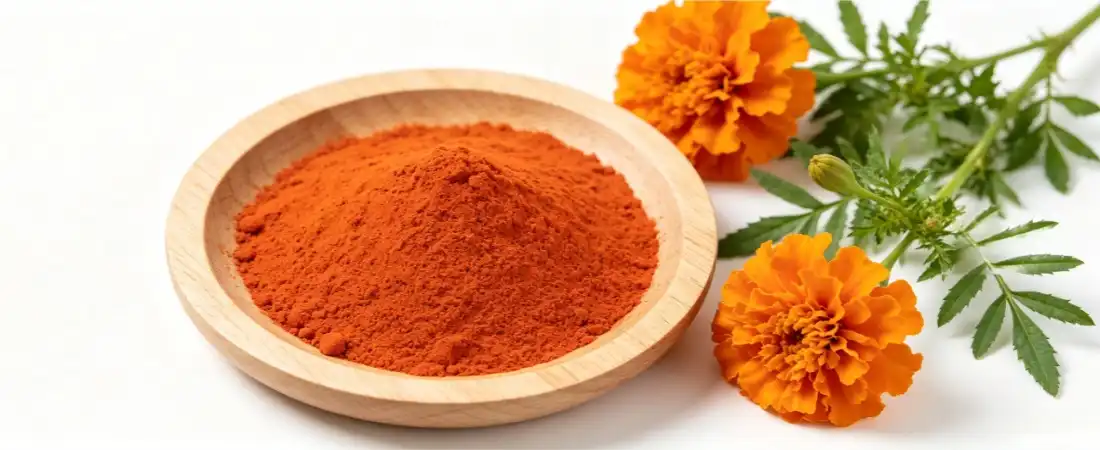
The global functional food and drink market is going through a huge change because health-conscious customers want goods that are easy to use every day and also help their health in specific ways. Lutein is one of the most important eye-healthy ingredients, but industrial food processors have a hard time working with traditional, raw carotenoid extracts because they easily oxidise, react badly to heat, and don't like water. This is exactly how microencapsulated lutein powder has changed modern food science, making it possible to add vitamins without any problems in a wide range of wet, hot, and dry conditions. NT Biotech (Shaanxi New Things Biotech), a leader in plant extraction and advanced delivery systems, offers high-quality microencapsulated lutein powder that gets around these old processing problems. NT Biotech uses advanced microencapsulation technology and its own special extraction methods to make highly standardised beadlet powders (like 5%, 10%, and 20% grades) that guarantee active compound yields above 98% purity, better shelf-life stability, and perfect dispersion. These powders give food brand owners an unbeatable competitive edge in developing clean-label functional products.
The Technological Bridge: Why Food Manufacturers Need Microencapsulated Lutein
Before you can understand why enriched foods have become so popular, you need to look at the physical science that has kept lutein in oil-filled softgel pills for a long time. Knowing how microencapsulated lutein powder solves these basic physical problems helps us understand why big food companies now see it as an important raw material for their new products.
Overcoming Native Lutein's Physical and Chemical Weaknesses
Specifically taken from marigold flowers (Tagetes erecta), crystalline lutein is naturally lipophilic, which means it dissolves easily in fats but completely repels water. When lutein extract that hasn't been made is added to drinks, doughs, or cheese bases, it leaves behind oily spots, floats to the top, or makes heavy sediment at the bottom of the box. Also, unprocessed xanthophyll carotenoids have a conjugated double-bond backbone that makes them very vulnerable to thermal degradation during pasteurisation, photo-oxidation under store lighting, and oxidation from oxygen in the air. By using lutein powder that is microencapsulated, food makers can protect this sensitive nutrient by putting it inside a wall structure. This gets rid of problems with physical separation, stops flavour interactions that aren't needed, and keeps the active molecule from getting damaged during normal food processing.
The Mechanism of Microencapsulation in Food Systems
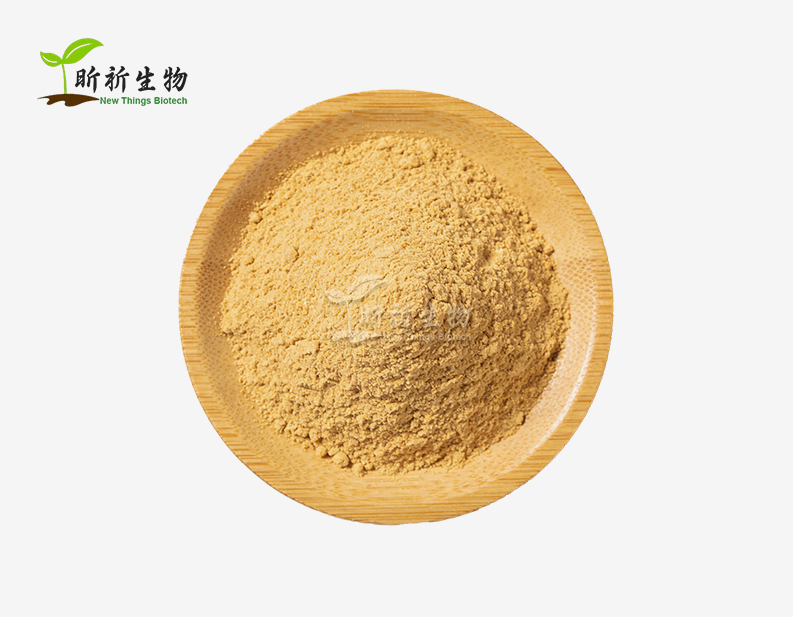
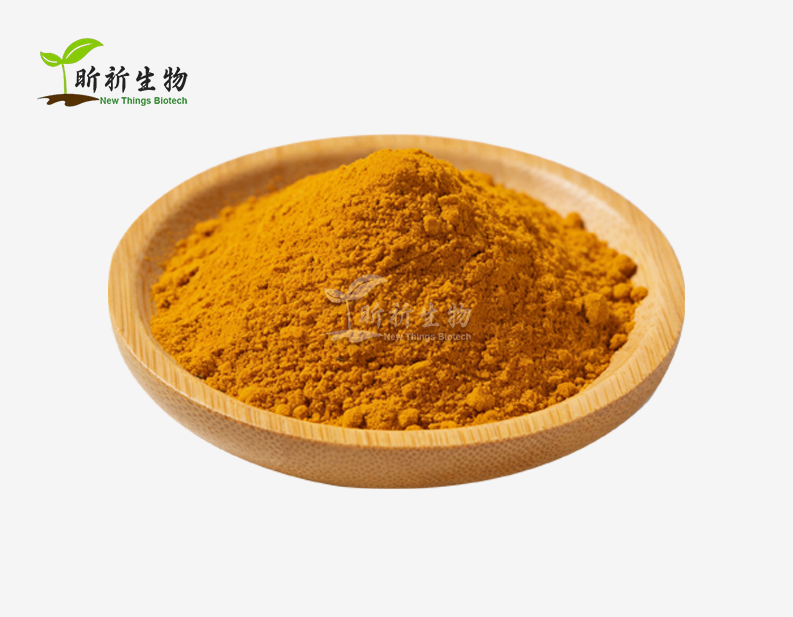
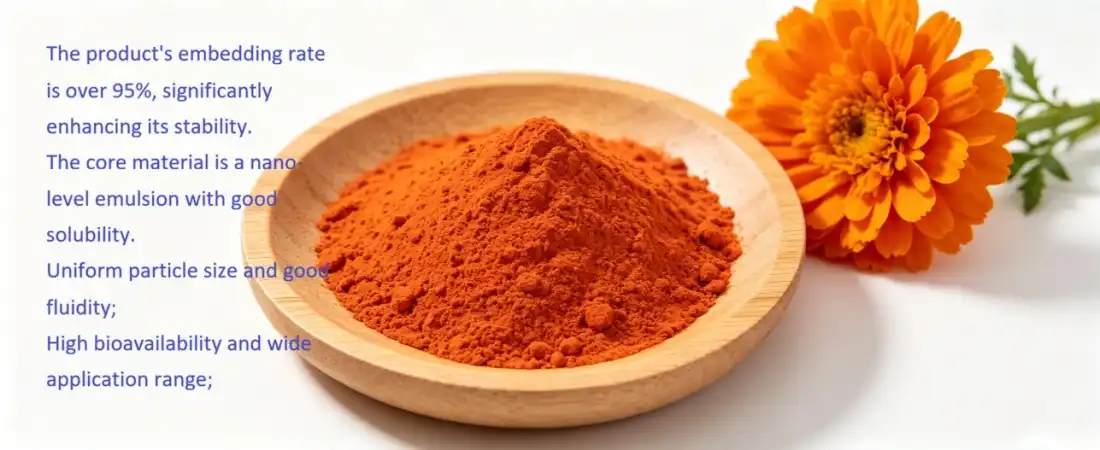
Microencapsulation changes delicate liquid oleoresins or highly pure crystalline carotenoids into tiny, solid beadlet structures that can flow freely. Using this special method, tiny lutein drops are mixed together and then put inside a water-loving shell made of carefully chosen food-grade hydrocolloids, starches, or proteins. The encapsulated core can't interact with reactive oxygen species, heavy metal ions, or light photons because of this microscopic barrier. The hydrophilic wall softens easily when added to water-based food preparations, letting the microencapsulated lutein powder spread evenly throughout the matrix without the need for harsh emulsifiers or complicated processing changes. NT Biotech uses advanced spray-granulation and double-shell microencapsulation methods that improve both the speed and safety of chemical reactions in a wide range of food system conditions.
Dual Advantage: Active Functional Nutrient and Clean-Label Colorant
In addition to its main biological role as a macular pigment and blue-light-filtering antioxidant, carotenoids from marigolds also give finished foods important taste benefits. When mixed into foods and drinks, microencapsulated lutein powder gives them a warm, attractive golden-yellow to rich amber colour. It is a great natural choice to manmade yellow dyes like FD&C Yellow No. 5 (Tartrazine) or Yellow No. 6. With a single standardised ingredient, food formulators can meet two consumer needs at the same time: functional vision support that has been tested and approved, and clean-label natural colouring that comes from real botanical sources. Because the active ingredient stays safely inside the microscopic carrier wall, it gives the product a bright, even colour that doesn't move around or fade quickly in store lighting. It also doesn't add any bitter botanical off-tastes.
Table 1: Physical and Chemical Comparison of Native vs. Microencapsulated Lutein in Food Manufacturing
| Processing Parameter | Native Lutein Oleoresin / Extract | Microencapsulated Lutein Powder |
|---|---|---|
| Water Dispersibility | Poor; floats, forms an oil slick, or precipitates | Excellent; rapid, homogeneous distribution in aqueous systems |
| Thermal Stability | Degrades rapidly above 60°C | High; withstands pasteurization, UHT, and baking cycles |
| Photo & Oxidative Resilience | Highly vulnerable to atmospheric oxygen and light | Protected by a hydrocolloid wall; significantly extended shelf retention |
| Food Matrix Compatibility | Strictly limited to fats, oils, and lipid matrices | Universal; compatible with drinks, dairy, confectionery, and dry mixes |
| Handling & Processing | Viscous, sticky oil; difficult to meter accurately | Free-flowing, dust-free powder; ideal for high-speed automated dosing |
| Flavor Impact | May impart subtle botanical off-notes | Complete flavor masking; sensory-neutral profile in finished foods |
Key Food and Beverage Application Pathways for Microencapsulated Lutein Powder
Because stabilised carotenoid beadlets can be used in a lot of different ways, commercial food makers can add useful vision support to almost every area of the grocery store. The important thing is to choose the right beadlet grade for the type of food you want to process based on its wetness, temperature, and structure.
Dairy Products and Plant-Based Alternatives
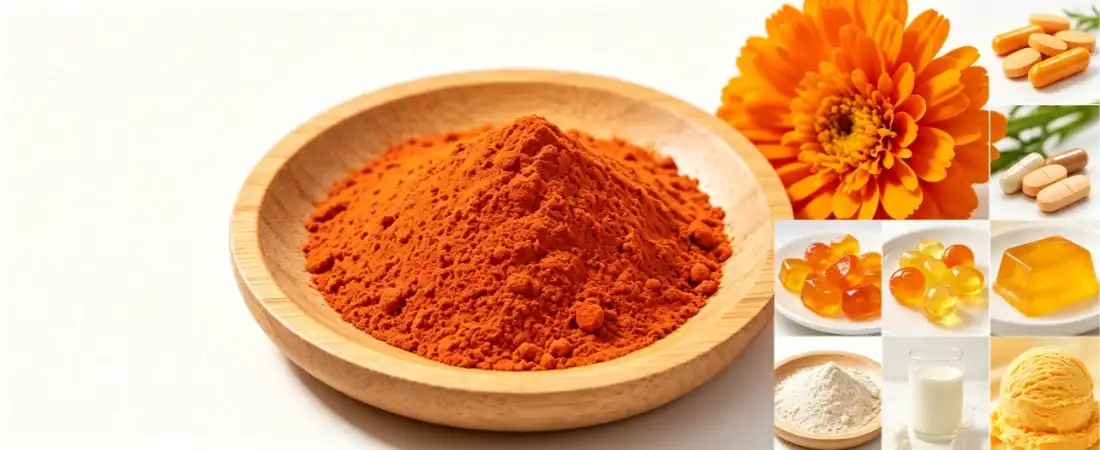
Microencapsulated lutein powder is now a popular way to add extra nutrition to dairy and plant-based drinks like milk, yoghurts, kefirs that can be drunk, and plant-based drinks made from oat, soy, or almond bases. When natural dairy products are homogenised, pasteurised, or treated with Ultra-High Temperature (UHT), adding raw carotenoids would cause them to lose their activity quickly and cause oil to separate in streaks. During the liquid mixing step before heat processing, microencapsulated powders mix smoothly. The lutein is protected by a tiny hydrocolloid wall during rapid pasteurisation cycles. The wall also keeps the active dose and golden colour during distribution in the fridge. Also, encapsulation completely hides the taste, so the clean, creamy taste of high-end dairy and plant-milk products stays the same.
Functional Beverages, Juices, and Dry Mixes
One of the fastest-growing areas of eye-health diet is liquid drinks, especially among students, digital workers, and e-sports fans who want to protect their eyes from blue light. Cold-water-dispersible (CWS) grades of microencapsulated lutein powder are used a lot in modern functional waters, cold-pressed fruit juices, sports hydration drinks, and instant powdered stick packs. When mixed with cold water or acidic juice, the micro-beadlets soften quickly and release fine, colloidal solutions that rise on top of the liquid without sticking or sinking to the bottom of clear bottles. For dry drink mixes, free-flowing beadlet powders make sure that water-soluble vitamins, minerals, and organic acidulants don't separate while being mixed with dry ingredients. This makes sure that when the end user dissolves each single-serve packet, it gives them the exact dose that is written on the label.
Confectionery, Gummies, and Baked Goods
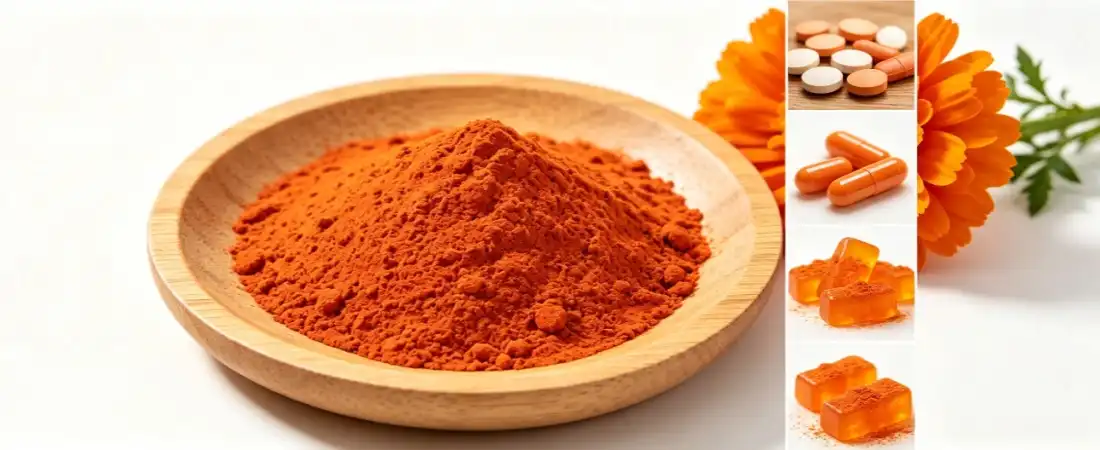
Functional confectionery, which includes chewable supplements and gummies made from pectin or gelatine, needs ingredients that can withstand high temperatures, being shaped, and being mixed with acid. Microencapsulated lutein powder works really well in these conditions because it keeps its shell structure even when it's exposed to high temperatures and low pH fruit mixtures. In the same way, encapsulated carotenoids can handle high temperatures inside an oven without burning or going bad in commercial baking products like nutrient-dense breakfast bars, fortified cookies, and enriched grain snacks. The strong microencapsulated shell structure ensures that the functional vision benefit lasts through the high temperatures of production and months of storage at room temperature.
To discover how these technological advantages can elevate your formulation pipeline, food developers can request custom beadlet samples, specification sheets, and trial batch documentation directly from our technical team by contacting info@newthingsbiotech.com. As a dedicated partner in botanical extraction, NT Biotech offers responsive engineering guidance to help match the ideal microencapsulated lutein powder grade to your specific food processing parameters.
Formulation Guidelines and Process Optimization in Food Production
Adding active plant ingredients to large-scale production requires careful recipe development, following the right order-of-addition rules, and thorough quality control testing. Formulators have to look at outdoor stress factors to get the best end yield and make sure that the label claims are completely true.
Managing Thermal Processing, Shear, and Storage Conditions
Microencapsulation makes things more durable than forms that aren't enclosed, but the best way to make industrial food is to still make the most of mechanical shear and heat exposure. In liquid operations, microencapsulated lutein powder should be mixed with a small amount of room-temperature water first, if possible, before being added to the main batch mixing tanks. Too much high-shear homogenization or long periods of high-speed, high-energy milling can damage protective hydrocolloid shells. To fix this, it is suggested to add something after harsh shear passes or adjust the homogenization pressures. To make the retention rate of active lutein in enhanced commercial goods much better over a period of months, lower the amount of dissolved oxygen in liquid packaging by washing it with nitrogen, and choose barrier packaging that blocks ultraviolet light.
Standardized Grade Selection for Specific Food Matrices
It is important to pick the right standardisation strength so that formulation weight budgets, cost-in-use measures, and process costs can all be met. A grade of 5% microencapsulated lutein powder is often chosen for functional foods that need to have a wide range of colours, a light yellow tint, or low active doses per serving size, like dairy drinks and daily breakfast cereals. Instead, 10% and 20% beadlet grades work best in high-potency functional chewables, compressed nutrition tablets, or compact nutrition bars. This is because space is limited and the most active lutein needs to be added without changing the texture of the main food base. When food engineers choose a standard, HPLC-verified material, they can do exact overage calculations, usually only needing small margin changes to make sure the test works perfectly throughout the product's shelf life.
Achieving Dose Uniformity and Label Transparency
Consumers will only trust a brand if it is consistent from batch to batch and strictly follows the regulatory nutrient facts panel numbers that are stated. Since microencapsulated beadlets are made with very specific particle sizes in mind, they have a consistent bulk density and great particle distribution. Gravitational segregation can't happen when there is physical regularity during air transfer, industrial dry mixing, or high-speed hoppers feeding packing equipment. High-performance liquid chromatography (HPLC) tests on finished food samples show that the microencapsulated lutein powder stays evenly distributed from the beginning of the batch to the end of the packaging runs. This level of technical accuracy protects brand owners from not following the rules set by regulators. It also gets rid of differences in the amount between customers and makes sure that clean-label claims are clear and can be defended in all foreign courts.
Table 2: Standardized Microencapsulated Lutein Grades & Food Category Compatibility Guide
| Ingredient Grade | Primary Functional Features | Recommended Food & Beverage Applications | Key Matrix Advantage |
|---|---|---|---|
| Lutein Beadlet Powder 5% (CWS) | Rapid cold-water dispersibility, delicate natural yellow tint | Ready-to-drink juices, sports drinks, dairy milks, flavored waters | Seamless liquid suspension without sedimentation or oil slicks |
| Lutein Beadlet Powder 10% | High mechanical stability, optimal density for dry blending | Functional gummies, chewable bars, infant cereals, dry drink mixes | Thermal protection during gummy cooking and baking processes |
| Lutein Beadlet Powder 20% | Concentrated active payload, minimal spatial footprint | Energy shots, high-potency functional snacks, compact food bars | Delivers high clinical dosage without adding bulk or altering mouthfeel |
| Custom OEM Beadlet Formulas | Tailored wall matrices (gelatin-free, vegan starch, sugar-free) | Special dietary foods, Kosher/Halal certified products, clean-label foods | Fulfills specific regional regulatory and lifestyle dietary requirements |
Sourcing Criteria: Evaluating Your Microencapsulated Lutein Powder Supplier
The honesty, technical skill, and governmental dependability of raw ingredient partners are directly linked to the final success of any functional food line. To find a good microencapsulated lutein powder provider, you need to look at their scientific skills, how open they are about agriculture, and how quickly they can handle your needs.
Field-to-Fork Traceability and Agricultural Standards
The best microencapsulated powder starts in the ground. Reliable sellers keep a close eye on their botanical farming supply chains and manage pure types of Tagetes erecta flowers from the time they are planted as seeds until they are harvested. Companies that grow their own crops and are vertically integrated make sure that pesticides, heavy metals, and industrial contaminants don't get into the marigold blooms. A company that sells advanced microencapsulated lutein powder can make sure that the chemicals in each batch are the same before they are even encapsulated. They do this by controlling the farming inputs, the time of the harvest, and the initial oleoresin processing. This full traceability from the field to the fork gives commercial food buyers clear proof that every batch of raw materials meets global food safety standards and ethical sourcing requirements.
Comprehensive Regulatory Documentation and Certifications
To get around the rules for food safety around the world, you need to get full, batch-specific lab tests and internationally recognised food safety certifications. A thorough Certificate of Analysis (CoA) must be included with every shipment as required by the seller. The CoA must include exact HPLC test measurements, heavy metal limits, leftover solvent screening, and microbial safety panels. Also, big food companies around the world need quality management certifications like ISO9001, as well as KOSHER and HALAL certifications, so they can sell their products to people from all over the world who have different cultural backgrounds. A reliable supplier is completely open and honest, giving customer quality assurance teams easy access to chromatographic reports, allergen statements, and non-GMO compliance certificates before they buy commercially.
Supply Chain Agility, Lead Times, and Technical Partnerships
Supply chain flexibility and technology response can mean the difference between a project being late and a product launch going well in markets that change quickly. A good ingredient maker is more than just a supplier; they're also a long-term technical partner that can offer OEM solutions, help with applications, and flexible transportation support. Production lines never stop because of quick responses (like promises to answer questions within two hours) and reliable stocking of standard grades. As well, food companies can easily increase production while keeping operational freight costs low, thanks to a variety of shipping options, such as fast factory-direct courier direct shipment for samples and direct sea and air bulk freight managed by trusted logistics partners.
Conclusion
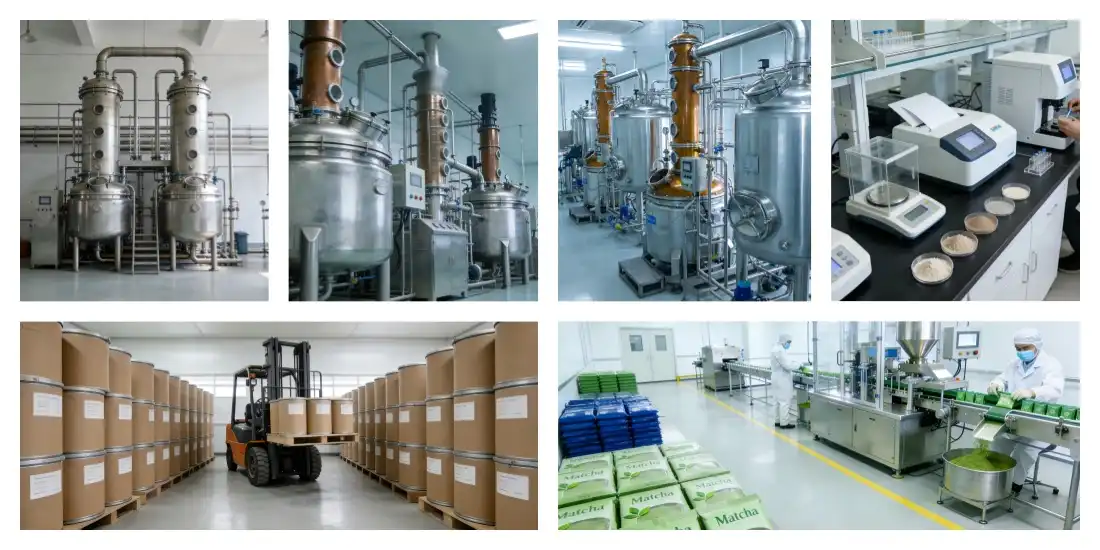
No longer is it hard to make functional foods and drinks that are good for your eyes because of new encapsulation technologies. Using microencapsulated lutein powder fills in the gap between fragile, fat-soluble marigold carotenoids and high-speed watery food processing. It provides better oxidative stability, clean-label colour appeal, and even distribution. Shaanxi New Things Biotech is a reliable company that sells plant-based products and is dedicated to driving innovation in the nutrition markets around the world. NT Biotech provides clean, active, and safe raw materials that meet ISO9001, KOSHER, and HALAL standards. They do this by combining self-sufficient marigold growing with cutting-edge research and development, smart production, and flexible supply chains. When you work with a vertically integrated specialist, you can be sure that your next food creation will be a mix of the best things about nature and the strict rules of modern science.
FAQ
Q1: Why is microencapsulated lutein powder preferred over raw lutein oleoresin in beverage production?
A: Microencapsulated powder disperses uniformly in aqueous systems without creating oil rings or settling, while protecting the active compound against oxygen and light degradation.
Q2: Can microencapsulated lutein withstand thermal food processing like pasteurization and baking?
A: Yes, the protective hydrocolloid matrix shields the delicate carotenoid core against elevated temperatures used in UHT milk processing, pasteurization, and baking.
Q3: Does microencapsulated lutein powder change the flavor profile of fortified foods?
A: No, advanced encapsulation provides complete flavor masking, ensuring that the natural taste of dairy, beverage, or confectionery products remains completely unaltered.
Q4: What certifications back NT Biotech’s microencapsulated lutein products?
A: NT Biotech’s products meet strict global standards backed by ISO9001 quality management as well as recognized KOSHER and HALAL certifications.
Q5: What is the typical lead time and availability for commercial orders?
A: Standardized stock inventory ships within 1–3 working days, while custom production orders typically require 3–10 working days, backed by a 2-hour inquiry response guarantee.
Partner With NT Biotech: Elevate Your Food Products Today
Ready to transform your functional food and beverage formulations with high-stability, clean-label eye-health ingredients like microencapsulated lutein powder? NT Biotech is ready to serve as your long-term technical partner. Whether you require standard CWS beadlets for beverage lines, high-density powders for functional confectionery, or customized OEM/ODM solutions tailored to regional regulatory requirements, our expert team is committed to advancing your product development efficiently and reliably.
Benefit from our rapid 2-hour initial inquiry response, verified HPLC quality documentation, competitive direct-from-factory logistics, and flexible local currency payment solutions. Reach out to our technical specialists today at info@newthingsbiotech.com to request product samples, specification sheets, and competitive bulk quotes. Let NT Biotech power your next functional food success naturally and reliably!
References
1. Age-Related Eye Disease Study 2 (AREDS2) Research Group. "Lutein + Zeaxanthin and Omega-3 Fatty Acids for Age-Related Macular Degeneration: The AREDS2 Randomized Clinical Trial." JAMA, 2013.
2. Abdel-Aal, E.-S.M.; Akhtar, H.; Zaheer, K.; Ali, R. "Dietary Sources of Lutein and Zeaxanthin Carotenoids and Their Role in Eye Health." Nutrients, 2013.
3. Boon, C.S.; McClements, D.J.; Weiss, J.; Decker, E.A. "Factors Influencing the Chemical Stability of Carotenoids in Foods." Critical Reviews in Food Science and Nutrition, 2010.
4. Buscemi, S.; Corleo, D.; Di Pace, F.; Petroni, M.L.; Satriano, A.; Marchesini, G. "The Effect of Lutein on Eye and Extra-Eye Health." Nutrients, 2018.
5. Ranard, K.M.; Jeon, S.; Mohn, E.S.; Griffiths, J.C.; Johnson, E.J.; Erdman, J.W. "Dietary Guidance for Lutein: Consideration for Intake Recommendations Is Scientifically Supported." European Journal of Nutrition, 2017.
6. Granado-Lorencio, F.; Olmedilla-Alonso, B.; Herrero-Barbudo, C.; Blanco-Navarro, I.; Pérez-Sacristán, B.; Blázquez-García, S. "In Vitro Bioaccessibility of Lutein and Zeaxanthin from Commercially Available Food Formulations." Journal of Agricultural and Food Chemistry, 2009.