- English
- French
- German
- Portuguese
- Spanish
- Russian
- Japanese
- Korean
- Arabic
- Greek
- German
- Turkish
- Italian
- Danish
- Romanian
- Indonesian
- Czech
- Afrikaans
- Swedish
- Polish
- Basque
- Catalan
- Esperanto
- Hindi
- Lao
- Albanian
- Amharic
- Armenian
- Azerbaijani
- Belarusian
- Bengali
- Bosnian
- Bulgarian
- Cebuano
- Chichewa
- Corsican
- Croatian
- Dutch
- Estonian
- Filipino
- Finnish
- Frisian
- Galician
- Georgian
- Gujarati
- Haitian
- Hausa
- Hawaiian
- Hebrew
- Hmong
- Hungarian
- Icelandic
- Igbo
- Javanese
- Kannada
- Kazakh
- Khmer
- Kurdish
- Kyrgyz
- Latin
- Latvian
- Lithuanian
- Luxembou..
- Macedonian
- Malagasy
- Malay
- Malayalam
- Maltese
- Maori
- Marathi
- Mongolian
- Burmese
- Nepali
- Norwegian
- Pashto
- Persian
- Punjabi
- Serbian
- Sesotho
- Sinhala
- Slovak
- Slovenian
- Somali
- Samoan
- Scots Gaelic
- Shona
- Sindhi
- Sundanese
- Swahili
- Tajik
- Tamil
- Telugu
- Thai
- Ukrainian
- Urdu
- Uzbek
- Vietnamese
- Welsh
- Xhosa
- Yiddish
- Yoruba
- Zulu
Here is a paradox that frustrates nutrition scientists and delights engineers: lutein is one of the most important nutrients for human vision, yet in its natural state, it is remarkably bad at surviving the journey from factory to eye. Heat degrades it, oxygen oxidizes it, light breaks it down, and its fat-soluble nature limits where it can even be used. The breakthrough that changed everything is microencapsulated lutein powder — a format in which marigold-derived lutein is sealed inside microscopic protective spheres, transforming a fragile carotenoid into a stable, versatile ingredient that actually delivers on its eye-health promise. But how exactly does this technology work, and why does it matter so much for the quality of vision supplements? This article traces the complete story: the science of lutein's role in the eye, the engineering that protects it, and the manufacturing discipline that determines whether protection survives to the final dose. As our benchmark, we will reference NT Biotech (Shaanxi New Things Biotech), whose microencapsulated lutein powder is standardized across grades from 5% to 20%, verified by HPLC/UV on every batch, produced through proprietary extraction, achieving purity above 98% on key products, and backed by ISO9001, KOSHER, and HALAL certifications with a Certificate of Analysis accompanying every shipment.
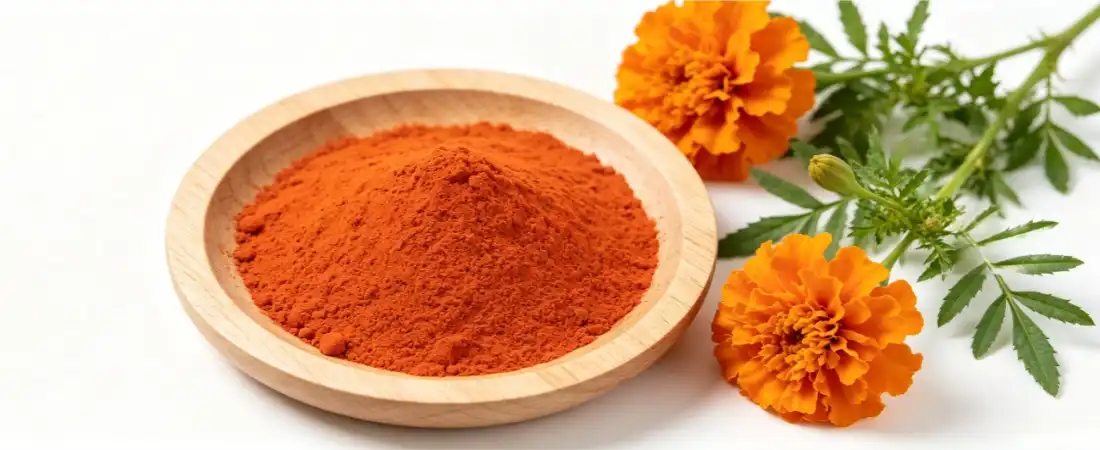
First, the Science: Why Your Eyes Depend on Lutein
Before appreciating what microencapsulation protects, it helps to understand what is at stake. Lutein is not just another antioxidant — it is a structural component of healthy vision, concentrated precisely where your eyes need it most.
The Macula's Golden Guardian
Deep inside your retina sits the macula, a small region responsible for the sharp central vision you use to read, drive, and recognize faces. Remarkably, this tissue concentrates lutein to levels far higher than anywhere else in the body, forming what scientists call the macular pigment. This pigment performs a task no other nutrient can replicate: it absorbs high-energy blue light — the wavelengths emitted most intensely by digital screens and modern lighting — before that light can stress the delicate photoreceptor cells beneath. Think of it as a pair of sunglasses built into the architecture of the eye itself. Because the human body cannot synthesize lutein, this protective pigment depends entirely on dietary intake, which is why microencapsulated lutein powder has become such a critical ingredient: it delivers the raw material your macula needs, in a form designed to arrive intact.
Antioxidant Defense Where It Matters Most
Light filtering is only half of lutein's contribution. The retina is among the most metabolically active tissues in the human body, and its constant exposure to light and oxygen generates free radicals — unstable molecules that gradually challenge cellular integrity. Lutein's molecular structure, a long chain of conjugated double bonds, makes it exceptionally effective at neutralizing these reactive compounds and quenching singlet oxygen. In essence, the same pigment that shields marigold petals from harsh sunlight in the field goes on to defend retinal cells in the human eye. Landmark clinical research, including the AREDS2 trial, has established lutein as a cornerstone nutrient in macular health strategies, transforming it from a botanical curiosity into one of the most scientifically validated ingredients in the entire supplement industry.
The Delivery Dilemma: A Nutrient That Degrades Before It Delivers
Here is where the story takes its engineering turn. The very properties that make lutein effective — its light-reactive, oxygen-quenching molecular structure — also make it unstable outside the body. Exposed to heat during tablet compression, oxygen during storage, or light on a retail shelf, unprotected lutein steadily degrades. A capsule labeled "10 mg lutein" may deliver considerably less by the time it reaches the consumer, and fat-soluble raw lutein resists use in the water-based formats modern consumers prefer. The gap between lutein's promise and its practical delivery is precisely the problem that microencapsulated lutein powder was invented to solve — and the quality of that solution determines whether eye-health products fulfill their purpose or merely claim it.
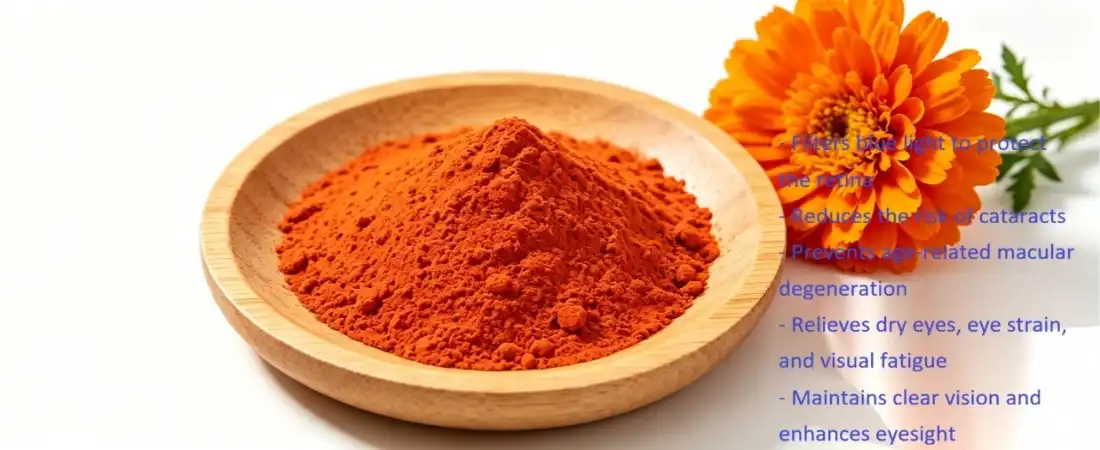
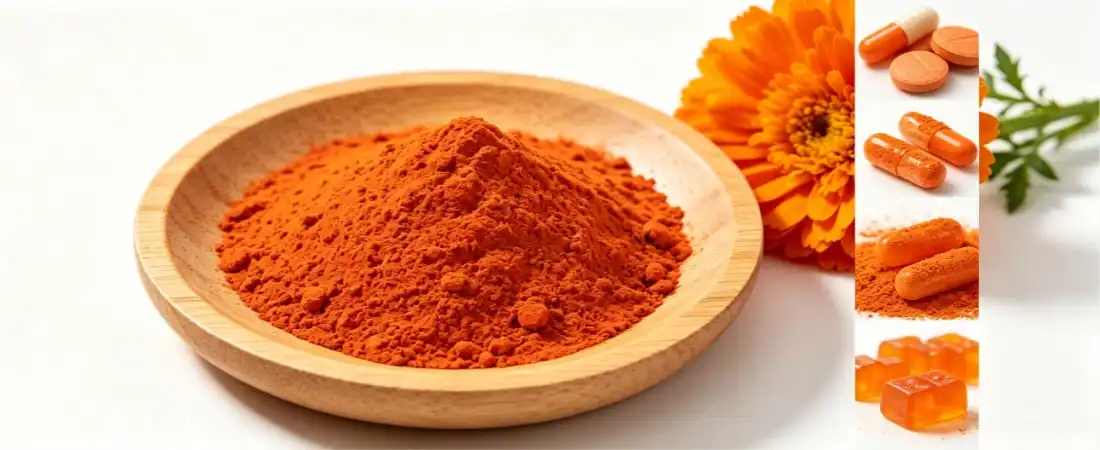
The Engineering Solution: How Microencapsulation Protects and Delivers
Microencapsulation is where food science becomes molecular architecture. By wrapping each lutein particle in a purpose-built protective shell, the technology converts lutein's weaknesses into strengths — and understanding this process reveals why not all encapsulated products perform equally.
Building a Microscopic Shield Around Every Particle
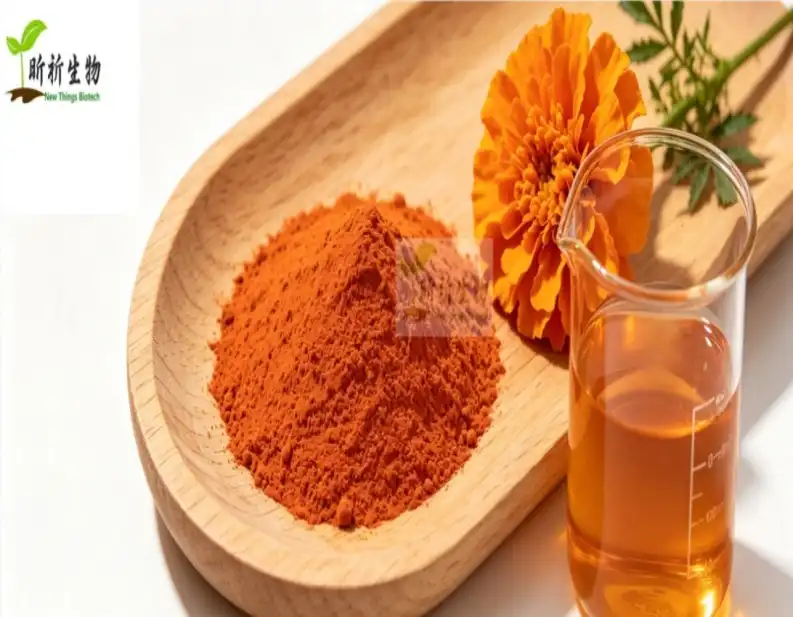
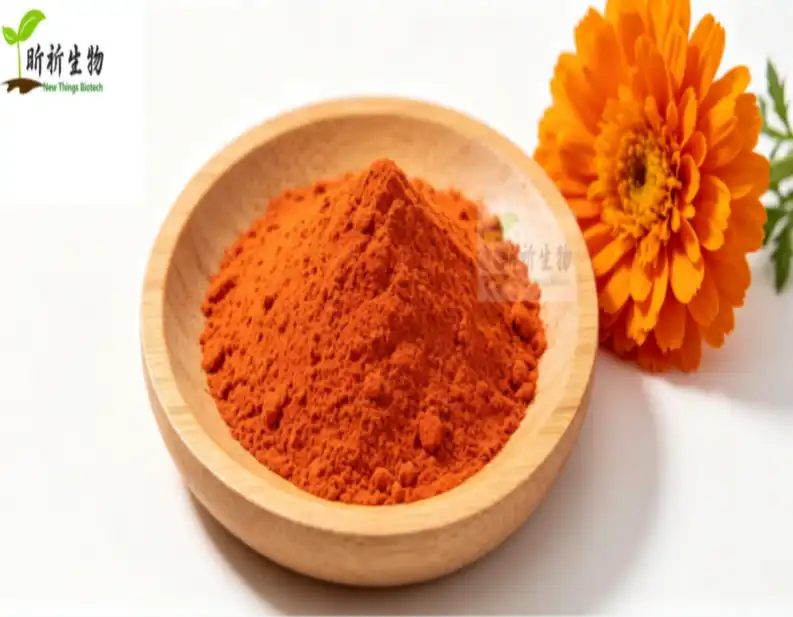
In the microencapsulation process, purified lutein — extracted from the petals of Tagetes erecta, the marigold flower — is dispersed at a microscopic scale and embedded within a protective matrix of food-grade wall materials, typically built from gelatin, starch, or plant-based alternatives. The mixture is then formed into uniform beadlets or fine particles and dried into a free-flowing powder. Each particle functions as an independent vault: the wall material blocks oxygen and light, the spherical or uniform geometry minimizes exposed surface area, and the lutein inside remains sealed until the moment of release. NT Biotech approaches this as an integrated discipline, pairing proprietary extraction methods that maximize the yield of active compounds with encapsulation engineering designed for superior stability. When both capabilities live under one roof, the resulting microencapsulated lutein powder carries protection that is designed in, not added on.
Stability That Survives the Real World
The true test of encapsulation is not the laboratory — it is the supply chain. Quality microencapsulated lutein powder endures the heat of tablet compression, the moisture and cooking cycles of gummy manufacturing, months of ambient warehouse storage, and long international freight journeys, emerging with its verified potency intact. For brands, this resilience translates into smaller overages, longer confident shelf lives, and stability studies that pass with a margin to spare. For consumers, it means something simpler and more important: the dose on the label is the dose in the capsule, on the last day of shelf life, as surely as the first. When NT Biotech verifies every batch by HPLC/UV and ships it with a Certificate of Analysis, that documentation represents potency engineered to survive — a claim cheaper, loosely encapsulated alternatives routinely fail to sustain.
Format Freedom: One Ingredient, Every Dosage Form
Microencapsulation does more than protect — it liberates. Free-flowing, dust-free microencapsulated lutein powder behaves beautifully on high-speed production lines, blending homogeneously with vitamins, minerals, and excipients so that every tablet, capsule, or gummy carries a uniform dose. Depending on the wall system, encapsulated lutein can serve hard capsules, compressed tablets, chewables, gummies, powdered drink mixes, and fortified foods — formats that unprotected, fat-soluble lutein either tolerates poorly or cannot enter at all. This versatility lets brands build entire eye-health product families around a single qualified ingredient, accelerating line extensions and simplifying supply chains. The format freedom that consumers experience as convenient gummies and on-the-go stick packs begins, invisibly, inside the encapsulation matrix.
Table 1: Microencapsulated Lutein Powder vs. Unprotected Lutein — What the Technology Delivers
| Performance Dimension | Microencapsulated Lutein Powder | Conventional Unprotected Lutein |
|---|---|---|
| Resistance to oxidation | Excellent — sealed protective matrix | Poor — direct exposure degrades potency |
| Stability through processing | Survives compression, gummy cooking, and blending | Significant losses during manufacturing |
| Shelf-life performance | Potency retained to expiry | Requires large overages to compensate |
| Flowability & handling | Free-flowing, dust-free, uniform | Dusty, prone to caking and segregation |
| Dose uniformity | Homogeneous distribution in blends | Variable dosing between units |
| Format versatility | Capsules, tablets, gummies, drink mixes | Limited to oil-based or simple formats |
| Typical standardized grades | 5%, 10%, 20% (HPLC/UV verified) | Often unstandardized or inconsistent |
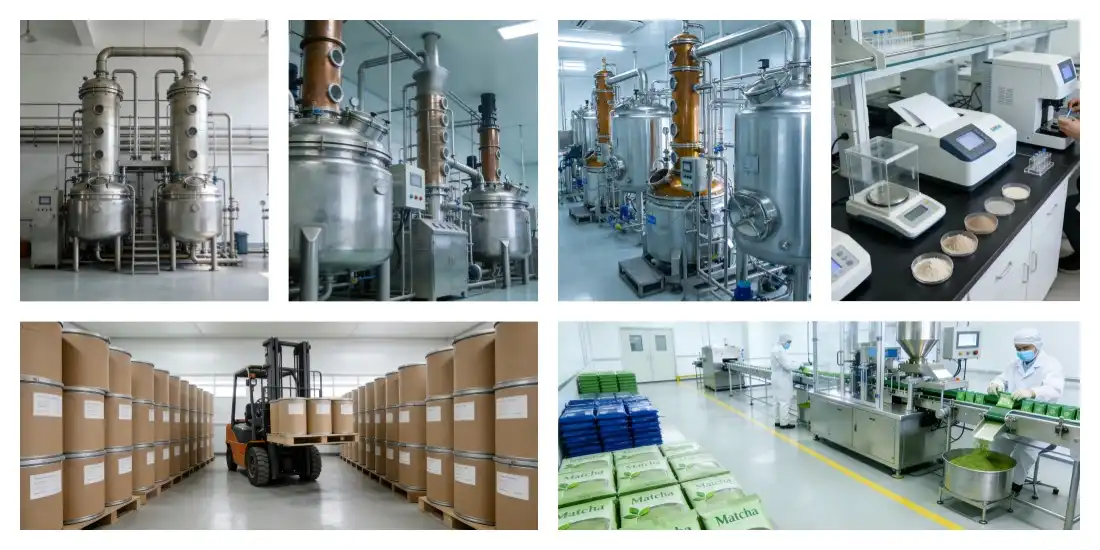
The Partner Behind the Powder: Why Manufacturing Depth Determines Eye-Health Outcomes
Technology alone does not guarantee quality — execution does. The difference between microencapsulated lutein powder that protects vision health and powder that merely claims to lie in the manufacturer's control over every stage, from the marigold field to the finished drum.
From Autonomous Fields to Intelligent Production
NT Biotech operates a complete value chain that begins in its own autonomous marigold planting bases, where cultivation timing and harvest conditions are optimized for carotenoid content, and extends through state-of-the-art research and development, intelligent production, and adaptive supply chains. This vertical integration means the lutein inside every encapsulated particle is cultivated, extracted, and protected under one quality system — not purchased on the spot market and repackaged. The company's proprietary processing achieves purity above 98% on its key standardized products, and every batch of microencapsulated lutein powder can be traced back to the field where its journey began. For brands facing retailer audits or regulatory filings, that unbroken chain of custody transforms traceability from a marketing phrase into a documented, defensible fact.
Documentation and Certification: The Proof Behind the Promise
In eye-health nutrition, trust is built on paper as much as on chemistry. A credible microencapsulated lutein powder supplier provides comprehensive documentation as standard practice: a Certificate of Analysis with every batch, covering assay, heavy metals, microbiological parameters, and physical characteristics, supported by HPLC/UV chromatographic evidence. Certifications complete the foundation — ISO9001 for disciplined quality management, plus KOSHER and HALAL credentials that open global markets from North America to the Middle East and Southeast Asia. NT Biotech maintains all three and attaches full documentation to every lot it ships. The most direct way to evaluate this standard is simply to test it: send your target grade, application, and destination market to info@newthingsbiotech.com, and NT Biotech guarantees an initial reply within two hours, complete with specification sheets, sample support, and the technical files your quality team needs to begin meaningful evaluation.
Service That Keeps Eye-Health Innovation Moving
Even the finest ingredient underperforms when the company behind it cannot deliver at the market's pace. NT Biotech's service structure is engineered for momentum: initial replies to all inquiries within two hours, guaranteed; inventory of popular standardized extracts held for shipment within 1–3 working days after order confirmation; and production orders completed within 3–10 working days — a cycle that already includes premium raw material procurement, proprietary extraction, stringent laboratory testing with batch CoA, and final packaging. Logistics flex to each order, with direct-from-factory delivery through the company's own FedEx/UPS accounts for urgent shipments and trusted freight forwarders for secure bulk cargo by air or sea. Customized OEM/ODM solutions adapt specifications and documentation to different countries, and payment is accepted in the buyer's local currency. This is what distinguishes a true microencapsulated lutein powder supplier from a vendor: every system is built around the customer's next launch.
Table 2: Evaluating a Microencapsulated Lutein Powder Supplier — The NT Biotech Benchmark
| Evaluation Criterion | What Buyers Should Require | NT Biotech Standard |
|---|---|---|
| Assay verification | Batch-specific HPLC/UV testing | Every batch verified, CoA included |
| Standardized grades | Multiple options for formulation needs | 5%, 10%, 20% beadlet grades |
| Purity capability | High active-content integrity | >98% on key products |
| Encapsulation quality | Engineered stability and uniformity | Proprietary protective processing |
| Certifications | Globally recognized credentials | ISO9001, KOSHER, HALAL |
| Traceability | Field-to-product chain of custody | Autonomous marigold planting bases |
| Inquiry response | Hours, not days | Within 2 hours, guaranteed |
| Delivery performance | Testable, transparent timelines | Stock: 1–3 days; production: 3–10 days |
| Buyer-friendly terms | Flexible international payment | Local-currency payment accepted |
Conclusion
Microencapsulated lutein powder bridges the gap between lutein's proven eye-health benefits and their reliable delivery. By sealing marigold-derived lutein inside protective microscopic spheres, the technology shields the macula's golden guardian from oxygen, heat, and light — preserving potency through manufacturing, shipping, and shelf life, while unlocking formats from capsules to gummies and drink mixes. Yet the technology only fulfills its promise through manufacturing excellence. NT Biotech delivers that excellence: autonomous marigold cultivation, proprietary extraction and encapsulation, purity above 98% on key products, batch-level HPLC/UV verification, triple international certification, and two-hour responsiveness. Better eye health begins with better protection — and better protection begins with the right partner.
FAQ
Q1: What is microencapsulated lutein powder?
A: It is marigold-derived lutein sealed inside microscopic, food-grade protective spheres — a format that shields the carotenoid from oxygen, heat, and light while enabling versatile supplement applications.
Q2: How does microencapsulation support eye health?
A: By preserving lutein's potency through manufacturing and shelf life, it ensures the dose on the label reaches the consumer — delivering the blue-light filtering and antioxidant support the macula depends on.
Q3: Which product formats can use this ingredient?
A: Capsules, tablets, gummies, chewables, powdered drink mixes, and fortified foods all benefit from its stability, flowability, and dose uniformity.
Q4: What grades does NT Biotech offer?
A: Standardized beadlet grades including 5%, 10%, and 20%, each verified by HPLC/UV with a Certificate of Analysis for every batch.
Q5: How quickly can orders be fulfilled?
A: Inquiries are answered within two hours; in-stock material ships within 1–3 working days, and production orders are completed within 3–10 working days.
Protect Every Dose, Empower Every Product — Contact NT Biotech Today
The science is clear: lutein protects vision, and microencapsulated lutein powder protects lutein. What remains is choosing a partner whose engineering, documentation, and service turn that protection into your product's promise. NT Biotech invites you to verify every claim — request batch Certificates of Analysis, time our two-hour response guarantee, or discuss your next eye-health formulation with our plant-extraction specialists. With standardized grades, proprietary encapsulation technology, ISO9001, KOSHER and HALAL certifications, flexible OEM/ODM solutions, and payment in your local currency, we are ready to support your vision from first sample to global scale. Email your specification or sample request to info@newthingsbiotech.com today — and let NT Biotech help you deliver better eye health, one protected particle at a time.
References
1. Age-Related Eye Disease Study 2 (AREDS2) Research Group. "Lutein + Zeaxanthin and Omega-3 Fatty Acids for Age-Related Macular Degeneration: The AREDS2 Randomized Clinical Trial." JAMA, 2013.
2. Abdel-Aal, E.-S.M.; Akhtar, H.; Zaheer, K.; Ali, R. "Dietary Sources of Lutein and Zeaxanthin Carotenoids and Their Role in Eye Health." Nutrients, 2013.
3. Boon, C.S.; McClements, D.J.; Weiss, J.; Decker, E.A. "Factors Influencing the Chemical Stability of Carotenoids in Foods." Critical Reviews in Food Science and Nutrition, 2010.
4. Buscemi, S.; Corleo, D.; Di Pace, F.; Petroni, M.L.; Satriano, A.; Marchesini, G. "The Effect of Lutein on Eye and Extra-Eye Health." Nutrients, 2018.
5. Ranard, K.M.; Jeon, S.; Mohn, E.S.; Griffiths, J.C.; Johnson, E.J.; Erdman, J.W. "Dietary Guidance for Lutein: Consideration for Intake Recommendations Is Scientifically Supported." European Journal of Nutrition, 2017.
6. Stahl, W.; Sies, H. "Bioactivity and Protective Effects of Natural Carotenoids." Biochimica et Biophysica Acta, 2005.