- English
- French
- German
- Portuguese
- Spanish
- Russian
- Japanese
- Korean
- Arabic
- Greek
- German
- Turkish
- Italian
- Danish
- Romanian
- Indonesian
- Czech
- Afrikaans
- Swedish
- Polish
- Basque
- Catalan
- Esperanto
- Hindi
- Lao
- Albanian
- Amharic
- Armenian
- Azerbaijani
- Belarusian
- Bengali
- Bosnian
- Bulgarian
- Cebuano
- Chichewa
- Corsican
- Croatian
- Dutch
- Estonian
- Filipino
- Finnish
- Frisian
- Galician
- Georgian
- Gujarati
- Haitian
- Hausa
- Hawaiian
- Hebrew
- Hmong
- Hungarian
- Icelandic
- Igbo
- Javanese
- Kannada
- Kazakh
- Khmer
- Kurdish
- Kyrgyz
- Latin
- Latvian
- Lithuanian
- Luxembou..
- Macedonian
- Malagasy
- Malay
- Malayalam
- Maltese
- Maori
- Marathi
- Mongolian
- Burmese
- Nepali
- Norwegian
- Pashto
- Persian
- Punjabi
- Serbian
- Sesotho
- Sinhala
- Slovak
- Slovenian
- Somali
- Samoan
- Scots Gaelic
- Shona
- Sindhi
- Sundanese
- Swahili
- Tajik
- Tamil
- Telugu
- Thai
- Ukrainian
- Urdu
- Uzbek
- Vietnamese
- Welsh
- Xhosa
- Yiddish
- Yoruba
- Zulu
The global market for standardized plant extracts is large, competitive, and — if you have been sourcing for a while — occasionally frustrating. When it comes to grape seed extract 95 OPC, the gap between suppliers who genuinely deliver 95% oligomeric proanthocyanidin content and those who simply state it on a datasheet is wider than most buyers initially appreciate. NT Biotech has built its product program around closing that gap — with a Grape Seed Extract standardized to ≥95% OPC by UV assay confirmed through HPLC chromatography, produced through proprietary solvent-free extraction, and certified to ISO 9001, HALAL, and KOSHER standards. This guide provides a practical, honest framework for evaluating grape seed extract 95 OPC supplier options — and explains why the right choice is one of the most consequential decisions in your ingredient supply chain.
The Specification Sheet Is a Starting Point, Not a Guarantee
Why '95% OPC' Means Different Things from Different Suppliers
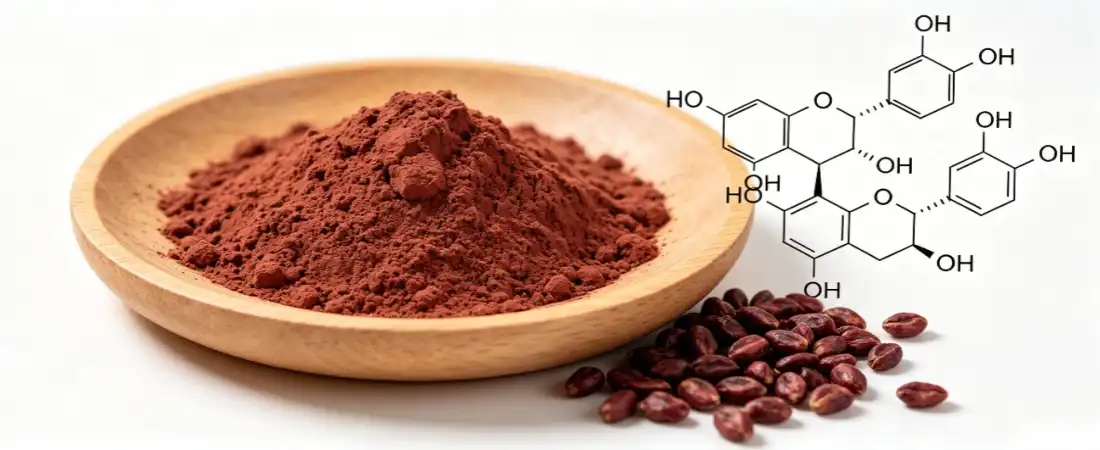
Every supplier of grape seed extract 95 OPC presents a specification sheet showing 95% OPC content. The problem is that this figure is only as reliable as the analytical methodology used to generate it. The most common testing method — UV spectrophotometry — measures absorbance at a wavelength that correlates with proanthocyanidin content, but it is susceptible to interference from other phenolic compounds in grape seed matrix. Tannins, flavonols, and other co-extracted polyphenols absorb at similar wavelengths and can inflate the apparent OPC reading by five to fifteen percent in extracts produced through lower-precision methods. A supplier whose specification is built on UV assay alone may be reporting a figure that overstates true bioactive OPC content — and because most buyers do not independently test incoming ingredients, this discrepancy often goes undetected until formulation performance fails to meet expectations.
HPLC as the Reliability Standard for OPC Verification
High-performance liquid chromatography separates the individual molecular species in a grape seed extract and quantifies each one independently, eliminating the interference artifacts that make UV assay results unreliable on their own. When a supplier provides both UV and HPLC data for the same batch — and the figures are concordant — that alignment is meaningful evidence that the OPC content reported reflects genuine proanthocyanidin concentration rather than a methodology-inflated estimate. NT Biotech provides HPLC confirmation alongside UV assay for every batch of its Grape Seed Extract 95% OPC. Requesting this dual-method documentation from any supplier you are evaluating, and walking away from those who cannot or will not provide it, is the single most effective filter in a supplier qualification process.
What Historical CoA Data Reveals About Process Control
A single Certificate of Analysis shows you what one batch tested. What it cannot show you is whether that batch is representative of what the supplier ships consistently. Requesting CoAs from three to five consecutive production batches gives a far more informative picture — specifically, the variance in OPC content from batch to batch. A high-quality grape seed extract 95 OPC program should show OPC content clustered tightly around the stated specification, with variance of less than two percentage points across consecutive batches. Wide variance signals poor process control at the extraction, concentration, or drying stage — and poor process control in ingredient supply creates a shelf life and potency reliability problem that manifests as inconsistent finished product performance at exactly the moment it is most damaging: when a customer complains about a product that previously worked.
The table below presents a practical supplier evaluation matrix — distinguishing the warning signs that indicate a supplier to avoid from the quality indicators that signal a reliable long-term partner:
|
Evaluation Area |
Red Flag — Walk Away |
Green Flag — Proceed With Confidence |
|
OPC Assay Method |
UV assay only, no HPLC confirmation |
UV + HPLC dual verification per batch |
|
Documentation |
CoA on request only; no batch traceability |
CoA standard with every shipment |
|
Heavy Metal Testing |
Not included or not disclosed |
Full ICP-MS panel: Pb, Cd, As, Hg ≤10 ppm |
|
Solvent Residues |
Not disclosed or 'within limits' vagueness |
Non-detect confirmed — proprietary extraction |
|
Certifications |
Self-declared only; no third-party verification |
ISO 9001, HALAL, KOSHER — documented |
|
Inquiry Response |
Days to respond; generic replies |
≤2 hours; specification-specific answers |
|
Batch Consistency |
Single CoA provided; no historical data |
Historical CoA data available on request |
If you are currently building a supplier evaluation list for grape seed extract 95 OPC and want to benchmark your options against a supplier with fully documented HPLC verification and ISO 9001 certified production, NT Biotech's team is ready to engage. We respond to all technical inquiries within two hours — send your specifications or questions to info@newthingsbiotech.com and expect a substantive reply from a product specialist, not a generic auto-response.
Extraction Technology: The Hidden Quality Variable
How the Extraction Process Determines Structural Integrity
The analytical figure on a specification sheet — 95% OPC — describes the endpoint of the production process. What determines whether that endpoint consistently reflects high-quality, biologically active proanthocyanidins is the extraction process itself. Proanthocyanidins are oligomeric structures — chains of catechin and epicatechin units — whose specific oligomeric configuration is responsible for their documented antioxidant potency and bioavailability. Conventional solvent extraction at elevated temperatures can partially depolymerize these oligomeric chains, fragmenting them into monomeric catechins that still contribute to the UV absorbance reading but do not deliver the same biological activity. The specification says 95%, but the functional compound profile of what was extracted is materially different.
Solvent-Free Processing and Its Downstream Consequences
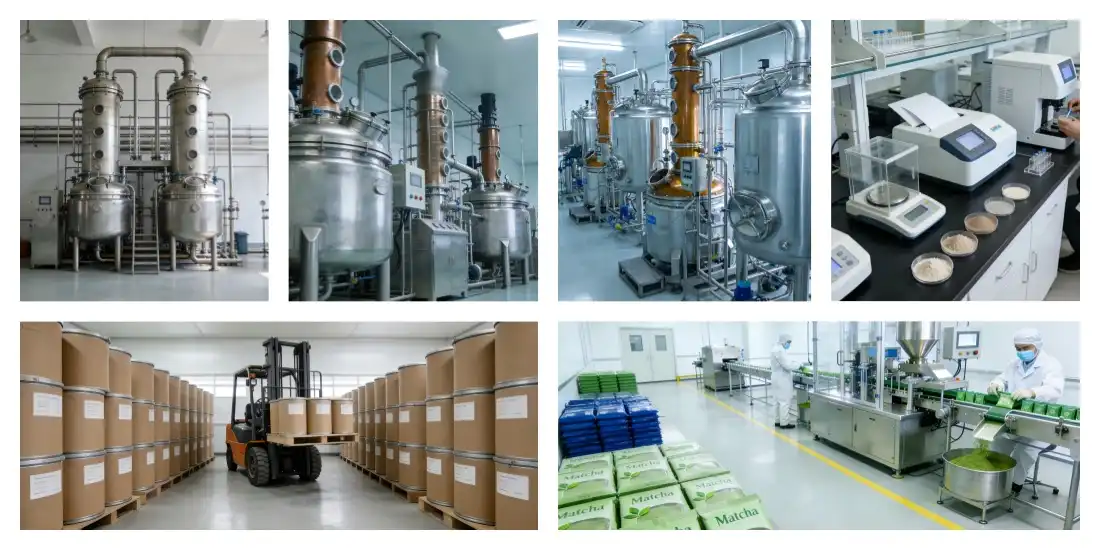
NT Biotech's proprietary extraction technology eliminates organic solvent use from the production process entirely. This has two direct consequences for the finished grape seed extract 95 OPC product. The first is purity: non-detectable residual solvents mean buyers do not need to manage solvent contamination risks in their finished products, and do not face the regulatory compliance burden of demonstrating solvent limits compliance in markets with strict maximum residue standards — including the EU, where pharmaceutical-grade solvent controls are increasingly referenced in premium supplement manufacturing guidance. The second is structural integrity: without the solvent-mediated temperature and chemical exposure that accelerates proanthocyanidin depolymerization, the oligomeric chain structures in NT Biotech's extract are preserved from raw material through to final powder.
Stability Over the Product Lifecycle
Polyphenolic compounds are susceptible to oxidative degradation under conditions of heat, humidity, and light — the conditions that botanical ingredient powders encounter during shipping, warehousing, and production handling. A grape seed extract that tests at 95% OPC at manufacture but degrades toward 87% over six months of normal storage is creating a label claim compliance problem that will only become apparent when a stability test, regulatory audit, or customer complaint surfaces it. NT Biotech's Grape Seed Extract 95% OPC is formulated and packaged to maintain potency across a 24-month shelf life under specified storage conditions, with stability data available to prospective customers as part of the pre-qualification documentation package — allowing buyers to build shelf life confidence into their product development timeline rather than discovering degradation retrospectively.
Certifications, Compliance, and the Markets They Unlock
ISO 9001 as the Manufacturing Baseline
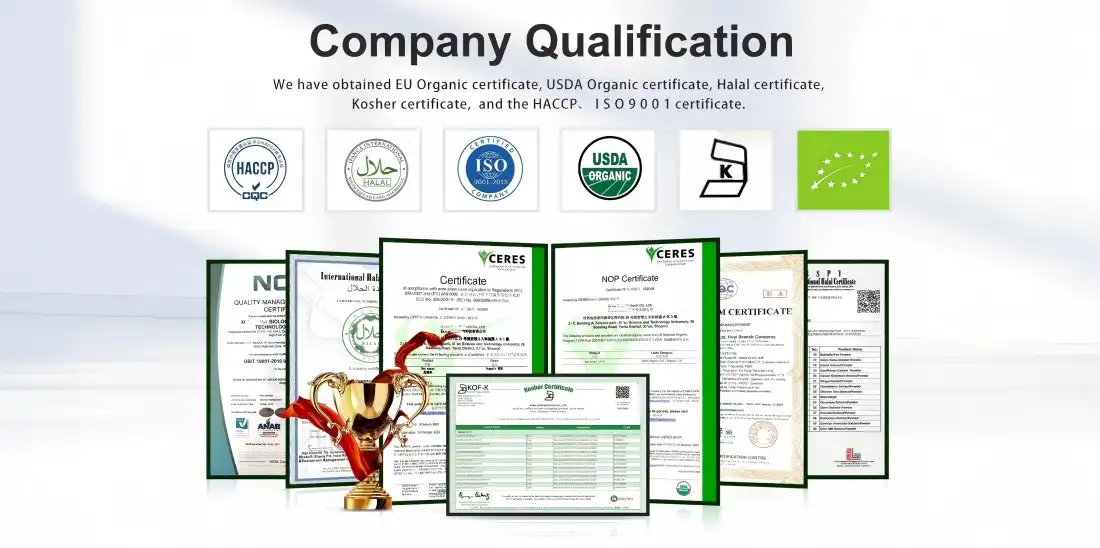
ISO 9001 quality management certification is the international standard for documented, audited manufacturing quality systems. For ingredient buyers, a supplier's ISO 9001 status is the baseline indicator that production processes — from raw material receiving through extraction, testing, and packaging — are controlled, documented, and subject to periodic independent audit. NT Biotech holds ISO 9001:2015 certification for its grape seed extract 95 OPC manufacturing operations. For buyers operating under GMP-adjacent supplement manufacturing standards — as required in the US, EU, Australia, and other major regulated markets — sourcing from an ISO 9001 certified supplier is the minimum quality system requirement for ingredient procurement compliance. Beyond compliance, it is the organizational discipline that produces the batch-to-batch consistency that quality-driven formulation depends on.
HALAL and KOSHER: Market Access, Not Just Certification
HALAL and KOSHER certifications are frequently discussed as compliance requirements — but their commercial significance is better understood as market access credentials. The global halal food and supplement market, estimated at over two trillion USD with high single-digit growth rates across Southeast Asian, Middle Eastern, and Western Muslim-minority markets, requires certified halal ingredient supply throughout the production chain. KOSHER certification similarly represents a purchase prerequisite for a consumer segment that tends toward high per-unit spending in the premium supplement category. NT Biotech holds both HALAL and KOSHER certification for its grape seed extract, meaning that brands sourcing from NT Biotech can enter these market segments without managing a secondary ingredient qualification process for their halal or kosher product lines.
Documentation as a Regulatory Asset
Grape seed extract 95 OPC used in dietary supplements sold in the US, EU, Japan, and Australia must be accompanied by documentation that satisfies both internal quality management requirements and potential regulatory authority review. NT Biotech provides a comprehensive documentation package with every batch: HPLC and UV Certificate of Analysis confirming OPC content, full heavy metal panel results, microbial testing data compliant with applicable pharmacopeial limits, and solvent residue confirmation. For product registrations, import documentation, and retailer supplier qualification audits — all of which have become more rigorous across major supplement markets in recent years — this documentation package converts a supplier's quality claims into verifiable regulatory evidence that travels with every shipment.
Supply Chain Performance as a Strategic Business Input
Lead Time Transparency and Production Planning
The most common supply chain complaint among dietary supplement manufacturers is not ingredient quality — it is delivery predictability. A grape seed extract 95 OPC supplier who quotes a lead time of "two to four weeks" without clearly defining what that period includes creates planning uncertainty that propagates through production scheduling, finished goods inventory management, and ultimately customer delivery commitments. NT Biotech's lead time structure is explicit: standard-specification stock ships within one to three working days of order confirmation; production orders — custom specifications, large batches, or batches requiring extended QC documentation — complete within three to ten working days covering the full production and quality testing cycle. This transparency is not a marketing claim — it is a planning input that procurement teams can use.
Logistics Infrastructure for Global Ingredient Supply
For ingredient buyers outside China, the logistics dimension of a supplier relationship involves export documentation, customs classification, freight forwarding, and final-mile delivery — a chain of handoffs where delays and errors accumulate. NT Biotech operates its own FedEx and UPS shipping accounts for express and sample deliveries, enabling direct factory-to-customer dispatch without third-party handler involvement for time-sensitive orders. Bulk volume shipments are handled through NT Biotech's trusted freight forwarder network, which has established relationships with customs brokers in major import markets and experience managing the documentation requirements for botanical ingredient imports into the EU, US, and other regulated markets. Payment is accepted in the buyer's local currency, removing the exchange rate management burden from the procurement relationship.
OEM/ODM Capability and the Path from Ingredient to Product
For brands that want a more integrated relationship than raw ingredient supply, NT Biotech's OEM/ODM capability extends the supplier value proposition into finished product development. The company can produce custom formulations incorporating grape seed extract 95 OPC alongside complementary actives — Vitamin C for synergistic antioxidant enhancement, resveratrol for cardiovascular positioning, or collagen peptides for ingestible beauty applications — in capsule, tablet, powder sachet, or other finished formats. Custom pack sizes, label designs, and regulatory documentation for target market compliance are part of the service. This integrated offering is particularly valuable for brands at earlier development stages without established formulation infrastructure, and for established brands looking to accelerate new product timelines without adding manufacturing management complexity.
NT Biotech's full product specification and supply framework are summarized in the tables below:
|
Parameter |
NT Biotech Specification |
|
Product Name |
Grape Seed Extract 95% OPC |
|
Botanical Source |
Vitis vinifera L. (Grape seeds) |
|
Active Assay |
≥95% OPC — UV confirmed by HPLC |
|
Appearance |
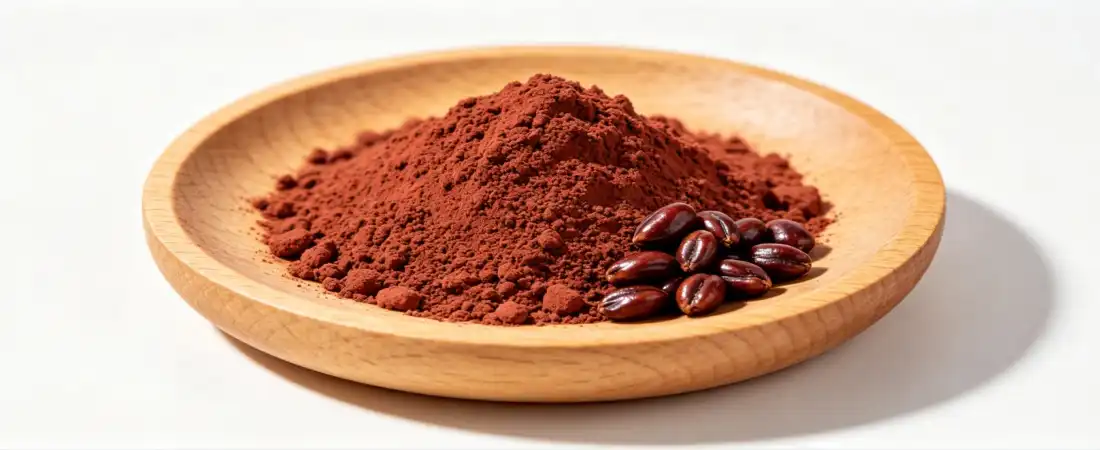
Brownish red powder |
|
Solubility |
Freely water-soluble |
|
Loss on Drying |
≤5.0% |
|
Heavy Metals (Total) |
≤10 ppm (full panel) |
|
Residual Solvents |
Non-detect (proprietary process) |
|
Microbial Limits |
Compliant with USP/Ph. Eur. standards |
|
Shelf Life |
24 months — cool, dry, sealed storage |
|
Certifications |
ISO 9001, HALAL, KOSHER |
|
Supply Parameter |
NT Biotech Commitment |
|
Inquiry Response |
Within 2 hours — all time zones |
|
Sample Dispatch |
1–3 working days |
|
Stock Order Lead Time |
1–3 working days after payment confirmation |
|
Production Order Lead Time |
3–10 working days — full QC cycle included |
|
Express Shipping |
Own FedEx/UPS accounts — direct factory dispatch |
|
Bulk/Sea Freight |
Trusted freight forwarder network for large volumes |
|
OEM/ODM |
Custom specifications, blends, pack sizes available |
|
Payment Currency |
Accepted in buyer's local currency |
Conclusion
Choosing a grape seed extract 95 OPC supplier is a decision that shapes product quality, regulatory compliance posture, and supply chain reliability for as long as the relationship runs. The right supplier combines analytical rigor (dual UV/HPLC verification), extraction integrity (solvent-free processing, preserved oligomeric structure), certification breadth (ISO 9001, HALAL, KOSHER), and logistics transparency (explicit, accountable lead times). NT Biotech addresses all of these criteria with documented evidence — not marketing assertions. For ingredient buyers who have been burned by specification misrepresentation or delivery surprises, NT Biotech offers the kind of supplier relationship where the fine print is exactly what the headline says.
FAQ
Q1: How do I verify that a supplier's 95% OPC claim is accurate?
Request both UV and HPLC assay data from consecutive production batches. If a supplier provides only UV data, ask specifically why HPLC confirmation is not available — the answer will be revealing. NT Biotech provides HPLC confirmation as standard documentation with every batch.
Q2: How does NT Biotech's solvent-free extraction differ from standard methods?
Conventional extraction uses organic solvents at elevated temperatures, which can partially depolymerize OPC oligomeric structures and leave residual solvent in the finished powder. NT Biotech's proprietary process eliminates solvent use, preserving oligomeric chain integrity and producing non-detectable residual solvent levels — confirmed analytically per batch.
Q3: Can NT Biotech supply a custom grape seed extract specification?
Yes. Through its OEM/ODM service, NT Biotech can produce custom OPC concentrations, particle sizes, or co-processed formulations. Custom extract specifications and finished product formats are available. Lead times for custom orders are confirmed at the quotation stage.
Find Your Ideal Grape Seed Extract 95 OPC Supplier in NT Biotech — Contact Us
When quality claims need to be backed by analytical evidence, and delivery commitments need to hold across production schedules, the choice of ingredient supplier matters more than the price on the first quotation. NT Biotech supplies grape seed extract 95 OPC verified by HPLC, produced without organic solvents, certified to ISO 9001, HALAL, and KOSHER standards, and supported by a logistics infrastructure built for global reliability. As a trusted grape seed extract 95 OPC supplier, we stock for rapid dispatch, produce custom orders within ten working days, and accept payment in your local currency. If you are ready to evaluate a supplier whose documentation matches its claims, reach us at info@newthingsbiotech.com — we will respond within two hours.
References
1. Bagchi, D., Bagchi, M., Stohs, S. J., Das, D. K., Ray, S. D., Kuszynski, C. A., ... & Preuss, H. G. (2000). Free radicals and grape seed proanthocyanidin extract: Importance in human health and disease prevention. Toxicology, 148(2–3), 187–197.
2. Feringa, H. H. K., Laskey, D. A., Dickson, J. E., & Coleman, C. I. (2011). The effect of grape seed extract on cardiovascular risk markers: A meta-analysis of randomized controlled trials. Journal of the American Dietetic Association, 111(8), 1173–1181.
3. Cos, P., De Bruyne, T., Hermans, N., Apers, S., Berghe, D. V., & Vlietinck, A. J. (2004). Proanthocyanidins in health care: Current and new trends. Current Medicinal Chemistry, 11(10), 1345–1359.
4. European Medicines Agency. (2016). Guideline on Specifications: Test Procedures and Acceptance Criteria for Herbal Substances, Herbal Preparations and Herbal Medicinal Products. EMA/HMPC/162241/2005.
5. Yamakoshi, J., Saito, M., Kataoka, S., & Kikuchi, M. (2002). Safety evaluation of proanthocyanidin-rich extract from grape seeds. Food and Chemical Toxicology, 40(5), 599–607.
6. Fine, A. M. (2000). Oligomeric proanthocyanidin complexes: History, structure, and phytopharmaceutical applications. Alternative Medicine Review, 5(2), 144–151.