- English
- French
- German
- Portuguese
- Spanish
- Russian
- Japanese
- Korean
- Arabic
- Greek
- German
- Turkish
- Italian
- Danish
- Romanian
- Indonesian
- Czech
- Afrikaans
- Swedish
- Polish
- Basque
- Catalan
- Esperanto
- Hindi
- Lao
- Albanian
- Amharic
- Armenian
- Azerbaijani
- Belarusian
- Bengali
- Bosnian
- Bulgarian
- Cebuano
- Chichewa
- Corsican
- Croatian
- Dutch
- Estonian
- Filipino
- Finnish
- Frisian
- Galician
- Georgian
- Gujarati
- Haitian
- Hausa
- Hawaiian
- Hebrew
- Hmong
- Hungarian
- Icelandic
- Igbo
- Javanese
- Kannada
- Kazakh
- Khmer
- Kurdish
- Kyrgyz
- Latin
- Latvian
- Lithuanian
- Luxembou..
- Macedonian
- Malagasy
- Malay
- Malayalam
- Maltese
- Maori
- Marathi
- Mongolian
- Burmese
- Nepali
- Norwegian
- Pashto
- Persian
- Punjabi
- Serbian
- Sesotho
- Sinhala
- Slovak
- Slovenian
- Somali
- Samoan
- Scots Gaelic
- Shona
- Sindhi
- Sundanese
- Swahili
- Tajik
- Tamil
- Telugu
- Thai
- Ukrainian
- Urdu
- Uzbek
- Vietnamese
- Welsh
- Xhosa
- Yiddish
- Yoruba
- Zulu
Choosing the right senna extract powder requires more than comparing prices or selecting the highest advertised percentage. Senna is a botanical ingredient traditionally used in herbal preparations designed to support bowel regularity, so identity, active-marker standardization, dosage control, regulatory status, and supplier documentation are especially important. NT Biotech supports manufacturers with standardized natural ingredients, batch testing, flexible OEM/ODM solutions, and international logistics. Its experience in plant-derived raw materials can help supplement, food, and herbal-product brands evaluate a suitable senna extract powder for capsules, tablets, teas, and customized formulas. Buyers searching for a dependable senna extract powder supplier should consider quality evidence, responsible formulation, and supply continuity—not simply the lowest quotation.
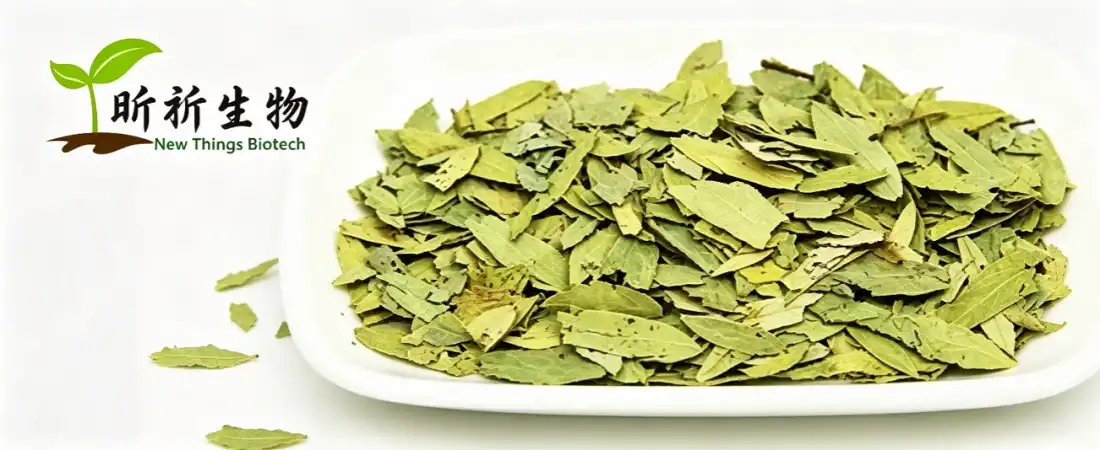
Begin with Senna Identity and Extract Type
Know the botanical source
Senna generally refers to plants in the Senna genus, particularly Senna alexandrina and related species historically associated with senna leaf or pod preparations. Before approving a raw material, buyers should confirm the scientific name, plant part, geographical origin, cultivation or collection method, and identification procedure. These details matter because botanical names can be used inconsistently in commercial documents. A qualified senna extract powder supplier should provide a clear identity statement supported by suitable testing, such as macroscopic or microscopic examination, chromatography, or other validated methods. NT Biotech’s broader plant-extraction experience and source-to-application supply-chain model can support this type of review. Buyers should never approve a senna ingredient based only on a common name or a photograph of dried leaves.
Distinguish powder from extract
A dried senna leaf powder is not the same as a concentrated extract. Powder is usually milled plant material, while an extract is produced using a defined solvent and concentration process. The resulting material may be standardized to hydroxyanthracene derivatives, including sennosides, depending on the product specification and applicable regulations. This distinction affects serving size, potency, flowability, color, solubility, and label declarations. When purchasing senna extract powder, ask whether the product is a water extract, hydroalcoholic extract, or another preparation, and whether carriers are included during drying. The extract ratio alone does not fully describe potency; a measurable active-marker specification and test method are more useful for formulation decisions.
Why plant part and processing matter
Senna leaf and senna fruit or pod materials may have different chemical profiles and may be treated differently by regulatory authorities. Processing conditions can also influence the concentration and stability of active constituents. A professional supplier should explain the raw material, extraction conditions, concentration stage, drying technology, packaging, and storage recommendations. NT Biotech emphasizes standardized processing, laboratory testing, and Certificates of Analysis for applicable batches. This documentation allows buyers to compare senna extract powder grades using measurable criteria. Because the product information page supplied for this project concerns oyster mushroom extract rather than senna, buyers should request senna-specific specifications directly and avoid transferring mushroom-related data to a senna product.
| Identity and specification item | Why buyers should verify it |
|---|---|
| Scientific name | Confirms the intended Senna species |
| Plant part | Distinguishes leaf, pod, fruit, or blended material |
| Extract type | Clarifies solvent, concentration, and drying process |
| Active markers | Defines the declared sennoside or hydroxyanthracene specification |
| Test method | Shows how identity and potency are measured |
| Carrier ingredients | Affects label claims, flow, and finished-product calculations |

Evaluate Potency, Quality, and Regulatory Fit
Standardization is central to consistency
Senna products are commonly standardized according to their active constituents, particularly sennosides or total hydroxyanthracene derivatives. The exact marker, assay range, reference standard, and analytical method must be written clearly in the specification. Two products described as “10:1 extracts” may have different active-marker concentrations, so extract ratio should never replace assay data. A reliable senna extract powder supplier should provide a lot-specific Certificate of Analysis showing the measured result and acceptance range. NT Biotech highlights the use of laboratory testing, HPLC/UV documentation for relevant products, and batch CoAs. For senna, buyers should confirm whether the analytical method is appropriate for the declared marker and whether the result is calculated on an as-is or dried basis.
Review contaminant and quality testing
Botanical materials should be assessed for microbial quality, heavy metals, pesticides, foreign matter, moisture, and other risks relevant to their source and intended use. For senna extract powder, additional attention should be given to identity, active-marker uniformity, residual solvents where applicable, and adulteration. The correct testing panel depends on the market, formulation, and regulatory category. Buyers should request test methods, laboratory qualifications, sampling procedures, and retention-sample policies. NT Biotech’s integrated approach combines raw-material sourcing, processing, testing, and packaging, which can help create a more traceable quality system. Clear documentation is particularly important for senna because potency directly affects formulation calculations and directions for use.
Match the product to local regulations
Senna is not regulated identically in every country. Some markets treat certain senna preparations as herbal medicines, while others may classify them as foods, supplements, or regulated laxative products. Permitted plant parts, active-marker limits, warning statements, age restrictions, duration of use, and advertising language can vary. A brand should consult qualified regulatory professionals before launch. A supplier can provide technical documents, but it cannot replace a market-specific legal review. When evaluating senna extract powder, buyers should ask whether the supplier can provide origin statements, allergen information, certificates, stability data, and documents needed by the destination market. NT Biotech’s ISO9001, Kosher, and Halal capabilities may support supplier qualification, although additional regulatory requirements may still apply.
Use responsible safety language
Senna is a stimulant laxative ingredient, so responsible product development must include appropriate use instructions. Brands should avoid presenting it as a general “detox” solution or a long-term substitute for dietary fiber, hydration, movement, and medical evaluation. Excessive or prolonged use of stimulant laxatives may be inappropriate, and consumers with persistent bowel symptoms should seek professional advice. Mentioning these considerations is not a weakness; it demonstrates responsible quality management. A careful senna extract powder supplier should support accurate specifications and documentation, allowing brands to prepare compliant labels and directions. NT Biotech can assist with technical communication and OEM coordination, while final safety wording and regulatory approval remain the responsibility of the finished-product manufacturer.

Design a Senna Formula with Precision
Choose the appropriate dosage form
Senna extract powder may be used in capsules, pills, granules, instant herbal drinks, tea products etc. depending upon the market and formulation needs. Capsules and tablets give regulated serving quantities and teas may provide a more conventional consumer experience. The optimum form depends on the assay, density, flowability, hygroscopicity, taste and colour of the extract. A tiny capsule may need a high potency extract while a lesser strength substance may need additional carrier or bigger serving. During development, producers should test for mix homogeneity and fill-weight accuracy. NT Biotech OEM/ODM service helps firms manage raw-material selection, packaging and customised final goods using senna extract powder.
Calculate active content, not only material weight
Formula calculations should be based on the declared active marker and the intended serving, not simply on grams of extract. For example, if a product is standardized to a specified sennoside level, the amount of raw material required must be calculated against that assay and then verified through finished-product testing. Moisture and carrier content may also affect the calculation. Every batch should be reviewed against the approved specification before release. A qualified senna extract powder supplier should explain whether the assay is measured on an as-is basis, dry basis, or another basis. This detail prevents avoidable differences between theoretical calculations, label declarations, and actual finished-product results.
Protect the powder during storage
Moisture, heat, light, oxygen, and unsuitable packaging may influence the stability and flow of botanical extracts. Buyers should follow the supplier's storage recommendations and evaluate stability in the final container. Depending on the product qualities, high-barrier bags, sealed drums, moisture resistant liners or other packaging techniques may be considered. Lot number, production date, expiration date and storage instructions should be visible throughout the whole distribution process. For senna extract powder, stability testing should confirm that active markers remain within specification across the proposed shelf life. NT Biotech’s packaging coordination and batch documentation can support traceability, while the finished-product manufacturer should conduct its own real-time or accelerated stability program.
| Formulation checkpoint | Practical question |
|---|---|
| Serving calculation | Is the amount based on verified active-marker content? |
| Blend uniformity | Does every capsule, tablet, or sachet contain a consistent portion? |
| Packaging | Does the container protect the powder from moisture and light? |
| Stability | Does potency remain within specification throughout shelf life? |
| Label review | Are directions, warnings, and claims compliant in the target market? |

Select a Supplier That Supports the Whole Project
Documentation and quality systems
A competent senna extract powder provider should give more than a business quote. Buyers should obtain product definition, lot-specific CoA, botanical identification data, origin statement, processing description, storage conditions, allergy declaration and any regulatory documentation. NT Biotech is a technology-based provider of nutritional supplements, functional foods, cosmetics and animal nutrition, situated in Taipei, Taiwan. Quality capabilities include ISO9001, Kosher and Halal support, standard processes and laboratory documentation. Buyers should check certificate scope, validity, issuing organisation and applicability to real production plant. Accurate records help quality teams and contract manufacturers to approve the senna extract powder and for future audits as well.
Delivery speed and inventory planning
Supply interruptions can delay product launches and create unnecessary reformulation pressure. NT Biotech states that it aims to respond to inquiries within two hours, maintains inventory for selected standardized extracts, and may ship available stock within one to three working days after order confirmation. Typical production orders may require three to ten working days, covering raw-material procurement, processing, testing, CoA preparation, and final packaging. Actual timing for senna depends on species, plant part, assay, quantity, packaging, and destination, so buyers should confirm the schedule in writing. Sharing forecasts with the senna extract powder supplier can improve production planning and reduce the risk of last-minute shortages.
Logistics and customized services
Samples could be appropriate for express shipping, while air or sea freight might be more efficient for bigger orders. NT Biotech offers multiple shipping options, including express, air and sea transportation, direct FEDEX or UPS shipment and freight-forwarder service for bulk delivery. The firm also provides OEM and ODM solutions for a variety of markets and client needs. Buyers should include the desired dosage form, target country, yearly volume, package size, desired certifications and launch timetable. This information allows NT Biotech to provide a better specification for senna extract powder and to organise private labelling or final product development. Flexible payment alternatives, including local-currency payment when possible, may also facilitate international collaboration.
If you are developing a compliant herbal formula, contact NT Biotech at info@newthingsbiotech.com. Share your target market, desired active-marker range, dosage form, expected volume, and document requirements for a more focused technical response.

Create a Responsible Commercial Product
Build claims around evidence
A successful senna formula should be informative rather than sensational. Claims should be true and appropriate for the product's intended purpose and should comply with laws in the destination market. Don't make any sweeping claims like "total detox," "permanent weight loss,"or "instant cleansing."Brands should instead disclose serving instructions, intended length of use, storage restrictions and any legally mandated cautions. The technical specification of the senna extract powder should support the label declaration and the completed product should be tested to validate potency and consistency. Good labelling helps customers make educated choices and protects the company from unnecessary compliance issues.
Use quality agreements for long-term supply
Quality agreement may be used to specify identification, assay, testing techniques, packing, change control, deviation management, complaint processes, notification schedules, etc. for repeated buys. It may also state how the provider will disclose changes in the source of raw materials, extraction conditions, analytical procedures or production locations. These details are especially useful for a botanical ingredient whose active-marker content must remain consistent. NT Biotech’s batch CoA process and technical coordination provide a practical foundation for discussing long-term supply. A written agreement gives the buyer and the senna extract powder supplier a shared reference point as order volumes grow and products enter additional markets.
Measure total value, not only kilogram price
The lowest unit price may not create the lowest total cost. Buyers should consider assay, serving size, testing, freight, customs, storage, minimum order quantity, production losses, rejected batches, and the cost of delays caused by incomplete documents. A supplier that provides accurate CoAs, responsive communication, flexible logistics, and OEM support may reduce hidden development expenses. When comparing senna extract powder offers, ask every supplier for equivalent information: botanical identity, plant part, active-marker assay, test method, packaging, lead time, Incoterms, certification status, sample policy, and payment terms. A complete comparison reveals which partner can support dependable growth rather than only one transaction.

Conclusion
When you decide to buy senna extract powder you need to look closely at botanical identification, plant part, technique of extraction, active-marker standardisation, testing, dose calculations, packaging and market restrictions. Since senna is a stimulating laxative substance, responsible claims, clear instructions and adequate regulatory scrutiny are necessary. Buyers should assess the whole package being offered by the provider and not just the extract ratio or pricing. “NT Biotech has standardised natural ingredient processing, batch documentation, OEM/ODM customisation, flexible logistics, and international customer support. Herbal brands may partner with a competent senna extract powder provider to ensure uniformity, traceability, and commercial readiness. Get in touch with NT Biotech to discuss your specification, target market and product development objectives.
FAQ
1. What is senna extract powder?
It is a powdered botanical extract made from senna plant material and commonly standardized to active constituents such as sennosides.
2. Is senna extract the same as dried senna leaf powder?
No. Extract is processed and may be more concentrated, while leaf powder is generally milled raw botanical material.
3. What should buyers check first?
Confirm the scientific name, plant part, active-marker assay, test method, CoA, origin, storage conditions, and regulatory status.
4. Can senna extract be used in capsules and tablets?
Yes, it may be developed for controlled-dose formats, subject to formulation testing and applicable regulations.
5. Does NT Biotech provide customization?
Yes. NT Biotech offers OEM/ODM support, documentation coordination, packaging assistance, and flexible logistics for different markets.
Develop Your Herbal Formula with NT Biotech
NT Biotech helps brands source standardized natural ingredients with greater confidence and practical technical support. Its services connect raw-material selection, processing, batch testing, CoA documentation, packaging, OEM/ODM development, and international delivery. For companies developing a senna capsule, tablet, tea, or customized herbal formula, the right supplier can improve consistency while reducing avoidable delays. Buyers can discuss active-marker specifications, plant-part requirements, certifications, storage, testing, shipping, and payment arrangements with one responsive partner. If your next product requires dependable senna extract powder, contact info@newthingsbiotech.com with your target market, dosage form, expected volume, and documentation needs. NT Biotech can help you evaluate a suitable grade and move from concept to a more consistent, compliant, market-ready herbal product.
References
1. European Medicines Agency. “European Union Herbal Monograph on Senna Leaf.” Committee on Herbal Medicinal Products.
2. European Medicines Agency. “European Union Herbal Monograph on Senna Fruit.” Committee on Herbal Medicinal Products.
3. World Health Organization. WHO Monographs on Selected Medicinal Plants: Folium Sennae.
4. Blumenthal, M., et al. The Complete German Commission E Monographs: Therapeutic Guide to Herbal Medicines. American Botanical Council.
5. Evans, W. C. Trease and Evans’ Pharmacognosy. Elsevier.
6. Williamson, E. M., K. R. Driver, and K. Baxter. Stockley’s Herbal Medicines Interactions. Pharmaceutical Press.