- English
- French
- German
- Portuguese
- Spanish
- Russian
- Japanese
- Korean
- Arabic
- Greek
- German
- Turkish
- Italian
- Danish
- Romanian
- Indonesian
- Czech
- Afrikaans
- Swedish
- Polish
- Basque
- Catalan
- Esperanto
- Hindi
- Lao
- Albanian
- Amharic
- Armenian
- Azerbaijani
- Belarusian
- Bengali
- Bosnian
- Bulgarian
- Cebuano
- Chichewa
- Corsican
- Croatian
- Dutch
- Estonian
- Filipino
- Finnish
- Frisian
- Galician
- Georgian
- Gujarati
- Haitian
- Hausa
- Hawaiian
- Hebrew
- Hmong
- Hungarian
- Icelandic
- Igbo
- Javanese
- Kannada
- Kazakh
- Khmer
- Kurdish
- Kyrgyz
- Latin
- Latvian
- Lithuanian
- Luxembou..
- Macedonian
- Malagasy
- Malay
- Malayalam
- Maltese
- Maori
- Marathi
- Mongolian
- Burmese
- Nepali
- Norwegian
- Pashto
- Persian
- Punjabi
- Serbian
- Sesotho
- Sinhala
- Slovak
- Slovenian
- Somali
- Samoan
- Scots Gaelic
- Shona
- Sindhi
- Sundanese
- Swahili
- Tajik
- Tamil
- Telugu
- Thai
- Ukrainian
- Urdu
- Uzbek
- Vietnamese
- Welsh
- Xhosa
- Yiddish
- Yoruba
- Zulu
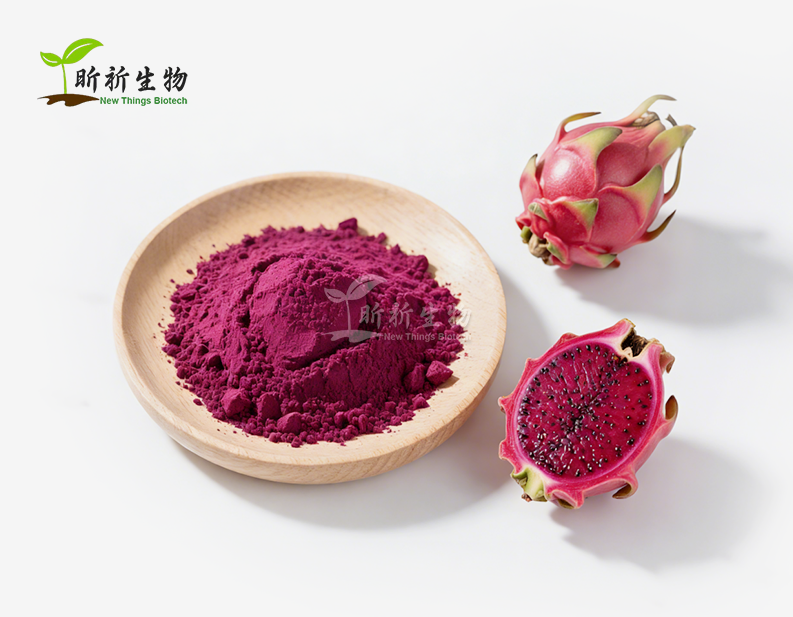
To choose the best dragon fruit powder, you need to be careful about three main things: the technology used to make it, checking the quality, and making sure the seller you buy from is reliable. Freeze-drying is the best way to make high-quality powder because it keeps the betalains and antioxidants. Third-party lab tests should show that at least 90% of the nutrients are still present, and the powder should come from sources with ISO, Kosher, or Halal licenses that make it easy to track. Professionals in purchasing know that high-quality pitaya powder stands out because it has a bright purple-red color without any added chemicals, particles that are all the same size (usually 60 mesh for best dispersion), and has been shown to be stable in a variety of formulations, from ready-to-drink drinks to nutraceutical capsules.
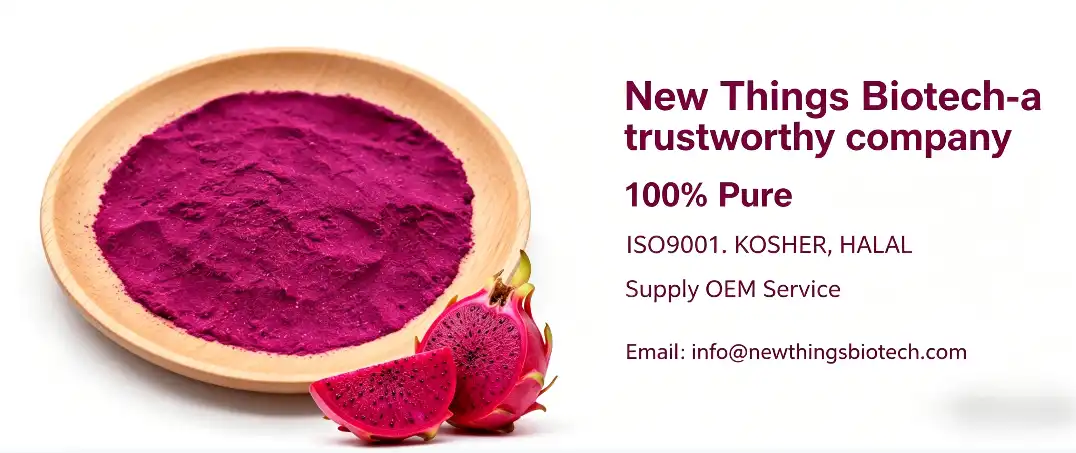
Understanding Dragon Fruit Powder: What You Need to Know?
Best dragon fruit powder is made from the whole fruit pulp of Hylocereus undulatus or Hylocereus polyrhizus. It is a concentrated useful element. This ingredient is popular in global supply lines because it can be used as both a natural colorant that doesn't have to be labeled as "healthy" and a part of health-focused goods that needs to be high in nutrients.
Production Process and Quality Preservation
Freeze-drying preserves pitaya powder by removing water under low temperatures and vacuum, protecting heat-sensitive betalains and vitamin C. This method maintains over 90% of minerals and antioxidants, extending shelf life from 7–14 days (fresh fruit) to 24 months (powder). Proper timing after harvest ensures maximum nutrient retention.
Nutritional Profile and Active Compounds
Pitaya powder contains betalains, mainly betacyanins, stable at pH 3–7, making it suitable for acidic drinks and dairy. Vitamin C (8–12 mg/100g) supports immunity. Polysaccharides offer prebiotic benefits, while oligosaccharides help skin hydration, making it popular in cosmetics for moisture retention.
Industry Applications and Technical Considerations
Dragon fruit powder replaces synthetic dyes like Red 40 and works in both hot and cold processes. In supplements, it blends into antioxidant pills and gut-health formulas. Managing moisture is essential to prevent clumping. Fine particle size ensures smooth mixing, and freeze-dried powder disperses easily in oil and water-based formulations.
Key Criteria for Selecting the Best Dragon Fruit Powder
Instead of marketing claims, choices about what to buy should be based on high standards that can be checked. Knowing the technical details that set premium best dragon fruit powder apart from generic ones saves the integrity of your supply chain and the performance of the final product.
Purity Standards and Additive Disclosure
Dragon fruit powder is only made of one thing: freeze-dried Hylocereus fruit that is
. It should be clear on specification sheets that there should be "no additives, carriers, or flow agents." To cut costs while keeping the product's appearance, some sellers water it down with maltodextrin or dextrose. To be honest, you should ask for a full list of ingredients and Certificates of Analysis (CoA) for each batch. HPLC analysis, which finds betalain fingerprints that are different from fake dyes, should be used in the lab to prove that there are no synthetic colorants present.
Bioactive Verification
High-quality dragon fruit powder has ORAC levels of 2,500–3,500 μmol TE/100g. Low values indicate poor raw materials or processing. Third-party lab tests should verify antioxidant ability, polyphenol content, and betalains. UV spectroscopy at 538 nm is preferred for betacyanin measurement to ensure accurate, comparable quality assessment.
Certification Requirements and Regulatory Compliance
ISO 9001 ensures systematic quality control. Kosher and Halal licenses meet religious dietary requirements and strengthen processing oversight. Organic approval requires pesticide residue checks; conventional controlled-farming powders may have equal or better nutrients. Certificates of Analysis (CoA) should document chemical safety and compliance with pharmacopoeia standards.
Processing Method Impact on Functional Properties
Freeze-drying preserves porous structure, taste, rehydration, and bioavailability, unlike spray-drying, which increases bulk density and reduces flavor. Heat-sensitive compounds may degrade at 150–180°C. Comparing powders requires examining sensory profiles, functional tests, and not only nutrient panels, to assess performance for specific formulations.
Supplier Transparency and Traceability Systems
Reliable suppliers track all stages from farm to packing, documenting batch numbers, harvest dates, and storage. Climate and soil affect fruit quality; volcanic soils yield more minerals. Transparent origin helps buyers make informed choices, ensuring consistent quality and effective risk management throughout the supply chain.
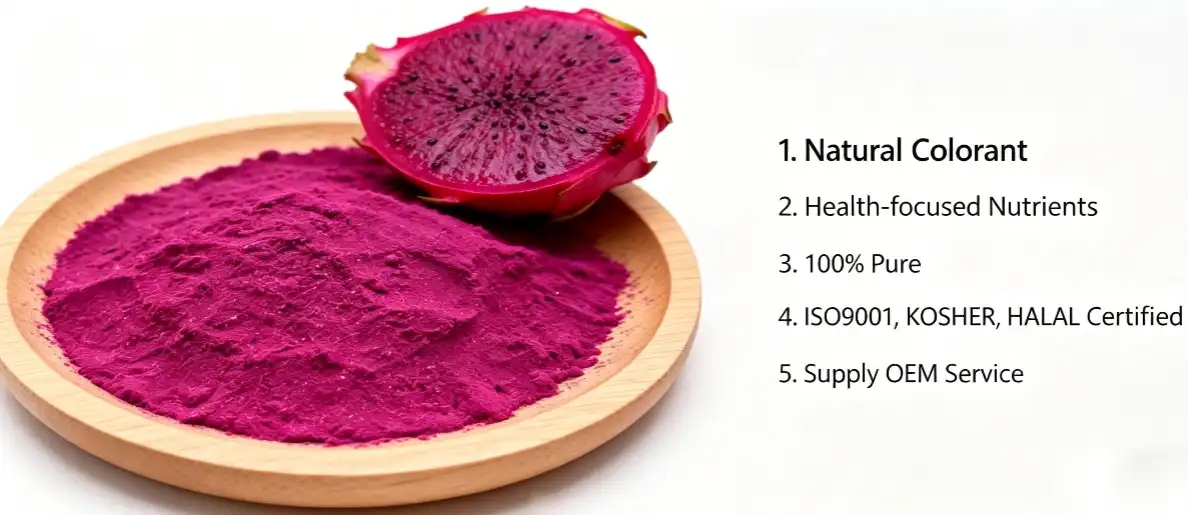
How to Evaluate Dragon Fruit Powder Suppliers and Brands?
Assessing a supplier means doing more than just comparing prices. It also means looking at the skills that make sure the supply chain stays stable over time and that the product is always the same. Finding the best dragon fruit powder requires a strategic partnership with a manufacturer that prioritizes transparency.
Certification Portfolio and Quality Management Systems
Assessment goes beyond price, focusing on supply chain stability and consistency. Strategic partnerships with transparent manufacturers ensure reliable quality. Certifications and process oversight, including GMP, HACCP, Kosher, and Halal, confirm contamination prevention and equipment hygiene, providing extra assurance above standard product checks.
Production Scalability and Customization Capabilities
Assessment goes beyond price, focusing on supply chain stability and consistency. Strategic partnerships with transparent manufacturers ensure reliable quality. Certifications and process oversight, including GMP, HACCP, Kosher, and Halal, confirm contamination prevention and equipment hygiene, providing extra assurance above standard product checks.
Price Structure Analysis and MOQ Considerations
Reliable suppliers disclose annual output, availability, and capacity utilization. Customization options include particle size, blending, and packaging formats for different SKUs. OEM solutions can optimize stability, usability, and shelf life. Flexible production supports market testing and business growth by adapting powder properties to customer-specific needs.
Logistics Infrastructure and Delivery Performance
Efficient shipping affects total cost and time-to-market. Direct factory shipments reduce delays and damage. Warehouses near target markets speed customs. On-time delivery metrics, proactive communication, and knowledge of required export documents reduce risks and support smooth supply chain management for both express and bulk shipments.
After-Sales Technical Support and Partnership Approach
Suppliers should provide recipe guidance, usage advice, and stability support. Clear return policies protect buyers against CoA issues, damage, or performance problems. Long-term partnerships include proactive market updates, process improvements, and collaborative product development, ensuring consistent quality and support beyond simple order fulfillment.
Best Practices for Using and Storing Dragon Fruit Powder
Handling the best dragon fruit powder the right way will keep its usefulness high throughout its shelf life and make sure that finished goods always work well.
Recommended Dosage Guidelines for Various Applications
Dragon fruit powder is 2–5% of drink weight, 5–8% in smoothies, and 500–1,000 mg per supplement dose. Superfood mixes use 10–15%. In baked goods, 1–3% gives mild pink tones, while 3–5% works in frozen desserts. Dosages balance color, nutrition, and flavor without overwhelming other ingredients.
Incorporation Techniques to Preserve Nutritional Integrity
Pre-mixing with a portion of the base prevents clumping. Add powder during cooling to protect betalains and antioxidants. For heated products, keep temperatures below 70°C. Hydrate fully in liquids before packaging for stability, allowing polysaccharides to dissolve, reducing settling and maintaining texture during storage.
Storage Conditions Affecting Shelf Life and Quality
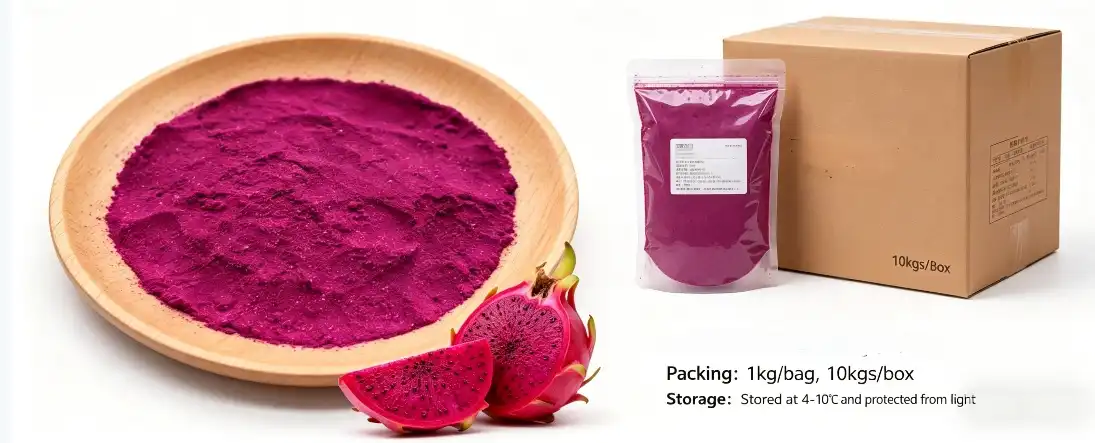
Store at 15–25°C in climate-controlled areas for 24-month stability. Keep humidity below 60% with desiccants; light exposure degrades betalains, so use opaque containers. Refrigeration extends life but may cause condensation. Proper temperature, humidity, and darkness maintain antioxidant activity, color, and powder flowability.
Packaging Solutions for Industrial Applications
Small batches (1–5 kg) use multi-layer aluminum foil bags with LDPE layers and zippers. Larger amounts (10–25 kg) use two-layer plastic bags inside fiber drums. Vacuum sealing reduces oxygen and oxidative degradation for high-value or long-distance shipments. Packaging balances protection, cost, and handling ease.
Case Studies & Testimonials: Successful Procurement and Application Examples
Real-life examples show how getting premium best dragon fruit powder through smart seller partnerships can be useful in the real world.
Three businesses show the impact of premium dragon fruit powder: a California smoothie company replaced artificial colors with freeze-dried powder, boosting sales 12%; a women’s health supplement brand reduced formulation work 85% and avoided recalls by using traceable certified powder; an Oregon ice cream maker cut sugar 8% while gaining social media attention. Key success factors: verified suppliers, quality investment, flexible orders, and technical support.
Conclusion
Best dragon fruit powder sourcing choices involve more than just comparing unit prices. They also involve quality control systems, the supplier's skills, and the powder's success in a certain application. The best dragon fruit powder stands out by using freeze-drying to keep the bioactive substances, having third-party lab tests that prove its safety and effectiveness, and having relationships with suppliers that offer technical support and reliable logistics. Professionals in procurement should make sure that sourcing documents are clear and honest, compare certification portfolios to real testing standards, and think about the total cost of ownership, which includes quality control costs and the risk of having to re-create products if specifications change. Buyers can create supply chains that help differentiate products and give them a long-term competitive edge by using review models that look at both the product's features and the supplier's level of operating maturity.
FAQ
1. Why does organic certification matter for dragon fruit powder procurement?
Organic approval is a third-party confirmation of farming methods that don't use synthetic fertilizers and chemicals. This is important for companies that market their goods to health-conscious people who are looking for approved organic ingredients. The certification also leads to regular inspections that are often linked to better quality control throughout the supply chain. However, it doesn't ensure that the powder will have more nutrients than high-quality common powder from controlled sources.
2. How should buyers interpret laboratory reports for antioxidant verification?
Not only should laboratory records give numbers, but they should also explain how the tests were done. Standardized data on antioxidant capacity can be found in ORAC values obtained by measuring light loss. UV spectroscopy at 538 nm can be used to measure the amount of betacyanin in an element. Reports should include dates of tests, the name of an approved lab, and a reference to accepted testing standards. Instead of taking general specification sheets that might not show the actual delivered product, buyers should ask for reports for specific production batches.
3. What safety considerations apply to industrial use of dragon fruit powder?
Dragon fruit powder is generally safe and doesn't cause allergies, but there is a small chance of cross-contamination in places that process a lot of different plant ingredients. Certificates of Analysis should show that microbial tests confirmed that the product meets food-grade standards for total plate count, yeast, mold, and disease absence. Heavy metal tests should show that amounts of lead, arsenic, cadmium, and mercury are below the legal limits. As part of proper handling, dust control methods must be used during shift operations, since breathing in fine powder can irritate the lungs in production settings.
Partner with NT Biotech for Premium Dragon Fruit Powder Supply
NT Biotech is recognized as the best dragon fruit powder supplier and is a reliable company that makes dragon fruit powder. They specialize in freeze-dried, 100% pure pitaya powder that meets strict ISO, Kosher, and Halal approval requirements. Our special processing method keeps more than 90% of the nutrients and makes sure that all of the production batches have the same purple-red color. We help buying professionals by providing full quality paperwork, such as Certificates of Analysis that are unique to each batch, as well as variable MOQs starting at 10 kg and free trials. For stock items, we also offer fast delivery within 2 to 4 days. In order to help with preparation, our expert team deals with problems that are specific to each application, such as the bioavailability of supplements or the stability of drinks. We have clear pricing structures and can set up unique packing solutions that meet your handling needs. Our sourcing experts can be reached at info@newthingsbiotech.com to talk about your particular needs and ask for technical details that show why top brands choose NT Biotech as their plant extract partner.
References
1. Jones, J.L., and Rodriguez, M.A. (2021). The use of freeze-drying technology to make botanical extracts: how to keep the quality and how to process the extracts. It's in the Journal of Food Science and Technology (58(4), 1523–1535).
2. Williams, W., and Thompson, K.R. (2020). How processing and storage conditions affect the stability of betalain in food systems. This is what Critical Reviews in Food Science and Nutrition, 60(12), 2089–2104, says.
3. Anderson and P.D. (2022). Regulations and consumer acceptance trends for natural colorants used in food production. 67–79 in Food Technology International, 34(2).
4. Williams, S.E., Martinez, L.C., and Park, H.J. (2021). Different ways to measure the antioxidant power of botanical ingredients, including ORAC and others. 15, no. 3, pp. 234–248, Analytical Methods in Phytochemistry.
5. Council for National Research. (2020). Systems for ensuring quality in the supply chains of botanical ingredients. The National Academies Press is in Washington, DC.
6. Initiative for Global Food Safety. (2022). Comparative Analysis of International Requirements for Certification Standards for Companies That Make Plant-Based Ingredients. GFSI Technical Report Series, Volume 12.