- English
- French
- German
- Portuguese
- Spanish
- Russian
- Japanese
- Korean
- Arabic
- Greek
- German
- Turkish
- Italian
- Danish
- Romanian
- Indonesian
- Czech
- Afrikaans
- Swedish
- Polish
- Basque
- Catalan
- Esperanto
- Hindi
- Lao
- Albanian
- Amharic
- Armenian
- Azerbaijani
- Belarusian
- Bengali
- Bosnian
- Bulgarian
- Cebuano
- Chichewa
- Corsican
- Croatian
- Dutch
- Estonian
- Filipino
- Finnish
- Frisian
- Galician
- Georgian
- Gujarati
- Haitian
- Hausa
- Hawaiian
- Hebrew
- Hmong
- Hungarian
- Icelandic
- Igbo
- Javanese
- Kannada
- Kazakh
- Khmer
- Kurdish
- Kyrgyz
- Latin
- Latvian
- Lithuanian
- Luxembou..
- Macedonian
- Malagasy
- Malay
- Malayalam
- Maltese
- Maori
- Marathi
- Mongolian
- Burmese
- Nepali
- Norwegian
- Pashto
- Persian
- Punjabi
- Serbian
- Sesotho
- Sinhala
- Slovak
- Slovenian
- Somali
- Samoan
- Scots Gaelic
- Shona
- Sindhi
- Sundanese
- Swahili
- Tajik
- Tamil
- Telugu
- Thai
- Ukrainian
- Urdu
- Uzbek
- Vietnamese
- Welsh
- Xhosa
- Yiddish
- Yoruba
- Zulu
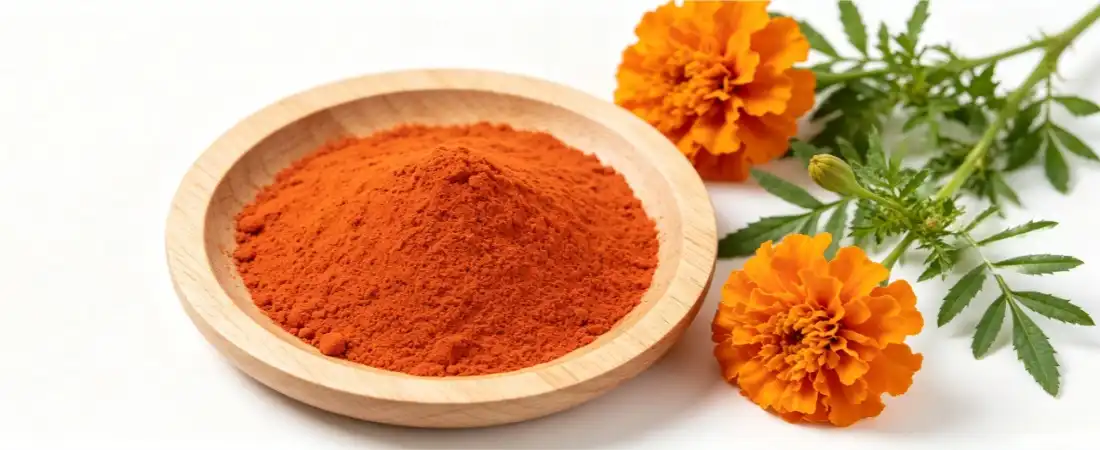
Maintaining eye health has gone from being a concern for older people to something that everyone needs to do every day in this age of constant screen time, artificial lighting, and phototoxic exposure in cities. Learning about the health benefits of lutein from marigold extract is a great way for scientists to help people who make nutraceuticals, functional foods, and health-conscious brands that want to protect the look of their labels. Lutein comes naturally from the bright orange leaves of the Tagetes erecta (marigold) plant. It protects the eye from UV light and is its main antioxidant. NT Biotech (Shaanxi New Things Biotech), a leader in pigment extraction, offers high-quality lutein from marigold extract that was specially designed to solve long-standing problems in the industry with stability, dispersibility, and active strength. NT Biotech provides high-purity raw materials that allow finished products to have the best bioavailability, longest shelf life, and proven therapeutic effectiveness in the global market. They do this by using their own unique processing methods, self-sufficient cultivation bases, and standardised HPLC/UV validation.
The Ocular Mechanism: How Lutein Selectively Accumulates in Retinal Tissue
It's amazing how selective the human body is about where it stores bioavailable carotenoids. This biological prioritisation is most clear in the fovea of the retina. To understand why adding plant-based carotenoids to your diet is so helpful, you need to look at how the macula specifically stores these lipid-soluble chemicals to make an organic visual defence matrix.
Macular Pigment Density and Natural Blue Light Filtration
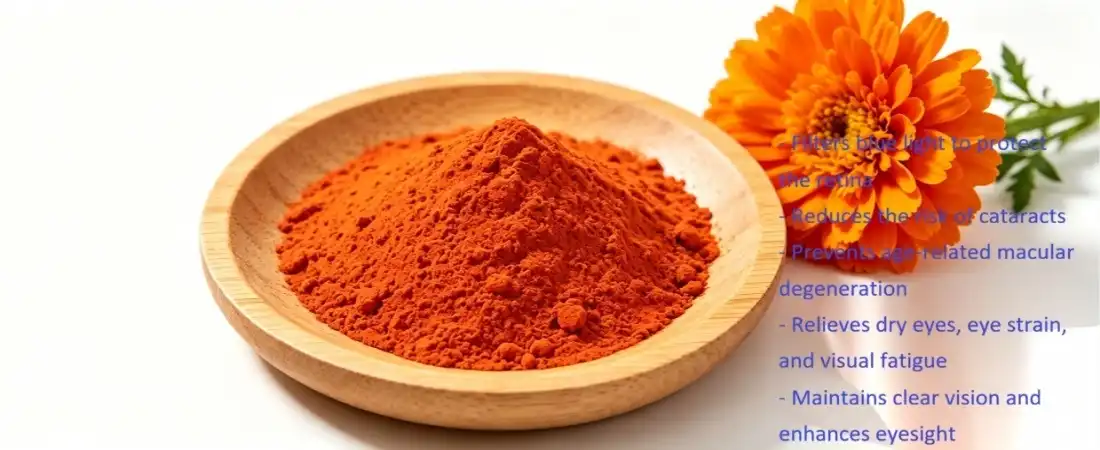
When lutein from marigold extract is taken in through the bloodstream, it is carried directly to the macula lutea by special proteins that cross the blood-retinal barrier. In this area, lutein and zeaxanthin, which is a structural isomer of lutein, build up to form what eye doctors call Macular Pigment Optical Density (MPOD). The main thing that MPOD does is act as nature's shades. High-energy visible (HEV) blue light with wavelengths between 400 and 460 nanometers can reach photoreceptors and the retinal pigment epithelium below. It goes deep into the eye and damages it. Lutein's unique chemical structure soaks up this harmful high-frequency light energy before it can start photo-oxidative cycles. This stops molecular wear and keeps the structure's visual integrity even after decades of being exposed to the environment.
Free Radical Neutralization in High-Oxygen Retinal Cells
In addition to blocking light, the macula's metabolism is always under a lot of stress. It is thought that retinal tissue uses oxygen faster than almost any other organ system in the body. During normal phototransduction, it creates a lot of reactive oxygen species (ROS). Within this highly oxygenated space, lutein works as a strong lipophilic antioxidant. Because it has a long conjugated double-bond system, it can stop singlet oxygen molecules, free radicals, and lipid breakdown in the outer segment membranes of photoreceptors. Taking stabilised lutein from marigold extract by mouth on a regular basis helps protect the fluidity of fragile cell membranes, which stops cells from dying and keeps the basic structural health of central retinal pathways.
Contrast Sensitivity and Visual Fatigue Reduction in the Digital Era
People who work on screens today have to deal with glare, colour aberration, and constant micro-adjustments that wear out the ciliary muscles. Optimising the amounts of macular pigment has been shown in clinical studies to immediately improve visual performance measures such as chromatic contrast sensitivity, glare recovery time, and photostress tolerance. Lutein helps improve clarity and line sharpness in low-contrast environments by lowering the scattering of blue light inside the eye. When people take standardised marigold extracts as a supplement, they consistently report less digital eye strain, fewer tension-related headaches, and better vision while driving at night or working on a computer for long periods of time.
Botanical Advantage: Why Marigold Blossoms Outperform Synthetic Alternatives
Synthetic chemistry can make basic carotenoid structures again, but for regulatory, taste, and nutritional reasons, industrial food science always chooses plant-based extraction over chemical synthesis.
Natural Bioavailability and Esterified versus Free Lutein Structures
The flower of the marigold plant (Tagetes erecta) naturally makes a lot of lutein that is attached to natural fatty acids like palmitic and myristic acid. Through careful enzymatic or chemical saponification, extraction facilities make free-lutein crystals that have the same isomer arrangements that are found naturally in human serum and eye tissues. Natural lutein from marigold extract is better at micellarization in the small intestine than synthetic analogues. This means that it is absorbed more efficiently and stays distributed throughout the body for a longer time. Because these ingredients are so biologically compatible, formulators can use smaller amounts of them to get the same or better tissue saturation results.
Synergistic Carotenoid Profiles Featuring Natural Zeaxanthin
Nature rarely gives us active molecules by themselves in natural botanical raw materials. The flowers of marigold plants naturally have a high concentration of xanthophyll pigments, including lutein, zeaxanthin and meso-zeaxanthin in equal amounts. These related carotenoids build up in different parts of the macula. Zeaxanthin protects the exact centre of vision (the fovea), while lutein covers the rest of the macular tissue around it. Formulating with real extracts from marigold flowers creates a full, naturally balanced spectral defence matrix that man-made single-molecule isolates just can't match.
Clean Label Consumer Demand and Agricultural Purity
People today read supplement labels with more care than ever before, and they deliberately avoid synthetic colours, fake precursors, and chemical processing aids. Lutein from marigold extract has a clear, clean label: it comes from a well-known golden flower that was grown in clean farmland, carefully picked, and processed through pure plant extraction. This origin story strikes a chord with people who are interested in natural health, veganism, non-GMOs, and organic products. It directly leads to higher brand equity and higher shelf conversion rates for consumer goods.
Table 1: Natural Marigold Lutein vs. Synthetic Carotenoid Precursors
| Technical Evaluator | Natural Marigold Extract Lutein | Synthetic Carotenoid Formulations |
|---|---|---|
| Botanical Origin | Pure Tagetes erecta flower blossoms | Petroleum/chemical synthetic substrates |
| Bioavailable Configuration | Naturally stereospecific free-lutein / natural esters | Mixed cis/trans isomers; non-natural geometry |
| Synergistic Co-Factors | Contains natural zeaxanthin complex | Isolated single-molecule structure |
| Clean Label Compliance | High consumer trust; non-GMO, plant-based | Lower acceptance among natural health buyers |
| Chemical Stability Profile | Superior when microencapsulated | Prone to rapid degradation without additives |
| Consumer Perception | Highly positive natural botanical story | Synthetic manufacturing perception |
Industrial Standardization and Quality Benchmarks for Formulators
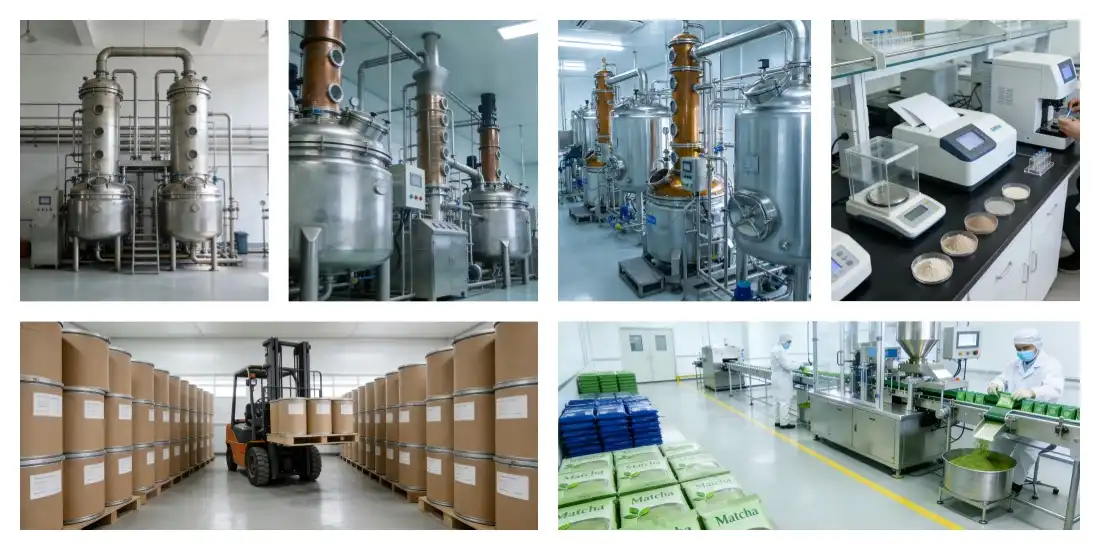
Manufacturers of plant derivatives must use strict scientific control at every step of the production process to turn flower petals into a reliable industrial ingredient. To find the best lutein from a marigold extract supplier, you need to look at their lab's capabilities, chemical purity metrics, and compliance with international quality management standards.
Precise Chemical Quantification via HPLC and UV Analytical Spectrum
The quality of an ingredient can't be judged by looking at it; it needs to be carefully checked through analysis. High-Performance Liquid Chromatography (HPLC) and Ultraviolet-Visible (UV) spectroscopy are used by reliable suppliers to test each batch. Basic UV spectrophotometry measures the absorbance of all carotenoids, while advanced HPLC chromatography separates different lutein isomers, zeaxanthin levels, and possible degradation compounds. High-quality providers promise clear, batch-specific HPLC chromatograms that confirm the exact number of active molecules. This way, formulators can figure out exact production overages and keep label claims confident over multiple years of product shelf life.
Purity Metrics, Solvents Control, and Heavy Metal Elimination
Food-grade chemical solvents are used to dissolve oleoresin in industrial extraction, and they must then be completely removed. Leading processing facilities use strict multi-stage evaporation cleansing methods to make sure that the amounts of leftover liquid are well below the strict limits set by the international pharmacopoeia. Also, strong batch testing looks for heavy metals (like lead, arsenic, mercury, and cadmium), agricultural pesticide residues, and microbial counts because plants can take in minerals from the soil. Standardised marigold extracts make sure that all global food safety standards are met. This keeps expensive product recalls from happening and protects consumers' health.
Batch Uniformity and Physical Dispersion Dynamics
The physical shape of an ingredient has a big impact on how well it works on high-speed industrial manufacturing lines. Standardised marigold lutein can be bought in a variety of custom-made forms, from oil-loving solutions to microencapsulated beadlets that can dissolve in cold water. Unencapsulated lutein is naturally hydrophobic, which means that raw powders will float, gather, or stick to mixing hoppers made of stainless steel. To make free-flowing, dust-free powders that mix evenly in cold water, withstand mechanical compression, and fit perfectly into dry matrix systems, advanced microencapsulation technology surrounds tiny lutein particles in a hydrophilic hydrocolloid matrix.
Recognized Global Certifications, including ISO9001, KOSHER, and HALAL
A seller verification system is a must for companies that want to send finished food products to other countries around the world. Accredited factories use full ISO9001 quality control systems to make sure that standard operating procedures are followed every step of the way, from receiving the raw petals to packing them in drums. Getting real KOSHER and HALAL approvals also makes sure that the item follows strict cultural and nutritional laws. This opens up important customer markets in North America, Europe, the Middle East, and Southeast Asia.
Formulators and procurement teams seeking technical dossiers, batch Chromatograms, or specific quotation tiers are encouraged to reach out directly to our global engineering support desk at info@newthingsbiotech.com. Our technical team guarantees initial technical responses within two hours, simplifying your raw material qualification workflow.
Application Versatility Across Global Wellness Categories
Lutein from marigold extract has special physical and colour qualities that make it useful for a lot more than just food vitamin pills. It can be used as an ingredient in many different types of products.
Solid Oral Dosage Innovations: Tablets, Hard Capsules, and Beadlets
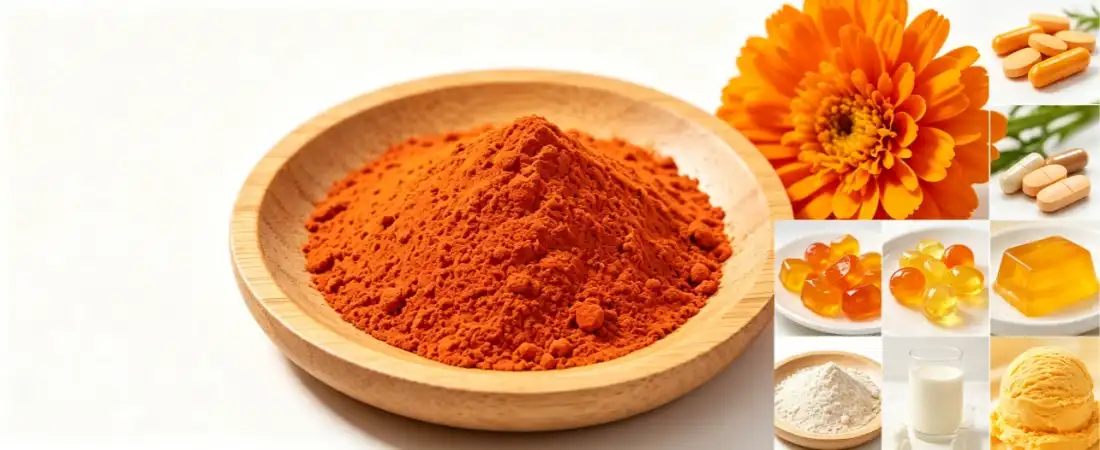
Lutein powder is the main ingredient in eye health pills, multivitamin mixes, and crushed daily tablets that are made the old-fashioned way. Standardised beadlets or powders with 5%, 10%, or 20% free-lutein give the best bulk density and flowability for fast automated encapsulation machines. Microencapsulated beadlets protect active molecules from the friction heat and mechanical compression pressure that are created during tabletting. This keeps the active assay percentages the same without having to add too many extra ingredients.
Functional Food and Beverage Fortification Formats
The rise of functional lifestyle nutrition has increased the need for eye-healthy ingredients in everyday foods. Microencapsulated lutein from marigold extract that dissolves easily in cold water can be added to ready-to-drink (RTD) juices, sports drinks, plant-based milks, and powdered stick packs. When making gummy candies, heat-stable microencapsulated beadlets can handle adding citric acid and cooking syrups at high temperatures without getting burned or breaking down. The ingredient gives the food a bright, natural golden-yellow colour and an eye-health marketing claim at the same time. This lets makers get rid of manmade yellow food dyes.
Cosmetic Dermal Defense and Animal Nutrition Pigmentation
Lutein's ability to protect eyes by blocking harmful light has many effects that go beyond eye health. Topical and beauty-from-within lutein solutions are used in high-end facial treatments to protect the dermal layers from photoaging caused by sunshine and blue-light screens inside. They do this by stopping lipid peroxidation on the skin. In agriculture, special marigold extracts add clean, natural colour to chicken feed. They do this by adding stable, bioavailable xanthophylls that make egg yolks and broiler skin darker and more appealing to people who like rich, healthy farm foods.
Table 2: NT Biotech Marigold Extract Lutein Portfolio Specifications
| Ingredient Grade / Specification | Assay Method | Primary Physical Format | Ideal Product Applications |
|---|---|---|---|
| Marigold Extract Lutein Powder 5% / 10% / 20% | HPLC / UV | Free-flowing standardized powder | Daily vision capsules, tablets, and multi-vitamins |
| Lutein CWS 5% / 10% (Cold Water Dispersible) | HPLC | Microencapsulated CWS powder | RTD beverages, dry drink mixes, functional dairy |
| Lutein Beadlets 5% / 10% / 20% | HPLC | Free-flowing spherical beadlets | Functional gummies, chewable tablets, and baking |
| Lutein Oil Suspension 15% / 20% | HPLC | Uniform lipophilic liquid suspension | Softgel capsules, oil-based food fortification |
| High-Purity Lutein 80% / 90% | HPLC / UV | Fine crystalline powder | Advanced pharmaceutical R&D, premium formulas |
| Marigold Zeaxanthin 5% – 40% | HPLC | Standardized powder/oil | Synergistic macular support complex blends |
Strategic Criteria for Sourcing Managers Evaluating Botanical Raw Materials
When choosing an ingredient supplier, you need to look at more than just price-per-kilogram quotes. To keep production plans on track, procurement workers must look at supply chain security, handling rules, and long-term expert service capabilities.
Vertical Integration from Autonomous Planting Bases to Extract Processing
Supply chain security starts with the farms that grow the food. When mid-market sellers only get their raw marigold oleoresin from open spot markets, they can't control when pesticides are used or if crops fail during certain times of the year. A trustworthy company that sells lutein from marigold extract has fully merged autonomous planting bases where they manage seed genetics, farming standards, harvest time, and the first extraction all under one quality roof. This vertical integration makes sure that the way from the field to the drum can be tracked. This gives commercial buyers a clear chain of custody that makes it easier to follow the rules and have third-party facilities audit them.
Supply Chain Responsiveness, Inventory Reserves, and Dispatch Velocity
Unexpected sales jumps can make it hard to stick to production plans in retail markets that move quickly. Responsible raw material partners keep large backup stocks of common standardised extract grades, like 5%, 10%, and 20% lutein powders. This means that approved stock orders can be shipped within 1 to 3 business days. For special orders or particle encasings, streamlined processing operations make it possible to complete the whole production cycle—from getting the raw materials and extracting them in a proprietary way to rigorous CoA lab testing and final drum packaging—within 3 to 10 working days.
Adaptive Logistics Infrastructure and Flexible International Payment Options
For global trade to work, freight options need to be flexible enough to fit different budgets, volumes, and time constraints. Fast delivery for sample checks and urgent production line top-offs is guaranteed by direct factory-direct courier shipping using dedicated FedEx or UPS business accounts. For large amounts of commercial manufacturing, reliable international freight forwarders efficiently manage safe air and ocean cargo routes. Also, offering flexible payment terms that are good for buyers, like accepting payments in the customer's own currency, gets rid of problems caused by foreign exchange and makes buying things easier for international brands.
Conclusion
Shaanxi New Things Biotech (NT Biotech) is a reliable, technology-based company that sells plant derivatives and wants to improve people's eyesight around the world. NT Biotech provides pure, safe, and active lutein from marigold extract to the global dietary supplement, functional food, cosmetic, and animal nutrition industries. They do this by combining self-sufficient marigold planting with cutting-edge extraction technology, smart manufacturing, and flexible supply chains. Our standard extracts meet strict ISO9001, KOSHER, and HALAL standards. They offer verified purity levels above 98% for key products, better stability, and flexible OEM/ODM solutions that can be tailored to your formulation needs. NT Biotech is more than just a provider; they are also your long-term technical partner, making sure that every batch shows both the pure gift of nature and the unwavering commitment of science.
FAQ
Q1: What makes lutein from marigold extract superior for eye health applications?
A: Marigold blossoms provide the highest natural concentration of bioavailable free-lutein and zeaxanthin, offering proven blue-light filtration and macular antioxidant protection.
Q2: What quality certifications back NT Biotech’s marigold extract products?
A: NT Biotech’s products are produced under certified ISO9001 quality systems and carry recognized KOSHER and HALAL certifications for global market compliance.
Q3: How quickly can NT Biotech fulfill standardized lutein raw material orders?
A: In-stock standardized extracts ship within 1–3 working days, while custom production orders are completed within 3–10 working days, backed by a 2-hour inquiry reply guarantee.
Q4: Which ingredient format is recommended for functional gummy manufacturing?
A: Microencapsulated Lutein Beadlets (5% or 10%) are recommended because their protective shell matrix withstands heat, moisture, and acid during cooking.
Q5: Does NT Biotech offer customized OEM/ODM specifications and local currency payment?
A: Yes, NT Biotech provides tailor-made OEM specifications, custom packaging, and accepts payment in local buyer currencies to simplify global transactions.
Accelerate Your Vision Formulation Line with NT Biotech
Ready to elevate your product portfolio with standardized, science-backed eye health ingredients like lutein from marigold extract? NT Biotech is prepared to power your next product launch with verified purity, exceptional stability, and seamless supply chain reliability. Whether you require fast-dispersing CWS powders for functional beverage development, high-density beadlets for gummies, or lipophilic oil suspensions for softgel capsules, our technical specialists respond to all inquiries within two guaranteed hours. Contact our engineering team today at info@newthingsbiotech.com to request comprehensive technical dossiers, batch Certificate of Analysis samples, or competitive bulk quotations. Discover how partnering with an integrated extraction specialist turns natural marigold carotenoids into your brand's ultimate market advantage!
References
1. Age-Related Eye Disease Study 2 (AREDS2) Research Group. "Lutein + Zeaxanthin and Omega-3 Fatty Acids for Age-Related Macular Degeneration: The AREDS2 Randomized Clinical Trial." JAMA, 2013.
2. Abdel-Aal, E.-S.M.; Akhtar, H.; Zaheer, K.; Ali, R. "Dietary Sources of Lutein and Zeaxanthin Carotenoids and Their Role in Eye Health." Nutrients, 2013.
3. Boon, C.S.; McClements, D.J.; Weiss, J.; Decker, E.A. "Factors Influencing the Chemical Stability of Carotenoids in Foods." Critical Reviews in Food Science and Nutrition, 2010.
4. Buscemi, S.; Corleo, D.; Di Pace, F.; Petroni, M.L.; Satriano, A.; Marchesini, G. "The Effect of Lutein on Eye and Extra-Eye Health." Nutrients, 2018.
5. Ranard, K.M.; Jeon, S.; Mohn, E.S.; Griffiths, J.C.; Johnson, E.J.; Erdman, J.W. "Dietary Guidance for Lutein: Consideration for Intake Recommendations Is Scientifically Supported." European Journal of Nutrition, 2017.
6. Granado-Lorencio, F.; Olmedilla-Alonso, B.; Herrero-Barbudo, C.; Blanco-Navarro, I.; Pérez-Sacristán, B.; Blázquez-García, S. "In Vitro Bioaccessibility of Lutein and Zeaxanthin from Commercially Available Food Formulations." Journal of Agricultural and Food Chemistry, 2009.