- English
- French
- German
- Portuguese
- Spanish
- Russian
- Japanese
- Korean
- Arabic
- Greek
- German
- Turkish
- Italian
- Danish
- Romanian
- Indonesian
- Czech
- Afrikaans
- Swedish
- Polish
- Basque
- Catalan
- Esperanto
- Hindi
- Lao
- Albanian
- Amharic
- Armenian
- Azerbaijani
- Belarusian
- Bengali
- Bosnian
- Bulgarian
- Cebuano
- Chichewa
- Corsican
- Croatian
- Dutch
- Estonian
- Filipino
- Finnish
- Frisian
- Galician
- Georgian
- Gujarati
- Haitian
- Hausa
- Hawaiian
- Hebrew
- Hmong
- Hungarian
- Icelandic
- Igbo
- Javanese
- Kannada
- Kazakh
- Khmer
- Kurdish
- Kyrgyz
- Latin
- Latvian
- Lithuanian
- Luxembou..
- Macedonian
- Malagasy
- Malay
- Malayalam
- Maltese
- Maori
- Marathi
- Mongolian
- Burmese
- Nepali
- Norwegian
- Pashto
- Persian
- Punjabi
- Serbian
- Sesotho
- Sinhala
- Slovak
- Slovenian
- Somali
- Samoan
- Scots Gaelic
- Shona
- Sindhi
- Sundanese
- Swahili
- Tajik
- Tamil
- Telugu
- Thai
- Ukrainian
- Urdu
- Uzbek
- Vietnamese
- Welsh
- Xhosa
- Yiddish
- Yoruba
- Zulu
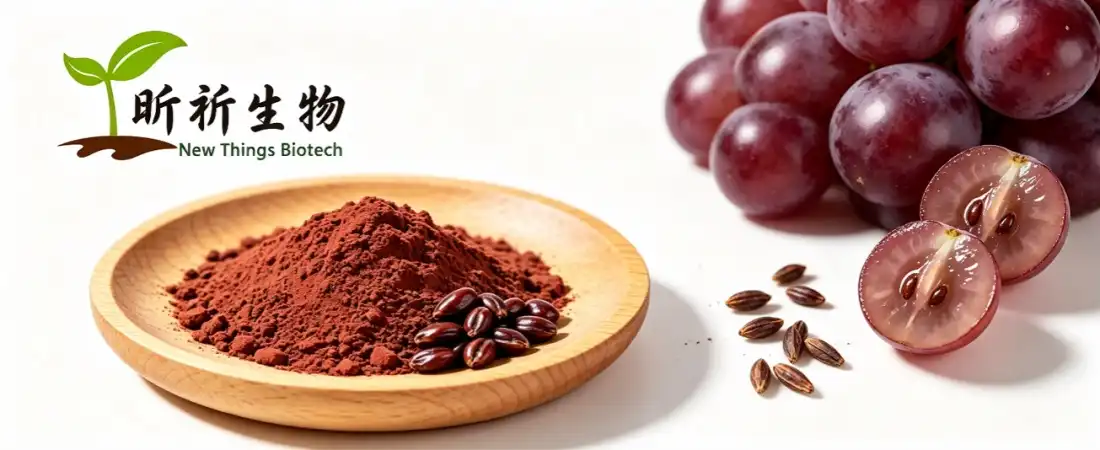
Skincare products tackle oxidation on two fronts. The antioxidants in the jar keep the oils from going bad. They help to fight against the free radicals produced by sun, pollution and normal stress on the skin. For decades, synthetic antioxidants like BHT and tocopheryl acetate have been doing most of this action. Today more and more formulators and purchasers are considering the subject plant-based may perform better. In this article, we’ll explore organic grape seed powder against standard synthetic antioxidants, from the viewpoint of skin benefits, mode of action, stability and label appeal—so you can choose with confidence. Written by NT Biotech, a premier supplier of organic grape seed powder to firms in the cosmetic, supplement and food sectors globally. Our organic grape seed powder is produced from selected Vitis vinifera seeds and standardised to 95% oligomeric proanthocyanidins (OPCs) by UV testing. It is water soluble, thoroughly milled and each batch comes with a full Certificate of Analysis. Get a sample at info@newthingsbiotech.com.
Natural or Synthetic? The Skin Health Verdict Up Front
What Counts as a Synthetic Antioxidant
substances created in a lab . In cosmetics , these include butylated hydroxytoluene ( BHT ) , butylated hydroxyanisole ( BHA ) , tocopheryl acetate ( a synthetic vitamin E ) , ascorbyl palmitate , and idebenone . These compounds became popular because they are inexpensive, constant, and very excellent at stopping oils and scents from going bad. Their primary job is often to keep the formula intact, not to do anything for the skin. That’s a big difference.” But an antioxidant that allows a cream to sit on the market doesn’t always do more for the skin or provide a visible effect.
Where Organic Grape Seed Powder Pulls Ahead
Grape seed proanthocyanidins are a full skin care active, not a just preserving aid. Bagchi and colleagues demonstrated in a famous research that grape seed proanthocyanidin extract was a more powerful defender against free radicals than vitamins C and E and beta-carotene in experimental mice. OPCs also bind to collagen, help calm UV-induced stress, promote a more even-looking tone and sweep up free radicals. A high grade organic grape seed powder extract provides marketers with a natural, familiar ingredient story that resonates with clean beauty shoppers. Some substances accomplish several jobs at the same time, which simplifies the formulations, but also increases the marketing claims.
Side-by-Side Comparison
| Factor | Organic Grape Seed Powder (95% OPC) | Common Synthetic Antioxidants (BHT, BHA, Tocopheryl Acetate) |
|---|---|---|
| Source | Vitis vinifera seeds, plant-derived | Petrochemical or lab synthesis |
| Primary role | Skin-active antioxidant plus formula support | Mainly protects oils and fragrances |
| Free radical defense | Broad, multi-pathway polyphenol activity | Targeted chain-breaking activity |
| Collagen and elastin support | Binds and stabilizes collagen fibers | Minimal direct effect |
| Tone and brightness | Studied for evening out pigmentation | Not a typical function |
| Solubility | Water soluble | Mostly oil soluble |
| Label appeal | Natural, clean-label friendly | Increasingly avoided by clean-beauty buyers |
| Cost per kilogram | Higher | Lower |
Inside the Skin: How Grape Seed OPCs Work Differently
Broad-Spectrum Free Radical Defense
Synthetic antioxidants such as BHT function by inhibiting one particular chain reaction of oxidation, and are great for stabilising oils. Grape seed OPCs work more extensively. These compounds have a structure of linked catechin and epicatechin units with numerous hydroxyl groups that may neutralise many types of reactive oxygen species. Research also indicates that OPCs help renew other antioxidants, such as vitamins C and E, thus they literally lengthen the working lives of their partners. This network effect is why a 95% proanthocyanidin grape seed powder may provide considerable protection at relatively modest usage levels in serums, creams and beauty supplements.
Guarding Collagen and Elastin
Healthy collagen and elastin are what give us firm, bouncy skin, yet both break down quicker when exposed to oxidative stress. “Proanthocyanidins bind these proteins very well.” Han and co-workers demonstrated in biomaterials research that proanthocyanidins might operate as natural cross-linking agents to stabilise the collagen matrices and promote the resistance to enzymatic degradation. In terms of skin-care this indicates that grape seed OPCs do more than only intercept free radicals. They help preserve the structure that keeps the skin appearing smooth and robust. Grape seed has an advantage in anti-aging products since synthetic preservative antioxidants are not in this position.
Calming UV Stress and Supporting Even Tone
Sunlight is the main cause of apparent skin ageing. Mantena and Katiyar, in laboratory work with human skin cells, revealed that grape seed proanthocyanidins decreased oxidative stress generated by UVB and modulated the inflammatory signalling pathways that are activated by UV exposure. In a subsequent assessment Katiyar detailed their larger significance in strengthening skin’s defences against UV harm. There are benefits from inside too. In a clinical research, Yamakoshi et al. observed that women who took proanthocyanidin-rich grape seed extract orally for six months saw noticeable lightening of chloasma. Not many synthetic antioxidants can claim this combination of topical and oral skin assistance.
Where Synthetic Antioxidants Still Earn a Place
Their Genuine Strengths
It’s fair to compare and to see what synthetics perform well. BHT and related chemicals are exceedingly stable, cheap and active at low doses. They stop plant oils, butters, and perfumes from becoming rancid over lengthy shelf lives, which is important for items sold in hot areas or that go through extensive distribution chains. Tocopheryl acetate is also more stable than natural vitamin E in final formulations. These chemicals are nevertheless useful tools for safeguarding the formula itself for firms on a tight budget or with particularly oil-heavy products.
Building Smart Hybrid Formulas
And many successful goods typically use a combination of both of these ways, which is often the wisest plan. While a little of stabilising antioxidant may safeguard the oil phase, the skin-active hero operates in the water phase: organic grape seed powder. The extract is water soluble and hence readily lends itself to toners, essences, gels and the watery phase of emulsions. It also combines well with vitamin C, niacinamide, ferulic acid and resveratrol, giving formulators the ability to develop a layered antioxidant system that functions better than any one ingredient alone. As companies get more comfortable using plant actives many discover that they are able to lessen or completely replace synthetic antioxidants with time.
Winning the Clean-Beauty Shopper
The consumer wants more natural ingredients and the business is going there. In their study of natural and synthetic antioxidants, Carocho and Ferreira referred to the long standing controversy about the use of synthetic chemicals and the rising interest in plant derived alternatives. Increasingly consumers are looking for recognisable names on labels and “grape seed extract” is a lot more attractive than an acronym. Grape seed also has an upcycling tale, since the seeds are a by-product of the winemaking process. For clean, vegan or sustainable cosmetic companies, a basic organic grape seed powder extract makes premium price appear legitimate.
Thinking about replacing synthetic antioxidants with a plant-based active or creating a hybrid formula? Tell us about your product info@newthingsbiotech.com Our technical staff will provide you a reply with grade recommendations, appropriate usage levels and a free sample with batch CoA within 2 hours.
Choosing a Cosmetic-Grade Organic Grape Seed Powder Extract
Why 95% Proanthocyanidins Matters
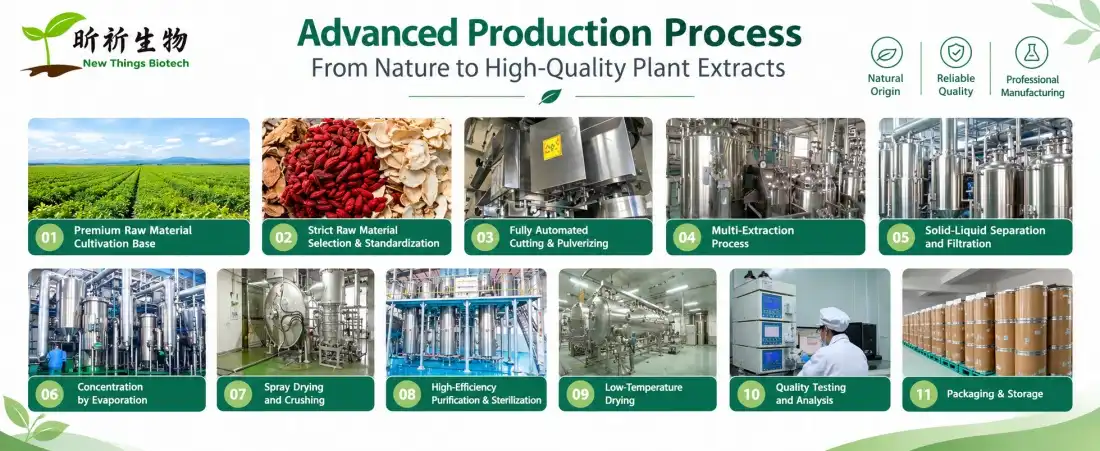
The grape seed material ranges greatly from low strength powdered seed flour to extremely potent extracts. For skin care, focus is strongly related to performance and attractiveness. Proanthocyanidins 95% Grape Seed Powder has high antioxidant activity at low inclusion levels. This way you may have various actives in the recipe and you don’t impact the colour or the texture. Lower quality materials include more plant contaminants which may darken a cream, create off-odors or diminish stability. NT Biotech employs innovative extraction procedures that are intended to maximise the amount of active chemicals that can be extracted while preserving their natural structure. This enables formulators consistent performance from batch to batch.
NT Biotech Specification Profile
The usual specification of our organic grape seed powder, confirmed by laboratory analysis of each batch of manufacture, is as follows:
| Item | Specification | Test Method |
|---|---|---|
| Botanical Source | Vitis vinifera L. (seed) | TLC |
| Active Compound | Proanthocyanidins (OPC) ≥ 95% | UV |
| CAS No. | 84929-27-1 | — |
| Appearance | Reddish-brown fine powder | Visual |
| Odor and Taste | Characteristic | Organoleptic |
| Solubility | Water soluble | — |
| Particle Size | 100% pass 80 mesh | Sieve |
| Loss on Drying | ≤ 5.0% | USP |
| Ash | ≤ 5.0% | USP |
| Heavy Metals | ≤ 10 ppm | ICP-MS |
| Microbiology | TPC ≤ 1,000 cfu/g; E. coli and Salmonella negative | USP |
| Storage and Shelf Life | Sealed, cool, dry, away from light; 24 months | — |
Formulating for Stability and Elegance
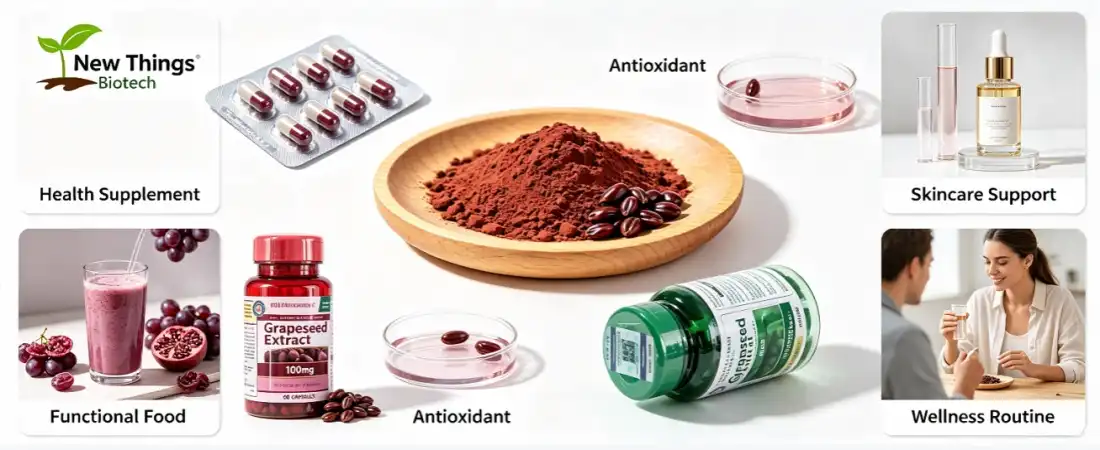
formulations, which is good for most current serums and creams. Moreover, the extract was added during the cool-down period (below ~40°C) to assist retain its activity. Opaque or airless packaging preserves the extract from light and air during usage. Its natural reddish-brown tone offers items a warm, botanical look that many manufacturers tout as a sign of authenticity. The colour is faint at common usage levels in cosmetic products. The same powder fits readily into capsules, tablets, collagen beverages and gummies for beauty-from-within lines, enabling one basic material to support both topical and oral collections.
Why Brands Choose NT Biotech as Their Organic Grape Seed Powder Supplier
Fast Response, Ready Stock, and Flexible Logistics
Reliable supply is required for product launches. NT Biotech promises to respond to any questions within two hours. We carry popular grades and ship in 1-3 business days after purchase confirmation. As a rule, production orders take between 3 and 10 working days to complete. This includes sourcing quality raw materials, proprietary extraction, laboratory testing and final packing. Samples and small purchases ship straight from our own facility on our own FedEx and UPS accounts. We ship bulk orders by air or sea using reliable goods forwarders chosen to meet your needs for speed, volume and cost.
Certified Quality, OEM Customization, and Easy Payment
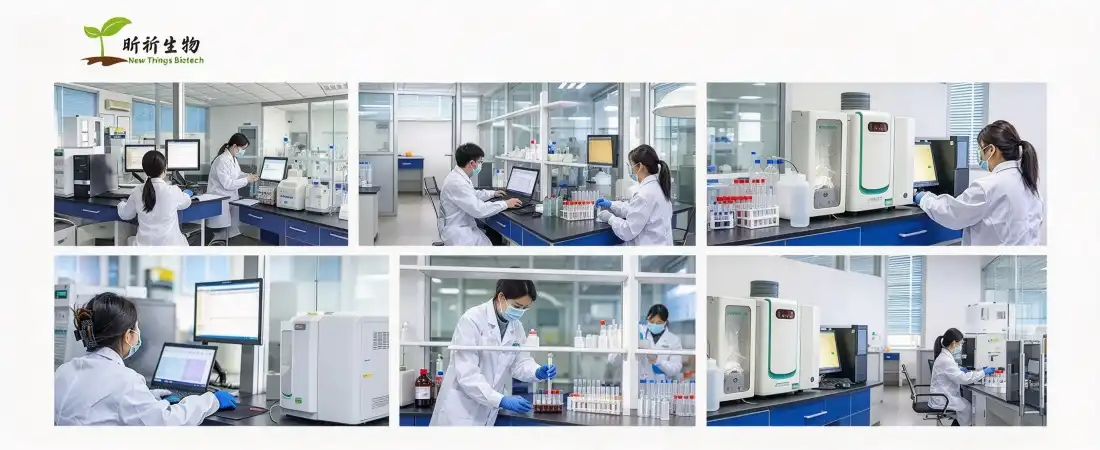
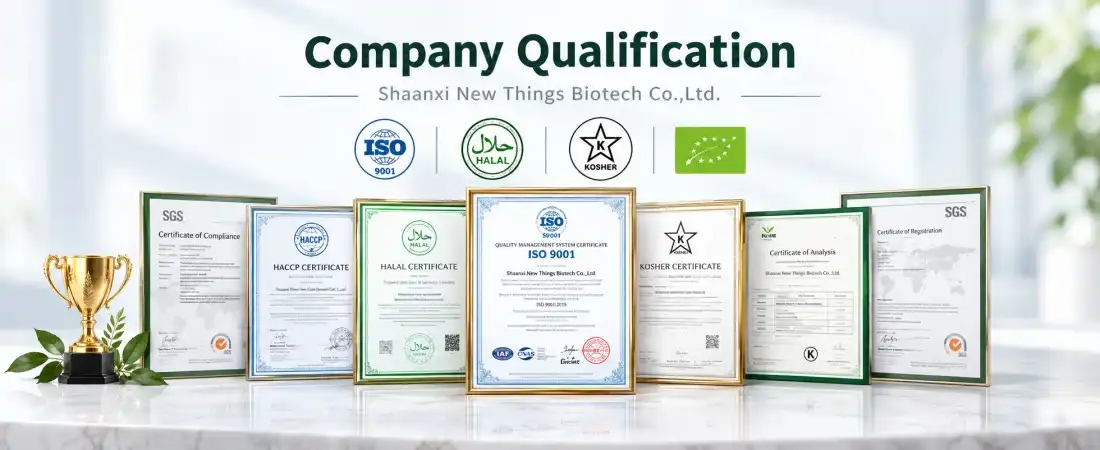
We are ISO9001 quality management, KOSHER, and HALAL certified, facilitating access into a broad variety of foreign markets. UV and HPLC data and a batch specific CoA are provided with each shipment. And since our value chain goes from plant source and research and development to intelligent manufacturing and adaptive supply, we can provide flexible OEM and ODM services to customise OPC levels, particle size, packaging and completed forms. We also take payment in the buyer’s native currency making international sourcing easy.
Conclusion
Synthetic antioxidants are still good for shelf life, but organic grape seed powder gives so much more for the skin itself. Provides wide free radical protection, protects collagen, soothes UV stress, maintains an even tone and has high clean-label appeal. Shaanxi New Things Biotech is a trusted source of plant-based ingredients. We provide pure, active and stable grape seed extract standardised to 95% proanthocyanidins. Proprietary extraction, full UV, HPLC and CoA documentation backs every batch, and we are ISO9001, KOSHER and HALAL certified. We assist cosmetic, supplement and food manufacturers launch their next product organically and reliably with fast stock delivery and customisable OEM solutions. Choose science-backed nature’s gift and start formulating with us now.
FAQ
Q1: Is grape seed extract better than synthetic antioxidants for skin?
For skin benefits, yes. It protects collagen, supports even tone, and defends against free radicals, while synthetics mainly stabilize formulas.
Q2: Can I combine grape seed powder with synthetic antioxidants?
Yes. Many brands use hybrid systems, and grape seed works well in the water phase.
Q3: What OPC level does NT Biotech offer?
Our organic grape seed powder is standardized to 95% proanthocyanidins, verified by UV.
Q4: Is it suitable for both skincare and supplements?
Yes. It works in serums, creams, capsules, drinks, and gummies.
Q5: How fast can you deliver?
Stock grades ship within 1–3 working days. Production orders take 3–10 working days.
Go Natural with NT Biotech: Request Your Grape Seed Sample Today
The shift from synthetic to plant-based antioxidants is reshaping skincare, and your brand can lead that change. NT Biotech supplies organic grape seed powder standardized to 95% proanthocyanidins. It is water soluble, consistent from batch to batch, and backed by a CoA for every shipment. We reply within two hours, ship stock grades within days, accept payment in your local currency, and offer OEM and ODM support for serums, creams, beauty supplements, and functional drinks. Whether you are replacing BHT in a bestseller or creating a new clean-beauty line, our technical team will help you formulate with confidence. Email info@newthingsbiotech.com today to request your free sample, full specifications, and a competitive quotation.
References
1. Bagchi D, Bagchi M, Stohs SJ, et al. Free radicals and grape seed proanthocyanidin extract: importance in human health and disease prevention. Toxicology. 2000;148(2–3):187–197.
2. Mantena SK, Katiyar SK. Grape seed proanthocyanidins inhibit UV-radiation-induced oxidative stress and activation of MAPK and NF-κB signaling in human epidermal keratinocytes. Free Radical Biology and Medicine. 2006;40(9):1603–1614.
3. Katiyar SK. Grape seed proanthocyanidines and skin cancer prevention: inhibition of oxidative stress and protection of immune system. Molecular Nutrition & Food Research. 2008;52(Suppl 1):S71–S76.
4. Yamakoshi J, Sano A, Tokutake S, et al. Oral intake of proanthocyanidin-rich extract from grape seeds improves chloasma. Phytotherapy Research. 2004;18(11):895–899.
5. Han B, Jaurequi J, Tang BW, Nimni ME. Proanthocyanidin: a natural crosslinking reagent for stabilizing collagen matrices. Journal of Biomedical Materials Research Part A. 2003;65(1):118–124.
6. Carocho M, Ferreira ICFR. A review on antioxidants, prooxidants and related controversy: natural and synthetic compounds, screening and analysis methodologies and future perspectives. Food and Chemical Toxicology. 2013;51:15–25.