- English
- French
- German
- Portuguese
- Spanish
- Russian
- Japanese
- Korean
- Arabic
- Greek
- German
- Turkish
- Italian
- Danish
- Romanian
- Indonesian
- Czech
- Afrikaans
- Swedish
- Polish
- Basque
- Catalan
- Esperanto
- Hindi
- Lao
- Albanian
- Amharic
- Armenian
- Azerbaijani
- Belarusian
- Bengali
- Bosnian
- Bulgarian
- Cebuano
- Chichewa
- Corsican
- Croatian
- Dutch
- Estonian
- Filipino
- Finnish
- Frisian
- Galician
- Georgian
- Gujarati
- Haitian
- Hausa
- Hawaiian
- Hebrew
- Hmong
- Hungarian
- Icelandic
- Igbo
- Javanese
- Kannada
- Kazakh
- Khmer
- Kurdish
- Kyrgyz
- Latin
- Latvian
- Lithuanian
- Luxembou..
- Macedonian
- Malagasy
- Malay
- Malayalam
- Maltese
- Maori
- Marathi
- Mongolian
- Burmese
- Nepali
- Norwegian
- Pashto
- Persian
- Punjabi
- Serbian
- Sesotho
- Sinhala
- Slovak
- Slovenian
- Somali
- Samoan
- Scots Gaelic
- Shona
- Sindhi
- Sundanese
- Swahili
- Tajik
- Tamil
- Telugu
- Thai
- Ukrainian
- Urdu
- Uzbek
- Vietnamese
- Welsh
- Xhosa
- Yiddish
- Yoruba
- Zulu
Pyrroloquinoline quinone (PQQ) is developing as a target ingredient for nutraceutical producers for products focused on cellular energy metabolism, cognitive wellness and antioxidant support. The bulk PQQ powder is utilised in nutritional supplement, functional drink and certain cosmetic therapy. But the choice of ingredients involves more than comparing advertised levels of purity. When picking a supplier, buyers should consider the chemical form, research data, quality expectations and regulatory requirements. In this video, we’ll cover the basics of PQQ, compare it to other mitochondrial compounds, and discuss best practices for B2B buying.
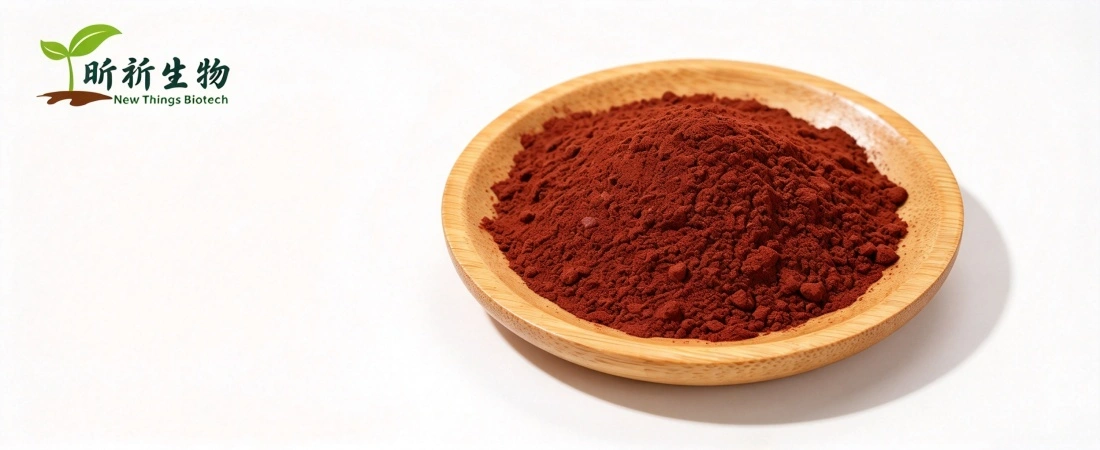
Understanding Bulk PQQ Powder and Its Core Benefits
Pyrroloquinoline quinone (PQQ) is a redox-active quinone molecule studied for its potential significance in cellular signalling and mitochondrial function. Bulk PQQ powder is the ingredient in powder form that may be used in further formulations or manufacturing .
PQQ is available in a number of chemical forms including PQQ free acid and PQQ disodium salt. Buyers should check the material specifics before looking at the requirements, since these forms have distinct chemical formulae and molecular weights. The free acid has a molecular weight of about 330.2 g/mol and the chemical formula C14H6N2O8. These statistics are not to be used to PQQ disodium.
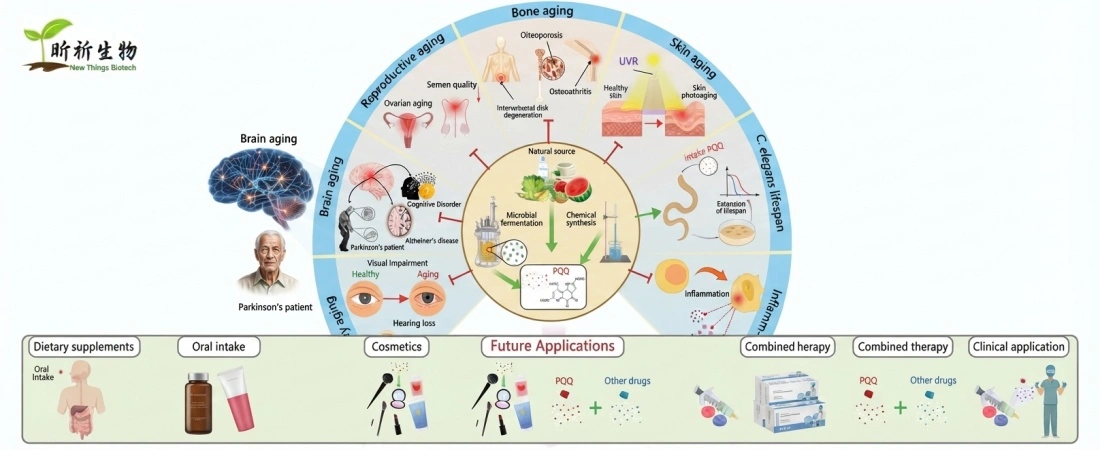
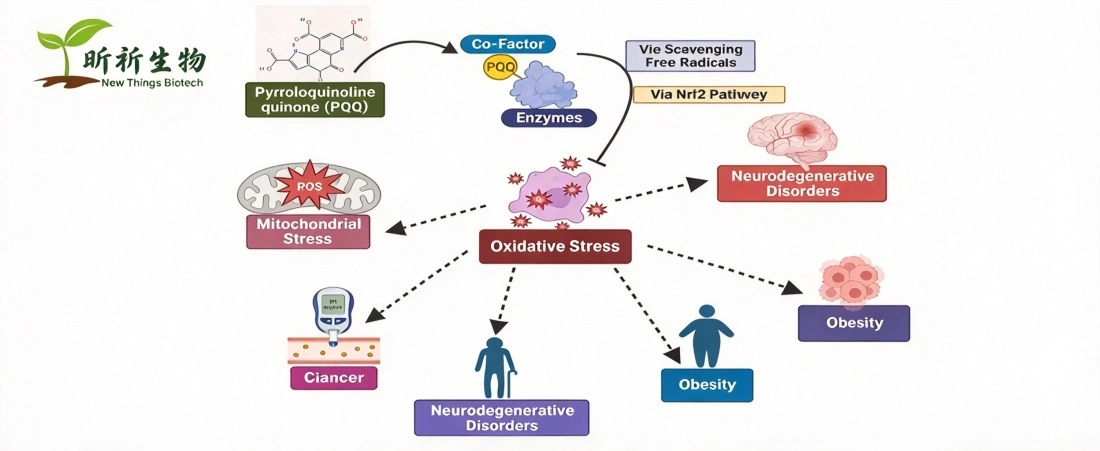
We have explored the possible effects of PQQ on mitochondrial biogenesis and oxidative stress responses. The outcomes of these research are essential for the development of nutraceutical ingredients, however they do not suggest that PQQ supplements prevent ageing or cure energy-related illnesses.
Chemical Properties and Manufacturing Standards
PQQ is a redox active molecule belonging to the ortho-quinone family. It is a separate chemical than CoQ10 and resveratrol, and has different biological actions, and different formulation profiles.
Commercial PQQ powder needs should contain chemical form, CAS number, molecular formula, test required and analytical procedure. Buyers should also check the appearance, solubility, moisture content and impurity profile of the material in the technical documentation of the maker.
PQQ may be produced via microbial fermentation and other techniques. Fermentation does not indicate the product is more pure, or free from unwanted substances. Whatever the production procedure, purification, process controls and analytical testing are essential.
The particle size may influence the handling, mixing and filling performance of powders. However, do not request an 80-mesh standard unless the vendor can really produce to that specification and the finished product requires it.
Store according to product specific directions. PQQ powder should generally be protected against excessive light, moisture and incorrect temperatures. Buyers are advised to seek for stability data to show that the transportation and storage conditions are appropriate.
Primary Therapeutic Benefits
PQQ has been researched for its mitochondrial biogenesis, oxidative stress and cellular signalling. The influence of PQQ on CREB phosphorylation and PGC-1α expression was shown in experimental models in the work of Chowanadisai et al . These pathways regulate mitochondrial related processes.
Other preclinical work has investigated potential PQQ impacts on mitochondrial abundance and function. But cell and animal research don’t prove that the same advantages will occur in humans with supplementation.
Selected cognitive, inflammatory and metabolic indicators have been examined in people as well. Data are still restricted at this point and findings should be considered in light of the study design, population, dosage and outcomes studied.
For manufacturers, PQQ might be a product for mitochondrial research or antioxidant assistance. Any claim that your product is good for the heart, liver, nerves or anti-ageing has to be carefully examined against the clinical data that exists and the rules that apply.
Optimal Dosage Guidelines
Studies on PQQ been published with various amounts of daily consumption and various durations of the inquiry. Human studies have examined supplementation from 10 to 20 mg, although this does not provide a standard suggested serving size or therapeutic dosage.
The dose of the finished product should be defined on the basis of the chemical form of the component, the relevant legislation, the targeted consumer group, the composition design and the corresponding safety data. Manufacturers should not assume that the dosage used in one research will be appropriate for all products.
Don't just put in a planned 3-5% overage. Any other ingredient should be justified by stability test, processing and final product analytical data. This is to guarantee that the finished product satisfies the specified requirements throughout its shelf life.
Bulk PQQ Powder vs Alternatives: A Comparative Procurement Insight
PQQ is routinely tested alongside CoQ10, NADH and alpha-lipoic acid in the development of mitochondria-targeted supplements. These chemicals have various chemical characteristics and different biological functions. So, while deciding on what to buy the emphasis should be on the product wanted rather than on the idea that one item may be substituted for another element.
Efficacy and Mechanism Comparison
CoQ10 is involved in the electron transport in the mitochondrial respiratory chain and is also essential for the energy metabolism in the cell. The possible impacts of PQQ on signalling pathways involved in mitochondrial biogenesis were investigated. They have independent biological roles and should not be thought of as substances that may be used to directly replace each other.
NADH is the reduced form of nicotinamide adenine dinucleotide . It participates in redox reactions in cells . Alpha lipoic acid is an essential component of mitochondrial enzyme complexes and has been studied for its antioxidant properties.
PQQ may be mixed with CoQ10 or other chemicals in one formulation. Such combinations may be explored in the development of a product but any improved or synergistic benefit must be satisfactorily shown. Formulators must also consider compatibility of components, dose, stability, and regulatory requirements.
Bulk Powder vs Finished Products
Pyrroloquinoline Quinone (PQQ) in Bulk Powder Form Purchasing PQQ in bulk powder form provides manufacturers with more flexibility in formulation, serving size and final product needs than purchasing pre-made tablets or capsules.
Bulk ingredients can provide more flexibility for companies that make many different kinds of products. But the raw component is not the sole consideration in the whole cost comparison. Other expenditures may be incurred for mixing, encapsulation, quality testing, packaging, staff and regulatory paper work.
For example, while creating cognitive support concepts, manufacturers might attempt different serving sizes or combine PQQ with phosphatidylserine, B-complex vitamins or DHA. And that there is proof it is in the proper location.And that there is evidence it is in the right place.
You can't assume you have a 40-60% cost advantage unless you compare actual supplier bids and actual final product manufacturing costs. How best to acquire will depend on quantity of orders, production capability and how much control is needed.
Supplier Evaluation Criteria
Buyers should consider product identity, analytical testing, transparency of production and batch uniformity when choosing suppliers. Supplier should provide specification document and Certificate of Analysis (COA) for the particular batch of material being provided.
The COA should include a thorough description of the assay technique, the test results and the quality attributes of importance. Other documentation may include heavy metal studies, residual solvent testing, microbiological data and stability information, depending on the intended usage.
I'm also concerned about transparency in manufacturing. Buyers should enquire about the source material (fermentation or otherwise) and the parameters for purification and quality.
Check supplier reliability with confirmed MOQ, stock availability, production lead time and shipping arrangements. Such information should be included in the pricing or supply contract, not merely assumed on the basis of what vendors say in general.
Strategic Procurement of Bulk PQQ Powder for B2B Clients
Good procurement should aim to achieve quality ingredients, pricing, regulatory fit and supply chain. Buyers need to have all the criteria accessible to properly evaluate suppliers or negotiate business terms.
Minimum Order Quantities and Negotiation
Minimum order quantities for bulk PQQ powder will depend on the source, kind of chemical, production capability and container design. Some suppliers may own the 25 kilogram drum but this is not to be viewed as the industry standard.
Before each purchase, procurement teams should consider MOQ, sample availability, unit cost, packaging, payment conditions and manufacturing lead time. However, the price may be reduced for greater purchases, but the discount size will depend on the supplier’s offer and order condition.
Long term supply contracts may help firms to plan production and make recurrent purchases less unpredictable. But the agreements have to contain the specifications, the acceptance criteria to the batches, the delivery dates and the processes for non complying items.
Buy in bulk, but ask for a sample first. R&D teams may utilise it for inspection of appearance, dissolving behaviour, compatibility with excipients and performance in the proper formulation.
Certification and Compliance Requirements
Regulatory requirements for PQQ vary on its chemical form and application, and on its production method and target market.
GRAS status and New Dietary Ingredient (NDI) notice are two separate regulatory issues in the United States. A GRAS finding applies to one drug and the particular circumstances of intended usage . An NDI notice is a dietary ingredient which fulfils the required statutory prerequisites and is subject to the applicable notification procedures. This is not an across-the-board endorsement of all PQQ products and usage.
EU customers should refer to the Novel Food authorisation and terms of use for the particular PQQ ingredient. Better to examine the regulatory status against the latest official paperwork rather than take a provider’s word for a generic claim.
ISO 9001 is a certification for quality management systems. Kosher and Halal are certifications for particular industrial or religious purpose. These articles do not modify the need for regulatory approval for use in foods or dietary supplements.
Buyers should seek the required regulatory documentation before to import and confirm that the ingredient’s identification, intended purpose and usage circumstances are appropriate for the market they are targeting.
Logistics and International Shipping
The way you ship may impact your landing expenses, your delivery timelines and the quality of your items. When choosing between courier, air freight and sea freight alternatives, buyers should take cargo weight, urgency, destination and cost into consideration.
You may send samples or small packages via courier. For larger transactions, air or sea freight might be used. Transit times vary on carrier, route, customs clearing and local delivery arrangements. buyer needs to ask for cargo specific projections not general delivery time.
The container should protect PQQ powder from light, moisture and physical harm. The container, inner liner, seal method and net weight should be authorised by the provider prior to delivery.
For overseas deliveries you can be requested to provide a commercial invoice, packing list, certificate of origin and other papers required by the destination country. Before they organise transportation, importers should evaluate the customs and regulatory limitations of the country.
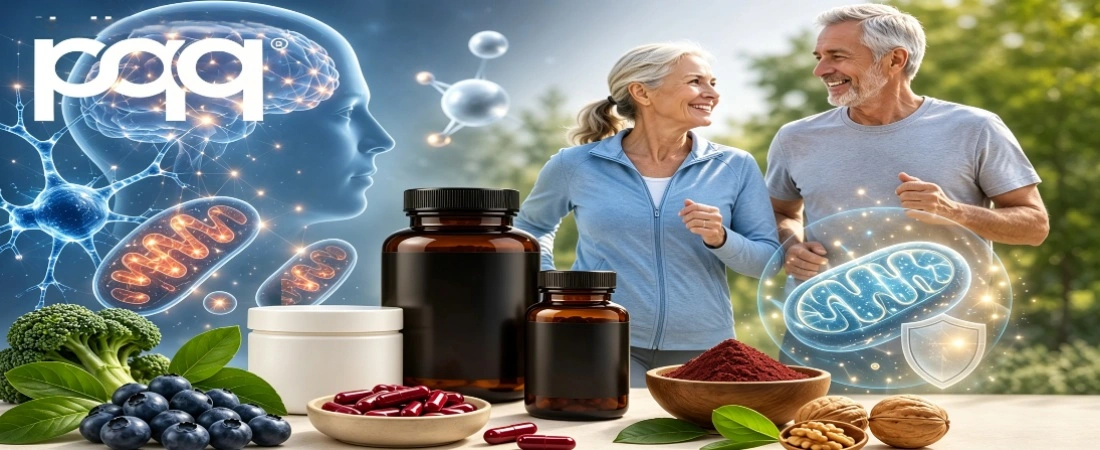
Application of Bulk PQQ Powder Across Industries
Especially in product-development applications for bulk PQQ powder include nutritional supplements, functional foods, drinks and even cosmetic formulations. Its applicability relies on its chemical form, the circumstances of its creation, its stability and its regulatory status.
Dietary Supplement Formulations
Production of PQQ compounds is a strength of dietary supplements. Manufacturers may also choose to add PQQ to capsules, tablets and powder blends for mitochondrial research or antioxidant assistance.
Potential combinations include CoQ10, acetyl-L-carnitine, phosphatidylserine, B-complex vitamins, and other agents. The decision should be based on the intended product idea and the information that is available, not on the assumption that all compounds provide complimentary benefits.
The manufacturers should evaluate the flowability of the powder, uniformity of mixing, solubility and compatibility with excipients. These variables may impact the filling accuracy and uniformity of the final product. Test in real production conditions, not vague explanations about the elements.
Functional Food and Beverage Integration
PQQ may be used in several powdered drink mixes, liquid supplements and functional beverage concepts. The acceptability of the substance for these products is dependent upon the chemical form and its reactivity at the pH of the formulation and processing and storage conditions.
PQQ disodium salt is used in aqueous formulations but solubility is insufficient for long term stability. Beverage manufacturers should test for dissolving and colour changes, compatibility with other ingredients and assay retention throughout storage.
Effects of pasteurisation, light and pH should also be studied under realistic processing conditions. Stability testing may be useful for the assessment of packaging features, e.g. light protective containers.
Moreover, the use of PQQ in beverages must comply with the appropriate food standards and conditions of use in the market of destination.
Cosmeceutical and Topical Applications
Due to its redox activity and its role in oxidative-stress reactions, PQQ has been a molecule of interest to researchers. These properties have caused interest in its future use in some cosmetic formulations.
But the study into the cellular pathways does not support the idea that PQQ when applied topically reduces wrinkles, reverses skin ageing or provides clinically proven skin benefits. “Cosmetic companies should not make anti-aging or therapeutic claims they can’t substantiate.
Formulators producing serums, lotions or other topical products containing PQQ should evaluate the compatibility of PQQ with emulsifiers, preservatives, solvents and other active ingredients. Appropriate tests should be carried out to assess the stability, appearance, compatibility with packaging and safety of the finished product.
Suppliers to provide necessary identity and quality documentation. Microbiological test requirements should be defined depending on the final product, manufacturing process and appropriate cosmetic regulations.
Ensuring Quality & Safety: What B2B Buyers Must Know
Quality assurance is an important issue when buying functional ingredients for commercial manufacture. A defined specification, accurate analytical procedures and documentation at batch level assist customers to evaluate whether Bulk PQQ powder matches their needs.
Certificate of Analysis Verification
Each commercial batch should be accompanied with a particular COA for the batch. Buyers should ensure that the document contains the product identification, assay result, test methodologies, and any applicable impurity or contaminant results.
HPLC may be used to evaluate PQQ content, however the result provided should be interpreted in line with the analytical technique and calculation foundation. whether a claim is made for 99 % purity, it should be clear whether the claim is based on chromatographic area percent, assay on an as-is basis, or any other established measurement.
Depending on the intended use and market, purchasers may also ask for:
- Heavy metal testing for lead, arsenic, cadmium, and mercury
- Residual solvent results, where relevant to the manufacturing process
- Microbiological testing appropriate to the intended product
- Moisture content and other relevant physical specifications
- Identity confirmation using suitable analytical techniques
- Stability information under defined storage conditions
There is no one numerical limit that applies to all PQQ products and markets. Acceptance criteria are to be created according to relevant rules, product category and buyer quality standard.
A further step in verification might be testing in independent laboratories, notably in the initial accreditation of suppliers or when changing manufacturing lots.
Safety Profile and Contraindications
PQQ has been studied in both preclinical and human studies; nevertheless, the information provided does not prove that every dosage is safe for every group. Safety judgements should be based on the exact chemical form, amount of exposure, research population and intended application.
Manufacturers need to avoid sweeping promises such as “no side effects” or extrapolating results of a small human trial to all customers. Information on pregnancy, lactation, drug usage in particular populations and other relevant safety information should be evaluated according to available safety data and regulatory advice.
Finished supplements to be consumed by the public should be labelled to meet the criteria of the market in which it is sold. Warnings or precautions should be based on solid knowledge, not on guesswork as to how PQQ impacts the body.
Storage and Stability Requirements
Store PQQ powder as directed per the manufacturer’s written advice. The packaging should be well sealed and appropriate for safeguarding the goods from moisture and excessive light.
Temperature and relative humidity requirements should be based on product specific stability data. The article should not presume that all PQQ materials must be kept below 25 °C or 60% relative humidity unless such values are specified in the specifications provided by the supplier.
Studies of stability under specified settings should be available to support the stability of an ingredient for the claimed shelf-life. A set six-month time after opening is not suitable for every product. Buyers should consult the manufacturer’s guidelines for opened containers and implement appropriate practices at the manufacturing plant.
Finished formulations must be tested separately for stability. But the stability of the raw material doesn’t inevitably translate into the shelf life of a capsule, pill, beverage or cosmetic product.
Conclusion
Bulk PQQ powder is an ingredient of interest in nutraceutical development because of research into its redox activity and potential influence on mitochondrial biogenesis-related signaling. However, preclinical findings should not be presented as proven clinical outcomes, and product claims must reflect the available evidence and applicable regulations.
For B2B procurement, the most important considerations include chemical form, identity, assay method, impurity profile, batch-specific COA, stability, and supplier transparency. Buyers should also compare the actual cost of bulk ingredients with finished products and confirm MOQ, packaging, and delivery arrangements before placing an order. A structured evaluation process helps manufacturers select suitable PQQ ingredients for their intended applications.
FAQ
1. What is the standard minimum order quantity for bulk PQQ powder?
The MOQ for Bulk PQQ powder varies by supplier, product form, packaging, and production arrangement. Some suppliers may offer 25 kg drums, while others may support smaller sample or development orders. Buyers should confirm the current MOQ, sample policy, and pricing directly with the supplier before planning production.
2. How does bulk powder purity compare to finished capsule products?
Bulk powder purity refers to the assay or purity of the raw ingredient, while finished capsule specifications refer to the complete formulation. A finished capsule contains additional excipients and may have a different active ingredient content per serving. Buyers should review the raw material COA and finished-product test results separately.
3. What documented side effects should manufacturers disclose?
Manufacturers should base safety information on reliable human studies, regulatory assessments, and the intended conditions of use. They should avoid presenting PQQ as completely free of side effects or making unsupported claims about specific adverse reactions. Any warnings on finished-product labels should comply with the relevant market's requirements.
Partner with NT Biotech for Premium Bulk PQQ Powder Supply
Choosing a suitable Bulk PQQ powder supplier requires clear product specifications, reliable analytical testing, and transparent communication about manufacturing and delivery arrangements. NT Biotech can be contacted to discuss PQQ ingredient requirements and request the available technical documentation for the relevant product.
Before placing an order, buyers should confirm the chemical form, assay specification, batch-specific COA, testing scope, packaging, MOQ, and delivery terms. For product information, quotation requests, or sample inquiries, contact NT Biotech at info@newthingsbiotech.com.
References
1. Chowanadisai, W., et al. "Pyrroloquinoline Quinone Stimulates Mitochondrial Biogenesis through cAMP Response Element-binding Protein Phosphorylation and Increased PGC-1α Expression." Journal of Biological Chemistry, 2010.
2. Stites, T., et al. "Pyrroloquinoline Quinone Modulates Mitochondrial Quantity and Function in Mice." Journal of Nutrition, 2006.
3. Nakano, M., et al. "Effects of Oral Supplementation with Pyrroloquinoline Quinone on Stress, Fatigue, and Sleep Quality." Functional Foods in Health and Disease, 2012.
4. Rucker, R., et al. "Potential Physiological Importance of Pyrroloquinoline Quinone." Alternative Medicine Review, 2009.
5. Harris, C.B., et al. "Dietary Pyrroloquinoline Quinone (PQQ) Alters Indicators of Inflammation and Mitochondrial-Related Metabolism in Human Subjects." Journal of Nutritional Biochemistry, 2013.
6. Hwang, P. and Willoughby, D.S. "Mechanisms Behind Pyrroloquinoline Quinone Supplementation on Skeletal Muscle Mitochondrial Biogenesis." Applied Physiology, Nutrition, and Metabolism, 2018.