- English
- French
- German
- Portuguese
- Spanish
- Russian
- Japanese
- Korean
- Arabic
- Greek
- German
- Turkish
- Italian
- Danish
- Romanian
- Indonesian
- Czech
- Afrikaans
- Swedish
- Polish
- Basque
- Catalan
- Esperanto
- Hindi
- Lao
- Albanian
- Amharic
- Armenian
- Azerbaijani
- Belarusian
- Bengali
- Bosnian
- Bulgarian
- Cebuano
- Chichewa
- Corsican
- Croatian
- Dutch
- Estonian
- Filipino
- Finnish
- Frisian
- Galician
- Georgian
- Gujarati
- Haitian
- Hausa
- Hawaiian
- Hebrew
- Hmong
- Hungarian
- Icelandic
- Igbo
- Javanese
- Kannada
- Kazakh
- Khmer
- Kurdish
- Kyrgyz
- Latin
- Latvian
- Lithuanian
- Luxembou..
- Macedonian
- Malagasy
- Malay
- Malayalam
- Maltese
- Maori
- Marathi
- Mongolian
- Burmese
- Nepali
- Norwegian
- Pashto
- Persian
- Punjabi
- Serbian
- Sesotho
- Sinhala
- Slovak
- Slovenian
- Somali
- Samoan
- Scots Gaelic
- Shona
- Sindhi
- Sundanese
- Swahili
- Tajik
- Tamil
- Telugu
- Thai
- Ukrainian
- Urdu
- Uzbek
- Vietnamese
- Welsh
- Xhosa
- Yiddish
- Yoruba
- Zulu
A deep violet cake, a lavender milk tea, ice cream the color of twilight – these delights have made ube one of the most sought ingredients in the last few years. Ube is a purple yam that has been used in Filipino cuisine for a long time, and can now be found in cafes, bakeries and food factories all over the globe. Because fresh tubers are perishable and difficult to get outside of Asia, most manufacturers use a powdered version. This article covers what ube starch powder is, how it varies from lookalike ingredients, what nutrients it delivers, how it’s utilized throughout food categories and how to purchase with confidence. Authored by NT Biotech, a leading provider of ube starch powder to food, beverage and supplement companies globally. Our ube starch powder is prepared from carefully chosen Dioscorea alata tubers which are cleaned, peeled, softly dried and processed into a fine, naturally purple powder. It includes no artificial colors, it mixes readily and each batch is tested and sent with a Certificate of Analysis. Ube For samples or bulk pricing contact info@newthingsbiotech.com .
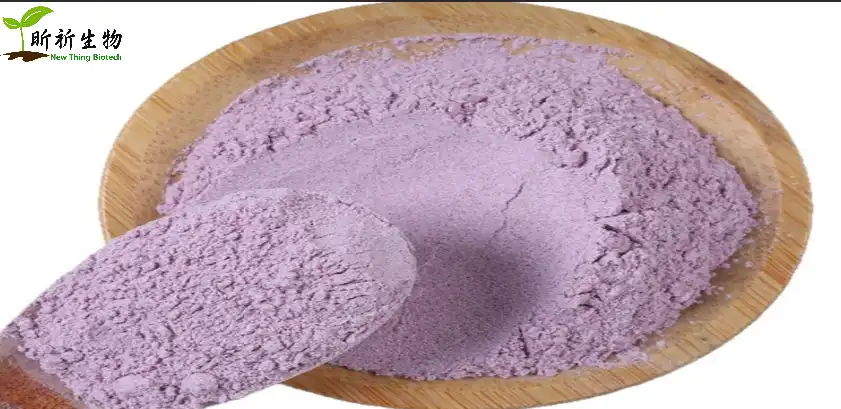
Ube Starch Powder Explained in Plain Terms
The Plant Behind the Color
Ube is the Filipino name for Dioscorea alata, a climbing vine with underground tubers ranging from light lavender to deep purple. It is sometimes called the purple yam, bigger yam or water yam. Native to South East Asia, it is now grown in all tropical locations from the Philippines to southern China, India, West Africa and the Caribbean. In an exhaustive review of the genus yam, Obidiegwu and co-workers observed that Dioscorea species are important staple foods with high carbohydrate content and also contain bioactive compounds of growing scientific interest . For cooks the draw is more immediate. Ube has a subtle nutty, vanilla-like taste and a tint that few other natural foods can match.
From Tuber to Powder
Making ube powder from a fresh tuber is a delicate art. The yams are cleaned and peeled and then sliced or pulped and dried at controlled temperatures to retain both color and flavor. The dry material is then milled and screened to form a uniform powder. The tuber naturally contains a lot of starch and the powder when finished will thicken when cooked with liquids. And that is why it is so great in jams, puddings, fillings and baked items. Drying also removes most of the water which concentrates color and flavor, reduces shipping weight and enhances shelf life to around 24 months when the powder is kept sealed, cool and dry.
Ube, Taro, or Purple Sweet Potato?
Even shoppers and even vendors confuse ube with taro and purple sweet potatoes. All three may be purple, but they are distinct plants with diverse tastes and textures.” The difference is the initial step to buy the right substance.
| Feature | Ube (Purple Yam) | Taro | Purple Sweet Potato |
|---|---|---|---|
| Botanical name | Dioscorea alata | Colocasia esculenta | Ipomoea batatas |
| Flesh color | Deep violet to lilac | White to pale lilac with purple flecks | Purple to dark violet |
| Flavor | Mild, nutty, vanilla-like | Earthy, starchy, slightly nutty | Sweet, earthy |
| Texture when cooked | Smooth, creamy | Dense, slightly sticky | Soft, fibrous |
| Classic dishes | Ube halaya, ube cake, ice cream | Taro milk tea, taro buns | Roasted dishes, Okinawan desserts |
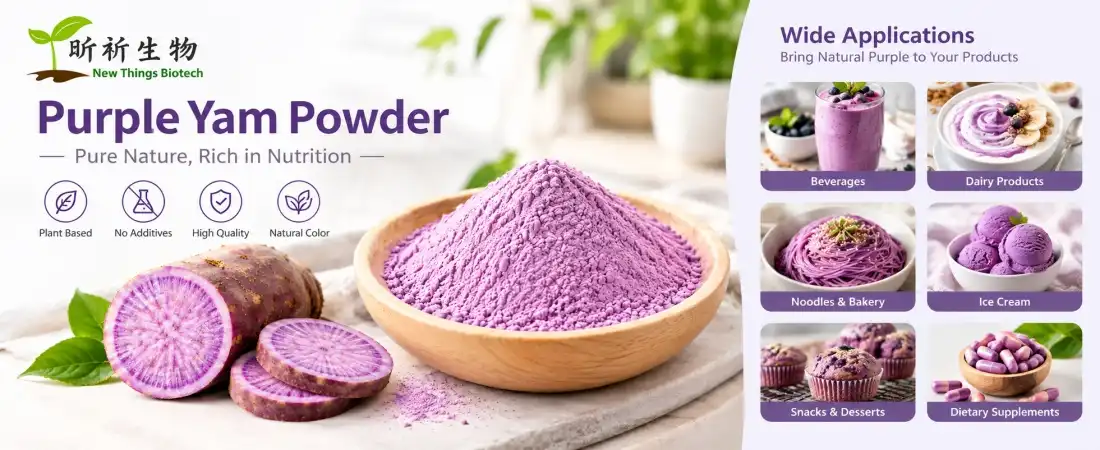
What Makes Purple Yam Ube Powder Nutritionally InterestingAnthocyanins: Antioxidants Behind the Purple
Anthocyanins are the same kind of plant pigment that gives blueberries and red cabbage their color, and it’s what gives ube its bright hue. What makes ube distinctive is the sort of anthocyanin it has. Moriya et al. identified various acylated anthocyanins from purple yam. They had color molecules bound to organic acids, which are usually more persistent than simple anthocyanins, and they exhibited strong antioxidant action in lab testing. Fang and colleagues have also discovered a variety of phenolic chemicals in Chinese purple yam. Practically speaking, the same chemicals that give purple yam ube powder its jewel-toned hue also support an antioxidant claim on the label.
Complex Carbohydrates and Natural Starch
Ube is mainly a source of complex carbohydrates, which give a slow release of energy. Riley, Wheatley and Asemota looked at starches taken from numerous Dioscorea alata cultivars and reported on features such as granule size, amylose content and swelling qualities that impact the behavior of yam starch in food. Zhu in his complete analysis on yam starch said that it forms nice gels and has strong thickening capacity. These qualities are also what makes ube generate such smooth, creamy textures in sweets, without significant quantities of additional thickeners.
Minerals, Fiber, and Everyday Wellness
Purple yam also contains dietary fiber, potassium and modest quantities of vitamin C and other minerals. The greater potential of its pigments is now the subject of research. In an animal model, Chen and colleagues discovered that anthocyanins from Dioscorea alata modulated inflammatory markers in a colitis model (Chen et al., 2014). It’s still very early days for these findings, but they give further dimension to ube’s tale as a naturally vibrant, plant-based substance that does more than just looks. For companies, the mix of color, texture and nutrition helps position them in luxury desserts, better-for-you snacks and wellness beverages.
Uses: From Ube Halaya to Bubble Tea
Bakery and Desserts
Ube is on the dessert table. Ube halaya is a creamy jam of coconut milk and butter that forms the base for cakes, pastries and halo-halo, a tiered shaved-ice delight from the Philippines. Now, ube starch powder is utilized in chiffon cakes, crinkle cookies, pandesal rolls, cheesecakes, mochi, donuts and macarons. For best results and a more even color, dissolve the powder in warm milk or water first, then stir in. It has a natural starchiness that helps to set fillings and custards in a creamy consistency.
Drinks, Frozen Treats, and Cafés
You’re starting to see more purple ube lattes at coffee shops, and bubble tea stores now offer ube as a flavor among the likes of taro and matcha. It is a favorite among ice cream producers, who appreciate its tint and subtle vanilla overtones; smoothie bars blend it with coconut, banana and oat milk. Here are some reasonable beginning points for typical applications in the table below. Select your choices and colors.
| Application | Suggested Starting Level | Main Benefit | Handling Tip |
|---|---|---|---|
| Cakes and cookies | 5–15% of flour weight | Natural purple color, nutty flavor | Rehydrate in warm liquid first |
| Ube halaya and fillings | 15–25% of mix | Creamy texture, deep color | Cook slowly with coconut milk |
| Lattes and milk tea | 5–10 g per cup | Café-style color and taste | Whisk into warm milk |
| Ice cream and frozen desserts | 3–8% | Vivid color, smooth body | Add to the base before churning |
| Smoothies and shakes | 5–10 g per serving | Color and plant-based carbohydrates | Blend with coconut or banana |
| Noodles, bread, and snacks | 5–10% | Eye-catching purple tone | Avoid strongly alkaline doughs |
Snacks, Supplements, and Beyond
Food companies claim ube powder is utilized in extruded snacks, cereals, cereal coatings, protein bars and plant-based yogurts, where a natural purple instantly suggests luxury. Supplement producers use it to superfood blends and meal-replacement shakes. Its delicate texture lends itself to cosmetic face masks and bath products where a flora hue lends shelf appeal.
Keeping the Purple Bright
Anthocyanins are pH sensitive. In acid circumstances they are more red-violet, in alkaline situations they are more blue, or even greenish-gray. Therefore, baking soda may make an ube cake “dull.” Using baking powder, a little lemon juice or cutting down on alkaline elements can keep the shade bright. Opaque packaging and moderate baking temperatures also help maintain the color.
Developing an ube latte mix, bakery line or frozen treat and want to check how our powder works in your recipe? Send us your product concept at info@newthingsbiotech.com Our technical staff will contact you back within two hours with tips on use and a free sample with its batch CoA.
Buying Tips: How to Spot a High-Quality Ube Starch Powder
Check the Botanical Name and Ingredient List
The first test is that of identification. Genuine ube powder should have Dioscorea alata as its source. Some goods labeled as “ube” are really purple sweet potatoes, or just plain starch tinted with colors and flavored with fake vanilla. Read the label carefully and search for a single ingredient that has no extra colors, fillers or flavorings. A reliable provider will happily confirm the botanical source in writing, along with accompanying paperwork.
Review the Specification Sheet
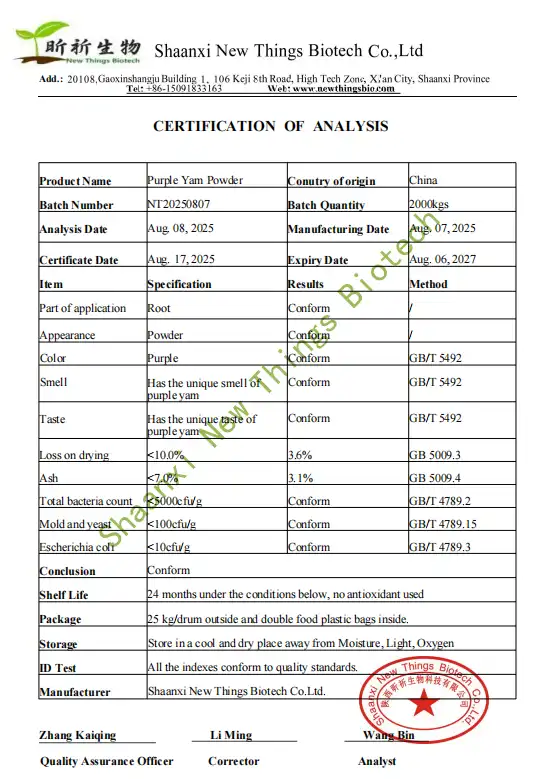
Indicators of how a powder will work and how long it will persist include its color, moisture, particle size and microbiology. Request complete spec sheet and batch specific CoA before purchase. The average specification of NT Biotech's ube starch powder is shown in the table below and is confirmed for each manufacturing lot.
| Item | Specification | Test Method |
|---|---|---|
| Botanical Source | Dioscorea alata L. (tuber) | Organoleptic |
| Part Used | Tuber | — |
| Appearance | Light to deep purple fine powder | Visual |
| Odor and Taste | Characteristic, mildly sweet and nutty | Organoleptic |
| Particle Size | 100% pass 80 mesh | Sieve |
| Loss on Drying | ≤ 8.0% | USP |
| Ash | ≤ 5.0% | USP |
| Heavy Metals | ≤ 10 ppm | ICP-MS |
| Total Plate Count | ≤ 10,000 cfu/g | USP |
| Yeast and Mold | ≤ 100 cfu/g | USP |
| E. coli / Salmonella | Negative | USP |
| Storage and Shelf Life | Sealed, cool, dry, away from light; 24 months | — |
Judge Color Consistency and Storage Practices
The quality of natural commodities will vary from harvest to harvest and from cultivar to cultivar. Color uniformity from batch to batch implies a precise selection of raw materials and a controlled drying. Compare reference samples ordered under same light. Make sure the product is in sealed, moisture-proof packaging since starchy granules absorb moisture. Store below around 25°C in a dry place, away from direct sunlight After each use in the home or warehouse, seal bags again.
Why Brands Choose NT Biotech as Their Ube Starch Powder Supplier
Fast Response and Reliable Delivery
Delays are almost impossible with seasonal menus and product launches. NT Biotech is committed to responding to all inquiries within two hours. Popular grades are in stock and are sent within 1-3 working days following purchase confirmation. The production orders generally take 3-10 working days, including raw material procurement, processing, laboratory testing and final packing. Samples and lesser quantities will be sent straight from our manufacturer using our own FedEx and UPS accounts. We move container cargoes by air or sea via reliable freight forwarders tailored to your demands for speed, volume and cost.
Certified Quality, OEM Flexibility, and Easy Payment
We are ISO9001 quality management certified and we are KOSHER and HALAL certified for distribution into a broad variety of markets. Each batch has a CoA with it. Our value chain combines raw material sourcing, research & development, intelligent manufacturing and adaptive supply. OEM and ODM services enable us to customize mesh size, color intensity, packaging and completed formats such as latte premixes or dessert blends. We make international buying easy by accepting payment in the buyer's native currency.

Conclusion
Ube starch powder, purple yam in a simple, shelf-stable form, captures the color, delicate sweetness and creamy texture of the purple yam. It offers natural anthocyanins, complex carbs and eye-catching appeal to cakes, lattes, ice cream, snacks and health mixes. Good outcomes rely on the quality consistency of real Dioscorea alata. Shaanxi New Things Biotech is a reliable plant derivatives supplier, offering batch tested ube starch powder, complete with CoA paperwork and ISO9001, KOSHER and HALAL certifications. We assist food, beverage and supplement companies from plant source to final product, with speedy stock delivery, flexible logistics and bespoke OEM solutions. Bring nature’s best purple to your cuisine and start working with us immediately.
FAQ
Q1: What is ube starch powder made from?
It is made from dried, finely milled purple yam tubers (Dioscorea alata).
Q2: Is ube the same as taro or purple sweet potato?
No. They are different plants with distinct flavors and textures.
Q3: What gives ube its purple color?
Natural anthocyanins, including stable acylated forms with antioxidant activity.
Q4: How do I keep baked goods bright purple?
Limit baking soda, add a little acidity, and avoid overbaking.
Q5: How fast can NT Biotech ship?
Stock grades ship within 1–3 working days. Production orders take 3–10 working days.
Bring Purple Magic to Your Products with NT Biotech
Ube is gaining popularity in Filipino kitchens and on restaurants throughout the world, and diners are begging for more. NT Biotech answers this need with authentic ube starch powder from selected Dioscorea alata tubers. It is naturally colored, smooth textured and CoA for each batch. We react within 2 hours, send stock grades in days, accept payment in your local currency and provide OEM and ODM assistance for latte premixes, bakery blends, ice cream bases and snacks. Whether you’re introducing an ube special to a café menu or a whole purple product line, our staff can help you achieve it fast and confidently. Email us immediately info@newthingsbiotech.com to get a free sample, complete specs and competitive bulk quote.
References
1. Obidiegwu JE, Lyons JB, Chilaka CA. The Dioscorea genus (yam)—an appraisal of nutritional and therapeutic potentials. Foods. 2020;9(9):1304.
2. Moriya C, Hosoya T, Agawa S, et al. New acylated anthocyanins from purple yam and their antioxidant activity. Bioscience, Biotechnology, and Biochemistry. 2015;79(9):1484–1492.
3. Fang Z, Wu D, Yü D, Ye X, Liu D, Chen J. Phenolic compounds in Chinese purple yam and changes during vacuum frying. Food Chemistry. 2011;128(4):943–948.
4. Riley CK, Wheatley AO, Asemota HN. Isolation and characterization of starches from eight Dioscorea alata cultivars grown in Jamaica. African Journal of Biotechnology. 2006;5(17):1528–1536.
5. Zhu F. Isolation, composition, structure, properties, modifications, and uses of yam starch. Comprehensive Reviews in Food Science and Food Safety. 2015;14(4):357–386.
6. Chen T, Hu S, Zhang H, Guan Q, Yang Y, Wang X. Anti-inflammatory effects of Dioscorea alata L. anthocyanins in a TNBS-induced colitis model. Food & Function. 2017;8(2):659–669.