- English
- French
- German
- Portuguese
- Spanish
- Russian
- Japanese
- Korean
- Arabic
- Greek
- German
- Turkish
- Italian
- Danish
- Romanian
- Indonesian
- Czech
- Afrikaans
- Swedish
- Polish
- Basque
- Catalan
- Esperanto
- Hindi
- Lao
- Albanian
- Amharic
- Armenian
- Azerbaijani
- Belarusian
- Bengali
- Bosnian
- Bulgarian
- Cebuano
- Chichewa
- Corsican
- Croatian
- Dutch
- Estonian
- Filipino
- Finnish
- Frisian
- Galician
- Georgian
- Gujarati
- Haitian
- Hausa
- Hawaiian
- Hebrew
- Hmong
- Hungarian
- Icelandic
- Igbo
- Javanese
- Kannada
- Kazakh
- Khmer
- Kurdish
- Kyrgyz
- Latin
- Latvian
- Lithuanian
- Luxembou..
- Macedonian
- Malagasy
- Malay
- Malayalam
- Maltese
- Maori
- Marathi
- Mongolian
- Burmese
- Nepali
- Norwegian
- Pashto
- Persian
- Punjabi
- Serbian
- Sesotho
- Sinhala
- Slovak
- Slovenian
- Somali
- Samoan
- Scots Gaelic
- Shona
- Sindhi
- Sundanese
- Swahili
- Tajik
- Tamil
- Telugu
- Thai
- Ukrainian
- Urdu
- Uzbek
- Vietnamese
- Welsh
- Xhosa
- Yiddish
- Yoruba
- Zulu
Every beverage formulator eventually faces the same crossroads: how do you deliver striking color, genuine functional value, and a clean ingredient list without compromising shelf stability? For a growing number of drink brands, the answer arrives in the form of a deep crimson powder made from organically grown beets. Organic beet juice concentrate powder solves several problems at once, acting as colorant, nutrient carrier, and marketing asset within a single ingredient. NT Biotech has refined this category through vertically integrated organic farming, proprietary low-temperature concentration, and batch-level analytical verification that beverage manufacturers can actually build specifications around. Their concentrate dissolves cleanly in cold water, holds its color through pasteurization windows, and arrives with the documentation regulatory teams demand. If you are formulating functional shots, sports drinks, or plant-based blends, understanding what organic beet concentrate brings to a liquid system is worth your attention.
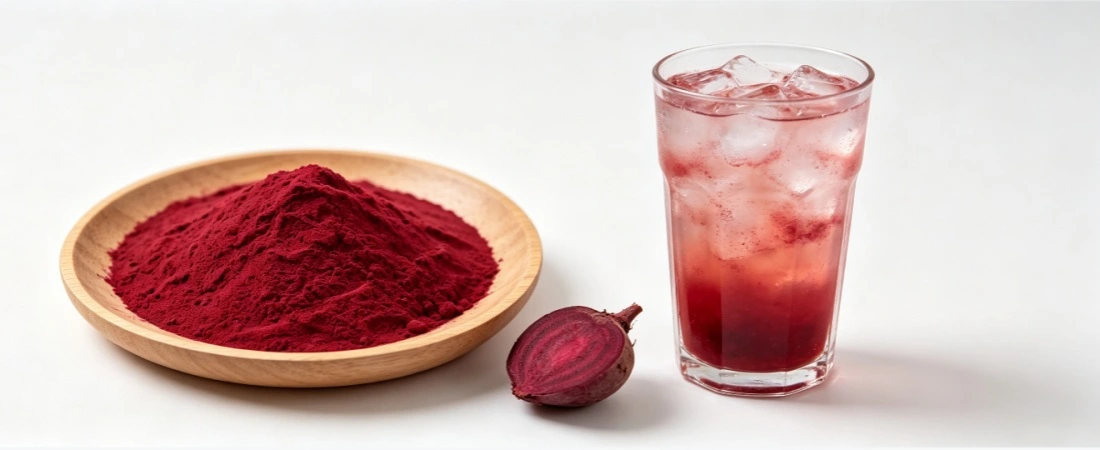
The Color Problem Beverages Couldn't Solve — Until Beet Arrived
Consumers judge a bottle in around two seconds and colour tells of freshness, power and authenticity. For decades, synthetic dyes like Red 40 provide that visual punch economically and dependably, but the regulatory and cultural ground has moved radically under them.
Regulatory Pressure and Consumer Rejection of Synthetic Dyes
Several countries now mandate warning labels for items containing certain azo dyes , and more and more businesses are refusing to carry them . One of the biggest consumer pressures in the market has been parents checking at labels on their children’s beverages. This has prompted formulators to look to plant-based alternatives that have no regulatory burden and no need for explanation on the front panel.
Betalains: A Naturally Vivid Pigment System
The characteristic colour of beetroots is due to two classes of betalains: red-violet betacyanins and yellow-orange betaxanthins. Compared to anthocyanins, which change from red to blue-grey as pH increases, betalains retain a very stable colour at the somewhat acidic pH of most drinks. That reliability is a godsend to production teams expanding a recipe from bench to bottling line.
Where NT Biotech's Concentrate Outperforms
Standard dried beetroot powder has fibre and cellulose that obscure liquids and settle at the bottom of a container. NT Biotech’s beetroot juice concentrate powder eliminates the insoluble part in processing, resulting in a soluble pigment-dense substance that disperses uniformly. Betalain content is assured at 0.8% or greater every batch by HPLC, thus a formulator can determine inclusion rates instead of guessing.
Organic Versus Conventional: What Actually Changes Inside the Bottle
Beetroots are voracious bio-accumulators, pulling into their store root everything is present in the surrounding soil. This biology makes practice of cultivation unusually important.
Residue Profiles and Contaminant Load
Convention beetroot harvests regularly have measurable pesticide residues and because concentration eliminates the water but leaves the solids, the residues concentrate along with the beneficial chemicals in beet juice concentrate powder. Organic certification requires the removal of inputs at the source. NT Biotech combines organic farming with a comprehensive full spectrum ICP-MS analysis for lead, cadmium, arsenic and mercury, providing beverage manufacturers with a defensible stance when retailers or authorities raise concerns.
Soil Health and Nitrate Density
Organic soil management emphasises composting, crop rotation and microbial variety, which corresponds to increased density of mineral absorption and more constant nitrate levels in the harvested root. That’s not just a philosophical choice, it’s a potency variable. The dietary nitrates are what gives beetroot most of its functional appeal in drinks.
The Commercial Value of a Clean Label
Organic certification on a supplier’s raw material flows immediately onto your final label, opening up premium shelf positioning and speciality retail channels. The price difference on the ingredient is made up multiple times over in the placement of the completed product.
| Parameter | Conventional Beet Powder | NT Biotech Organic Concentrate |
|---|---|---|
| Cultivation input | Synthetic fertilizers, pesticides | Certified organic, no synthetic inputs |
| Betalain content | 0.3–0.5% | ≥0.8%, HPLC verified |
| Nitrate concentration | 1.0–2.0% | ≥2.5% guaranteed |
| Solubility in cold water | 60–70%, visible sediment | >95%, clear dispersion |
| Heavy metals testing | Basic panel | Full ICP-MS spectrum |
| Moisture content | 8–12% | <5% |
| Microbial limit | <10,000 CFU/g | <1,000 CFU/g |
| Label eligibility | Standard | Organic, KOSHER, HALAL |
Technical Performance in Real Liquid Systems
The beverage creator cares about how fast it disperses, pH tolerance, thermal endurance and the way the product appears after ninety days on a heated warehouse shelf. Organic beetroot concentrate meets all these requirements well, if the raw material has been treated adequately.
Cold Solubility and Dispersion Behaviour
Surface-clumping powders cause manufacturing problems and customer complaints. NT Biotech's concentrate is milled to an acceptable particle distribution and dries to a low residual moisture so it will wet out quickly in cold water with no need for high shear mixing. This fast dissolving is the difference between a repeat purchase and a one-time trial for ready-to-mix sachets and stick packs.
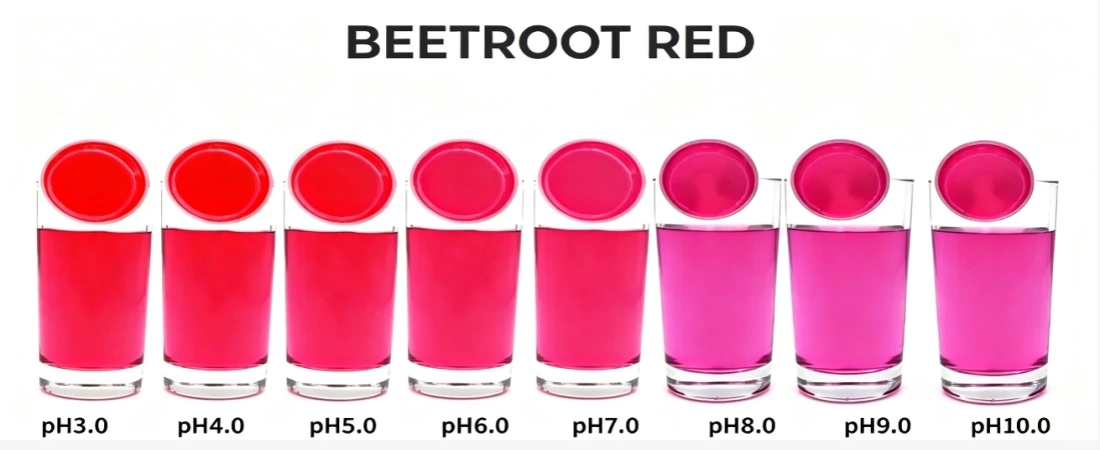
pH Windows and Color Retention
Betalains are mainly stable between pH 4.0 and 6.0, which conveniently coincides with juices, functional waters and most sports beverages. If the pH is below 3.5 the pigment slowly becomes brown over a long period of storage hence ascorbic acid is added as a co-stabiliser for severely acidic mixtures. Above pH 7.0 the degradation increases and hence beetroot is less suited for alkaline waters.
Thermal Tolerance During Processing
Betalains are more resistant to HTST pasteurisation than lengthy low temperature keeping. Short, fast heat exposure saves the pigment, but long, heated holding tanks slowly leak colour from your batch. Where possible, the concentrate is aseptically dosed after pasteurisation to retain maximum vibrancy and nitrate integrity.
Light Protection and Shelf Life Planning
Natural colourants are hostile to ultraviolet radiation. Amber glass, opaque boxes or foil lined pouches retain colour much longer than clear PET. When packed correctly and kept below 25°C, NT Biotech’s concentrate will remain within specification for a period of 24 months.
If you are wrestling with a specific pH, heat, or packaging constraint, it is worth putting the question to people who work with this material daily. NT Biotech's technical team responds to formulation inquiries at info@newthingsbiotech.com, usually within two hours, and can supply application samples sized for prototype runs rather than full production commitments.
Beverage Categories Winning with Beet Concentrate
Most effective examples rely on the earthy-sweet character of beetroot with complimentary flavours, while hanging their hat on the colour or nitrate content as the main selling feature.
Functional Wellness Shots
The 60ml shot size has surged throughout convenience retail and beetroot is a natural anchor ingredient. The earthiness is real and not offensive with ginger, lemon, and cayenne. High inclusion levels provide clinically meaningful amounts of nitrate in a form that consumers may absorb in a single swallow.
Sports and Endurance Beverages
Endurance athletes have driven beet demand for over a decade, and the category continues expanding into mainstream fitness. Combining beet juice concentrate powder with electrolytes and citrulline produces a pre-workout drink that supports circulation without stimulant dependence, appealing strongly to evening trainers and caffeine-sensitive consumers.
Kombucha, Sodas, and Fermented Drinks
Beetroot, which is mostly used as a colourant by craft beverage companies, produces a stunning rose to red spectrum in pictures. As fermentation lowers pH, concentrate is often added after fermentation is completed to preserve colour and beneficial ingredients.
Plant-Based Dairy and Smoothie Blends
At near neutral pH, almond and oat bases are a great canvas. Beetroot provides a natural pink without any chemical additions, and the mild flavour of NT Biotech’s concentrate melds well without overpowering vanilla or berry flavours.
| Beverage Type | Typical Inclusion Rate | Optimal pH | Flavor Partners |
|---|---|---|---|
| Functional wellness shot | 5–10 g per 60 ml | 4.0–4.5 | Ginger, lemon, turmeric |
| Sports pre-workout mix | 8–15 g per serving | 3.8–4.5 | Tart cherry, citrus, electrolytes |
| Kombucha / craft soda | 0.5–2 g per litre | 3.2–4.0 | Hibiscus, raspberry, ginger |
| Plant-based milk | 1–3 g per litre | 6.5–7.0 | Vanilla, strawberry, cacao |
| Cold-pressed juice blend | 3–8 g per 250 ml | 4.0–5.0 | Apple, carrot, orange |
| Instant sachet / stick pack | 5–12 g per stick | 4.0–5.5 | Mixed berry, tropical |
Choosing a Beet Juice Concentrate Powder Supplier You Can Scale With
Evaluating a beetroot juice concentrate powder provider requires looking at the operational layer behind the specification sheet.
Vertical Integration from Field to Finished Powder
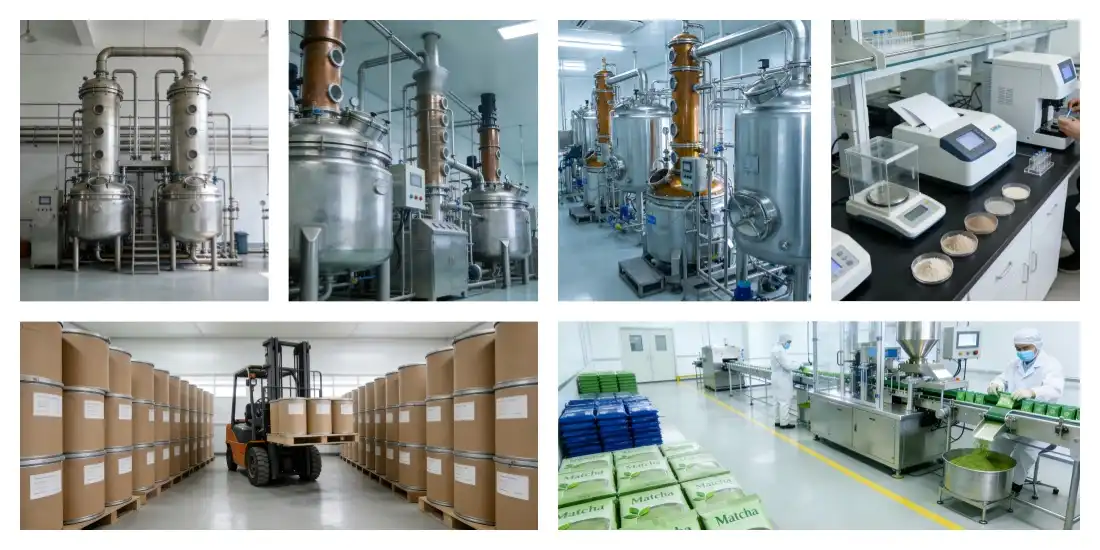
NT Biotech handles the whole supply chain from organic planting agreements to extraction, testing and packaging. No intermediate traders means you eliminate the batch-to-batch unpredictability that plagues commodity sourcing. The material you qualify in development is the same material that arrives twelve months down the road.
Certification and Documentation Depth
Their quality management system is governed by ISO9001 and KOSHER and HALAL certifications allow them to enter Middle Eastern, South-east Asian and North American markets without reformulation. A Certificate of Analysis accompanies each shipment with HPLC & UV findings, microbiological data and heavy metals screening.
Responsiveness, Lead Times, and Logistics
Stock products are sent within 1-3 working days after order confirmation, and custom manufacturing orders are fulfilled in 3-10 working days – a fraction of the industry norm. Shipping is tailored to need, direct FEDEX and UPS despatch from production for urgent samples and trusted freight forwarders for big sea and air consignments.
OEM Flexibility and Payment Terms
Offering custom particle sizes, bespoke mixes and private-label packaging as part of their OEM programme. They also take payment in the buyers native currency, reducing a pain point many overseas providers overlook.
| Service Element | Industry Norm | NT Biotech |
|---|---|---|
| Inquiry response | 24–48 hours | Within 2 hours |
| Stock dispatch | 5–7 days | 1–3 working days |
| Custom production | 15–30 days | 3–10 working days |
| Sample availability | Limited | Prototype-scale samples |
| Payment currency | USD only | Buyer's local currency |
| Customization | Restricted | Full OEM / ODM |
Conclusion
Organic beet juice concentrate powder earns its place in modern beverage development by solving color, function, and label credibility simultaneously. Its betalain stability across common beverage pH ranges, high cold-water solubility, and nitrate density make it a genuinely versatile formulation tool rather than a novelty ingredient. NT Biotech strengthens that proposition through certified organic sourcing, low-temperature processing, HPLC-verified specifications, and service infrastructure built for real production schedules. For brands aiming to launch clean-label functional drinks with confidence, choosing a supplier with vertical control and rapid, documented delivery is as strategic as choosing the ingredient itself.
FAQ
1. Will beet concentrate survive pasteurization in my beverage?
Yes, betalains tolerate short high-temperature pasteurization well. Avoid prolonged warm holding, and add post-pasteurization via aseptic dosing where possible for maximum color retention.
2. What pH range keeps the color stable longest?
Between pH 4.0 and 6.0. Below 3.5, adding ascorbic acid helps protect the pigment during extended storage.
3. Does beet concentrate cloud clear beverages?
No. Because the insoluble fiber fraction is removed during concentration, NT Biotech's powder disperses at over 95% solubility with no visible sediment.
4. How much should I use for a functional claim versus just color?
Color alone requires roughly 0.5–2 g per litre. Functional nitrate levels generally need 5–15 g per serving.
5. What is the shelf life of the powder itself?
Twenty-four months when stored below 25°C in sealed, light-protected packaging.
Build Your Next Beverage with NT Biotech
Ready to move from concept to shelf-ready formula? NT Biotech supplies organic beet juice concentrate powder engineered specifically for liquid applications, backed by ISO9001, KOSHER, and HALAL certification and a full Certificate of Analysis with every batch. Their technical team helps you navigate pH windows, thermal processing, and packaging choices before you commit to a production run. With prototype-scale samples, stock shipping in one to three working days, custom OEM formulation, flexible shipping by express, air, or sea, and payment accepted in your local currency, the barriers to getting started are refreshingly low. Send your specifications to info@newthingsbiotech.com and expect a reply within two hours. Great beverages begin with great raw materials.
References
1. Clifford, T., Howatson, G., West, D.J., & Stevenson, E.J. (2015). The potential benefits of red beetroot supplementation in health and disease. Nutrients, 7(4), 2801–2822.
2. Wiczkowski, W., Romaszko, E., Szawara-Nowak, D., & Pachołek, B. (2016). Chemical stability of betalains during thermal processing and storage. Food Chemistry, 196, 1106–1112.
3. Herbach, K.M., Stintzing, F.C., & Carle, R. (2006). Betalain stability and degradation: structural and chromatic aspects. Journal of Food Science, 71(4), R41–R50.
4. Hord, N.G., Tang, Y., & Bryan, N.S. (2009). Food sources of nitrates and nitrites: the physiologic context for potential health benefits. American Journal of Clinical Nutrition, 90(1), 1–10.
5. Azeredo, H.M.C. (2009). Betalains: properties, sources, applications, and stability – a review. International Journal of Food Science & Technology, 44(12), 2365–2376.
6. Chhikara, N., Kushwaha, K., Sharma, P., Gat, Y., & Panghal, A. (2019). Bioactive compounds of beetroot and utilization in food processing industry: A critical review. Food Chemistry, 272, 192–200.