- English
- French
- German
- Portuguese
- Spanish
- Russian
- Japanese
- Korean
- Arabic
- Greek
- German
- Turkish
- Italian
- Danish
- Romanian
- Indonesian
- Czech
- Afrikaans
- Swedish
- Polish
- Basque
- Catalan
- Esperanto
- Hindi
- Lao
- Albanian
- Amharic
- Armenian
- Azerbaijani
- Belarusian
- Bengali
- Bosnian
- Bulgarian
- Cebuano
- Chichewa
- Corsican
- Croatian
- Dutch
- Estonian
- Filipino
- Finnish
- Frisian
- Galician
- Georgian
- Gujarati
- Haitian
- Hausa
- Hawaiian
- Hebrew
- Hmong
- Hungarian
- Icelandic
- Igbo
- Javanese
- Kannada
- Kazakh
- Khmer
- Kurdish
- Kyrgyz
- Latin
- Latvian
- Lithuanian
- Luxembou..
- Macedonian
- Malagasy
- Malay
- Malayalam
- Maltese
- Maori
- Marathi
- Mongolian
- Burmese
- Nepali
- Norwegian
- Pashto
- Persian
- Punjabi
- Serbian
- Sesotho
- Sinhala
- Slovak
- Slovenian
- Somali
- Samoan
- Scots Gaelic
- Shona
- Sindhi
- Sundanese
- Swahili
- Tajik
- Tamil
- Telugu
- Thai
- Ukrainian
- Urdu
- Uzbek
- Vietnamese
- Welsh
- Xhosa
- Yiddish
- Yoruba
- Zulu
Formulators working with bioactive carotenoid compounds have a major barrier in nutritional component development: stability. Among these chemicals, zeaxanthin stands out for its exceptional biological advantages and equally great degradation susceptibility, generating a fundamental conflict that has fuelled decades of ingredient protection technology research. The introduction of microencapsulated zeaxanthin from marigold has transformed formulating by combining the bioactive benefits of natural plant-derived material with the protective benefits of sophisticated encapsulation technology. NT Biotech has developed proprietary encapsulation processes to preserve marigold-derived zeaxanthin's natural integrity and increase its stability in modern product manufacturing, distribution, and consumer use. Our premium microencapsulated zeaxanthin from marigold protects against primary degradation pathways, ensuring product potency, colour, and function throughout shelf life. This comprehensive analysis will examine the scientific principles, technological advances, and practical benefits that make microencapsulated zeaxanthin the best option for formulators seeking to harness this powerful carotenoid's remarkable benefits in stable, commercially viable products.
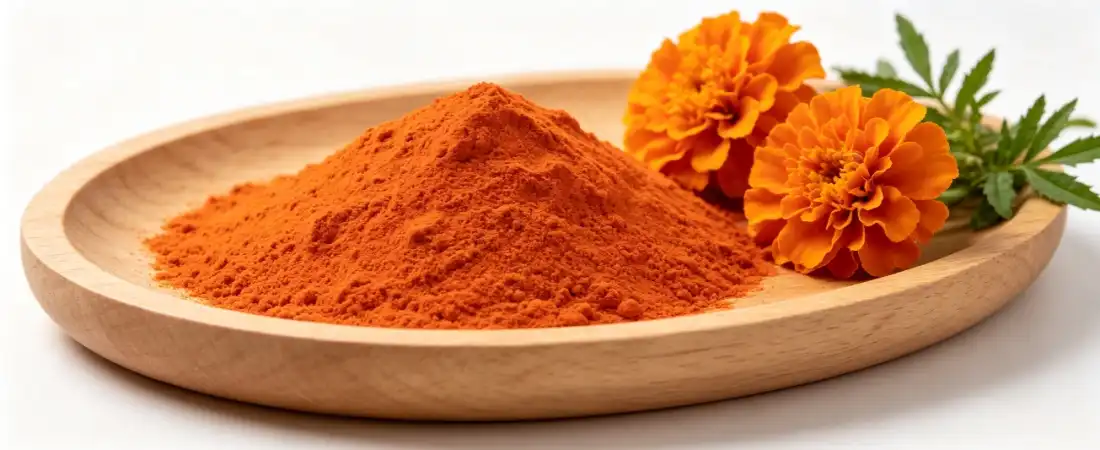
The Fundamental Stability Challenge of Carotenoid Compounds
Molecular Vulnerability of Unprotected Zeaxanthin
Zeaxanthin's chemical structure, with its extended conjugated double bonds, offers it light-absorbing and antioxidant characteristics. The structural characteristic that makes zeaxanthin physiologically useful also makes it very susceptible to chemical breakdown via many interrelated routes. The conjugated polyene system is easily attacked by electrophilic oxidising species and isomerises from bioactive all-trans to less active cis-isomers when exposed to light, heat, or chemical stress. Zeaxanthin's conjugated chain may cleave via oxidative processes, releasing shorter-chain aldehydes and ketones that diminish bioactivity and cause off-odours and flavours that consumers dislike. Understanding degradation mechanisms is crucial to comprehend the considerable improvement in microencapsulated zeaxanthin from marigold compared to unprotected material.
Environmental Factors Accelerating Degradation
The stability issues confronting unprotected zeaxanthin are genuine and affect the product lifecycle from manufacture to consumer usage. The conjugated molecular system is destroyed by free radical chain reactions caused by atmospheric oxygen, while light, especially the blue and ultraviolet wavelengths that zeaxanthin absorbs, accelerates isomerisation and photochemical degradation. The Arrhenius relationship indicates that the deterioration rate doubles for every 10°C temperature rise during production, storage, and distribution. Moisture promotes hydrolytic processes and microbial development, whereas trace metals like iron and copper catalyse Fenton-type oxidative destruction. These diverse, often synergistic degradation mechanisms render unprotected zeaxanthin unsuitable for commercial product development, emphasising the need for robust stabilisation.
Commercial Consequences of Inadequate Stability
The commercial repercussions of low zeaxanthin stability go beyond laboratory concerns regarding potency retention and may impair product success. Unprotected zeaxanthin products often fade colours, which erodes consumer confidence and gives the impression of an aged or degraded product. Off-odors and off-flavors can make products unpalatable before their expiration dates. Products may have much less active ingredient than advertised due to potency losses throughout distribution and storage, causing regulatory compliance concerns and customer dissatisfaction with effectiveness. Commercial implications drive the importance of stabilisation technology in the carotenoid ingredient industry, with microencapsulated zeaxanthin from marigold being the preferred choice for premium product developers.
Microencapsulation Technology: A Comprehensive Protection Strategy
Physical Barrier Formation and Protective Mechanisms
Zeaxanthin's various stability issues are addressed using microencapsulation technology, which isolates each particle of the active chemical from degrading influences. To create microencapsulated zeaxanthin from marigold, the carotenoid is dispersed in an emulsion system and spray-dried to form a solid matrix of protective wall material, such as modified starches, maltodextrins, and food-grade polymers. This matrix forms a physical barrier that greatly minimises oxygen passage to the encapsulated carotenoid, prevents moisture penetration that may cause hydrolytic breakdown, and partly protects the active chemical from direct light. Multiple protective processes work together to provide defense-in-depth that is more effective than any one stabilisation method.
Wall Matrix Composition and Functional Optimization
Efficient microencapsulated zeaxanthin from marigold relies on the wall matrix composition and qualities, ensuring appropriate protection and functional features for various applications. The proprietary wall matrix formulations of NT Biotech combine multiple ingredients chosen for their functional contributions to the protective system. Maltodextrins give fast solubility and matrix structure, whereas modified starches produce films and block oxygen. Proteins for emulsification and film strength, antioxidants for supplementary protection, and specialised polymers for modified release or stability may also be used. This advanced multi-component technique creates encapsulation matrices tailored to varied applications and stability issues.
Spray Drying Process Control and Quality Outcomes
To produce high-quality microencapsulated zeaxanthin from marigold, the spray drying process must be carefully controlled to achieve the desired balance of encapsulation efficiency, particle characteristics, and stability. For quick water drainage without thermal damage to the heat-sensitive carotenoid, inlet and outlet temperatures must be regulated. Atomisation parameters influence particle size distribution and surface shape. For consistent capsule production, feed emulsion solids, viscosity, and stability must be controlled. NT Biotech's cutting-edge spray drying facilities use powerful process control systems to monitor and alter these settings, assuring batch-to-batch consistency in encapsulated product quality and stability.
Table 1: Comparative Stability Performance: Microencapsulated Versus Unprotected Zeaxanthin
| Stability Parameter | Unprotected Zeaxanthin | Microencapsulated Zeaxanthin from Marigold | Stability Enhancement Factor |
|---|---|---|---|
| Oxidative Stability (25°C) | Significant degradation within weeks | Stable for 24+ months | 10 to 20 times improvement |
| Light Stability (Ambient) | Rapid color loss and isomerization | Maintained color and isomer profile | 5 to 15 times improvement |
| Thermal Stability (40°C) | Substantial potency loss within days | Minimal degradation over months | 8 to 12 times improvement |
| Moisture Resistance | Highly susceptible to hydrolysis | Protected by barrier matrix | 6 to 10 times improvement |
| Processing Tolerance | Limited to gentle conditions | Compatible with diverse processes | Dramatically expanded range |
| Color Retention | Fades visibly within weeks | Maintains characteristic orange-red | Sustained visual quality |
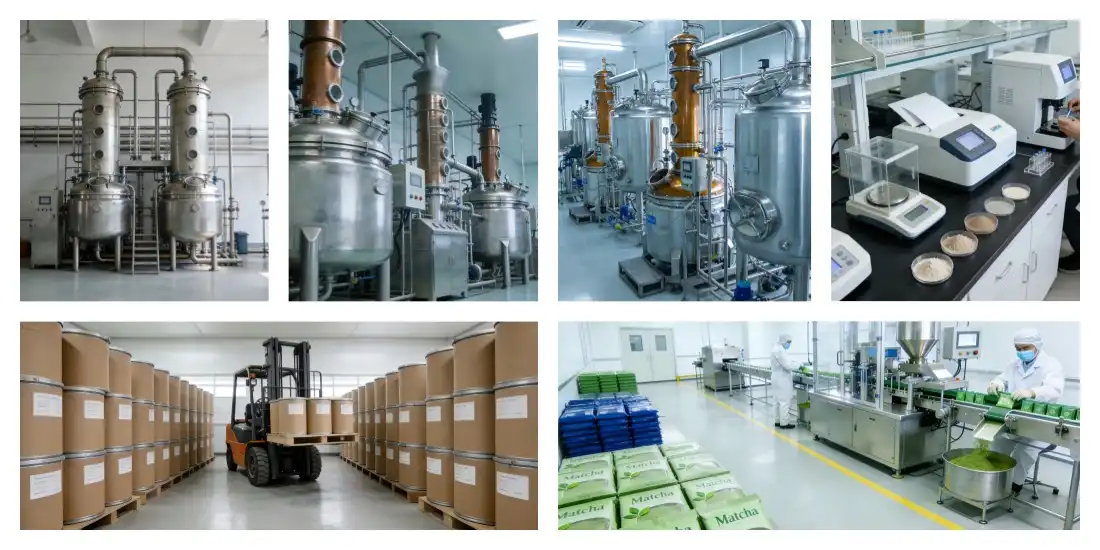
Source Material Advantages: Why Marigold-Derived Zeaxanthin Excels
Natural Isomer Profile and Bioactive Integrity
The selection of marigold flowers as the raw material for microencapsulated zeaxanthin is based on scientific considerations, including product quality, stability, and bioactivity. Marigold-derived zeaxanthin tends to be all-trans, which has been shown to have better bioavailability, tissue accumulation, and biological activity than cis-isomers found in synthetic alternatives or aggressively processed. Lutein and other carotenoid chemicals in marigold extracts synergistically improve stability and biological activity, while the lack of chemical synthesis byproducts reduces catalyst and reagent problems. Our source material has the optimal natural isomer profile due to NT Biotech's autonomous marigold cultivation, making it ideal for encapsulation.
Sustainable and Traceable Supply Chain
Microencapsulated zeaxanthin from marigold has stability benefits and superior supply chain features compared to synthetic alternatives, including sustainability, traceability, and customer acceptability. Synthetic zeaxanthin manufacture uses petrochemical-derived precursors and energy-intensive chemical processes, whereas marigold agriculture uses sustainable approaches to maintain soil health, save water, and encourage biodiversity. Complete transparency of marigold-derived material from growth plots to extraction and encapsulation enhances regulatory compliance and customer trust. Vertically integrated marigold farming to completed encapsulated product gives NT Biotech the best supply chain management and traceability.
Compatibility with Clean Label Requirements
Microencapsulated zeaxanthin from marigold offers benefits over synthetic equivalents due to customer desire for clean label goods with short ingredient lists, recognisable constituents, and little processing. Natural plant-derived chemicals meet clean label requirements better than synthetic substances, and encapsulation wall materials may be made from food-grade products customers trust. This clean label compatibility increases the market appeal of marigold-derived microencapsulated zeaxanthin products, allowing brands to meet both technical formulation requirements and health-conscious consumer preferences. NT Biotech carefully formulates its encapsulation matrices with chemicals that guarantee clean label compatibility while providing formulators with stability and functional performance.
Application-Specific Stability Benefits Across Product Categories
Dietary Supplement Formulation Advantages
The stability benefits of microencapsulated zeaxanthin from marigold are particularly beneficial in the dietary supplement industry, where products must maintain potency over extended shelf lives and withstand various retail situations. Microencapsulation improves oxidative stability, ensuring medicines deliver their full labelled dose at the moment of consumption, promoting regulatory compliance and customer efficacy satisfaction. Visual degradation can indicate product age and erode consumer confidence, but improved processing tolerance allows direct compression tableting, hard-shell encapsulation, and powder sachet filling. Premium supplement manufacturers who want to produce high-quality goods choose microencapsulated zeaxanthin due to its many benefits.
Functional Food and Beverage Applications
Carotenoid ingredients must survive pasteurisation, baking, and hot-fill operations while maintaining appearance and nutritional value in functional food and beverages, which is a difficult stability challenge. Microencapsulated zeaxanthin from marigold overcomes challenges by enhancing thermal stability and dispersibility, allowing for incorporation into products that would degrade unprotected zeaxanthin quickly. This prevents sedimentation and colour streaking in aqueous systems. Protecting against pH extremes in certain food systems widens the range of possible uses, while concealing colour intensity in other matrix compositions allows the production of goods where zeaxanthin's orange-red colour would be troublesome.
Cosmetic and Personal Care Applications
Due to expanding scientific proof of its skin protection and anti-aging properties, zeaxanthin is rising quickly in cosmetics and personal care. Microencapsulated zeaxanthin from marigold provides stability and dispersibility for consistent colour and bioactive content in various formulations, including serums, creams, lotions, and colour cosmetics across their shelf life. Cosmetic formulations need oxidation protection because air can rapidly degrade unprotected carotenoids. Properly encapsulated materials also improve skin delivery and functional performance. This stability and functionality make microencapsulated marigold-derived zeaxanthin an attractive active ingredient for luxury cosmetic and personal care products.
As you consider how the stability advantages of microencapsulated zeaxanthin can enhance your specific product development objectives, the partnership with a knowledgeable and capable supplier becomes a decisive factor in achieving your commercial goals. We invite you to connect with our encapsulation specialists at info@newthingsbiotech.com to discuss your specific formulation challenges, request evaluation samples of our premium microencapsulated zeaxanthin from marigold, and discover how our comprehensive technical support can accelerate your path to market success.
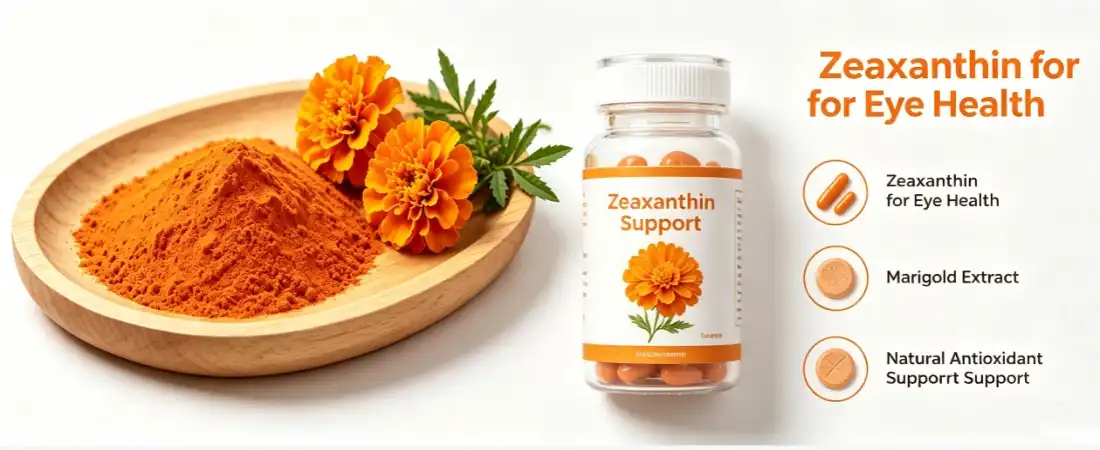
NT Biotech: The Premier Source for Microencapsulated Zeaxanthin from Marigold
Proprietary Technology and Manufacturing Excellence
NT Biotech's microencapsulated zeaxanthin from marigold is very stable due to our exclusive encapsulation technique and production expertise, established through years of research and process optimisation. Our cutting-edge spray drying, emulsion preparation, and process control allow us to reliably create encapsulated zeaxanthin that fulfils the most stringent stability and quality standards. Our wall matrix compositions preserve marigold-derived zeaxanthin optimally, and our quality control procedures guarantee that every batch has the same outstanding stability. As a top provider of microencapsulated zeaxanthin from marigold, we have ISO9001, KOSHER, and HALAL certifications, ensuring worldwide market access for our customers.
Comprehensive Quality Verification and Documentation
Our marigold microencapsulated zeaxanthin's stability claims are backed by rigorous quality verification processes that assess product quality and performance under diverse stress situations. HPLC for zeaxanthin content and isomer profile, surface oil analysis for encapsulation efficiency verification, and standard methods for moisture content, particle size, and contaminant screening are performed on every batch. Accelerated stability evaluations under controlled settings validate shelf life claims and storage recommendations, and full Certificates of Analysis give quality transparency to our customers. We assist our customers' internal quality assurance procedures and regulatory compliance across varied worldwide marketplaces with rigorous documentation.
Partnership-Driven Service and Supply Chain Excellence
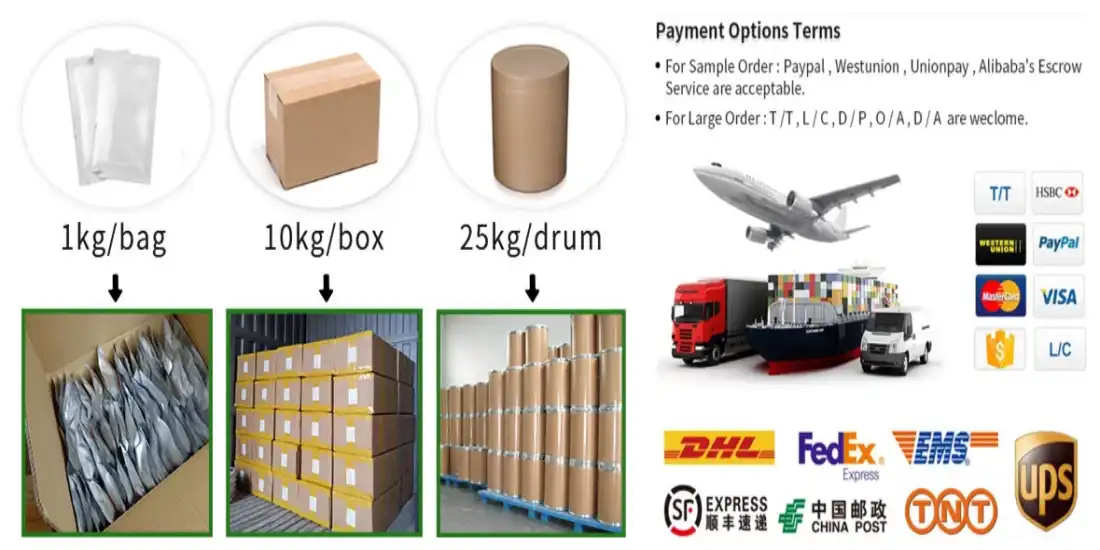
Beyond product delivery, NT Biotech offers technical assistance, customisation, and supply chain excellence to support our customers' long-term success. Our OEM and ODM services allow customisation of zeaxanthin concentrations, encapsulation parameters, and product specifications to meet specific application requirements, while our experienced scientists and formulation specialists advise on product selection, formulation optimisation, and regulatory documentation. We have a large inventory of completed items for fast shipping within 1 to 3 days, and we can custom produce to your requirements within 3 to 10 days. We distribute items internationally via FEDEX, UPS, and reliable freight partners, and our varied payment options, including local currency acceptance, make international procurement easy for our broad global customer.
Table 2: NT Biotech Service Standards and Stability Performance Indicators
| Service and Quality Dimension | NT Biotech Standard | Client Strategic Benefit |
|---|---|---|
| Encapsulation Technology | Proprietary multi-component wall matrix | Superior protection against all degradation pathways |
| Stability Performance | 24+ month shelf life under proper storage | Reliable long-term potency retention |
| Zeaxanthin Purity | 5% to 20% (Customizable), HPLC verified | Tailored to specific formulation requirements |
| All-trans Isomer Content | ≥90% of Total Zeaxanthin | Maximum bioavailability and efficacy |
| Quality Certifications | ISO9001, KOSHER, HALAL | Global market access and compliance |
| Inquiry Response Time | Within 2 Hours | Accelerated project planning and execution |
| Stock Order Fulfillment | 1 to 3 Working Days | Continuous production schedule maintenance |
| Custom Production Lead Time | 3 to 10 Working Days | Rapid innovation and market entry |
| Payment Flexibility | Local Currency Acceptance | Reduced currency risk, simplified transactions |
Conclusion
Shaanxi New Things Biotech provides reliable plant derivatives, including microencapsulated zeaxanthin from marigold. We deliver the greatest extracts to the food, supplement, and cosmetic sectors and adaptable OEM solutions to help you build your next product organically and reliably. Shaanxi New Things Biotech, a technology-based firm with extensive plant extraction expertise, supplies safe and effective pure and active natural raw materials to the worldwide markets for nutritional supplements, functional foods, high-end cosmetics, and animal nutrition. Along with providing, we are our clients' long-term technical partners. We have created a complete value-chain service system from plant source to product application by combining autonomous planting, cutting-edge research and development, intelligent production, and adaptive supply chains. This ensures that each product reflects nature and science, and microencapsulated zeaxanthin from marigold is a prime example of our commitment to quality and innovation.
FAQ
Q1: Why is microencapsulation important for zeaxanthin stability?
A: Microencapsulation creates a physical barrier that protects zeaxanthin from oxygen, light, moisture, and heat, the primary factors that cause degradation. This protection dramatically extends shelf life, maintains potency, and preserves the characteristic color of the carotenoid throughout the product lifecycle.
Q2: How does marigold-derived zeaxanthin differ from synthetic alternatives?
A: Marigold-derived zeaxanthin naturally exists primarily in the all-trans configuration, which exhibits superior bioavailability and bioactivity compared to synthetic material. The natural source also provides clean label appeal, sustainable sourcing credentials, and synergistic co-compounds that enhance overall performance.
Q3: What stability improvements can be expected with microencapsulated zeaxanthin?
A: Properly microencapsulated zeaxanthin typically shows 5 to 20 times improvement in stability compared to unprotected material, with shelf life extending from weeks to 24+ months under appropriate storage conditions. Processing tolerance is similarly expanded, enabling use in applications that would rapidly degrade unprotected carotenoids.
Q4: Can the encapsulation parameters be customized for specific applications?
A: Yes, NT Biotech offers extensive OEM and ODM services that allow customization of zeaxanthin concentration, wall matrix composition, particle size distribution, and release characteristics to meet the specific requirements of different applications and processing conditions.
Q5: How does NT Biotech verify the stability of each production batch?
A: Every batch undergoes comprehensive analytical testing including HPLC analysis of zeaxanthin content and isomer profile, surface oil determination for encapsulation efficiency, and accelerated stability studies. All results are documented in a detailed Certificate of Analysis that provides complete quality and stability documentation for our clients.
Discover the Stability Advantage with NT Biotech's Premium Microencapsulated Zeaxanthin
The stability of your product's active ingredients directly determines its commercial success, consumer acceptance, and long-term brand reputation in the competitive global marketplace. NT Biotech stands as the definitive source for microencapsulated zeaxanthin from marigold that delivers uncompromising stability, exceptional bioavailability, and consistent quality in every batch. Our proprietary encapsulation technology, vertically integrated operations, comprehensive certifications, and partnership-driven service combine to create a supplier relationship that accelerates product development and maximizes commercial success. Do not allow your products to suffer the consequences of inadequate ingredient stability when superior solutions are readily available. Connect with our stability specialists today at info@newthingsbiotech.com to request evaluation samples, access detailed stability documentation, and discover why leading brands worldwide consistently choose NT Biotech as their preferred microencapsulated zeaxanthin from marigold supplier for their most demanding premium applications.
References
1. Bernstein, P. S., Li, B., Vachali, P. P., Gorusupudi, A., Shyam, R., Henriksen, B. S., & Nolan, J. M. (2016). Lutein, zeaxanthin, and meso-zeaxanthin: The basic and clinical science underlying carotenoid-based nutritional interventions against ocular disease. Progress in Retinal and Eye Research, 50, 34-66.
2. Boon, C. S., McClements, D. J., Weiss, J., & Decker, E. A. (2010). Factors influencing the chemical stability of carotenoids in foods. Critical Reviews in Food Science and Nutrition, 50(6), 515-532.
3. Johnson, E. J. (2014). Role of lutein and zeaxanthin in visual and cognitive function throughout the lifespan. Nutrition Reviews, 72(9), 605-612.
4. Krinsky, N. I., & Johnson, E. J. (2005). Carotenoid actions and their relation to health and disease. Molecular Aspects of Medicine, 26(6), 459-516.
5. Soukoulis, C., & Bohn, T. (2018). A comprehensive overview on the micro- and nano-technological encapsulation advances for enhancing the chemical stability and bioavailability of carotenoids in foods. Critical Reviews in Food Science and Nutrition, 58(1), 1-36.
6. Stringham, J. M., Garcia, P. V., Smith, P. A., McLin, L. N., & Foutch, B. K. (2011). Macular pigment and visual performance in glare: benefits for photostress recovery, disability glare, and visual discomfort. Investigative Ophthalmology & Visual Science, 52(10), 7406-7415.