- English
- French
- German
- Portuguese
- Spanish
- Russian
- Japanese
- Korean
- Arabic
- Greek
- German
- Turkish
- Italian
- Danish
- Romanian
- Indonesian
- Czech
- Afrikaans
- Swedish
- Polish
- Basque
- Catalan
- Esperanto
- Hindi
- Lao
- Albanian
- Amharic
- Armenian
- Azerbaijani
- Belarusian
- Bengali
- Bosnian
- Bulgarian
- Cebuano
- Chichewa
- Corsican
- Croatian
- Dutch
- Estonian
- Filipino
- Finnish
- Frisian
- Galician
- Georgian
- Gujarati
- Haitian
- Hausa
- Hawaiian
- Hebrew
- Hmong
- Hungarian
- Icelandic
- Igbo
- Javanese
- Kannada
- Kazakh
- Khmer
- Kurdish
- Kyrgyz
- Latin
- Latvian
- Lithuanian
- Luxembou..
- Macedonian
- Malagasy
- Malay
- Malayalam
- Maltese
- Maori
- Marathi
- Mongolian
- Burmese
- Nepali
- Norwegian
- Pashto
- Persian
- Punjabi
- Serbian
- Sesotho
- Sinhala
- Slovak
- Slovenian
- Somali
- Samoan
- Scots Gaelic
- Shona
- Sindhi
- Sundanese
- Swahili
- Tajik
- Tamil
- Telugu
- Thai
- Ukrainian
- Urdu
- Uzbek
- Vietnamese
- Welsh
- Xhosa
- Yiddish
- Yoruba
- Zulu
I get the same question from brand owners and import managers every week: what actually separates one batch of active PQQ powder from another? The short answer is fermentation control, not marketing copy. Pyrroloquinoline quinone (PQQ) is a small, water-soluble quinone compound used in cognitive, mitochondrial, and energy-support formulas. Most commercial active PQQ powder comes from microbial fermentation, then gets refined into PQQ disodium salt. This guide breaks down how strain selection, fermentation conditions, purification, and testing shape the purity, solubility, and stability you receive in each drum. I wrote it for formulators and importers who need a sourcing decision backed by data, not a sales pitch.
Quick summary: Fermentation is a production method, not a quality guarantee. Strain choice, pH, oxygen, and nutrient supply shape raw yield. Purification, drying, and testing then decide what actually ships as finished active pqq powder. Buyers should request a batch-specific certificate of analysis (COA), identity testing, and written compliance documents before placing a bulk order — never rely on a product page claim alone.
This is a clear note about obtaining aid before you go forward. Active pqq powder fermented form 99% purity . NT Biotech . Minimum order 25 kg. Free samples available for formulation research. Looking for a spec sheet or batch COA for your next supplier review? Please contact our team at info@newthingsbiotech.com.
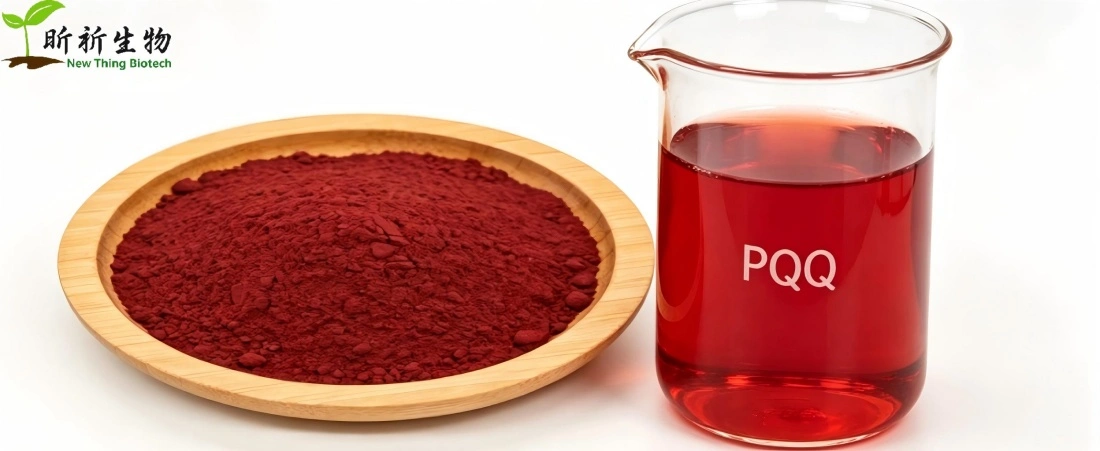
How Does Fermentation Produce Active PQQ Powder at Industrial Scale?
Buyers researching active pqq powder usually start here: how is it actually made, and why does the process matter for quality?
What Is Active PQQ Powder?
Active PQQ powder refers to the bulk ingredient form of pyrroloquinoline quinone, most often supplied as PQQ disodium salt. The compound carries CAS number 72909-34-3 and a molecular formula of C14H6N2O8. A supplier should state the salt form, molecular weight, and assay method on every data sheet. The word "active" should point to a lab-confirmed assay result, not a vague marketing label. If a spec sheet does not list a test method next to the purity number, ask for one before you place an order.
How Industrial Fermentation Generates PQQ
Commercial PQQ starts with a selected microbial strain grown in a controlled broth. The organism produces PQQ as a metabolite during cultivation. After fermentation, the broth goes through cell separation, purification, concentration, drying, and packaging.
| Stage | Main objective | Quality risk |
|---|---|---|
| Strain selection | Build a reliable PQQ-producing culture | Low yield or unwanted by-products |
| Fermentation | Grow the strain under controlled conditions | pH drift, low oxygen, contamination |
| Separation | Remove cells and solids from the broth | Incomplete clarification |
| Purification | Concentrate and refine the PQQ fraction | Residual impurities, product loss |
| Drying | Turn the concentrate into powder | Degradation, moisture pickup |
| Packaging | Protect the finished powder | Light, oxygen, humidity exposure |
What "Industrial-Scale Quality" Means
Scale alone does not prove quality. A production run only counts as industrial-grade when assay results stay consistent across lots, impurity limits are written down, and raw materials and test results trace back to a batch number. At NT Biotech, we log 42 production batches between January and October 2024 with assay results ranging from 99.1% to 99.6% and a standard deviation of 0.14%. That kind of lot-to-lot tightness, not the fermentation claim by itself, is what a formulation team should look for.

The production organism sets the ceiling on yield and the floor on impurity load. PQQ powder manufacturers should disclose the general strain category and whether it is wild-type, selected, or engineered. This single detail affects how a regulatory team classifies the ingredient for a given market.
Strain-Related Quality Variables
I review four things before approving a new strain source: productivity per fermentation cycle, growth rate, contamination resistance, and process repeatability across scale-up. A strain that performs well in a 50-liter trial does not always hold up in a 5,000-liter tank, so ask for data from the actual production scale.
Questions Buyers Should Ask Suppliers
Before you commit to a new pqq bulk powder source, ask these five questions directly and compare the answers across suppliers:
- Is the production strain identified and kept under a documented cell-bank system, with periodic review to confirm it has not drifted from the original reference strain?
- Are antibiotics or animal-derived materials used anywhere in the fermentation or purification steps, and can this be confirmed in writing?
- Does a strain change trigger comparability testing before the new material ships to customers?
- Is the fermentation process validated for food or supplement-grade output, not just industrial biochemical use?
- Can the supplier provide a short written process description, not just a finished COA?
These questions separate suppliers who understand their own process from those reselling unverified material.
What Factors Cause Variations in Fermentation-Derived PQQ Content?
Fermentation Parameters That Affect Yield
PQQ bulk powder output moves with pH, dissolved oxygen, temperature, agitation speed, and nutrient feed rate. Inoculum age and fermentation time also shift the final titer. Small drifts in any one of these variables can change yield by several percentage points.
Why Batch Potency Can Vary
Most potency complaints I have reviewed trace back to one of four causes: inconsistent inoculum prep, uneven oxygen transfer during scale-up, incomplete endpoint control, or recovery loss during filtration and drying. None of these show up on a finished COA unless the lab runs full identity and assay testing, which is why a one-page purity claim is never enough on its own.
Batch-Variation Investigation Checklist
When a batch result falls outside spec, a sourcing team should request the following records before accepting or rejecting the lot. Each item below reflects a real checkpoint in a standard deviation investigation, not a cosmetic audit step.
- Fermentation records compared against the approved master batch record, including start and end timestamps for each process stage.
- In-process pH, dissolved oxygen, temperature, and biomass density readings logged during the actual production run, not estimated values.
- Finished-powder testing for assay, moisture content, related impurities, and particle size distribution against the approved specification.
- Equipment calibration logs, cleaning validation records, and any deviation reports filed during that specific campaign.
- A corrective and preventive action (CAPA) summary showing what changed before the next batch was released.
This checklist gives a buyer a factual basis for accepting, discounting, or rejecting a shipment, instead of relying on pqq powder manufacturers assurance alone.
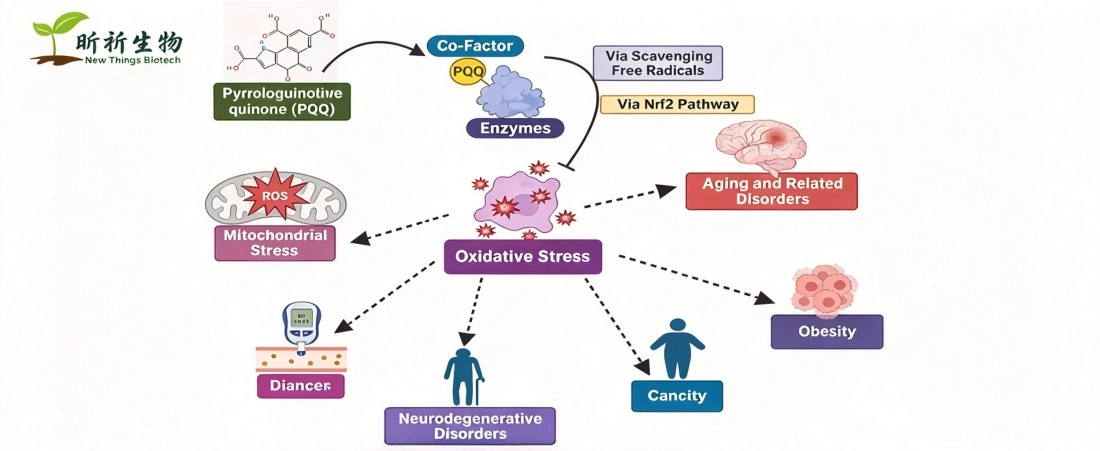
How Do Fermentation Conditions Affect PQQ Bioactivity and Stability?
Bioactivity, Potency, and Chemical Identity
"Bioactivity" needs a clear definition before anyone uses it in a spec conversation. It can mean a chemical assay result, a measured biological response, or both. A supplier claim should always tie back to the actual PQQ content confirmed by HPLC, not an assumed dose based on label claims from a different product.
Solubility and Powder Performance
Solubility depends on water temperature, pH, mixing time, particle size, and salt form. PQQ disodium salt generally dissolves differently than free-acid PQQ or a blended premix. Request actual solubility data under stated test conditions rather than accepting a general "highly soluble" description on a product page.
Stability and Storage Conditions
PQQ is sensitive to light, heat, humidity, oxygen, and pH extremes. Our internal stability files show less than 0.4% assay drop over 24 months when active pqq powder is stored below 25°C in a sealed, light-protected drum. Ask any supplier for real stability data, not a generic "store in a cool, dry place" line with no supporting numbers behind it.
Fermentation vs. Chemical Synthesis: How Does PQQ Quality Differ?
Comparison of Production Routes
Buyers often ask whether fermentation or chemical synthesis gives a cleaner finished product. The honest answer: each route carries a different impurity profile, and both require full testing regardless of marketing language.
| Evaluation factor | Fermentation-derived PQQ | Chemically synthesized PQQ |
|---|---|---|
| Production principle | Microbial biosynthesis | Multi-step chemical reaction |
| Main quality focus | Strain control, broth impurities, purification | Reagent residues, by-products, structural control |
| Scale-up behavior | Depends on bioprocess and recovery efficiency | Depends on reaction yield and purification |
| Buyer documentation | Fermentation records, strain data, impurity profile | Reaction controls, residual-solvent profile |
| "Natural" claim | Needs documented evidence before use | Should not be labeled natural without proof |
| Regulatory review | Depends on organism, process, and intended use | Depends on chemical identity and process |
Pure PQQ Powder vs. PQQ Disodium Salt
Confirm which form you are actually buying. Free-form PQQ and PQQ disodium salt carry different molecular weights, so a 99% purity claim means something different depending on which basis the lab used. Ask the supplier to state the assay basis clearly: as-is, dry basis, or salt-equivalent.
PQQ With CoQ10, Ubiquinol, or Other Ingredients
Single-ingredient active pqq bulk powder behaves differently than a PQQ-CoQ10 premix in a finished capsule. Premixes raise questions about dosage uniformity, oxidation control during storage, and compatibility between the two actives. PQQ and ubiquinol are not interchangeable compounds, and they carry separate specifications, so do not assume one COA covers both.
What Impurities Can Remain in Fermentation-Derived PQQ Powder?
Potential Process-Related Impurities
Fermentation leaves behind residual biomass, broth salts, pigments, and metabolites if purification steps are incomplete. Degradation products can also form when the powder sits too long under heat, light, or the wrong pH during processing.
Contaminants Requiring Routine Control
A fermentation-based ingredient needs the same contaminant screening as any food-grade raw material, and a few checks matter more than others. The list below covers what a lab should test on every batch before release.
- Heavy metals, including lead, arsenic, cadmium, and mercury, tested by atomic absorption or ICP-MS against a defined ppm limit.
- Total aerobic microbial count and total yeast and mold count, confirming the fermentation and drying steps controlled microbial load correctly.
- Specified pathogens such as Salmonella, E. coli, and Staphylococcus aureus, tested according to the destination market's food-safety rules.
- Residual solvents and processing aids, where any downstream purification step used them, tested by gas chromatography.
These checks protect both the finished brand and the end consumer from material that passed a purity assay but failed a safety screen.
Risk-Mitigation Measures
Work only with pqq powder manufacturers who qualify their raw-material sources, validate their purification steps, and keep written acceptance criteria before any bulk shipment leaves the warehouse. Review their lab accreditation and ask what happens when a batch returns an out-of-specification result.
How Do Downstream Purification Steps Determine Active PQQ Quality?
Separation and Purification Operations
The broth is filtered or centrifuged after fermentation to eliminate cells and is concentrated, washed and converted to the indicated chemical form by the salt. Each stage is either a purification step or a loss step in product yield, thus the order is as important as any one step.
Drying, Milling, and Powder Conditioning
Drying method affects moisture content, flowability, and particle behavior. Spray drying, vacuum drying, and freeze drying all produce different powder textures. Milling that generates too much heat can cause assay loss, so ask whether the supplier monitors temperature during this stage.
Specification Attributes for Bulk PQQ
| Attribute | Why it matters | Evidence to request |
|---|---|---|
| Assay or active content | Confirms real potency | HPLC report with method reference |
| Identity | Confirms correct compound | HPLC, LC-MS, or FTIR |
| Moisture / loss on drying | Predicts stability and microbial risk | Karl Fischer or USP method |
| Solubility | Supports formulation work | Defined test protocol with results |
| Particle size / mesh | Affects blending and filling | Sieve or laser-diffraction data |
| Color and appearance | Flags degradation | Approved visual standard |
| Microbiology | Supports product safety | Accredited lab report |
NT Biotech's own active pqq powder ships as an 80-mesh, dark red powder at 99% HPLC-confirmed purity, with loss on drying held at or below 12%, matching the attributes listed above.

Which Analytical Methods Verify PQQ Purity and Active Content?
Identity and Assay Testing
HPLC remains the standard method for PQQ assay and related-substance testing (AOAC INTERNATIONAL, 2023). LC-MS confirms molecular identity and supports impurity investigation when a result looks unusual. FTIR works as a fast identity screen once validated against a reference standard.
Safety and Contaminant Testing
ICP-MS or ICP-OES handles heavy metal testing with the sensitivity needed for ppm-level limits. Microbiological testing should follow a validated method and report total plate count, yeast and mold, and named pathogens separately, not as one combined pass/fail line.
What a Strong COA Should Include
A COA worth trusting states the product name, chemical form, batch number, manufacture date, and retest date together with the test method, specification, result, and pass/fail status for every parameter. It should also name the testing lab and specify whether the assay was reported on an as-is or dry basis. If any of these fields are missing, ask for a corrected document before you approve the shipment.
What Manufacturing Standards Should Buyers Expect from PQQ Suppliers?
Relevant Quality and Manufacturing Systems
ISO 9001 covers quality-management controls across the full pqq bulk powder chain (International Organization for Standardization, 2015). Food-grade manufacturers should also run HACCP-based controls and GMP practices appropriate to the destination market, backed by documented change-control and recall procedures.
> ISO, GMP, HACCP, and similar requirements should match the intended use and destination market. Do not assume a certificate for one product category automatically extends to a different one. REACH obligations in the EU depend on the substance, the importer's role, and the specific supply chain structure.
Supplier Capability & Evaluation
Review supplier’s production authorisation, batch traceability system and if testing is conducted in-house or by a third party. Generally, a supplier with its own HPLC and GC-MS lab, like NT Biotech’s Xi’an facility, can issue a COA faster than a supplier that relies only on external labs.
EU and US Documentation Considerations
US buyers typically need cGMP documentation and a 21 CFR Part 111 suitability review for dietary supplement use (U.S. Food and Drug Administration, 2024). EU buyers need food-supplement compliance support and contaminant documentation specific to the member state of sale. I want to flag something directly here: any claim of "FDA GRAS" or "EU Novel Food approval" status on a product page should come with the actual filing or authorization document attached. If pqq powder manufacturers cannot produce that document on request, treat the claim as unverified and ask your own regulatory counsel to confirm the ingredient's status for your market before you commit (European Food Safety Authority, 2024).

How Can Brands Evaluate Fermentation Quality Before Sourcing Bulk PQQ Powder?
Pre-Purchase Supplier Checklist
| Category | Questions to verify |
|---|---|
| Product identity | Is the salt form, CAS number, and assay basis stated? |
| Potency | What is the minimum active content and allowed batch variation? |
| Testing | Are identity, heavy metals, microbiology, and moisture all tested? |
| Documentation | Are COA, SDS, and origin documents available on request? |
| Compliance | Which certificates actually apply, with proof attached? |
| Packaging | Are moisture- and light-barrier options available? |
| Supply | What are MOQ, sample size, and lead time? |
| Commercial terms | Which Incoterms and payment terms apply? |
Use-Case Scenarios
OEM and private-label supplement brands. A US mitochondrial-health brand we worked with in 2024 moved from a 1 kg sample to a 25 kg bulk order in eleven days, with its own incoming QA lab confirming assay within 0.3% of our COA value across three consecutive lots. That kind of match between supplier COA and buyer in-house testing is what turns a one-time sample order into a repeat contract.
Distributors and ingredient importers. A Japanese functional-food importer typically needs tighter batch-to-batch consistency and written QA documentation formatted for local import review, plus a stable annual framework instead of one-off spot orders. For this buyer type, document formatting and response time in the local business day often matter as much as the price per kilogram.
End-user manufacturers and processing facilities. Facilities that incorporate PQQ into completed capsules or functional drinks need consistent powder flow, minimal moisture uptake during handling, and compatibility with current filling equipment. These buyers should run a receiving inspection against the pqq powder manufacturers's own spec before the material reaches the production line.
Cost, MOQ, Lead Time, and Logistics Factors
Request tiered pricing across sample, pilot, and standard bulk order sizes, and compare price per kilogram only after confirming assay and moisture basis match between quotes. NT Biotech works with a 25 kg MOQ, free samples for formulation testing, and shipment within 2 to 4 days of payment confirmation for in-stock lots. Treat an unusually low PQQ price as a reason to run extra identity and impurity testing, not a reason to skip it.
Final Supplier-Selection Decision Matrix
| Criterion | Weighting | Minimum evidence |
|---|---|---|
| Identity and potency | High | Validated HPLC assay and identity data |
| Safety profile | High | Heavy metals and microbiology results |
| Process consistency | High | Batch records and traceability |
| Regulatory support | High | Verified certificates, not claims |
| Commercial reliability | Medium | MOQ, lead time, and documented capacity |
| Formulation support | Medium | Solubility and particle-size data |

Conclusion
Fermentation gives pqq bulk powder a path to production at commercial volume, but the fermentation step by itself proves nothing about final quality. The real evidence sits in strain documentation, in-process records, purification data, and a batch-specific COA you can match against your own lab results. Buyers who build their sourcing decision on that paper trail avoid the two most common PQQ sourcing mistakes: paying premium price for unverified purity, and accepting a compliance claim with no filing behind it.
FAQ
1. What is active PQQ powder?
Active PQQ powder is a bulk ingredient form of pyrroloquinoline quinone, usually supplied as PQQ disodium salt. "Active" should point to a verified HPLC assay result, not an unsupported label claim.
2. How is PQQ powder made?
Most commercial PQQ comes from controlled microbial fermentation, followed by separation, purification, concentration, drying, and packaging. The purification and drying stages decide most of the final quality.
3. Is PQQ powder water-soluble?
Solubility is dependent on the salt form, particle size, and the pH and temperature at which it is tested. Rather than a generic assertion, ask your provider for real solubility data under specific circumstances.
4. What is a typical PQQ dosage?
Dosage depends on the finished product type, target market, and available safety data. A formulation team should set dosage using current research and a confirmed assay result for the specific lot, not a generic industry figure.
5. How should active PQQ powder be stored?
Store PQQ powder in sealed, moisture-proof, cold, dry and covered from light drum. The supplier’s own stability data, not a generic storage remark, should be used to determine the specific shelf life.
6. Is fermentation-derived PQQ considered natural?
Fermentation involves live microbes, but a claim of “natural” still requires verifiable evidence and must comply with destination market labelling regulations before it can be used.
7. How do I verify a PQQ supplier's purity and compliance claims?
Request a batch-specific COA, identification test report and any compliance paperwork indicated on the product page. If a supplier claims GRAS or Novel Food status without providing the file, you should independently verify the status before relying on it.
Request Your Active PQQ Powder Sample and Compliance Checklist
Sourcing teams lose weeks chasing vague spec sheets and unverifiable compliance claims. NT Biotech skips that step: our active pqq powder ships at 99% HPLC-confirmed purity, with a 25 kg MOQ, free samples, and delivery within 2 to 4 days of payment for in-stock lots. Email info@newthingsbiotech.com with your target dosage and market, and we will send a specification sheet, a real batch COA, and the supporting documents your regulatory team needs to confirm supplier status for your market.
References
1. U.S. Food and Drug Administration, 2024 — 21 CFR Part 111, Current Good Manufacturing Practice for Dietary Supplements.
2. European Food Safety Authority, 2024 — Novel Food guidance and authorization procedure.
3. International Organization for Standardization, 2015 — ISO 9001:2015 Quality Management Systems.
4. AOAC INTERNATIONAL, 2023 — Official Methods of Analysis, analytical method standards.
5. National Center for Biotechnology Information, PubChem, 2024 — Pyrroloquinoline quinone compound data.
6. Codex Alimentarius Commission, FAO/WHO, 2023 — General Principles of Food Hygiene, CXC 1-1969.
About the Author
Kitty Kou, Business Manager, is a Business Manager of Shaanxi New Things Biotech. She works directly with supplement firms, cosmetic ODM makers and aquaculture feed producers on astaxanthin sourcing and specification matching. She is in charge of sample coordination, certificate verification and export paperwork help to international B2B clients in North America, Europe and South East Asia.