- English
- French
- German
- Portuguese
- Spanish
- Russian
- Japanese
- Korean
- Arabic
- Greek
- German
- Turkish
- Italian
- Danish
- Romanian
- Indonesian
- Czech
- Afrikaans
- Swedish
- Polish
- Basque
- Catalan
- Esperanto
- Hindi
- Lao
- Albanian
- Amharic
- Armenian
- Azerbaijani
- Belarusian
- Bengali
- Bosnian
- Bulgarian
- Cebuano
- Chichewa
- Corsican
- Croatian
- Dutch
- Estonian
- Filipino
- Finnish
- Frisian
- Galician
- Georgian
- Gujarati
- Haitian
- Hausa
- Hawaiian
- Hebrew
- Hmong
- Hungarian
- Icelandic
- Igbo
- Javanese
- Kannada
- Kazakh
- Khmer
- Kurdish
- Kyrgyz
- Latin
- Latvian
- Lithuanian
- Luxembou..
- Macedonian
- Malagasy
- Malay
- Malayalam
- Maltese
- Maori
- Marathi
- Mongolian
- Burmese
- Nepali
- Norwegian
- Pashto
- Persian
- Punjabi
- Serbian
- Sesotho
- Sinhala
- Slovak
- Slovenian
- Somali
- Samoan
- Scots Gaelic
- Shona
- Sindhi
- Sundanese
- Swahili
- Tajik
- Tamil
- Telugu
- Thai
- Ukrainian
- Urdu
- Uzbek
- Vietnamese
- Welsh
- Xhosa
- Yiddish
- Yoruba
- Zulu
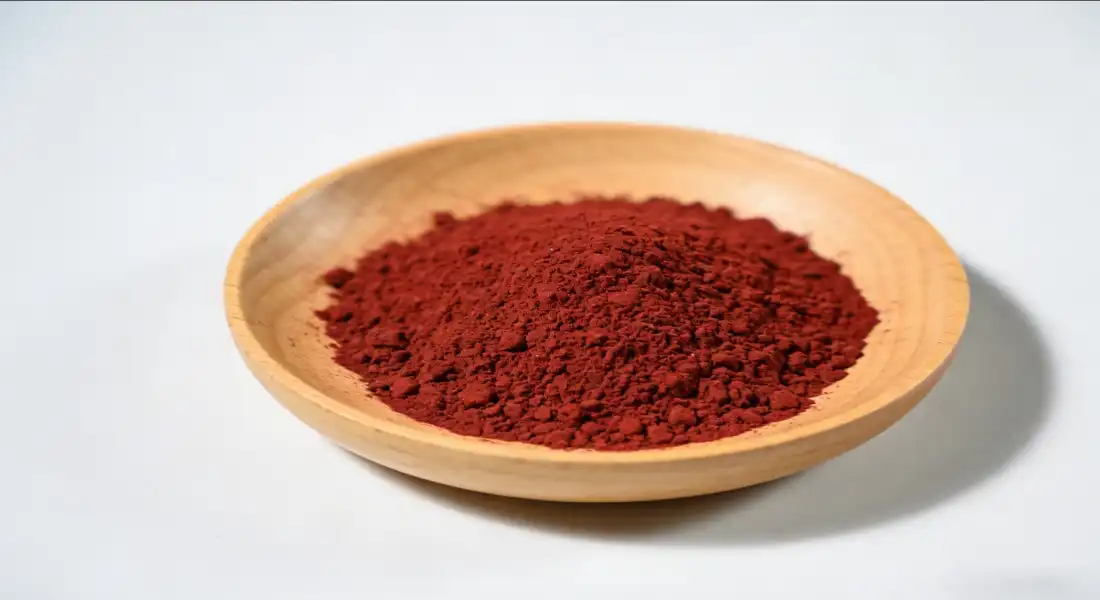
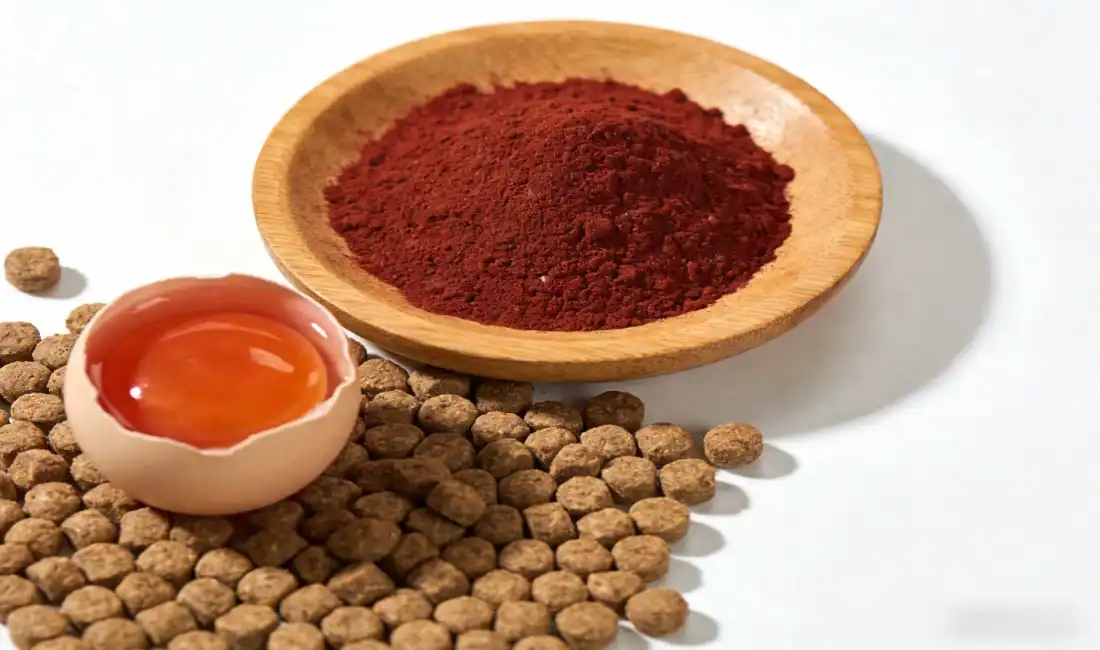
The Astaxanthin Feed Additive has changed the way animals are fed today, especially in the aquaculture and poultry industries that want their animals to be healthier and have better coloration. These powerful carotenoids can be found in nature, like in the microalgae Haematococcus pluvialis, or they can be made in a lab. It has great antioxidant properties that make foods like salmon, shrimp, and egg yolks bright yellow. These properties also boost the immune system and speed up growth. Because the market is getting more competitive, procurement and R&D managers need to know how astaxanthin works and pick the right supplier to make their products stand out and make money.
Understanding Astaxanthin Feed Additive: Composition, Benefits, and Mechanism
The science behind this xanthophyll carotenoid tells us why it is distinctive from other nourish colors. Analysts have found that Haematococcus pluvialis has up to 3.8% astaxanthin by dry weight. This makes it one of the best places in nature to discover this bioactive compound in huge sums. It is a solid antioxidant that works at the cellular level to ensure creature tissues from oxidative stretch and make the digestion system work better.
Natural Versus Synthetic Astaxanthin Sources
Astaxanthin from microalgae like Haematococcus pluvialis is more bioavailable than synthetic forms, consisting mainly of free and esterified molecules that animals absorb efficiently. Synthetic astaxanthin is cheaper and widely available, but natural sources are preferred in high-end, organic, and eco-conscious markets, depending on budget and target consumers.
Health Benefits Beyond Pigmentation
Beyond pigmentation, astaxanthin progresses creature wellbeing by boosting resistance, lessening mortality, improving nourish change, and securing cells from lipid peroxidation. It moreover mitigates push amid transport, bolsters cardiovascular wellbeing, and diminishes metabolic issues, making strides in general crowd or run execution and bringing down veterinary costs.
Dosage Optimization Across Species
Correct dosing depends on species and production goals: salmon need 50–100 mg/kg feed, shrimp 100–150 mg/kg, and layer hens 5–10 mg/kg for yolk color. Dosage adjustments consider water temperature, growth stage, and absorption efficiency. Suppliers with technical expertise help optimize results while minimizing feed costs.
Key Factors for Choosing Reliable Astaxanthin Feed Additive Suppliers
Looking Beyond Price: Why Supplier Evaluation Matters
You should think about more than just the price per kilogram when you are looking for Astaxanthin Feed Additive suppliers. As part of your procurement strategy, it's important to carefully evaluate suppliers. This is because the quality of different products can have a big impact on how the final product looks and on the health of animals.
Certifications and Sustainability as Quality Signals
Top astaxanthin suppliers maintain ISO9001, KOSHER, and HALAL certifications, ensuring quality and regulatory compliance. FDA adherence is essential for U.S. feed additives, reducing legal risks. Sustainability credentials, like closed-loop water or renewable energy production, add marketing value and appeal to eco-conscious buyers.
Product Quality, Bioavailability, and Real Value
High-quality natural astaxanthin shows >98% active compounds via HPLC or UV tests. Certificates of Analysis confirm batch quality and source. Bioavailability improves with carrier oils or microencapsulation, lowering inclusion rates. Suppliers who protect active compounds during extraction provide better value despite higher upfront costs.
Service Responsiveness and Supply Chain Reliability
Reliable suppliers offer technical support, formulation advice, and responsive communication, often replying within two hours. Efficient supply chains keep products in stock, with standard shipments leaving in 1–3 days and custom orders completed in 3–10 days. Transparent production processes, from raw material sourcing to packaging, help buyers plan inventory and maintain consistent production.
Application and Procurement Insights for Astaxanthin Feed Additive
To turn research into useful feeding plans for astaxanthin, you need to know how to use it in different production systems in different ways. Putting your investment to use in the real world is the only way to know if it's worth it in terms of color quality and animal performance.
Aquaculture Applications and Results
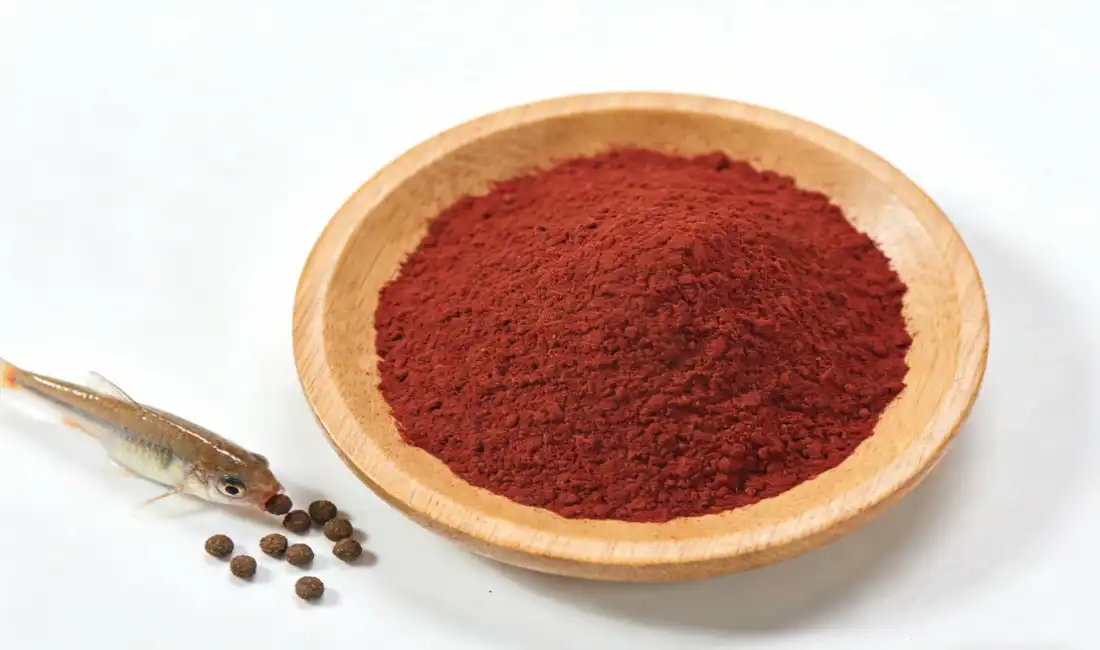
Astaxanthin Feed Additive is essential in salmon farming, providing the coral-pink flesh consumers prefer. Norwegian salmon feed contains 60–80 mg/kg daily, with color gradually building in muscle over 8–12 weeks before harvest. Proper supplementation ensures marketable color and maximizes fish value.
Poultry Industry Integration
For shrimp, astaxanthin enhances shell color, strength, and disease resistance at 100 mg/kg feed, improving survival and growth. It also supports trout, crayfish, and ornamental koi by enhancing red and orange hues. Species-specific absorption and timing are key, and experienced suppliers simplify implementation.
Procurement Strategy and Bulk Purchasing
For shrimp, astaxanthin enhances shell color, strength, and disease resistance at 100 mg/kg feed, improving survival and growth. It also supports trout, crayfish, and ornamental koi by enhancing red and orange hues. Species-specific absorption and timing are key, and experienced suppliers simplify implementation.
Best Practices and Considerations When Using Astaxanthin Feed Additives
To get the most out of Astaxanthin Feed Additive and keep problems from happening, you need to pay close attention to the details of how it is made and how it is monitored. When production teams follow best practices in a planned way, they get the most out of the feed they buy and get consistent results.
Storage and Handling Protocols
Storage drastically impacts astaxanthin stability. Light, heat, and oxygen degrade the molecule. So animals can't eat it. Keep astaxanthin-containing goods in fixed holders away of direct sunlight and below 25°C (77°F). Many companies provide reliable, cancer-preventing astaxanthin. This prolongs rack life when fed normally. If expulsion temperature exceeds compound warm solidity limits, dietary astaxanthin levels may drop. Pelletizing below 80°C (176°F) preserves astaxanthin. Coatings ensure heat-sensitive compounds are uniformly distributed in pelletized feed. Talk to your nutritionist and nourish producer about using astaxanthin effectively throughout manufacture and storage.
Monitoring and Adjusting Supplementation
Check pigmentation often to confirm your astaxanthin treatment is working. Tissue color charts or colorimeters may assist aquaculture enterprises evaluate salmon filet color. If results don't meet advertiser expectations, supplement pricing may vary. To compare yolk color, Roche or DSM fans are used. A consistent measuring method aids recipe changes. Animal species react differently to astaxanthin supplementation. Different strains generate carotenoids better. Tracking pigmentation differences across clusters or genetic sources might help you identify groups who need premium attention. Infections or bad water may hinder astaxanthin absorption. This emphasizes generational nutrition and ecological issues.
Synergistic Nutrient Combinations
Astaxanthin mixes nicely with carotenoids and other vitamins. Replace fair astaxanthin with astaxanthin and canthaxanthin to increase salmon color. Both carotenoids develop in muscle tissue to work together. Use the right amount of carotenoids to avoid false color. Astaxanthin is better preserved with vitamin E. Food and tissues are protected by astaxanthin and vitamin E, which prevent cancer. Thus, fat intake must be sufficient. Astaxanthin, which breaks down in fat, needs intestinal fat transfer. Instead of coloring undernourished foods, create astaxanthin-rich diets. Minerals and nutrients may combine poorly. Excess minerals may enhance astaxanthin oxidation. Experts can assist you prepare nutritious meals that safeguard your Astaxanthin Nourish Added substance speculation and meet your nutritional needs.
Future Trends and Innovations in Astaxanthin Feed Additives for B2B Clients
The Astaxanthin Feed Additive market is always shifting because people buy things in new ways as new technologies come out and their tastes change. Businesses that are willing to look ahead set themselves up to take advantage of new chances and deal with changes in the supply chain.
Sustainability and Natural Source Preference
Since consumers need regular, sustainable materials, astaxanthin buying has altered considerably. Microalgae development has improved with photobioreactors and closed-loop generation. These approaches enhance surrender and decrease environmental impact. These frameworks manufacture environmentally friendly astaxanthin without chemicals. Organic certification is increasingly significant to luxury buyers. People are willing to pay extra for natural items like microalgae-grown astaxanthin. Certified natural astaxanthin suppliers should be researched by acquisition firms servicing these areas. Transportation and packaging contribute to Astaxanthin's carbon impact. Companies that employ renewable energy, clean shipping routes, and recyclable packaging help their consumers become more eco-friendly, making them more profitable. Working with environmentally conscientious suppliers gives you an edge over competition since the law mandates reporting natural consequences.
Advanced Delivery Systems and Bioavailability Enhancement
Astaxanthin performs better with nanoencapsulation. Nanocarriers shield astaxanthin molecules, making stomach absorption easier. Early commercial use shows that encapsulated astaxanthin saves 20–30% of feed expenditures while producing the same color. Emulsification improves astaxanthin mixing in water-based feeds for aquaculture. Distribute feed particles evenly to ensure everyone gets the same amount. A dose change changes color. Companies may create their own emulsification methods to make feed that mixes better and remains stable when stored and fed. Controlled-release formulations boost digestive astaxanthin availability. May be absorbed longer. Recently developed astaxanthin costs more but is better absorbed by cells. Since less must be used, the extra cost is worth it. Compare pigment prices per unit to component costs per kilogram to see how new ideas save money.
Strategic Procurement Approaches
Using data-driven forecasting, procurement teams may optimize stock and discounts. Look at past purchases and estimate future sales to buy in bulk when the market is good. Multiple respected suppliers provide you supply security and market competitiveness, enabling you to bargain. In volatile markets, long-term supply agreements stabilize prices. Astaxanthin prices depend on how much microalgae can be gathered, how much synthetic astaxanthin can be made, and how much people want it for its main purposes. Contracts with 12-to-24-month pricing schemes or predetermined rates protect your budget from price increases and guarantee you have enough. Having several suppliers may reduce quality difficulties, production delays, and regulatory changes. Test and interact with several astaxanthin providers before adding them to your approved vendor list. This initial expenditure pays off when large suppliers have unanticipated troubles. Various suppliers are required. You may avoid complications with more suppliers in different areas.
Conclusion
Because they make the color better, improve animal health, and raise production costs, astaxanthin feed additives add real value when used correctly and strategically sourced. Depending on your production goals and position in the market, natural sources are better because they are more bioavailable, but synthetic sources are less expensive. To make sure the implementation goes smoothly, you should know the correct doses for each species, keep an eye on how the coloring works, and work with suppliers who can provide technical support and quality you can trust. When procurement professionals work with suppliers who are thinking ahead, they give their companies a long-term edge in markets that are becoming more competitive. This is because the business world is moving toward new delivery systems and sustainable ways to get goods to customers.
FAQ
1. What makes astaxanthin effective for animal pigmentation?
Astaxanthin's xanthophyll carotenoid molecular structure lets it stick to animal tissues, especially skin and muscle, giving them the orange-red color that people think of as a sign of quality. Astaxanthin binds to proteins in tissue to make a stable color that stays the same during processing and storage. Other pigments just pass through the body. The compound is an antioxidant, which also keeps the pigment from breaking down. This means that the color stays brighter longer than with options that aren't as stable.
2. How do natural and synthetic astaxanthin compare in performance?
It is easier for the body to use astaxanthin that comes from Haematococcus pluvialis. Research has shown that animals take in more astaxanthin when they eat microalgae. Its natural state is mostly made up of ester structures that are easy for animals to break down. It's easier to get synthetic astaxanthin and it costs less, but it might need higher rates of inclusion to have the same color. How the market is set up often tells us what the best choice is. High-end natural products, for instance, can fetch higher prices that cover the costs of natural astaxanthin, while commodity markets tend to favor synthetic economics.
3. What dosage levels work best for different species?
For the color of their meat to be marketable, salmon usually need 50 to 100 mg of astaxanthin per kilogram of feed. Shrimp farms use 100 to 150 mg/kg, depending on how strong they want the smell to be. A chicken farmer will usually add 5–10 mg/kg to the layer food to change the color of the egg yolk. How much to use depends on the stage of growth, the environment, and the color preferences of the people you want to reach. You can make changes to get the results you want without having to pay more for feed if you start with low inclusion rates and watch how the pigmentation works.
Partner with NT Biotech for Premium Astaxanthin Feed Additive Solutions
You can count on NT Biotech to give you astaxanthin feed additives when you need them. They know a lot about technology and can answer quickly, which is what procurement professionals need. They are over 98% pure because of the unique ways we extract key compounds, and each batch comes with a full HPLC/UV analysis report and a Certificate of Analysis. Standard products are kept in stock so they can be sent out within one to three days. Custom formulations can be made in three to ten business days. ISO9001, KOSHER, and HALAL are all international standards that have been met by us. You can also use your own money to pay, which gives you more choices. Please email our technical team at info@newthingsbiotech.com to learn more about how our standardized plant extracts and OEM customization services can help your products and position in the market.
References
1. Ambati, R. R., Phang, S. M., Ravi, S., & Aswathanarayana, R. G. (2014). Astaxanthin: Sources, extraction, stability, biological activities and its commercial applications. Marine Drugs, 12(1), 128-152.
2. Bjerkeng, B. (2008). Carotenoid pigmentation of salmonid fishes: Recent progress in fish nutrition. In Proceedings of the Eighth International Symposium on Feeding and Nutrition in Fish (pp. 71-89). Korean Society of Fisheries Science.
3. Christiansen, R., & Torrissen, O. J. (1996). Growth and survival of Atlantic salmon fed different dietary levels of astaxanthin. Aquaculture, 143(2), 179-193.
4. Shahidi, F., Metusalach, & Brown, J. A. (1998). Carotenoid pigments in seafoods and aquaculture. Critical Reviews in Food Science and Nutrition, 38(1), 1-67.
5. Storebakken, T., & No, H. K. (1992). Pigmentation of rainbow trout. Aquaculture, 100(1-3), 209-229.
6. Yuan, J. P., Peng, J., Yin, K., & Wang, J. H. (2011). Potential health-promoting effects of astaxanthin: A high-value carotenoid mostly from microalgae. Molecular Nutrition & Food Research, 55(1), 150-165.