- English
- French
- German
- Portuguese
- Spanish
- Russian
- Japanese
- Korean
- Arabic
- Greek
- German
- Turkish
- Italian
- Danish
- Romanian
- Indonesian
- Czech
- Afrikaans
- Swedish
- Polish
- Basque
- Catalan
- Esperanto
- Hindi
- Lao
- Albanian
- Amharic
- Armenian
- Azerbaijani
- Belarusian
- Bengali
- Bosnian
- Bulgarian
- Cebuano
- Chichewa
- Corsican
- Croatian
- Dutch
- Estonian
- Filipino
- Finnish
- Frisian
- Galician
- Georgian
- Gujarati
- Haitian
- Hausa
- Hawaiian
- Hebrew
- Hmong
- Hungarian
- Icelandic
- Igbo
- Javanese
- Kannada
- Kazakh
- Khmer
- Kurdish
- Kyrgyz
- Latin
- Latvian
- Lithuanian
- Luxembou..
- Macedonian
- Malagasy
- Malay
- Malayalam
- Maltese
- Maori
- Marathi
- Mongolian
- Burmese
- Nepali
- Norwegian
- Pashto
- Persian
- Punjabi
- Serbian
- Sesotho
- Sinhala
- Slovak
- Slovenian
- Somali
- Samoan
- Scots Gaelic
- Shona
- Sindhi
- Sundanese
- Swahili
- Tajik
- Tamil
- Telugu
- Thai
- Ukrainian
- Urdu
- Uzbek
- Vietnamese
- Welsh
- Xhosa
- Yiddish
- Yoruba
- Zulu
Astaxanthin Feed Additive is now an important part of animal food, especially in the chicken and fish businesses. Some of the many benefits of this naturally occurring carotenoid are a stronger immune system, better color, faster growth, and a strong defense against free radicals. Farmers say that adding astaxanthin to feed makes animals healthier, feed conversion rates go up, and things of better quality sell for more money. When people who work in B2B buying know about these many benefits, they can make smart decisions that help the business run more smoothly and make products stand out.
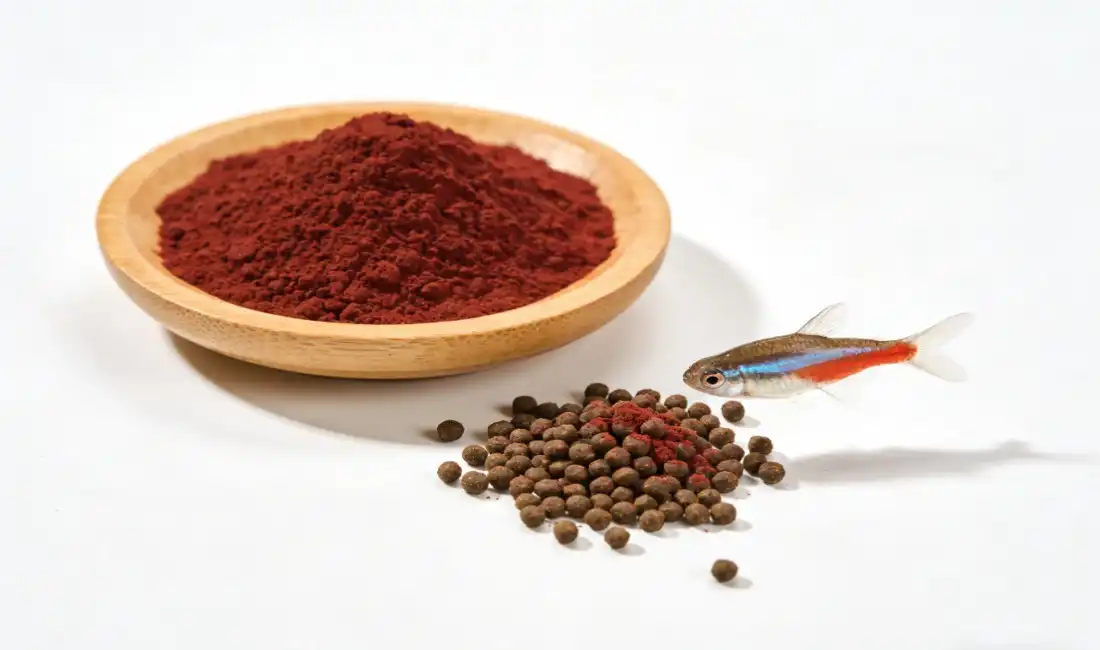
Understanding Astaxanthin Feed Additive
A strong xanthophyll pigment called astaxanthin is becoming better known in the animal feed business. Because of the way its molecules are structured, the chemical has a lot of biological activity. This makes it an important part of industrial feed products.
The Chemical Nature of Astaxanthin
Astaxanthin is a unique carotenoid with hydroxyl and keto groups that enhance its antioxidant strength. Its molecular structure enables superior free radical scavenging compared to vitamin E and beta-carotene. This activity protects animal cells from oxidative damage, supporting overall health, cellular stability, and performance under physiological stress conditions.
Natural Versus Synthetic Sources
Natural astaxanthin mainly comes from the microalga Haematococcus pluvialis, along with yeast and other algae species. These sources offer better bioavailability and biological effects than synthetic forms. Although synthetic versions are cheaper, natural astaxanthin aligns better with clean-label, organic, and premium product requirements in B2B markets.
How Astaxanthin Functions in Animal Physiology?
Astaxanthin integrates into cell membranes, stabilizing lipids and reducing oxidative stress. It enhances immune responses by promoting antibody production and cellular activity. Additionally, it accumulates in tissues like muscle and egg yolks, improving pigmentation. This dual role supports both animal health and product quality, which are critical for commercial performance.
Application Contexts in Aquaculture and Poultry
In aquaculture, astaxanthin is essential for salmon and trout pigmentation, directly affecting market value. It improves shrimp survival and shell color during production. In poultry, it enhances egg yolk color and boosts immunity in broilers. Application-specific benefits help procurement teams optimize dosage, formulations, and compliance with industry standards.
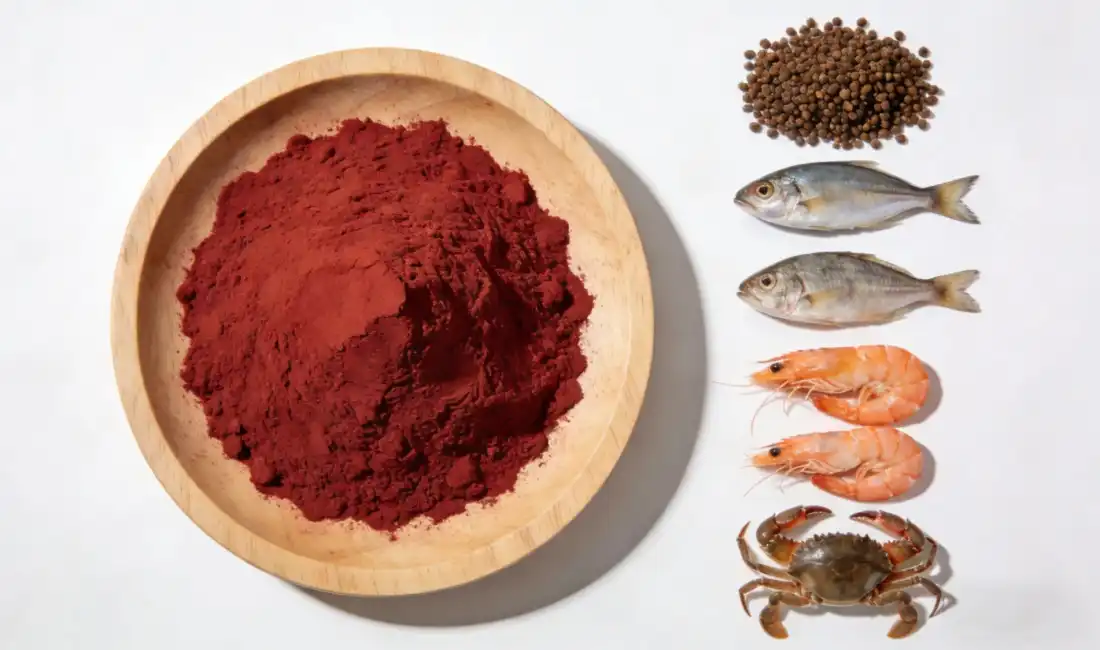
Key Benefits of Astaxanthin as a Feed Additive
Adding Astaxanthin Feed Additive to programs that feed animals is good for more than just making the animals look better. This part talks about the general benefits that can be linked to business results that can be measured.
Enhanced Immune System Function
Astaxanthin supplementation significantly enhances animal immunity by increasing white blood cell counts and improving phagocytic activity. It strengthens both innate and adaptive immune responses, reducing disease incidence and medical needs. In commercial settings, this leads to lower mortality, reduced medication use, and improved herd health, ultimately boosting profitability and operational efficiency.
Superior Antioxidant Protection
Astaxanthin provides exceptional antioxidant protection in intensive animal systems prone to oxidative stress. It neutralizes reactive oxygen species, stabilizes cell membranes, and supports mitochondrial function. With far greater potency than vitamins C and E, it reduces inflammation, protects neural tissues, and improves meat quality by limiting lipid peroxidation and preserving freshness.
Improved Product Quality Through Pigmentation
Astaxanthin improves product quality through enhanced pigmentation, a key market factor. In salmon, it creates the desired pink-red flesh, while in poultry it deepens egg yolk color. Shrimp benefit from improved shell appearance. These visual upgrades increase consumer appeal, enable product differentiation, and allow producers to command premium prices.
Optimized Growth Performance Metrics
Astaxanthin supplementation improves growth performance by enhancing feed conversion ratios and weight gain. Animals utilize nutrients more efficiently, requiring less feed for the same growth. Improved gut health and reduced stress contribute to faster production cycles and better yields, delivering higher returns despite increased ingredient costs in feed formulations.
Best Practices for Using Astaxanthin Feed Additives in B2B Settings
It's important to keep an eye on technical details, quality control, and the supply chain in order for Astaxanthin Feed Additive to work. These things make sure that the most money is spent and that it is well spent.
Optimal Dosage and Formulation Selection
Astaxanthin dosage depends on species, production goals, and formulation type. Aquaculture uses 50–100 mg/kg for salmonids and 75–150 mg/kg for shrimp, while poultry requires 6–12 mg/kg. Powders suit dry feed and pelleting, while liquid emulsions offer higher bioavailability but require specialized mixing equipment and more complex storage conditions.
Quality Assurance and Safety Compliance
Natural astaxanthin, especially from Haematococcus pluvialis, provides 20–40% higher bioavailability and supports organic, clean-label demands. Synthetic versions cost 30–50% less but absorb less efficiently. Procurement decisions should balance cost, regulatory requirements, and market positioning based on business goals and customer expectations.
Supply Chain and Storage Considerations
Strict quality control requires Certificates of Analysis verifying content, purity, and safety via HPLC, along with ISO9001, KOSHER, and HALAL certifications. Proper storage below 25°C protects stability, while compliance with U.S. Food and Drug Administration and regional rules is essential. Efficient supply chains, bulk purchasing, and reliable suppliers ensure consistent quality and availability.
Comparing Astaxanthin with Other Feed Additive
You should know how Astaxanthin Feed Additive stacks up against other commonly used animal food colorants and carotenoids in order to make smart buying decisions.
Astaxanthin Versus Beta-Carotene and Canthaxanthin
Beta-carotene mainly provides vitamin A and produces yellow pigmentation but lacks the strong antioxidant and red-coloring effects of astaxanthin. Canthaxanthin offers reddish-orange color at lower cost but has weaker antioxidant capacity and stricter usage limits. Compared to both, astaxanthin delivers superior antioxidant performance, safety, and premium application value.
Cost and Sustainability Analysis
Astaxanthin costs more than standard colorants but improves feed efficiency, reduces mortality, and increases profitability over time. Natural astaxanthin from Haematococcus pluvialis supports sustainability through eco-friendly production systems. Lower carbon impact and organic compatibility enhance brand value and align with growing environmental and market demands.
Sourcing and Procurement Guide for Astaxanthin Feed Additives
You need to carefully examine your suppliers, deal strategically, and plan your processes well if you want to do well in the global Astaxanthin Feed Additive market.
Identifying Qualified Manufacturers
Astaxanthin is made by a part of diverse companies around the world. Their generation sizes, quality guidelines, and specialized know-how are all exceptionally distinctive. The greatest businesses that make characteristic astaxanthin tend to be found in places that as of now have a solid bioscience base. Asia, Europe, and North America are a few of these places. Great Fabricating Hone (GMP) certifications that are up-to-date and suitable for the bolster employments ought to be checked by buying groups when they see at conceivable sources. Vital quality administration framework certifications like ISO9001 ought to too be checked. Getting certified as Legitimate or HALAL can offer assistance you get into certain zones and reach certain sorts of individuals. Getting natural endorsements like USDA Natural or EU Natural guidelines can offer assistance your products stand out as a awesome choice.
When you judge somebody, their specialized aptitudes are moreover exceptionally critical. Concentrations are as a rule more correct and steady when they come from providers who have their claim extraction strategies and progressed preparing innovations. When a commerce spends cash on full investigation aptitudes, like doing their possess HPLC and spectrophotometric tests, it appears that they care approximately quality control. Generation capacity and versatility matter essentially for operations with developing request, guaranteeing providers can suit volume increments without quality compromises. Asking office reviews or third-party review reports gives extra confirmation, especially when building up unused provider connections including significant obtainment commitments.
Strategic Negotiation and Quality Verification
To successfully negotiate prices, it is important to find a balance between lowering costs, making sure quality, and making sure there is a steady supply of goods. Volume-based pricing usually gives discounts of 5 to 10 percent for yearly commitments of 500 kilograms or more. There are even bigger discounts for commitments of 1,000 kilograms or more. Once supplies run out, deals that last 12 to 24 months can often get you better prices and first choice when supplies are low. The terms of payment affect the total price. There are usually 30 days of net terms in this business, but if you settle within 10 days, you might get a 2 to 3 percent savings. Currency considerations matter in international transactions, with suppliers increasingly offering invoicing in buyers' local currencies, eliminating foreign exchange exposure and simplifying financial management.
A good way to make sure the quality of a product is still to test samples before buying large amounts of it. Good providers give away samples, which are usually between 100 and 500 grams, for free or for a small fee. This is enough for small-scale feeding studies and lab tests. Third-party tests done in approved labs confirm the amount of astaxanthin present, its purity, and the absence of any impurities. Small feeding tests are done on animals to see how they respond to the goods and how biologically active they are. This makes sure that the goods work and look the way they're supposed to. These checks make sure there aren't any problems with the quality before big stocking claims are made. This stops people from making costly mistakes when they buy things.
Logistics and After-Sales Support
Transporting astaxanthin from one country to another is hard to do and needs careful planning and skilled freight management. For goods that weigh less than 25 kg, express shipping through FedEx or UPS is best. The extra cost of freight is worth it for the speed. Around the world, packages normally get there in 3 to 7 days. Air freight is a cheap way to send things that weigh between 25 and 500 kg. Seven to fourteen days is a good range of time and cost for it to arrive. If your order weighs more than 500 kilograms, ocean freight is cheaper, but it takes 20 to 45 days to get there, so you need to plan ahead and make sure you have enough goods on hand. Astaxanthin goods that are very sensitive to heat may need to be shipped in a way that keeps the temperature fixed while they move through tropical areas.
Help that comes after the sale has a big effect on how well a business does and how well it gets along with its providers in the long run. When you answer expert questions quickly, you can help increase the number of inclusions and solve formulation issues. Top companies say they'll answer questions in two hours or less on work days. It is easier to get through customs and send in regulatory papers when you get help with paperwork like letters of regulatory compliance and up-to-date certificates. Quality issue resolution procedures should be clearly established, specifying processes for investigating concerns, arranging replacement shipments, and documenting corrective actions. Suppliers committed to partnership rather than transactional relationships invest in understanding customer applications, proactively sharing technical insights and market intelligence that creates mutual value beyond simple ingredient supply.
Conclusion
Astaxanthin Feed Additive has been shown by scientists to give animal feeding companies a competitive edge by making their products better, keeping animals healthy, and increasing the speed of their production. The compound's amazing antioxidant properties, ability to boost the immune system, and ability to change color are useful in the chicken and fishing industries. For a good application, it's important to pay close attention to source selection, quality assurance, and quantity optimization. Also, you should think about the pros and cons of natural and synthetic options based on your business goals and how you want to place yourself in the market. Professionals in charge of buying things can add astaxanthin to feed mixtures with confidence if they learn about its benefits over other carotenoids and get to know qualified producers who offer full technical support. This will help with both short-term success and long-term strategy differentiation in markets around the world that are getting more competitive.
Frequently Asked Questions
1. What are the recommended dosage levels for different animal species?
Astaxanthin should be used in a certain amount based on the species and the output goal. Salmonid fish raised in farming need 50 to 100 milligrams per kilogram of full feed to get the meat to the color they want. Most shrimp feeds have between 75 and 150 milligrams per kilogram, but this depends on how strong of a color you want and how long you want to make the feed. Getting 6 to 12 milligrams per kilogram of food is best for laying hens to get the best yolk color. Even if the main goal is to make the chickens healthier, they might get the same amount. These are just ideas for numbers. The exact recipes will be changed based on how bioavailable the ingredients are, what the food is made of, and the desired outcomes.
2. How can we verify astaxanthin product quality and purity?
The first step in checking the quality is to get full Certificates of Analysis from the sources. HPLC tests were used to find out how much astaxanthin is in the product. These also show the purity rates, moisture content, and levels of microbe contamination. Independent confirmation of specs is given by study done in a third-party lab through authorized sites. The package should be checked to make sure it is whole, the color should be the right strength for the concentrations mentioned, and there shouldn't be any strange smells that could mean the product has gone bad. Small-scale food studies check the biological activity by seeing if the animals' colors change and how well they do in their tasks. So, people can be sure that the things work as they should before they buy a lot of them.
3. Are there any safety concerns or side effects with astaxanthin supplementation?
Astaxanthin is good for all kinds of animals. A lot of research has shown that it doesn't have many bad effects, even at amounts much higher than what the market suggests. In the first few days, your stomach may change a little, but you can get over that by slowly speeding up over the next 7 to 10 days. A lot of governing bodies, like the US Food and Drug Administration (FDA), think that astaxanthin is safe for some uses. Regular medicines or feed ingredients shouldn't not be used for no good reason. By handling a product the right way, you keep it stable and stop rusting, which makes it less useful but doesn't pose a safety risk.
Partner with NT Biotech for Premium Astaxanthin Feed Additive Solutions
The source of astaxanthin feed supplements you choose can make the difference between good performance and great performance. As an Astaxanthin Feed Additive supplier, there is a trustworthy company called NT Biotech that makes astaxanthin from natural sources that is very pure. Quick expert help and strict quality control are what they deal with. Because of the way we remove the ingredients, they are more than 98% pure. This means that your goods will always work the same way and have the most biological activity. With a lot of different approvals, like ISO9001, KOSHER, and HALAL, we can meet the legal wants of any market in the world. Because we have flexible inventory management, we can ship quickly—within 1 to 3 working days for normal orders—but it takes 3 to 10 working days for special orders to be made to meet specific client needs. As always, professional support is available to help make dosing methods better and apps work better. Send us an email at info@newthingsbiotech.com right now to get samples or talk about how our astaxanthin solutions can help you feed your animals better and make your goods stand out.
References
1. Ambati, R. R., Phang, S. M., Ravi, S., & Aswathanarayana, R. G. (2014). Astaxanthin: Sources, extraction, stability, biological activities and its commercial applications—A review. Marine Drugs, 12(1), 128-152.
2. Shahidi, F., & Brown, J. A. (1998). Carotenoid pigments in seafoods and aquaculture. Critical Reviews in Food Science and Nutrition, 38(1), 1-67.
3. Christiansen, R., Lie, Ø., & Torrissen, O. J. (1995). Growth and survival of Atlantic salmon fed different dietary levels of astaxanthin. Aquaculture, 130(1), 65-82.
4. Guerin, M., Huntley, M. E., & Olaizola, M. (2003). Haematococcus astaxanthin: Applications for human health and nutrition. Trends in Biotechnology, 21(5), 210-216.
5. Kalinowski, C. T., Robaina, L. E., Fernández-Palacios, H., Schuchardt, D., & Izquierdo, M. S. (2005). Effect of different carotenoid sources and their dietary levels on red porgy growth and skin coloration. Aquaculture, 244(1-4), 127-231.
6. Higuera-Ciapara, I., Félix-Valenzuela, L., & Goycoolea, F. M. (2006). Astaxanthin: A review of its chemistry and applications. Critical Reviews in Food Science and Nutrition, 46(2), 185-196.