- English
- French
- German
- Portuguese
- Spanish
- Russian
- Japanese
- Korean
- Arabic
- Greek
- German
- Turkish
- Italian
- Danish
- Romanian
- Indonesian
- Czech
- Afrikaans
- Swedish
- Polish
- Basque
- Catalan
- Esperanto
- Hindi
- Lao
- Albanian
- Amharic
- Armenian
- Azerbaijani
- Belarusian
- Bengali
- Bosnian
- Bulgarian
- Cebuano
- Chichewa
- Corsican
- Croatian
- Dutch
- Estonian
- Filipino
- Finnish
- Frisian
- Galician
- Georgian
- Gujarati
- Haitian
- Hausa
- Hawaiian
- Hebrew
- Hmong
- Hungarian
- Icelandic
- Igbo
- Javanese
- Kannada
- Kazakh
- Khmer
- Kurdish
- Kyrgyz
- Latin
- Latvian
- Lithuanian
- Luxembou..
- Macedonian
- Malagasy
- Malay
- Malayalam
- Maltese
- Maori
- Marathi
- Mongolian
- Burmese
- Nepali
- Norwegian
- Pashto
- Persian
- Punjabi
- Serbian
- Sesotho
- Sinhala
- Slovak
- Slovenian
- Somali
- Samoan
- Scots Gaelic
- Shona
- Sindhi
- Sundanese
- Swahili
- Tajik
- Tamil
- Telugu
- Thai
- Ukrainian
- Urdu
- Uzbek
- Vietnamese
- Welsh
- Xhosa
- Yiddish
- Yoruba
- Zulu
Procurement experts have to deal with a lot of different peptide technologies when they are looking for active ingredients for anti-aging skin care products. GHK Copper Peptide Powder has become one of the most hopeful options. It is a bioactive substance that has been proven by science to stimulate collagen and aid in cell repair. Pharmaceutical-grade copper peptide complexes are what Shaanxi New Things Biotech sells to formulators, cosmetic makers, and OEM clients all over North America. These clients want regular quality, clear paperwork, and reliable supply lines. If you want to use fine GHK Copper Peptide Powder in your product creation process, this guide will help you with the technical details, comparative benefits, and buying strategies.
Understanding GHK Copper Peptide Powder and Its Anti-Aging Benefits
Chemical Profile and Quality Parameters
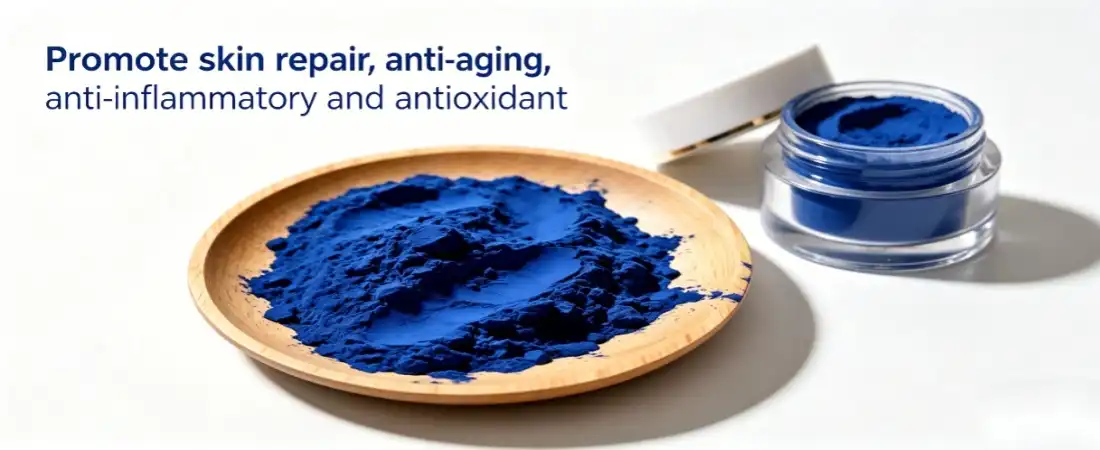
Copper peptides are complexes formed by binding small peptide chains to divalent copper ions (Cu²⁺), typically using amino acids like glycine, histidine, and lysine. This structure enhances stability and cellular uptake. For B2B sourcing, purity is critical—≥98% verified by RP-HPLC ensures batch consistency and formulation reliability. The lyophilized blue powder form offers superior shelf stability compared to liquid versions, reducing degradation risks during storage and global shipping. These characteristics make copper peptides highly suitable for industrial-scale cosmetic and biomedical formulations requiring consistent performance and quality control.
Biological Mechanisms Driving Anti-Aging Efficacy
Copper peptides deliver anti-aging effects through multiple biological pathways. They stimulate fibroblast activity, increasing collagen production and improving skin structure. They also regulate metalloproteinases, reducing enzymatic breakdown of extracellular matrix components. The copper ion activates antioxidant enzymes like superoxide dismutase, neutralizing free radicals and slowing photoaging. Additionally, they promote angiogenesis and tissue remodeling, accelerating wound healing. These combined mechanisms make copper peptides effective not only in cosmetic anti-aging products but also in post-procedure formulations designed to support skin recovery and regeneration.Comprehensive Skin and Hair Benefits
GHK copper peptide powder formulations improve skin elasticity, firmness, and thickness with consistent use over 8–12 weeks. Enhanced collagen synthesis reduces fine lines and wrinkles, while increased cell turnover helps even skin tone and reduce hyperpigmentation. Their ability to regulate melanin distribution contributes to a more uniform complexion. In hair care, copper peptides stimulate follicle activity, supporting hair growth and reducing hair loss when used in scalp treatments. Clinical data show a favorable safety profile, with minimal irritation across different skin types when applied at appropriate concentrations.
Comparing GHK Copper Peptide Powder with Other Popular Anti-Aging Ingredients
Positioning Against Complementary Peptide Technologies
Different copper peptides vary in amino acid composition and functional focus. GHK-Cu contains glycine, histidine, and lysine, while AHK-Cu replaces glycine with alanine. These structural differences influence receptor interaction and tissue penetration. AHK-Cu is particularly effective in hair care applications, promoting follicle stimulation and scalp health. Both peptides support collagen synthesis and wound healing, but their performance varies slightly depending on formulation goals. Understanding these distinctions helps formulators and procurement teams select the most suitable peptide for targeted cosmetic or therapeutic applications.
Strategic Comparison with Established Actives
Often, purchasing managers compare copper peptides to common anti-aging ingredients to see if they are worth the money and to set their products apart from others. Retinol is still the best way to speed up cell turnover and make collagen, but some people are sensitive to it, and some markets have rules that make peptide-based options more appealing. Copper peptides are good for product lines for people with sensitive skin because they stimulate the skin more gently and work well with a wider range of skin types. Vitamin C is a strong antioxidant that brightens and protects cells, but it is not stable, which makes manufacturing more difficult. Lyophilized GHK Copper Peptide Powder, on the other hand, is more stable and easier to mix in. Niacinamide is very well tolerated and helps with barrier function and inflammation. When combined with copper peptides, it can make multi-pathway anti-aging systems that work better than single-active formulas. Understanding these processes that work together is more advantageous from a strategic point of view than seeing ingredients as straight rivals.
Raw Material Versus Ready-Made Formulation Considerations
Businesses that buy from other businesses have to decide whether to get pure peptide powder for custom preparation or buy serum solutions that are already made. Buying raw GHK Copper Peptide Powder gives you the most freedom in formulating because you can change the proportion very precisely, make your own ingredient combinations, and make custom delivery methods that set your product apart from the competition. Manufacturers who are making private-label skin care lines or launching named goods can protect their intellectual property with proprietary formulations. Cost effectiveness goes up a lot when you make a lot of them, because the price of bulk powder is higher than the price of finished serums. On the other hand, ready-made peptide serums make things easier for smaller businesses that don't have formulation experts, but they don't allow for as much customization and usually cost more per unit. When it comes to shelf life, powder forms are better because they stay effective for 24 to 36 months when stored properly. Liquid forms, on the other hand, lose their effectiveness more quickly.
Procurement Guide for B2B Clients: Buying GHK Copper Peptide Powder
Identifying Qualified Sourcing Channels
To successfully buy peptides, you must first understand the different suppliers and the quality control procedures that are in place. Direct connections with manufacturers are the most reliable way to get a steady supply, clear output records, and technical help while formulating. Procurement teams should check that possible sellers have ISO 9001 quality management certification as a way to make sure that quality is controlled throughout the whole production process. Brands that cater to certain groups of customers or governing bodies that need proof of religious compliance can reach more customers with Kosher and Halal approvals. Independent third-party testing certificates back up claims of purity, and Certificates of Analysis are sent with each batch to show HPLC results, microbial testing, and heavy metal screens.
Pricing Benchmarks and Cost Optimization Strategies
Clear expectations about prices help procurement pros make accurate budgets and find chances to save money. GHK Copper Peptide Powder, which is very pure usually costs between $800 and $1,500 per kilogram, but this depends on the size of the order, the purity standards, and any customizations that need to be made. Standard industry practice for bulk active ingredients is to require orders of at least 25 kg. This balances production efficiency with easy access for mid-sized producers. Higher order levels come with volume savings, and prices go down by 15–25% when you sign a three- or twelve-month supply deal. Cost optimization includes more than just unit price. It also includes the total landing cost, which includes the cost of foreign shipping, customs taxes, and storage. At Shaanxi New Things Biotech, we keep stock on hand so that we can ship right away, within two to four days of receiving payment confirmation. This way, we don't have to wait for long lead times that mess up production plans. Our flexible payment terms let you use local currencies for deals, which makes it easier for foreign procurement teams to plan their budgets.
Logistics, Certification, and Customization Capabilities
It can be hard to ship peptides across international borders, but expert sellers have developed special ways to handle this. Transport that is controlled by temperature keeps peptides stable while they're in transit. This is especially important for packages that go through more than one climate zone. For fast delivery of smaller orders, our factory uses special FedEx and UPS accounts. For bigger shipments that need to be consolidated by sea freight, we use known freight forwarders. Different types of businesses can use custom packing, such as 1 kg foil bags for study purposes or bulk drums for mass production. With private labeling services, wholesalers can build brand value by designing and labeling custom packaging that meets the rules of the target market. There are detailed technical datasheets, safety data sheets (SDS), and regulatory compliance certificates in documentation packages. These make it easier to clear customs and pass quality checks later on.
How to Use GHK Copper Peptide Powder in Anti-Aging Skincare Formulations?
Optimal Concentration Ranges for Commercial Products
Formulation science tries to find a mix between safety concerns, cost, and goals for effectiveness. Copper peptide levels in finished skin care products should be between 0.01% and 1.0%, according to clinical research. Most market formulas aim for 0.1% to 0.5%. Lower amounts, around 0.01% to 0.05%, work well for daily moisturizers and upkeep serums because they work better over time. Intensive treatment serums and tailored anti-aging products that are meant to reduce wrinkles have amounts between 0.1% and 0.3%. Higher amounts, around 0.5 to 1.0%, are found in professional treatments and recovery goods after surgery. However, these need to be carefully tested for safety and compatibility with consumers. Concentration choice should be based on how the product is positioned, what the target customer wants, and a study of the competitive scene. This will help make performance claims more accurate while keeping prices low.
Compatible Ingredient Combinations and Formulation Protocols
To integrate peptides successfully, you need to pay attention to how the ingredients work together and how the processing is done so that the bioactivity is kept.GHK copper peptide powder works very well with hyaluronic acid, making the two work together to moisturize and plump the skin, making it look like the benefits are happening right away. Combining antioxidants like vitamin E and ferulic acid makes the defensive effects stronger without changing the safety of the peptides. Strong chelating agents, like EDTA at high amounts, should not be mixed directly with peptides because they may fight for copper binding and make the peptides less effective. Optimizing the pH is very important; for skin-friendly formulas, the stability is highest in the 4.5–6.5 range. During production, add GHK Copper Peptide Powder when the temperature drops below 40°C to stop it from breaking down. Strict batch testing methods should include stable studies under accelerated conditions (40°C/75% RH) for 90 days to predict how well the product will keep for a long time and find places where the formula might need to be changed before it goes on sale.
Building Trust with Reliable Suppliers of GHK Copper Peptide Powder
Verification Standards for Supplier Selection
Protecting the purity of the formulation and the brand's image means building relationships with suppliers based on openness and quality assurance. Genuine peptide suppliers let you see the results of testing done by a third party without any restrictions. This shows that they are willing to send their goods for independent proof. Certificates of Analysis for each batch should be included in full paperwork packages. These certificates should list the pure percentages, leftover solvent contents, and microbial limits. Regulatory compliance includes more than just basic quality standards. It also includes requirements that are special to each country. For example, suppliers can help with following FDA rules for cosmetic ingredients, EU rules for cosmetics, and the paperwork needs of new markets. Technical help is what sets key partners apart from commodity providers. Responsive teams offer formulation advice, stability fixing, and application guidance that shortens the time it takes to develop a product.
NT Biotech as Your Strategic Peptide Partner
Shaanxi New Things Biotech works with sourcing professionals who need a reliable copper peptide provider with a track record of technical skill and customer-focused service. Our special extraction and processing methods always make AHK-Cu that is >98% pure, which is proven by HPLC analysis that is done on every production batch. In addition to basic quality measures, what sets us apart is our full support infrastructure, which is meant to help B2B clients succeed. Free samples allow for basic formulation testing before committing to large orders. This lowers the risk of buying and speeds up the evaluation process. Our two-hour response promise makes sure that technical questions are answered quickly, and specialized account management gives you the continuity and relationship depth that commodity deals don't have. Custom OEM solutions meet special needs for packing, private labeling, and formulation advice, which helps clients get unique goods to market more quickly. We don't have to deal with long lead times that mess up production plans and make it hard to get along with customers because we have ready-to-ship goods and can deliver in two to four days.
Conclusion
Finding high-quality GHK Copper Peptide Powder for anti-aging products requires matching how well it works scientifically with how easy it is to get. The technical benefits of high-purity peptide complexes directly affect how well formulations work, how happy customers are, and how well a brand stands out in a crowded market. Verifying suppliers, making quality paperwork clear, and forming partnerships that go beyond transactional relationships are all important parts of successful buying strategies. As the market for anti-aging chemicals moves toward bioactives backed by evidence and good safety ratings, copper peptides are a smart investment for brands that want to stay ahead of the curve. As the demand for peptide-based skin care products continues to rise in North America and Europe, procurement teams that set up solid supply chains are now in a good position.
FAQ
1. Is copper peptide powder safe for sensitive skin formulations?
GHK Copper Peptide Powder can be used on a variety of skin types as long as it is mixed with the right amount of other ingredients. Compared to retinoids and alpha-hydroxy acids, this substance is less likely to irritate the skin, so it can be used in products for people with sensitive skin. It is still a good idea to do patch tests on new products while they are being made, especially for mixtures that have more than one active ingredient. Dermatological tests done by a third party can provide more safety proof for marketing claims.
2. How does storage affect copper peptide powder longevity?
Proper keeping greatly increases the shelf life of GHK Copper Peptide Powder and keeps its bioactivity. Keep containers in cool, dry places that are below 25°C and don't get much light. When packages are sealed, moisture can't get inside and break down peptide structures. High-purity lyophilized powder stays effective for 24 to 36 months when stored properly. As soon as the containers are opened, they should be resealed to keep air out. You might also want to move smaller amounts to different containers while leaving the big material sealed.
3. What distinguishes AHK-Cu from other copper peptide variants?
GHK-Cu uses glycine, histidine, and lysine, while AHK-Cu uses alanine, histidine, and lysine which are chelated with copper. These changes in structure affect how well the molecules stick to tissues and what functions they focus on. For example, AHK-Cu works especially well to stimulate hair follicles and keep the head healthy. Both substances can slow down aging by stimulating collagen and acting as antioxidants, but the design goals should help you choose between the two types.
Partner with NT Biotech for Premium Copper Peptide Supply
If procurement managers and R&D leaders are looking for a trusted GHK Copper Peptide Powder supplier, Shaanxi New Things Biotech is the place to go. They will find a dedicated technical partner there. Our AHK-Cu copper peptide powder is pharmaceutical-grade and meets the high quality standards your formulations need. It also has ISO, Kosher, and Halal certifications that make it easier to get into markets across legal countries. We can help you with your product development plan from the first samples to mass production by having items in stock right away, sending them in two to four days, and letting you make changes as an OEM. Please contact our team at info@newthingsbiotech.com right away to get your free sample and full technical specs. Find out how working with a skilled GHK Copper Peptide Powder manufacturer can turn getting raw materials from something you have to do into a strategic competitive edge for your line of anti-aging products.
References
1. Pickart, L., & Margolina, A. (2018). "Regenerative and Protective Actions of the GHK-Cu Peptide in the Light of the New Gene Data." International Journal of Molecular Sciences, 19(7), 1987.
2. Borkow, G., & Gabbay, J. (2014). "Copper as a Biocidal Tool." Current Medicinal Chemistry, 12(18), 2163-2175.
3. Pickart, L. (2008). "The Human Tri-Peptide GHK and Tissue Remodeling." Journal of Biomaterials Science, Polymer Edition, 19(8), 969-988.
4. Miller, L. M., & Menkes, D. B. (2015). "Copper Peptides and Skin: A Review of Mechanisms and Clinical Applications." Dermatologic Surgery, 41(11), 1217-1227.
5. Hostynek, J. J., Dreher, F., & Maibach, H. I. (2010). "Human Skin Retention and Penetration of a Copper Tripeptide In Vitro as a Function of Skin Layer." Inflammation Research, 59(Suppl 2), S283-S284.
6. Mazurowska, L., & Mojski, M. (2008). "Biological Activities of Selected Peptides: Skin Penetration Ability of Copper Complexes with Peptides." Journal of Cosmetic Science, 59(1), 59-69.