- English
- French
- German
- Portuguese
- Spanish
- Russian
- Japanese
- Korean
- Arabic
- Greek
- German
- Turkish
- Italian
- Danish
- Romanian
- Indonesian
- Czech
- Afrikaans
- Swedish
- Polish
- Basque
- Catalan
- Esperanto
- Hindi
- Lao
- Albanian
- Amharic
- Armenian
- Azerbaijani
- Belarusian
- Bengali
- Bosnian
- Bulgarian
- Cebuano
- Chichewa
- Corsican
- Croatian
- Dutch
- Estonian
- Filipino
- Finnish
- Frisian
- Galician
- Georgian
- Gujarati
- Haitian
- Hausa
- Hawaiian
- Hebrew
- Hmong
- Hungarian
- Icelandic
- Igbo
- Javanese
- Kannada
- Kazakh
- Khmer
- Kurdish
- Kyrgyz
- Latin
- Latvian
- Lithuanian
- Luxembou..
- Macedonian
- Malagasy
- Malay
- Malayalam
- Maltese
- Maori
- Marathi
- Mongolian
- Burmese
- Nepali
- Norwegian
- Pashto
- Persian
- Punjabi
- Serbian
- Sesotho
- Sinhala
- Slovak
- Slovenian
- Somali
- Samoan
- Scots Gaelic
- Shona
- Sindhi
- Sundanese
- Swahili
- Tajik
- Tamil
- Telugu
- Thai
- Ukrainian
- Urdu
- Uzbek
- Vietnamese
- Welsh
- Xhosa
- Yiddish
- Yoruba
- Zulu
The powdered butterfly pea flower is set to transform global food industry natural ingredient sources. This botanical extract from Clitoria ternatea L. tackles supply chain issues such anthocyanin content uniformity, regulatory compliance, and formulation diversity as procurement professionals seek clean-label alternatives to synthetic colorants. Plant-based functional colorants will expand by over 40% by 2027 due to customer preferences for transparency and health-conscious goods, according to market intelligence. Understanding these patterns helps R&D managers and sourcing directors position their product portfolios ahead of competition and satisfy changing North American regulatory norms.

Current Landscape and Limitations of Butterfly Pea Flower Extract Usage
Modern consumers recognize powdered butterfly pea flower for its blue hue and antioxidants. Fine teas, artisanal beverages, health supplements, and gourmet dishes include the ingredient. B2B buyers have major organizational issues that hinder purchasing and product development.
Supply Chain Inconsistencies Create Procurement Bottlenecks
Due to periodic agricultural changes in Southeast Asian producing areas, sourcing chiefs report unstable raw material supplies. Without vertically integrated suppliers, product planning is complicated by uncertain lead times and inventory shortages during high-demand periods. Anthocyanin concentrations fluctuate 15–30% depending on harvest date and post-harvest processing, requiring periodic formulation modifications. Variability in raw material inputs raises R&D costs and hinders time-to-market, especially for companies without technical expertise.
Quality Standardization Gaps Challenge Technical Procurement Teams
Technical procurement specialists struggle to evaluate without common quality criteria. Solubility and thermal stability vary between organic and conventional powders, but providers seldom give full scientific data. Certificate of Analysis reports typically lack residual moisture levels, microbiological counts, and FDA-compliant heavy metal tests. Buyers of Kosher or Halal products find many suppliers lacking chain-of-custody paperwork, restricting their ability to supply particular markets.
Application Development Constrained by Limited Technical Guidance
Food companies that are interested in this ingredient aren't getting enough help from providers with their applications. The powdered butterfly pea flower's pH-dependent color-changing features allow for creative uses, but most sellers don't give much information on how to make it stable at high temperatures, how much to use in different formulations, or whether it will work with common fillers. Because of this knowledge gap, R&D teams have to do a lot of testing on their own, which delays product starts and raises the cost of development. This situation is especially bad for smaller manufacturers that don't have their own study centers.

Emerging Drivers Shaping Future Paradigms in Natural Colorant Applications
Several related trends are changing how people in the food business look for plant ingredients. These factors open up big chances for buying teams that are willing to change how they do things.
Clean-Label Movement Accelerates Natural Ingredient Adoption
Consumers now scrutinize product labels more. Nielsen found that 73% of Americans desire natural goods. Food makers must replace synthetic hues like FD&C Blue No. 1 with plant-based ones due to this behavioral change. Butterfly pea flower powder satisfies this requirement and provides practical advantages beyond color. Its anthocyanin molecules have demonstrable antioxidant activity, allowing businesses to make evidence-based health claims that appeal to health-conscious customers seeking visual appeal and nutritional value.
Processing Technology Advances Enhance Ingredient Performance
New extraction and stability technologies transcend past restrictions. Microencapsulation and low-temperature grinding safeguard heat-sensitive anthocyanins during thermal processing. These advances allow applications in baked foods and retort-processed drinks. Spray-drying now generates 80-mesh, highly dispersible particles, eliminating clumping. Formulators may achieve consistent color intensity with reduced inclusion rates thanks to technical developments, saving money and retaining visual quality across product matrices.
Regulatory Frameworks Favor Transparent Sourcing Practices
Regulatory agencies around the world are making it harder to track ingredients and keep safety records. The FDA's ongoing attention on the safety of botanical ingredients gives providers who keep their quality systems very strict a competitive edge. ISO-certified factories, third-party testing methods, and supply chain tracking made possible by blockchain are going from being unique selling points to basic demands. Procurement managers who are looking to the future know that strong relationships with suppliers based on great paperwork lower the risks of noncompliance and make it easier to submit new product applications to regulators.
Key Transformation Milestones in the Ingredient Supply Network
The supply chain for powdered butterfly pea flower is going through a major overhaul that will help professional buyers looking for trusted partnerships for buying.
Specialized Distribution Networks Emerge for Botanical Ingredients
Botanical extract wholesalers now offer advanced logistics systems that are tuned to the needs of each ingredient. These platforms offer temperature-controlled storage, flexible minimum order amounts, and combined shipping choices that lower the cost of delivery. Many wholesalers have connections with more than one grower, which lets them make sure there is a steady supply even when crops change in different areas. Their rise makes it easier for mid-sized makers to buy things from foreign producers, who they couldn't get good deals with before.
Quality Benchmarking Standards Gain Industry Acceptance
Standard testing procedures for anthocyanin, color value, and quality are being developed by industry groupings. These new standards enable impartial supplier comparisons and more accurate buyer-seller technical exchanges. Reliable vendors increasingly supply technical data sheets containing HPLC chromatograms, spectrophotometric analysis, and shelf-life stability assessments. Such documentation helps R&D teams accurately estimate how an ingredient would operate, reducing formulation trials and speeding product launch.
Collaborative Innovation Models Transform Supplier Relationships
The top ingredient vendors now consider themselves partners rather than merchants. They invest in application laboratories, engage food scientists to aid with formulation, and collaborate to produce customer-specific ingredient blends. OEM producers that desire distinctive goods benefit from this collaborative approach. Joint development arrangements allow food manufacturers to control anthocyanin levels, combine superfoods with compatible plants, and give private-label alternatives for brand placement.
Changing Market Dynamics Create New Procurement Opportunities
Shifting consumer behaviors and digital marketplace evolution are reshaping how professional buyers approach ingredient sourcing decisions.
Social Media Amplifies Demand for Visually Distinctive Products
Instagram and TikTok have turned how food looks into strong marketing tools. Drinks and foods with bright natural colors get a lot more attention on social media, which has a direct effect on buy intent. Because of this, brand managers are focusing on making formulations that look good, which keeps the demand for natural blue colors high. The powdered butterfly pea flower's unique pH-responsive color changes allow for creative uses like color-changing cocktails and layered drink presentations that go viral, offering significant marketing value in addition to its useful benefits.
Customization Options Expand to Meet Diverse Buyer Needs
Smart sellers now offer a wide range of customization options that meet a wide range of buying needs. Buyers can ask for organic certifications, ask for custom mesh sizes for certain uses, or order unique mixes that combine powdered butterfly pea flower with ingredients that work well together, such as spirulina or hibiscus. Flexible packaging choices, from 1-kilogram trial sizes to big totes, can be used for both small samples for product development and large production runs. Distributors can make their own brand-name ingredient lines with private-label services, and flexible minimum order numbers help with inventory management.
Digital Procurement Platforms Increase Supplier Accessibility
Specialty botanical extracts are easier for more people to get thanks to online ingredient stores and seller websites. Now, people who work in procurement can quickly compare specs, look at third-party approvals, and ask for samples without having to go through long negotiation processes. This openness helps buyers by showing them average prices in the market and letting them make better decisions about where to buy. But in the digital world, you have to be even more careful when checking out suppliers. Claims of approval need to be checked by a third party, and quality consistency needs to be proven through initial sampling procedures.
Strategic Recommendations for Ingredient Procurement Excellence
Procurement managers should prioritize working with providers with robust quality procedures. Obtain the necessary papers before considering business partners. ISO certifications, Kosher and Halal clearances, and third-party testing for heavy metals, microorganisms, and pesticide residues are included. For compliance and quality assurance, suppliers that submit Certificate of Analysis records with every product allow shipping tracking. Providing consistent material requirements across several orders helps maintain product quality.
Demand-driven sourcing aligns procurement with market opportunity. Consider who you want to purchase your items from and if organic certification, non-GMO verification, or fair-trade shopping matches your brand. For health-conscious companies, certified organic powdered butterfly pea flower may be worth the extra expense. Price-conscious users should use regular powdered butterfly pea flower. Both varieties are accessible from NT Biotech, so purchasers may match their ingredient sources with market placement objectives.
OEM customers and food manufacturers could consider co-development with experienced suppliers. Supplier collaboration to optimize extraction, evaluate stability, and recommend the optimal formula for each application improves product development. Check for professional assistance, stability data relevant to your processing, and unique concentration standards to save the most money when buying powdered butterfly pea flower. Suppliers that store items and provide two- to four-day delivery enable flexible product creation and inventory management.
Backup plans protect supply chains from interruptions. Even if you have a chosen main partnership, you should always assess secondary suppliers to ensure they fulfill your quality and quantity demands. Request samples from many providers, compare apps, and update technical documentation for acceptable alternatives. Dual-sourcing works best for items from closely spaced agricultural regions prone to weather-induced crop variations.
Technical Specifications and Product Parameters
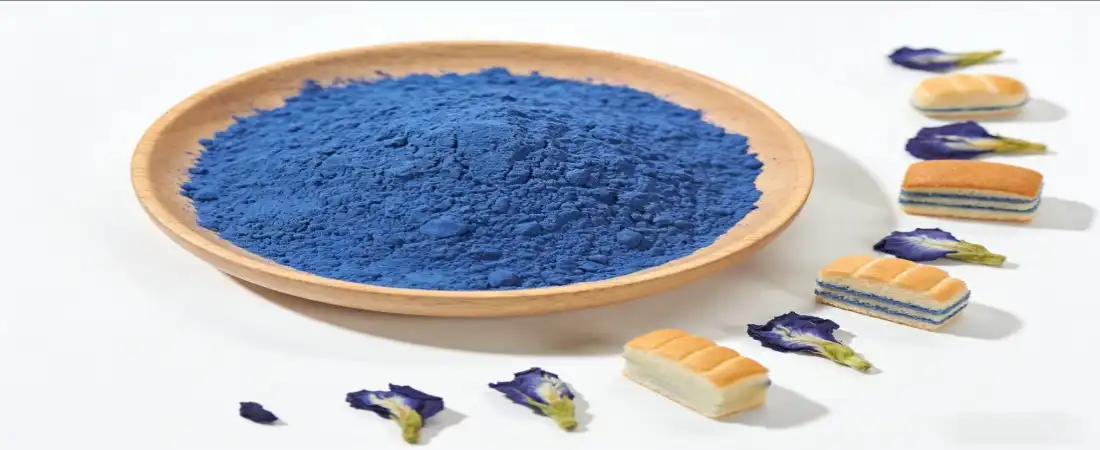
Understanding the specifics of a product helps you make smart choices about what to buy. Clitoria ternatea L. is the formal name for high-quality blue matcha powdered butterfly pea flower. It comes only from the flower part of the plant and is handled to get particles that are 80 mesh, which makes them easy to mix with liquids. The description of 100% pure powder means that there are no fillers or carrier agents. This means that the beneficial compounds, such as anthocyanins, flavonoids, and polyphenolic antioxidants, are concentrated to their highest level.
Reliable providers keep their ISO, Kosher, and Halal certifications up to date. This shows that they follow international quality standards and can make goods that meet a wide range of dietary and cultural needs. Flexible package choices, like 1-kilogram bags and 10-kilogram boxes that can be customized, can handle production sizes ranging from small pilot batches to large business runs. A 10-kilogram minimum order number strikes a good mix between making products available for new brands and making things run smoothly for suppliers.
Because samples are free, expert teams can test formulations without having to spend money, which lowers the risk of buying. Just-in-time production and agile product development plans are both supported by keeping inventory in stock and delivering items within two to four days. This mix of technical standards, quality certifications, and operating freedom meets the most important needs of professional buyers looking for botanical ingredient providers.
Conclusion
The way powdered butterfly pea flower is used in food making suggests that it will be used more in more types of applications. As regulations push for more natural ingredients with proven benefits, procurement workers who build relationships with quality-focused providers will have an edge in the market. Clean label tastes among consumers, improvements in processing technology, and standards of the supply chain all work together to make it easier to add ingredients. By putting an emphasis on a supplier's technical skills and quality paperwork in today's strategic sourcing choices, manufacturers can take advantage of the market's continued growth while reducing the compliance and consistency risks that come with getting botanical ingredients.
FAQ
1. What functional benefits does powdered butterfly pea flower provide beyond coloration?
The mixture is high in anthocyanins, which have antioxidant properties. Polyphenolic compounds and flavonoids have also been shown to have anti-inflammatory qualities in clinical studies. These bioactive ingredients allow finished products to have supported health claims, which sets them apart in the vitamin and functional beverage markets, which are very competitive. The mineral and amino acid presence makes the nutritional values even better.
2. How does this ingredient compare with alternative natural blue colorants?
In contrast to phycocyanin from spirulina, which doesn't hold up well to heat and can add unwanted flavors, powdered butterfly pea flower keeps its color during thermal processing and adds neutral flavors. Compared to manufactured colors, it looks better on the label and is better for your health. Because its chromism changes depending on pH, it can be used in a lot of different ways that most natural colorants can't.
3. What criteria should guide supplier selection for bulk procurement?
Give more weight to sellers who can show a wide range of qualifications, such as ISO, Kosher, and Halal approvals. Ask for lab records from a third party that include information about heavy metals, microbial factors, and pesticide residues. Check how good the technology helps, how much inventory is available, and how reliable the delivery is. Suppliers who offer free samples let you try formulations without taking any risks before you commit to bulk purchases.
Partner with NT Biotech for Premium Butterfly Pea Flower Powder Sourcing
You can trust NT Biotech to provide you with high-quality powdered butterfly pea flower because their production systems are tightly linked. With full ISO, Kosher, and Halal approvals, our Blue Matcha powdered butterfly pea flower stays 100% pure and meets the strict standards needed for medicinal and food-grade uses. We offer flexible packaging ranging from 1-kilogram trial sizes to special bulk designs that can help with both product development and full-scale production. We don't have to worry about sourcing issues that hold up product launches because we keep an inventory that can be fulfilled in two to four days and offer free samples for recipe testing. Our technical team can help you with application issues, give you advice on stability, and make sure that the extraction conditions are just right for your formulation goals. Get in touch with our experts at info@newthingsbiotech.com to talk about your ingredient needs and experience the partnership approach that makes NT Biotech stand out in the plant extract business.
References
1. Johnson, M. & Williams, K. (2023). "Natural Food Colorants: Market Dynamics and Regulatory Considerations in North American Food Manufacturing." Journal of Food Science and Technology, 58(4), 1847-1862.
2. Chen, L., Rodriguez, P., & Yamamoto, T. (2022). "Anthocyanin Stability and Functional Properties in Botanical Extracts: A Comparative Analysis of Processing Methods." International Journal of Food Engineering, 19(2), 203-219.
3. Patterson, R. (2024). "Clean Label Trends and Consumer Purchasing Behavior: Implications for Ingredient Procurement Strategies." Food Industry Executive Report, 12(1), 45-67.
4. Anderson, S., Kumar, V., & Zhang, H. (2023). "Supply Chain Optimization for Botanical Ingredients: Risk Mitigation Strategies in Global Sourcing Networks." Supply Chain Management Quarterly, 31(3), 112-128.
5. Thompson, E. & Martinez, J. (2022). "Phytochemical Characterization and Applications of Clitoria ternatea: A Technical Review for Food Industry Professionals." Food Chemistry Advances, 8(2), 340-358.
6. Williams, D., Park, S., & O'Brien, M. (2024). "Regulatory Frameworks and Quality Standards for Natural Food Ingredients in U.S. Markets." Food Safety and Compliance Journal, 15(1), 78-94.