- English
- French
- German
- Portuguese
- Spanish
- Russian
- Japanese
- Korean
- Arabic
- Greek
- German
- Turkish
- Italian
- Danish
- Romanian
- Indonesian
- Czech
- Afrikaans
- Swedish
- Polish
- Basque
- Catalan
- Esperanto
- Hindi
- Lao
- Albanian
- Amharic
- Armenian
- Azerbaijani
- Belarusian
- Bengali
- Bosnian
- Bulgarian
- Cebuano
- Chichewa
- Corsican
- Croatian
- Dutch
- Estonian
- Filipino
- Finnish
- Frisian
- Galician
- Georgian
- Gujarati
- Haitian
- Hausa
- Hawaiian
- Hebrew
- Hmong
- Hungarian
- Icelandic
- Igbo
- Javanese
- Kannada
- Kazakh
- Khmer
- Kurdish
- Kyrgyz
- Latin
- Latvian
- Lithuanian
- Luxembou..
- Macedonian
- Malagasy
- Malay
- Malayalam
- Maltese
- Maori
- Marathi
- Mongolian
- Burmese
- Nepali
- Norwegian
- Pashto
- Persian
- Punjabi
- Serbian
- Sesotho
- Sinhala
- Slovak
- Slovenian
- Somali
- Samoan
- Scots Gaelic
- Shona
- Sindhi
- Sundanese
- Swahili
- Tajik
- Tamil
- Telugu
- Thai
- Ukrainian
- Urdu
- Uzbek
- Vietnamese
- Welsh
- Xhosa
- Yiddish
- Yoruba
- Zulu
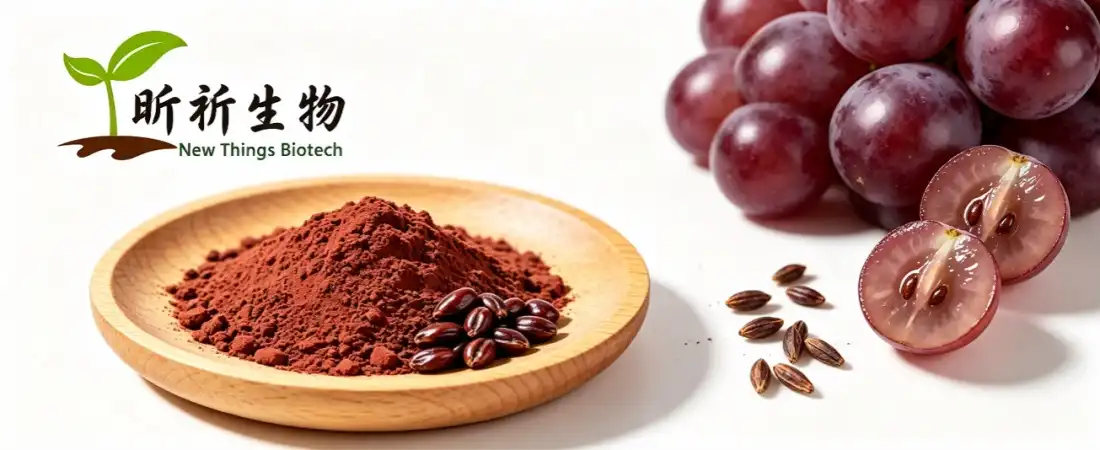
You’ll find OPCs on supplement labels regularly but few explain what these compounds really do in the body. To summarise, OPCs are working on several fronts at the same time. They sweep up free radicals, shield collagen from enzymes that break it down, help blood vessels relax and reduce the signals of inflammation. This lesson walks you through the chemical structure of an OPC molecule, through digestion and through to its effects within cells so you may understand why the substance functions the way it does. Manufactured by NT Biotech, a major opc oligomeric proanthocyanidins provider for supplement, food and cosmetic firms worldwide. We employ unique extraction processes that preserve the short chain part of the OPCs. Our opc oligomeric proanthocyanidins are standardised to a minimum of 95% OPC by UV testing. The fine reddish-brown powder is readily soluble in water. Each shipment is accompanied by a Certificate of Analysis. Please email us at info@newthingsbiotech.com for samples or rates.
The Short Answer: OPCs Work on Five Fronts
One Molecule, Many Jobs
Most antioxidants have one restricted function. Vitamin E preserves fats; vitamin C functions in aqueous fluids. Synthetic preservatives such as BHT are largely aimed to prevent rancidity in oils. OPCs are unique in that they have a structure that allows them to function across many routes at once. Each catechin or epicatechin molecule in an OPC chain has several hydroxyl groups. These are the chemical “handles” that provide electrons to unstable molecules and attach to proteins such as collagen. Connecting a few units together increases those handles while keeping the molecule small enough to be helpful in the body. That’s the actual secret of grape seed OPCs’ adaptability.
The Five-Mechanism Snapshot
The table below summarises the primary processes that have been described by researchers, along with the published work behind each. The next parts describe them step by step .
| Mechanism | What Happens | Key Research | Benefit Area |
|---|---|---|---|
| Free radical scavenging | Hydroxyl groups donate electrons to neutralize reactive oxygen species | Maffei Facino et al., 1994 | Antioxidant defense |
| Enzyme inhibition | Slows collagenase, elastase, and hyaluronidase activity | Maffei Facino et al., 1994 | Skin and capillary integrity |
| Nitric oxide signaling | Activates endothelial nitric oxide production | Edirisinghe et al., 2008 | Healthy blood vessel tone |
| Endothelin-1 moderation | Reduces production of a vessel-tightening peptide | Corder et al., 2006 | Cardiovascular support |
| Inflammatory balance | Lowers inflammatory cytokine expression | Terra et al., 2009 | Metabolic and whole-body wellness |
Step One: The Structure That Makes OPCs Active
Built from Catechin and Epicatechin
Proanthocyanidins are of the flavonoid kind. Flavonoids are a large class of plant substances like the catechins in green tea and the flavanols in chocolate. Dixon, Xie and Sharma investigated the chemistry of proanthocyanidins extensively and demonstrated how plants produce them by connecting flavan-3-ol molecules into chains. These are natural defences used by the plant against UV radiation, insects and disease. These compounds are plentiful in grape seeds, since the seed has to safeguard the future generation of the vine. We are just using a protection that the plant has spent millions of years developing, by removing OPCs from grape seed.
Why Chain Length Decides Performance
Proanthocyanidins are different. Oligomers are 2 to 5 repetition units in chain. Polymers are lengthy chains, some of which include dozens of units. Size is essential because it may influence how fast the molecule goes through the body and how it interacts with cells. Small oligomers are more quickly transported across the intestinal wall whereas big polymers are more likely to be retained in the gut. Why the “oligomeric” on the label, and why buyers need to verify the OPC content, not a generic polyphenol number. And a rich extract of genuine oligomeric proanthocyanidins water-soluble is more of the fraction that truly reaches to the tissues where the action takes place.
Step Two: The Journey Through the Body
Absorption in the Small Intestine
Once a capsule dissolves, OPCs begin a two-step journey. "Small oligomers such as dimers and trimers and monomers can be absorbed in the small intestine," said Zhang and co-workers in their assessment of procyanidin absorption, distribution, metabolism and excretion. Then they enter circulation, where they are further processed by the body and transported to vessel walls, skin and other tissues. This first path is a rapid one, and it’s why short-chain content is so vital.
Transformation by the Gut Microbiome
The part that is not absorbed early goes to the colon. There, indigenous bacteria degrade bigger proanthocyanidins into smaller metabolites such as phenyl-valerolactones and phenolic acids. These metabolites are then absorbed and may be responsible for the whole impact. In practice, OPCs may be both intact molecules and metabolites of microorganisms. The travel is shown in the table below.
| Stage | Location | What Happens to OPCs | Why It Matters |
|---|---|---|---|
| Release | Stomach | Powder dissolves; compounds become available | Water solubility speeds release |
| Early absorption | Small intestine | Monomers and dimers enter circulation | Delivers intact OPCs to tissues |
| Microbial conversion | Colon | Bacteria produce smaller phenolic metabolites | Adds a second wave of activity |
| Distribution | Bloodstream | Compounds and metabolites reach vessels and skin | Enables the five mechanisms |
Why Water Solubility Helps the Process
Oligomeric proanthocyanidins are a water soluble powder that dissolves quickly in the digestive tract and chemicals are ready for absorption without delay. The same aspect is also good for manufacturers. Powder is spread evenly in liquids, gummies and wet-granulated tablets to provide consistent dose per serving. The product is more evenly distributed That suggests it is administered in the body more predictably.”
Step Three: What OPCs Do Once They Arrive
Quenching Free Radicals and Recycling Vitamin C
The first mechanism is rather simple. Free radicals are molecules without an electron. They take electrons from cell membranes, proteins and DNA. “OPCs have several hydroxyl groups that are very effective in transferring electrons and neutralising these radicals before they can do damage.” Maffei Facino and associates demonstrated the scavenging action of grape seed procyanidins on laboratory animals . OPCs also replenish vitamin C after it has neutralised a radical, therefore increasing the functional life of the body’s broader antioxidant network.
Shielding Collagen and Elastin
underlines the relevance of OPCs for the skin and blood vessels. Collagen and elastin provide tissues with their strength and pliability, but they are gradually destroyed by enzymes such as collagenase, elastase and hyaluronidase, particularly under oxidative stress conditions. In the same research Maffei Facino showed that grape seed procyanidins are inhibitors of these enzymes. The authors describe this as a key reason for their action in safeguarding the capillaries. OPCs could also be able to attach directly to collagen fibres, which might be vital for maintaining the matrix that keeps skin firm and vessel walls robust.
Helping Blood Vessels Relax
The third and fourth steps have to do with the endothelium, the thin layer of cells lining every blood channel. Edirisinghe found that grape seed extract induced endothelium-dependent relaxation via activation of the enzyme responsible for synthesising nitric oxide, the body’s own vasodilator, according to Burton-Freeman and Kappagoda. In a separate study in Nature, Corder and colleagues showed that procyanidins prevented the development of endothelin-1, a peptide that constricts blood arteries. More signals to relax and fewer signals to tighten help keep blood flow and blood pressure healthy with oligomeric proanthocyanidins water-soluble.
Calming Inflammatory Signaling
The fifth mechanism is not limited to a single organ. Many of the issues of ageing are due to persistent, low-grade inflammation. In an animal study, Terra et al. demonstrated that grape seed procyanidins lowered the generation of inflammatory markers such as interleukin-6 and C-reactive protein in rats fed a high-fat diet. OPCs serve to balance these signals to improve general body health as well as to boost their antioxidant and vascular properties.
So that you know how OPCs function. Which mechanism will your product concentrate on? Email us at info@newthingsbiotech.com and let us know whether you are creating a circulation, skin or antioxidant solution. Our technical staff will react within 2 hours with grading suggestions and a free sample with its batch CoA.
From Mechanism to Formula: Choosing an OPC That Works
What the Specification Should Show
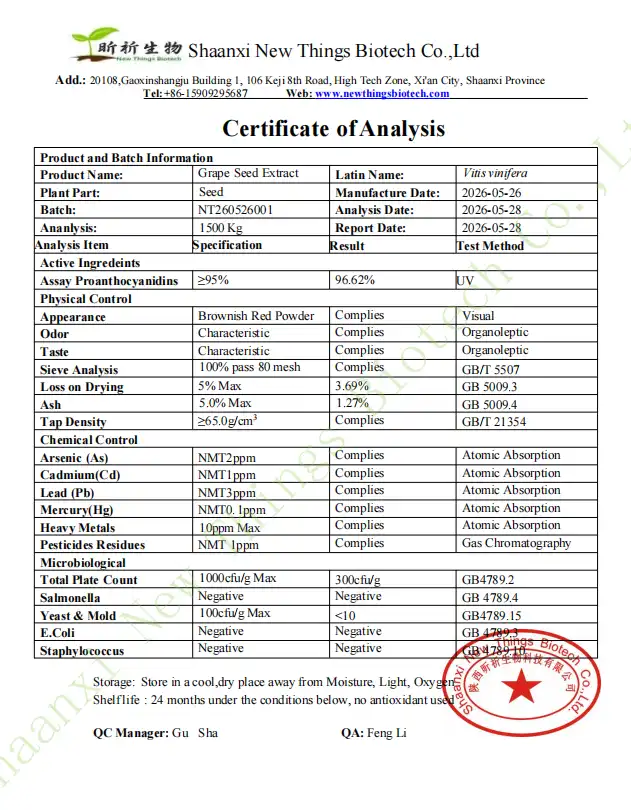
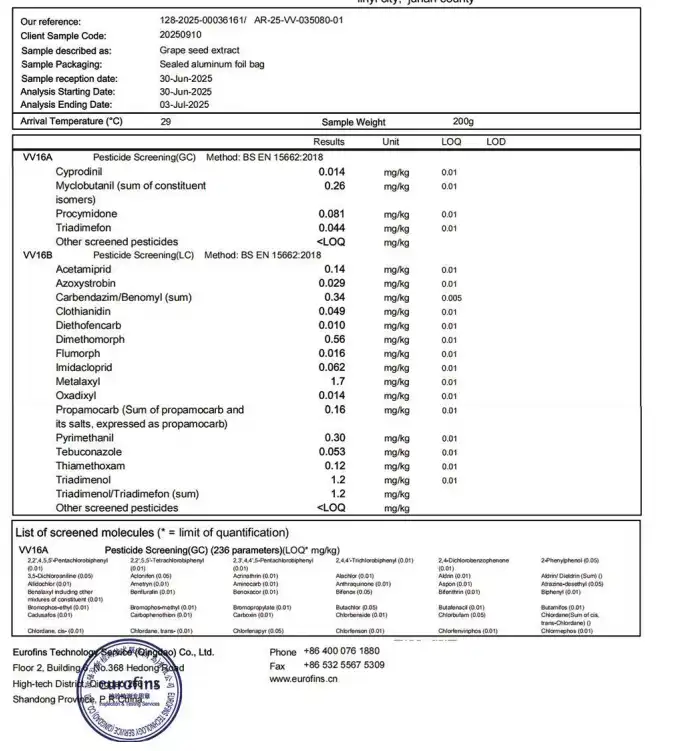
All above stated methods need a validated OPC content and a clean raw material. The usual profile of NT Biotech’s OPC powder is shown in the table below and is validated by laboratory testing of each manufacturing batch.
| Item | Specification | Test Method |
|---|---|---|
| Botanical Source | Vitis vinifera L. (grape seed) | TLC |
| Active Compound | Oligomeric proanthocyanidins ≥ 95% | UV |
| CAS No. | 84929-27-1 | — |
| Appearance | Reddish-brown fine powder | Visual |
| Solubility | Water soluble | — |
| Particle Size | 100% pass 80 mesh | Sieve |
| Loss on Drying | ≤ 5.0% | USP |
| Heavy Metals | ≤ 10 ppm | ICP-MS |
| Microbiology | TPC ≤ 1,000 cfu/g; E. coli and Salmonella negative | USP |
| Storage and Shelf Life | Sealed, cool, dry, away from light; 24 months | — |
Matching the Mechanism to the Format
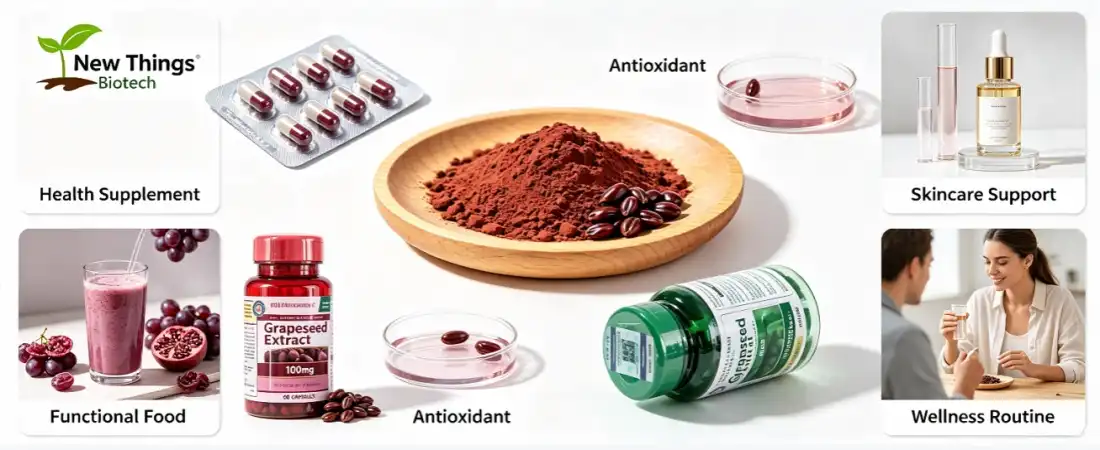
You know the mechanics, therefore you build better things. Circulation formulations pair well with magnesium, CoQ10 or omega-3s and play on nitric oxide and endothelin activity. The Beauty-from-within pills and beverages operate on collagen protection and hence complement well with collagen peptides, vitamin C and hyaluronic acid. Topical serums supply the skin with antioxidant and enzyme-inhibiting qualities. The powder is water soluble, making it as easy to use in wellness shots, stick packs, gummies and toners as in capsules. Slightly acid formulations and opaque packagings are useful to preserve activity throughout shelf life.
Partnering with a Reliable OPC Oligomeric Proanthocyanidins Supplier
Proanthocyanidins Supplier NT Biotech as a Proanthocyanidins Supplier provides a prompt answer to all your queries within two hours. Popular grades in stock ship in 1-3 business days following purchase confirmation. The manufacturing orders take frequently 3-10 working days for raw ingredient procurement, proprietary extraction, lab testing and packaging. We ship samples and small orders directly from the factory on our own FedEx and UPS accounts and we ship large orders by air or sea via dependable freight forwarders. We are ISO9001 quality management, KOSHER and HALAL certified, every shipment will offer UV and HPLC data, OEM and ODM available, Payment: We accept buyer's local currencies.
Conclusion
OPC oligomeric proanthocyanidins work via a unique combination of mechanisms. They scavenge free radicals, protect collagen and elastin from enzymatic degradation, increase nitric oxide signalling, control endothelin-1 and help regulate inflammation. Due to their short chain structure and water solubility they are able to enter into the tissues where these effects are significant. Shaanxi New Things Biotech is a trusted source of plant derivatives. We provide OPCs from grape seed with 95% standard, proprietary extraction, and full UV, HPLC, and CoA documentation. We are certified ISO9001, KOSHER and HALAL. We help supplement, food & cosmetic producers turn research into finished goods with fast stock delivery and flexible OEM options. Join us today to get the gift of nature working.
FAQ
Q1: How do OPCs work in the body?
They scavenge free radicals, protect collagen, support blood vessel relaxation, and help balance inflammation.
Q2: Why does chain length matter?
Short oligomers are absorbed more readily than large polymers, so more reaches the tissues.
Q3: Do gut bacteria play a role?
Yes. Colon bacteria convert unabsorbed proanthocyanidins into smaller, active metabolites.
Q4: Is NT Biotech's OPC water soluble?
Yes. It dissolves easily and suits drinks, gummies, tablets, and serums.
Q5: What OPC content do you supply?
At least 95% OPC from grape seed, verified by UV, with a CoA for every batch.
Put Proven Mechanisms to Work with NT Biotech
When you understand how OPCs work, you can build products that truly deliver. NT Biotech supplies opc oligomeric proanthocyanidins standardized to 95% from premium grape seeds. The powder is water soluble, rich in short-chain oligomers, and documented with a CoA for every shipment. We reply within two hours, ship stock grades within days, accept payment in your local currency, and offer OEM and ODM support for capsules, beverages, gummies, and skincare. Whether your formula targets circulation, collagen, or antioxidant defense, our technical team will help you match the right grade to the right mechanism. Email info@newthingsbiotech.com today for a free sample, full specifications, and a competitive quotation.
References
1. Dixon RA, Xie DY, Sharma SB. Proanthocyanidins—a final frontier in flavonoid research? New Phytologist. 2005;165(1):9–28.
2. Maffei Facino R, Carini M, Aldini G, et al. Free radicals scavenging action and anti-enzyme activities of procyanidines from Vitis vinifera: a mechanism for their capillary protective action. Arzneimittel-Forschung. 1994;44(5):592–601.
3. Corder R, Mullen W, Khan NQ, et al. Oenology: red wine procyanidins and vascular health. Nature. 2006;444(7119):566.
4. Edirisinghe I, Burton-Freeman B, Kappagoda CT. Mechanism of the endothelium-dependent relaxation evoked by a grape seed extract. Clinical Science. 2008;114(4):331–337.
5. Terra X, Montagut G, Bustos M, et al. Grape-seed procyanidins prevent low-grade inflammation by modulating cytokine expression in rats fed a high-fat diet. Journal of Nutritional Biochemistry. 2009;20(3):210–218.
6. Zhang L, Wang Y, Li D, Ho CT, Li J, Wan X. The absorption, distribution, metabolism and excretion of procyanidins. Food & Function. 2016;7(3):1273–1281.