- English
- French
- German
- Portuguese
- Spanish
- Russian
- Japanese
- Korean
- Arabic
- Greek
- German
- Turkish
- Italian
- Danish
- Romanian
- Indonesian
- Czech
- Afrikaans
- Swedish
- Polish
- Basque
- Catalan
- Esperanto
- Hindi
- Lao
- Albanian
- Amharic
- Armenian
- Azerbaijani
- Belarusian
- Bengali
- Bosnian
- Bulgarian
- Cebuano
- Chichewa
- Corsican
- Croatian
- Dutch
- Estonian
- Filipino
- Finnish
- Frisian
- Galician
- Georgian
- Gujarati
- Haitian
- Hausa
- Hawaiian
- Hebrew
- Hmong
- Hungarian
- Icelandic
- Igbo
- Javanese
- Kannada
- Kazakh
- Khmer
- Kurdish
- Kyrgyz
- Latin
- Latvian
- Lithuanian
- Luxembou..
- Macedonian
- Malagasy
- Malay
- Malayalam
- Maltese
- Maori
- Marathi
- Mongolian
- Burmese
- Nepali
- Norwegian
- Pashto
- Persian
- Punjabi
- Serbian
- Sesotho
- Sinhala
- Slovak
- Slovenian
- Somali
- Samoan
- Scots Gaelic
- Shona
- Sindhi
- Sundanese
- Swahili
- Tajik
- Tamil
- Telugu
- Thai
- Ukrainian
- Urdu
- Uzbek
- Vietnamese
- Welsh
- Xhosa
- Yiddish
- Yoruba
- Zulu
Dermal fibroblasts are skin cells that make the structural proteins that keep the skin together. GHK copper peptide powder boosts collagen by directly activating these cells. The tripeptide-copper complex becomes part of the goods or is applied to the skin and breaks through the skin's barrier to connect with cell receptors. In turn, this starts signaling pathways that make more collagen type I. In addition to stopping MMPs from breaking down collagen, this bioactive molecule changes TGF-β, which is a key factor in the formation of the extracellular matrix. The copper ion part is a key part of lysyl oxidase, an enzyme that joins together newly made collagen strands. The skin's defenses get better and last longer because of this.
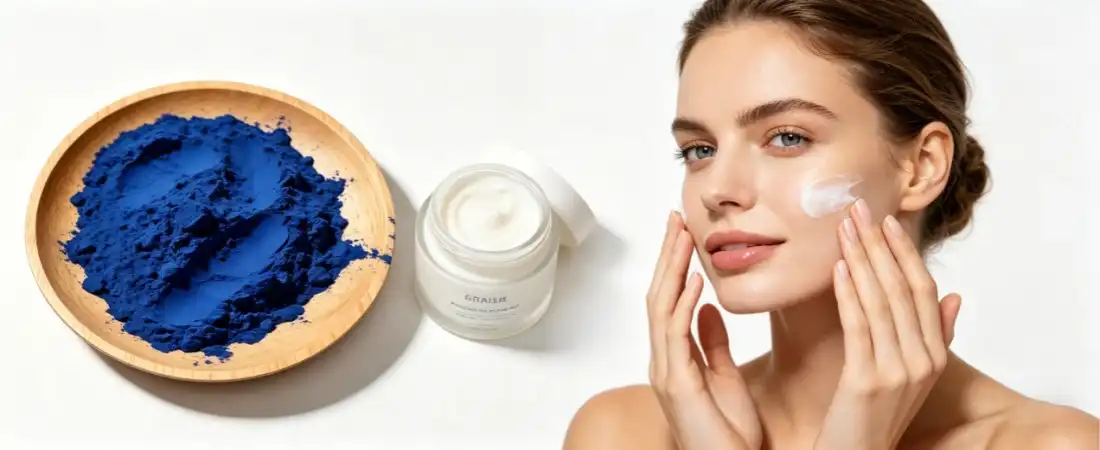
Understanding GHK Copper Peptide Powder and Its Role in Collagen Production
The Molecular Architecture and Biological Mechanism
Find out about GHK copper peptide powder and how it helps your body make collagen. This naturally occurring tripeptide is made up of the amino acids glycine, histidine, and lysine, connected to a copper ion with two charges. This biomolecule is really small, but it's strong. It's only about 340 Da, which makes it easy for it to pass through the stratum corneum and get to the cells it's meant for in the dermis. Copper forms a strong link with the histidine residue in the peptide structure. This makes a stable coordination complex that stays biologically active in a range of pH conditions that are common in skin care products.
Activation of Collagen Synthesis Pathways
The cells are where the process that makes collagen work starts in the body. When the peptide-copper complex comes in touch with fibroblasts, it changes how genes are produced. This makes more messenger RNA for procollagen alpha chains. Studies published in respected dermatology journals show that even very small amounts can cause collagen production to rise. Within 48 to 72 hours of exposure, this rise can be seen and measured. Along with increasing output, the peptide complex changes the quality of collagen by using enzymes that depend on copper to help it fold and solidify correctly.
Additional Regenerative Functions Beyond Collagen
Researchers have found that this helpful ingredient also raises the production of glycosaminoglycan. This is another important part of the extracellular matrix that gives skin tissue its thickness and wetness. The substance is also angiogenic, which means it helps blood vessels grow. This makes it easier for growing tissue to get the nutrients it needs. Because they are good at more than one thing, copper peptide complexes help skin heal. They can help with the loss of structural proteins, the support of blood vessels, and keeping the skin moist.
Comparing GHK Copper Peptide Powder with Other Collagen-Boosting Solutions
Chemical Stability and Formulation Compatibility
While liquid peptide serums are more likely to break down when mixed with water or air, GHK copper peptide powder stays more solid when it is lyophilized. If you store the powder the right way, which is generally in a cool, dry place out of direct sunlight, it will stay active for a long time. However, this is not at all like retinol products or ascorbic acid derivatives, which often become unstable in water solutions above pH 3.5 and need special packaging to keep them from breaking down when exposed to UV light. When making skin care products, R&D teams that work with powders have more control over the pH level and final dose. When it comes to pH, copper peptides work well in a wider range (5.5–7.0), but retinol products need to be carefully balanced to keep working while causing as little pain as possible. Formulations with vitamin C often need an acidic environment, which can be painful for some people. In other words, they can't be used in products for people with sensitive skin.
Efficacy Profiles and Clinical Response Timelines
There are different ways that collagen-boosting agents work when they are compared in the lab. People who use copper peptide combinations regularly for 8-12 weeks will notice changes in their skin's density and elasticity. These changes are measured and range from 1% to 3%. It takes 12-16 weeks for retinol products to really start to work, but there may be times when you don't want to keep using them. Vitamin C serums work faster as antioxidants, but they need more (10–20%) to have the same effect on collagen, which could make the product cost more. Different amounts of these toxins can be tolerated. Patch tests have shown that copper peptides work very well with sensitive skin and don't make it feel sensitive at all. Because retinoids can dry out, peel, and make skin sensitive to light, they need to be carefully added to the face. Vitamin C products can sometimes sting people whose barrier function isn't working well. This means that the products need to be remade with buffering agents, which could make them more expensive.
Optimal Usage and Integration of GHK Copper Peptide Powder in Skincare Routines
Recommended Concentration Ranges for Different Applications
The best concentration amounts rely on what you want to achieve, according to professional formulation standards. Skin care products that work well on fine lines and loss of flexibility have between 1% and 2% active peptide in the final product. 3–5% may be in products meant to fix things completely or help people heal after surgery, but higher levels need to be carefully checked for stability to make sure they keep working well for as long as they're stored. Correct measurement can be done while the mixture is being made with the powder form. It is possible for manufacturers to try small amounts to find the lowest percentage that works best for their product grid. This makes both the cost structure and the claims about efficiency better. With this much flexibility, you can make different types of anti-aging products for different price points and customer groups.
Formulation Procedures and Synergistic Ingredients
The powder has to be mixed with water at temperatures below 40°C before it can be added to emulsion systems. This is necessary to protect the structure of the peptides. When antioxidants like vitamin E or ferulic acid are added to peptide complexes, they protect them from oxidative stress while they are being stored, which makes them more stable. It works well with other ingredients because it adds wetness to the product, which helps collagen production and makes the product feel better. People who work in procurement should know that the pH of the mixture affects how solid the peptides are and how well they work to get into the skin. The end result is more solid and works better with the acid layer in skin if its pH stays between 5.8 and 6.5. If you add sodium citrate or sodium phosphate to buffering systems, the pH stays fixed even if the temperature changes while the system is being shipped or stored. This is very important for networks that distribute GHK copper peptide powder to other countries.
Safety Considerations and Clinical Precautions
A lot of toxicity studies have shown that copper peptide products are very safe when used as directed. Contact sensitization rates are below 0.5%, which is a lot lower than the rates seen with many plant products that are used in makeup. Scientists have found that the material doesn't change in Ames tests and doesn't harm cells when exposed to UVA or UVB light. Developers of new products should still think about how much copper ion is in produced goods, even though this is a good safety profile. There is less free copper when it is in the chelated form, but the total copper level should stay below 1% to avoid pro-oxidant effects in some recipe settings. Copper level should be checked for quality control reasons on a regular basis during the product creation cycle. So, the product will be safe because it will follow local beauty rules that control the amount of heavy metals it has.
Procurement Insights: Acquiring High-Quality GHK Copper Peptide Powder for B2B Buyers
Critical Quality Parameters and Certification Requirements
When deciding where to get the raw ingredients for copper peptides, quality must come first. High-performance liquid chromatography (HPLC) says that materials used in medicine must be at least 98% pure. There should be a Certificate of Analysis (CoA) for each batch that shows how pure it is, how much liquid is left over, the maximum number of microbes that can grow, and the heavy metal test results. Reliable sellers use ISO-accredited labs to do third-party checks. This takes away any worries about data security that could come up if the seller was the only one to try it. Another important thing to think about when you buy something is the paperwork that you need to follow the rules. When things are sent to the US market, they have to meet FDA standards for chemicals used in cosmetics. Things that are going to be sold in the EU must be registered with REACH and follow the Cosmetic Regulation (EC) No 1223/2009. There are certifications like Kosher and Halal that help brands get into new areas where they want to sell to people with certain religious needs. This makes things better without changing how well they work technically.
Evaluating Supplier Reliability and Supply Chain Stability
You need to look at more than just prices to tell the difference between simple sellers and tech partners. The time it takes to make a new product is cut down by the fact that leading providers have specialized research and development teams that help with creation and give expert advice. They tell buying teams how to better handle their goods and make more accurate guesses about how long something will last by telling them how stable something is in different storage conditions. Recently, problems in the world have made it more important for supply chains to be strong. Preferred providers make sure they have enough safety stock on hand in case demand changes quickly, or production is held up. They usually keep 30 to 90 days' worth of goods on hand for SKUs that sell a lot. Having clear conversations about when to start making things, where to get the materials, and any issues that might arise with supplies helps procurement managers come up with backup plans that keep launch dates and customer promises.
Bulk Purchase Advantages and Commercial Terms
When prices are set based on quantities, big players like GHK copper peptide powder and contract makers can save a lot of money. Usually, the least you can order is 25 kilograms. If you buy 100 kilograms, the price drops by 8 to 15 percent, and if you buy 500 kilograms, the price drops by 15 to 25 percent. These savings of scale change the prices of finished goods right away. This is very true for well-known brands that have to make do with low returns. When it comes to buying things, NT Biotech knows that controlling cash flow is just as important as unit price. Our business teams set up payment terms that work for a variety of business methods. To avoid foreign exchange risks, they also only accept deals in the currency chosen by the buyer. The delivery system uses both fast services for urgent needs and shared freight to get big items to people quickly and cheaply. This makes sure that the ways of getting around are in line with its objectives.

Future Trends and Innovations in GHK Copper Peptide Powder Applications
Emerging Research in Advanced Regenerative Medicine
New studies look into how copper peptide can be used for things other than beauty, like healing cells that have been hurt. Already-published studies look at how to speed up the healing of wounds in diabetic ulcer models. This is important because collagen production problems are a big problem in real life. Early tests show that peptide-copper mixtures may help wounds heal 30–40% faster than usual care. This could lead to new ways to use drugs, but only if the right permissions are given by the government. Microencapsulation technologies are being used to find better ways to give peptides that are controllable and available to the body. With these new forms, they might only need to be used once a day instead of twice a day. This would make it easier for people to stick to their treatment plans and still get good results. These kinds of new ideas can help cosmetic brands that want to make claims about their goods that are different and backed up by scientific proof that their claims will last.
Integration with Biotechnology and Personalized Skincare
Peptide technology and DNA testing tools work together to make individual anti-aging treatments possible. Companies that make skincare products based on DNA are adding more and more specific active ingredients that are based on how much collagen breakdown signs and matrix metalloproteinase activity each person has. Copper peptides are great for these exact preparation methods because it is easy to figure out how they work and what the dose-response relationship will be. Fermentation is used in new ways to make things that are better for the earth and will appeal to brands that care about the world. Biotech companies are working on microbe translation systems that can make copper-binding peptides that have the same sequence of amino acids as the ones that appear naturally. Normal molecular chemistry methods might cost more and not work as well as these systems. Tests in the early stages show that production can be increased and that the business will start making money in 18 to 24 months.
Conclusion
The collagen-stimulating properties of GHK copper peptide powder have been shown to have biological effects through in-depth studies of cellular processes. This makes it an important material for B2B buyers who are making high-end lines of skin care and healing products. If procurement professionals know how something works with fibroblasts at the molecular level, compare its benefits to those of other active ingredients, and figure out the best formulation factors, they can make smart decisions about where to buy it. The powder form is more steady, gives you more ways to mix it, and can save you money in ways that liquid forms can't. Brands that quickly accept new technologies are on the cutting edge of new ideas. This is because new research is expanding the uses in healing areas and biotechnology makes production more eco-friendly. To make a product successful and stay competitive in the market over time, you need to choose sources that have both technical know-how and good supply chain efficiency.
FAQ
1. Is GHK Copper Peptide Powder Safe for Sensitive Skin Formulations?
Clinical tests have shown that it works well for a lot of different skin types, even those that are more likely to get skin irritations. Even with standardized patch tests, contact sensitivity rates are still less than 0.5%, which is a lot lower than many plant products. Light and UV exposure can be managed so that the substance doesn't respond badly to either. Products that keep the pH level between 5.8 and 6.5 are the most stable and work best with skin that doesn't have a strong defense mechanism, like sensitive skin.
2. What Timeline Should Brands Expect for Visible Collagen-Stimulation Results?
Medical tests using ultrasound to find out how dense the skin is have shown that regular use of amounts between 1% and 3% can show results in 8 to 12 weeks. Customers usually start to notice a difference in the smoothness and elasticity of the skin around week 6 to 8. However, this can be different for each person as it depends on their collagen levels and how quickly they break down as they age. To keep the brand's credibility, buying teams should not make false short-term promises. Instead, they should make sure that marketing claims are backed up by sensible timelines.
3. What Key Factors Should Buyers Evaluate When Selecting Copper Peptide Suppliers?
Priority assessment factors include HPLC analysis by a third party to ensure purity standards, full legal paperwork for target markets, and keeping a safety stock to show that the supply chain is reliable. Technical help is what makes key partners different from people who sell goods. Leading providers offer composition help and stable data that speed up the development process. Making sure everyone knows about production plans and where to get raw materials is important for effective supply chain risk management, which is needed to keep launch pledges.
Partner with NT Biotech for Premium Copper Peptide Solutions
If you need GHK copper peptide powder, NT Biotech is the place to go. Their AHK-Cu is 98% pure and is used in medicine. It has ISO, Kosher, and Halal certifications to back it up. Bioactive chemicals that come from plants are something that our scientific team knows a lot about. To make sure that every batch is the same and works well, they use their own unique ways to separate and process the materials. These full Certificates of Analysis come with every package. They show proof of HPLC purity, tests for microbes, and heavy metal screens. These are the kinds of quality control records that the people in charge of your business need. We have a lot of items in stock, so we can ship them out two to four days after getting an order. This cuts down on the long wait times that can throw off plans to start a product. We have a 25-kilogram minimum order size that works for both new and well-known names. We also offer custom packing options to meet your specific needs for handling and preparation. Your R&D teams can try out free samples to see how well the material works before ordering a lot of it. This makes buying less risky and speeds up the process of choosing. We do more than just sell raw materials; we also help you with the technical side of making your product. We have experts in applications who can help you with formulation, stability, and licensing problems that are unique to the areas you want to reach. If you need to talk about copper peptides, get technical information, or set up sample packs, you can email our team at info@newthingsbiotech.com. This shows how dedicated we are to offering the best bioactive ingredients.
References
1. Pickart, L., Vasquez-Soltero, J. M., & Margolina, A. (2015). GHK Peptide as a Natural Modulator of Multiple Cellular Pathways in Skin Regeneration. BioMed Research International, Article ID 648108.
2. Finkey, M. B., & Appa, Y. (2013). Copper Peptide and Skin. In Cosmeceuticals and Active Cosmetics (3rd ed., pp. 549-563). CRC Press.
3. Arul, V., Gopinath, D., Gomathi, K., & Jayakumar, R. (2005). Biotinylated GHK Peptide Incorporated Collagenous Matrix: A Novel Biomaterial for Dermal Wound Healing in Rats. Journal of Biomedical Materials Research Part B: Applied Biomaterials, 73B(2), 383-391.
4. Hostynek, J. J., Dreher, F., & Maibach, H. I. (2011). Human Skin Retention and Penetration of a Copper Tripeptide In Vitro as Function of Skin Layer. Inflammation Research, 60(1), 79-86.
5. Murad, S., Grove, D., Lindberg, K. A., Reynolds, G., Sivarajah, A., & Pinnell, S. R. (1981). Regulation of Collagen Synthesis by Ascorbic Acid. Proceedings of the National Academy of Sciences, 78(5), 2879-2882.
6. Pollard, J. D., Quan, T., Kang, S., & Voorhees, J. J. (2009). Ultaviolet Radiation-Induced Degradation of Type I Collagen: Role of Matrix Metalloproteinases. Journal of Investigative Dermatology, 129(10), 2424-2432.