- English
- French
- German
- Portuguese
- Spanish
- Russian
- Japanese
- Korean
- Arabic
- Greek
- German
- Turkish
- Italian
- Danish
- Romanian
- Indonesian
- Czech
- Afrikaans
- Swedish
- Polish
- Basque
- Catalan
- Esperanto
- Hindi
- Lao
- Albanian
- Amharic
- Armenian
- Azerbaijani
- Belarusian
- Bengali
- Bosnian
- Bulgarian
- Cebuano
- Chichewa
- Corsican
- Croatian
- Dutch
- Estonian
- Filipino
- Finnish
- Frisian
- Galician
- Georgian
- Gujarati
- Haitian
- Hausa
- Hawaiian
- Hebrew
- Hmong
- Hungarian
- Icelandic
- Igbo
- Javanese
- Kannada
- Kazakh
- Khmer
- Kurdish
- Kyrgyz
- Latin
- Latvian
- Lithuanian
- Luxembou..
- Macedonian
- Malagasy
- Malay
- Malayalam
- Maltese
- Maori
- Marathi
- Mongolian
- Burmese
- Nepali
- Norwegian
- Pashto
- Persian
- Punjabi
- Serbian
- Sesotho
- Sinhala
- Slovak
- Slovenian
- Somali
- Samoan
- Scots Gaelic
- Shona
- Sindhi
- Sundanese
- Swahili
- Tajik
- Tamil
- Telugu
- Thai
- Ukrainian
- Urdu
- Uzbek
- Vietnamese
- Welsh
- Xhosa
- Yiddish
- Yoruba
- Zulu
Few compounds have topped the premium-supplement rankings as quickly as PQQ. Short for pyrroloquinoline quinone, this little reddish-brown chemical currently supports some of the fastest-growing cognitive, energetic and healthy-aging softgels in the worldwide market. That popularity poses a sourcing dilemma to brand owners and contract manufacturers: PQQ is costly on a per gram basis, moisture and light sensitive, and comes in multiple distinct chemical forms of significantly varying quality. So when choosing bulk PQQ powder, it’s less about the price per kilogram and more about matching the correct form, purity and documentation to your end product. This article takes you through the five choices that matter most. Pharmaceutical quality PQQ disodium salt powder from NT Biotech. Produced in ISO 9001, Kosher and Halal certified facility. CoA provided for each batch. Free samples are available. In-stock. info@newthingsbiotech.com for custom specifications.
Decision One: Understanding PQQ and Why Form Dictates Everything
First, formulators need to know what they are really purchasing before comparing providers. There are a few different ways to mark a spec sheet with the term “PQQ.
Free Acid vs Disodium Salt
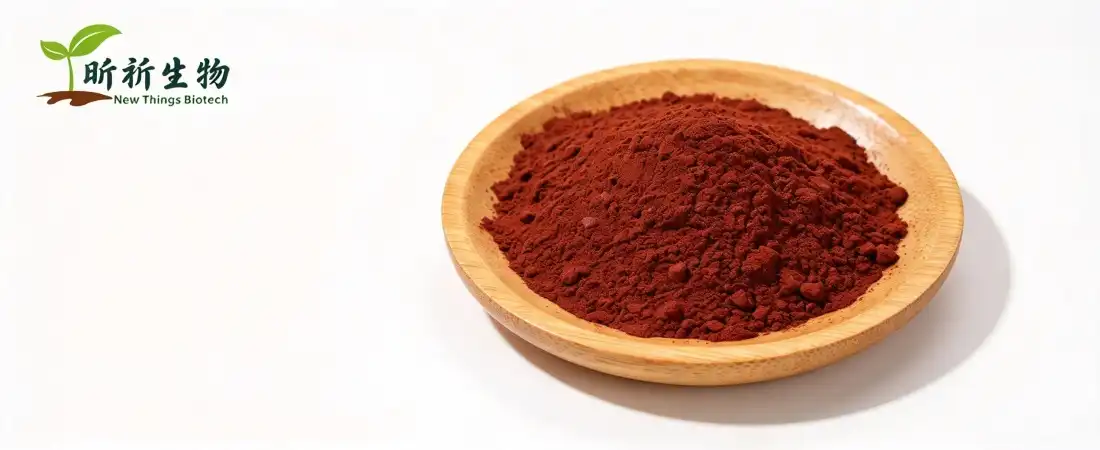
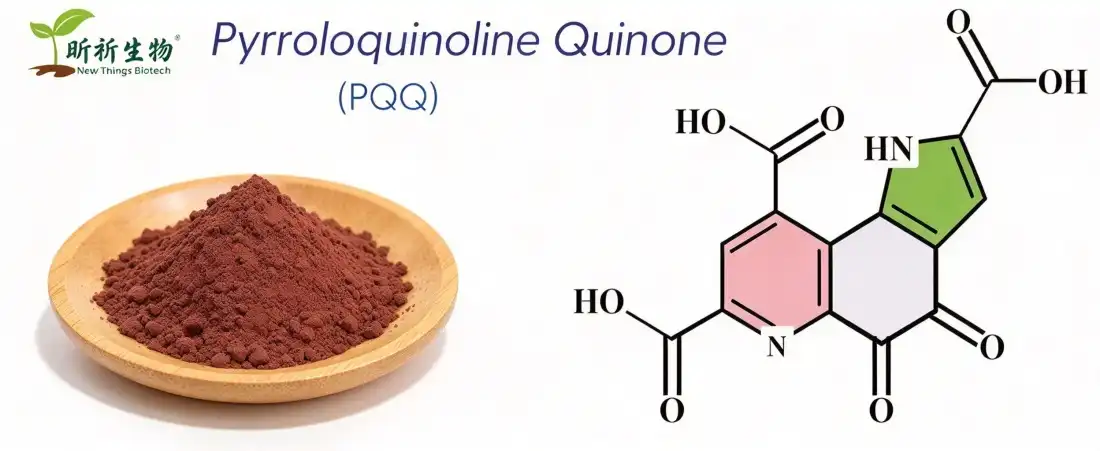
PQQ is a free acid. The free acid form is poorly soluble and has limited stability and is thus inappropriate for most commercial supplements. Most of the food-grade PQQ on the market today is PQQ disodium salt powder (CAS 122628-50-6), which is a crystalline red-brown or dark-red powder with the chemical formula C14H4N2Na2O8. The sodium ions are located at two of the carboxylic acid sites, providing substantially improved water solubility, bulk stability and encapsulation performance of the molecule. You will notice nearly all commercial goods that say “PQQ 20 mg” on the label are really providing you 20 mg of the disodium salt equivalent.
How PQQ Powder Is Produced
Commercial PQQ is manufactured by microbial fermentation, generally using strains such as Hyphomicrobium or Methylobacterium. The fermentation broth is then purified, crystallised as the disodium salt and spray dried to a fine free flowing powder. The integrity of the fermentation process immediately impacts on the final purity, residual solvents, heavy metals and microbiological profile - which is why checking the supplier's production papers is as crucial as the headline purity statistic.
Decision Two: Reading the Spec Sheet Like a Pro
A good PQQ spec sheet should provide your QC team all the information they need to clear material coming in in minutes, not days. The five parameters that you might use to separate pharmaceutical grade material from the rest are:
Assay, Purity and Identification
PQQ Powder Pharmaceutical Grade 98% HPLC Head Purity Much below this indicates pollution, moisture or poor purification. Identification should be performed by UV-Vis spectra (characteristic absorption of PQQ at around 249 nm and 330 nm) and by HPLC retention time against a reference sample. The sodium content of the pqq disodium salt powder should be equal to the theoretical amount of the disodium form.
Appearance, Loss on Drying and Residual Solvents
PQQ should be a fine powder, consistent red-brown or dark-red in colour. Loss on drying is frequently kept at ≤10% to allow for the inherent crystal water of the disodium salt. Residual solvents (ethanol, methanol) must be below ICH Q3C class limitations. Any change in colour (too bright, too dark, uneven) is a visual alarm to examine.
Reference Specifications
The table below provides a summary of the requirements most bulk PQQ pharmaceutical grade programs should meet.
| Parameter | Pharmaceutical-Grade Benchmark |
|---|---|
| Chemical name | Pyrroloquinoline quinone disodium salt |
| CAS number | 122628-50-6 |
| Molecular formula | C₁₄H₄N₂Na₂O₈ |
| Appearance | Red-brown to dark-red fine powder |
| Assay (HPLC) | ≥98.0% |
| Identification | UV-Vis and HPLC vs reference standard |
| Loss on drying | ≤10.0% |
| Heavy metals (Pb, As, Cd, Hg) | Meets USP/EU limits |
| Residual solvents | Meets ICH Q3C |
| Microbiology | Meets USP 61/62 |
| Shelf life | 24 months (sealed, cool and dry) |
| Certifications | ISO 9001, Kosher, Halal |
Decision Three: Matching PQQ Powder to Your Finished Format
The right standard is chosen based on what you wish to construct. Using the wrong grade or wrong dose might raise costs or impact the performance of your product.
Capsules and Softgels
The most common form of PQQ is a hard capsule. Miscible with microcrystalline cellulose or rice flour. Powder flows well and is dry in the capsule shell. In clinical research, typical daily doses are 10-20 mg of PQQ disodium salt. 20 mg is the dose used in landmark studies such as the 2013 study published in the Journal of Nutritional Biochemistry on mitochondrial markers.
Softgels, Liquids and Novel Formats
For softgels, PQQ has to be distributed in an oil basis, commonly coupled with CoQ10 for cognitive-mitochondrial combos. For solubility, liquid shots and functional beverages especially need the disodium salt form. Chewables and gummies may also be used providing the peak processing temperatures are not too high and the recipe include an opaque covering to shield the pigment from light.
Suggested Formulation Snapshots
| Finished Format | Suggested Daily Dose | Companion Ingredients |
|---|---|---|
| Daily cognitive capsule | 10–20 mg PQQ | CoQ10, phosphatidylserine |
| Mitochondrial energy softgel | 10–20 mg PQQ | Ubiquinol, L-carnitine |
| Healthy-aging stack | 10 mg PQQ | NMN, resveratrol |
| Pre-workout focus powder | 10 mg PQQ | Caffeine, L-theanine |
| Liquid wellness shot | 5–10 mg PQQ | B-vitamins, taurine |
Need Help Narrowing Down?
Not sure which specification fits your SKU? Send your target format, serving size and companion actives to info@newthingsbiotech.com. Our technical team will respond within two hours with a recommended grade of pqq disodium salt powder and arrange free samples so bench work can start right away.
Decision Four: Regulatory and Compliance Essentials
A wonderful raw material is only good if you can lawfully offer it in your target markets. PQQ has made great progress in regulation over the last several years, but each area still has its own laws.
United States: GRAS and NDI
Affirmed GRAS in the United States for use in food and beverage applications at daily consumption up to 20 mg per day . The PQQ disodium salt has a good New Dietary Ingredient (NDI) notification history for dietary supplements and 20 mg/day is commonly used as the reference dose. Your regulatory team should be on the lookout for any updated suggestions from the FDA for your specific product.
European Union: Novel Food Authorization
Pyrroloquinoline quinone disodium salt was authorised in the European Union as a Novel Food in 2018 under Regulation (EU) 2017/2470, subject to strict conditions of use. Their usage in dietary supplements for the adult population is allowed at established maximum levels. For a brand team planning a launch in the EU, this implies that PQQ is a legally recognised ingredient, but packaging claims will still need to conform with EU health claim rules.
Other Key Markets
PQQ disodium salt is permitted as a food or supplement ingredient in Japan, China and several Southeast Asian nations. In Canada and Australia, PQQ products are generally regulated as natural health products or supplementary medicines, and must be registered before being marketed. Confirm with a local regulatory expert on current rules before finishing label artwork.
Decision Five: Choosing a Bulk PQQ Powder Supplier You Can Trust
A superb spec only pays dividends if the material comes in consistent, pure and on time. The last choice – and frequently the most crucial – is who you purchase from.
Documentation and Testing Rigor
Each batch of pqq powder from NT Biotech is supplied with a Certificate of Analysis which includes assay by HPLC, identification, loss on drying, heavy metals, residual solvents and microbiological. ISO 9001, Kosher and Halal certification supports export paperwork and difficult store audits. For marketers establishing long-term SKUs on PQQ, batch-to-batch purity consistency is sometimes more valuable than the lowest spot pricing.
Storage, Packaging and Shelf Life
PQQ is susceptible to light, moisture and extended heat. NT Biotech supplies bulk PQQ powder in sealed drums with sealed aluminium foil bags to protect it from light and oxygen. Store sealed barrels in a cool, dry warehouse at 2-8 °C or below 25 °C depending on environment. Rotate stock on a first-in, first-out basis and plan to utilise opened material within the window provided on the Certificate of Analysis (CoA).
Delivery, OEM and Flexibility
The table below is what you may expect to see when working with NT Biotech as your bulk pqq powder supplier.
| Service Area | NT Biotech Commitment |
|---|---|
| Inquiry response | First reply within 2 hours |
| In-stock grades | Shipment in 1–3 working days after order confirmation |
| Production orders | 3–10 working days, from fermentation batch to packing |
| Shipping options | Express via FedEx/UPS, air or sea through trusted forwarders |
| Customization | OEM/ODM packing sizes, private-label documentation |
| Payment | Flexible options, including the buyer's local currency |
A Long-Term Technical Partner
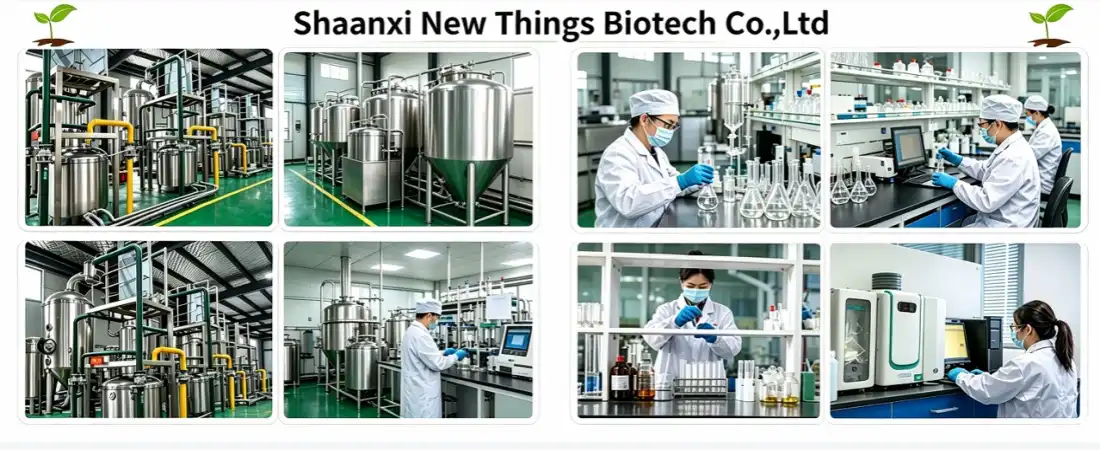
Shaanxi New Things Biotech integrates its own sourcing network, modern R&D, smart manufacturing and adaptable supply chains. That whole value chain preserves uniformity from fermentation to final powder – just what you need when PQQ is the star ingredient of a premium cognitive, energy or healthy-aging product.
Conclusion
5 Tips for Choosing bulk PQQ Powder for Supplement Manufacturing Select the relevant chemical form (disodium salt) Don’t sweat the headline purity on the spec sheet Match your completed format and dosage to the grade Verify the regulatory situation in each target market Work with a trusted provider If it gets it right, PQQ is one of the most interesting hero molecules a modern supplement company can build around. Shaanxi New Things Biotech provides pharmaceutical-grade pqq disodium salt powder that is ISO 9001, Kosher and Halal certified. Each batch comes with a CoA. The company offers various OEM options and can deliver in days. Order your free sample now and give your next premium softgel the basis your customers can trust.
FAQ
Q1: Which form of PQQ should I buy for supplements?
A: PQQ disodium salt powder (CAS 122628-50-6) at ≥98% HPLC purity.
Q2: What is the typical daily dose used in research?
A: 10 to 20 mg per day, with 20 mg being the dose in landmark mitochondrial studies.
Q3: Is PQQ legal in the US and EU?
A: Yes. It has Self-Affirmed GRAS status in the US and Novel Food authorization in the EU since 2018.
Q4: What certifications does NT Biotech hold?
A: ISO 9001, Kosher and Halal, with a CoA for every batch.
Q5: How fast can NT Biotech ship?
A: In-stock PQQ ships in 1–3 working days. Production orders take 3–10 working days.
Build Your Next Premium PQQ SKU with NT Biotech
The PQQ is squarely in the middle of this trend with the categories of cognitive health, mitochondrial energy and healthy-aging expanding faster than almost any other section in global supplements. NT Biotech is eager to get you started. We provide pharmaceutical quality bulk PQQ powder, ISO 9001, Kosher and Halal certified, complete CoA with every batch and a two hour response assurance. Our experts will help you pick the correct specification from daily cognitive capsule, mitochondrial energy softgel, healthy-aging stack with NMN and resveratrol, liquid wellness shot, and organise shipment by express, air or sea. Simple projects, flexible OEM choices, and payment in your currency. Contact info@newthingsbiotech.com immediately for free samples, a technical data sheet and a bulk quote.
References
1. Chowanadisai, W., Bauerly, K. A., Tchaparian, E., Wong, A., Cortopassi, G. A., & Rucker, R. B. (2010). Pyrroloquinoline quinone stimulates mitochondrial biogenesis through cAMP response element-binding protein phosphorylation and increased PGC-1α expression. Journal of Biological Chemistry, 285(1), 142–152.
2. Harris, C. B., Chowanadisai, W., Mishchuk, D. O., Satre, M. A., Slupsky, C. M., & Rucker, R. B. (2013). Dietary pyrroloquinoline quinone (PQQ) alters indicators of inflammation and mitochondrial-related metabolism in human subjects. Journal of Nutritional Biochemistry, 24(12), 2076–2084.
3. Nakano, M., Yamamoto, T., Okamura, H., Tsuda, A., & Kowatari, Y. (2012). Effects of oral supplementation with pyrroloquinoline quinone on stress, fatigue, and sleep. Functional Foods in Health and Disease, 2(8), 307–324.
4. Akagawa, M., Nakano, M., & Ikemoto, K. (2016). Recent progress in studies on the health benefits of pyrroloquinoline quinone. Bioscience, Biotechnology, and Biochemistry, 80(1), 13–22.
5. Nakano, M., Suzuki, H., Imamura, T., Lau, A., & Lynch, B. (2013). Genotoxicity of pyrroloquinoline quinone (PQQ) disodium salt (BioPQQ™). Regulatory Toxicology and Pharmacology, 67(2), 189–197.
6. EFSA Panel on Dietetic Products, Nutrition and Allergies. (2017). Safety of pyrroloquinoline quinone disodium salt as a novel food pursuant to Regulation (EC) No 258/97. EFSA Journal, 15(11), 5058.