- English
- French
- German
- Portuguese
- Spanish
- Russian
- Japanese
- Korean
- Arabic
- Greek
- German
- Turkish
- Italian
- Danish
- Romanian
- Indonesian
- Czech
- Afrikaans
- Swedish
- Polish
- Basque
- Catalan
- Esperanto
- Hindi
- Lao
- Albanian
- Amharic
- Armenian
- Azerbaijani
- Belarusian
- Bengali
- Bosnian
- Bulgarian
- Cebuano
- Chichewa
- Corsican
- Croatian
- Dutch
- Estonian
- Filipino
- Finnish
- Frisian
- Galician
- Georgian
- Gujarati
- Haitian
- Hausa
- Hawaiian
- Hebrew
- Hmong
- Hungarian
- Icelandic
- Igbo
- Javanese
- Kannada
- Kazakh
- Khmer
- Kurdish
- Kyrgyz
- Latin
- Latvian
- Lithuanian
- Luxembou..
- Macedonian
- Malagasy
- Malay
- Malayalam
- Maltese
- Maori
- Marathi
- Mongolian
- Burmese
- Nepali
- Norwegian
- Pashto
- Persian
- Punjabi
- Serbian
- Sesotho
- Sinhala
- Slovak
- Slovenian
- Somali
- Samoan
- Scots Gaelic
- Shona
- Sindhi
- Sundanese
- Swahili
- Tajik
- Tamil
- Telugu
- Thai
- Ukrainian
- Urdu
- Uzbek
- Vietnamese
- Welsh
- Xhosa
- Yiddish
- Yoruba
- Zulu
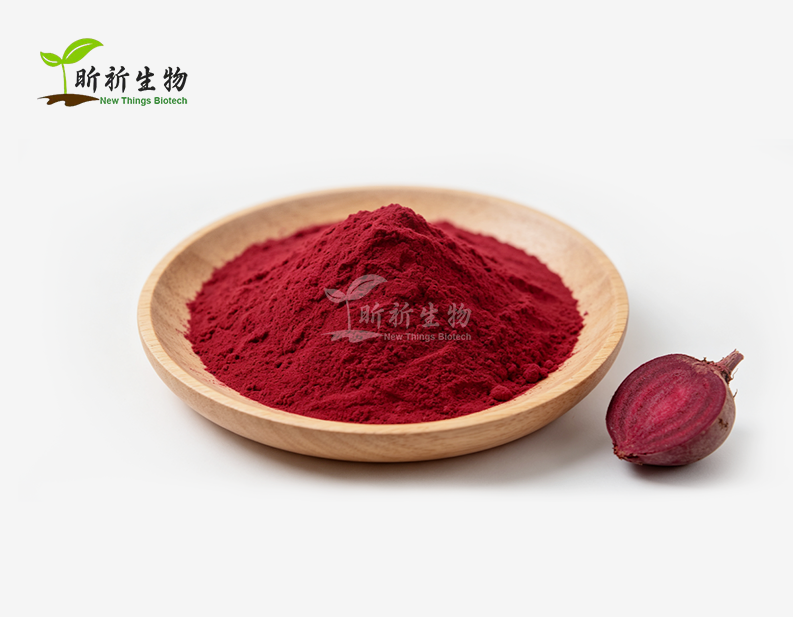
The food sector is shifting toward clean-label botanical alternatives to synthetic colourants such as Red 40, Red 3, and insect-derived carmine due to consumer concern. Commercial bakers, confectionery artisans and beverage manufacturers may learn to use raw organic beetroot powder as a natural food dye to generate brilliant pink to deep magenta hues without chemical additives or petroleum derivatives. But working with plant colourants means looking at pigment stability, moisture impacts, and the science of mixing. That is where NT Biotech excels with high quality raw organic raw organic beet root powder specially designed for demanding colour applications. Our powder is derived from sustainably grown red beets, processed via a proprietary low-temperature vacuum dehydration technique that maintains heat-sensitive betalains, guarantees instant cold-water solubility, and ensures consistent tinting power without gritty sedimentation or undesirable flavour carryover in finished food matrices.
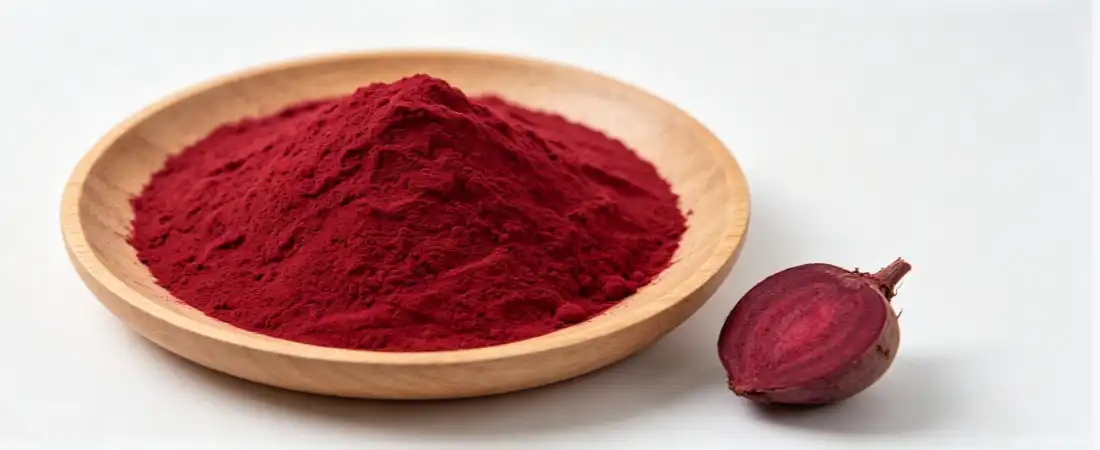
The Chemistry of Betalain Pigments: Understanding Natural Color Dynamics
To be able to utilise the raw organic beetroot root powder as a clean-label pigment, the underlying biochemistry has to be understood at a fundamental level. The intense hue of red beetroot (Beta vulgaris) is attributed to betalains, rather than anthocyanins as in many red plant pigments. The nitrogenous pigments are water-soluble and are classed as red violet betacyanins (mostly betanin and isobetanin) and yellow betaxanthins (vulgaxanthin). Food scientists may use knowledge of how these chromophores interact with environmental factors such as pH, moisture and temperature to maximise colour brilliance and prevent premature pigment deterioration throughout commercial shelf life.
       [Fresh Beta Vulgaris Roots]
                   │
                   ▼
     Low-Temperature Vacuum Drying
   (Protects Betanin Chromophores)
                   │
                   ▼
    Multi-Stage Precision Micronization
        (Uniform 80-100 Mesh)
                   │
         ┌─────────┴─────────┐
         ▼                   ▼
  Betacyanin Pool     Inorganic Nitrates
  (Red-Violet Dye)    (2.5% - 3.5% NO3-)
         │                   │
         └─────────┬─────────┘
                   ▼
  Vibrant, Water-Soluble Natural Food Dye
Betacyanins vs. Anthocyanins: pH Stability in Food Systems
One of the main benefits of using raw organic beetroot root powder over anthocyanin colours (elderberry, red cabbage, grape skin) is its capacity to withstand wide pH fluctuations. Anthocyanins undergo radical change, from brilliant red in acidity (pH 1-3) to violet in neutrality (pH 5-7) to nasty drab blue-green in alkalinity. Conversely, betanin is quite stable in colour in the range of pH 3.5-7.0, where it retains its brilliant magenta-red colour. The wide stability profile of beetroot powder makes it acceptable for low-acid dairy desserts, plant-based milks, frostings and neutral doughs, where fruit-based anthocyanins tend to lose their intended shade.
Temperature Sensitivity and Thermal Thresholds of Betanin
Betacyanins are stable across a broad pH range, but their molecular ring structure is vulnerable to intense heat treatment. Betanin with prolonged contact with high temperatures is subject to hydrolysis to form betalamic acid and cyclo-DOPA, and the bright magenta hue is converted to a sad yellow-brown shade. Food processors may resort to brief pasteurisation or cooking cycles or adding the powder during post-bake procedures to keep colour intensity. Furthermore, the powder mixed with dietary antioxidants such as ascorbic acid or citric acid has a synergistic copigmentation action which helps to maintain colour stability throughout light exposure and heat production cycles.
Colorimetric Standardization and Tinting Strength
Commercial production batches need standardised raw ingredients to provide consistent colour consistency. Commercial beetroot powders tend to show variability in the levels of pigments owing to irregular harvest, inadequate storage, or unregulated drying processes. NT Biotech’s production procedure standardises the active betanin content from 0.40% to 0.80% to provide reliable tinting strength. Our powder has high a∗a∗ (redness) and well-balanced b∗b∗ (yellow/blue balance) coordinates in the worldwide CIE L∗a∗b∗ colour space, enabling formulators to accurately produce consistent pastel pinks or deep burgundies.
| Technical Parameter | Specification Standard | Analytical Test Method | Functional Significance in Dyeing |
|---|---|---|---|
| Betanin Concentration | ≥0.40%−0.80%≥0.40%−0.80% | UV-Vis Spectrophotometry | Standardized tinting strength and chromatic purity |
| Natural Nitrate Content | 2.5%−3.5%2.5%−3.5% | HPLC / Ion Chromatography | Bioactive functional co-factor retention |
| Physical Appearance | Fine, uniform magenta-red powder | Visual Inspection | Free of oxidized brownish thermal degradation |
| Particle Size Distribution | 100%100% through 80−100 mesh80−100 mesh | Sieve Granulometry | Immediate liquid dispersion; zero textural grit |
| Moisture Content | ≤7.0%≤7.0% | Loss on Drying (105∘C105∘C, 2 h) | Prevents clumping and preserves pigment stability |
| Aqueous Dispersibility | Rapid cold-water dissolution | Gravimetric Analysis | Yields clear, streak-free color solutions |
| Heavy Metals (Pb, As, Cd, Hg) | ≤10 ppm≤10 ppm Total (Pb<2 ppmPb<2 ppm) | ICP-MS | Complies with international food additive safety limits |
| Total Aerobic Microbial Count | <1,000 CFU/g<1,000 CFU/g | USP Standard Microbiological | Suitable for clean-label food and cosmetic products |
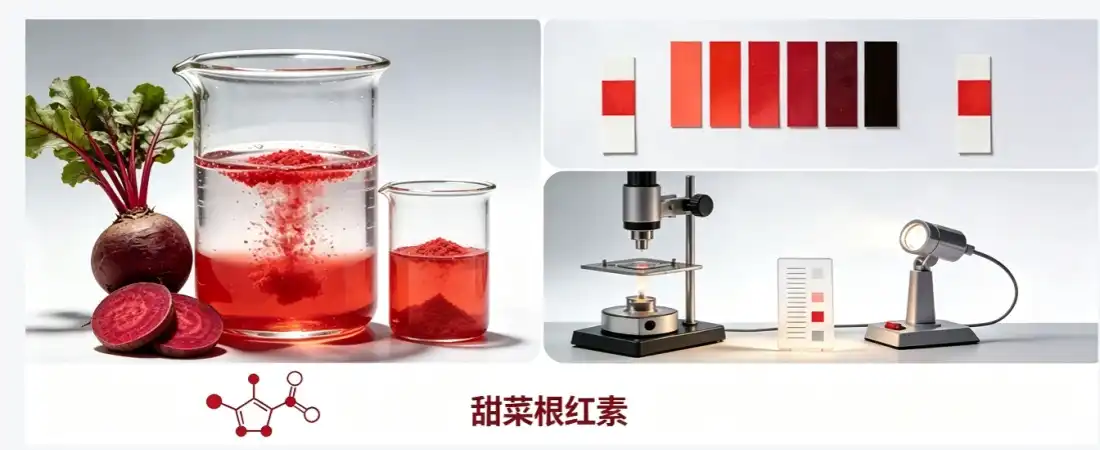
Practical Preparation and Reconstitution Protocols for Optimal Dye Performance
To avoid streaks, clumping, and uneven colour in commercial food preparation, it is vital to properly reconstitute the raw organic beetroot root powder. Pure botanical raw organic beet root powders are hydrocolloidal and, by nature, hydrophilic; therefore, pouring dry powder straight into cold, fat-rich, or viscous liquid bases may result in localised clumping and dark, unblended colour spots. Uniform pigment distribution may be achieved for wet, dry and multi-phase emulsion systems by following accurate reconstitution procedures, pre-emulsion dispersion or unique dry-blending techniques.
       [Raw Organic Beet Root Powder]
                     │
         ┌───────────┴───────────┐
         ▼                       ▼
   AQUEOUS DYEING           DRY BLENDING
(Beverages, Frostings)     (Flours, Spices)
         │                       │
Hydrate in Water (1:4 ratio)     Pass 80-Mesh Sieve
Add 0.1% Ascorbic Acid           Geometric Dilution
Mix under Shear (60s)            Tumble Blend (Dry)
         │                       │
         ▼                       ▼
Uniform Magenta Liquid     Streak-Free Dry Premix
Liquid Stock Solution Formulation and Hydration Techniques
The recommended industrial procedure for fluid applications such as drinks, icings, syrups, and dairy products is to produce a concentrated liquid stock dye. Add raw organic beetroot root powder and ambient, filtered water in a 1:4 or 1:5 weight ratio and agitate moderately mechanically for 60 seconds. NT Biotech’s powder, 80-to-100 mesh in particle size, dissolves instantly and without lumping. A modest quantity (0.1-0.2%) of food-grade citric or ascorbic acid may reduce the solution pH to around 4.5 and help protect betanin pigments from oxidation during storage. These solutions should be maintained in sealed opaque containers at 4°C and utilised within 24-48 hours for maximum chromatic intensity.
Direct Dry Blending and Carrier-Free Powder Dispersion
The powder may be used directly into the bulk formulation for dry bread mixes, protein powders, extruded snacks, or dry spice rubs. To minimise localised colour spots when the final consumer adds liquid, use geometric dilution: mix the needed beetroot powder into a tiny portion of the dry carrier (e.g. starch, flour, or crystalline sweetener) before adding it to the larger batch. NT Biotech’s powder is 100% pure beetroot extract with no additional maltodextrin carriers, so it disperses uniformly in dry mixes to provide quick, consistent colour development upon the final addition of liquid.
Neutralizing Earthy Odors: Managing Geosmin in Sweet Recipes
One of the major challenges in formulation with beet-based colourants is controlling geosmin, the natural volatile terpene that imparts a characteristic earthy flavour to root crops. Geosmin is useful in savoury cooking but might interfere with subtle sweet flavours like vanilla, cream or mild citrus. NT Biotech does this during processing with regulated low-temperature flash evaporation to decrease volatile geosmin levels. In commercial kitchens and production factories, formulators may counter any residual earthy overtones by matching the powder with complementing flavours, such as dark chocolate, tart cherry, raspberry, lemon oil, ginger, or cultured dairy.
Formulation Support & Sample Inquiries
Are you reformulating your confectionery, dairy, or bakery line to replace synthetic Red 40 with a clean-label botanical alternative? Connect directly with the technical specialists at NT Biotech by emailing info@newthingsbiotech.com. Our application team can provide tailored dosage guidelines, HPLC-verified certificates of analysis, and complimentary pilot testing samples for your R&D trials.
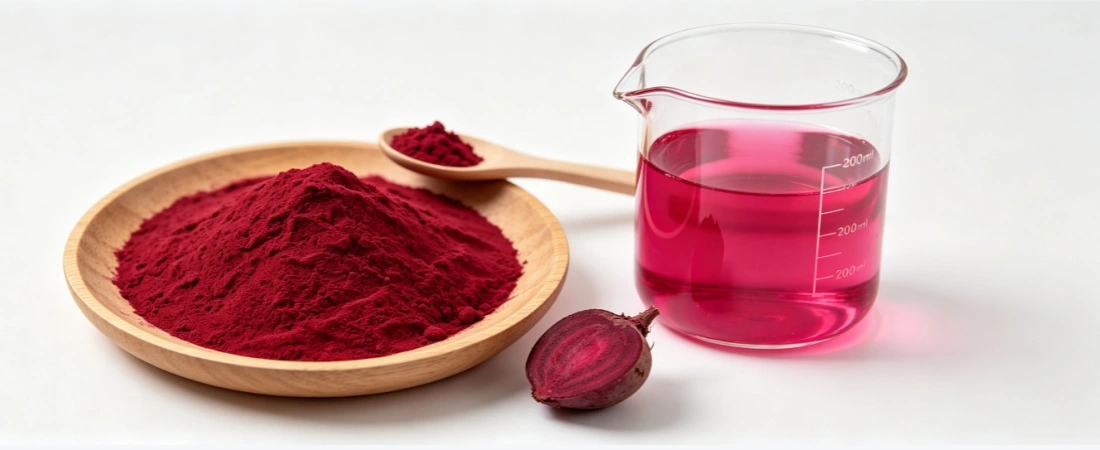
Industrial and Culinary Food Matrix Applications: From Pastry to Beverages
Raw organic beetroot root powder is a very versatile functional ingredient for commercial culinary applications as an efficient substitute for manufactured azo colours. It is fully water-soluble and stable at a wide range of moisture levels, which allows the formulator to utilise it in a variety of water-continuous, oil-continuous and semi-solid food systems. Product creators may hit precise target hues from delicate pastel pinks to deep ruby reds by understanding how betanin interacts with other substances including lipids, proteins, carbohydrates and leavening agents.
Dairy Systems, Frostings, and Plant-Based Emulsions
Raw organic beetroot root powder delivers excellent colour performance in dairy and non-dairy fat emulsions such as yoghurts, cream cheeses, buttercreams, plant-based spreads and ice creams. These matrices are kept at moderate temperatures or sent to a mild pasteurisation process in an effort to preserve the betanin pigments in their full chromatic integrity. For colouring buttercream frostings or white chocolate glazes, dissolve the powder in a small amount of liquid or vegetable glycerin, and add to the fat phase. This minimises micro-speckling and yields a smooth, satin-like pink or magenta sheen that resists light-induced fading in chilled retail displays.
Confectionery, Fruit Jellies, and Gummy Manufacturing
Synthetic red dyes are a major component of the confectionery industry, which is dependent on bright red colours; high-purity beetroot powder presents a possible alternative. When manufacturing hard candy, fruit snacks, and pectin- or gelatin-based gummy sweets, the raw organic beet root powder should be introduced late in the cooking process. The reconstituted beet colour is added at the chilling stage (ideally when the syrup temperature is below 85°C) with flavourings and food acids without exposure to heat. Gummy formulations are naturally acidic (typically pH 3.2–3.8) and this helps stabilise betacyanin pigments, creating vivid ruby-red transparencies that are stable for the course of the retail shelf life.
Extruded Pasta, Doughs, and Low-Thermal Bakery Formulations
Processing conditions must be carefully controlled for applications in bread and dry pasta, because of thermal degradation. In high-heat baking, Maillard reactions may create a golden brown crust on the exterior at surface temperatures over 175 °C, yet the crumb within often reveals beautiful pink colours. Beetroot powder is suitable for applications where lower temperatures are preferred for enhanced colour retention (less than 120 degrees C), such as French macarons, raw vegan desserts, refrigerated cookie dough, extruded pasta and steamed buns. Cream of tartar or lemon juice is added to the dough to help retain an acidic interior matrix that preserves the red colour throughout baking.
| Food Matrix Category | Target Visual Color | Recommended Dosage (w/w) | Application Stage & Method | Stability Enhancers |
|---|---|---|---|---|
| Yogurt & Cultured Milks | Pastel Rose to Raspberry | 0.10%−0.35%0.10%−0.35% | Post-fermentation liquid dosing | Natural lactic acid; cold storage |
| Buttercream & Icings | Vibrant Magenta Pink | 0.25%−0.80%0.25%−0.80% | Pre-dissolve in glycerin; fold into fat | Ascorbic acid (0.1%0.1%); dark storage |
| Pectin & Gelatin Gummies | Ruby Red / Cherry Pink | 0.40%−1.20%0.40%−1.20% | Add at <85∘C<85∘C with flavor oils | Citric acid buffer (pH 3.2−3.63.2−3.6) |
| Fresh Extruded Pasta | Deep Crimson Burgundy | 1.50%−3.00%1.50%−3.00% | Pre-blend dry with semolina flour | Low-temperature drying (<55∘C<55∘C) |
| Beverage Syrups & RTDs | Bright Cherry to Rose | 0.15%−0.50%0.15%−0.50% | Direct cold dissolution under shear | Synergistic citric acid copigmentation |
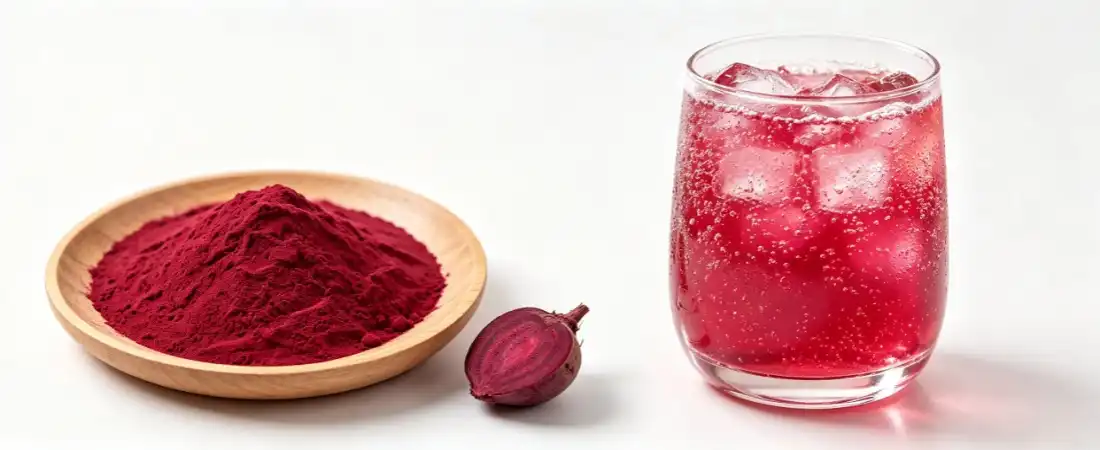
Commercial Sourcing Criteria: Selecting a Reliable Botanical Pigment Partner
The transition from lab-scale food trials to commercial manufacturing necessitates selecting a knowledgeable, quality-oriented provider of raw organic beetroot root powder. The efficacy of a botanical food dye is highly dependent on consistency in raw material sources, processing settings, and quality control. You can be working with a vendor that can’t be trusted to provide consistent pigment strengths, delivers clumps of pigment because of too much moisture, delivers insoluble grit that jams up your processing equipment, or delivers synthetic carriers that make your clean-label claims false.
       [Field Harvesting: Non-GMO Beta Vulgaris]
                           │
                           ▼
          [Low-Temperature Vacuum Drying]
                           │
                           ▼
          [Multi-Stage 80-100 Mesh Milling]
                           │
                           ▼
[Analytical QC: HPLC Nitrates + UV-Vis Betanins + ICP-MS]
                           │
         ┌─────────────────┴─────────────────┐
         ▼                                   ▼
 [Stock Shipments: 1-3 Days]     [Custom OEM: 3-10 Days]
Particle Sizing, Mesh Homogeneity, and Carrier-Free Purity
Physical particle dispersion is a key factor to evaluate a wholesale raw organic beetroot root powder provider. Coarse powders (40-60 mesh) dissolve slowly and leave noticeable particles in final goods. To get a high-precision botanical extraction with a standard of 80-100 mesh, a multi-stage milling process is used. This ultra-fine particle profile provides quick, streak-free dissolving on industrial liquid mixing lines. Procurement teams also need to ensure the powder isn’t hiding any anti-caking chemicals, synthetic flow aids, or maltodextrin dilution and that it’s a pure 100% Beta vulgaris ingredient that fits visible clean-label criteria.
Analytical Quality Assurance and Global Certifications
High-volume food and beverage businesses need vendor audits for rigorous quality control systems and confirmed analytical testing. Every batch of NT Biotech is commercially tested for nitrate content by High-Performance Liquid Chromatography (HPLC), betanin concentration by UV-Vis spectrophotometry, and heavy metal compliance by ICP-MS. We manufacture under an ISO 9001-certified quality management system, and our products are Kosher and Halal certified to international standards. Such a level of quality assurance guarantees smooth customs clearance and regulatory compliance in the target North American, European, and Asian markets.
Supply Chain Flexibility, OEM Capabilities, and Global Logistics
For procurement managers, supply chain stability and rapid communication are as vital as the technical performance of the ingredient. NT Biotech has an adaptive fulfilment network, maintaining standard raw organic beetroot root powder in safety stock to ship within 1-3 business days following order confirmation. We can meet your specific needs, such as special mesh sizes, low moisture formulations, or special pre-mixes, in 3 to 10 working days. We have direct business accounts with FEDEX, UPS, and reliable freight forwarders for easy international logistics. We offer multi-currency payment options to make worldwide transactions pain-free.
Conclusion
The shift to natural food colourants means a balance between botanical purity, pigment chemistry, and commercial usefulness. As seen in this tutorial, commercial formulators may use raw organic beet root powder to make bright, clean-label pinks and reds that have wide pH stability throughout a variety of food matrices. Shaanxi New Things Biotech (NT Biotech) is a reliable, technology-driven producer of plant derivatives for the food, supplement, and cosmetic industries. We provide a complete value chain from plant source to application, through integrating self-sufficient agriculture cultivation and mild low-temperature vacuum drying, ISO9001, Kosher, Halal, and customisable OEM service, guaranteeing each batch of product with consistent bioactivity, immediate cold water solubility, and natural colour retention.
FAQ
1. How does heat affect raw organic beet root powder when used as a food dye?
Prolonged exposure to temperatures above 100°C hydrolyzes betanin pigments into betalamic acid, causing the color to shift from vibrant magenta to pale yellow-brown. To preserve color intensity, add the powder during late-stage processing, lower baking temperatures, or incorporate food acids like citric acid for improved thermal stability.
2. Can beet root powder replace synthetic Red 40 in acidic food systems?
Yes. Unlike anthocyanins, which require strong acidity to maintain their red hue, the betanin in beet root powder remains stable across a pH range of 3.5 to 7.0. It serves as an effective, clean-label replacement for Red 40 in acidic gummy candies, yogurts, and fruit beverages.
3. Will raw organic beet root powder impart an earthy taste to delicate foods?
NT Biotech uses low-temperature vacuum dehydration to reduce volatile geosmin compounds, resulting in a mild, slightly sweet profile. In finished formulations, low inclusion rates (0.1%–0.8%) deliver vibrant color without detectable earthy notes, especially when paired with citrus, vanilla, berry, or chocolate flavorings.
4. How should liquid beet dye stock solutions be stored to prevent fading?
Liquid stock solutions should be adjusted to pH 4.0–4.5 using citric or ascorbic acid, stored in opaque, airtight containers, and refrigerated at 4°C. These solutions should be used within 24 to 48 hours to minimize oxidation and maintain maximum color vibrancy.
5. What inclusion rate is needed to achieve pastel pink versus deep red shades?
For soft pastel pinks in buttercreams or yogurts, an inclusion rate of 0.10% to 0.25% by weight is typically sufficient. For deep magenta, crimson, or ruby-red shades in fruit pastes, gummies, or pasta, use an inclusion rate between 0.80% and 2.50%, depending on formulation opacity.
Upgrade to Clean-Label Color: Partner with NT Biotech for Custom Botanical Solutions
Modernize your food, beverage, and confectionery formulations with pure, vibrant botanical colorants engineered for clean-label excellence. As an established, technology-driven plant derivatives manufacturer, raw organic beet root powder serves as your long-term technical partner, bridging the gap between natural agricultural purity and advanced extraction science. Whether you are reformulating extruded snacks, dairy desserts, bakery fillings, or vibrant functional drinks, our standardized red beet extracts and tailored OEM/ODM solutions provide the chromatic vibrancy, cold-water solubility, and quality documentation your brand needs to succeed. Take advantage of our two-hour inquiry response, ready-to-ship inventory, and flexible multi-currency payment options today. Connect directly with our food science formulation team at info@newthingsbiotech.com to request comprehensive technical dossiers, lot-specific Certificates of Analysis, and complimentary pilot testing samples.
References
1. Azeredo, H. M. (2009). Betalains: properties, sources, applications, and stability—a review. International Journal of Food Science & Technology, 44(12), 2365-2376.
2. Esatbeyoglu, T., Wagner, A. E., Schini-Kerth, V. B., & Rimbach, G. (2015). Betanin—A food colorant with biological activity. Molecular Nutrition & Food Research, 59(1), 36-47.
3. Herbach, K. M., Stintzing, F. C., & Carle, R. (2006). Betalain stability and degradation—structural and chromatic aspects. Journal of Food Science, 71(4), R41-R50.
4. Ravichandran, K., Saw, N. M. M. T., Mohdaly, A. A., Gabr, A. M., Kastell, A., Riedel, H., & Smetanska, I. (2013). Impact of processing of red beet on betalain content and antioxidant activity. Food Research International, 50(2), 670-675.
5. Stintzing, F. C., & Carle, R. (2004). Functional properties of anthocyanins and betalains in plants, food, and in human nutrition. Trends in Food Science & Technology, 15(1), 19-38.
6. Clifford, T., Howatson, G., West, D. J., & Stevenson, E. J. (2015). The potential benefits of red beetroot supplementation in health and disease. Nutrients, 7(4), 2801-2822.