- English
- French
- German
- Portuguese
- Spanish
- Russian
- Japanese
- Korean
- Arabic
- Greek
- German
- Turkish
- Italian
- Danish
- Romanian
- Indonesian
- Czech
- Afrikaans
- Swedish
- Polish
- Basque
- Catalan
- Esperanto
- Hindi
- Lao
- Albanian
- Amharic
- Armenian
- Azerbaijani
- Belarusian
- Bengali
- Bosnian
- Bulgarian
- Cebuano
- Chichewa
- Corsican
- Croatian
- Dutch
- Estonian
- Filipino
- Finnish
- Frisian
- Galician
- Georgian
- Gujarati
- Haitian
- Hausa
- Hawaiian
- Hebrew
- Hmong
- Hungarian
- Icelandic
- Igbo
- Javanese
- Kannada
- Kazakh
- Khmer
- Kurdish
- Kyrgyz
- Latin
- Latvian
- Lithuanian
- Luxembou..
- Macedonian
- Malagasy
- Malay
- Malayalam
- Maltese
- Maori
- Marathi
- Mongolian
- Burmese
- Nepali
- Norwegian
- Pashto
- Persian
- Punjabi
- Serbian
- Sesotho
- Sinhala
- Slovak
- Slovenian
- Somali
- Samoan
- Scots Gaelic
- Shona
- Sindhi
- Sundanese
- Swahili
- Tajik
- Tamil
- Telugu
- Thai
- Ukrainian
- Urdu
- Uzbek
- Vietnamese
- Welsh
- Xhosa
- Yiddish
- Yoruba
- Zulu
With our phones, computers, tablets and LED lights, our eyes are working harder than ever, and buyers are looking for supplements to help them see comfortably for years to come. Now lutein, the golden pigment located in the center of the retina, is the substance at the core of that category, with marigold flowers the most abundant commercial supply. This book will teach you how marigold carotenoids benefit eyesight, what the clinical research says, how to design a good eye health product, and how to get the raw material properly. It is written by NT Biotech, a professional marigold extract powder wholesale provider for supplement, food and cosmetic businesses globally. We make our marigold extract powder bulk, standardized lutein grades 5%-90%, using Tagetes erecta flower petals. Each grade is tested by HPLC or UV and delivered with a batch specific Certificate of Analysis so you receive consistent potency in capsules, pills, gummies and beverages. Bulk or samples cost, contact info@newthingsbiotech.com.
The Screen-Time Era Has Made Lutein a Must-Have
A Generation of Tired Eyes
The ordinary adult spends several hours a day staring at digital devices. Common problems in their twenties include eye strain, dryness, sensitivity to brightness, exhaustion at the end of the day. That move has opened up the eye health industry far wider than elderly customers. Research backs this larger appeal. Stringham and colleagues conducted a placebo-controlled study of a macular carotenoid supplement in young individuals with heavy screen exposure for six months. Participants accumulated more macular pigment and experienced reduced eye strain, ocular tiredness and headache and better sleep. For companies, it means a marigold extract with lutein combination may appeal to students, gamers and office professionals as well as seniors.
Marigold: Nature's Most Practical Lutein Source
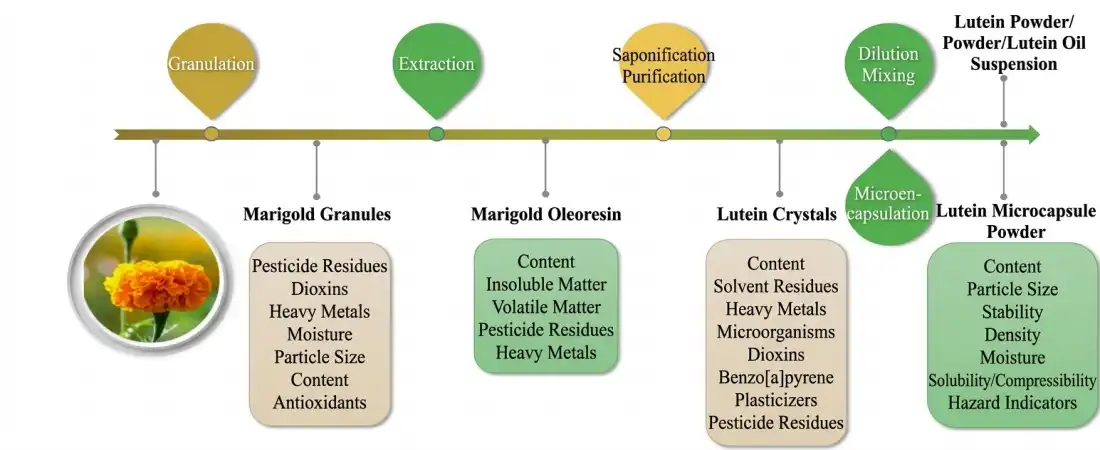
Lutein naturally occurs in leafy greens such as kale and spinach, but in such tiny and fluctuating quantities that it cannot be used for supplement manufacture. That's another tale. The African marigold, Tagetes erecta, has colorful petals. They are high in lutein esters and include minor levels of zeaxanthin. The blooms are collected and dried, then the carotenoids are removed and a saponification procedure is used to convert lutein esters to free lutein, the form present in human eye tissue. The extract is refined, concentrated and standardized into a free-flowing powder. That’s why practically every lutein supplement on the market begins with marigold. It delivers plenty, traceability and constant quality.
Benefits at a Glance
The table below outlines the significant eye health advantages of lutein and zeaxanthin, the major studies, and the dosage taken daily by researchers:
| Benefit | How It Works | Key Research | Daily Amount Studied |
|---|---|---|---|
| Higher macular pigment density | Lutein accumulates in the macula | Bone et al., 2003 | 5–30 mg lutein |
| Blue light filtering | Macular pigment absorbs high-energy blue light | Krinsky et al., 2003 | — |
| Glare and photostress recovery | Denser pigment reduces scattered light | Hammond et al., 2014 | 10 mg lutein + 2 mg zeaxanthin |
| Screen-time comfort | Less eye strain and fatigue | Stringham et al., 2017 | About 24 mg total macular carotenoids |
| Support for aging eyes | Antioxidant protection of retinal cells | AREDS2 Research Group, 2013 | 10 mg lutein + 2 mg zeaxanthin |
Inside the Eye: How Marigold Carotenoids Protect Vision
Building the Macular Pigment Shield
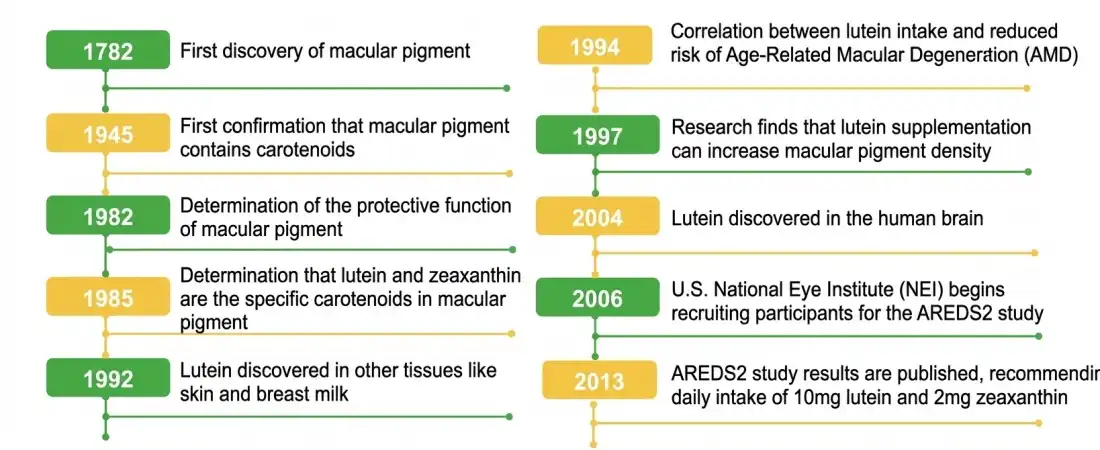
The macula is a tiny part of the retina responsible for crisp, center vision, such as when you read, drive and see faces. It is also the site of natural accumulation of lutein and zeaxanthin, which produce a yellow coating termed the macular pigment. These carotenoids are not produced by the body, hence must be obtained from food or supplementation. Bone and colleagues found that daily supplementation with lutein increased blood levels and macular pigment optical density in human volunteers in a dose-dependent manner. Part of the credibility of marigold extract lutein powder as an ingredient is the measurable change that occurs in the eye itself. Formulators are providing a nutrition that the retina actively takes up and utilizes.
Filtering Blue Light and Neutralizing Free Radicals
Macular pigment acts like built-in sunglasses It is capable of absorbing high-energy blue light, with a peak absorption about 460 nanometers, before the light reaches the photoreceptors behind it. The retina is also very susceptible to oxidative stress because it combines bright light, rapid oxygen consumption and membranes rich in vulnerable fatty acids. Krinsky, Landrum, and Bone in their article in the Annual article of Nutrition defined lutein and zeaxanthin as blue light filters and as antioxidants that quench reactive oxygen species. It is this double effect that makes these carotenoids so vital for the long-term health of the retina.
Sharper Contrast and Faster Glare Recovery
Most buyers see the visual improvements first. Hammond and colleagues provided 10 mg of lutein and 2 mg of zeaxanthin daily to healthy people in a year-long double-blind research. The augmented group recovered more quickly after exposure to bright light, fared better with glare and had increased chromatic contrast compared with placebo. In practical terms, it may mean better nite driving, smoother transitions from sunshine to shade and sharper eyesight under bright workplace lights. Practical and relevant advantages that improve marketing claims.
Long-Term Support for Aging Eyes
Thousands of older persons took part in the landmark AREDS2 experiment performed by the US National Eye Institute, which examined a mixture comprising 10mg of lutein and 2mg of zeaxanthin. Researchers found that lutein and zeaxanthin might take the role of beta-carotene in the original AREDS recipe. Products that follow the AREDS2 formulation have since raised the bar for the category. In a meta-analysis by Ma et al., increased dietary consumption of lutein and zeaxanthin was linked with a decreased risk of late-stage age-related macular degeneration. These research, taken together, provide eye health businesses with one of the strongest bases of data in the supplement market.
Planning an AREDS2 type capsule, a screen-time gummy or a vision drink? Send your product idea to info@newthingsbiotech.com Our technical staff will respond within two hours with the proper lutein grade, dose recommendation and a free sample with its batch CoA.
Formulating an Eye Health Product That Works
Choosing the Right Lutein Grade
There are varying strengths of Marigold extract that may be used for different goods and price points. Lower grades provide natural color and a modest amount of lutein. High purity crystals provide therapeutic dosages in extremely tiny quantities. Cold water dispersible forms allow drinks and candy. The table below lists common grades and their usual uses.
| Lutein Grade | Typical Form | Best Applications | Formulation Note |
|---|---|---|---|
| 5%–10% lutein | Orange-yellow powder | Tablets, multivitamins, functional foods | Cost-effective; adds natural color |
| 20% lutein | Concentrated powder | Capsules, premium eye blends | Clinical doses in compact servings |
| 80%–90% lutein | Free lutein crystals | Softgels, high-potency capsules | Smallest dose size; often suspended in oil |
| 5%–10% CWS beadlets | Cold-water-dispersible beadlets | Beverages, gummies, effervescent tablets | Disperses evenly in water-based systems |
| Lutein with zeaxanthin | Blended powder | AREDS2-style formulas | Matches the clinically studied 5:1 ratio |
Dose and Delivery Format
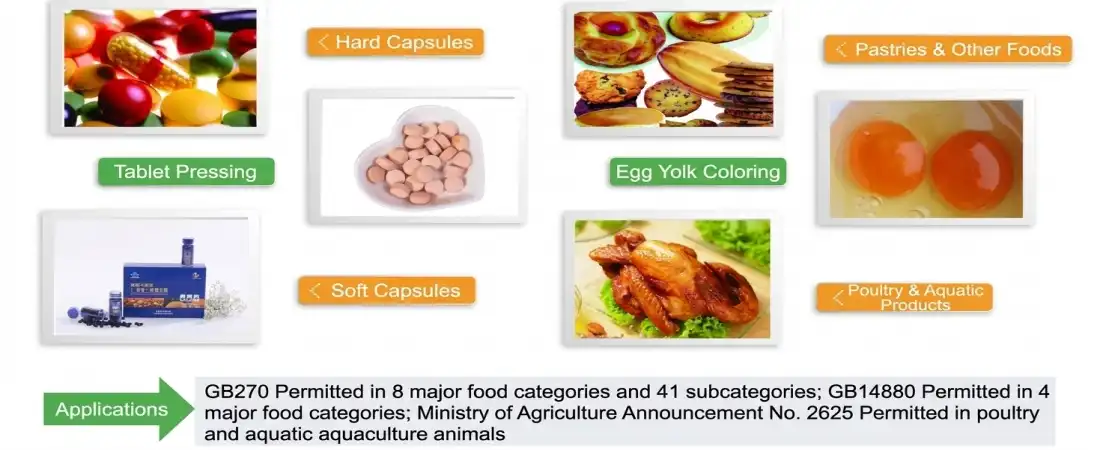
Most clinical study has been done using 10 mg to 20 mg of lutein daily, commonly with 2 mg to 4 mg of zeaxanthin, giving formulators a clear goal. Lutein is fat soluble and absorbed better with oil, hence softgels are the conventional formulation. Bone and colleagues discovered that carotenoid absorption is increased when they are consumed with dietary fat. Powder and beadlet grades function nicely with capsules and tablets. Cold-water-dispersible forms are used in gummies and beverages. No matter the format, a well selected marigold extract powder bulk grade assures that each serving will deliver to the label promise.
Smart Partner Ingredients
In high-end eye solutions, lutein is seldom a solo ingredient. The triad of macular pigments is rounded out by zeaxanthin and meso-zeaxanthin. Bilberry anthocyanins assist with positioning for nite vision and astaxanthin is famous for claims related to eye tiredness. DHA is a major structural lipid in the retina. Vitamins C and E, zinc and copper are in line with the AREDS2 model. When you put marigold extract lutein powder along with two or three of these partners, you have a very unambiguous benefit narrative leveraging the science behind each ingredient.
Protecting Stability Through Shelf Life
Lutein is a lengthy chain of conjugated double bonds. That chain gives lutein a golden glow, but also renders the molecule susceptible to light, oxygen and heat. Good practice would include the use of natural antioxidants such as mixed tocopherols, nitrogen flushing during packing, moderate blending temperatures and the use of opaque bottles or foil blisters. Microencapsulated beadlets give an added level of protection in tablets and beverages. These measures are meant to keep formulations potent and colorful to the very last serving.
Sourcing Marigold Extract Powder Bulk with Confidence
What the Specification Should Show
The mentioned advantages are based on certified lutein content and clean raw material. Ask for a complete spec sheet and batch-specific CoA before ordering. The table below illustrates the average profile of NT Biotech’s marigold extract with lutein, which is validated on each manufacturing batch.
| Item | Specification | Test Method |
|---|---|---|
| Botanical Source | Tagetes erecta L. (flower) | TLC |
| Active Compound | Lutein 5%, 10%, 20%, 80%, 90% (custom grades available) | HPLC / UV |
| Lutein CAS No. | 127-40-2 | — |
| Molecular Formula / Weight | C₄₀H₅₆O₂ / 568.87 | — |
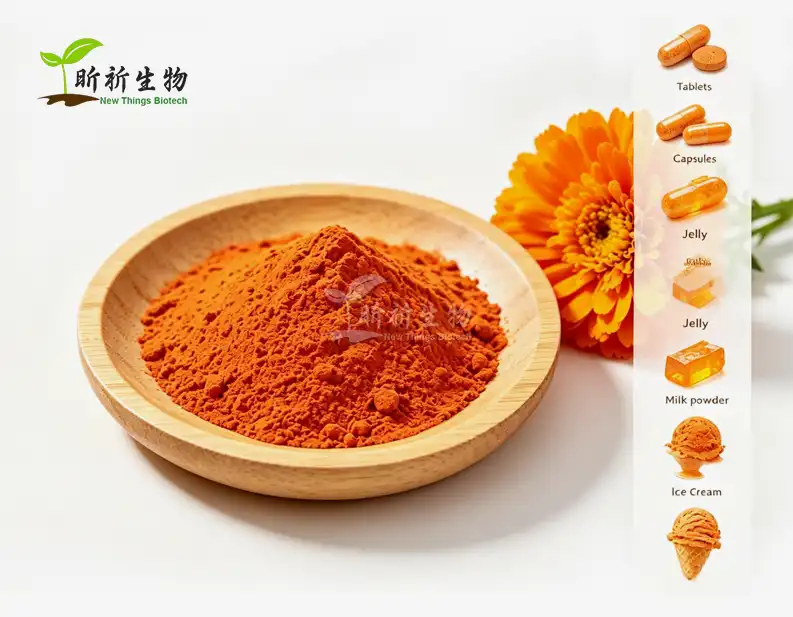
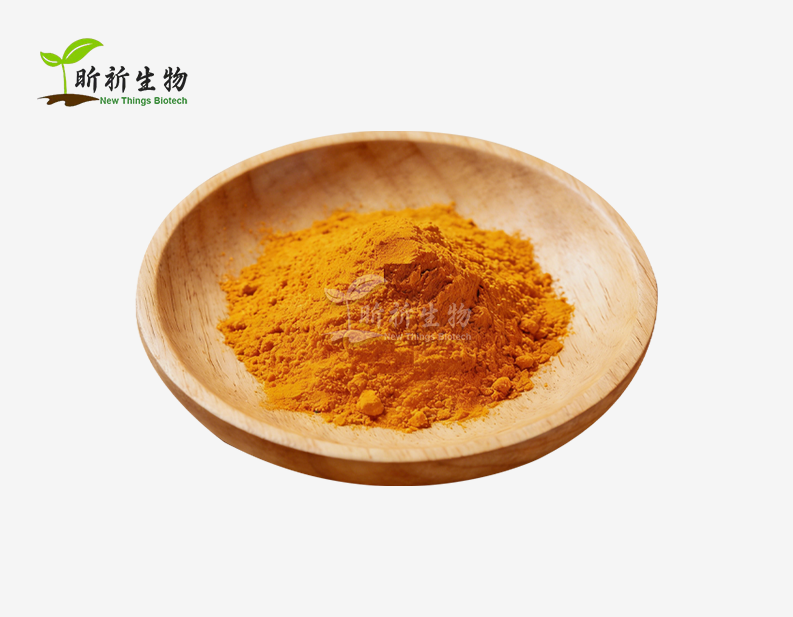
| Appearance | Orange-yellow to orange-red fine powder | Visual |
| Particle Size | 100% pass 80 mesh | Sieve |
| Loss on Drying | ≤ 5.0% | USP |
| Ash | ≤ 5.0% | USP |
| Heavy Metals | ≤ 10 ppm | ICP-MS |
| Microbiology | TPC ≤ 1,000 cfu/g; E. coli and Salmonella negative | USP |
| Storage and Shelf Life | Sealed, cool, dry, away from light; 24 months | — |
Stock, Speed, and Flexible Logistics
Eye health launches generally adhere to tight retail timelines, so supply reliability is as important as purity. NT Biotech guaranties a first response to all queries within 2 hours. Popular grades of lutein are stocked and sent within 1-3 working days after purchase confirmation. The production order normally takes 3-10 working days for the acquisition of premium raw materials, proprietary extraction, laboratory testing, and final packing. Samples and small purchases ship straight from our factory on our own Fedex and UPS accounts. We ship bulk quantities by air or sea, pairing with reliable freight forwarders to meet your needs for speed, volume and cost.
Certifications, OEM Support, and Easy Payment
We work under ISO9001 quality management and we are KOSHER and HALAL certified which supports distribution on a broad variety of markets. All shipments contain HPLC or UV data, and CoA. Our value chain combines plant sourcing, research and development, intelligent manufacturing and adaptive supply. This enables us to modify lutein concentration, lutein to zeaxanthin ratio, particle size, packaging and final softgels, capsules or gummies via flexible OEM and ODM services. We also accept payment in the currency of the buyer’s country.

Conclusion
Eye health formulations are built on an established foundation of marigold extract. Lutein produces macular pigment, filters out blue light, neutralizes free radicals, increases glare recovery and contrast, and supports aging eyes, with evidence from studies like AREDS2. It’s about the appropriate grade, clever partners and proven quality. Shaanxi New Things Biotech is a reliable provider of plant derivatives, offering marigold extract powder bulk graded at 5%-90% lutein. Each batch is backed by proprietary extraction, comprehensive HPLC and CoA documentation and ISO9001, KOSHER and HALAL certifications. Our speedy stock delivery and flexible OEM solutions empower companies to create their next product organically and reliably. Team up with us immediately and provide your consumers with sharper eyesight.
FAQ
Q1: Why is marigold used for lutein supplements?
Marigold petals are the richest commercial source of lutein and provide consistent, traceable raw material.
Q2: What lutein dose do eye health studies use?
Most use 10–20 mg of lutein daily, often with 2–4 mg of zeaxanthin.
Q3: Which lutein grades does NT Biotech offer?
Lutein 5%, 10%, 20%, 80%, and 90%, all verified by HPLC or UV.
Q4: Can marigold extract be used in drinks or gummies?
Yes. Cold-water-dispersible beadlet grades suit beverages and gummies.
Q5: How fast can you ship bulk orders?
Stock grades ship within 1–3 working days. Production orders take 3–10 working days.
See Your Eye Health Line Succeed with NT Biotech
Consumers of every age want to protect their vision, and lutein from marigold gives your brand one of the most trusted ingredients in the category. NT Biotech supplies marigold extract powder bulk in standardized lutein grades from 5% to 90%. The material is extracted from Tagetes erecta petals and documented with a CoA for every batch. We reply within two hours, ship stock grades within days, accept payment in your local currency, and provide OEM and ODM support for softgels, capsules, gummies, and drinks. Whether you are creating an AREDS2-style formula or a screen-time comfort gummy, our technical team will help you formulate with confidence. Email info@newthingsbiotech.com today for a free sample, full specifications, and a competitive quotation.
References
1. Age-Related Eye Disease Study 2 Research Group. Lutein + zeaxanthin and omega-3 fatty acids for age-related macular degeneration: the Age-Related Eye Disease Study 2 (AREDS2) randomized clinical trial. JAMA. 2013;309(19):2005–2015.
2. Krinsky NI, Landrum JT, Bone RA. Biologic mechanisms of the protective role of lutein and zeaxanthin in the eye. Annual Review of Nutrition. 2003;23:171–201.
3. Bone RA, Landrum JT, Guerra LH, Ruiz CA. Lutein and zeaxanthin dietary supplements raise macular pigment density and serum concentrations of these carotenoids in humans. Journal of Nutrition. 2003;133(4):992–998.
4. Hammond BR, Fletcher LM, Roos F, Wittwer J, Schalch W. A double-blind, placebo-controlled study on the effects of lutein and zeaxanthin on photostress recovery, glare disability, and chromatic contrast. Investigative Ophthalmology & Visual Science. 2014;55(12):8583–8589.
5. Stringham JM, Stringham NT, O'Brien KJ. Macular carotenoid supplementation improves visual performance, sleep quality, and adverse physical symptoms in those with high screen time exposure. Foods. 2017;6(7):47.
6. Ma L, Dou HL, Wu YQ, et al. Lutein and zeaxanthin intake and the risk of age-related macular degeneration: a systematic review and meta-analysis. British Journal of Nutrition. 2012;107(3):350–359.