- English
- French
- German
- Portuguese
- Spanish
- Russian
- Japanese
- Korean
- Arabic
- Greek
- German
- Turkish
- Italian
- Danish
- Romanian
- Indonesian
- Czech
- Afrikaans
- Swedish
- Polish
- Basque
- Catalan
- Esperanto
- Hindi
- Lao
- Albanian
- Amharic
- Armenian
- Azerbaijani
- Belarusian
- Bengali
- Bosnian
- Bulgarian
- Cebuano
- Chichewa
- Corsican
- Croatian
- Dutch
- Estonian
- Filipino
- Finnish
- Frisian
- Galician
- Georgian
- Gujarati
- Haitian
- Hausa
- Hawaiian
- Hebrew
- Hmong
- Hungarian
- Icelandic
- Igbo
- Javanese
- Kannada
- Kazakh
- Khmer
- Kurdish
- Kyrgyz
- Latin
- Latvian
- Lithuanian
- Luxembou..
- Macedonian
- Malagasy
- Malay
- Malayalam
- Maltese
- Maori
- Marathi
- Mongolian
- Burmese
- Nepali
- Norwegian
- Pashto
- Persian
- Punjabi
- Serbian
- Sesotho
- Sinhala
- Slovak
- Slovenian
- Somali
- Samoan
- Scots Gaelic
- Shona
- Sindhi
- Sundanese
- Swahili
- Tajik
- Tamil
- Telugu
- Thai
- Ukrainian
- Urdu
- Uzbek
- Vietnamese
- Welsh
- Xhosa
- Yiddish
- Yoruba
- Zulu
There is a quiet hero story in the supplement business that is worth telling. The golden carotenoid lutein protects vision and should be one of the easiest ingredients to formulate with, since it has a lot of scientific support and is well known by consumers. But formulators had to deal with its stubborn flaws for decades: it broke down in heat, oxidised while stored, wouldn't mix with water, and lost its effectiveness long before it reached customers. When microencapsulated lutein powder came along, that story changed totally. By putting lutein from marigolds inside tiny safe spheres, this technology made a fragile vitamin into one of the most useful and reliable ingredients used in modern supplement making. This article goes over the whole picture, including what microencapsulated lutein powder is, how it helps both consumers and brands, the different dosage formats it can be used in, and what makes a great supplier different from a bad one. We will use NT Biotech (Shaanxi New Things Biotech) as a standard for quality. Their microencapsulated lutein powder is standardised across beadlet grades from 5% to 20%, checked by HPLC/UV on every batch, made through a proprietary extraction process that achieves purity above 98% on key products, and comes with ISO9001, KOSHER, and HALAL certifications as well as a Certificate of Analysis with every shipment.
Understanding the Technology: What Microencapsulation Actually Does
Before exploring benefits and applications, it is worth understanding the engineering itself, because everything this ingredient achieves flows from one elegant idea executed at a microscopic scale.
From Fragile Carotenoid to Protected Particle
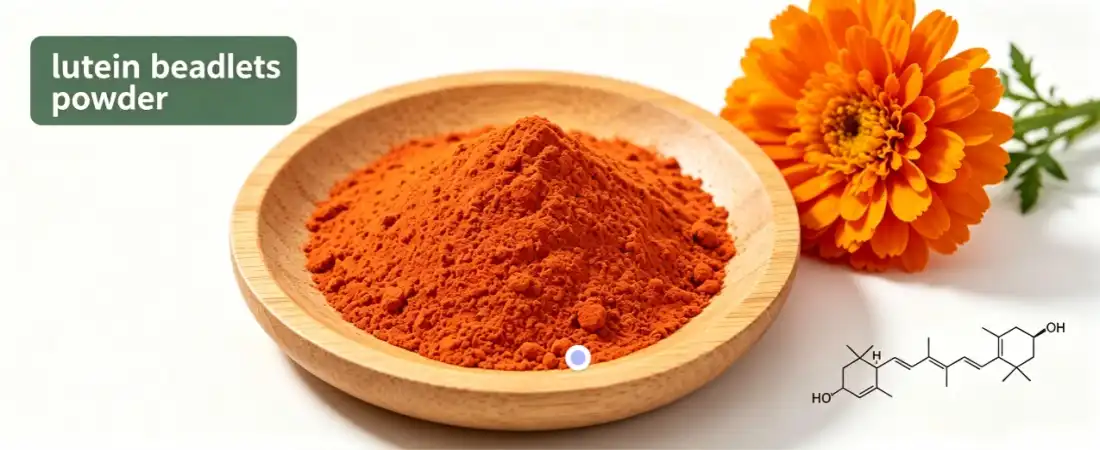
Lutein begins its journey in the petals of Tagetes erecta, the marigold flower, where nature concentrates it more abundantly than in any other cultivated plant. Once extracted and purified, however, this valuable carotenoid faces a hostile world: oxygen oxidizes it, light degrades it, and heat dismantles its molecular structure. Microencapsulation answers each threat with architecture. Purified lutein is dispersed at a microscopic scale and embedded within a protective matrix of food-grade wall materials — typically gelatin, starch, or plant-based alternatives — then formed into uniform beadlets and dried into a free-flowing powder. Every particle becomes an independent protective unit, with the wall material blocking oxygen and light while the lutein waits, sealed and stable, for its moment of release. The result is microencapsulated lutein powder: the same golden nutrient, re-engineered for survival.
Why the Wall Material System Matters
Not all encapsulation is equal, and the difference lies in the details of the wall system. The composition, thickness, and uniformity of the protective matrix determine how quickly particles disperse, how completely they resist oxidation, and how predictably they release their payload. A well-engineered matrix hydrates appropriately, protects through the stresses of manufacturing, and delivers consistent performance across thousands of production batches. NT Biotech treats this as core technology rather than a commodity process, pairing proprietary extraction methods that maximize the yield of active compounds with encapsulation engineering designed for superior stability. This integrated control — over both the active ingredient and its protective shell — is a genuine technological barrier, and it explains why two powders with identical label claims can perform so differently in real-world formulations.
Standardization: The Numbers Behind the Quality
Professional-grade microencapsulated lutein powder is defined by standardized potency. Industry-standard beadlet grades typically include 5%, 10%, and 20% lutein content, each verified by HPLC or UV analysis rather than estimated on paper. This standardization transforms formulation mathematics: a 10 mg lutein dose requires exactly 100 mg of 10% beadlets, with no guesswork and no drift between batches. For quality teams, standardized grades mean incoming material can be approved against clear specifications; for brands, they mean label claims built on verified numbers. When every batch ships with chromatographic documentation — as NT Biotech provides as standard practice — standardization stops being a marketing word and becomes a measurable, auditable reality.
The Core Benefits: Why Brands and Consumers Both Win
The popularity of microencapsulated lutein powder rests on a rare alignment: the same technology that protects the nutrient also improves manufacturing, economics, and the consumer experience simultaneously.
Stability That Protects Potency From Factory to Final Dose
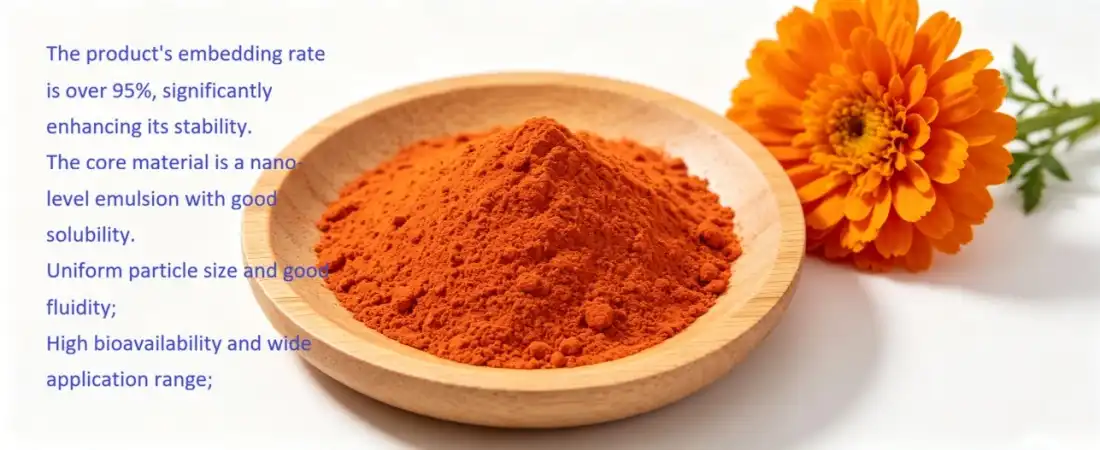
The headline benefit is stability. Sealed inside its protective matrix, lutein survives the challenges that destroy unprotected carotenoids: the heat of tablet compression, the cooking cycles of gummy production, months of ambient warehouse storage, and long international freight journeys. For brands, this resilience translates into smaller overages, longer confident shelf lives, and stability studies that pass with a margin to spare. For consumers, it means something simpler and more powerful — the dose printed on the label is the dose in the capsule, on the last day of shelf life, as surely as the first. In a category where trust is everything, microencapsulated lutein powder turns label honesty from an aspiration into an engineered outcome, protecting not just the nutrient but the brand promise wrapped around it.
Flowability and Dose Uniformity on the Production Line
Ask production managers why they prefer encapsulated formats, and they will describe machines, not molecules. Microencapsulated lutein powder flows smoothly through hoppers and feeders, generates virtually no dust, resists caking in humid conditions, and blends homogeneously with vitamins, minerals, and excipients. Because every beadlet shares approximately the same size, density, and lutein content, the active ingredient distributes evenly through any blend — the first tablet and the hundred-thousandth carry the same verified dose. This uniformity accelerates batch release, reduces waste, and keeps high-speed lines running clean. The operational savings are real: less downtime, fewer rejected batches, and quality teams who spend their time verifying excellence rather than firefighting inconsistency.
A Better Consumer Experience, From Gummies to Drink Mixes
Ultimately, supplement success is decided at the moment of consumption — and microencapsulated lutein powder improves that moment in ways consumers genuinely notice. The encapsulation matrix masks the taste and odor that raw carotenoids can carry, enabling pleasant-tasting gummies, chewables, and powdered drink mixes. The uniform particles disperse smoothly, and the natural golden hue contributes visual appeal without synthetic colorants. These sensory advantages may sound subtle, but they drive the metric that matters most: repeat purchase. Products that look appealing, taste clean, and deliver consistent results earn loyalty. When a single ingredient technology improves stability, manufacturability, and consumer experience together, its dominance in the eye-health category stops being surprising and starts looking inevitable.
Table 1: Microencapsulated Lutein Powder vs. Conventional Lutein Formats
| Performance Dimension | Microencapsulated Lutein Powder | Conventional Lutein Powder | Lutein Oil Suspension |
|---|---|---|---|
| Oxidation resistance | Excellent — sealed matrix | Poor to moderate | Moderate (needs dark packaging) |
| Stability through processing | Survives compression, cooking, and blending | Significant losses | Limited format compatibility |
| Flowability & dust | Free-flowing, dust-free | Dusty, prone to caking | Not applicable (liquid) |
| Dose uniformity | Homogeneous in blends | Variable | Good within softgels only |
| Format versatility | Capsules, tablets, gummies, drink mixes | Limited | Softgels only |
| Taste & odor masking | Yes — matrix-enclosed | No | Partial |
| Standardized grades | 5%, 10%, 20% (HPLC/UV verified) | Often inconsistent | Typically 10%–20% |
Applications Across Every Supplement Format
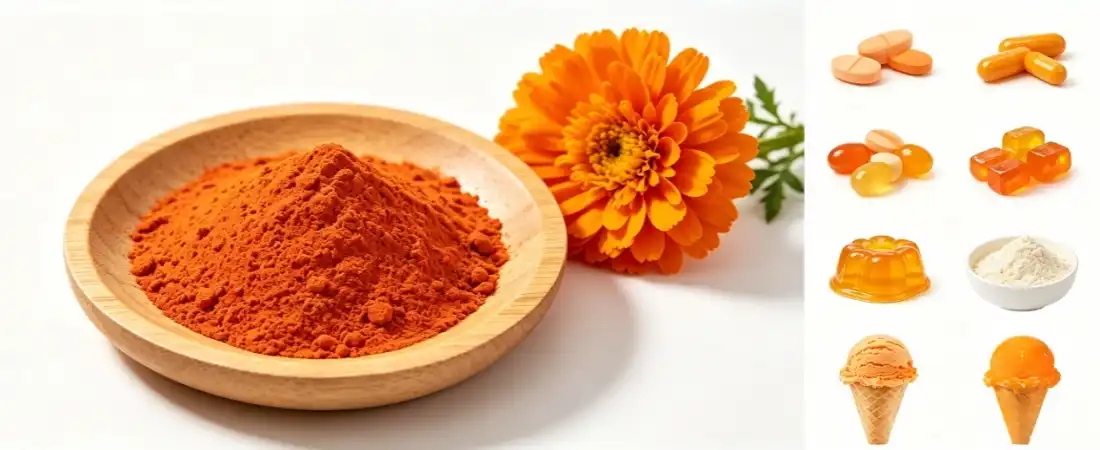
Versatility is where microencapsulated lutein powder truly earns its reputation. One qualified ingredient can anchor an entire product portfolio — a strategic advantage that simplifies sourcing, accelerates launches, and compounds value across every SKU.
Capsules and Tablets: The Classics, Perfected
Hard capsules and compressed tablets remain the backbone of the supplement industry, and microencapsulated lutein powder elevates both. In capsules, the dust-free, free-flowing particles fill cleanly at high speed, with uniform content from the first unit to the last. In tablets, the beadlets' controlled particle size supports excellent compressibility and blend homogeneity, surviving compression forces that would degrade unprotected lutein. Standardized grades make dose design effortless: 5% beadlets suit multivitamin inclusion, 10% serves mainstream eye-health formulas, and 20% enables high-strength products in compact tablet sizes. Because every batch arrives with HPLC/UV verification, quality teams approve material quickly, keeping production schedules intact and launch dates credible.
Gummies and Chewables: Eye Health Consumers Actually Enjoy
Gummies have transformed from a children's novelty into the preferred supplement format for adults of all ages — and they are brutally unforgiving to fragile ingredients. Heat, moisture, and long cooking cycles destroy unprotected carotenoids, which is precisely why microencapsulated lutein powder has become essential to this category. The protective matrix shields lutein through the cooking process, while the uniform beadlets distribute evenly through the gel matrix, ensuring every gummy carries a consistent dose. The encapsulation also masks any carotenoid taste, supporting the pleasant flavor profiles that drive repeat purchases. Chewable tablets benefit identically, gaining both dose uniformity and oxidative stability. For brands targeting the gummy boom, encapsulated lutein is not an upgrade — it is the entry requirement.
Powdered Drink Mixes and Beyond: The Expanding Frontier
The fastest-growing supplement formats are the ones that fit modern lifestyles: single-serve stick packs stirred into water, powdered drink mixes, and functional blends consumed on the go. These water-adjacent applications were once closed to fat-soluble lutein, but microencapsulated lutein powder — particularly grades engineered for dispersion — opens them wide. The same technology extends into functional foods, from fortified bars to nutritional powders, where stability through processing and shelf life remains paramount. One ingredient, one supplier qualification, one documentation package, serving formats from classic capsules to cutting-edge drink mixes: this portfolio leverage is why experienced formulators increasingly specify encapsulated lutein as their default, reserving other formats only for specialized needs.
Table 2: Application Guide — Matching Grades to Supplement Formats
| Supplement Format | Recommended Grade | Why Microencapsulation Matters Here |
|---|---|---|
| Multivitamin capsules/tablets | Lutein beadlets 5% | Compact inclusion, uniform blending |
| Mainstream eye-health formulas | Lutein beadlets 10% | Clean dose math (100 mg = 10 mg lutein) |
| High-strength vision complexes | Lutein beadlets 20% | Maximum potency in compact sizes |
| Gummies & chewables | Lutein beadlets 10% | Survives cooking heat and moisture |
| Powdered stick packs & drink mixes | Dispersion-engineered grades | Smooth mixing, natural golden hue |
| Functional foods & bars | Lutein beadlets 5%–10% | Stability through processing and shelf life |
Choosing a Supplier: Where Quality Is Actually Decided
Here is the uncomfortable truth of the category: the same specification name can hide vastly different products. Choosing the right microencapsulated lutein powder supplier is therefore not a procurement detail — it is the decision on which all the benefits above depend.
Verify the Technology, Not Just the Label
The market divides sharply between manufacturers who own their encapsulation technology and traders who relabel bulk material. A genuine manufacturer controls the variables that determine performance — oleoresin quality, dispersion fineness, wall-material composition, drying parameters — and can customize, troubleshoot, and guarantee consistency because it owns the process. NT Biotech is a technology-based company operating proprietary extraction and encapsulation under one roof, achieving purity above 98% on its key standardized products. When interviewing candidates, ask where encapsulation is performed and request process documentation. Manufacturers answer with specifics; traders answer with brochures. This single question filters your shortlist more effectively than any price comparison ever will.
Documentation, Certification, and Traceability
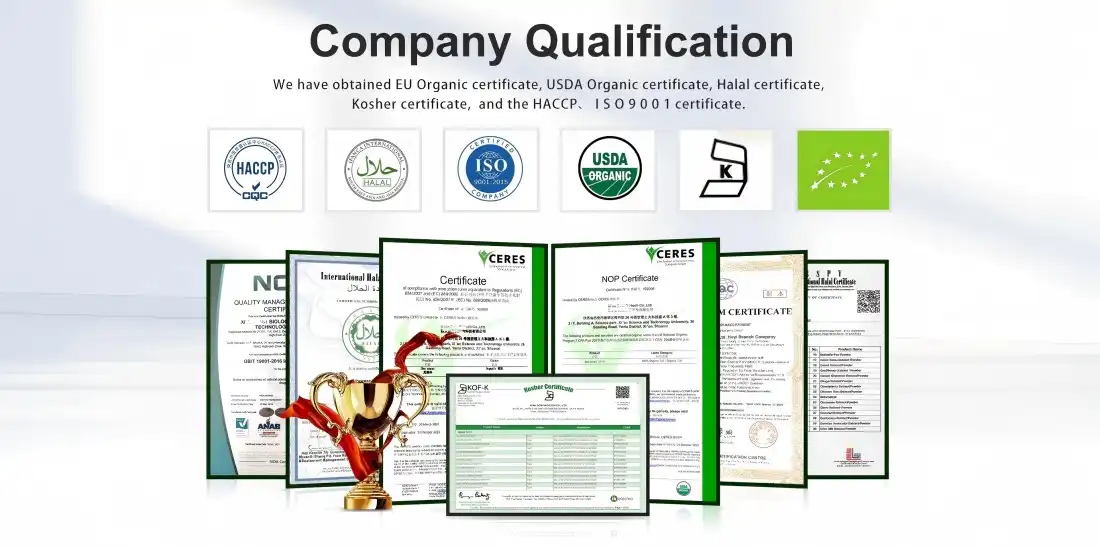
Proof must be paper-backed. A credible microencapsulated lutein powder supplier issues a comprehensive Certificate of Analysis with every batch — covering assay, heavy metals, microbiological parameters, and physical characteristics, supported by HPLC/UV chromatograms — and maintains ISO9001, KOSHER, and HALAL certifications that open global markets. Traceability adds the final layer: NT Biotech operates autonomous marigold planting bases integrated with research, intelligent production, and adaptive supply chains, so every drum can be traced back to the field where its journey began. The most efficient way to verify these standards is simply to test them. Send your target grade, application, and destination market to info@newthingsbiotech.com, and NT Biotech guarantees an initial reply within two hours, complete with specification sheets, batch documentation, and sample support for your evaluation.
Service Speed as a Quality Signal
Responsiveness during the inquiry stage predicts reliability during the production stage. NT Biotech's published benchmarks set a demanding industry standard: initial replies to all inquiries within two hours, guaranteed; inventory of popular standardized extracts shipped within 1–3 working days after order confirmation; and production orders completed within 3–10 working days, including raw material procurement, proprietary extraction, laboratory testing, and packaging. Logistics flex to each order — direct-from-factory delivery via the company's own FedEx/UPS accounts for urgent shipments, and trusted freight forwarders for secure bulk cargo by air or sea. Add customized OEM/ODM solutions for different countries and payment accepted in the buyer's local currency, and you have the profile of a long-term technical partner rather than a one-off vendor.
Conclusion
Microencapsulated lutein powder has earned its central role in modern supplements by solving the problems that once limited lutein's potential: it shields the carotenoid from oxygen, heat, and light, flows cleanly through production lines, delivers uniform doses across every format, and supports the gummies, drink mixes, and tablets consumers actually want. Yet these benefits materialize only when the technology is executed with genuine manufacturing depth. NT Biotech provides exactly that — autonomous marigold cultivation, proprietary extraction and encapsulation, purity above 98% on key products, batch-level HPLC/UV verification, triple international certification, and two-hour responsiveness. For brands building the next generation of eye-health products, the right encapsulated ingredient, from the right partner, is where better supplements begin.
FAQ
Q1: What is microencapsulated lutein powder?
A: It is marigold-derived lutein sealed inside microscopic, food-grade protective beadlets — a format that protects the carotenoid from oxygen, heat, and light while enabling versatile supplement applications.
Q2: What are its main benefits for supplement brands?
A: Superior stability through processing and shelf life, free-flowing dust-free handling, uniform dosing, taste masking, and compatibility with capsules, tablets, gummies, and drink mixes.
Q3: Which grades are available?
A: Standardized beadlet grades including 5%, 10%, and 20% lutein content, each verified by HPLC/UV with a batch-specific Certificate of Analysis.
Q4: What certifications does NT Biotech hold?
A: ISO9001, KOSHER, and HALAL certifications, supporting compliance and market access across major global regions.
Q5: How fast can orders be delivered?
A: Inquiries are answered within two hours; in-stock material ships within 1–3 working days, and production orders are completed within 3–10 working days.
Formulate With Confidence — Partner With NT Biotech Today
The benefits of microencapsulated lutein powder are proven; the applications are limitless; and the supplier behind your ingredient determines whether those advantages reach your customers. NT Biotech invites you to verify everything in this article — request batch Certificates of Analysis, take advantage of our two-hour response guarantee, or discuss your next formulation with our plant-extraction specialists. With standardized beadlet grades, proprietary encapsulation technology, ISO9001, KOSHER, and HALAL certifications, flexible OEM/ODM solutions, and payment in your local currency, we are ready to support your project from first sample to global scale. Email your specification or sample request to info@newthingsbiotech.com today — and let NT Biotech turn protected lutein into your brand's most reliable advantage.
References
1. Age-Related Eye Disease Study 2 (AREDS2) Research Group. "Lutein + Zeaxanthin and Omega-3 Fatty Acids for Age-Related Macular Degeneration: The AREDS2 Randomized Clinical Trial." JAMA, 2013.
2. Abdel-Aal, E.-S.M.; Akhtar, H.; Zaheer, K.; Ali, R. "Dietary Sources of Lutein and Zeaxanthin Carotenoids and Their Role in Eye Health." Nutrients, 2013.
3. Boon, C.S.; McClements, D.J.; Weiss, J.; Decker, E.A. "Factors Influencing the Chemical Stability of Carotenoids in Foods." Critical Reviews in Food Science and Nutrition, 2010.
4. Buscemi, S.; Corleo, D.; Di Pace, F.; Petroni, M.L.; Satriano, A.; Marchesini, G. "The Effect of Lutein on Eye and Extra-Eye Health." Nutrients, 2018.
5. Ranard, K.M.; Jeon, S.; Mohn, E.S.; Griffiths, J.C.; Johnson, E.J.; Erdman, J.W. "Dietary Guidance for Lutein: Consideration for Intake Recommendations Is Scientifically Supported." European Journal of Nutrition, 2017.
6. Stahl, W.; Sies, H. "Bioactivity and Protective Effects of Natural Carotenoids." Biochimica et Biophysica Acta, 2005.