- English
- French
- German
- Portuguese
- Spanish
- Russian
- Japanese
- Korean
- Arabic
- Greek
- German
- Turkish
- Italian
- Danish
- Romanian
- Indonesian
- Czech
- Afrikaans
- Swedish
- Polish
- Basque
- Catalan
- Esperanto
- Hindi
- Lao
- Albanian
- Amharic
- Armenian
- Azerbaijani
- Belarusian
- Bengali
- Bosnian
- Bulgarian
- Cebuano
- Chichewa
- Corsican
- Croatian
- Dutch
- Estonian
- Filipino
- Finnish
- Frisian
- Galician
- Georgian
- Gujarati
- Haitian
- Hausa
- Hawaiian
- Hebrew
- Hmong
- Hungarian
- Icelandic
- Igbo
- Javanese
- Kannada
- Kazakh
- Khmer
- Kurdish
- Kyrgyz
- Latin
- Latvian
- Lithuanian
- Luxembou..
- Macedonian
- Malagasy
- Malay
- Malayalam
- Maltese
- Maori
- Marathi
- Mongolian
- Burmese
- Nepali
- Norwegian
- Pashto
- Persian
- Punjabi
- Serbian
- Sesotho
- Sinhala
- Slovak
- Slovenian
- Somali
- Samoan
- Scots Gaelic
- Shona
- Sindhi
- Sundanese
- Swahili
- Tajik
- Tamil
- Telugu
- Thai
- Ukrainian
- Urdu
- Uzbek
- Vietnamese
- Welsh
- Xhosa
- Yiddish
- Yoruba
- Zulu
Every day, our eyes fight a battle we can't see. Overuse of screens for long periods of time, harsh artificial lighting, and constant exposure to blue light have turned eye strain from a rare problem into an epidemic, and people are looking for natural solutions. There are many nutrients that have been tested to help eyesight, but lutein from marigold extract stands out as the best. This plant-based nutrient comes from the colourful leaves of Tagetes erecta. It is used as the main ingredient in eye health products all over the world because it is pure, effective, and has a clean label. This piece goes from the marigold field to the finished pill. It talks about the science behind lutein, why marigold is still the best natural source of it, and what makes premium extract different from regular powder. We will see how NT Biotech (Shaanxi New Things Biotech) sets the standard by providing lutein from marigold extract with standardised assays confirmed by HPLC/UV, a proprietary extraction technology that achieves purity above 98% on key products, ISO9001, KOSHER, and HALAL certifications, and a Certificate of Analysis with every batch.

The Golden Flower: Why Marigold Is Nature's Richest Lutein Source
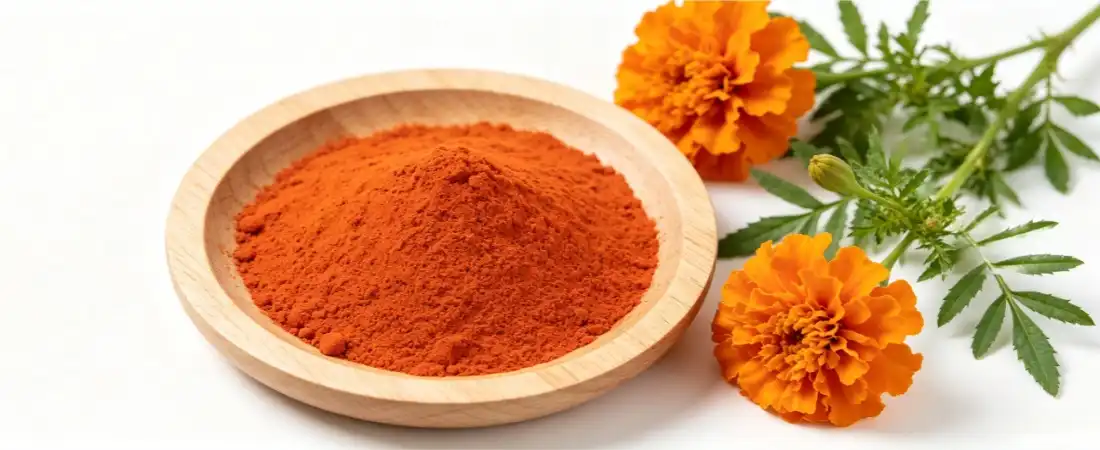
Lutein starts out as sunshine caught inside a flower and never makes it to a capsule. Figuring out how the marigold became the best source of lutein in the world helps you understand why this plant route makes such a better nutrient.
A Carotenoid Concentrated by Nature
The flower of the marigold (Tagetes erecta), which is grown in gardens, has the highest known concentration of lutein. It has a lot more than leafy greens like spinach and kale. A dose of veggies may only have a few milligrams of lutein, but marigold flowers have so much of the carotenoid that it is possible and affordable to remove it for industrial use. There is a good reason for this natural abundance: the flower makes lutein to protect its own tissues from strong sunlight, which is pretty much the same job it does in our eyes. When you choose lutein from marigold extract, you are picking a nutrient that nature made to protect against light, and it comes from the plant source that stores it most abundantly.
From Petal to Powder: The Art of Extraction
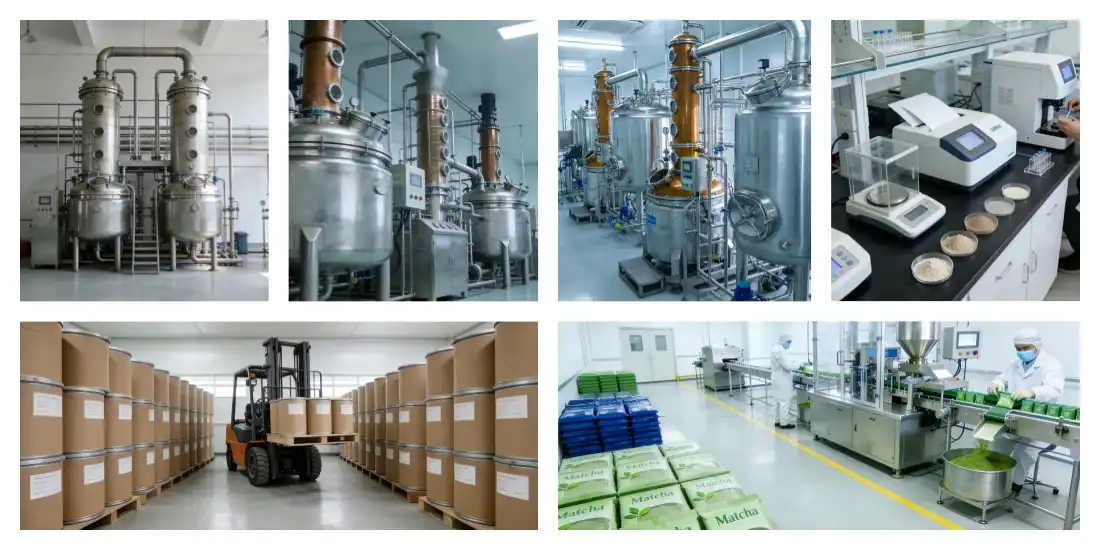
Science and art come together when tiny flowers are turned into a stable, powerful powder. The process starts with carefully planned harvests that happen at the peak of the blossoms' carotenoid content. The flowers are then dried and turned into marigold oleoresin, which is a concentrated product high in lutein. This oleoresin is then put through special steps of extraction and purification to make standardised powder grades. Each step needs to be done carefully, because too much heat or oxygen can break down the compounds that are being captured. This is why there is such a wide range in the quality of lutein from marigold extract. NT Biotech deals with this problem by using special extraction methods that are designed to get the most active compounds out of plants while also keeping them from breaking down. This turns the plants' potential into potency that can be tested and stored for a long time.
Traceability Starts in the Field
Even the best extraction technology can't fix bad raw materials. That's why serious makers keep an eye on their supply from the ground up. The amount of carotenoids in a crop depends on its climate, how it was grown, when it was harvested, and the quality of the soil. NT Biotech has self-sufficient plant nurseries that are directly connected to its research, production, and supply chain systems. This creates a full value chain that goes from the plant source to the product use. For buyers, this vertical integration means that every drum of lutein from marigold extract can be tracked back to the fields where it started. This provides the kind of clear chain of custody that regulators, inspectors, and brands that care about quality are asking for more and more.
The Science of Sight: How Lutein Supports Your Eyes
The image of lutein is not based on catchy ads, but on decades of study that have been reviewed by experts in the field. This carotenoid has become an important part of modern vision nutrition because scientists have figured out how it works inside the eye.
The Macula's Natural Sunglasses
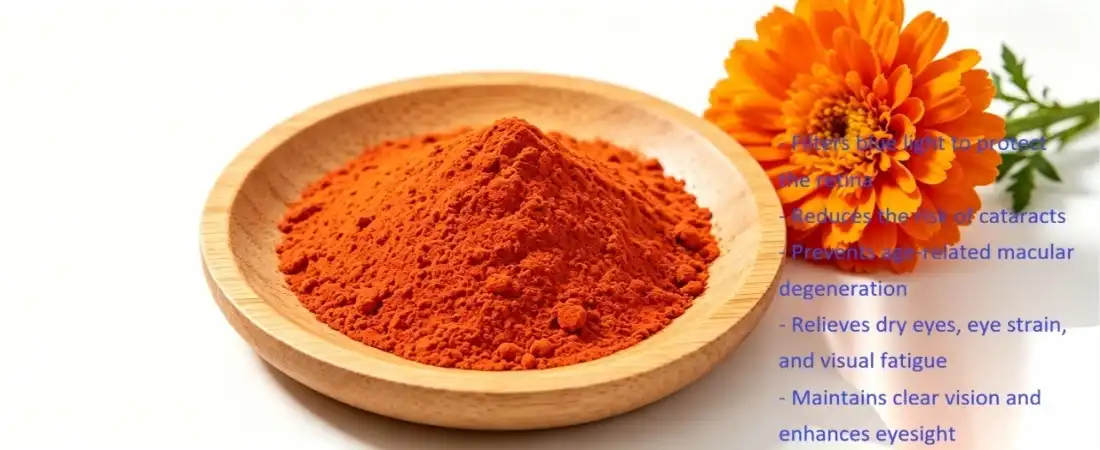
The macula is a small area deep inside the eye that gives you clear central vision for things like reading, driving, and recognising people. After being eaten, lutein from marigold extract is carried through the bloodstream and deposited only in this tissue, where it builds up as part of the macular pigment. There, it works a lot like a pair of sunglasses inside the eye, blocking wavelengths that cause vision strain and absorbing high-energy blue light before it can reach photoreceptor cells. Lutein is one of the most scientifically proven botanical ingredients in the supplement industry. It has been shown to be important for eye health in clinical studies, such as the groundbreaking AREDS2 trial.
Antioxidant Defense Where It Matters Most
Lutein does more than just block light; it also protects eye cells from damage. Light and oxygen are always hitting the eye, which makes free radicals. Free radicals are unstable molecules that slowly damage cell structures. Lutein helps to neutralise these reactive compounds, which helps retinal cells stay strong over time. Its long chain of conjugated double bonds makes its molecular structure very good at blocking singlet oxygen and getting rid of extra energy. When people take lutein from marigold extract every day, they are basically strengthening the eye's own defence system with the same plant-based pigment that plants use to stay alive in the sun. This is a beautiful example of how botanical knowledge can be used to improve human nutrition.
A Nutrient for the Digital Generation
People used to think that this was good for eyes that were getting older, but now the screen youth wants it. Students, players, artists, and people who work in offices now spend eight, ten, or even twelve hours a day in front of digital screens, which is why there is more interest than ever in blue-light safety. Supplements for eye health that contain lutein from marigold extract are now available in most stores. They come in capsules, gummies, chewables, and functional drinks for people in their twenties and thirties. This change in the population is a huge chance for brands, but only if they can offer lutein in safe, appealing forms that are backed up by solid quality paperwork. The market is ready, and science has settled it.
Table 1: Lutein Content Across Natural Sources — Why Marigold Leads
| Natural Source | Typical Lutein Content | Commercial Viability for Extraction |
|---|---|---|
| Marigold petals (Tagetes erecta) | Highest known concentration (extract-grade) | Excellent — the global industry standard |
| Kale | ~11–26 mg per 100 g (fresh) | Limited — low concentration, high water content |
| Spinach | ~12 mg per 100 g (fresh) | Limited — impractical for large-scale extraction |
| Egg yolk | ~0.2–0.3 mg per yolk | Poor — trace amounts only |
| Corn | ~0.6–1 mg per 100 g | Poor — insufficient for standardized extracts |
Not All Extracts Are Equal: The Anatomy of a Premium Product
Here is a truth the industry sometimes whispers: two drums labeled "lutein 20%" can deliver dramatically different real-world performance. Discerning buyers evaluate lutein from marigold extract across several dimensions that marketing brochures rarely mention.
Standardization and Verified Purity
Standardization is the difference between an ingredient and a guess. Premium lutein from marigold extract is offered in precisely defined grades — commonly 5%, 10%, and 20% powders for supplements and functional foods, with high-purity 80% to 90% grades for advanced nutraceutical applications — each quantified by HPLC or UV analysis rather than estimated on paper. The assay printed on the label must match the assay measured in the laboratory, batch after batch. NT Biotech pushes this discipline further, achieving purity above 98% on its key standardized extracts and attaching comprehensive HPLC/UV documentation to every lot. For formulators, that rigor translates into tighter dosage control, cleaner labels, and far fewer surprises during stability testing.
Stability, Solubility, and Formulation Performance
Lutein is a lipophilic carotenoid, which makes its physical form critically important. A premium lutein from marigold extract supplier engineers its powders for the realities of production: consistent particle size for uniform blending, stability against heat and oxidation for long shelf lives, and compatibility with tablets, capsules, gummies, powdered beverages, and fortified foods. Superior stability is not a convenience — it directly determines whether the potency promised on your label survives warehousing, ocean freight, and months on a retail shelf. Proprietary processing that protects active compounds through these stresses is a genuine technological barrier, and it is precisely where NT Biotech's extraction expertise delivers measurable value to client formulations.
The Paperwork Behind the Powder
Certificates reveal culture. A trustworthy lutein from marigold extract supplier treats documentation not as an afterthought but as a core product feature: a Certificate of Analysis with every batch, covering assay, heavy metals, microbiological limits, and residual solvents, supported by chromatographic evidence. NT Biotech ships every batch with a full CoA and maintains ISO9001, KOSHER, and HALAL certifications, opening doors to mainstream Western markets and specialty segments alike. If you want to see what professional documentation looks like before committing to a purchase, the simplest step is to request a sample specification sheet — email info@newthingsbiotech.com with your target grade and market, and NT Biotech's team will respond within two hours with the technical files your quality team needs.
Table 2: NT Biotech Lutein from Marigold Extract — Product Portfolio and Applications
| Specification | Assay (HPLC/UV) | Typical Applications |
|---|---|---|
| Lutein Powder 5% | ≥5% | Daily eye-health supplements, functional foods |
| Lutein Powder 10% | ≥10% | Capsules, tablets, gummies |
| Lutein Powder 20% | ≥20% | High-strength vision formulas |
| Lutein 80% | ≥80% | Premium nutraceuticals, advanced formulations |
| Lutein 90% | ≥90% | Pharmaceutical-grade and research applications |
| Lutein Esters 10%–20% | ≥10%–20% | Fortified foods, cost-effective blends |
| Zeaxanthin 5%–40% | ≥5%–40% | Synergistic macular-support formulas |
Choosing a Partner, Not Just a Powder: The NT Biotech Difference
By now, the criteria for excellence are clear — but criteria only matter when a company actually lives them. This final section shows how NT Biotech turns sourcing from a transaction into a long-term advantage.
Quality Certified Across Global Markets
NT Biotech (Shaanxi New Things Biotech) is a technology-based plant derivatives company supplying pure, active natural raw materials to the dietary supplement, functional food, high-end cosmetics, and animal nutrition industries worldwide. Its lutein from marigold extract is produced under an ISO9001-certified quality management system and carries KOSHER and HALAL certifications, enabling brands to enter regulated and specialty markets without compliance detours. Combined with batch-level CoA documentation and full traceability from autonomous marigold planting bases, this certification framework gives procurement teams something rare: an ingredient whose quality story survives every audit, from retailer questionnaires to regulatory inspections.
Speed That Respects Your Launch Calendar
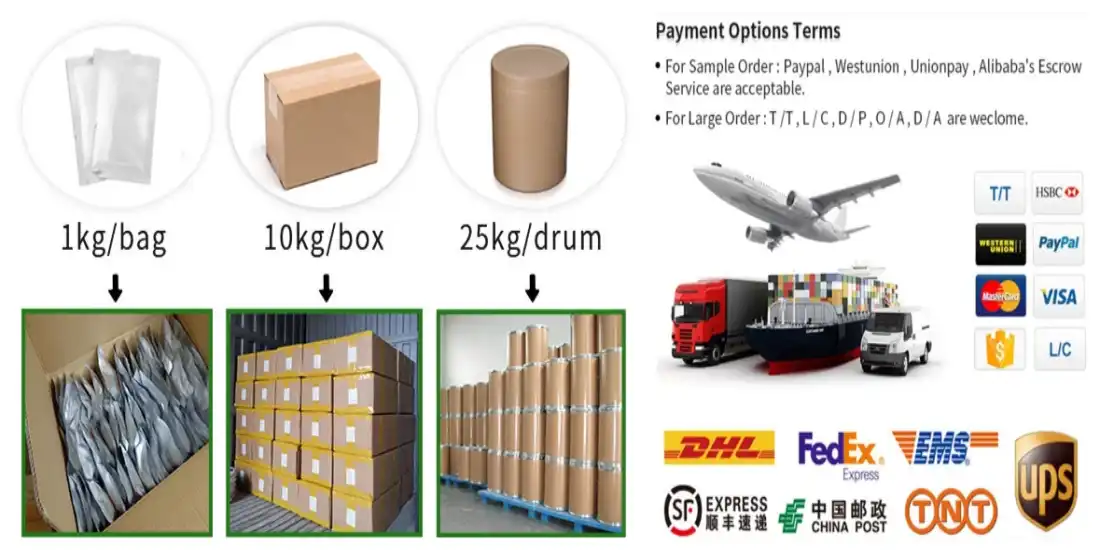
In the supplement business, timing is money, and NT Biotech's service structure is engineered for momentum. The company guarantees initial replies to all inquiries within two hours. Popular standardized extracts ship from inventory within 1–3 working days after order confirmation, while production orders typically complete within 3–10 working days — a cycle that already includes premium raw material procurement, proprietary extraction, stringent laboratory testing, and final packaging. Logistics flex to each buyer's needs: direct-from-factory delivery via the company's own FedEx/UPS accounts for urgent shipments, and trusted freight forwarders for secure, on-time bulk cargo by air or sea. Your launch date stops being a hope and becomes a plan.
Partnership Beyond the Purchase Order
The main thing that sets NT Biotech apart from other companies that sell lutein from marigold extract is its business philosophy: it sees itself as a long-term technical partner rather than a one-time vendor. Specifications, grades, packing, and paperwork can be changed to fit the needs of different countries and clients with customised OEM/ODM solutions. Technical help covers both composition questions and problems with the application. The terms of payment are good for the buyer, and the buyer's local currency can be used to avoid problems with foreign exchange. Every system, from the field to the finished extract, is built around one idea: that every product should show the gift of nature and the dedication of science. This is true from the first sample request to the hundredth production batch.
Conclusion
Lutein from marigold extract is nature's best source of lutein, and it has been carefully extracted to become a vitamin that protects the macula, blocks blue light, and meets the vision needs of all generations. However, the ingredient only works as well as the other part that goes with it. One integrated value chain is made up of NT Biotech's own planting, unique extraction, standard purity checks by HPLC/UV, ISO9001, KOSHER, and HALAL certifications, two-hour response times, and batches that are fully recorded. When brands want natural eye-health products that they can count on, the seller they choose is very important.
FAQ
Q1: Why is marigold the preferred source of lutein?
A: Marigold petals (Tagetes erecta) contain the highest natural lutein concentration of any cultivated plant, making standardized, high-purity extraction practical and economical.
Q2: How does lutein from marigold extract support eye health?
A: Lutein accumulates in the macula, where it filters high-energy blue light and provides antioxidant defense for retinal cells.
Q3: What specifications does NT Biotech offer?
A: Lutein powders from 5% to 90%, plus lutein esters and zeaxanthin grades — all standardized and verified by HPLC/UV testing.
Q4: What certifications back the product?
A: ISO9001, KOSHER, and HALAL certifications, with a Certificate of Analysis accompanying every batch.
Q5: How quickly can orders be fulfilled?
A: In-stock extracts ship within 1–3 working days; production orders take approximately 3–10 working days, with inquiries answered within two hours.
Bring Nature's Golden Nutrient to Your Brand — Contact NT Biotech Today
Your customers are searching for natural, science-backed eye health — and lutein from marigold extract delivers exactly that, provided it comes from a source you can trust. NT Biotech combines autonomous marigold cultivation, proprietary extraction technology, purity above 98% on key products, and complete ISO9001, KOSHER, and HALAL certification into an ingredient partnership built for global brands. Whether you need a standard grade shipped within days, a customized OEM specification for your market, or technical guidance on your next formulation, our team guarantees a response within two hours. Send your inquiry or sample request to info@newthingsbiotech.com now, and let NT Biotech turn the gift of nature into your product's brightest competitive advantage.
References
1. Age-Related Eye Disease Study 2 (AREDS2) Research Group. "Lutein + Zeaxanthin and Omega-3 Fatty Acids for Age-Related Macular Degeneration: The AREDS2 Randomized Clinical Trial." JAMA, 2013.
2. Abdel-Aal, E.-S.M.; Akhtar, H.; Zaheer, K.; Ali, R. "Dietary Sources of Lutein and Zeaxanthin Carotenoids and Their Role in Eye Health." Nutrients, 2013.
3. Buscemi, S.; Corleo, D.; Di Pace, F.; Petroni, M.L.; Satriano, A.; Marchesini, G. "The Effect of Lutein on Eye and Extra-Eye Health." Nutrients, 2018.
4. Granado, F.; Olmedilla, B.; Blanco, I. "Nutritional and Clinical Relevance of Lutein in Human Health." British Journal of Nutrition, 2003.
5. Ranard, K.M.; Jeon, S.; Mohn, E.S.; Griffiths, J.C.; Johnson, E.J.; Erdman, J.W. "Dietary Guidance for Lutein: Consideration for Intake Recommendations Is Scientifically Supported." European Journal of Nutrition, 2017.
6. Bone, R.A.; Landrum, J.T.; Guerra, L.H.; Ruiz, C.A. "Lutein and Zeaxanthin Dietary Supplements Raise Macular Pigment Density and Serum Concentrations of These Carotenoids in Humans." Journal of Nutrition, 2003.