- English
- French
- German
- Portuguese
- Spanish
- Russian
- Japanese
- Korean
- Arabic
- Greek
- German
- Turkish
- Italian
- Danish
- Romanian
- Indonesian
- Czech
- Afrikaans
- Swedish
- Polish
- Basque
- Catalan
- Esperanto
- Hindi
- Lao
- Albanian
- Amharic
- Armenian
- Azerbaijani
- Belarusian
- Bengali
- Bosnian
- Bulgarian
- Cebuano
- Chichewa
- Corsican
- Croatian
- Dutch
- Estonian
- Filipino
- Finnish
- Frisian
- Galician
- Georgian
- Gujarati
- Haitian
- Hausa
- Hawaiian
- Hebrew
- Hmong
- Hungarian
- Icelandic
- Igbo
- Javanese
- Kannada
- Kazakh
- Khmer
- Kurdish
- Kyrgyz
- Latin
- Latvian
- Lithuanian
- Luxembou..
- Macedonian
- Malagasy
- Malay
- Malayalam
- Maltese
- Maori
- Marathi
- Mongolian
- Burmese
- Nepali
- Norwegian
- Pashto
- Persian
- Punjabi
- Serbian
- Sesotho
- Sinhala
- Slovak
- Slovenian
- Somali
- Samoan
- Scots Gaelic
- Shona
- Sindhi
- Sundanese
- Swahili
- Tajik
- Tamil
- Telugu
- Thai
- Ukrainian
- Urdu
- Uzbek
- Vietnamese
- Welsh
- Xhosa
- Yiddish
- Yoruba
- Zulu
knowledge
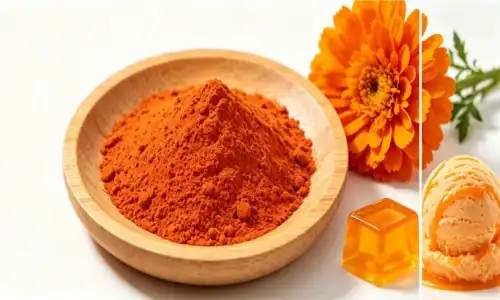
Walk through any supplement trade show, scan any contract manufacturer's ingredient list, or browse the best-selling eye-health products online, and you will notice a recurring specification: Lutein beadlets 10%. Among all the forms in which marigold-derived lutein is sold — oils, powders, suspensions, high-purity crystals — this particular format has quietly become the industry's workhorse, powering everything from mass-market multivitamins to premium vision formulas. Popularity on this scale is never accidental. It is earned through a rare combination of scientific credibility, manufacturing practicality and commercial logic that serves everyone in the value chain: formulators, production managers, brand owners, and, ultimately, consumers. This article unpacks the reasons behind the format's dominance — why the beadlet matters, why the 10% standardization hits the industry's sweet spot, and why the choice of supplier determines whether those advantages actually reach your finished product. As our quality benchmark, we will reference NT Biotech (Shaanxi New Things Biotech), whose Lutein beadlets 10% are standardized at a verified 10% lutein content, tested by HPLC/UV on every batch, produced through proprietary extraction, achieving purity above 98% on key products, and supported by ISO9001, KOSHER and HALAL certifications with a Certificate of Analysis accompanying every shipment.
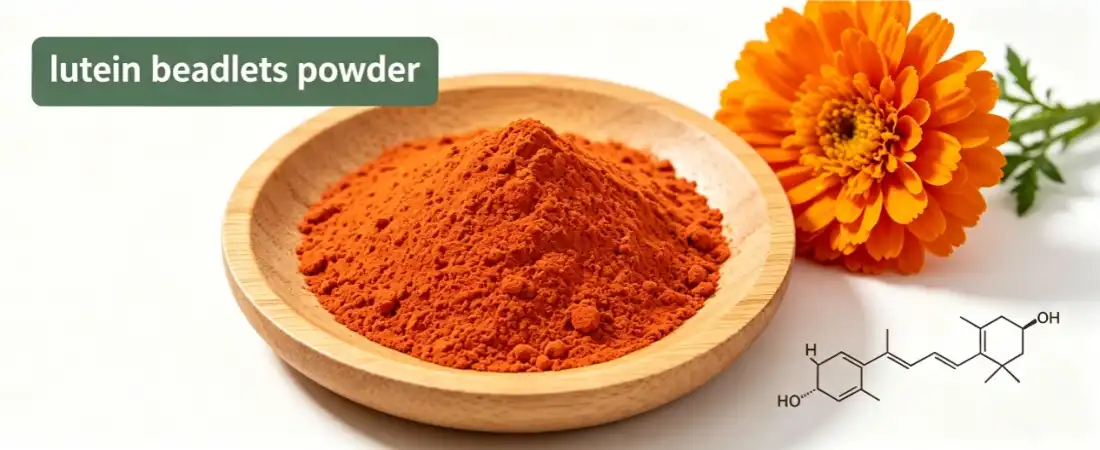
The Beadlet Advantage: Protection and Practicality in Every Sphere
To understand the popularity of Lutein beadlets 10%, start with the beadlet itself — because this tiny sphere solves two of the supplement industry's oldest headaches simultaneously: ingredient fragility and production difficulty.
Solving Lutein's Fragility Problem at the Source
Lutein is a nutritional superstar with a delicate constitution. As a carotenoid extracted from the petals of Tagetes erecta (the marigold flower), it is highly vulnerable to oxygen, heat, and light — the three forces that quietly erode potency from the moment an ingredient leaves the factory. Unprotected lutein powders can lose meaningful strength during manufacturing, storage, and shelf life, forcing brands into expensive overages and anxious stability studies. Beadlet technology attacks this problem structurally. Through microencapsulation, purified lutein is embedded within a protective matrix of food-grade wall materials, forming uniform spheres in which every particle carries its own shield. The result is Lutein beadlets 10% that survive tablet compression, gummy cooking, warehouse summers, and long ocean freight routes with potency intact — a resilience that directly protects label claims and brand reputations.
Free-Flowing, Dust-Free: A Production Line's Best Friend
Ask any production manager why they prefer beadlets, and you will hear a story about machines, not molecules. Lutein beadlets 10% are engineered for the realities of high-speed manufacturing: the uniform spherical particles flow smoothly through hoppers and feeders, generate virtually no dust, resist caking in humid conditions, and blend evenly with vitamins, minerals, and excipients. This physical discipline has profound consequences on the factory floor. Encapsulation machines run cleaner and longer between maintenance stops. Tablet blends remain homogeneous from the first compression to the last, so every unit carries the same verified dose. Waste drops, batch release accelerates, and quality teams stop firefighting. In an industry where production efficiency quietly determines margins, these operational advantages explain why beadlets — not raw powders — became the default specification in so many master formulas.
Dose Uniformity: The Quality Consumers Never See but Always Feel
The most important benefit of beadlet technology is invisible to consumers and indispensable to brands: uniformity. Because every beadlet in Lutein beadlets 10% shares approximately the same size, density, and lutein content, the active ingredient distributes homogeneously through any blend. The first capsule off the line and the hundred-thousandth carry the same dose; the gummy at the top of the bottle matches the one at the bottom. This consistency is what allows brands to make confident label claims, pass third-party testing, and earn the repeat purchases that define successful products. NT Biotech engineers this uniformity at the process level, combining proprietary extraction that maximizes active-compound yield with encapsulation technology built for consistent particle formation — and then proving the result with HPLC/UV verification on every batch. When uniformity is manufactured rather than hoped for, quality stops being a variable and becomes a feature.
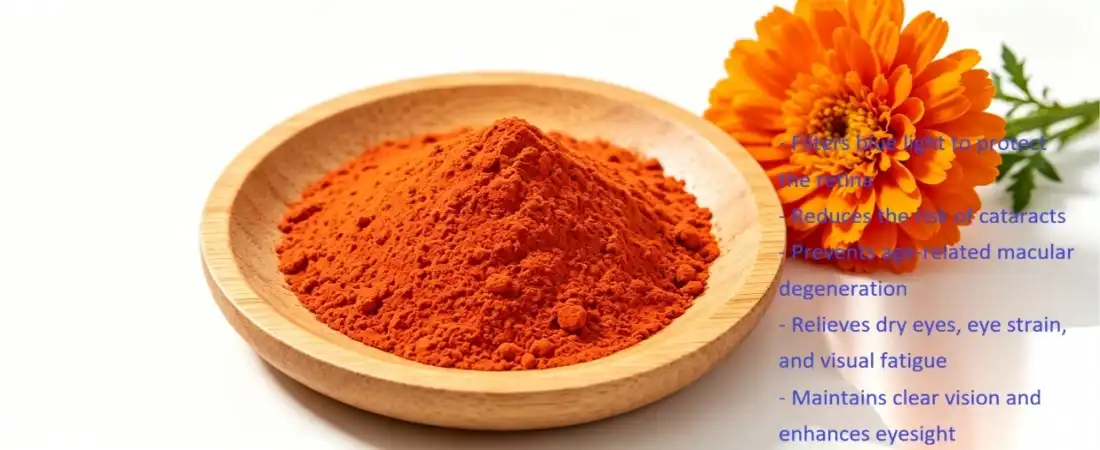
Why 10% Hits the Sweet Spot: The Commercial Logic Behind the Specification
Beadlets come in many strengths, so why has 10% emerged as the industry's favorite? The answer lies in an elegant alignment of dosage science, formulation economics and product-line strategy.
Dosage Mathematics That Just Works
The 10% standardization creates beautifully clean formulation arithmetic. Delivering a 10 mg lutein dose — a level widely used in daily eye-health products — requires exactly 100 mg of Lutein beadlets 10%; a 20 mg dose requires 200 mg. These quantities fit comfortably inside standard capsule and tablet sizes, leaving room for complementary ingredients like zeaxanthin, bilberry extract, or vitamin A in multi-nutrient vision formulas. Lower-potency formats would force larger fill weights and crowded capsules; ultra-high-potency grades would demand sub-100 mg precision that complicates blending and increases segregation risk. At 10%, the dosage math aligns with both clinical reference points and the physical constraints of real dosage forms — a sweet spot that simplifies development for formulators and keeps production forgiving at commercial scale.
One Specification, an Entire Product Portfolio
The strategic brilliance of Lutein beadlets 10% is its range. A single standardized specification can anchor an entire product family: entry-level daily eye-health capsules at 10 mg, premium vision complexes at 20 mg, multivitamin inclusion at lower inclusion rates, gummies, chewables, and even functional food applications. This versatility carries enormous commercial value. Brands qualify one ingredient from one supplier, with one documentation package and one inventory stream, then deploy it across multiple SKUs, price points, and market segments. Procurement simplifies, quality systems streamline, and line extensions launch faster because the core ingredient is already validated. For growing brands, this portfolio leverage is a decisive advantage — and it explains why purchasing teams so often standardize on the 10% grade when building long-term supply agreements.
The Economics: Performance Without Premium-Grade Costs
Popularity ultimately obeys economics, and Lutein beadlets 10% occupies the value zone where performance and cost efficiency intersect. The specification delivers full beadlet benefits — encapsulation protection, flowability, dose uniformity, verified potency — without the premium pricing of 20% grades or the formulation bulk of 5% alternatives. Because the encapsulation matrix protects potency through shelf life, brands typically require smaller overages than with unprotected powders, reducing the effective cost per delivered dose. Add the operational savings from dust-free, free-flowing handling, and the total cost of ownership becomes compelling. When a Lutein beadlets 10% supplier like NT Biotech combines this value equation with inventory-backed availability and 1–3 working day stock shipment, the specification becomes not just the popular choice but the rational one.
Table 1: Why the 10% Grade Wins — Lutein Format Comparison for Supplement Brands
| Comparison Point | Lutein Beadlets 10% | Lower-Grade Beadlets (5%) | High-Potency Grades (20%+) | Conventional Powder |
|---|---|---|---|---|
| Dose mathematics (10 mg lutein) | Clean 100 mg fill | 200 mg fill the crowd's capsule | Sub-100 mg, precision-sensitive | Variable, unstable |
| Protection from oxidation | Full encapsulation shield | Full shield | Full shield | Minimal |
| Flowability & dust | Free-flowing, dust-free | Good | Good | Dusty, prone to caking |
| Multi-SKU versatility | Excellent across formats | Limited to economy lines | Premium lines only | Limited |
| Cost per delivered dose | Optimized sweet spot | Higher fill costs | Premium pricing | Hidden stability costs |
| Typical applications | Capsules, tablets, gummies, multivitamins | Economy supplements | High-strength formulas | Basic blends |
The Supplier Factor: Why Popularity Demands Provenance
A popular specification attracts every kind of vendor — excellent manufacturers and opportunistic traders alike. The final reason Lutein beadlets 10% dominates the industry is also a warning: the format performs only as well as the company behind it. This is where provenance separates genuine value from expensive disappointment.
Technology That Starts in the Marigold Field
Premium beadlets begin long before encapsulation — in the soil. NT Biotech operates autonomous marigold planting bases integrated with state-of-the-art research and development, intelligent production, and adaptive supply chains, creating a complete value chain from plant source to product application. Cultivation timing and harvest conditions are optimized for carotenoid content; proprietary extraction then maximizes the yield of active compounds, achieving purity above 98% on key products; and engineered encapsulation locks that quality into every beadlet. This vertical integration means NT Biotech's Lutein beadlets 10% carries an unbroken chain of custody from field to finished drum — traceability that transforms audits, regulatory filings, and retailer questionnaires from stressful exercises into routine documentation. Traders who buy bulk beadlets for relabeling simply cannot offer this depth, no matter how polished their brochures appear.
Documentation and Certification as Standard Practice
The popularity of the 10% specification makes batch documentation even more critical, because high-volume ingredients invite corner-cutting. A credible Lutein beadlets 10% supplier counters that risk with disciplined transparency: a comprehensive Certificate of Analysis with every batch, covering assay, heavy metals, microbiological parameters, and physical characteristics, supported by HPLC/UV chromatographic evidence. Certifications complete the foundation — ISO9001 for quality management discipline, plus KOSHER and HALAL credentials that open global markets. NT Biotech maintains all three and attaches full documentation to every lot as standard practice, not a special request. The most efficient way to verify this standard is simply to test it: email your target specification and destination market to info@newthingsbiotech.com, and NT Biotech guarantees an initial reply within two hours, complete with specification sheets, sample support, and the technical files your quality team needs.
Service Speed That Matches the Market's Pace
Popular ingredients move fast, and brands need suppliers who move faster. NT Biotech's service structure is built for this tempo: initial replies to all inquiries within two hours, guaranteed; inventory of popular standardized extracts held for shipment within 1–3 working days after order confirmation; and production orders completed within 3–10 working days, a cycle that already includes raw material procurement, proprietary extraction, laboratory testing, and packaging. Logistics flex to each order — direct-from-factory delivery via the company's own FedEx/UPS accounts for urgent shipments, and trusted freight forwarders for secure bulk cargo by air or sea. Customized OEM/ODM solutions adapt specifications and documentation to different countries, and payment is accepted in the buyer's local currency. When a Lutein beadlets 10% supplier operates at this standard, the industry's most popular ingredient becomes its most dependable one, too.
Table 2: What Premium Supply Looks Like — NT Biotech Service Benchmarks
| Service Dimension | Industry Expectation for a Leading Supplier | NT Biotech Standard |
|---|---|---|
| Inquiry response | Same-day, technically complete | Within 2 hours, guaranteed |
| Stock availability | Inventory for popular grades | Ships in 1–3 working days |
| Production lead time | Transparent, reliable cycle | 3–10 working days, CoA included |
| Quality documentation | Batch-specific CoA with chromatograms | HPLC/UV verified, every batch |
| Certifications | Internationally recognized credentials | ISO9001, KOSHER, HALAL |
| Traceability | Field-to-product chain of custody | Autonomous marigold planting bases |
| Logistics flexibility | Express and bulk options | Own FedEx/UPS accounts + freight forwarders |
| Buyer-friendly terms | Flexible international payment | Local-currency payment accepted |
Conclusion
The popularity of Lutein beadlets 10% in dietary supplements rests on a rare triple alignment: beadlet technology that shields fragile lutein from oxygen, heat and light; a 10% standardization that delivers clean dosage mathematics, portfolio-wide versatility, and optimized cost per dose; and production-friendly handling that keeps manufacturing lines efficient. Yet the specification only fulfills its promise when backed by genuine manufacturing depth. NT Biotech provides exactly that — autonomous marigold cultivation, proprietary extraction and encapsulation, purity above 98% on key products, batch-level HPLC/UV verification, triple international certification, and two-hour responsiveness. For brands seeking the industry's most proven lutein format, provenance turns popularity into performance.
FAQ
Q1: Why are lutein beadlets preferred over regular lutein powder?
A: Beadlets protect lutein from oxygen, heat, and light through microencapsulation, while offering free-flowing, dust-free handling and uniform dosing that conventional powders cannot match.
Q2: Why is the 10% grade so widely used?
A: It offers clean dosage mathematics (100 mg delivers 10 mg lutein), fits standard capsule and tablet sizes, and serves entire product portfolios at an optimized cost per dose.
Q3: What product formats use Lutein beadlets 10%?
A: Capsules, tablets, gummies, chewables, multivitamins, and functional food applications all benefit from the format's stability and flowability.
Q4: What quality documentation should accompany each batch?
A: A Certificate of Analysis with HPLC/UV verification covering assay, heavy metals, microbiology, and physical characteristics — plus ISO9001, KOSHER, and HALAL certification support.
Q5: How quickly can NT Biotech supply Lutein beadlets 10%?
A: Inquiries are answered within two hours; in-stock material ships within 1–3 working days, and production orders are completed within 3–10 working days.
Join the Brands Choosing Proven Quality — Contact NT Biotech Today
Now you know why Lutein beadlets 10% powers the world's most successful eye-health supplements — and why the supplier behind the specification makes all the difference. NT Biotech invites you to experience that difference firsthand: request batch Certificates of Analysis, test our two-hour response guarantee, or send your toughest formulation question to our plant-extraction specialists. With verified 10% standardization, proprietary encapsulation technology, ISO9001, KOSHER, and HALAL certifications, flexible OEM/ODM solutions, and payment in your local currency, we are ready to support your next product from first sample to global scale. Email your specification or sample request to info@newthingsbiotech.com today — and let the industry's most trusted lutein format power your brand's next chapter.
References
1. Age-Related Eye Disease Study 2 (AREDS2) Research Group. "Lutein + Zeaxanthin and Omega-3 Fatty Acids for Age-Related Macular Degeneration: The AREDS2 Randomized Clinical Trial." JAMA, 2013.
2. Abdel-Aal, E.-S.M.; Akhtar, H.; Zaheer, K.; Ali, R. "Dietary Sources of Lutein and Zeaxanthin Carotenoids and Their Role in Eye Health." Nutrients, 2013.
3. Boon, C.S.; McClements, D.J.; Weiss, J.; Decker, E.A. "Factors Influencing the Chemical Stability of Carotenoids in Foods." Critical Reviews in Food Science and Nutrition, 2010.
4. Buscemi, S.; Corleo, D.; Di Pace, F.; Petroni, M.L.; Satriano, A.; Marchesini, G. "The Effect of Lutein on Eye and Extra-Eye Health." Nutrients, 2018.
5. Ranard, K.M.; Jeon, S.; Mohn, E.S.; Griffiths, J.C.; Johnson, E.J.; Erdman, J.W. "Dietary Guidance for Lutein: Consideration for Intake Recommendations Is Scientifically Supported." European Journal of Nutrition, 2017.
6. Stahl, W.; Sies, H. "Bioactivity and Protective Effects of Natural Carotenoids." Biochimica et Biophysica Acta, 2005.
Here is a paradox that frustrates nutrition scientists and delights engineers: lutein is one of the most important nutrients for human vision, yet in its natural state, it is remarkably bad at surviving the journey from factory to eye. Heat degrades it, oxygen oxidizes it, light breaks it down, and its fat-soluble nature limits where it can even be used. The breakthrough that changed everything is microencapsulated lutein powder — a format in which marigold-derived lutein is sealed inside microscopic protective spheres, transforming a fragile carotenoid into a stable, versatile ingredient that actually delivers on its eye-health promise. But how exactly does this technology work, and why does it matter so much for the quality of vision supplements? This article traces the complete story: the science of lutein's role in the eye, the engineering that protects it, and the manufacturing discipline that determines whether protection survives to the final dose. As our benchmark, we will reference NT Biotech (Shaanxi New Things Biotech), whose microencapsulated lutein powder is standardized across grades from 5% to 20%, verified by HPLC/UV on every batch, produced through proprietary extraction, achieving purity above 98% on key products, and backed by ISO9001, KOSHER, and HALAL certifications with a Certificate of Analysis accompanying every shipment.
First, the Science: Why Your Eyes Depend on Lutein
Before appreciating what microencapsulation protects, it helps to understand what is at stake. Lutein is not just another antioxidant — it is a structural component of healthy vision, concentrated precisely where your eyes need it most.
The Macula's Golden Guardian
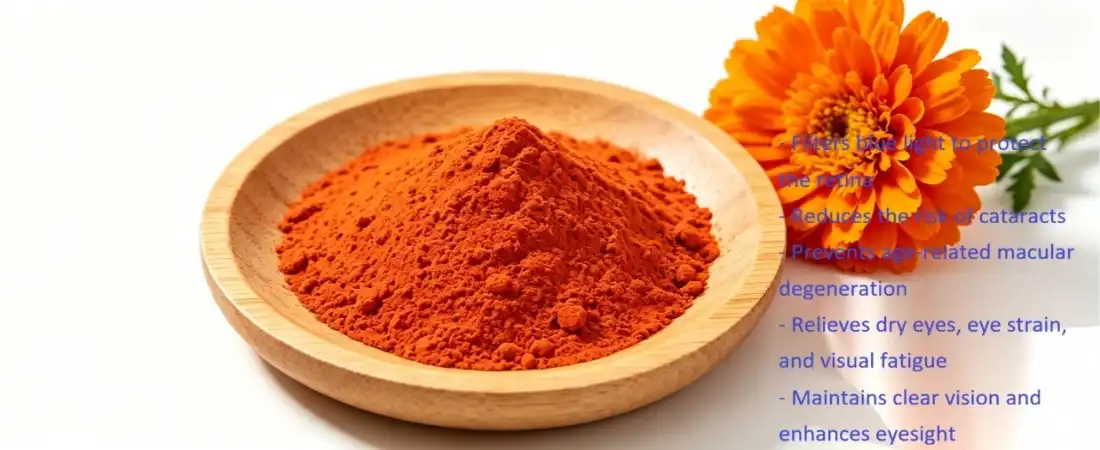
Deep inside your retina sits the macula, a small region responsible for the sharp central vision you use to read, drive, and recognize faces. Remarkably, this tissue concentrates lutein to levels far higher than anywhere else in the body, forming what scientists call the macular pigment. This pigment performs a task no other nutrient can replicate: it absorbs high-energy blue light — the wavelengths emitted most intensely by digital screens and modern lighting — before that light can stress the delicate photoreceptor cells beneath. Think of it as a pair of sunglasses built into the architecture of the eye itself. Because the human body cannot synthesize lutein, this protective pigment depends entirely on dietary intake, which is why microencapsulated lutein powder has become such a critical ingredient: it delivers the raw material your macula needs, in a form designed to arrive intact.
Antioxidant Defense Where It Matters Most
Light filtering is only half of lutein's contribution. The retina is among the most metabolically active tissues in the human body, and its constant exposure to light and oxygen generates free radicals — unstable molecules that gradually challenge cellular integrity. Lutein's molecular structure, a long chain of conjugated double bonds, makes it exceptionally effective at neutralizing these reactive compounds and quenching singlet oxygen. In essence, the same pigment that shields marigold petals from harsh sunlight in the field goes on to defend retinal cells in the human eye. Landmark clinical research, including the AREDS2 trial, has established lutein as a cornerstone nutrient in macular health strategies, transforming it from a botanical curiosity into one of the most scientifically validated ingredients in the entire supplement industry.
The Delivery Dilemma: A Nutrient That Degrades Before It Delivers
Here is where the story takes its engineering turn. The very properties that make lutein effective — its light-reactive, oxygen-quenching molecular structure — also make it unstable outside the body. Exposed to heat during tablet compression, oxygen during storage, or light on a retail shelf, unprotected lutein steadily degrades. A capsule labeled "10 mg lutein" may deliver considerably less by the time it reaches the consumer, and fat-soluble raw lutein resists use in the water-based formats modern consumers prefer. The gap between lutein's promise and its practical delivery is precisely the problem that microencapsulated lutein powder was invented to solve — and the quality of that solution determines whether eye-health products fulfill their purpose or merely claim it.
The Engineering Solution: How Microencapsulation Protects and Delivers
Microencapsulation is where food science becomes molecular architecture. By wrapping each lutein particle in a purpose-built protective shell, the technology converts lutein's weaknesses into strengths — and understanding this process reveals why not all encapsulated products perform equally.
Building a Microscopic Shield Around Every Particle
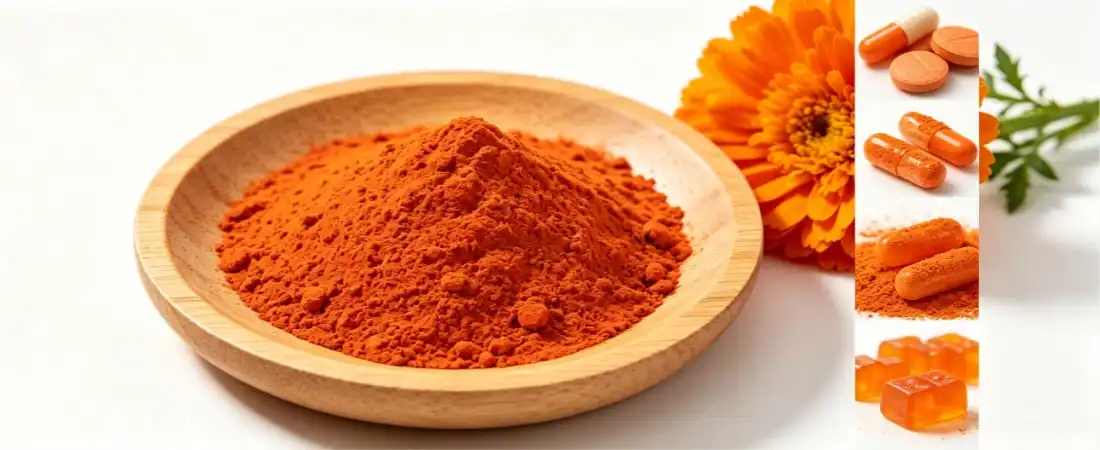
In the microencapsulation process, purified lutein — extracted from the petals of Tagetes erecta, the marigold flower — is dispersed at a microscopic scale and embedded within a protective matrix of food-grade wall materials, typically built from gelatin, starch, or plant-based alternatives. The mixture is then formed into uniform beadlets or fine particles and dried into a free-flowing powder. Each particle functions as an independent vault: the wall material blocks oxygen and light, the spherical or uniform geometry minimizes exposed surface area, and the lutein inside remains sealed until the moment of release. NT Biotech approaches this as an integrated discipline, pairing proprietary extraction methods that maximize the yield of active compounds with encapsulation engineering designed for superior stability. When both capabilities live under one roof, the resulting microencapsulated lutein powder carries protection that is designed in, not added on.
Stability That Survives the Real World
The true test of encapsulation is not the laboratory — it is the supply chain. Quality microencapsulated lutein powder endures the heat of tablet compression, the moisture and cooking cycles of gummy manufacturing, months of ambient warehouse storage, and long international freight journeys, emerging with its verified potency intact. For brands, this resilience translates into smaller overages, longer confident shelf lives, and stability studies that pass with a margin to spare. For consumers, it means something simpler and more important: the dose on the label is the dose in the capsule, on the last day of shelf life, as surely as the first. When NT Biotech verifies every batch by HPLC/UV and ships it with a Certificate of Analysis, that documentation represents potency engineered to survive — a claim cheaper, loosely encapsulated alternatives routinely fail to sustain.
Format Freedom: One Ingredient, Every Dosage Form
Microencapsulation does more than protect — it liberates. Free-flowing, dust-free microencapsulated lutein powder behaves beautifully on high-speed production lines, blending homogeneously with vitamins, minerals, and excipients so that every tablet, capsule, or gummy carries a uniform dose. Depending on the wall system, encapsulated lutein can serve hard capsules, compressed tablets, chewables, gummies, powdered drink mixes, and fortified foods — formats that unprotected, fat-soluble lutein either tolerates poorly or cannot enter at all. This versatility lets brands build entire eye-health product families around a single qualified ingredient, accelerating line extensions and simplifying supply chains. The format freedom that consumers experience as convenient gummies and on-the-go stick packs begins, invisibly, inside the encapsulation matrix.
Table 1: Microencapsulated Lutein Powder vs. Unprotected Lutein — What the Technology Delivers
| Performance Dimension | Microencapsulated Lutein Powder | Conventional Unprotected Lutein |
|---|---|---|
| Resistance to oxidation | Excellent — sealed protective matrix | Poor — direct exposure degrades potency |
| Stability through processing | Survives compression, gummy cooking, and blending | Significant losses during manufacturing |
| Shelf-life performance | Potency retained to expiry | Requires large overages to compensate |
| Flowability & handling | Free-flowing, dust-free, uniform | Dusty, prone to caking and segregation |
| Dose uniformity | Homogeneous distribution in blends | Variable dosing between units |
| Format versatility | Capsules, tablets, gummies, drink mixes | Limited to oil-based or simple formats |
| Typical standardized grades | 5%, 10%, 20% (HPLC/UV verified) | Often unstandardized or inconsistent |
The Partner Behind the Powder: Why Manufacturing Depth Determines Eye-Health Outcomes
Technology alone does not guarantee quality — execution does. The difference between microencapsulated lutein powder that protects vision health and powder that merely claims to lie in the manufacturer's control over every stage, from the marigold field to the finished drum.
From Autonomous Fields to Intelligent Production
NT Biotech operates a complete value chain that begins in its own autonomous marigold planting bases, where cultivation timing and harvest conditions are optimized for carotenoid content, and extends through state-of-the-art research and development, intelligent production, and adaptive supply chains. This vertical integration means the lutein inside every encapsulated particle is cultivated, extracted, and protected under one quality system — not purchased on the spot market and repackaged. The company's proprietary processing achieves purity above 98% on its key standardized products, and every batch of microencapsulated lutein powder can be traced back to the field where its journey began. For brands facing retailer audits or regulatory filings, that unbroken chain of custody transforms traceability from a marketing phrase into a documented, defensible fact.
Documentation and Certification: The Proof Behind the Promise
In eye-health nutrition, trust is built on paper as much as on chemistry. A credible microencapsulated lutein powder supplier provides comprehensive documentation as standard practice: a Certificate of Analysis with every batch, covering assay, heavy metals, microbiological parameters, and physical characteristics, supported by HPLC/UV chromatographic evidence. Certifications complete the foundation — ISO9001 for disciplined quality management, plus KOSHER and HALAL credentials that open global markets from North America to the Middle East and Southeast Asia. NT Biotech maintains all three and attaches full documentation to every lot it ships. The most direct way to evaluate this standard is simply to test it: send your target grade, application, and destination market to info@newthingsbiotech.com, and NT Biotech guarantees an initial reply within two hours, complete with specification sheets, sample support, and the technical files your quality team needs to begin meaningful evaluation.
Service That Keeps Eye-Health Innovation Moving
Even the finest ingredient underperforms when the company behind it cannot deliver at the market's pace. NT Biotech's service structure is engineered for momentum: initial replies to all inquiries within two hours, guaranteed; inventory of popular standardized extracts held for shipment within 1–3 working days after order confirmation; and production orders completed within 3–10 working days — a cycle that already includes premium raw material procurement, proprietary extraction, stringent laboratory testing with batch CoA, and final packaging. Logistics flex to each order, with direct-from-factory delivery through the company's own FedEx/UPS accounts for urgent shipments and trusted freight forwarders for secure bulk cargo by air or sea. Customized OEM/ODM solutions adapt specifications and documentation to different countries, and payment is accepted in the buyer's local currency. This is what distinguishes a true microencapsulated lutein powder supplier from a vendor: every system is built around the customer's next launch.
Table 2: Evaluating a Microencapsulated Lutein Powder Supplier — The NT Biotech Benchmark
| Evaluation Criterion | What Buyers Should Require | NT Biotech Standard |
|---|---|---|
| Assay verification | Batch-specific HPLC/UV testing | Every batch verified, CoA included |
| Standardized grades | Multiple options for formulation needs | 5%, 10%, 20% beadlet grades |
| Purity capability | High active-content integrity | >98% on key products |
| Encapsulation quality | Engineered stability and uniformity | Proprietary protective processing |
| Certifications | Globally recognized credentials | ISO9001, KOSHER, HALAL |
| Traceability | Field-to-product chain of custody | Autonomous marigold planting bases |
| Inquiry response | Hours, not days | Within 2 hours, guaranteed |
| Delivery performance | Testable, transparent timelines | Stock: 1–3 days; production: 3–10 days |
| Buyer-friendly terms | Flexible international payment | Local-currency payment accepted |

Conclusion
Microencapsulated lutein powder bridges the gap between lutein's proven eye-health benefits and their reliable delivery. By sealing marigold-derived lutein inside protective microscopic spheres, the technology shields the macula's golden guardian from oxygen, heat, and light — preserving potency through manufacturing, shipping, and shelf life, while unlocking formats from capsules to gummies and drink mixes. Yet the technology only fulfills its promise through manufacturing excellence. NT Biotech delivers that excellence: autonomous marigold cultivation, proprietary extraction and encapsulation, purity above 98% on key products, batch-level HPLC/UV verification, triple international certification, and two-hour responsiveness. Better eye health begins with better protection — and better protection begins with the right partner.
FAQ
Q1: What is microencapsulated lutein powder?
A: It is marigold-derived lutein sealed inside microscopic, food-grade protective spheres — a format that shields the carotenoid from oxygen, heat, and light while enabling versatile supplement applications.
Q2: How does microencapsulation support eye health?
A: By preserving lutein's potency through manufacturing and shelf life, it ensures the dose on the label reaches the consumer — delivering the blue-light filtering and antioxidant support the macula depends on.
Q3: Which product formats can use this ingredient?
A: Capsules, tablets, gummies, chewables, powdered drink mixes, and fortified foods all benefit from its stability, flowability, and dose uniformity.
Q4: What grades does NT Biotech offer?
A: Standardized beadlet grades including 5%, 10%, and 20%, each verified by HPLC/UV with a Certificate of Analysis for every batch.
Q5: How quickly can orders be fulfilled?
A: Inquiries are answered within two hours; in-stock material ships within 1–3 working days, and production orders are completed within 3–10 working days.
Protect Every Dose, Empower Every Product — Contact NT Biotech Today
The science is clear: lutein protects vision, and microencapsulated lutein powder protects lutein. What remains is choosing a partner whose engineering, documentation, and service turn that protection into your product's promise. NT Biotech invites you to verify every claim — request batch Certificates of Analysis, time our two-hour response guarantee, or discuss your next eye-health formulation with our plant-extraction specialists. With standardized grades, proprietary encapsulation technology, ISO9001, KOSHER and HALAL certifications, flexible OEM/ODM solutions, and payment in your local currency, we are ready to support your vision from first sample to global scale. Email your specification or sample request to info@newthingsbiotech.com today — and let NT Biotech help you deliver better eye health, one protected particle at a time.
References
1. Age-Related Eye Disease Study 2 (AREDS2) Research Group. "Lutein + Zeaxanthin and Omega-3 Fatty Acids for Age-Related Macular Degeneration: The AREDS2 Randomized Clinical Trial." JAMA, 2013.
2. Abdel-Aal, E.-S.M.; Akhtar, H.; Zaheer, K.; Ali, R. "Dietary Sources of Lutein and Zeaxanthin Carotenoids and Their Role in Eye Health." Nutrients, 2013.
3. Boon, C.S.; McClements, D.J.; Weiss, J.; Decker, E.A. "Factors Influencing the Chemical Stability of Carotenoids in Foods." Critical Reviews in Food Science and Nutrition, 2010.
4. Buscemi, S.; Corleo, D.; Di Pace, F.; Petroni, M.L.; Satriano, A.; Marchesini, G. "The Effect of Lutein on Eye and Extra-Eye Health." Nutrients, 2018.
5. Ranard, K.M.; Jeon, S.; Mohn, E.S.; Griffiths, J.C.; Johnson, E.J.; Erdman, J.W. "Dietary Guidance for Lutein: Consideration for Intake Recommendations Is Scientifically Supported." European Journal of Nutrition, 2017.
6. Stahl, W.; Sies, H. "Bioactivity and Protective Effects of Natural Carotenoids." Biochimica et Biophysica Acta, 2005.

There is a generation that spends their days staring at screens and their evenings looking for natural ways to protect their eyes. This generation is the one that has been steadily increasing interest in lutein from marigold extract for years. But behind the buzzword is a really great ingredient: a golden carotenoid that is extracted from Tagetes erecta petals using modern technology, and it has been shown to work in clinical studies for decades. You will make better choices if you know the benefits, uses, and buying factors of this plant wonder, whether you are a brand formulator, a purchasing manager, or just a curious customer. This guide shows you how to do all three in order. We will talk about NT Biotech (Shaanxi New Things Biotech) a lot because they have high-quality lutein from marigold extract: standardised grades from 5% to 90% confirmed by HPLC/UV; a proprietary extraction process that achieves purity above 98% on key products; ISO9001, KOSHER, and HALAL certifications; and a Certificate of Analysis sent with every batch.
Part One: The Benefits That Made Marigold Lutein Famous
Every successful ingredient earns its reputation through results, and lutein from marigold extract built its global fame on three science-backed pillars that continue to drive consumer demand today.
A Natural Filter for the Screen-Saturated Age
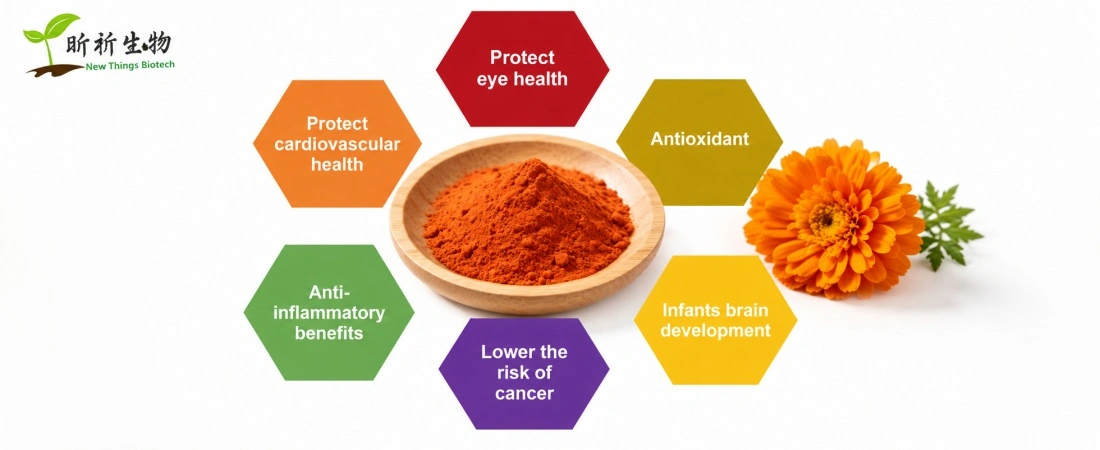
The human eye wasn't made to be in front of a screen for ten hours a day, but that's what modern life requires. Lutein solves this problem in a very simple way: after being eaten, it enters the bloodstream and focuses in the macula, the small area of the retina that controls clear central vision. There, it forms a protective pigment layer. This macular pigment soaks up strong blue light before it can damage the sensitive photoreceptor cells below. It works a lot like sunglasses inside the eye. To build and keep up this natural filter, the best way is to take lutein supplements made from marigold extract. This is because the body can't make it itself. The important AREDS2 trial, which was one of the biggest nutritional studies ever done on eye health, proved that lutein is an important part of macular nutrition plans and brought it to the public's attention.
Antioxidant Armor for Lifelong Vision
Only half of lutein's defensive resume is made up of blocking light. The retina is one of the body's most chemically active organs. It is constantly exposed to light and air, which creates free radicals that damage cells over time. Lutein is very good at stopping these unstable molecules and cooling singlet oxygen because its molecules are made up of a long chain of conjugated double bonds. Basically, the same chemical that protects marigold leaves from direct sunlight in the field also protects cells in the retina of the eye. Taking lutein from marigold extract on a regular basis helps the eye's defence system by making cells stronger. This gives people a natural way to take charge of their long-term eye health that they can easily fit into their daily lives.
Emerging Benefits Beyond the Eyes
Lutein's most famous benefit is still its role in vision, but scientists are still finding uses for it in other body parts. Lutein builds up in the skin, where its antioxidant and light-absorbing properties help the skin fight off environmental stress. This discovery has made lutein a rising star in beauty-from-within products. The brain also specifically stores lutein, and research has linked higher levels of lutein with better cognitive function across all ages. As science grows, lutein from marigold extract goes from being a one-use ingredient to a flexible platform nutrient that can support eye health, skin health, and healthy ageing product lines all at the same time. This means that brands can make more money from every kilogram they source.
Part Two: From Petal to Product — How Lutein From Marigold Extract Is Used
Benefits create demand, but versatility creates markets. One reason lutein from marigold extract dominates its category is the sheer breadth of applications it serves, from daily supplements to functional foods and beyond.
Dietary Supplements: The Heartland Application
Capsules, tablets, softgels, and gummies remain the primary home of marigold lutein, and for good reason. Standardized powder grades — typically 5%, 10%, and 20% — allow formulators to hit precise label claims across entry-level daily formulas and high-strength vision complexes alike. High-purity 80% and 90% grades serve premium nutraceuticals where minimal excipient load and maximum active content matter most. Complementary ingredients such as zeaxanthin, lutein's macular partner carotenoid, enable synergistic blends that mirror the eye's natural pigment composition. A capable lutein from marigold extract supplier will offer this full ladder of specifications, each verified by HPLC/UV, so that one trusted source can support your entire supplement portfolio without compromise.
Functional Foods and Beverages: Nutrition Consumers Actually Enjoy
The fastest-growing frontier for lutein from marigold extract lies beyond the supplement aisle. Powdered drink mixes, nutrition bars, fortified dairy products, and functional beverages increasingly feature lutein as a differentiating ingredient, riding the consumer shift toward foods that do more than fill stomachs. Success in these formats depends on ingredient stability — lutein is naturally sensitive to heat, light, and oxygen — which is why proprietary processing matters so much. NT Biotech's extraction technology is engineered specifically to protect active compounds through the stresses of food manufacturing and long shelf lives, delivering lutein from marigold extract with superior stability that keeps label claims honest from the production line to the consumer's kitchen.
Cosmetics and Animal Nutrition: The Surprising Frontiers
Lutein's golden color and antioxidant character have earned it roles far from the vitamin shelf. In high-end cosmetics, it appears in formulations targeting environmental skin defense and natural radiance. In animal nutrition, lutein from marigold extract is valued for enriching the color and nutritional profile of poultry products, egg yolks, and aquaculture feeds — applications where consistent potency and easy blending are essential. NT Biotech supplies pure, active natural raw materials across all of these sectors, providing flexible OEM solutions that adapt specifications and documentation to each industry's distinct requirements. This cross-category versatility is precisely why buyers increasingly treat lutein not as a niche purchase but as a strategic, multi-market ingredient investment.
Table 1: Where Lutein From Marigold Extract Works — Applications and Recommended Grades
| Application Category | Recommended Grade | Why It Fits |
|---|---|---|
| Daily eye-health supplements | Lutein powder 5%–10% | Cost-effective, precise daily dosing |
| High-strength vision capsules/tablets | Lutein powder 20% | Concentrated potency per unit |
| Premium nutraceuticals | Lutein 80%–90% | Maximum active content, minimal load |
| Functional foods & beverages | Lutein powder 5%–20% | Stability through processing and shelf life |
| Fortified food blends | Lutein esters 10%–20% | Economical fortification at scale |
| Synergistic macular formulas | Zeaxanthin 5%–40% | Complements lutein's natural profile |
| Cosmetics & animal nutrition | Custom specifications | Flexible OEM/ODM adaptation |
Part Three: The Smart Buyer's Guide to Sourcing With Confidence
Here is where knowledge turns into purchasing power. The market is full of drums labeled "lutein," but only a disciplined buying process separates premium lutein from marigold extract from disappointing substitutes. These are the four checks experienced buyers never skip.
Check One: Demand Standardized, Verified Specifications
Never accept vague potency claims. A professional lutein from marigold extract supplier states precise grades — 5%, 10%, 20%, 80%, 90% — and proves them with HPLC or UV analysis on every batch, not just a flattering certificate from years ago. Ask for assay data across several recent lots; consistency between batches reveals process control far better than any single result. NT Biotech sets a strong benchmark here, achieving purity above 98% on its key standardized extracts through proprietary extraction methods that maximize the yield of active compounds. When the number on the label reliably matches the number in the laboratory, formulation becomes predictable, stability studies run smoothly, and your brand's promises remain trustworthy batch after batch.
Check Two: Audit the Documentation and Certifications
Paperwork reveals culture. Insist on a Certificate of Analysis with every shipment, covering assay, heavy metals, microbiological limits, and residual solvents, ideally supported by chromatographic evidence. Then verify the certification framework: ISO9001 confirms a disciplined quality management system, while KOSHER and HALAL certifications unlock consumer markets that remain closed to uncertified ingredients. NT Biotech maintains all three and attaches comprehensive HPLC/UV documentation to every lot of lutein from marigold extract it ships. The simplest way to evaluate this standard before committing is to request a sample CoA and specification sheet — email your target grade and destination market to info@newthingsbiotech.com, and NT Biotech's team guarantees an initial reply within two hours with the technical files your quality department needs.
Check Three: Follow the Supply Chain Back to the Field
Premium extract begins in premium soil, so ask every candidate a disarming question: Can you trace this drum back to the field where the marigolds grew? Vertically integrated producers can; traders cannot. NT Biotech operates autonomous marigold planting bases merged with state-of-the-art R&D, intelligent production, and adaptive supply chains — a complete value chain running from plant source to product application. Cultivation timing, harvest conditions, and post-harvest handling are all optimized for carotenoid content, and every batch carries an unbroken chain of custody. For buyers, this traceability is practical insurance during audits, regulatory inspections, and retailer due diligence, and a decisive advantage over suppliers whose sourcing story dissolves under scrutiny.
Check Four: Test the Service Before You Test the Sample
A supplier's responsiveness during the inquiry stage predicts its reliability during the production stage. Benchmark the answers you receive against NT Biotech's published standards: initial replies within two hours; in-stock standardized extracts shipped within 1–3 working days after order confirmation; production orders completed within 3–10 working days, including raw material procurement, proprietary extraction, laboratory testing, and packaging. Examine logistics flexibility too — NT Biotech ships urgent orders directly from its factory through its own FedEx/UPS accounts, while trusted freight forwarders handle secure bulk cargo by air or sea. Add customized OEM/ODM capability for different countries and buyer-friendly payment in local currency, and you have the profile of a genuine long-term technical partner rather than a one-off vendor.
Table 2: Buyer Evaluation Checklist — What to Ask vs. NT Biotech's Answer
| Buying Criterion | The Question to Ask | NT Biotech Benchmark |
|---|---|---|
| Assay verification | "How is each batch tested?" | HPLC/UV verified; purity >98% on key products |
| Batch documentation | "What ships with each lot?" | Full Certificate of Analysis, every batch |
| Certifications | "Which markets can I enter?" | ISO9001, KOSHER, HALAL |
| Inquiry response | "How fast will you reply?" | Within 2 hours, guaranteed |
| Stock shipment | "Can you ship from inventory?" | 1–3 working days after confirmation |
| Production lead time | "How long for fresh batches?" | 3–10 working days, CoA included |
| Logistics | "How will my order travel?" | FedEx/UPS direct, air, or sea freight |
| Payment terms | "Can I pay in my currency?" | Local-currency payment accepted |
Conclusion
Lutein from marigold extract has earned its place at the center of modern eye-health nutrition through proven blue-light filtration, antioxidant defense, and expanding benefits for skin and cognitive wellness. Its versatility spans supplements, functional foods, cosmetics, and animal nutrition — but those benefits only materialize when the ingredient is standardized, stable, and fully documented. The smart buyer's path is clear: demand verified assays, audit certifications, trace the supply chain to the field, and test service speed before signing. NT Biotech meets every criterion, uniting proprietary extraction, purity above 98% on key products, triple certification, and two-hour responsiveness into one integrated partnership built from marigold field to finished powder.
FAQ
Q1: What are the main benefits of lutein from marigold extract?
A: It filters high-energy blue light in the macula, provides antioxidant protection for retinal cells, and shows emerging benefits for skin and cognitive wellness.
Q2: Which grades are available for different applications?
A: Standardized lutein powders from 5% to 90%, plus lutein esters (10%–20%) and zeaxanthin (5%–40%), each matched to specific formulation needs.
Q3: How can I verify a supplier's quality claims?
A: Request batch-specific Certificates of Analysis with HPLC/UV data across multiple recent lots, and confirm ISO9001, KOSHER, and HALAL certifications.
Q4: Why does supply chain traceability matter?
A: Traceability from the marigold field to the finished extract ensures consistent raw material quality and provides an unbroken chain of custody for audits and regulatory filings.
Q5: How quickly does NT Biotech fulfill orders?
A: Inquiries are answered within two hours; in-stock extracts ship within 1–3 working days, and production orders are completed within 3–10 working days.
Source Smarter Today — Let NT Biotech Power Your Next Product
You now have the complete picture: the benefits that drive demand, the applications that expand markets, and the buying criteria that separate premium lutein from marigold extract from the rest. The final step is choosing a partner who delivers on every one of them. NT Biotech combines autonomous marigold cultivation, proprietary extraction technology, triple international certification, and guaranteed two-hour responsiveness into an ingredient partnership trusted across the globe. Whether you need a standard grade shipped within days, a customized OEM specification for your target market, or technical guidance from genuine plant-extraction specialists, our team is ready. Send your inquiry or sample request to info@newthingsbiotech.com now — and turn nature's golden carotenoid into your brand's next success story.
References
1. Age-Related Eye Disease Study 2 (AREDS2) Research Group. "Lutein + Zeaxanthin and Omega-3 Fatty Acids for Age-Related Macular Degeneration: The AREDS2 Randomized Clinical Trial." JAMA, 2013.
2. Abdel-Aal, E.-S.M.; Akhtar, H.; Zaheer, K.; Ali, R. "Dietary Sources of Lutein and Zeaxanthin Carotenoids and Their Role in Eye Health." Nutrients, 2013.
3. Buscemi, S.; Corleo, D.; Di Pace, F.; Petroni, M.L.; Satriano, A.; Marchesini, G. "The Effect of Lutein on Eye and Extra-Eye Health." Nutrients, 2018.
4. Johnson, E.J. "Role of Lutein and Zeaxanthin in Visual and Cognitive Function Throughout the Lifespan." Nutrition Reviews, 2014.
5. Ranard, K.M.; Jeon, S.; Mohn, E.S.; Griffiths, J.C.; Johnson, E.J.; Erdman, J.W. "Dietary Guidance for Lutein: Consideration for Intake Recommendations Is Scientifically Supported." European Journal of Nutrition, 2017.
6. Granado, F.; Olmedilla, B.; Blanco, I. "Nutritional and Clinical Relevance of Lutein in Human Health." British Journal of Nutrition, 2003.
Somewhere in the world right now, a promising eye-health product is quietly failing — not because its formula was wrong, but because the ingredient behind it came from the wrong supplier. Potency faded before expiry, a batch arrived off-spec, an audit uncovered missing documentation, or a shipment simply never showed up on time. These are the invisible costs of a poor sourcing decision, and they land hardest on brands that treated lutein from marigold extract as a commodity rather than a critical raw material. Choosing a reliable supplier is not about finding the cheapest quote; it is about protecting your formulation, your compliance, and your reputation for years to come. This guide takes a risk-based approach, showing you the warning signs to avoid and the proof points to demand. Throughout, we reference NT Biotech (Shaanxi New Things Biotech), a technology-based plant derivatives company whose lutein from marigold extract is standardized from 5% to 90%, verified by HPLC/UV on every batch, produced through proprietary extraction, achieving purity above 98% on key products, and backed by ISO9001, KOSHER and HALAL certifications with a Certificate of Analysis shipped with every order.

Start by Understanding the Risks You're Trying to Avoid
Great sourcing decisions begin with clear-eyed awareness of what can go wrong. Before evaluating any supplier, understand the specific failure modes that make lutein from marigold extract a higher-risk purchase than ordinary ingredients.
The Stability Trap That Ruins Shelf Life
Lutein is a carotenoid, and carotenoids are fragile by nature — vulnerable to oxygen, heat, and light. The most common and costly sourcing failure is stability collapse: a batch that tests perfectly on arrival but loses significant potency months into shelf life, leaving your finished product below its label claim exactly when a consumer or regulator checks it. This failure traces directly to weak extraction and processing. A reliable lutein from marigold extract supplier engineers stability from the start, protecting the active compound throughout production. NT Biotech's proprietary processing is designed specifically for superior stability, so the potency verified in its laboratory remains intact through warehousing, shipping, and retail display — closing the trap that catches so many brands.
The Standardization Illusion
The second major risk is the standardization illusion — products labeled "20% lutein" that don't actually deliver 20% when independently tested. Some suppliers estimate assays on paper, use imprecise UV-only testing, or quote ester assays against free-lutein expectations. The result is formulation chaos: your dosage mathematics collapses, overages become guesswork, and label claims become indefensible. Genuine standardization requires HPLC verification on every batch, with results that match the label consistently. When evaluating lutein from marigold extract, treat any supplier who cannot provide batch-specific HPLC data as an immediate risk. NT Biotech anchors its entire portfolio in verified standardization, achieving purity above 98% on key products and documenting every assay transparently.
The Traceability Gap That Fails Audits
The third risk surfaces during audits, recalls, and regulatory inspections: the traceability gap. When a supplier cannot trace a finished drum back to the field where the marigolds grew, your entire compliance story rests on faith rather than fact. Retailers increasingly demand chain-of-custody documentation, and regulators expect it. Traders who buy bulk oleoresin on the spot market simply cannot provide this. NT Biotech eliminates the gap through vertical integration — autonomous marigold planting bases merged with research, intelligent production, and adaptive supply chains, creating a complete value chain from plant source to product application. Every batch carries an unbroken chain of custody, transforming audits from anxiety into routine.
Verify Manufacturing Depth Before Anything Else
Once you understand the risks, the most effective single filter is manufacturing depth. This is where genuine producers separate themselves from middlemen who add cost while removing accountability.
The Manufacturer Test: Ask Where and How
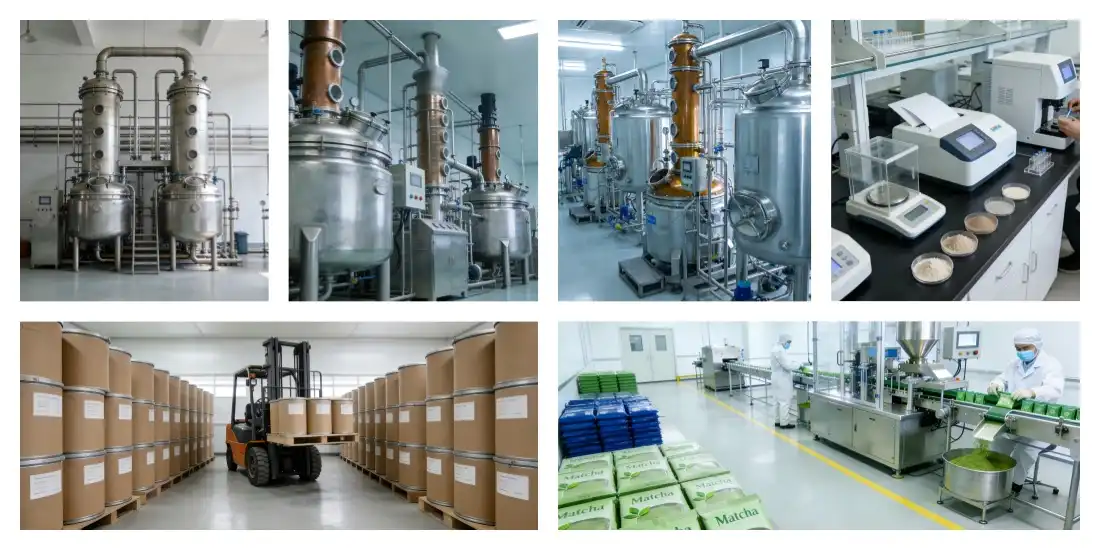
The clearest way to assess a lutein from marigold extract supplier is to ask direct, specific questions: Where is your extraction performed? Do you own the facility? Can you share process documentation? Genuine manufacturers answer with detail — extraction methods, saponification processes, quality controls — because they live these operations daily. Traders deflect toward glossy brochures and vague reassurances. NT Biotech is a technology-based company with wide experience in plant extraction, operating proprietary processing that maximizes the yield of active compounds. This depth means it can customize specifications, troubleshoot formulation challenges, and guarantee batch-to-batch consistency — capabilities no relabeling middleman can genuinely offer, regardless of how polished the sales pitch appears.
Purity Capability as a Proxy for Competence
A supplier's ability to consistently produce high-purity grades reveals its true technical mastery. Manufacturing 80% or 90% lutein from marigold extract, batch after batch, demands sophisticated extraction and purification technology that many vendors simply lack. Even if your application only needs a 10% grade, a supplier capable of high-purity production has demonstrated process control that reassures you about every specification it offers. NT Biotech's achievement of purity above 98% on its key products signals exactly this level of capability. When comparing suppliers, treat high-purity competence as a proxy for overall reliability — a company that masters the hardest grades will rarely stumble on the easier ones.
Documentation as a Window Into Culture
How a supplier handles paperwork reveals how it handles everything. A reliable lutein from marigold extract supplier provides a comprehensive Certificate of Analysis with every batch — covering assay, heavy metals, residual solvents, microbiology, and physical characteristics — supported by HPLC/UV chromatographic evidence, and delivers it promptly without excuses. Request CoAs from several recent batches and compare them: tight, consistent results demonstrate genuine process control, while wide fluctuations expose instability. NT Biotech attaches full documentation to every lot as standard practice, reflecting a quality culture that operates even when nobody is watching. Complete, transparent, readily available documentation is one of the most honest signals of a trustworthy partner.
Table 1: Red Flags vs. Green Flags When Evaluating a Supplier
| Evaluation Area | Red Flag (Walk Away) | Green Flag (NT Biotech Standard) |
|---|---|---|
| Manufacturing | Vague answers, no facility details | In-house proprietary extraction, documented |
| Assay verification | UV-only or paper estimates | HPLC/UV on every batch |
| Purity capability | Cannot supply high grades | >98% purity on key products |
| Documentation | Incomplete or delayed CoA | Full CoA with every batch |
| Traceability | Chain ends at the trading desk | Field-to-drum via autonomous planting |
| Certifications | Expired or generic | Current ISO9001, KOSHER, HALAL |
Confirm Certifications and Regulatory Readiness
With manufacturing depth verified, the next checkpoint is compliance. For any brand selling internationally, a supplier's certifications and regulatory readiness determine which markets you can enter — and how smoothly.
The Three Certifications That Open Markets
Three credentials form the foundation of supplier credibility for lutein from marigold extract. ISO9001 confirms a disciplined, audited quality management system governing the entire production process. KOSHER and HALAL certifications unlock diverse consumer markets and retail channels across North America, Europe, the Middle East, and Southeast Asia — segments that remain firmly closed to uncertified ingredients. NT Biotech maintains all three, current and scope-relevant, enabling clients to move across mainstream and specialty markets without compliance detours. Always verify certificates directly: check issuing bodies, validity dates, and product scope. A certificate that cannot survive five minutes of scrutiny reveals more about a supplier's real compliance culture than any presentation.
Market-Specific Documentation Support
Regulations differ sharply between regions, and a truly reliable lutein from marigold extract supplier helps you navigate them rather than leaving you to struggle alone. Beyond core certifications, look for allergen statements, non-GMO declarations, specification sheets formatted for regulatory filings, and technical dossiers tailored to your destination market. The smartest way to test a supplier's regulatory competence is simply to ask a market-specific question and evaluate the answer. In fact, the fastest route to confirming everything in this section is to email your target market and specification to info@newthingsbiotech.com — NT Biotech guarantees an initial reply within two hours, complete with the certification documents and technical files your compliance team needs to move forward confidently.
Safety Testing That Protects Consumers and Brands
Because marigolds are an agricultural crop, rigorous safety testing is non-negotiable. A dependable supplier screens aggressively for heavy metals (lead, arsenic, mercury, cadmium), pesticide residues, residual solvents, and microbiological contamination, documenting results well within international limits. Weak or incomplete safety data is a serious warning sign — it suggests either limited testing capability or reluctance to disclose. NT Biotech's full-panel batch testing ensures every shipment of lutein from marigold extract meets stringent global food-safety standards, protecting both consumers and the brands that trust its material. In a category where a single contamination failure can trigger costly recalls, comprehensive safety documentation is essential insurance.
Stress-Test Supply Chain and Service Performance
A flawless specification means nothing if the powder arrives late, degraded, or inconsistent. This checkpoint examines the operational reality of working with a supplier — the performance that determines whether your production runs smoothly.
Response Speed and Delivery Benchmarks
A supplier's responsiveness during inquiry predicts its reliability during production. Demand concrete, testable numbers rather than vague promises of "fast service." NT Biotech's published benchmarks set a demanding industry standard: initial replies to all inquiries within two hours; inventory of popular standardized extracts held for shipment within 1–3 working days after order confirmation; and production orders completed within 3–10 working days — a cycle that already includes raw material procurement, proprietary extraction, laboratory testing, and packaging. These commitments are verifiable, and the simplest stress-test costs nothing: send a real inquiry and measure the response yourself. A lutein from marigold extract supplier that answers within hours, with documentation attached, has demonstrated genuine reliability.
Inventory Depth and Supply Security
Reliable supply is the foundation of reliable production. A supplier with thin inventory and vague timelines exposes your business to stockouts and rush-order premiums, while one with genuine buffer stock protects your schedule. Before committing, clarify inventory depth for your target grades and the supplier's ability to absorb sudden demand spikes. NT Biotech holds a buffer inventory of popular standardized extracts, enabling rapid 1–3 working day shipment for stock items, while custom orders are completed within a predictable window. Establishing clear expectations around supply security — ideally supported by a rolling forecast arrangement — is one of the most practical steps you can take to safeguard your production continuity.
Logistics and Payment Flexibility
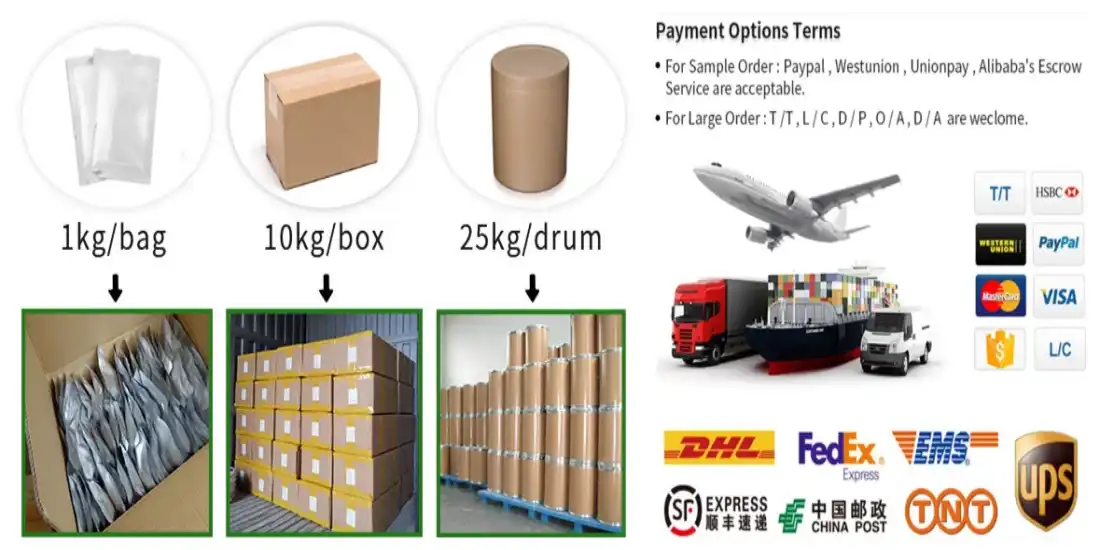
International sourcing lives in the details of freight and finance. A flexible lutein from marigold extract supplier matches shipping to your needs — direct-from-factory courier via dedicated FedEx/UPS accounts for urgent samples and top-offs, and trusted freight forwarders for secure bulk air or ocean cargo, balancing speed, volume, and cost. On the financial side, buyer-friendly terms matter more than they first appear: NT Biotech accepts payment in the buyer's local currency, eliminating foreign-exchange friction and simplifying accounting for international brands. These operational conveniences reduce cost, risk, and administrative burden over the life of a supply relationship — practical advantages that distinguish a customer-focused partner from a transaction-focused vendor.
Table 2: Supply Chain Performance Checklist — What Reliable Looks Like
| Performance Area | What to Require | NT Biotech Benchmark |
|---|---|---|
| Inquiry response | Hours, not days | Within 2 hours, guaranteed |
| Stock availability | Ready inventory for standard grades | Ships in 1–3 working days |
| Production lead time | Transparent, testable cycle | 3–10 working days, CoA included |
| Express logistics | Trackable, factory-direct | Own FedEx/UPS accounts |
| Bulk freight | Secure, documented air/sea | Trusted freight forwarders |
| Payment terms | Buyer-friendly international options | Local-currency payment accepted |
| Customization | Market-specific OEM/ODM | Tailored specs, packaging, documents |
Choose a Partner Built for the Long Term
The final consideration transcends any single transaction. The best sourcing decisions anticipate years of collaboration, choosing a supplier whose capabilities and philosophy will strengthen your business as it grows.
Customization That Grows With Your Ambition
Markets evolve, product lines expand, and new export destinations bring new requirements. A supplier capable of customized OEM/ODM solutions — adjusting specifications, particle formats, packaging, and documentation for different countries and clients — becomes a partner you grow with rather than a vendor you outgrow. NT Biotech provides this flexibility across dietary supplements, functional foods, high-end cosmetics, and animal nutrition, adapting its lutein from marigold extract to each market's distinct needs. Choosing this depth at the outset spares you the painful re-qualification cycles that follow when a limited supplier can no longer support your evolving portfolio.
Technical Support Beyond the Sale
The most valuable suppliers act as technical partners, not order-takers. When your R&D team hits a formulation snag, needs application guidance, or must adapt documentation for a novel regulatory filing, having genuine plant-extraction specialists on your side shortens development cycles and de-risks launches. NT Biotech positions itself explicitly as a long-term technical partner rather than a mere provider, offering the accessible expertise that turns supply relationships into strategic advantages. This support is precisely where the difference between a good lutein from a marigold extract supplier and a great one becomes tangible — in the moments when problems arise, and expertise matters most.
A Philosophy That Aligns With Your Values
Ultimately, you are choosing not just a product but a partner whose approach to business aligns with yours. NT Biotech has built a complete value-chain service system — merging autonomous planting with cutting-edge research, intelligent production, and adaptive supply chains — designed to ensure that every product reflects the gift of nature and the commitment of science. Suppliers who think this holistically tend to anticipate problems, invest in quality, and treat customer success as their own. For brands seeking a lutein from a marigold extract supplier they can trust for the long haul, this philosophical alignment is the final, decisive checkpoint.
Conclusion
Choosing a reliable lutein from marigold extract supplier is fundamentally an exercise in risk management: avoid the stability trap, the standardization illusion, and the traceability gap by demanding verified proof at every stage. Prioritize genuine manufacturing depth, confirm certifications and safety testing, stress-test supply chain performance, and select a partner built for the long term. NT Biotech satisfies every checkpoint — proprietary extraction, purity above 98% on key products, standardized grades from 5% to 90% verified by HPLC/UV, ISO9001, KOSHER and HALAL certifications, autonomous marigold cultivation, two-hour responsiveness, and buyer-friendly terms. In a market where quality claims are cheap and consistency is rare, verifiable proof turns supplier selection into a strategy.
FAQ
Q1: What is the biggest risk when sourcing lutein from marigold extract?
A: Stability collapse — a batch that tests fine on arrival but loses potency before expiry. Choose suppliers whose proprietary processing guarantees superior stability.
Q2: How do I confirm a supplier is a genuine manufacturer?
A: Ask where extraction is performed, request process documentation, and compare CoAs across multiple recent batches for consistency.
Q3: Which certifications should a reliable supplier hold?
A: ISO9001 for quality management, plus KOSHER and HALAL certifications to access mainstream and specialty global markets.
Q4: Why does traceability matter so much?
A: Field-to-drum traceability provides the chain-of-custody documentation required for audits, recalls, and regulatory filings — assurance that traders cannot offer.
Q5: How fast should a reliable supplier respond and deliver?
A: NT Biotech's benchmarks: replies within two hours, in-stock shipment within 1–3 working days, and production orders within 3–10 working days with CoA included.
Choose Your Lutein Partner Wisely — Contact NT Biotech Today
You now have a complete, risk-based framework for choosing a reliable lutein from a marigold extract supplier — and NT Biotech invites you to test it against us. Send your toughest technical questions, request CoAs from our recent batches, verify our ISO9001, KOSHER, and HALAL certifications, or simply time our guaranteed two-hour response with a real inquiry. With proprietary extraction technology, purity above 98% on key products, standardized grades from 5% to 90%, flexible OEM/ODM solutions, and payment in your local currency, we are built to serve buyers worldwide as a long-term technical partner. Email your specification or sample request to info@newthingsbiotech.com today — and turn careful sourcing into your brand's quietest, strongest competitive advantage.
References
1. Age-Related Eye Disease Study 2 (AREDS2) Research Group. "Lutein + Zeaxanthin and Omega-3 Fatty Acids for Age-Related Macular Degeneration: The AREDS2 Randomized Clinical Trial." JAMA, 2013.
2. Abdel-Aal, E.-S.M.; Akhtar, H.; Zaheer, K.; Ali, R. "Dietary Sources of Lutein and Zeaxanthin Carotenoids and Their Role in Eye Health." Nutrients, 2013.
3. Granado, F.; Olmedilla, B.; Blanco, I. "Nutritional and Clinical Relevance of Lutein in Human Health." British Journal of Nutrition, 2003.
4. Boon, C.S.; McClements, D.J.; Weiss, J.; Decker, E.A. "Factors Influencing the Chemical Stability of Carotenoids in Foods." Critical Reviews in Food Science and Nutrition, 2010.
5. Ranard, K.M.; Jeon, S.; Mohn, E.S.; Griffiths, J.C.; Johnson, E.J.; Erdman, J.W. "Dietary Guidance for Lutein: Consideration for Intake Recommendations Is Scientifically Supported." European Journal of Nutrition, 2017.
6. Alves-Rodrigues, A.; Shao, A. "The Science Behind Lutein." Toxicology Letters, 2004.
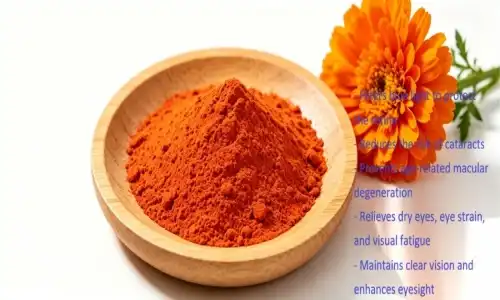
You are asking the right question if you have ever thought about why so many eye-health products happily show a golden marigold flower on their packages. Why has marigold extract become the gold standard for eye nutrition around the world? What is the benefit of lutein from marigold extract? You can find the answer in biology, clinical science, and smart preparation. The marigold flower (Tagetes erecta) is nature's most concentrated and commercially viable source of lutein, a pigment that your eyes actively crave. This piece explains the health benefits of lutein derived from marigold extract, why it works better than lutein derived from other sources, and what makes a premium extract different from a regular one. We will use NT Biotech (Shaanxi New Things Biotech) as an example of a company that does great work. Their lutein from marigold extract is standardised from 5% to 90%, checked by HPLC/UV on every batch, and certified under the ISO9001, KOSHER, and HALAL systems. It is also made using a proprietary extraction method that makes key products more than 98% pure.
The Core Benefit: Lutein Is Your Eyes' Built-In Defense System
Before we get into sources and specs, let's answer the main question right away. Lutein from marigold extract starts to help the eye right away. This golden pigment does two amazing jobs to protect the eye that no artificial replacement can match.
Filtering Blue Light Before It Does Damage
High-energy blue light fills your eyes every time you look at a screen, like a phone, laptop, or TV. The macula is a small area deep in your retina that gives you clear central vision. This is also where lutein focuses after being eaten, creating what scientists call the macular pigment. This pigment takes in blue light like sunglasses inside the cell, stopping it from damaging the sensitive photoreceptor cells that are behind it. It is better to have thick macular pigment because it protects your eyes more. Because the body can't make lutein on its own, the only way to build this defence is through food. Lutein from marigold extract gives you concentrated, standard amounts that food alone doesn't usually give you. Lutein is one of the most researched plant-based nutrients in the world, thanks to the important AREDS2 clinical trial that proved its role in eye health.
Neutralizing Free Radicals Where Vision Happens
What light filtering does is only half of the story. The eye is one of the most biologically active parts of the body. It is constantly exposed to air and light, which creates free radicals that can damage retinal cells over time. Lutein is a very good antioxidant because it has a long chain of conjugated double bonds that stop singlet oxygen and waste energy before it causes damage to cells. When people take supplements with lutein from marigold extract, they are adding to the eye's natural antioxidant shield with the same pigment that plants use to keep their own tissues safe from the sun. It's a beautiful example of how botanical knowledge can be used directly to make food for people. It's like nature's defence mechanism in a bottle.
Beyond the Eyes: Skin, Brain, and Whole-Body Wellness
Lutein's main benefit is still its effect on vision, but more studies are showing that it has other uses in the body as well. Lutein builds up in the skin, where its antioxidant and light-filtering properties help the skin fight off environmental stressors. This is why it's becoming more common in high-end beauty-from-within products. Studies have also linked lutein levels to cognitive function across all ages, since this vitamin is also specifically stored in the brain. Because science is growing, lutein from marigold extract is no longer just an ingredient with one benefit. It is now a platform nutrient that can be used to support eye health, skin health, and healthy ageing product lines, making every sourcing decision more profitable.
Why Marigold? The Source Makes the Difference
Lutein can be found in egg yolks, spinach, and kale, so why does the global industry mostly use marigolds? The answer lies in quantity, uniformity, and the fact that it has a clean label. This is why picky buyers insist on lutein from marigold extract over generic options.
Nature's Most Concentrated Lutein Factory
There is more lutein in the marigold flower than in any other popular food source. Leafy veggies only have a few milligrams of lutein per dose, but marigold flowers have extract-level amounts of the carotene. This makes commercial purification easy and cheap. This level of concentration lets sellers offer uniform powders with purity levels of 5%, 10%, 20%, and even 80% to 90%, which are levels that can't be made from vegetables. When you choose lutein from marigold extract, you are choosing the only organic source that can offer pharmaceutical-grade precision on a large scale. This is based on decades of research into how to improve farming and extracting plants.
Table 1: Why Marigold Dominates — Lutein Sources Compared
| Lutein Source | Relative Lutein Concentration | Practical for Standardized Extracts? | Clean-Label Appeal |
|---|---|---|---|
| Marigold petals (Tagetes erecta) | Highest known among cultivated plants | Yes — industry standard (5%–90% grades) | Excellent — "from marigold flowers" |
| Kale/spinach | Moderate (mg per 100 g fresh) | No — too dilute for commercial extraction | Good, but impractical |
| Egg yolk | Trace (~0.2–0.3 mg per yolk) | No | Limited |
| Synthetic lutein | N/A (chemically produced) | Possible, but | Poor — consumers prefer natural |
A Clean-Label Story Consumers Instantly Trust
People who buy supplements today read labels with the care of a detective, and "lutein from marigold extract" passes their test with flying colours. The source is a well-known and happy flower; the extraction is a physical cleaning rather than a chemical synthesis; and the story is simple enough to be written on labels and other marketing materials. Compared to manufactured options, which need to be explained in awkward ways. For companies that want to sell green, plant-based, or clean-label products, lutein from marigolds gives them a story edge that helps them place themselves as more expensive. Certifications make the story even stronger: NT Biotech's lutein from marigold extract is certified as ISO9001, KOSHER, and HALAL. This means that one ingredient can meet the needs of both general and niche customer markets at the same time.
Consistency: Only Vertical Integration Can Deliver
Because the area where the flower grows is so important, the most trusted growers are directly in charge of the fields. NT Biotech has its own research, intelligent production, and adaptive supply chain that works with its own autonomous marigold planting bases. This creates a full value chain from the plant source to the product application. For maximum carotene content, the soil is managed, the harvest is timed, and the fruit is handled afterward. Each batch of finished extract can be traced back to its farm where it came from. For buyers, this traceability isn't just a romantic story; it's a practical safety measure that helps during audits, regulatory filings, and retailer due diligence. This is a big reason why experienced formulators choose a supplier that is vertically integrated for lutein from marigold extract over traders who can only see what's in their own warehouse.
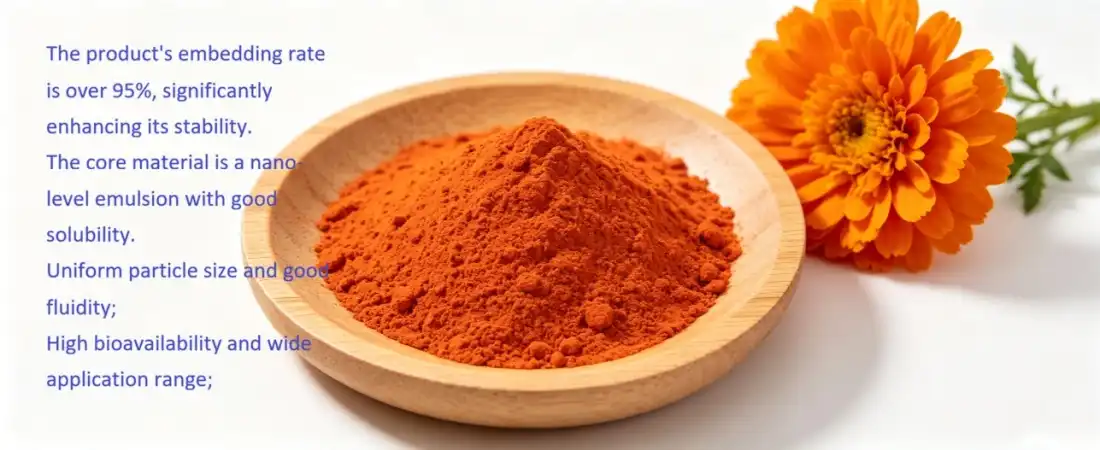
From Flower to Formula: Benefits for Product Developers
The benefits of lutein from marigold extract extend beyond human biology — they reach deep into the practical world of product development, where the right ingredient specification can make or break a launch.
Standardized Grades for Every Product Vision
One of marigold lutein's quiet superpowers is its flexibility. A professional lutein from marigold extract supplier offers a ladder of standardized grades, each verified by HPLC or UV analysis: 5% powders for everyday supplements and functional foods, 10% and 20% for capsules, tablets, and gummies, and high-purity 80% to 90% grades for premium nutraceuticals and advanced formulations. Lutein esters and complementary zeaxanthin grades round out the toolkit. This range lets a single supplier support your entire product architecture — from an entry-level daily eye-health capsule to a flagship high-strength formula — without forcing you to qualify multiple vendors or compromise on documentation standards.
Table 2: NT Biotech Lutein from Marigold Extract — Grade Selection Guide
| Specification | Assay (HPLC/UV) | Best-Suited Applications |
|---|---|---|
| Lutein Powder 5% | ≥5% | Daily supplements, fortified foods, and beverages |
| Lutein Powder 10% | ≥10% | Capsules, tablets, gummies |
| Lutein Powder 20% | ≥20% | High-strength vision formulas |
| Lutein 80% | ≥80% | Premium nutraceuticals |
| Lutein 90% | ≥90% | Pharmaceutical-grade, research use |
| Lutein Esters 10%–20% | ≥10%–20% | Cost-effective fortified foods |
| Zeaxanthin 5%–40% | ≥5%–40% | Synergistic macular-support blends |
Stability That Protects Your Label Claim
Here is a benefit few marketing brochures mention: formulation survival. Lutein is naturally sensitive to heat, light, and oxygen, so the true test of an extract is whether its potency survives production, shipping, and shelf life. NT Biotech's proprietary extraction technology is engineered precisely for this challenge, maximizing the yield of active compounds while delivering superior stability that keeps label claims honest from manufacture to expiry. For product developers, this translates into smaller overages, smoother stability studies, and fewer reformulation emergencies. If you are evaluating grades for a specific application, the fastest way to match the right specification to your formula is to email your target dosage form and market to info@newthingsbiotech.com — NT Biotech guarantees an initial reply within two hours, complete with technical documentation and sample support.
Documentation That Accelerates Time to Market
Every experienced developer knows that paperwork, not science, is usually the bottleneck. A premium lutein from marigold extract arrives with a complete documentation package: a Certificate of Analysis for every batch covering assay, heavy metals, and microbiological parameters, backed by HPLC/UV chromatograms, plus certification files supporting regulatory submissions across the United States, Europe, the Middle East, and Southeast Asia. NT Biotech issues this documentation as standard practice, not special request — meaning your quality team can approve incoming material quickly, your regulatory consultants can file with confidence, and your launch calendar stays intact. In competitive categories like eye health, that administrative velocity is a genuine commercial advantage.
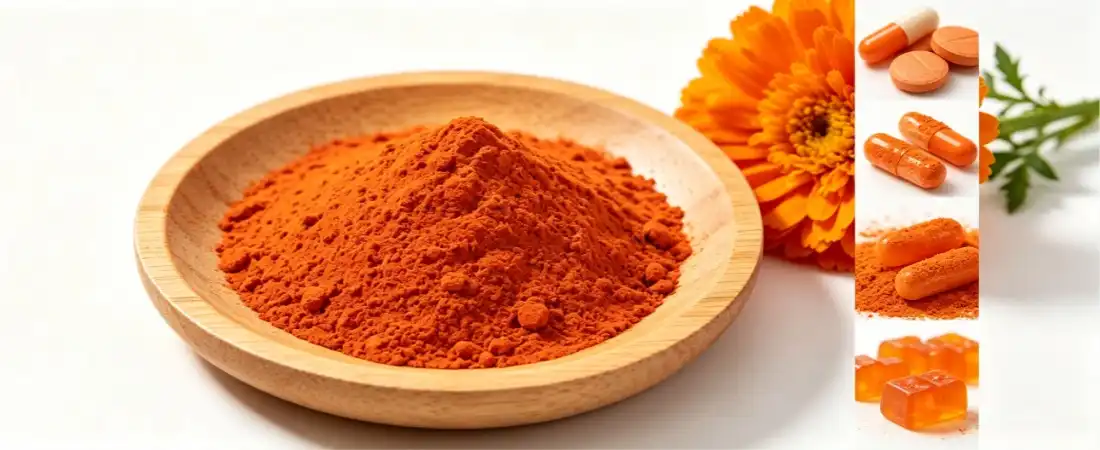
The Partner Behind the Petal: Why Supplier Choice Multiplies the Benefits
Even the finest extract underperforms when the company behind it cannot deliver consistently. The final layer of benefit comes from choosing a supplier whose service systems are as strong as its science.
Speed and Reliability You Can Plan Around
NT Biotech's service benchmarks read like a buyer's wish list. Initial replies to all inquiries arrive within two hours, guaranteed. Popular standardized extracts ship from inventory within 1–3 working days after order confirmation. Production orders are complete within 3–10 working days — a cycle that already includes premium raw material procurement, proprietary extraction, stringent laboratory testing, and final packaging. Logistics adapt to your priorities: the company's own FedEx/UPS accounts handle fast, trackable direct-from-factory shipments, while trusted freight forwarders manage secure bulk delivery by air or sea. When your lutein from marigold extract supplier operates at this tempo, ingredient sourcing stops being a risk factor and becomes a competitive weapon.
Customization and Partnership for Global Brands
No two markets want exactly the same product, and NT Biotech builds flexibility into every relationship. Customized OEM/ODM solutions adapt specifications, grades, packaging, and documentation to the requirements of different countries and clients across dietary supplements, functional foods, high-end cosmetics, and animal nutrition. Technical support extends beyond the sale, with formulation guidance from genuine plant-extraction specialists. Even payment is designed around the buyer, with local-currency options that eliminate foreign-exchange friction. This is the difference between purchasing an ingredient and gaining a long-term technical partner — one committed to ensuring that every product reflects the gift of nature and the commitment of science.
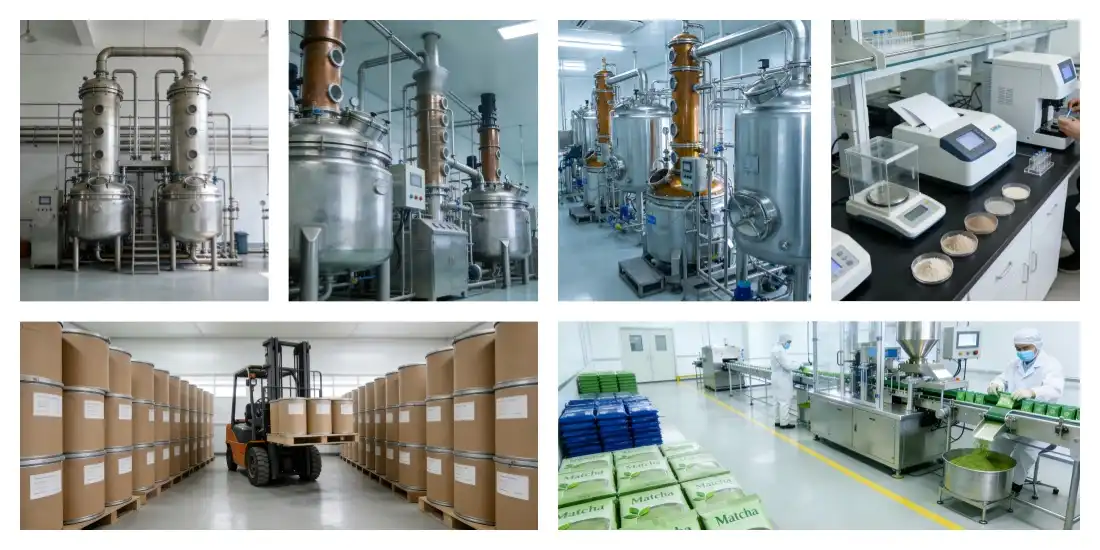
Conclusion
So, what is the benefit of lutein from marigold extract? In short: nature's most concentrated lutein source, delivering science-backed blue-light filtration, antioxidant defense for the macula, and emerging support for skin and cognitive wellness — all wrapped in a clean-label story consumers trust. The benefits multiply when the extract is standardized, stabilized, and fully documented. NT Biotech delivers exactly that: proprietary extraction achieving purity above 98% on key products, grades from 5% to 90% verified by HPLC/UV, ISO9001, KOSHER, and HALAL certifications, and a fully integrated value chain from marigold field to finished powder. The right ingredient, from the right partner, turns benefits into market success.
FAQ
Q1: What is the main benefit of lutein from marigold extract?
A: It supports eye health by filtering high-energy blue light and providing antioxidant protection to the macula, the region responsible for sharp central vision.
Q2: Why is marigold considered the best lutein source?
A: Marigold petals contain the highest natural lutein concentration of any cultivated plant, enabling standardized extracts from 5% to 90% purity.
Q3: Does lutein offer benefits beyond eye health?
A: Yes. Research links lutein to skin antioxidant support and cognitive wellness, making it a versatile multi-benefit ingredient.
Q4: What grades does NT Biotech supply?
A: Lutein powders from 5% to 90%, plus lutein esters and zeaxanthin grades, each verified by HPLC/UV with a batch-specific Certificate of Analysis.
Q5: How fast can NT Biotech ship orders?
A: In-stock extracts ship within 1–3 working days; production orders are completed within 3–10 working days, with inquiries answered within two hours.
Experience the Golden Benefit — Partner With NT Biotech Today
Now that you know what lutein from marigold extract can do for eyes, skin, and whole-body wellness, the next step is securing a supply that delivers those benefits without compromise. NT Biotech unites autonomous marigold cultivation, proprietary extraction technology, purity above 98% on key products, and complete ISO9001, KOSHER, and HALAL certification into one seamless ingredient partnership. Whether you need a standard grade shipped within days, a customized OEM specification for your market, or expert guidance on your next formulation, our team guarantees a response within two hours. Send your inquiry or sample request to info@newthingsbiotech.com today — and let NT Biotech transform nature's golden nutrient into your brand's brightest advantage.
References
1. Age-Related Eye Disease Study 2 (AREDS2) Research Group. "Lutein + Zeaxanthin and Omega-3 Fatty Acids for Age-Related Macular Degeneration: The AREDS2 Randomized Clinical Trial." JAMA, 2013.
2. Abdel-Aal, E.-S.M.; Akhtar, H.; Zaheer, K.; Ali, R. "Dietary Sources of Lutein and Zeaxanthin Carotenoids and Their Role in Eye Health." Nutrients, 2013.
3. Buscemi, S.; Corleo, D.; Di Pace, F.; Petroni, M.L.; Satriano, A.; Marchesini, G. "The Effect of Lutein on Eye and Extra-Eye Health." Nutrients, 2018.
4. Johnson, E.J. "Role of Lutein and Zeaxanthin in Visual and Cognitive Function Throughout the Lifespan." Nutrition Reviews, 2014.
5. Ranard, K.M.; Jeon, S.; Mohn, E.S.; Griffiths, J.C.; Johnson, E.J.; Erdman, J.W. "Dietary Guidance for Lutein: Consideration for Intake Recommendations Is Scientifically Supported." European Journal of Nutrition, 2017.
6. Roberts, R.L.; Green, J.; Lewis, B. "Lutein and Zeaxanthin in Eye and Skin Health." Clinics in Dermatology, 2009.
It's becoming clear to formulators all over the world that the way an ingredient is packaged is just as important as the ingredient itself. Because of this, lutein beadlets powder, which is microencapsulated, free-flowing, and very stable, is now the best choice for pills, capsules, sweets, and foods that have been supplemented. But there are so many sellers out there that want your business. How do you tell the difference between a real, reputable lutein beadlets powder supplier and a fake one with a nice website? Using NT Biotech (Shaanxi New Things Biotech) as an example, this guide walks you through the four questions that will show you a supplier's real strengths. NT Biotech's lutein beadlets powder has their own special extraction and packaging technology, as well as standardised tests that are backed by HPLC/UV, ISO9001, KOSHER, and HALAL certifications. Each batch also comes with a Certificate of Analysis, which shows what "reliable" really means in real life.
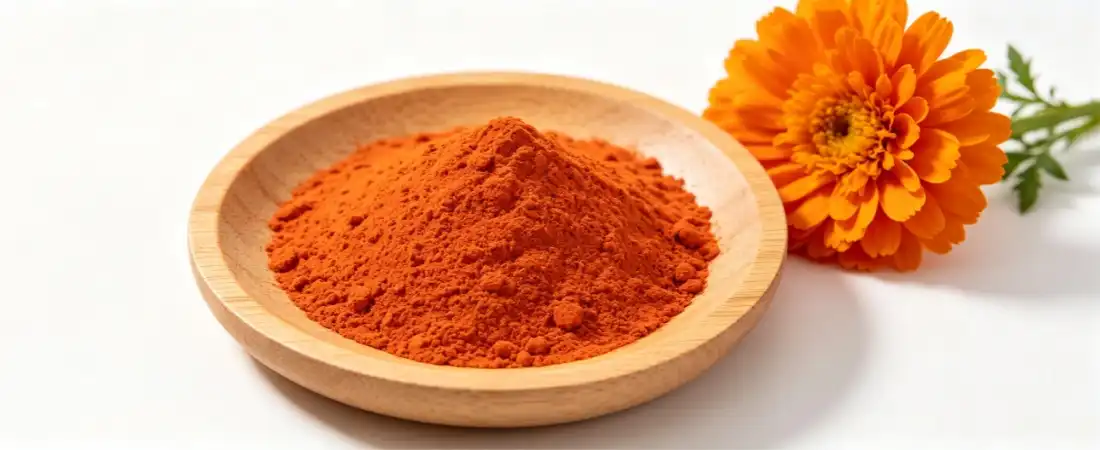
Question One: Does the Supplier Truly Understand the Beadlet Format?
A surprising number of vendors sell beadlets without understanding why the format exists. A credible lutein beadlets powder supplier should be able to explain, in technical detail, what makes beadlets different — and why those differences matter to your finished product.
What Exactly Are Lutein Beadlets?
Lutein beadlets are tiny, uniform spheres in which lutein — extracted from the petals of Tagetes erecta (marigold) — is embedded inside a protective matrix, typically built from food-grade gelatin, starch, or plant-based wall materials. The result is a free-flowing, dust-free lutein beadlets powder that handles beautifully on high-speed production lines. Unlike coarse crystalline powders, beadlets disperse evenly throughout a blend, which means every tablet or capsule in your batch carries the same dose. When a supplier describes its beadlets only as "orange powder," that vague language should raise your first red flag about its technical depth.
The Stability Advantage That Protects Your Shelf Life
Lutein is a carotenoid, and carotenoids are famously fragile — heat, light, and oxygen steadily erode their potency. Microencapsulation wraps each lutein particle in a protective wall, dramatically slowing oxidation and extending shelf life in the finished product. This is precisely why premium brands pay attention to lutein beadlets powder rather than cheaper, unprotected alternatives. A knowledgeable supplier will happily discuss beadlet wall composition, assay retention over time, and storage recommendations. NT Biotech's proprietary processing is engineered specifically for superior stability, so the potency on your label remains the potency in your customer's hands, even after months in the distribution chain.
One Ingredient, Many Delivery Formats
The commercial magic of lutein beadlets powder lies in its versatility. Because beadlets are uniform, compressible, and dispersible, a single ingredient grade can serve hard capsules, compressed tablets, chewables, gummies, powdered drink mixes, and fortified foods — a flexibility that oil suspensions and raw powders simply cannot match. When evaluating a lutein beadlets powder supplier, ask which applications its beadlets have been validated in, and request typical assay options such as 5%, 10%, and 20%. Suppliers with real application experience, like NT Biotech, will guide you toward the grade that fits your dosage form rather than pushing whatever happens to be sitting in the warehouse.
Table 1: Lutein Beadlets vs. Other Lutein Formats — A Formulator's Comparison
| Comparison Point | Lutein Beadlets Powder | Conventional Lutein Powder | Lutein Oil Suspension |
|---|---|---|---|
| Oxidation resistance | Excellent (protective wall) | Moderate | Moderate (requires dark, sealed packaging) |
| Flowability and dust | Free-flowing, dust-free | Prone to dust and caking | Not applicable (liquid) |
| Suitability for tablets/capsules | Excellent | Limited | Softgels only |
| Suitability for dry food fortification | Excellent | Limited | Not suitable |
| Does uniformity in blends | High (uniform particle size) | Variable | High |
| Typical assay range | 5%–20% | 5%–90% | 10%–20% |
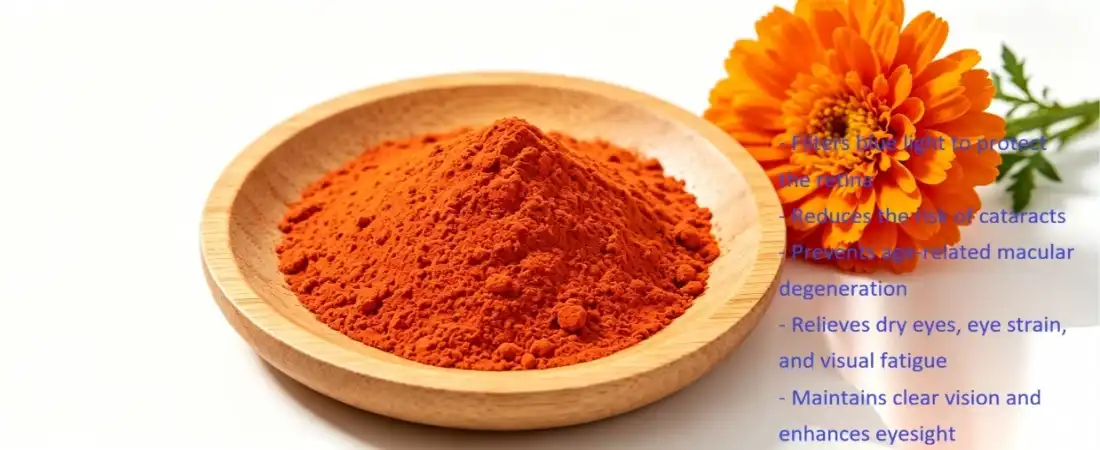
Question Two: Can the Supplier Prove Its Manufacturing Strength?
Every lutein beadlets powder supplier claims advanced technology. Far fewer can prove it. This second question separates genuine manufacturers with technological barriers from middlemen relabeling someone else's product.
Proprietary Extraction and Encapsulation Technology
True manufacturing strength begins at the molecular level. Proprietary extraction methods maximize the yield of active lutein from marigold oleoresin, while controlled encapsulation determines beadlet integrity, dissolution behavior, and stability. These are genuine technological barriers that take years of R&D to develop — not certificates that can be purchased. NT Biotech, a technology-based company with deep experience in plant extraction, operates proprietary processing that achieves exceptional purity (above 98% for its key products) and superior stability. When you interview a potential lutein beadlets powder supplier, ask who owns the technology behind the beadlets. If the answer is vague, the product probably is too.
Standardized Content and Particle Uniformity
Consistency is the silent promise behind every successful supplement brand. A reliable lutein beadlets powder supplier delivers standardized assays — batch after batch, year after year — verified by HPLC or UV testing rather than estimated on paper. Particle size distribution matters just as much: uniform beadlets flow predictably, blend homogeneously, and compress without segregation during tableting. Ask candidates for assay data across multiple recent batches, not just one flattering certificate. A supplier confident in its process control will share this data willingly, because consistent numbers are the loudest proof of manufacturing discipline you will ever see.
Documentation That Speaks Before Salespeople Do
Paperwork reveals culture. Before any commercial discussion, request a sample Certificate of Analysis and study what it covers: assay, heavy metals, microbiological limits, residual solvents, and physical characteristics. A serious lutein beadlets powder supplier attaches comprehensive quality documentation — including HPLC/UV chromatograms — to every single batch, not merely to the batches that customers question. NT Biotech follows exactly this practice, issuing a full CoA with each lot of lutein beadlets powder it ships. When documentation arrives promptly, completely, and without excuses, you are looking at a company whose quality system works even when nobody is watching.
Question Three: Does the Compliance Paperwork Hold Up Under Scrutiny?
A beautiful product means nothing if it cannot legally enter your target market. The third question examines certifications, traceability, and regulatory readiness — the unglamorous foundations on which international brands are built.
The Three Certificates That Open Global Doors
When shortlisting any lutein beadlets powder supplier, three certifications deserve immediate attention. ISO9001 demonstrates a disciplined, audited quality management system governing the entire production process. KOSHER and HALAL certifications unlock consumer markets and retail channels that remain firmly closed to uncertified ingredients. NT Biotech holds all three, giving its clients immediate access to mainstream Western markets and rapidly growing specialty segments alike. Always verify that certificates are current, scope-relevant, and issued by recognized bodies — an expired or generic certificate tells you more about a supplier's real compliance culture than any sales presentation ever will.
From Marigold Field to Finished Beadlet
Traceability has quietly become one of the most valuable assets in the botanical ingredients industry. Can your lutein beadlets powder supplier trace a finished drum back to the field where the marigolds were grown? NT Biotech can, because it operates autonomous planting bases integrated with its own R&D and intelligent production — a complete value chain running from plant source to product application. This vertical integration means raw material quality is controlled rather than gambled on, harvest timing is optimized for carotenoid content, and every link in the chain answers to one quality system. During audits or regulatory inspections, that unbroken chain of custody becomes your strongest defense.
Market-Specific Regulatory Readiness
Regulations differ sharply between the United States, Europe, the Middle East, and Southeast Asia, covering everything from permitted claims to labeling formats and documentation requirements. The smartest way to test a supplier's regulatory competence is simply to ask. In fact, the fastest way to verify everything discussed in this section is to send your target market, desired specification, and quantity to info@newthingsbiotech.com — NT Biotech guarantees an initial reply within two hours, complete with the certification documents and product files your compliance team needs. A lutein beadlets powder supplier that responds with precise, market-specific answers has clearly done this before; one that replies with generic brochures has not.
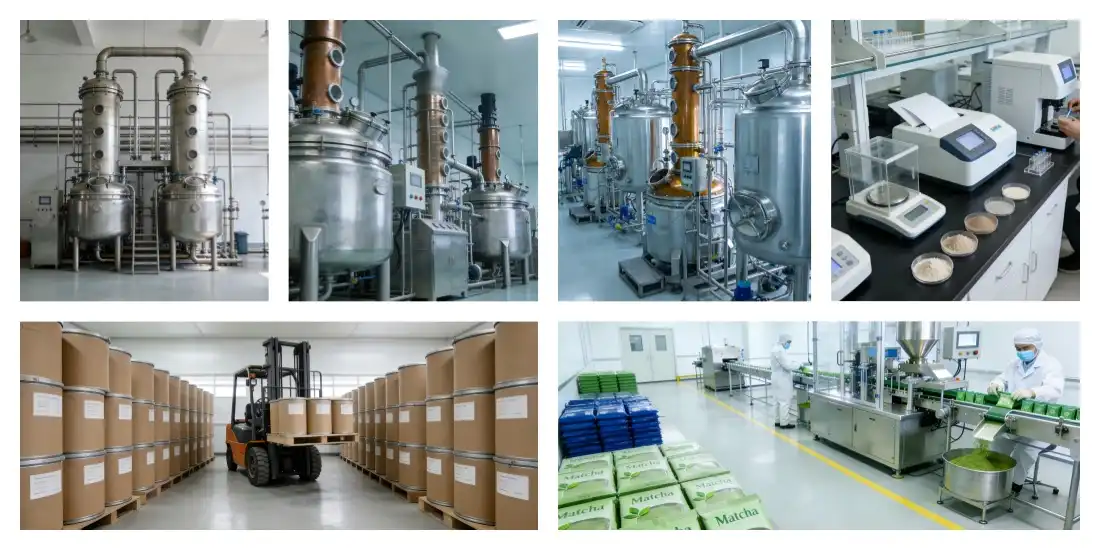
Question Four: Will the Supplier Perform After You Sign?
The final question is about the relationship itself. Samples are easy; sustained performance is hard. This is where a lutein beadlets powder supplier proves whether it is a vendor or a partner.
Response Time and Delivery Benchmarks
Demand concrete numbers, not reassuring adjectives. NT Biotech's published service structure offers a useful benchmark for the entire industry: initial replies to all inquiries within two hours; inventory of popular standardized extracts held for shipment within 1–3 working days after order confirmation; and production orders completed within 3–10 working days — a cycle that already includes premium raw material procurement, proprietary extraction, stringent laboratory testing with batch CoA, and final packaging. When a lutein beadlets powder supplier commits to figures like these in writing, you gain something rare in global sourcing: a supply chain you can actually plan your launches around.
OEM/ODM Customization and Buyer-Friendly Terms
No two markets want exactly the same product. NT Biotech provides customized OEM/ODM solutions tailored to different countries and clients — adjusting beadlet specifications, assay levels, packaging formats, and documentation to fit local requirements, whether your destination is dietary supplements, functional foods, high-end cosmetics, or animal nutrition. Equally refreshing is its payment philosophy: buyer-friendly terms that include accepting payment in the buyer's local currency, removing foreign-exchange friction from international transactions. A lutein beadlets powder supplier willing to adapt its product, packaging, and payment terms around your business is one that views your success as its own.
Logistics Engineered Around the Buyer
Great logistics are invisible until something goes wrong. NT Biotech matches the shipping method to each order's needs: its own FedEx/UPS accounts enable fast, trackable, direct-from-factory delivery for smaller and urgent orders, while trusted freight forwarders handle large shipments securely by air or sea. Express, air, and ocean options are balanced against your priorities for speed, volume, and cost. This flexibility matters more than it first appears — a lutein beadlets powder supplier with mature logistics protects your beadlets from the heat, humidity, and delays that quietly degrade carotenoid ingredients in transit, ensuring the stability built in the factory survives the journey to your door.
Table 2: Supplier Evaluation Scorecard — Criteria vs. NT Biotech Benchmarks
| Evaluation Criterion | What Buyers Should Ask | NT Biotech Benchmark |
|---|---|---|
| Inquiry response speed | "How fast will you reply?" | Within 2 hours, guaranteed |
| Stock availability | "Can you ship from inventory?" | 1–3 working days after confirmation |
| Production lead time | "How long for a fresh batch?" | 3–10 working days, CoA included |
| Quality documentation | "What comes with each batch?" | Full CoA with HPLC/UV data |
| Certifications | "Which markets can I enter?" | ISO9001, KOSHER, HALAL |
| Payment flexibility | "Can I pay in my currency?" | Buyer's local currency accepted |
| Shipping options | "How will my order travel?" | FedEx/UPS direct, air, or sea freight |
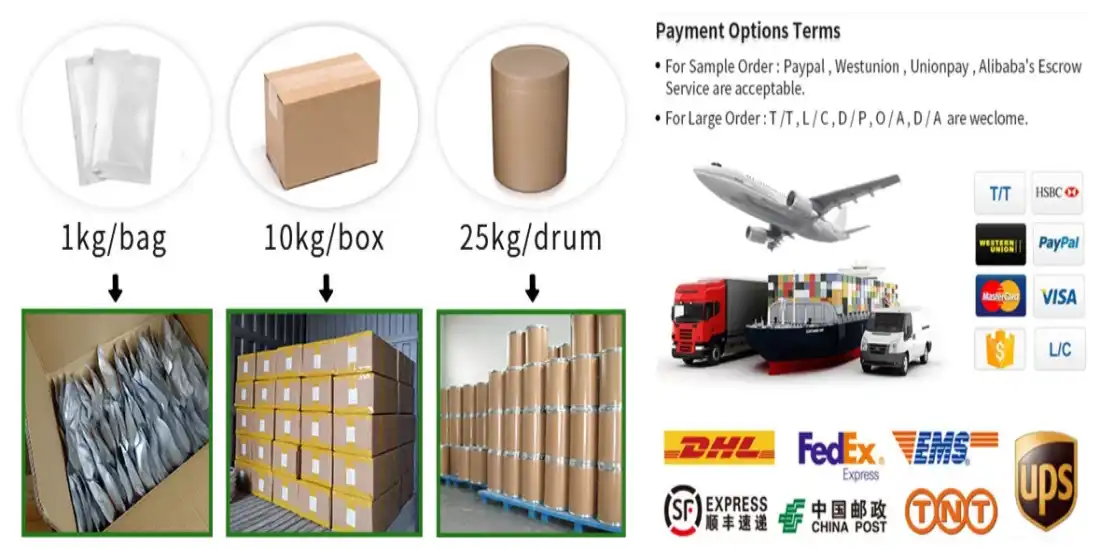
Conclusion
Choosing a reliable lutein beadlets powder supplier comes down to four honest questions: Does it understand beadlet technology? Can it prove manufacturing strength with data? Does its compliance paperwork survive scrutiny? And will it perform long after the contract is signed? Shaanxi New Things Biotech answers all four with proprietary extraction and encapsulation technology, standardized lutein beadlets powder verified by HPLC/UV, ISO9001, KOSHER, and HALAL certifications, two-hour response times, and a fully integrated value chain from autonomous marigold planting to finished product. Suppliers meeting this standard deserve your shortlist — and your next inquiry.
FAQ
Q1: What is lutein beadlets powder?
A: A microencapsulated, free-flowing form of marigold-derived lutein in which protective beadlet walls shield the carotenoid from oxidation, heat, and light.
Q2: What assay grades are available?
A: Common beadlet grades include 5%, 10%, and 20% lutein content, with custom specifications available through OEM/ODM services.
Q3: Which certifications does NT Biotech hold?
A: ISO9001, KOSHER, and HALAL, enabling access to major global markets and specialty consumer segments.
Q4: How fast can orders be delivered?
A: In-stock beadlets ship within 1–3 working days; production orders typically require 3–10 working days, with a CoA for every batch.
Q5: Can beadlet specifications be customized for my market?
A: Yes. NT Biotech offers OEM/ODM customization of assays, packaging, and documentation to meet country-specific requirements.
Partner With NT Biotech: Source Lutein Beadlets Powder With Confidence
Your next eye-health product deserves an ingredient partner that delivers verified stability, documented purity, and dependable speed — and that is precisely what NT Biotech builds into every batch of its lutein beadlets powder. Whether you need a standard beadlet grade shipped from inventory within days, a customized OEM formulation for your target market, or expert guidance on choosing the right assay for your dosage form, our technical team responds within two hours. Send your specification, sample request, or project brief to info@newthingsbiotech.com today, and discover why brands worldwide trust NT Biotech as their long-term lutein beadlets powder supplier. Let nature's most trusted carotenoid, protected by science, power your next product launch — contact us now.
References
1. Age-Related Eye Disease Study 2 (AREDS2) Research Group. "Lutein + Zeaxanthin and Omega-3 Fatty Acids for Age-Related Macular Degeneration: The AREDS2 Randomized Clinical Trial." JAMA, 2013.
2. Abdel-Aal, E.-S.M.; Akhtar, H.; Zaheer, K.; Ali, R. "Dietary Sources of Lutein and Zeaxanthin Carotenoids and Their Role in Eye Health." Nutrients, 2013.
3. Boon, C.S.; McClements, D.J.; Weiss, J.; Decker, E.A. "Factors Influencing the Chemical Stability of Carotenoids in Foods." Critical Reviews in Food Science and Nutrition, 2010.
4. Buscemi, S.; Corleo, D.; Di Pace, F.; Petroni, M.L.; Satriano, A.; Marchesini, G. "The Effect of Lutein on Eye and Extra-Eye Health." Nutrients, 2018.
5. Ranard, K.M.; Jeon, S.; Mohn, E.S.; Griffiths, J.C.; Johnson, E.J.; Erdman, J.W. "Dietary Guidance for Lutein: Consideration for Intake Recommendations Is Scientifically Supported." European Journal of Nutrition, 2017.
6. Eisenhauer, B.; Natoli, S.; Liew, G.; Flood, V.M. "Lutein and Zeaxanthin — Food Sources, Bioavailability and Dietary Variety in Age-Related Macular Degeneration Protection." Nutrients, 2017.
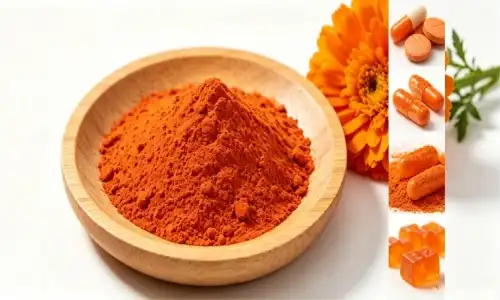
Lutein is the ingredient that everyone is talking about at any nutraceutical trade show right now. Brands all over the world are rushing to release eye-health formulas as the amount of time people spend in front of screens rises and people become more serious about protecting their eyesight. But here's the difficult truth: your finished product will never be better than the raw materials that went into it. That's why it's so important for buyers and formulators to know how to pick a reliable marigold extract lutein powder provider. In this guide, the real differences between reliable partners and risky vendors are broken down. We will compare each factor to NT Biotech (Shaanxi New Things Biotech), a supplier whose marigold extract lutein powder is standard, batch-tested by HPLC/UV, certified under ISO9001, KOSHER, and HALAL systems, and always shipped with a Certificate of Analysis. This is an example of what "reliable" really means in the real world.
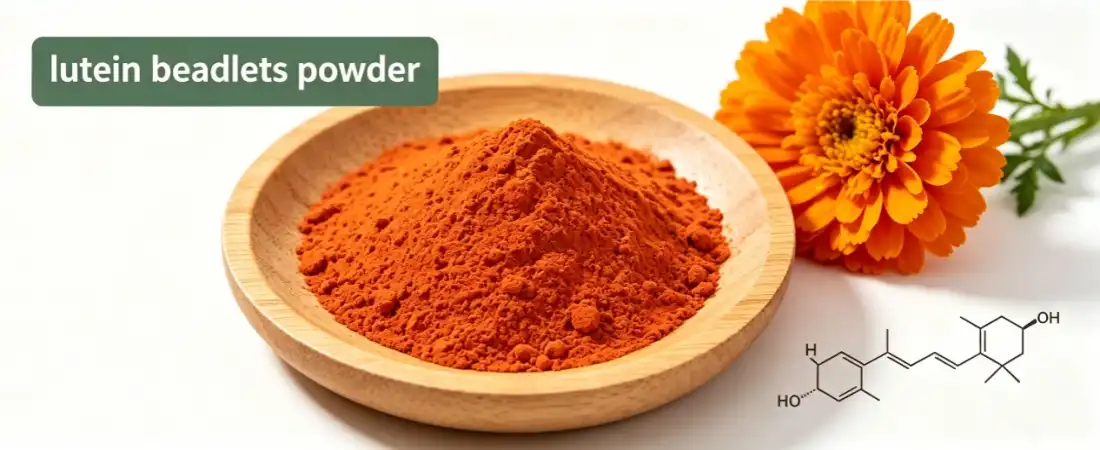
Start With the Product: What Premium Marigold Extract Lutein Powder Actually Looks Like
You need to know what "quality" means in this case before you go to any plant and check it out. A professional marigold extract lutein powder seller never sells "lutein" as an abstract idea; they sell exact, measurable details backed up by lab results.
Standardized Lutein Content You Can Verify
Serious sellers offer a wide range of grades, including 5%, 10%, and 20% powders for everyday vitamins and functional foods, as well as high-purity 80% to 90% grades for study and high-end nutraceuticals. HPLC or UV testing should be used to measure the amount in each batch, and the test on the label must match the test in the lab report. NT Biotech goes even further by making sure that the quality of its key standardised extracts is above 98%. This gives formulators more control over dose and better labels.
It All Begins With the Marigold Flower
The field is where great powder begins. Tagetes erecta is used to get lutein, and the amount of carotenoids in the petals depends a lot on the soil, the weather, when they are picked, and how they are handled after they are picked. A company that grows its own marigold extract lutein powder, as NT Biotech does with its autonomous cultivation system, can be sure of the quality of its raw materials year after year without having to risk it on the open market.
Extraction Method Determines Stability
Lutein is a weak carotene that breaks down in heat, light, and air. It is not a marketing phrase that proprietary extraction technology protects active chemicals from oxidation and increases their output. This is a real technological barrier. Better stability means that your pills, tablets, and candies will work better, and you'll have fewer headaches when checking their shelf life.
Table 1: Typical Specifications Offered by a Professional Marigold Extract Lutein Powder Supplier
| Specification | Assay (HPLC/UV) | Typical Application |
|---|---|---|
| Lutein Powder 5% | ≥5% | Daily eye-health supplements, functional foods |
| Lutein Powder 10% | ≥10% | Capsules, tablets, gummies |
| Lutein Powder 20% | ≥20% | High-strength formulations |
| Lutein 80% | ≥80% | Premium nutraceuticals, R&D |
| Lutein 90% | ≥90% | Pharmaceutical-grade applications |
| Lutein Esters 10%–20% | ≥10%–20% | Fortified foods, cost-effective blends |
| Zeaxanthin 5%–40% | ≥5%–40% | Synergistic eye-health formulas |
Verify Certifications and Documentation Before Anything Else
Once you know what the product should look like, the next step is proving the supplier can actually deliver it — legally, consistently, and transparently. This is where many deals fall apart, and where a qualified marigold extract lutein powder supplier quietly distinguishes itself.
Certifications That Actually Matter
ISO9001 confirms that a supplier runs a disciplined quality management system, while KOSHER and HALAL certifications unlock entire consumer markets that would otherwise remain closed to your brand. When evaluating any marigold extract lutein powder partner, ask whether these certificates are current, scope-relevant, and issued by recognized bodies. NT Biotech maintains all three, giving its clients immediate access to mainstream and specialty markets alike.
Batch-Level Proof: CoA, HPLC, and UV Reports
Certifications describe a system; a Certificate of Analysis describes a specific batch. Insist on a CoA with every shipment, covering assay, heavy metals, microbiological limits, and residual solvents. NT Biotech attaches comprehensive quality documentation — including HPLC/UV chromatograms — to every lot of marigold extract lutein powder it ships, so your quality team never has to take purity on faith.
Traceability From Field to Drum
Ask a simple question: "Can you trace this drum back to the field where the marigolds grew?" A supplier with a complete value chain — from plant source to product application — can answer yes. That level of traceability is your safety net during audits, recalls, and regulatory inspections, and it is increasingly demanded by retailers and regulators worldwide.
Evaluate Supply Chain Strength and Delivery Performance
Even the purest marigold extract, lutein powder, is worthless if it arrives three months late. Supply chain reliability is where a supplier's promises meet reality. Of course, the fastest way to verify everything discussed so far is simply to ask: send your target specification and quantity to info@newthingsbiotech.com — NT Biotech guarantees an initial reply within two hours, and that response speed alone tells you a great deal about how a marigold extract lutein powder supplier treats its customers.
Response Speed and Inventory Depth
Look for concrete numbers, not vague assurances. NT Biotech holds an inventory of popular standardized extracts, enabling shipment within 1–3 working days after order confirmation, while production orders typically require just 3–10 working days — a cycle that already includes premium raw material procurement, proprietary extraction, stringent laboratory testing, and final packaging.
Logistics That Fit Your Business
A flexible marigold extract lutein powder supplier matches the shipping method to your needs. NT Biotech uses its own FedEx/UPS accounts for fast, trackable direct-from-factory delivery of smaller orders, and trusted freight forwarders for secure, on-time bulk shipments by air or sea.
Vertical Integration Is the Real Safety Net
When planting, R&D, intelligent production, and adaptive supply chains live under one roof, disruptions get absorbed internally instead of being passed on to you. That integration is what turns a vendor into a dependable long-term source.
Table 2: What Reliable Delivery Looks Like — NT Biotech Service Benchmarks
| Service Item | Benchmark |
|---|---|
| Initial inquiry response | Within 2 hours |
| In-stock product shipment | 1–3 working days |
| Production order lead time | 3–10 working days |
| Quality documentation | CoA with every batch (HPLC/UV verified) |
| Shipping options | FedEx/UPS direct, air freight, sea freight |
| Payment flexibility | Buyer's local currency accepted |
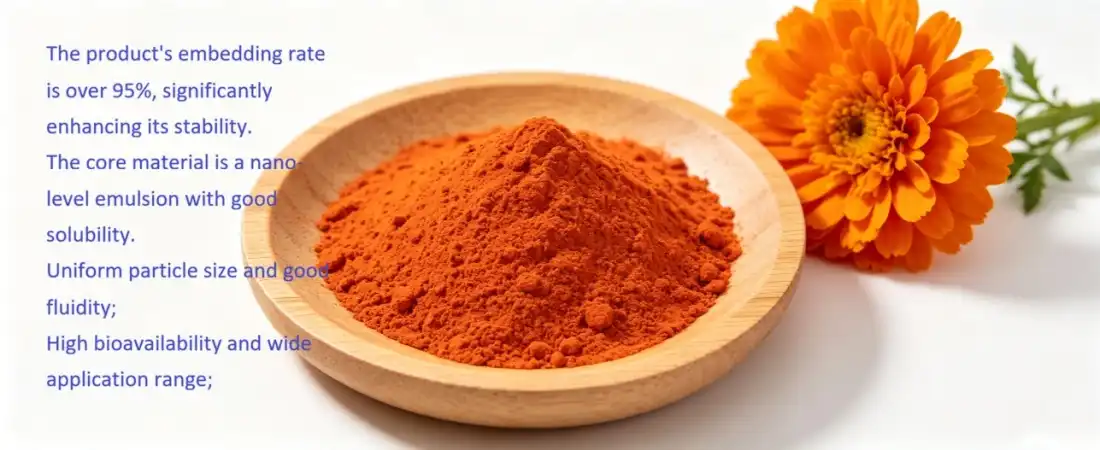
Choose a Long-Term Technical Partner, Not a One-Off Vendor
The final criterion is mindset. The best marigold extract lutein powder supplier does not simply fill purchase orders — it invests in your product's success across its entire lifecycle.
OEM/ODM Flexibility for Global Markets
Regulations, dosage preferences, and labeling rules differ dramatically between the United States, Europe, the Middle East, and Southeast Asia. NT Biotech provides customized OEM/ODM solutions tailored to the specific requirements of different countries and clients, adjusting specifications, packaging, and documentation so your product launches smoothly wherever it lands.
Technical Support That Extends Beyond the Sale
Positioning itself as a long-term technical partner rather than a mere provider, NT Biotech supports customers with formulation guidance, application know-how, and complete documentation packages across the dietary supplement, functional food, high-end cosmetics, and animal nutrition sectors. When your R&D team hits a snag, having an extraction specialist on your side shortens development cycles dramatically.
Payment and Communication Built Around the Buyer
Friction kills deals. Buyer-friendly terms — such as accepting payment in your local currency — remove foreign-exchange headaches and simplify accounting. Combined with two-hour response times and fluent technical communication, these details reveal a supplier that was genuinely designed around its customers.
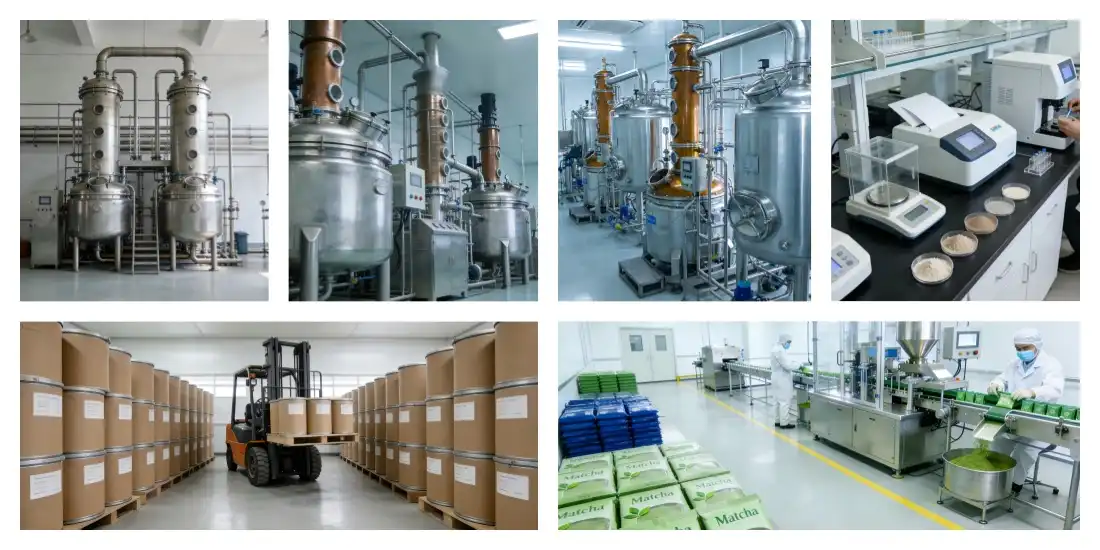
Conclusion
There are four questions that will help you find a dependable marigold extract lutein powder supplier: Is the product checked and standardised? Are all the batch documents and certifications filled out? Can the supply chain always and quickly deliver? Also, will the seller be there for you as an expert partner? Shaanxi New Things Biotech can answer all four questions because it has its own extraction technology, important goods that are purer than 98%, ISO9001, KOSHER, and HALAL certifications, two-hour response times, and a fully integrated value chain that goes from self-growing marigolds to finished marigold extract lutein powder. They should get your trust and your next sale if they meet this level.
FAQ
Q1: What specifications of marigold extract lutein powder does NT Biotech offer?
A: Lutein powders from 5% to 90%, plus lutein esters and zeaxanthin grades, all verified by HPLC/UV testing.
Q2: What certifications does the company hold?
A: ISO9001, KOSHER, and HALAL, supporting compliance in major global markets.
Q3: How quickly can orders be shipped?
A: In-stock items ship within 1–3 working days; production orders take approximately 3–10 working days.
Q4: Is a Certificate of Analysis provided with every batch?
A: Yes. Every batch of marigold extract lutein powder ships with a full CoA and chromatographic documentation.
Q5: Does NT Biotech support OEM/ODM projects?
A: Absolutely. Customized specifications, packaging, and formulations are available for different countries and market needs.
Ready to Source Smarter? Contact NT Biotech Today
Your eye-health product deserves a foundation of verified purity, documented quality, and dependable delivery — and that is exactly what NT Biotech builds into every kilogram of marigold extract lutein powder it produces. Whether you need a stock specification shipped within days, a customized OEM formulation for your target market, or simply expert advice on selecting the right lutein grade, our team is ready to move at your speed. Send your inquiry, specification sheet, or sample request to info@newthingsbiotech.com and receive a guaranteed response within two hours. Let NT Biotech turn nature's most trusted carotenoid into your brand's next success story — reach out today and experience what a true technical partner feels like.
References
1. Age-Related Eye Disease Study 2 (AREDS2) Research Group. "Lutein + Zeaxanthin and Omega-3 Fatty Acids for Age-Related Macular Degeneration: The AREDS2 Randomized Clinical Trial." JAMA, 2013.
2. Abdel-Aal, E.-S.M.; Akhtar, H.; Zaheer, K.; Ali, R. "Dietary Sources of Lutein and Zeaxanthin Carotenoids and Their Role in Eye Health." Nutrients, 2013.
3. Ma, L.; Lin, X.-M. "Effects of Lutein and Zeaxanthin on Aspects of Eye Health." Journal of the Science of Food and Agriculture, 2010.
4. Granado, F.; Olmedilla, B.; Blanco, I. "Nutritional and Clinical Relevance of Lutein in Human Health." British Journal of Nutrition, 2003.
5. Ranard, K.M.; Jeon, S.; Mohn, E.S.; Griffiths, J.C.; Johnson, E.J.; Erdman, J.W. "Dietary Guidance for Lutein: Consideration for Intake Recommendations Is Scientifically Supported." European Journal of Nutrition, 2017.
6. Bone, R.A.; Landrum, J.T.; Guerra, L.H.; Ruiz, C.A. "Lutein and Zeaxanthin Dietary Supplements Raise Macular Pigment Density and Serum Concentrations of These Carotenoids in Humans." Journal of Nutrition, 2003.
There is a quiet hero story in the supplement business that is worth telling. The golden carotenoid lutein protects vision and should be one of the easiest ingredients to formulate with, since it has a lot of scientific support and is well known by consumers. But formulators had to deal with its stubborn flaws for decades: it broke down in heat, oxidised while stored, wouldn't mix with water, and lost its effectiveness long before it reached customers. When microencapsulated lutein powder came along, that story changed totally. By putting lutein from marigolds inside tiny safe spheres, this technology made a fragile vitamin into one of the most useful and reliable ingredients used in modern supplement making. This article goes over the whole picture, including what microencapsulated lutein powder is, how it helps both consumers and brands, the different dosage formats it can be used in, and what makes a great supplier different from a bad one. We will use NT Biotech (Shaanxi New Things Biotech) as a standard for quality. Their microencapsulated lutein powder is standardised across beadlet grades from 5% to 20%, checked by HPLC/UV on every batch, made through a proprietary extraction process that achieves purity above 98% on key products, and comes with ISO9001, KOSHER, and HALAL certifications as well as a Certificate of Analysis with every shipment.
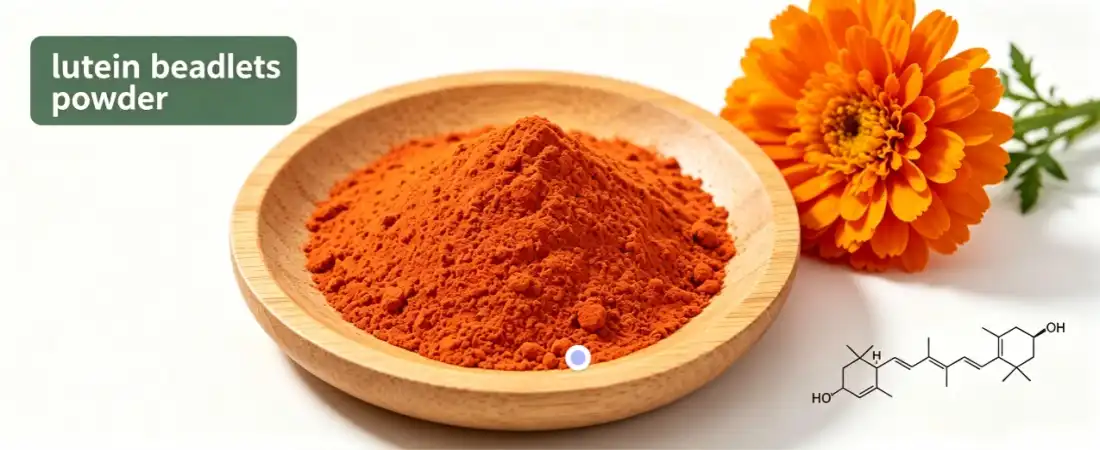
Understanding the Technology: What Microencapsulation Actually Does
Before exploring benefits and applications, it is worth understanding the engineering itself, because everything this ingredient achieves flows from one elegant idea executed at a microscopic scale.
From Fragile Carotenoid to Protected Particle
Lutein begins its journey in the petals of Tagetes erecta, the marigold flower, where nature concentrates it more abundantly than in any other cultivated plant. Once extracted and purified, however, this valuable carotenoid faces a hostile world: oxygen oxidizes it, light degrades it, and heat dismantles its molecular structure. Microencapsulation answers each threat with architecture. Purified lutein is dispersed at a microscopic scale and embedded within a protective matrix of food-grade wall materials — typically gelatin, starch, or plant-based alternatives — then formed into uniform beadlets and dried into a free-flowing powder. Every particle becomes an independent protective unit, with the wall material blocking oxygen and light while the lutein waits, sealed and stable, for its moment of release. The result is microencapsulated lutein powder: the same golden nutrient, re-engineered for survival.
Why the Wall Material System Matters
Not all encapsulation is equal, and the difference lies in the details of the wall system. The composition, thickness, and uniformity of the protective matrix determine how quickly particles disperse, how completely they resist oxidation, and how predictably they release their payload. A well-engineered matrix hydrates appropriately, protects through the stresses of manufacturing, and delivers consistent performance across thousands of production batches. NT Biotech treats this as core technology rather than a commodity process, pairing proprietary extraction methods that maximize the yield of active compounds with encapsulation engineering designed for superior stability. This integrated control — over both the active ingredient and its protective shell — is a genuine technological barrier, and it explains why two powders with identical label claims can perform so differently in real-world formulations.
Standardization: The Numbers Behind the Quality
Professional-grade microencapsulated lutein powder is defined by standardized potency. Industry-standard beadlet grades typically include 5%, 10%, and 20% lutein content, each verified by HPLC or UV analysis rather than estimated on paper. This standardization transforms formulation mathematics: a 10 mg lutein dose requires exactly 100 mg of 10% beadlets, with no guesswork and no drift between batches. For quality teams, standardized grades mean incoming material can be approved against clear specifications; for brands, they mean label claims built on verified numbers. When every batch ships with chromatographic documentation — as NT Biotech provides as standard practice — standardization stops being a marketing word and becomes a measurable, auditable reality.
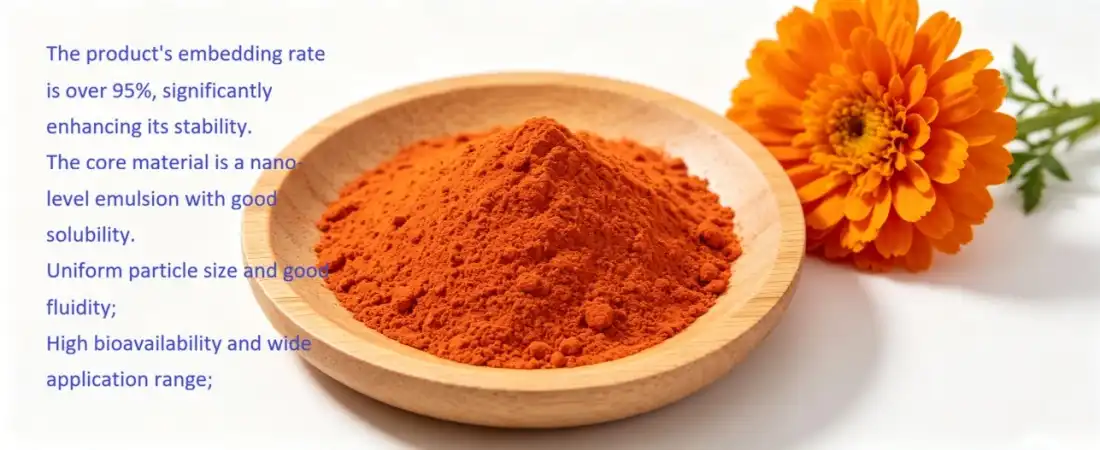
The Core Benefits: Why Brands and Consumers Both Win
The popularity of microencapsulated lutein powder rests on a rare alignment: the same technology that protects the nutrient also improves manufacturing, economics, and the consumer experience simultaneously.
Stability That Protects Potency From Factory to Final Dose
The headline benefit is stability. Sealed inside its protective matrix, lutein survives the challenges that destroy unprotected carotenoids: the heat of tablet compression, the cooking cycles of gummy production, months of ambient warehouse storage, and long international freight journeys. For brands, this resilience translates into smaller overages, longer confident shelf lives, and stability studies that pass with a margin to spare. For consumers, it means something simpler and more powerful — the dose printed on the label is the dose in the capsule, on the last day of shelf life, as surely as the first. In a category where trust is everything, microencapsulated lutein powder turns label honesty from an aspiration into an engineered outcome, protecting not just the nutrient but the brand promise wrapped around it.
Flowability and Dose Uniformity on the Production Line
Ask production managers why they prefer encapsulated formats, and they will describe machines, not molecules. Microencapsulated lutein powder flows smoothly through hoppers and feeders, generates virtually no dust, resists caking in humid conditions, and blends homogeneously with vitamins, minerals, and excipients. Because every beadlet shares approximately the same size, density, and lutein content, the active ingredient distributes evenly through any blend — the first tablet and the hundred-thousandth carry the same verified dose. This uniformity accelerates batch release, reduces waste, and keeps high-speed lines running clean. The operational savings are real: less downtime, fewer rejected batches, and quality teams who spend their time verifying excellence rather than firefighting inconsistency.
A Better Consumer Experience, From Gummies to Drink Mixes
Ultimately, supplement success is decided at the moment of consumption — and microencapsulated lutein powder improves that moment in ways consumers genuinely notice. The encapsulation matrix masks the taste and odor that raw carotenoids can carry, enabling pleasant-tasting gummies, chewables, and powdered drink mixes. The uniform particles disperse smoothly, and the natural golden hue contributes visual appeal without synthetic colorants. These sensory advantages may sound subtle, but they drive the metric that matters most: repeat purchase. Products that look appealing, taste clean, and deliver consistent results earn loyalty. When a single ingredient technology improves stability, manufacturability, and consumer experience together, its dominance in the eye-health category stops being surprising and starts looking inevitable.
Table 1: Microencapsulated Lutein Powder vs. Conventional Lutein Formats
| Performance Dimension | Microencapsulated Lutein Powder | Conventional Lutein Powder | Lutein Oil Suspension |
|---|---|---|---|
| Oxidation resistance | Excellent — sealed matrix | Poor to moderate | Moderate (needs dark packaging) |
| Stability through processing | Survives compression, cooking, and blending | Significant losses | Limited format compatibility |
| Flowability & dust | Free-flowing, dust-free | Dusty, prone to caking | Not applicable (liquid) |
| Dose uniformity | Homogeneous in blends | Variable | Good within softgels only |
| Format versatility | Capsules, tablets, gummies, drink mixes | Limited | Softgels only |
| Taste & odor masking | Yes — matrix-enclosed | No | Partial |
| Standardized grades | 5%, 10%, 20% (HPLC/UV verified) | Often inconsistent | Typically 10%–20% |
Applications Across Every Supplement Format
Versatility is where microencapsulated lutein powder truly earns its reputation. One qualified ingredient can anchor an entire product portfolio — a strategic advantage that simplifies sourcing, accelerates launches, and compounds value across every SKU.
Capsules and Tablets: The Classics, Perfected
Hard capsules and compressed tablets remain the backbone of the supplement industry, and microencapsulated lutein powder elevates both. In capsules, the dust-free, free-flowing particles fill cleanly at high speed, with uniform content from the first unit to the last. In tablets, the beadlets' controlled particle size supports excellent compressibility and blend homogeneity, surviving compression forces that would degrade unprotected lutein. Standardized grades make dose design effortless: 5% beadlets suit multivitamin inclusion, 10% serves mainstream eye-health formulas, and 20% enables high-strength products in compact tablet sizes. Because every batch arrives with HPLC/UV verification, quality teams approve material quickly, keeping production schedules intact and launch dates credible.
Gummies and Chewables: Eye Health Consumers Actually Enjoy
Gummies have transformed from a children's novelty into the preferred supplement format for adults of all ages — and they are brutally unforgiving to fragile ingredients. Heat, moisture, and long cooking cycles destroy unprotected carotenoids, which is precisely why microencapsulated lutein powder has become essential to this category. The protective matrix shields lutein through the cooking process, while the uniform beadlets distribute evenly through the gel matrix, ensuring every gummy carries a consistent dose. The encapsulation also masks any carotenoid taste, supporting the pleasant flavor profiles that drive repeat purchases. Chewable tablets benefit identically, gaining both dose uniformity and oxidative stability. For brands targeting the gummy boom, encapsulated lutein is not an upgrade — it is the entry requirement.
Powdered Drink Mixes and Beyond: The Expanding Frontier
The fastest-growing supplement formats are the ones that fit modern lifestyles: single-serve stick packs stirred into water, powdered drink mixes, and functional blends consumed on the go. These water-adjacent applications were once closed to fat-soluble lutein, but microencapsulated lutein powder — particularly grades engineered for dispersion — opens them wide. The same technology extends into functional foods, from fortified bars to nutritional powders, where stability through processing and shelf life remains paramount. One ingredient, one supplier qualification, one documentation package, serving formats from classic capsules to cutting-edge drink mixes: this portfolio leverage is why experienced formulators increasingly specify encapsulated lutein as their default, reserving other formats only for specialized needs.
Table 2: Application Guide — Matching Grades to Supplement Formats
| Supplement Format | Recommended Grade | Why Microencapsulation Matters Here |
|---|---|---|
| Multivitamin capsules/tablets | Lutein beadlets 5% | Compact inclusion, uniform blending |
| Mainstream eye-health formulas | Lutein beadlets 10% | Clean dose math (100 mg = 10 mg lutein) |
| High-strength vision complexes | Lutein beadlets 20% | Maximum potency in compact sizes |
| Gummies & chewables | Lutein beadlets 10% | Survives cooking heat and moisture |
| Powdered stick packs & drink mixes | Dispersion-engineered grades | Smooth mixing, natural golden hue |
| Functional foods & bars | Lutein beadlets 5%–10% | Stability through processing and shelf life |
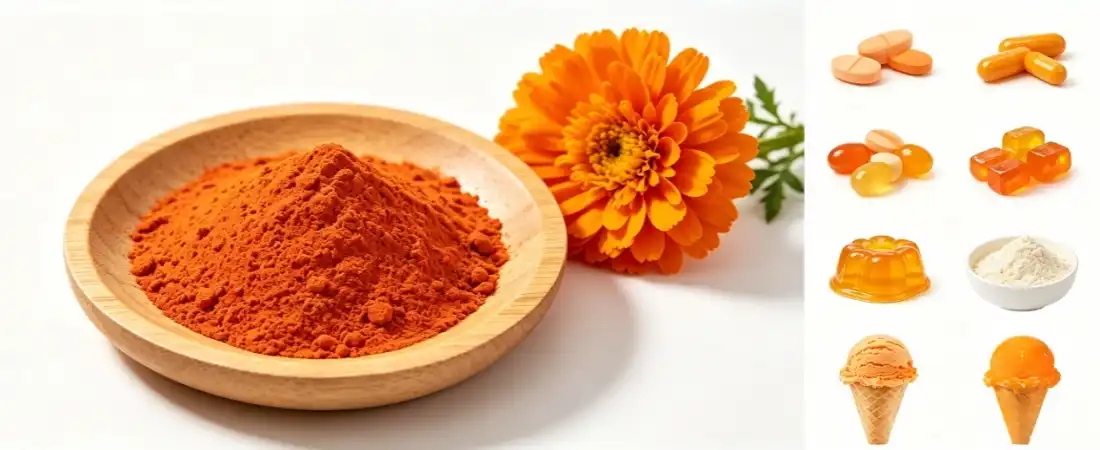
Choosing a Supplier: Where Quality Is Actually Decided
Here is the uncomfortable truth of the category: the same specification name can hide vastly different products. Choosing the right microencapsulated lutein powder supplier is therefore not a procurement detail — it is the decision on which all the benefits above depend.
Verify the Technology, Not Just the Label
The market divides sharply between manufacturers who own their encapsulation technology and traders who relabel bulk material. A genuine manufacturer controls the variables that determine performance — oleoresin quality, dispersion fineness, wall-material composition, drying parameters — and can customize, troubleshoot, and guarantee consistency because it owns the process. NT Biotech is a technology-based company operating proprietary extraction and encapsulation under one roof, achieving purity above 98% on its key standardized products. When interviewing candidates, ask where encapsulation is performed and request process documentation. Manufacturers answer with specifics; traders answer with brochures. This single question filters your shortlist more effectively than any price comparison ever will.
Documentation, Certification, and Traceability
Proof must be paper-backed. A credible microencapsulated lutein powder supplier issues a comprehensive Certificate of Analysis with every batch — covering assay, heavy metals, microbiological parameters, and physical characteristics, supported by HPLC/UV chromatograms — and maintains ISO9001, KOSHER, and HALAL certifications that open global markets. Traceability adds the final layer: NT Biotech operates autonomous marigold planting bases integrated with research, intelligent production, and adaptive supply chains, so every drum can be traced back to the field where its journey began. The most efficient way to verify these standards is simply to test them. Send your target grade, application, and destination market to info@newthingsbiotech.com, and NT Biotech guarantees an initial reply within two hours, complete with specification sheets, batch documentation, and sample support for your evaluation.
Service Speed as a Quality Signal
Responsiveness during the inquiry stage predicts reliability during the production stage. NT Biotech's published benchmarks set a demanding industry standard: initial replies to all inquiries within two hours, guaranteed; inventory of popular standardized extracts shipped within 1–3 working days after order confirmation; and production orders completed within 3–10 working days, including raw material procurement, proprietary extraction, laboratory testing, and packaging. Logistics flex to each order — direct-from-factory delivery via the company's own FedEx/UPS accounts for urgent shipments, and trusted freight forwarders for secure bulk cargo by air or sea. Add customized OEM/ODM solutions for different countries and payment accepted in the buyer's local currency, and you have the profile of a long-term technical partner rather than a one-off vendor.
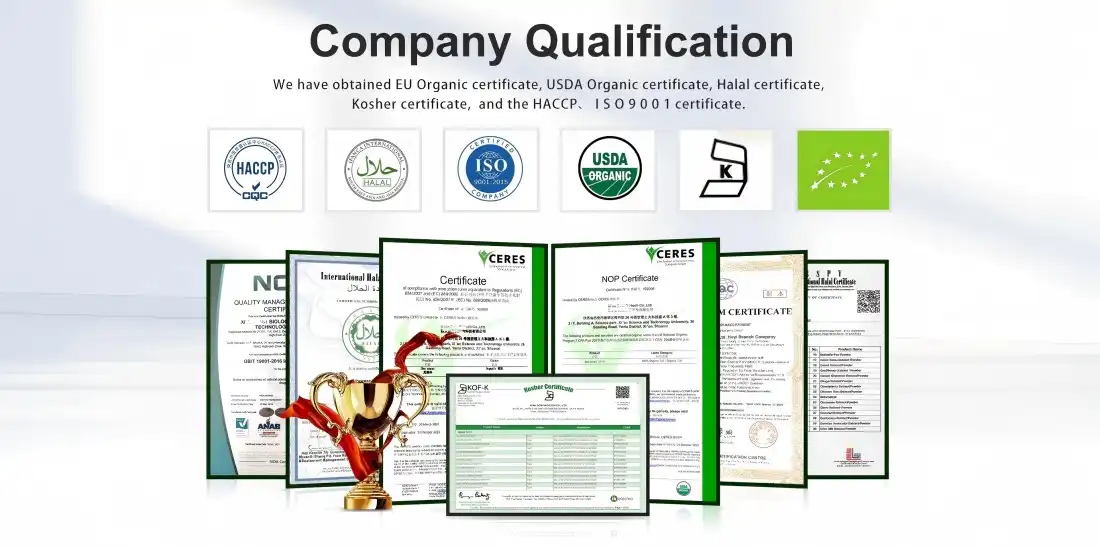
Conclusion
Microencapsulated lutein powder has earned its central role in modern supplements by solving the problems that once limited lutein's potential: it shields the carotenoid from oxygen, heat, and light, flows cleanly through production lines, delivers uniform doses across every format, and supports the gummies, drink mixes, and tablets consumers actually want. Yet these benefits materialize only when the technology is executed with genuine manufacturing depth. NT Biotech provides exactly that — autonomous marigold cultivation, proprietary extraction and encapsulation, purity above 98% on key products, batch-level HPLC/UV verification, triple international certification, and two-hour responsiveness. For brands building the next generation of eye-health products, the right encapsulated ingredient, from the right partner, is where better supplements begin.
FAQ
Q1: What is microencapsulated lutein powder?
A: It is marigold-derived lutein sealed inside microscopic, food-grade protective beadlets — a format that protects the carotenoid from oxygen, heat, and light while enabling versatile supplement applications.
Q2: What are its main benefits for supplement brands?
A: Superior stability through processing and shelf life, free-flowing dust-free handling, uniform dosing, taste masking, and compatibility with capsules, tablets, gummies, and drink mixes.
Q3: Which grades are available?
A: Standardized beadlet grades including 5%, 10%, and 20% lutein content, each verified by HPLC/UV with a batch-specific Certificate of Analysis.
Q4: What certifications does NT Biotech hold?
A: ISO9001, KOSHER, and HALAL certifications, supporting compliance and market access across major global regions.
Q5: How fast can orders be delivered?
A: Inquiries are answered within two hours; in-stock material ships within 1–3 working days, and production orders are completed within 3–10 working days.
Formulate With Confidence — Partner With NT Biotech Today
The benefits of microencapsulated lutein powder are proven; the applications are limitless; and the supplier behind your ingredient determines whether those advantages reach your customers. NT Biotech invites you to verify everything in this article — request batch Certificates of Analysis, take advantage of our two-hour response guarantee, or discuss your next formulation with our plant-extraction specialists. With standardized beadlet grades, proprietary encapsulation technology, ISO9001, KOSHER, and HALAL certifications, flexible OEM/ODM solutions, and payment in your local currency, we are ready to support your project from first sample to global scale. Email your specification or sample request to info@newthingsbiotech.com today — and let NT Biotech turn protected lutein into your brand's most reliable advantage.
References
1. Age-Related Eye Disease Study 2 (AREDS2) Research Group. "Lutein + Zeaxanthin and Omega-3 Fatty Acids for Age-Related Macular Degeneration: The AREDS2 Randomized Clinical Trial." JAMA, 2013.
2. Abdel-Aal, E.-S.M.; Akhtar, H.; Zaheer, K.; Ali, R. "Dietary Sources of Lutein and Zeaxanthin Carotenoids and Their Role in Eye Health." Nutrients, 2013.
3. Boon, C.S.; McClements, D.J.; Weiss, J.; Decker, E.A. "Factors Influencing the Chemical Stability of Carotenoids in Foods." Critical Reviews in Food Science and Nutrition, 2010.
4. Buscemi, S.; Corleo, D.; Di Pace, F.; Petroni, M.L.; Satriano, A.; Marchesini, G. "The Effect of Lutein on Eye and Extra-Eye Health." Nutrients, 2018.
5. Ranard, K.M.; Jeon, S.; Mohn, E.S.; Griffiths, J.C.; Johnson, E.J.; Erdman, J.W. "Dietary Guidance for Lutein: Consideration for Intake Recommendations Is Scientifically Supported." European Journal of Nutrition, 2017.
6. Stahl, W.; Sies, H. "Bioactivity and Protective Effects of Natural Carotenoids." Biochimica et Biophysica Acta, 2005.
Every day, our eyes fight a battle we can't see. Overuse of screens for long periods of time, harsh artificial lighting, and constant exposure to blue light have turned eye strain from a rare problem into an epidemic, and people are looking for natural solutions. There are many nutrients that have been tested to help eyesight, but lutein from marigold extract stands out as the best. This plant-based nutrient comes from the colourful leaves of Tagetes erecta. It is used as the main ingredient in eye health products all over the world because it is pure, effective, and has a clean label. This piece goes from the marigold field to the finished pill. It talks about the science behind lutein, why marigold is still the best natural source of it, and what makes premium extract different from regular powder. We will see how NT Biotech (Shaanxi New Things Biotech) sets the standard by providing lutein from marigold extract with standardised assays confirmed by HPLC/UV, a proprietary extraction technology that achieves purity above 98% on key products, ISO9001, KOSHER, and HALAL certifications, and a Certificate of Analysis with every batch.

The Golden Flower: Why Marigold Is Nature's Richest Lutein Source
Lutein starts out as sunshine caught inside a flower and never makes it to a capsule. Figuring out how the marigold became the best source of lutein in the world helps you understand why this plant route makes such a better nutrient.
A Carotenoid Concentrated by Nature
The flower of the marigold (Tagetes erecta), which is grown in gardens, has the highest known concentration of lutein. It has a lot more than leafy greens like spinach and kale. A dose of veggies may only have a few milligrams of lutein, but marigold flowers have so much of the carotenoid that it is possible and affordable to remove it for industrial use. There is a good reason for this natural abundance: the flower makes lutein to protect its own tissues from strong sunlight, which is pretty much the same job it does in our eyes. When you choose lutein from marigold extract, you are picking a nutrient that nature made to protect against light, and it comes from the plant source that stores it most abundantly.
From Petal to Powder: The Art of Extraction
Science and art come together when tiny flowers are turned into a stable, powerful powder. The process starts with carefully planned harvests that happen at the peak of the blossoms' carotenoid content. The flowers are then dried and turned into marigold oleoresin, which is a concentrated product high in lutein. This oleoresin is then put through special steps of extraction and purification to make standardised powder grades. Each step needs to be done carefully, because too much heat or oxygen can break down the compounds that are being captured. This is why there is such a wide range in the quality of lutein from marigold extract. NT Biotech deals with this problem by using special extraction methods that are designed to get the most active compounds out of plants while also keeping them from breaking down. This turns the plants' potential into potency that can be tested and stored for a long time.
Traceability Starts in the Field
Even the best extraction technology can't fix bad raw materials. That's why serious makers keep an eye on their supply from the ground up. The amount of carotenoids in a crop depends on its climate, how it was grown, when it was harvested, and the quality of the soil. NT Biotech has self-sufficient plant nurseries that are directly connected to its research, production, and supply chain systems. This creates a full value chain that goes from the plant source to the product use. For buyers, this vertical integration means that every drum of lutein from marigold extract can be tracked back to the fields where it started. This provides the kind of clear chain of custody that regulators, inspectors, and brands that care about quality are asking for more and more.
The Science of Sight: How Lutein Supports Your Eyes
The image of lutein is not based on catchy ads, but on decades of study that have been reviewed by experts in the field. This carotenoid has become an important part of modern vision nutrition because scientists have figured out how it works inside the eye.
The Macula's Natural Sunglasses
The macula is a small area deep inside the eye that gives you clear central vision for things like reading, driving, and recognising people. After being eaten, lutein from marigold extract is carried through the bloodstream and deposited only in this tissue, where it builds up as part of the macular pigment. There, it works a lot like a pair of sunglasses inside the eye, blocking wavelengths that cause vision strain and absorbing high-energy blue light before it can reach photoreceptor cells. Lutein is one of the most scientifically proven botanical ingredients in the supplement industry. It has been shown to be important for eye health in clinical studies, such as the groundbreaking AREDS2 trial.
Antioxidant Defense Where It Matters Most
Lutein does more than just block light; it also protects eye cells from damage. Light and oxygen are always hitting the eye, which makes free radicals. Free radicals are unstable molecules that slowly damage cell structures. Lutein helps to neutralise these reactive compounds, which helps retinal cells stay strong over time. Its long chain of conjugated double bonds makes its molecular structure very good at blocking singlet oxygen and getting rid of extra energy. When people take lutein from marigold extract every day, they are basically strengthening the eye's own defence system with the same plant-based pigment that plants use to stay alive in the sun. This is a beautiful example of how botanical knowledge can be used to improve human nutrition.
A Nutrient for the Digital Generation
People used to think that this was good for eyes that were getting older, but now the screen youth wants it. Students, players, artists, and people who work in offices now spend eight, ten, or even twelve hours a day in front of digital screens, which is why there is more interest than ever in blue-light safety. Supplements for eye health that contain lutein from marigold extract are now available in most stores. They come in capsules, gummies, chewables, and functional drinks for people in their twenties and thirties. This change in the population is a huge chance for brands, but only if they can offer lutein in safe, appealing forms that are backed up by solid quality paperwork. The market is ready, and science has settled it.
Table 1: Lutein Content Across Natural Sources — Why Marigold Leads
| Natural Source | Typical Lutein Content | Commercial Viability for Extraction |
|---|---|---|
| Marigold petals (Tagetes erecta) | Highest known concentration (extract-grade) | Excellent — the global industry standard |
| Kale | ~11–26 mg per 100 g (fresh) | Limited — low concentration, high water content |
| Spinach | ~12 mg per 100 g (fresh) | Limited — impractical for large-scale extraction |
| Egg yolk | ~0.2–0.3 mg per yolk | Poor — trace amounts only |
| Corn | ~0.6–1 mg per 100 g | Poor — insufficient for standardized extracts |
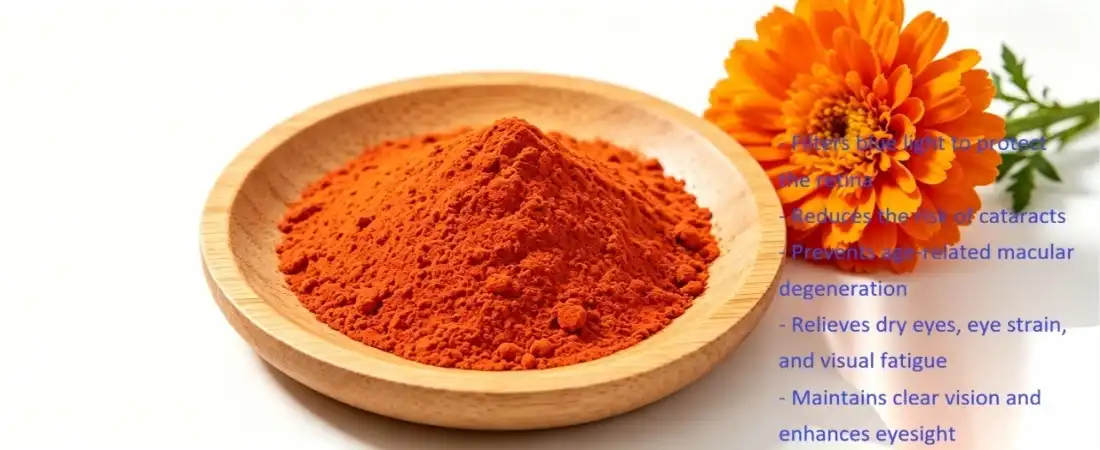
Not All Extracts Are Equal: The Anatomy of a Premium Product
Here is a truth the industry sometimes whispers: two drums labeled "lutein 20%" can deliver dramatically different real-world performance. Discerning buyers evaluate lutein from marigold extract across several dimensions that marketing brochures rarely mention.
Standardization and Verified Purity
Standardization is the difference between an ingredient and a guess. Premium lutein from marigold extract is offered in precisely defined grades — commonly 5%, 10%, and 20% powders for supplements and functional foods, with high-purity 80% to 90% grades for advanced nutraceutical applications — each quantified by HPLC or UV analysis rather than estimated on paper. The assay printed on the label must match the assay measured in the laboratory, batch after batch. NT Biotech pushes this discipline further, achieving purity above 98% on its key standardized extracts and attaching comprehensive HPLC/UV documentation to every lot. For formulators, that rigor translates into tighter dosage control, cleaner labels, and far fewer surprises during stability testing.
Stability, Solubility, and Formulation Performance
Lutein is a lipophilic carotenoid, which makes its physical form critically important. A premium lutein from marigold extract supplier engineers its powders for the realities of production: consistent particle size for uniform blending, stability against heat and oxidation for long shelf lives, and compatibility with tablets, capsules, gummies, powdered beverages, and fortified foods. Superior stability is not a convenience — it directly determines whether the potency promised on your label survives warehousing, ocean freight, and months on a retail shelf. Proprietary processing that protects active compounds through these stresses is a genuine technological barrier, and it is precisely where NT Biotech's extraction expertise delivers measurable value to client formulations.
The Paperwork Behind the Powder
Certificates reveal culture. A trustworthy lutein from marigold extract supplier treats documentation not as an afterthought but as a core product feature: a Certificate of Analysis with every batch, covering assay, heavy metals, microbiological limits, and residual solvents, supported by chromatographic evidence. NT Biotech ships every batch with a full CoA and maintains ISO9001, KOSHER, and HALAL certifications, opening doors to mainstream Western markets and specialty segments alike. If you want to see what professional documentation looks like before committing to a purchase, the simplest step is to request a sample specification sheet — email info@newthingsbiotech.com with your target grade and market, and NT Biotech's team will respond within two hours with the technical files your quality team needs.
Table 2: NT Biotech Lutein from Marigold Extract — Product Portfolio and Applications
| Specification | Assay (HPLC/UV) | Typical Applications |
|---|---|---|
| Lutein Powder 5% | ≥5% | Daily eye-health supplements, functional foods |
| Lutein Powder 10% | ≥10% | Capsules, tablets, gummies |
| Lutein Powder 20% | ≥20% | High-strength vision formulas |
| Lutein 80% | ≥80% | Premium nutraceuticals, advanced formulations |
| Lutein 90% | ≥90% | Pharmaceutical-grade and research applications |
| Lutein Esters 10%–20% | ≥10%–20% | Fortified foods, cost-effective blends |
| Zeaxanthin 5%–40% | ≥5%–40% | Synergistic macular-support formulas |
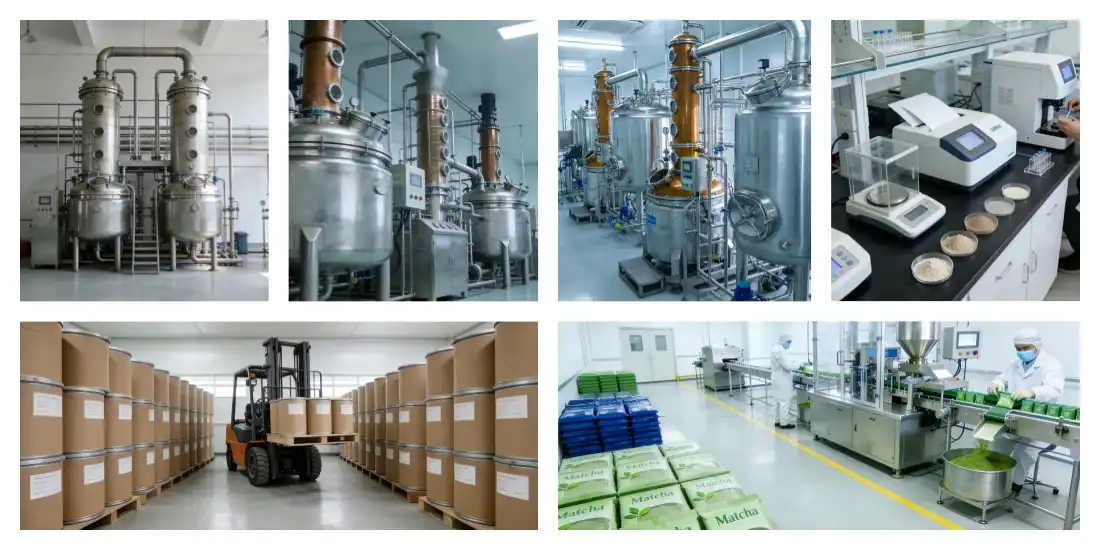
Choosing a Partner, Not Just a Powder: The NT Biotech Difference
By now, the criteria for excellence are clear — but criteria only matter when a company actually lives them. This final section shows how NT Biotech turns sourcing from a transaction into a long-term advantage.
Quality Certified Across Global Markets
NT Biotech (Shaanxi New Things Biotech) is a technology-based plant derivatives company supplying pure, active natural raw materials to the dietary supplement, functional food, high-end cosmetics, and animal nutrition industries worldwide. Its lutein from marigold extract is produced under an ISO9001-certified quality management system and carries KOSHER and HALAL certifications, enabling brands to enter regulated and specialty markets without compliance detours. Combined with batch-level CoA documentation and full traceability from autonomous marigold planting bases, this certification framework gives procurement teams something rare: an ingredient whose quality story survives every audit, from retailer questionnaires to regulatory inspections.
Speed That Respects Your Launch Calendar
In the supplement business, timing is money, and NT Biotech's service structure is engineered for momentum. The company guarantees initial replies to all inquiries within two hours. Popular standardized extracts ship from inventory within 1–3 working days after order confirmation, while production orders typically complete within 3–10 working days — a cycle that already includes premium raw material procurement, proprietary extraction, stringent laboratory testing, and final packaging. Logistics flex to each buyer's needs: direct-from-factory delivery via the company's own FedEx/UPS accounts for urgent shipments, and trusted freight forwarders for secure, on-time bulk cargo by air or sea. Your launch date stops being a hope and becomes a plan.
Partnership Beyond the Purchase Order
The main thing that sets NT Biotech apart from other companies that sell lutein from marigold extract is its business philosophy: it sees itself as a long-term technical partner rather than a one-time vendor. Specifications, grades, packing, and paperwork can be changed to fit the needs of different countries and clients with customised OEM/ODM solutions. Technical help covers both composition questions and problems with the application. The terms of payment are good for the buyer, and the buyer's local currency can be used to avoid problems with foreign exchange. Every system, from the field to the finished extract, is built around one idea: that every product should show the gift of nature and the dedication of science. This is true from the first sample request to the hundredth production batch.
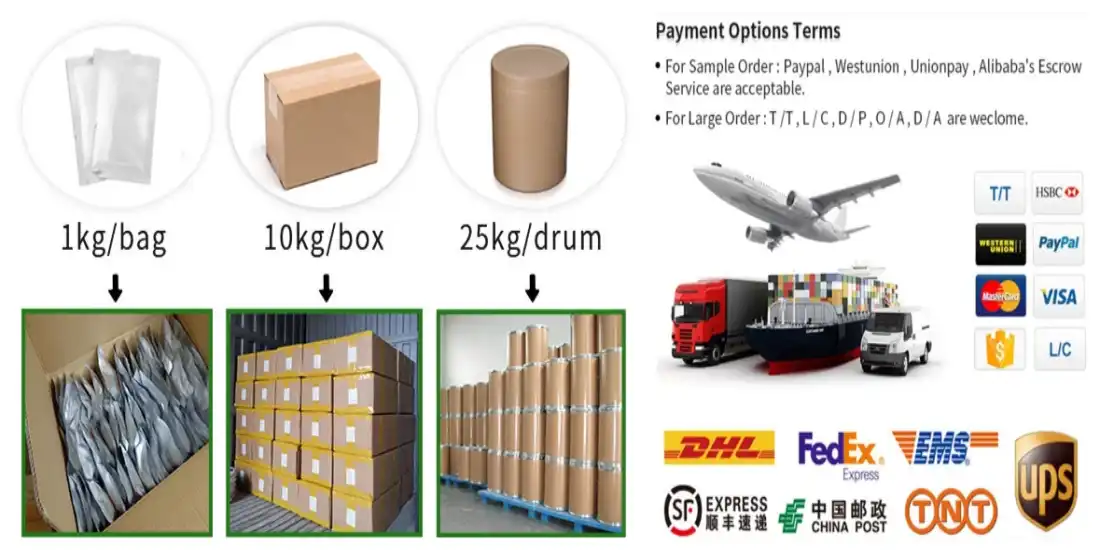
Conclusion
Lutein from marigold extract is nature's best source of lutein, and it has been carefully extracted to become a vitamin that protects the macula, blocks blue light, and meets the vision needs of all generations. However, the ingredient only works as well as the other part that goes with it. One integrated value chain is made up of NT Biotech's own planting, unique extraction, standard purity checks by HPLC/UV, ISO9001, KOSHER, and HALAL certifications, two-hour response times, and batches that are fully recorded. When brands want natural eye-health products that they can count on, the seller they choose is very important.
FAQ
Q1: Why is marigold the preferred source of lutein?
A: Marigold petals (Tagetes erecta) contain the highest natural lutein concentration of any cultivated plant, making standardized, high-purity extraction practical and economical.
Q2: How does lutein from marigold extract support eye health?
A: Lutein accumulates in the macula, where it filters high-energy blue light and provides antioxidant defense for retinal cells.
Q3: What specifications does NT Biotech offer?
A: Lutein powders from 5% to 90%, plus lutein esters and zeaxanthin grades — all standardized and verified by HPLC/UV testing.
Q4: What certifications back the product?
A: ISO9001, KOSHER, and HALAL certifications, with a Certificate of Analysis accompanying every batch.
Q5: How quickly can orders be fulfilled?
A: In-stock extracts ship within 1–3 working days; production orders take approximately 3–10 working days, with inquiries answered within two hours.
Bring Nature's Golden Nutrient to Your Brand — Contact NT Biotech Today
Your customers are searching for natural, science-backed eye health — and lutein from marigold extract delivers exactly that, provided it comes from a source you can trust. NT Biotech combines autonomous marigold cultivation, proprietary extraction technology, purity above 98% on key products, and complete ISO9001, KOSHER, and HALAL certification into an ingredient partnership built for global brands. Whether you need a standard grade shipped within days, a customized OEM specification for your market, or technical guidance on your next formulation, our team guarantees a response within two hours. Send your inquiry or sample request to info@newthingsbiotech.com now, and let NT Biotech turn the gift of nature into your product's brightest competitive advantage.
References
1. Age-Related Eye Disease Study 2 (AREDS2) Research Group. "Lutein + Zeaxanthin and Omega-3 Fatty Acids for Age-Related Macular Degeneration: The AREDS2 Randomized Clinical Trial." JAMA, 2013.
2. Abdel-Aal, E.-S.M.; Akhtar, H.; Zaheer, K.; Ali, R. "Dietary Sources of Lutein and Zeaxanthin Carotenoids and Their Role in Eye Health." Nutrients, 2013.
3. Buscemi, S.; Corleo, D.; Di Pace, F.; Petroni, M.L.; Satriano, A.; Marchesini, G. "The Effect of Lutein on Eye and Extra-Eye Health." Nutrients, 2018.
4. Granado, F.; Olmedilla, B.; Blanco, I. "Nutritional and Clinical Relevance of Lutein in Human Health." British Journal of Nutrition, 2003.
5. Ranard, K.M.; Jeon, S.; Mohn, E.S.; Griffiths, J.C.; Johnson, E.J.; Erdman, J.W. "Dietary Guidance for Lutein: Consideration for Intake Recommendations Is Scientifically Supported." European Journal of Nutrition, 2017.
6. Bone, R.A.; Landrum, J.T.; Guerra, L.H.; Ruiz, C.A. "Lutein and Zeaxanthin Dietary Supplements Raise Macular Pigment Density and Serum Concentrations of These Carotenoids in Humans." Journal of Nutrition, 2003.
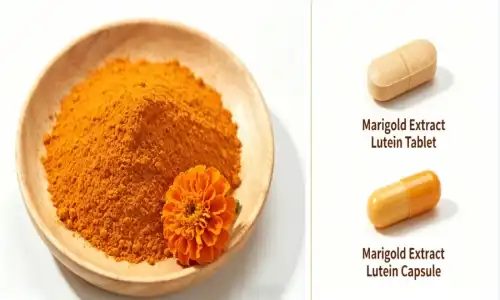
The lutein powder in marigold extract comes from the flowers of the marigold plant and is standardised for lutein, a carotenoid that is used in eye-health, beauty-from-within, functional food, and cosmetic formulas. Brands that need reliable active-content control, clear HPLC/UV testing records, and adjustable OEM support can get this ingredient from NT Biotech. Our marigold extract lutein powder gives buyers a place to start looking at how the product can be used and what they need to do to get it. The real benefit isn't just a powder that is bright yellow. It is a proven source of lutein that can help products work consistently, make formulation decisions more easily, and have a stronger natural product story.

Why Marigold Extract Lutein Powder Is in High Demand
A Natural Source of a Valuable Carotenoid
The lutein powder used in marigold extract is usually made from Tagetes erecta flowers. Lutein esters are found in these flowers and can be removed, cleaned, and standardised so that they can be used in industrial goods. There is a type of carotene called lutein. It happens normally in the macula, a small part of the eye that controls center and fine vision. Because of this link, lutein is often found in vitamins for eye health. Marigold is great for production because it is a plant-based source of lutein that can be scaled up and is more consistent for use in food than many other food-based sources.
Lutein Fits Eye-Health and Beauty Product Categories
Lutein is commonly found in eye-health products, but it has other uses in business besides helping with vision. Marigold extract lutein powder is often mixed with collagen, vitamin C, hyaluronic acid, ceramides, or fruit extracts that are high in antioxidants. This provides a "beauty from within" position that people who want to improve the look of their skin and age in a healthy way will like. Researchers have looked into how lutein and zeaxanthin affect eye colour and antioxidant activity in the skin. This means that product makers can still use these carotenoids [1, 4].
| Product Information Area | Why It Matters | Buyer Action |
|---|---|---|
| Botanical source | Marigold offers a plant-based lutein story. | Confirm botanical identity and source traceability. |
| Key active compound | Lutein is the main standardization marker. | Request the lutein assay in the current CoA. |
| Physical format | Powder can suit capsules, tablets, gummies, and blends. | Check particle size, carrier system, and flow behavior. |
| Main applications | Supplements, functional foods, cosmetics, and animal nutrition may use different grades. | Confirm the intended application before ordering. |
A Recognizable Ingredient Helps Product Marketing
Consumers often understand “lutein from marigold” more easily than a long chemical ingredient name. That recognition helps brands explain why a specific active appears in a capsule, gummy, sachet, or beauty drink. The best product messaging stays clear and compliant. It can explain that lutein is a naturally occurring carotenoid and that marigolds are a practical plant source. It should not make disease-treatment claims. The AREDS2 study increased global awareness of lutein and zeaxanthin in nutrition research, giving formulators a credible scientific foundation for responsible eye-health product positioning [2].
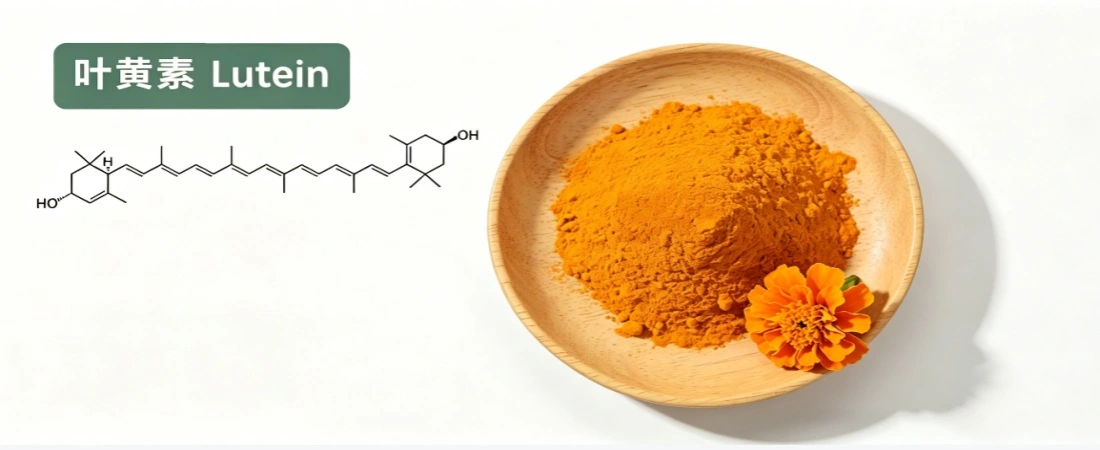
How Does Marigold Extract Lutein Powder Work in the Body?
Lutein Reaches the Macular Region of the Eye
The macula is the central part of the retina that helps people see fine detail. Lutein and zeaxanthin are found in macular pigment, where they contribute to the pigment’s optical properties. After ingestion, lutein is absorbed with dietary fats, transported through the body, and can accumulate in eye tissues. This is why many premium eye-support products pair marigold extract lutein powder with oil-based delivery systems or recommend taking finished products with meals. Research has linked lutein supplementation with increased macular pigment optical density, although the final outcome depends on dosage, diet, individual biology, and product design [3].
Its Antioxidant Story Supports Modern Wellness Formulas
Lutein is valued for more than its yellow-orange color. It has antioxidant characteristics, meaning it can help support the body’s defense against oxidative processes. Product developers often connect this story with digital-screen lifestyles, healthy aging, and beauty support. However, a good formulation should avoid making broad promises that cannot be supported in the target market. Marigold extract lutein powder works best when the brand uses clear language, reliable dosage control, and evidence-aware labeling. This creates trust with consumers and gives distributors fewer compliance questions.
Absorption Depends on Formula Design
Lutein is fat-soluble, so the final product format can affect how the ingredient performs. Softgels can be useful because they place lutein in an oil-based environment. Capsules and tablets can also work when formulators use suitable carriers, blending controls, and stability checks. A powder product may need emulsification or compatibility review if the finished formula is intended for beverages. NT Biotech can help buyers discuss ingredient format, target application, and technical documents before production. This saves time when marigold extract lutein powder moves from sample testing to a commercial order.
If you are comparing lutein formats, active levels, or private-label options, contact info@newthingsbiotech.com. NT Biotech can help you select a material that suits your formula, target market, and production timeline.
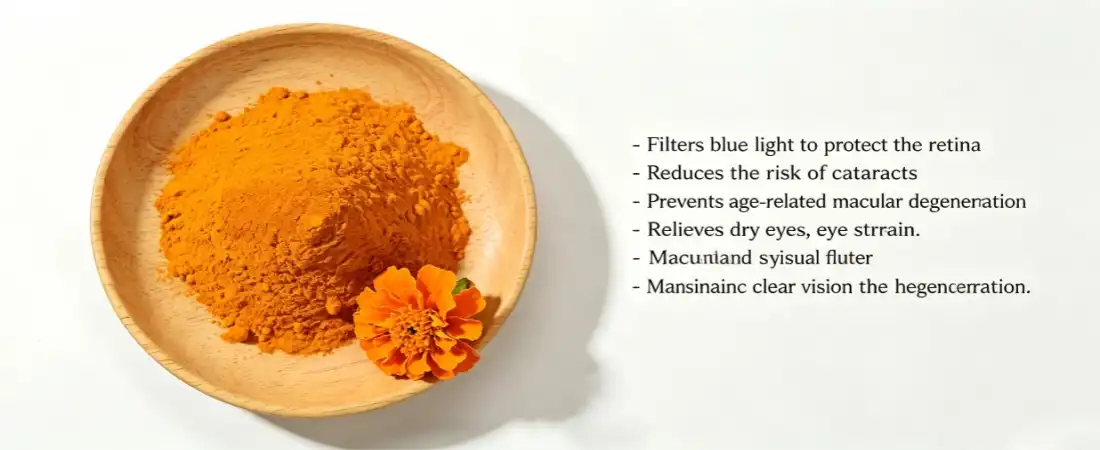
What Should Buyers Evaluate Before Selecting a Supplier?
The Certificate of Analysis Is a Core Buying Tool
A serious buyer should never select marigold extract lutein powder based only on color or price. The Certificate of Analysis, often called a CoA, should show the batch-specific results that matter to the agreed specification. HPLC or UV testing can help verify lutein content. Other documents may cover appearance, moisture, microbiological limits, heavy metals, storage requirements, packaging, and shelf life. NT Biotech provides HPLC/UV documentation and CoAs to support technical review. This level of detail helps contract manufacturers, quality teams, and importers avoid confusion between an early sample and the final production batch.
Cost Per Gram of Verified Lutein Is More Useful
Low price per kilogram can be misleading. One powder may have a different lutein concentration, carrier level, stability profile, or documentation package than another. Buyers should calculate the cost per gram of verified lutein rather than comparing only the bulk price. NT Biotech specializes in standardized, high-value plant extracts. Some key extracts in our portfolio reach purity levels above 98%, while every marigold grade should be evaluated against its own approved lutein specification. This is a more honest way to compare suppliers and protect finished-product consistency.
| Supplier Review Point | What a Strong Supplier Should Provide | Why It Protects Your Brand |
|---|---|---|
| Active-content verification | HPLC/UV test information and a batch CoA. | Confirms the ingredient matches the ordered lutein specification. |
| Quality-system evidence | ISO 9001 documentation and applicable quality records. | Supports a controlled production and documentation process. |
| Market-support documents | Current Kosher or Halal documents, where applicable. | Helps serve customers with specific market or dietary needs. |
| Logistics plan | Express, air, or sea freight choices. | Balances speed, order volume, and landed cost. |
Documentation Must Match the Intended Market
Buyers should ask what each certificate actually covers. ISO 9001 relates to a quality-management system. Kosher and Halal documents may help when relevant to the product and the current certificate scope. CE marking and FDA approval should not be used casually for botanical ingredients because their legal meaning depends on the specific product category and market. A responsible marigold extract lutein powder supplier explains what documents are available, what they cover, and what the buyer must confirm locally. That transparency helps prevent regulatory delays when the finished product enters a new country.
How Can NT Biotech Support a Lutein Product From Concept to Delivery?
Technical Support Starts Before the Purchase Order
NT Biotech is a plant-derivative supplier and a long-term technical partner for supplement, food, cosmetic, and animal nutrition customers. We combine plant-source management, extraction research, intelligent production, laboratory control, and adaptive supply-chain planning. This structure helps us support marigold extract lutein powder from raw material selection through finished product application. A buyer may need support with active-content selection, packaging size, documentation, shipping method, or formula direction. Our team works through these practical decisions early, when changes are easier and less expensive.
OEM and ODM Options Make Local Launches Easier
A lutein product in Southeast Asia may need different packaging, dosage forms, language, and price points than a similar product in the Middle East, Europe, or North America. NT Biotech offers flexible OEM and ODM solutions for brands that need a more localized approach. You may need bulk ingredient supply for your own factory, private-label capsules for a new brand, or a customized beauty-support formula. Marigold extract lutein powder can fit each route when the specification matches the commercial plan. We also discuss flexible payment solutions, including local-currency arrangements when available and appropriate.
Fast Response and Flexible Logistics Protect Launch Plans
Ingredient supply affects marketing schedules, production bookings, and retail launches. NT Biotech aims to respond to new inquiries within two hours. Popular standardized extracts held in stock may ship within one to three working days after order confirmation. Production orders usually take three to ten working days, including material preparation, extraction, laboratory testing, CoA release, and packaging. We can use FedEx or UPS for direct express delivery and work with freight partners for secure air or sea shipments. This gives buyers more control over cost, speed, and shipment volume.
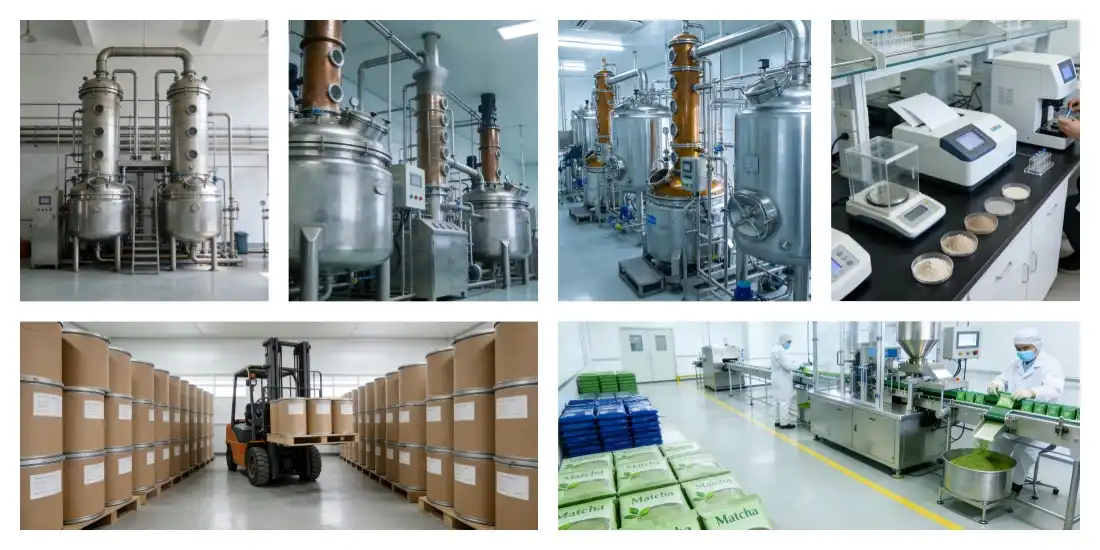
Conclusion
Marigold extract lutein powder is a standardized botanical ingredient that helps brands create eye-health, beauty, functional food, and nutrition products with a recognizable lutein story. Its performance depends on verified active content, suitable formulation design, complete documentation, and dependable supply support. NT Biotech combines extraction experience, HPLC/UV testing, batch CoAs, flexible OEM options, and responsive logistics to help global buyers move from product concept to market launch. Choosing the right lutein supplier means choosing more than a powder. It means choosing consistency, technical clarity, and a partner that understands commercial deadlines.
FAQ
1. What is marigold extract lutein powder?
It is a plant-derived powder made from marigold flowers and standardized for lutein, a carotenoid used in eye-health and beauty-support products.
2. What is lutein mainly used for?
Lutein is widely used in visual-wellness supplements, beauty-from-within formulas, functional foods, and selected cosmetic applications.
3. Can NT Biotech provide a Certificate of Analysis?
Yes. NT Biotech can provide batch-specific CoAs and HPLC/UV testing documentation for approved orders.
4. Is the ingredient suitable for OEM products?
Yes. NT Biotech offers OEM and ODM options for capsules, powders, gummies, softgels, and customized product concepts.
5. How fast can NT Biotech ship orders?
In-stock standardized extracts may ship within one to three working days. Production orders commonly take three to ten working days.
Build Your Lutein Product With NT Biotech
NT Biotech can help turn your lutein concept into a stable, market-ready product with trusted marigold extract lutein powder, clear testing documentation, and flexible supply options. Whether you need bulk material, private-label support, customized packaging, or an OEM formula for eye health and beauty, our team can guide the next step. We provide HPLC/UV records, Certificates of Analysis, practical logistics support, and responsive communication from inquiry through shipment. Email info@newthingsbiotech.com today to request specifications, samples, pricing, or a tailored supply plan for your target market.
References
1. Krinsky, N. I., Landrum, J. T., and Bone, R. A. “Biologic Mechanisms of the Protective Role of Lutein and Zeaxanthin in the Eye.” Annual Review of Nutrition, 2003.
2. Age-Related Eye Disease Study 2 Research Group. “Lutein + Zeaxanthin and Omega-3 Fatty Acids for Age-Related Macular Degeneration.” JAMA, 2013.
3. Ma, L., Liu, R., Du, J. H., Liu, T., Wu, S. S., and Liu, X. H. “Lutein, Zeaxanthin and Meso-Zeaxanthin Supplementation Associated With Macular Pigment Optical Density.” PLOS ONE, 2016.
4. Juturu, V., and Kruger, C. L. “Lutein and Zeaxanthin: Effects on Eye and Skin Health.” Journal of the American College of Nutrition, 2017.
5. Palombo, P., Fabrizi, G., Ruocco, V., et al. “Beneficial Long-Term Effects of Combined Oral and Topical Antioxidant Treatment With the Carotenoids Lutein and Zeaxanthin on Human Skin.” Skin Pharmacology and Physiology, 2007.
6. Kijlstra, A., Tian, Y., Kelly, E. R., and Berendschot, T. T. J. M. “Lutein: More Than Just a Filter for Blue Light.” Progress in Retinal and Eye Research, 2012.
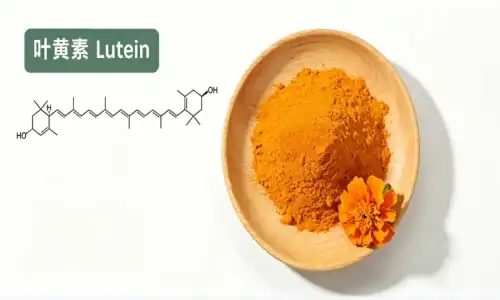
Marigold extract powder has become one of the world’s most widely used natural lutein sources because it combines plant-based origin, concentrated active content, scalable supply, and strong formulation flexibility. Lutein is valued in eye-health supplements, beauty-from-within products, functional foods, and selected cosmetic applications. NT Biotech supplies standardized marigold ingredients designed for brands that need dependable assay results, batch documentation, and flexible production support. Our marigold extract powder highlights its role as a practical ingredient for global dietary supplement development. For buyers, the advantage is clear: a recognizable botanical source that can become a credible, high-value product story.

Why Marigold Is a Leading Commercial Source of Lutein
Marigold Flowers Offer a Concentrated Botanical Starting Point
Marigold leaves, especially Tagetes erecta, which is known for having naturally occurring lutein esters, are often used to make marigold extract powder. There is lutein in leafy vegetables as well, but marigold flowers are often used for commercial extraction because the pigment profile is more concentrated and easier to standardise on a large scale. This makes the ingredient useful for companies that need consistent levels of activity instead of the natural changes that happen with fresh vegetables. Carotenoid research has shown that lutein and related xanthophylls are important for human health, especially when it comes to eye health [1]. As a supplement brand, Marigold sends a clear message: the lutein comes from flowers, is carefully extracted, and can be made into a daily product that works.
| Commercial Factor | Why It Matters to Buyers | What to Confirm With the Supplier |
|---|---|---|
| Botanical source | Marigold gives brands a plant-based lutein story. | Botanical identity and raw-material traceability. |
| Active compound | Lutein is the main carotenoid used in eye-health formulas. | Current lutein assay on the Certificate of Analysis. |
| Ingredient format | Powder format can fit capsules, tablets, gummies, and blends. | Carrier materials, particle size, and flow properties. |
| Product category | The ingredient is positioned for dietary supplement use. | Local compliance for food, supplements, or cosmetics. |
Standardized Lutein Gives Formulators Better Control
Not only is marigold extract powder pretty, but it also works well in industrial recipes. A standard amount of lutein is the most important value. A deep orange-yellow powder might look good, but its looks can't tell you anything about its active concentration. People who want to buy something should depend on HPLC or UV testing, a written test method, and a Certificate of Analysis that is specific to the batch. NT Biotech gives buyers HPLC/UV quality reports for accepted batches so they can look at the active-content results before putting the material to use in production. This is important when a brand needs every pill, softgel, bag, or candy to have the same amount of lutein in it. Studies on lutein and zeaxanthin supplements have also linked changes in macular pigment optical density. This supports the ongoing need for carotenoid ingredients that are properly standardised [2].
Eye Health and Beauty Demand Keep Lutein Relevant
As people spend more time in front of computers and more healthy-aging goods hit the market, interest in visual fitness has grown around the world.This need can be met by marigold extract powder because lutein is naturally found in the macula, the part of the retina that controls central vision. The AREDS2 clinical study program used lutein and zeaxanthin in a vitamin formula that was studied. This helped eye-health formulators get to know these carotenoids [3]. At the same time, beauty brands use lutein in ideas like "beauty from within," "skin glow," and "antioxidant support." This dual placement makes marigold extract more valuable in the business world. One ingredient can help a product that is focused on eye health or be used in a recipe that is more general and helps with looks and healthy ageing.
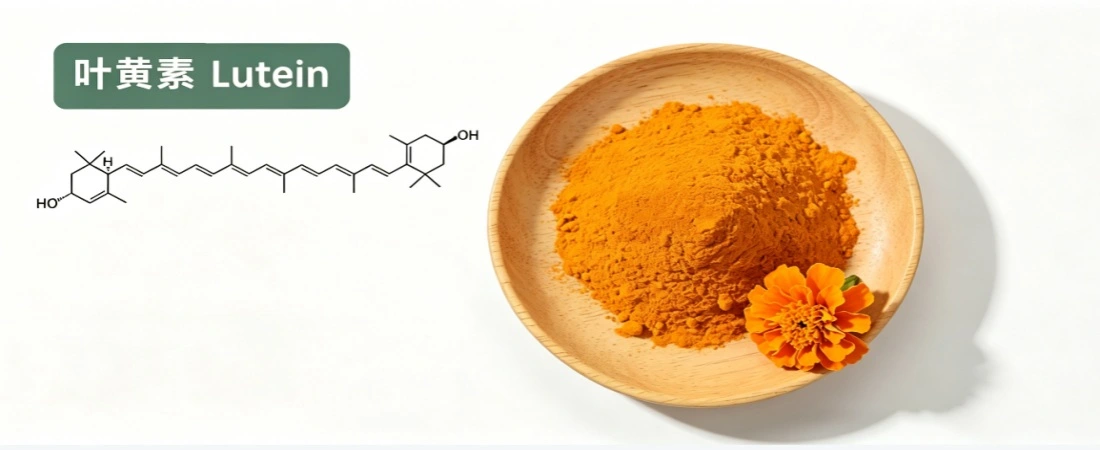
What Should Buyers Check Before Choosing Marigold Extract Powder?
Assay Results Matter More Than a Low Price
When a skilled buyer wants to buy marigold extract powder, they should look at the lutein analysis, testing method, stability, carrier content, packing, and paperwork. A smaller quote could mean that the concentration is lower, the recipe base is different, or there isn't as much expert help. So, price per kilogram might not tell you the whole story. A better way to compare is to look at the price per gram of confirmed lutein. NT Biotech specialises in standardising plant extracts and has its own processing methods that are meant to increase the yield of active compounds and make products more stable. Some of our key extracts are purer than 98%, and the approved lutein standard should always be used to check the specifications of marigold extract. Not a general marketing sheet, but the exact CoA for the lot that was bought should be used for every job.
| Quality Document | What It Proves | Why It Supports Better Procurement |
|---|---|---|
| Certificate of Analysis | Batch-specific assay and quality results. | Helps verify that the delivered material matches the agreed specification. |
| HPLC/UV test record | Analytical method for lutein or related markers. | Gives technical teams a clearer basis for formulation approval. |
| Product specification | Physical, chemical, and microbiological limits. | Reduces confusion between sample material and production material. |
| Packaging and shelf-life data | Storage and transport requirements. | Helps protect ingredient quality during shipping and warehousing. |
The Best Format Depends on the Finished Product
It's possible for marigold extract powder to work with many forms, but each one needs a different way of being developed. People still like softgels because lutein naturally dissolves in fat and works well in a method that uses oil. Capsules and tablets require that the powder flows well and the blend is uniform. Taste, colour, heat exposure, and the way ingredients are spread out need to be carefully thought out when making gummies. For beauty goods, powder packs may contain lutein along with collagen, vitamin C, ceramides, or fruit extracts. After making sure they meet cosmetic-grade standards, cosmetic developers may look into using marigold-derived ingredients in creams or serums. Which option is best relies on the dose, the target price, what the customer wants, the goals for steadiness, and the rules in your area.
Choosing the right specification should feel straightforward, not confusing. If you are deciding between a lutein softgel, capsule, gummy, or powder blend, contact NT Biotech at info@newthingsbiotech.com. We can help review the intended formula, active target, packaging style, and supply schedule before you commit to a larger production order.
Certificates Need a Clear Scope and Current Validation
Certifications are important, but buyers should know what each one means. NT Biotech uses ISO 9001 quality management standards and can help with Kosher and Halal paperwork based on the current product and certificate scope. These records can help brands serve customers in places where cultural, dietary, or quality-system needs affect what people buy. It's not legal to say that a raw material is "FDA certified" or "CE certified" without a clear legal reason, because those terms don't always apply to all plant ingredients. A trustworthy marigold extract powder provider gives you paperwork that shows the element, the market it's going to, and how it will be used when it's finished. This method keeps brands clear of confusion about compliance and makes technical review easier for import teams, distributors, and contract manufacturers.
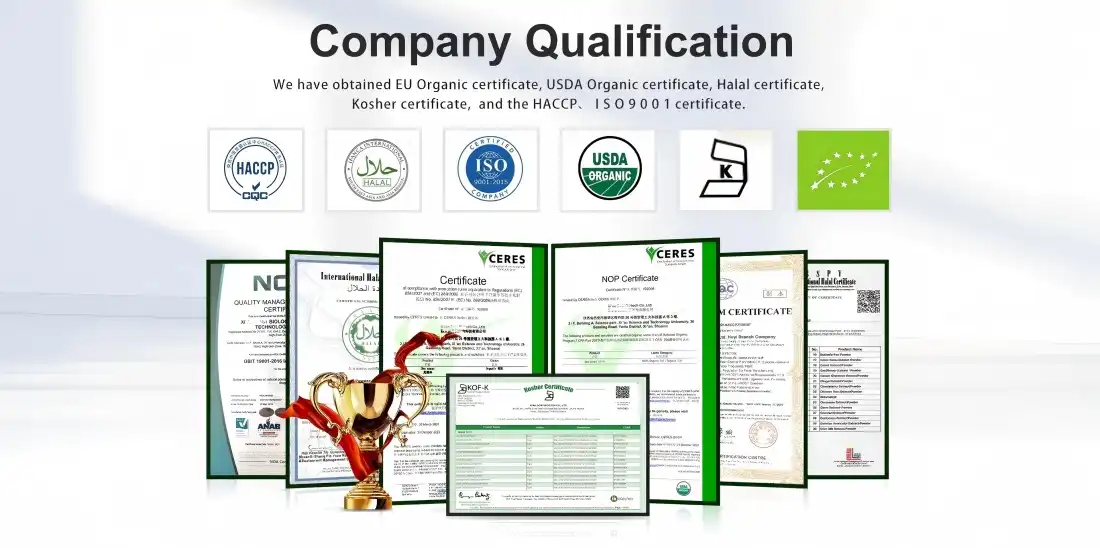
Where Does Marigold Extract Powder Create the Most Product Value?
Eye-Support Supplements Remain the Core Application
Supplements for eye health are still the main way that marigold extract powder is sold. Lutein is often mixed with zeaxanthin, vitamins, minerals, omega-3 ingredients, or antioxidant chemicals in products that are meant to improve daily eye health. The best product ideas don't depend on making big claims. They say that lutein is a vitamin that is linked to eye pigment and is used in recipes that help with nutrients. This is easier for customers to understand and easier for regulators to look over. Lutein and zeaxanthin are still being talked about as important carotenoids found in food when it comes to eye health [4]. A verified lutein assay, clean packaging, clear sourcing, and a clear message to the consumer can help a brand stand out.
Beauty-From-Within Products Add New Growth Potential
Marigold extract powder has found another important use in beauty products. Along with collagen peptides, hyaluronic acid, vitamin C, biotin, ceramides, and plant-based antioxidants, lutein can be found in food. Its natural yellow-orange colour also helps brands tell a story about skin health, radiance, and daily antioxidant support. Lutein and zeaxanthin have been studied for their role in protecting the skin from free radicals and improving the state of the skin [5]. This doesn't mean that all products should claim to work as medicine or beauty aids. It means that formulators can use ingredients that they know are good for looks. People who want one product that connects screen-heavy habits, healthy ageing, and inner beauty may be interested in a well-designed recipe.
Functional Foods and Animal Nutrition Expand the Opportunity
Marigold extract powder can be used for more than just pills and beauty products. It can also be used in useful food and animal nutrition projects where colour, vitamin value, and plant placement are important. After looking at local food laws, food makers can use the right grades in nutrition mixes, drinks with added vitamins and minerals, or speciality health powders. Animal feeding companies may use carotenoids that come from marigolds in situations where natural colour support is important. NT Biotech has clients in the fields of functional foods, high-end cosmetics, dietary supplements, and animal nutrition. This means that buyers can talk about a wider range of applications. When a project goes from a small product idea to a plan for a return order, this experience helps. The ingredient might be the same, but the packaging, specifications, and paperwork that are needed can be very different from one industry to the next.
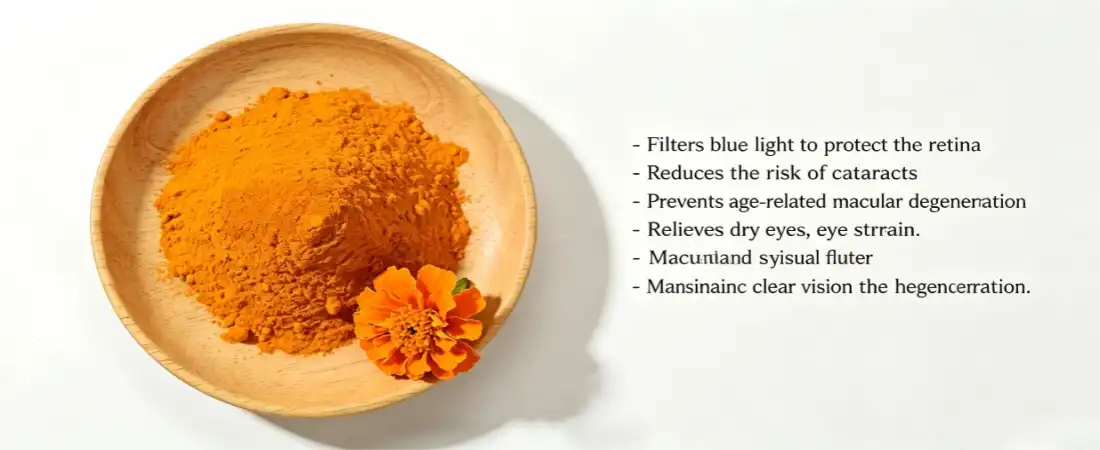
How NT Biotech Supports Long-Term Lutein Product Development
Plant Source, Extraction, and Application Support Work Together
NT Biotech does more than just sell raw materials. Shaanxi New Things Biotech manages plant sources, develops extraction methods, and supports smart production, testing, and an adaptable supply chain. This full-chain approach helps keep the consistency of the marigold extract powder safe from the time the raw flowers are chosen until they are delivered. When buying, testing, and shipping are handled by different people who don't talk to each other much, buyers often run into problems. These steps fit together better in our model. We want to give you plant ingredients that are pure, active, stable, and good for real formulation needs. This is especially helpful for companies making a new lutein product, since the quality of the ingredients affects both what the label says and how the customer feels about the product.
OEM and ODM Options Help Brands Enter Local Markets
Different countries have different tastes when it comes to flavours, pack sizes, dosage forms, and where products are placed on store shelves. NT Biotech supports OEM and ODM, which means customers can change ideas for marigold extract powder to fit their local market. A new business might need a small run of capsules with its own label on them. A retailer that has been around for a while might need large quantities, custom boxes, and a plan for placing repeat orders. A beauty brand might want a high-end bag mix with plant-based chemicals and collagen. We don't force every job into a single style; instead, we help customers talk about choices that will work. We can also talk about buyer-friendly payment options, such as using local currency when it's available and makes sense.
Responsive Delivery Helps Brands Protect Their Launch Timeline
When a supplier takes too long to respond or can't explain lead times, a product launch can lose steam. When someone calls NT Biotech, they try to answer within two hours. If you buy popular standardised extracts that are already in stock, you can get them shipped within one to three business days. Production orders usually take between three and ten working days, which includes getting the raw materials ready, extracting them, testing them in the lab, releasing the COA, and packaging them. We can set up fast delivery through FedEx or UPS accounts, and our trusted freight partners can handle bigger packages by air and sea. Marigold extract powder supply that you can count on isn't just about how fast it arrives. It's about making sure that paperwork, shipping, testing, and coordinating goods are all done in the same way.
Conclusion
Marigold extract powder is a top source of lutein because it comes from plants, can be used on a large scale, can be used in a variety of ways, and has a clear customer story. Its real value depends on how much lutein is in it, how stable the processing is, how much documentation there is, and how well the supplier knows what the finished product is. Standardised plant extracts, HPLC/UV tests, COAs, OEM support, and quick shipping are some of the things that NT Biotech offers to people who buy supplements, foods, cosmetics, and animal nutrition. If you are making a pill for eye health, a beauty supplement, a useful powder, or a specialised nutrition product, lutein from marigolds can help you make a more believable and competitive recipe.
FAQ
1. What is marigold extract powder mainly used for?
It is mainly used as a natural lutein source in eye-health supplements, beauty supplements, functional foods, and selected cosmetic or animal nutrition products.
2. Why is marigold used for lutein extraction?
Marigold flowers contain lutein esters in concentrations that support commercial extraction and standardization.
3. Can NT Biotech provide batch testing documents?
Yes. NT Biotech can provide HPLC/UV testing information and a batch-specific Certificate of Analysis for approved orders.
4. Is marigold extract powder suitable for softgels?
Yes. Lutein is commonly used in softgel formats, although the final formula should be reviewed for oil compatibility and dosage requirements.
5. How quickly can NT Biotech ship an order?
Popular in-stock extracts may ship within one to three working days. Production orders generally require three to ten working days.
Source Better Lutein Ingredients With NT Biotech
NT Biotech is ready to support your next eye-health, beauty-from-within, functional food, or nutrition project with reliable marigold extract powder and practical technical service. We offer standardized botanical ingredients, HPLC/UV documentation, Certificates of Analysis, flexible OEM and ODM development, and shipping options by express, air, or sea. Our team responds quickly because product development decisions often cannot wait. If you need a dependable lutein partner, contact info@newthingsbiotech.com for specifications, samples, pricing, packaging options, and a tailored supply plan. Let NT Biotech help turn your botanical ingredient idea into a market-ready product.
References
1. Krinsky, N. I., Landrum, J. T., and Bone, R. A. “Biologic Mechanisms of the Protective Role of Lutein and Zeaxanthin in the Eye.” Annual Review of Nutrition, 2003.
2. Ma, L., Liu, R., Du, J. H., Liu, T., Wu, S. S., and Liu, X. H. “Lutein, Zeaxanthin and Meso-Zeaxanthin Supplementation Associated With Macular Pigment Optical Density.” PLOS ONE, 2016.
3. Age-Related Eye Disease Study 2 Research Group. “Lutein + Zeaxanthin and Omega-3 Fatty Acids for Age-Related Macular Degeneration.” JAMA, 2013.
4. Kijlstra, A., Tian, Y., Kelly, E. R., and Berendschot, T. T. J. M. “Lutein: More Than Just a Filter for Blue Light.” Progress in Retinal and Eye Research, 2012.
5. Palombo, P., Fabrizi, G., Ruocco, V., et al. “Beneficial Long-Term Effects of Combined Oral and Topical Antioxidant Treatment With the Carotenoids Lutein and Zeaxanthin on Human Skin.” Skin Pharmacology and Physiology, 2007.
6. Juturu, V., and Kruger, C. L. “Lutein and Zeaxanthin: Effects on Eye and Skin Health.” Journal of the American College of Nutrition, 2017.
Marigold extract lutein powder helps the development of eye-health products by providing a standardised source of lutein, a carotenoid that is found in the macular pigment of the eye. This ingredient is sold by NT Biotech to supplement, functional food, and beauty brands that need more than just a pretty yellow-orange powder. Controlled extraction, active-content verification, HPLC/UV testing, batch Certificates of Analysis, and flexible OEM support are what set us apart. Brands can make eye health products with better technical bases and a clearer natural origin story when they use a reliable lutein ingredient.
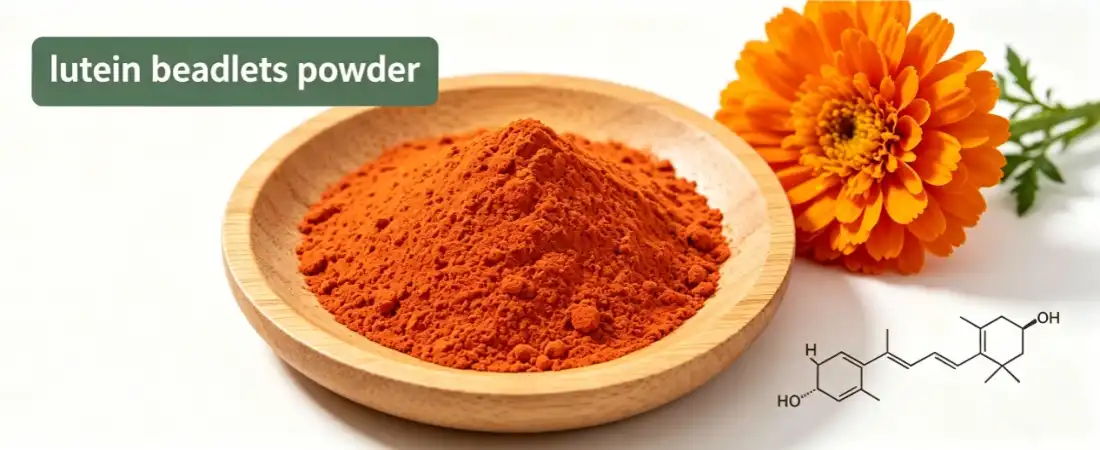
Why Global Eye-Health Brands Use Marigold as a Lutein Source
Marigold Flowers Provide a Scalable Natural Source
The flowers of the Tagetes erecta plant are usually used to make marigold extract lutein powder because they naturally contain lutein esters. Leafy vegetables also have lutein, but marigolds are a more concentrated source that can be used on a large scale for business reasons. This is important for supplement brands that need the same amount of active ingredients in each batch. How fresh veggies are grown, transported, and stored can change depending on the time of year. The amount of lutein in pills, tablets, chews, softgels, and powder sticks can be better controlled when the marigold ingredient is standardised. Because of this, marigolds have become a popular plant source for making lutein around the world.
Lutein Has a Clear Connection to Macular Pigment
The macula is the part of the eye in the middle that helps you see details. Both lutein and zeaxanthin are naturally found in macular pigment, which gives it its yellow colour and helps it filter light. Many people may have higher macular pigment optical density after taking lutein supplements, but the effects depend on their food, amount, age, and biology [1]. Based on this proof, marigold extract lutein powder can be used in responsible recipes for eye health. Brands should use legal language that focuses on health benefits rather than illness cures. A trustworthy label talks about lutein's role as a natural vitamin instead of making claims that the supplement can't legally back up.
| Buyer Question | Practical Answer | Documentation to Request |
|---|---|---|
| What is the botanical source? | Marigold flowers, usually Tagetes erecta, provide lutein esters for extraction. | Botanical identity and traceability records. |
| What is the key active compound? | Lutein is the main standardized carotenoid in the ingredient. | HPLC or UV assay in the current CoA. |
| Which finished products can use it? | Capsules, softgels, tablets, gummies, powder blends, and selected cosmetic concepts. | Application guidance and stability information. |
| Why is standardization important? | It helps control the lutein amount in every serving. | Product specification and batch test report. |
Consumer Interest Extends Beyond Traditional Eye Supplements
The main market for marigold extract lutein powder is still eye health, but it is now also popular with people who want to look younger and healthier. People use their phones, monitors, and tablets for long periods of time. Also, the products they want should fit in with their daily health habits. Depending on the idea behind the product, lutein can work with zeaxanthin, vitamin C, zinc, omega-3 ingredients, collagen peptides, or ceramides. People learned more about lutein and zeaxanthin in eye-health diet studies thanks to the AREDS2 clinical trial [2]. Not every product can make medical claims because of this. It does give people who make products a well-known scientific point of reference for placing lutein carefully.

What Happens When Lutein Enters an Eye-Health Formula?
Formula Design Influences Lutein Delivery
Lutein is an antioxidant that dissolves in fat. In other words, the form of the end product can change how the ingredient is used and consumed. Lutein is often put in softgels because they can hold it in an oil-based state. When formulators use the right carriers, blend controls, and stable tests, capsules and pills can also work. Powder drinks and packs might need more work to make them more evenly distributed and to keep the colour safe while they're being stored. Formulators have a lot of options with marigold extract lutein powder, but it should never be used as a one-size-fits-all ingredient. The final standard should be based on the dose goal, other chemicals, package shape, moisture exposure, and shelf-life plan.
Lutein Travels Through the Body With Dietary Lipids
When you eat lutein, your body absorbs it along with fats and moves it around in lipoproteins. It can build up in tissues, like the skin and eyes. This is why some signs on finished goods say to take lutein vitamins with food. Reviews in the scientific community talk about lutein as a part of the macular pigment system and its biological role in how our eyes work [3]. But even so, a formula should be looked at as a whole. How well marigold extract lutein powder works may depend on how it is mixed, what other ingredients are used, and how it is stored. Responsible brands shouldn't copy generic claims without first checking the rules in their own country.
Eye Wellness Works Best as a Long-Term Category
Lutein isn't an easy food to use right away. It works with both daily nutrition plans and long-term health plans. This makes it appealing for companies that want to make subscription products, supplement packs that last more than one month, and programs for healthy ageing. A well-thought-out product can help people understand why healthy eating is important without making false claims. Marigold extract lutein powder also gives marketing a well-known ingredient story: it is a flower-derived pigment that was created to help with eye health. More research reviews are being done on lutein and zeaxanthin and how they affect vision, macular pigment, and an eye-healthy diet [4]. This shows that science backs up careful teaching over big claims.
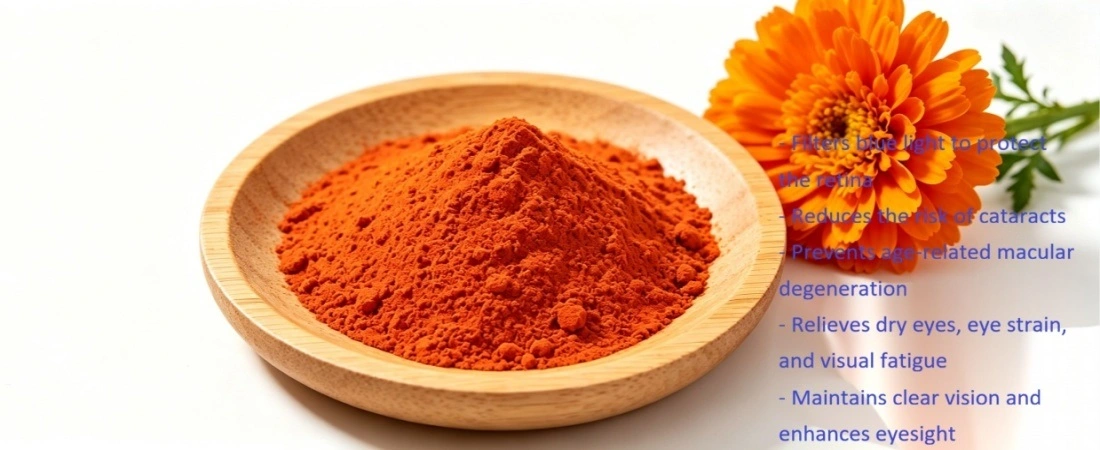
How Should Buyers Evaluate Marigold Lutein Powder Quality?
Test Results Matter More Than Powder Color
A bright yellow powder may look rich in carotenoids, but appearance alone does not confirm lutein content. Buyers should request a batch-specific Certificate of Analysis before approving commercial material. The CoA should show the agreed assay result, test method, physical description, moisture level, microbiological limits, heavy-metal information, packaging details, and storage conditions where applicable. NT Biotech supports marigold extract lutein powder orders with HPLC/UV documentation and quality records. This helps quality teams compare ingredient batches with the approved specification. It also reduces the risk of receiving material that looks similar but does not deliver the intended active content.
Cost Per Gram of Verified Lutein Gives a Fairer Comparison
The cheapest ingredient is not always the best commercial choice. One supplier may quote a low price because the powder contains less lutein, more carrier material, weaker documentation, or a different stability profile. Buyers should compare the cost per gram of verified lutein rather than price per kilogram alone. This approach gives procurement teams a more accurate view of formula value. NT Biotech develops standardized plant extracts with technical controls designed to support purity and stability. Some key extracts in our portfolio reach purity above 98%, while each marigold extract lutein powder grade should be assessed by its specific lutein standard and current CoA.
| Quality Checkpoint | What It Helps Confirm | Why It Matters |
|---|---|---|
| HPLC or UV assay | The agreed lutein content in the batch. | Supports accurate label claims and formula consistency. |
| Certificate of Analysis | Lot-specific quality results. | Connects the delivery to the approved specification. |
| Product specification | Limits for appearance, moisture, and microbiology. | Helps contract manufacturers set acceptance criteria. |
| Packaging guidance | Protection from heat, light, and moisture. | Supports stability during transport and storage. |
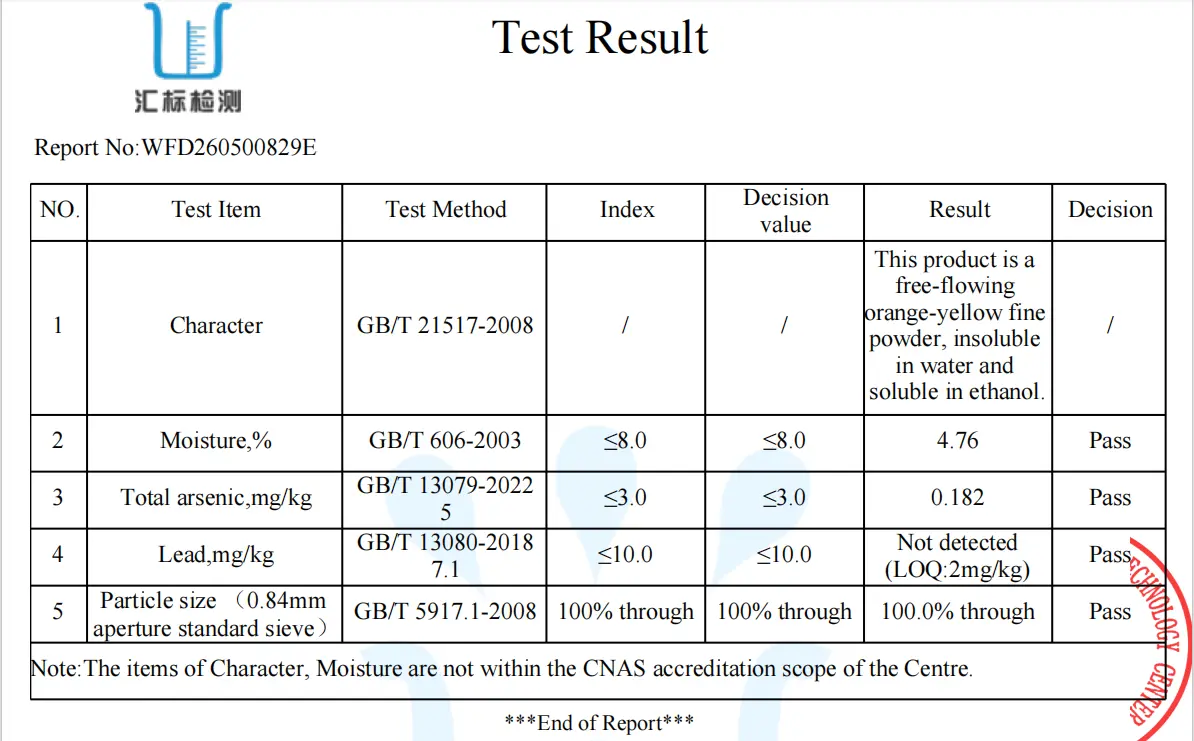
Supplier Documentation Should Match the Target Market
A reliable marigold extract lutein powder supplier should explain which documents are available and what each one means. NT Biotech operates under ISO 9001 quality-management practices and can provide current Kosher and Halal documents when relevant to the requested ingredient and certificate scope. Buyers should not assume that terms such as “FDA certified” or “CE certified” apply automatically to every botanical raw material. Regulatory status depends on the product category, intended use, formula, and destination market. Clear documentation gives importers, brand owners, and contract manufacturers a better starting point for local compliance review.
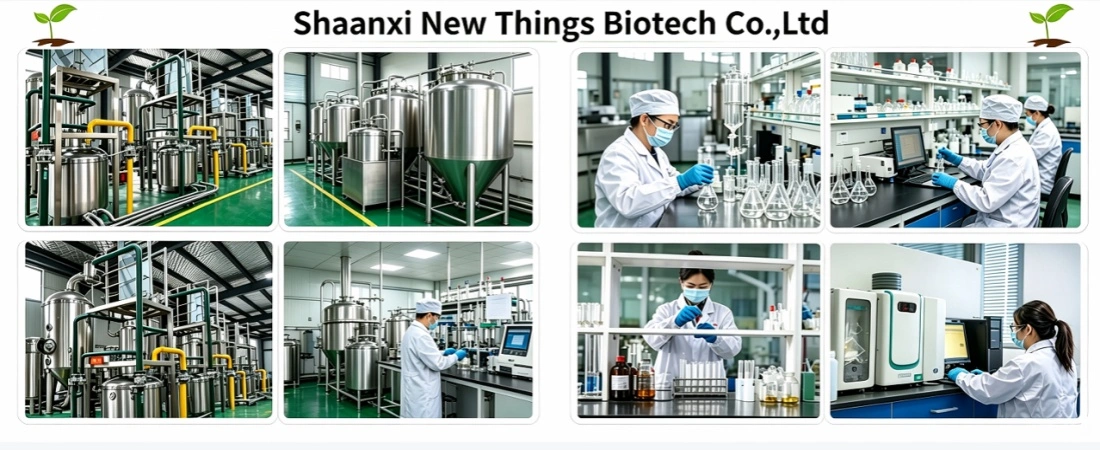
How NT Biotech Helps Brands Move From Ingredient to Launch
Technical Support Begins Before a Large Order
NT Biotech is not only a supplier of plant extracts. Shaanxi New Things Biotech works as a technical partner for dietary supplements, functional foods, high-end cosmetics, and animal nutrition products. We combine plant-source management, extraction development, laboratory testing, intelligent production, and supply-chain coordination. This helps buyers connect marigold extract lutein powder with their actual product goal. A startup may need sample evaluation and capsule advice. A distributor may need a stable bulk supply with technical documents. A beauty brand may need a lutein blend that fits its wider ingredient story. Early technical communication can prevent expensive changes later.
OEM and ODM Services Support Local Product Strategies
A lutein product sold in Southeast Asia may need different packaging, labels, price points, and dosage forms than one sold in Europe, the Middle East, or North America. NT Biotech provides flexible OEM and ODM support so customers can adapt a concept to local demand. We can support bulk ingredient supply, private-label projects, customized packaging, and formulation discussions. Marigold extract lutein powder can become part of a softgel, capsule, gummy, sachet, or beauty supplement when the specification matches the product plan. We also discuss buyer-friendly payment solutions, including local-currency payment options when available and appropriate.
Choosing a lutein supplier should not feel like guesswork. If you need help comparing assays, product formats, documents, or order quantities, contact info@newthingsbiotech.com. Our team can review your project and recommend a practical starting point.
Responsive Logistics Protect Product Launch Schedules
The arrival of ingredients changes the times of production bookings, marketing campaigns, and store launches. NT Biotech promises to answer questions in two hours or less. Standardised versions of popular extracts may be ready to ship one to three business days after the order is confirmed. Production orders usually take between three and ten working days, which includes getting the materials ready, extracting them, testing them, releasing the COA, and packaging them up. We can set up fast shipping through FedEx or UPS accounts, and for bigger orders, we have trusted freight partners who take care of air and sea goods. When it comes to marigold extract lutein powder, reliable logistics means more than just quick shipping. It means correct paperwork, the right packing, and reliable contact from the workplace to the location.
Conclusion
Marigold extract lutein powder helps the development of eye-health products by giving a standard natural source of lutein that can be easily mixed with other ingredients. Its worth comes from current content that has been checked, responsible product positioning, the right shipping forms, and reliable paperwork from the provider. Through HPLC/UV testing, batch COAs, flexible OEM support, and quick shipping, NT Biotech helps buyers around the world make lutein-based vitamins, functional foods, and beauty products. We help brands choose the right raw materials and get their products on the market with more confidence and better quality control by combining our experience with plant extraction with real-world business support.
FAQ
1. What is marigold extract lutein powder?
It is a plant-derived ingredient made from marigold flowers and standardized for lutein, a carotenoid used in eye-health, beauty, and nutrition formulas.
2. Why is lutein used in eye-health supplements?
Lutein is naturally found in macular pigment and is widely used in visual-wellness formulas designed for daily nutritional support.
3. Can NT Biotech provide a Certificate of Analysis?
Yes. NT Biotech can provide batch-specific Certificates of Analysis and HPLC/UV testing information for approved orders.
4. Is marigold lutein suitable for OEM products?
Yes. It can be used in OEM and ODM projects such as capsules, softgels, tablets, gummies, sachets, and customized wellness formulas.
5. How fast can NT Biotech ship orders?
In-stock standardized extracts may ship within one to three working days. Production orders usually require three to ten working days.
Build Your Eye-Health Product With NT Biotech
NT Biotech can help turn your eye-health concept into a market-ready product with dependable marigold extract lutein powder, clear quality documents, and flexible supply support. We provide HPLC/UV testing, batch Certificates of Analysis, OEM and ODM coordination, packaging options, and shipping by express, air, or sea. Whether you need bulk lutein material, a private-label supplement, or a customized beauty-from-within formula, our team can help you choose the right path. Contact info@newthingsbiotech.com today for specifications, samples, pricing, and a supply plan designed around your target market.
References
1. Ma, L., Liu, R., Du, J. H., Liu, T., Wu, S. S., and Liu, X. H. “Lutein, Zeaxanthin and Meso-Zeaxanthin Supplementation Associated With Macular Pigment Optical Density.” PLOS ONE, 2016.
2. Age-Related Eye Disease Study 2 Research Group. “Lutein + Zeaxanthin and Omega-3 Fatty Acids for Age-Related Macular Degeneration.” JAMA, 2013.
3. Krinsky, N. I., Landrum, J. T., and Bone, R. A. “Biologic Mechanisms of the Protective Role of Lutein and Zeaxanthin in the Eye.” Annual Review of Nutrition, 2003.
4. Kijlstra, A., Tian, Y., Kelly, E. R., and Berendschot, T. T. J. M. “Lutein: More Than Just a Filter for Blue Light.” Progress in Retinal and Eye Research, 2012.
5. Juturu, V., and Kruger, C. L. “Lutein and Zeaxanthin: Effects on Eye and Skin Health.” Journal of the American College of Nutrition, 2017.
6. Stringham, J. M., and Hammond, B. R. “The Glare Hypothesis of Macular Pigment Function.” Optometry and Vision Science, 2007.