- English
- French
- German
- Portuguese
- Spanish
- Russian
- Japanese
- Korean
- Arabic
- Greek
- German
- Turkish
- Italian
- Danish
- Romanian
- Indonesian
- Czech
- Afrikaans
- Swedish
- Polish
- Basque
- Catalan
- Esperanto
- Hindi
- Lao
- Albanian
- Amharic
- Armenian
- Azerbaijani
- Belarusian
- Bengali
- Bosnian
- Bulgarian
- Cebuano
- Chichewa
- Corsican
- Croatian
- Dutch
- Estonian
- Filipino
- Finnish
- Frisian
- Galician
- Georgian
- Gujarati
- Haitian
- Hausa
- Hawaiian
- Hebrew
- Hmong
- Hungarian
- Icelandic
- Igbo
- Javanese
- Kannada
- Kazakh
- Khmer
- Kurdish
- Kyrgyz
- Latin
- Latvian
- Lithuanian
- Luxembou..
- Macedonian
- Malagasy
- Malay
- Malayalam
- Maltese
- Maori
- Marathi
- Mongolian
- Burmese
- Nepali
- Norwegian
- Pashto
- Persian
- Punjabi
- Serbian
- Sesotho
- Sinhala
- Slovak
- Slovenian
- Somali
- Samoan
- Scots Gaelic
- Shona
- Sindhi
- Sundanese
- Swahili
- Tajik
- Tamil
- Telugu
- Thai
- Ukrainian
- Urdu
- Uzbek
- Vietnamese
- Welsh
- Xhosa
- Yiddish
- Yoruba
- Zulu
Pyrroloquinoline quinone (PQQ) is a naturally occurring quinone molecule that has been studied for its role in redox processes in the cell , mitochondrial function and antioxidant activity . This has created interest in the dietary supplement market, as experimental investigations have shown that PQQ may influence mitochondrial biogenesis and cellular responses to oxidative stress. PQQ powder is an increasingly researched ingredient, a favourite of manufacturers of nutritional supplements, functional foods and speciality formulations. But before you start selling them commercially you must examine the product quality, chemical form, regulatory requirements and supplier reliability.

Understanding PQQ Powder – Core Knowledge for Procurement
The Chemical Nature and Discovery of PQQ
Pyrroloquinoline quinone is an aromatic ortho-quinone molecule first identified in the late 1970’s in research of bacterial enzymes. It serves as a redox cofactor in many bacterial dehydrogenases involved in oxidation-reduction processes. Later research detected PQQ-related compounds in numerous biological systems and investigated their putative physiological consequences.
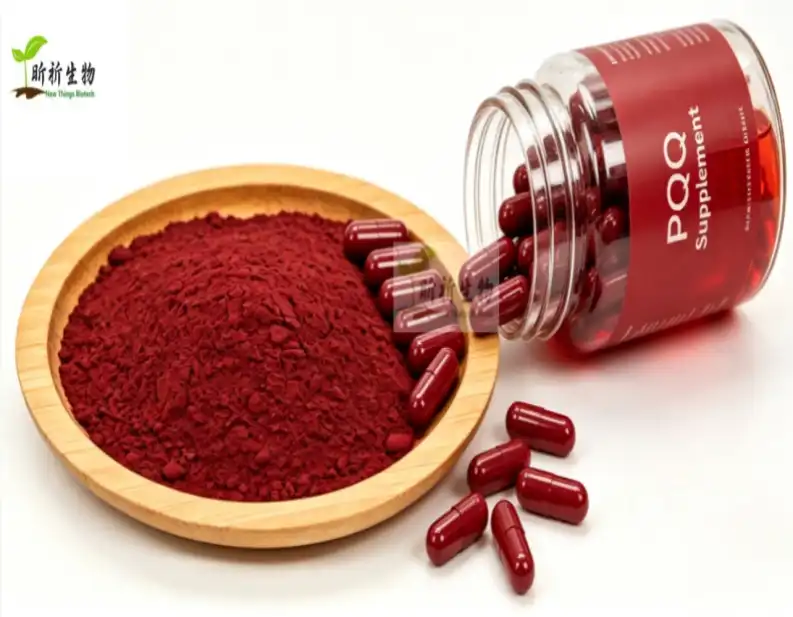
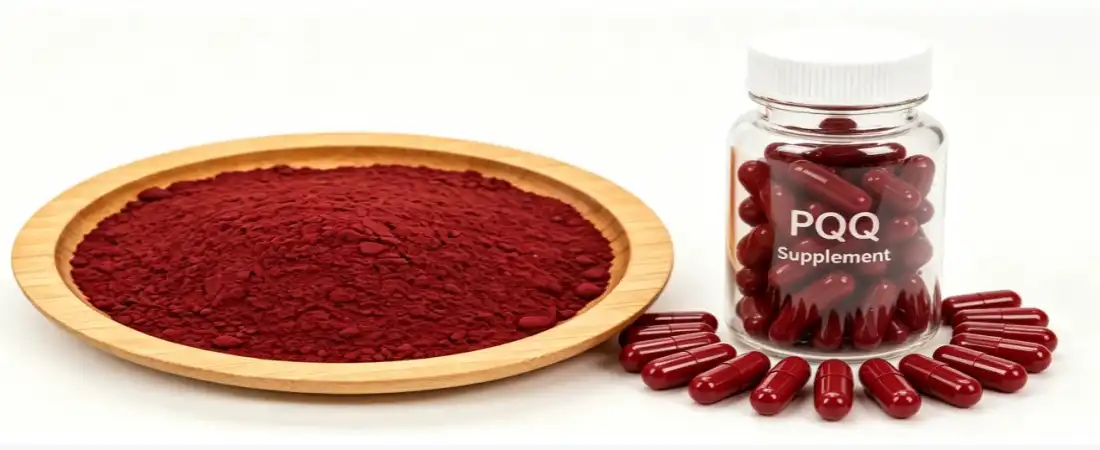
Buyers should be able to discern between free form PQQ and PQQ disodium salt when evaluating PQQ as a commercial ingredient. These forms differ in molecular weights and chemical composition. PQQ disodium salt is frequently utilised as an element in dietary supplement ingredient’s requirements. Molecular Formula: C14H4N2Na2O8 It is reddish-brown in colour and is water compatible, which makes it acceptable for consideration in capsules, tablets and selected liquid formulations. Buyers should ascertain the actual chemical form and basis of assay provided in the supplier's specification.
Mitochondrial Biogenesis and Antioxidant Mechanisms
One of the key scientific concerns in PQQ is its possible role in mitochondrial biogenesis. In experimental research, PQQ is thought to affect signalling pathways that include the phosphorylation of cAMP response element-binding protein (CREB) and the up-regulation of PGC-1α, a regulator of mitochondrial biogenesis and energy metabolism.
PQQ is engaged in redox processes and laboratory studies have shown it to have antioxidant effects. Its ability to prevent oxidative damage to biological components has been investigated in cell culture and in animal models. However, these results should not be taken as evidence of equal benefits in humans. Ingredient producers need to be careful to separate apart experimental mechanisms and clinical outcomes that have been demonstrated in the formulation and marketing of medicines.
Safety Profile and Regulatory Compliance
Safety assessment is an important part of the commercial purchase of PQQ. In humans, daily intakes of about 20 mg have been evaluated . In a short-term clinical research dosages up to 60 mg per day have been investigated . These findings are important for safety information, but do not provide a universally acceptable dosage for all populations or finished products .
Regulatory requirements differ by market as well. PQQ disodium salt has been listed in FDA GRAS notices for various intended food usage in the United States . An FDA response of no questions to a notifier’s GRAS conclusion should not be regarded as broad approval for all products or uses. In the European Union, PQQ disodium salt is allowed for use as a Novel Food in food supplements for adults for certain uses at a maximum dose of 20 mg per day and subject to certain limitations and labelling requirements. Buyers need to check the current regulations in the chosen markets. The supplier paperwork should include acceptable Certificate of Analysis (CoA), product specifications and related safety checks. Documents like ISO 9001, Kosher and Halal may be examined as per buyer’s quality and market needs.

Comparing PQQ Powder with Other Popular Supplements – Making Informed Choices
Synergistic Relationships with Coenzyme Q10
PQQ and Coenzyme Q10 (CoQ10) are often referenced together in relation to mitochondrial health, however they are biologically different. The involvement of PQQ in redox cycling and signalling events associated with mitochondrial biogenesis has been studied. CoQ10 however is a lipid soluble substance involved in the electron transport in the mitochondrial respiratory chain.
There are so many functions that they are strong candidates for composing together. The makers of dietary supplements may wish to incorporate both medications into capsules or other nutritional goods as the formulation has been shown to be safe and stable enough. Suitability is a result of targeted market, target serving size, ingredient specifications, and applicable regulatory requirements, not any imagined synergism.
What Is PQQ in CoQ10? Clarifying a Frequent Question
PQQ is not CoQ10. CoQ10 is not PQQ. They are two different molecules and they have different roles in the metabolism of cellular energy. CoQ10 acts as an electron shuttle in the mitochondrial respiratory chain. PQQ is being investigated for its redox activity and role in mitochondrial biogenesis.
On the label of a combination supplement, the two substances may appear together, but must be listed and quantified separately. This is a critical distinction for procurement teams to make when assessing ingredient declarations, calculating formulation amounts and reviewing supplier CoAs. “Necessary is the product specification and analytical data of each batch of each raw material.
Differentiation from Nicotinamide Riboside and NAD+ Precursors
Nicotinamide riboside (NR) and nicotinamide mononucleotide (NMN) are precursors of NAD+ and are involved in cellular metabolism. NAD+ is an important coenzyme in various redox processes and metabolic pathways.
PQQ has a separate history of research. Instead of a NAD+ precursor, its redox activity and potential impacts on mitochondrial signalling are examined. This difference is essential in the creation of combination supplements since the chemicals have different biological activities. It is important for formulators to analyse the purpose of each ingredient in the formulation, the supporting facts for its use, compatibility and regulatory status.
Bioavailability Considerations and Market Positioning
The chemical form of PQQ can affect the qualities of the formulation and its acceptability for use. The PQQ disodium salt is often used in products requiring a water friendly element. The efficacy of the PQQ disodium salt depends on the overall formulation and processing conditions.
For supplement makers, the product position needs to be consistent with the available science. Mitochondrial function, cellular energy metabolism and oxidative stress are significant scientific issues, but should not be readily translatable into unreserved health claims. Well-documented studies and compliant labelling with transparent constituent descriptions assist build trust for enterprises in competitive supplement markets.
Procurement Insights – Buying, Sourcing, and Evaluating PQQ Powder Suppliers
Direct Manufacturer Relationships Versus Distributors
The volume of purchases, technology needs and supply chain expectations are the drivers behind the manufacturer vs. distributor decision. Direct relationships with manufacturers offer better access to manufacturing information, batch documentation, product specifications and technical communication. Distributors can provide additional flexibility on order volumes and access to numerous ingredient categories.
Procurement teams should review MOQ, inventory on hand, packaging alternatives, sample availability and delivery plans for purchasing PQQ powder. NT Biotech distributes PQQ ingredients to B2B buyers and responds to queries regarding product specifications, samples and ordering in bulk. The minimum order is 25 kilogram. The product is in stock. Typical shipping time is 2-4 business days after payment is confirmed. Buyers are encouraged to confirm availability and delivery details prior to ordering.
Quality Specifications and Certification Requirements
The quality of a product should be defined by measurable requirements, not by marketing phrases such as “premium-grade” or “pharmaceutical-grade”. The first thing buyers should do is determine whether the ingredient is PQQ free acid or PQQ disodium salt. Then check assay, HPLC purity, appearance, moisture content and applicable impurity limitations.
A competent supplier should offer you with batch specific CoA's and proper analytical results. Depending on the application, heavy metals, residual solvents, microbiological limits and other relevant pollutants should be evaluated by the procurement team. HPLC analysis can be helpful for purity assessment but other analytical procedures may be needed for identification confirmation and for impurity characterisation.
Buyers might use the following variables to assess potential manufacturing partners:
- Analytical Testing Transparency: Verify that the provider offers batch-specific CoAs with clearly stated test procedures, requirements, and actual results. Compare the reported assay and HPLC purity independently as they may represent distinct bases of measurement.
- Traceability of the supply chain: Enquire as to the place of manufacture, production batches, controls on raw materials and packing records. Traceability helps purchasers to examine quality deviations and maintain uniform documentation across the supply chain.
- Technical Support Capabilities: Find out if the supplier can supply specification papers, sample quantities, stability information and formulation instructions relevant to your application. Technical support is especially important in adapting PQQ into other dosage forms or checking the compatibility of ingredients.
When judging supplier reliability, don’t only look at price. Documented quality controls, continuous communication and verifiable manufacturing facts are just as important.
Pricing Benchmarks and Supplier Reliability Indicators
Chemical form, assay requirement, order quantity, production process and supplier capabilities determine PQQ price. You can't just compare the price per kilogram on a quotation, you need to look at the real product specification.
When placing an order with vendors, consumers should review the quotation, MOQ, payment terms, sample policy, lead time, packing configuration, and shipping arrangements. Also, the availability of inventory and the supplier’s ability to maintain batch consistency are important. If you are buying for the long term, knowing your criteria and looking around for other qualified providers will help to minimise supply interruptions and unplanned changes in quality.
Practical Applications and Industry Use Cases of PQQ Powder
Cognitive Health Formulations for Professional Demographics
PQQ has been researched for its impact on brain health, oxidative stress and mitochondrial function. This makes it a potential element for supplement manufacturers seeking to build cognitive health and healthy-aging product designs.
Capsules and tablets are the best delivery options as manufactures may control the amount of each ingredient and combine PQQ with other vital elements. However claims on memory, attention or cognitive enhancement need to be supported by relevant human studies and align with the desired commercial objectives. Manufacturers should not make claims of clinical advantage from test results.
Functional Beverage Applications and Formulation Challenges
It is soluble in water and can be utilised in some liquid formulae and powdered beverage mixes. But you need more than just dissolving the ingredient to make a cocktail function. Formulators should take into consideration pH, temperature during production, exposure to light, interactions with other ingredients and stability during specified shelf life.
The chosen formulation can then be tested at pilot scale to see if it will meet the desired parameters in manufacture and storage. Packaging should also be tested to determine its ability to adequately safeguard the product under actual conditions of storage and transportation. “It’s more valuable to have stability data on the finished formulation than to assume that every study based on raw ingredients is applicable to every beverage,” says Smith.
OEM Partnership Models and Private Label Opportunities
PQQ powder can be formulated into private-label dietary supplements and custom nutritional formulations, based on the regulatory needs and technical standards of the target market. OEM initiatives can include sourcing of ingredients, creation of formulas, choice of dosage form, packaging, labelling and testing of the finished product for quality .
Before starting a project, companies need to determine the goal formulation, serving size, packaging requirements, production quantity and compliance paperwork. Suppliers of ingredients like NT Biotech can assist in the raw material sourcing phase with product information and sample evaluation. Confirm manufacturing deadlines and minimum order quantities for finished product with your contract manufacturer of choice.
How to Ensure Long-Term Success with PQQ Powder Procurement
Aligning Product Specifications with Market Demands
The successful procurement strategy starts with matching the raw material specifications to the finished product and its destination market. Buyers should provide the chemical form, assay, purity, impurity limitations, packaging and documentation when calling for quotations.
Marketing needs should be taken into account for product creation. Claims of mitochondrial function, cognitive health or healthy ageing must be properly substantiated and reviewed by the regulatory authority. Published research, technical data sheets and batch-specific CoA’s can assist product development teams to lay a more reliable foundation for product positioning.
Risk Mitigation and Supply Chain Resilience
If supply is impacted by production schedules, shipping or quality concerns, dependence on one source might introduce risk. Buyers should evaluate suppliers based on manufacturing capacity, inventory management, batch uniformity, communication and delivery performance.
To boost supply chain flexibility for regular purchase, you can stick to approved standards and look at other providers. Forecasting demand and confirming lead times before ordering also helps prevent unexpected stockouts. Any alternative source should be subjected to the same quality assessment as the original supplier to prevent any changes in chemical form, purity or impurity profiles.
Sustainable Sourcing and ESG Alignment
Ingredient sourcing is becoming more relevant to environmental and supply chain transparency.” Buyers could ask about the production procedures, energy consumption, wastewater treatment, waste minimisation, packaging materials, and traceability of raw materials.
PQQ can be created by microbial fermentation, but the environmental performance of an element is dependent on the production process, the resources used, the purification steps and the waste management processes. So manufacturers should ask for verifiable sustainability information and not assume that fermentation inevitably makes a product greener. Further information about the supplier’s environmental management system might be obtained from certifications such as ISO 14001.
Conclusion
PQQ powder is an ingredient of interest in the dietary supplement industry because of research into its redox activity, mitochondrial biogenesis, and potential cellular benefits. Its compatibility with selected dosage forms also makes it worth considering for capsules, tablets, and specialized nutritional formulations. However, successful commercial development requires careful attention to chemical form, ingredient purity, analytical testing, regulatory compliance, and formulation stability.
For B2B buyers, selecting a reliable supplier involves more than comparing quotations. Consistent batch quality, transparent documentation, technical support, and dependable delivery arrangements all contribute to long-term procurement success. By evaluating these factors together, supplement manufacturers can make better-informed decisions when sourcing PQQ ingredients.
FAQ
1. What dosage should finished products contain?
There is no universal dosage suitable for every PQQ product. Human studies have commonly investigated daily intake levels around 20 mg, while the European Union authorizes PQQ disodium salt in specified adult food supplements at a maximum of 20 mg per day, excluding pregnant and lactating women. Finished-product developers should consider the target market, intended population, total daily intake, and applicable regulatory requirements before establishing a serving size.
2. How should bulk material be stored?
PQQ raw material should be stored according to the supplier's product specification and validated stability information. Buyers should pay attention to temperature, humidity, light exposure, and packaging integrity. Containers should remain properly sealed during storage, and the manufacturer's recommended conditions and shelf life should be followed. Finished formulations may require separate stability testing because their storage behavior can differ from that of the raw ingredient.
3. What distinguishes fermentation-derived from synthetic versions?
PQQ can be manufactured through microbial fermentation followed by purification. For example, the PQQ disodium salt evaluated by EFSA was produced using Hyphomicrobium denitrificans. Manufacturing route alone does not establish product quality. Buyers should compare chemical identity, purity, impurity profiles, residual solvents, microbiological specifications, and manufacturing documentation when evaluating different sources.
4. What is PQQ in CoQ10 — are they the same supplement?
No. PQQ and CoQ10 are separate compounds with different biochemical functions. CoQ10 participates in mitochondrial electron transport, whereas PQQ is studied for its redox activity and potential involvement in mitochondrial biogenesis. They may be combined in a finished supplement, but each ingredient should be identified, quantified, and tested separately.
Partner with NT Biotech for Reliable PQQ Powder Supply
NT Biotech supplies PQQ ingredients for businesses developing dietary supplements and nutritional formulations. Product evaluation can be supported by relevant quality documentation, including batch-specific analytical information and product specifications. Buyers can discuss purity requirements, sample availability, packaging, and bulk purchasing arrangements before confirming an order.
With a stated MOQ of 25 kg and available stock, NT Biotech can arrange dispatch within approximately 2–4 business days after payment, subject to stock and order confirmation. Procurement teams seeking a dependable PQQ powder supplier can contact the company to request product specifications, CoA information, samples, and bulk quotations.
For product inquiries and purchasing support, contact info@newthingsbiotech.com to discuss ingredient requirements and potential supply arrangements.
References
1. Rucker R, Chowanadisai W, Nakano M. Potential physiological importance of pyrroloquinoline quinone. Alternative Medicine Review. 2009;14(3):268-277.
2. Harris CB, Chowanadisai W, Mishchuk DO, et al. Dietary pyrroloquinoline quinone alters indicators of inflammation and mitochondrial-related metabolism in human subjects. Journal of Nutritional Biochemistry. 2013;24(12):2076-2084.
3. Stites T, Storms D, Bauerly K, et al. Pyrroloquinoline quinone modulates mitochondrial quantity and function in mice. Journal of Nutrition. 2006;136(2):390-396.
4. Chowanadisai W, Bauerly KA, Tchaparian E, et al. Pyrroloquinoline quinone stimulates mitochondrial biogenesis through cAMP response element-binding protein phosphorylation and increased PGC-1alpha expression. Journal of Biological Chemistry. 2010;285(1):142-152.
5. Nakano M, Ubukata K, Yamamoto T, Yamaguchi H. Effect of pyrroloquinoline quinone on spontaneous firing activity of central nervous system neurons. Journal of Nutritional Science and Vitaminology. 2006;52(5):321-329.
6. Akagawa M, Nakano M, Ikemoto K. Recent progress in studies on the health benefits of pyrroloquinoline quinone. Bioscience, Biotechnology, and Biochemistry. 2016;80(1):13-22.