- English
- French
- German
- Portuguese
- Spanish
- Russian
- Japanese
- Korean
- Arabic
- Greek
- German
- Turkish
- Italian
- Danish
- Romanian
- Indonesian
- Czech
- Afrikaans
- Swedish
- Polish
- Basque
- Catalan
- Esperanto
- Hindi
- Lao
- Albanian
- Amharic
- Armenian
- Azerbaijani
- Belarusian
- Bengali
- Bosnian
- Bulgarian
- Cebuano
- Chichewa
- Corsican
- Croatian
- Dutch
- Estonian
- Filipino
- Finnish
- Frisian
- Galician
- Georgian
- Gujarati
- Haitian
- Hausa
- Hawaiian
- Hebrew
- Hmong
- Hungarian
- Icelandic
- Igbo
- Javanese
- Kannada
- Kazakh
- Khmer
- Kurdish
- Kyrgyz
- Latin
- Latvian
- Lithuanian
- Luxembou..
- Macedonian
- Malagasy
- Malay
- Malayalam
- Maltese
- Maori
- Marathi
- Mongolian
- Burmese
- Nepali
- Norwegian
- Pashto
- Persian
- Punjabi
- Serbian
- Sesotho
- Sinhala
- Slovak
- Slovenian
- Somali
- Samoan
- Scots Gaelic
- Shona
- Sindhi
- Sundanese
- Swahili
- Tajik
- Tamil
- Telugu
- Thai
- Ukrainian
- Urdu
- Uzbek
- Vietnamese
- Welsh
- Xhosa
- Yiddish
- Yoruba
- Zulu
Pyrroloquinoline quinone bulk powder is used as a raw ingredient in the food supplement and functional beverage sectors for formulations aimed at cellular health and mitochondrial function. Pyrroloquinoline quinone (PQQ) is a redox active quinone with antioxidant properties that has been the focus of nutritional and biochemical studies. We are looking at possible effects on cell signalling and mitochondrial-related pathways. When choosing the suitable PQQ ingredient, manufacturers must consider the chemical form, purity, analytical data and market-specific restrictions. PQQ is available in numerous chemical forms such as free acid and disodium salt. The customer has to confirm the authenticity and qualities of the item before buying.
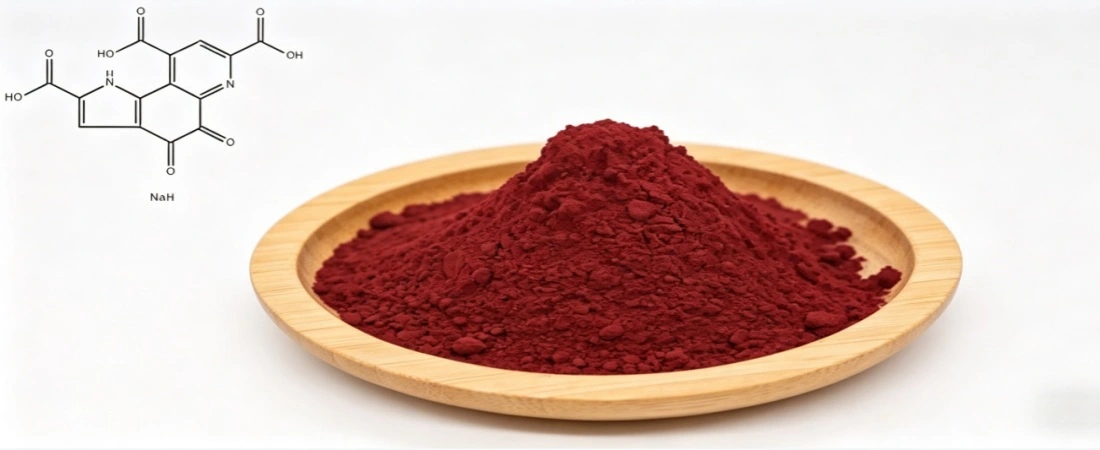
PQQ Powder: What the Term Means and Why It Matters to Buyers
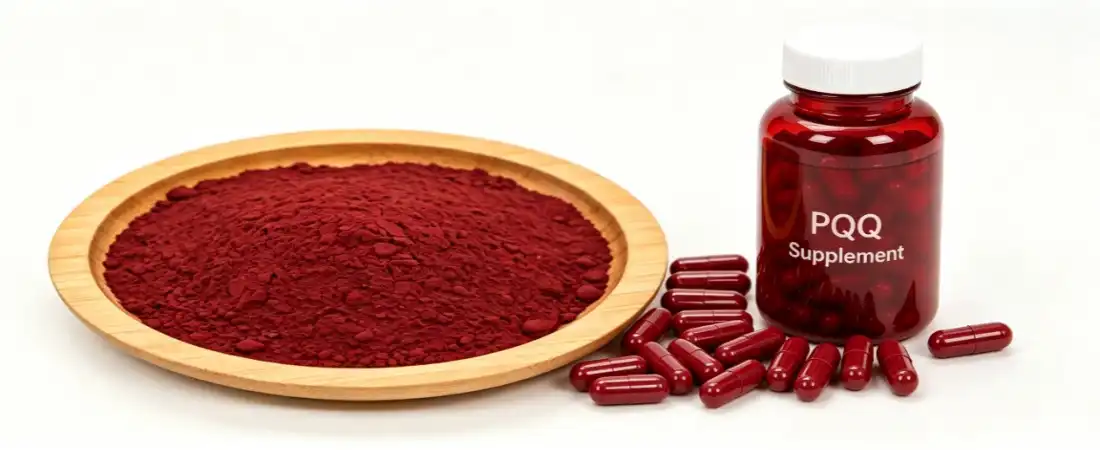
PQQ powder is normally the crude, non-encapsulated form of pyrroloquinoline quinone that is intended to be formed later. The substance may be employed by supplement and beverage manufacturers in capsules, tablets and other suitable product forms. Bulk Powder Pyrroloquinoline Quinone buyers want to see a raw material they can put into their own manufacturing process.
Identification of chemicals . PQQ free acid is C14H6N2O8 and also known as CAS number 72909-34-3. There is also PQQ disodium salt , another form of the molecule . C14H4N2Na2O8 formula CAS Nummer: 122628-50-6 The two categories should not be regarded interchangeable for specification, or solubility, or regulatory documentation purposes.
The supplier’s Certificate of Analysis (CoA) should indicate the chemical form and the applicable batch test findings. Assay, moisture, residual solvents, heavy metals and microbiological data, based on product specification and intended usage. Check out the particle size as well whether it may affect blending or processing. The packaging should be suitable to provide adequate protection from moisture and light as stated in the stability data provided by the supplier.
The Bulk PQQ ingredient allows formulators to create the dosage forms and match compounds. it may be researched in combination with other compounds such as CoQ10 or B vitamins, provided that the suggested formulation is technically possible and complies with the existing criteria. Don't buy based on the name of an ingredient alone. buy on established standards and documentation and consistency of supply.
Understanding Pyrroloquinoline Quinone and Its Core Benefits
What Makes PQQ a Unique Bioactive Compound
Pyrroloquinoline quinone is a redox active quinone compound first found in bacterial enzyme systems. Its capacity to carry out oxidation-reduction processes has made it a subject of study in the field of antioxidant activity and cellular signalling. The fact that PQQ has some experimental antioxidant function does not, in itself, show that it has any special therapeutic advantage, or that it is an essential vitamin for people.
PQQ has been identified in a number of foodstuffs and biological materials but the quantity has been shown to be varied. PQQ compounds are commercially manufactured for regulated formulation and industrial usage. Bulk powder pyrroloquinoline quinone purchasers should consider proven chemical identity, test, impurity profile and storage requirements.
Mitochondrial Biogenesis and Energy Metabolism
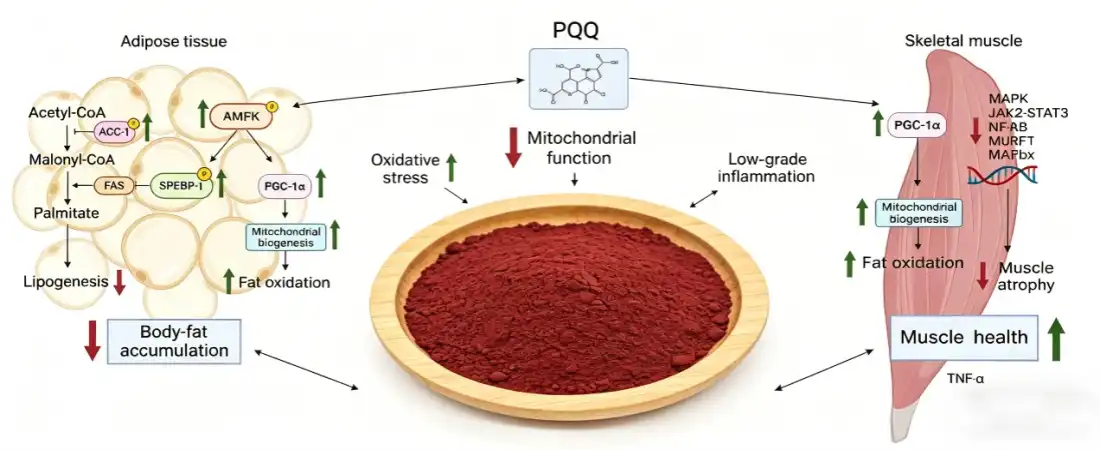
The primary organelles in the cell for generating energy via oxidative phosphorylation are mitochondria. Studies have looked at the impact of PQQ on pathways of mitochondrial function and biogenesis. A frequently referenced study showed that PQQ treatment increased the markers for mitochondrial biogenesis in mouse liver cells including cAMP response element-binding protein (CREB) and peroxisome proliferator-activated receptor gamma coactivator-1 alpha (PGC-1α).
These discoveries open up avenues for further research. However, cell studies don’t translate to increased mitochondria or exercise performance in humans given PQQ. Manufacturers of mitochondrial health should be able to distinguish between early molecular findings and established clinical impacts. Any claims on formulations should be supported by appropriate evidence for the end product and the intended market.
Neuroprotective Properties and Cognitive Enhancement
PQQ has also been investigated in experimental models of oxidative stress and neuronal function. There is some animal and laboratory research on how it may alter brain function and cell damage. The findings are of scientific interest but do not prove that PQQ helps prevent neurodegenerative illnesses or aids those with cognitive impairments.
There is little study on PQQ supplementation in humans and cognitive related measures. However, variations in study methodology, sample size, duration and outcomes hinder the ability to establish broad generalisations. Their results may be worth exploring further. So PQQ should not be sold as a scientifically validated treatment for memory loss, neurological issues or age related cognitive decline .
Supplement companies have a gap between research interest and demonstrated health benefits. Product descriptions should include only permitted claims for the appropriate market and should not imply that the product prevents or cures sickness without proper authorisation and proof.
Navigating Quality and Supplier Considerations in PQQ Bulk Powder Procurement
Purity Grades and Manufacturing Methods
Chemical identification, production details and analytical findings for each batch of pyrroloquinoline quinone bulk powder . PQQ may be created via microbial fermentation or other methods. Until you have compared product quality, impurity profiles and process controls you cannot assume one manufacturing technique is better.
Buyers need to confirm if the substance given is PQQ free acid or PQQ disodium salt. The chemical form may also affect qualities such as water solubility and consequently applicability for various formulations. For example, the disodium salt is used in many food applications and has its own chemical needs.
Assay is determined by HPLC or other recognised analytical technique in line with the supplier’s test protocol. Other tests for relevance might include moisture, residual solvents, heavy metals and micro-biological quality. Don’t expect all PQQ products to have the same particle size, moisture content or amount of contamination. Buyers should ensure that the supplier’s specification and CoA are suitable for the intended application and destination market.
Certifications and Regulatory Compliance
Quality certificates and regulatory paperwork are for various reasons. ISO 9001 is a quality management system. KOSHER and HALAL are labels for religious or commercial purposes. These studies may assist with supplier evaluation, but do not itself confirm that a PQQ ingredient is suitable for all food, supplement or cosmetic uses.
Check the regulatory status for the specific chemical form, product category, intended application and target market. Uses and conditions restricted to in the United States for FDA GRAS warnings for PQQ disodium salt. FDA’s decision not to query a particular GRAS notification is not an FDA endorsement of all PQQ products or applications.
PQQ disodium salt was authorised as a new food in the European Union by the Commission Implementing Regulation (EU) 2018/1122. The clearance indicates that the approved usage is as dietary supplements for adults (except than pregnant or nursing women) at a maximum dose of 20 mg per day. Other use under their own restrictions. Importers and producers must examine current legal requirements before putting items on the market.
Evaluating Supplier Reliability
A good supplier should be able to offer you with precise product specifications, batch paperwork and be able to communicate well throughout the procurement process. Buyers may ask for the latest Certificate of Analysis (CoA), product specification sheet, safety data sheet and applicable quality or certification documents. A sample may be used by the technical team to evaluate the compatibility and processing behaviour of a new formulation containing the chemical.
Also need to look at supply reliability via established production capacity, inventory levels, lead times and order history. Instead of imprecise remarks about the consistency of a batch, procurement teams may look at analytical data across batches and examine the supplier’s quality-control procedures.
NT Biotech offers a minimum purchase of 25 kg and claims stock orders may be sent in 2-4 days. Availability and delivery dates may vary as per product specification and order needs therefore these facts should be reconfirmed before requesting for estimate.
Comparing PQQ Bulk Powder with Other Antioxidants and Supplement Forms
Bulk Powder Versus Finished Dosage Forms
Raw PQQ powder buyers have more control over formulation and final product development than those who purchase pre-encapsulated chemicals. The OEM and private-label firms may decide on the formulation, the selection of suitable excipients and the mixing of the substance with other ingredients according to their product specification.
But bulk powder needs proper handling, weighing, mixing and quality-control systems, too. “Finished dosage forms may be more useful for companies that don’t have the capability to make them in-house.” The best purchase will depend on the manufacturing resources, order volume, formulation requirements and overall processing cost.
The physical properties and particle size of PQQ should be assessed in relation to the equipment to be utilised in the intended manufacturing process. Buyers should not presume that a certain mesh size will provide better flow or fill-weight accuracy without process testing.
PQQ Versus Coenzyme Q10 and Traditional Antioxidants
Both Coenzyme Q10 (CoQ10) and PQQ are being studied for their involvement in cellular and mitochondrial function but have different chemical structure and biological activity. PQQ is a redox active quinone, and has been studied for its effects on cellular signalling and mitochondrial related pathways. CoQ10 participates in the electron transport chain in the inner mitochondria membrane.
These differences don’t mean one element is better than the other. The suitability is determined by the formulation goal, existing scientific data, ingredient compatibility and the claims that may be made for the product. Vitamin C and vitamin E are both antioxidant . So comparing them head-to-head for strength, based on some random lab test, may be inaccurate.
Formulations of combination substances should be selected for compatibility, stability, dosage and testing on the final product and not on unsubstantiated claims of improved antioxidant strength.
Cost-Effectiveness and Supply Chain Optimization
The Bulk PQQ powder pricing is dependent on the chemical form, assay, quantity, packaging, paperwork and delivery conditions. A decent quote should include these facts, so customers may compare services fairly.
The right setup will allow manufacturers to buy in bulk, cutting down on packaging and handling expenses. But more purchases sometimes bring greater inventory needs and storage liabilities. Procurement teams should consider estimated production volume, shelf life documentation, storage and cash flow requirements before committing to a higher volume.
Contact supplier for their standard packing & delivery procedures. Buyers should understand the relevant Incoterms, the cost of goods, the responsibility for insurance and the export documents that are necessary before making an order.
Purchasing and Logistics: How to Procure Pyrroloquinoline Quinone Bulk Powder Efficiently
Sourcing Channels and Supplier Vetting
It may be easier to get product specifications, batch documentation and technical communication by purchasing directly from a manufacturer. Buyers should ask for the appropriate quality documentation before choosing a supplier to ensure that the manufacturer is able to supply the chemical form and specification needed.
A sample assessment allows an R&D team to check the appearance of the ingredient, its solubility where appropriate, compatibility with other formulation materials and behaviour during processing. The sample must be examined under circumstances representative of the intended use. Buyers must also check that the specification of the sample is in line with that of the commercial batch.
NT Biotech is already rolling its PQQ ingredient into its product channels. We suggest that interested parties contact the company before opting to engage the business’s services to review current specifications, available documentation, sample installations and order conditions.
Negotiating Terms and Managing Orders
A purchase order must be properly identified: - Ingredient - Chemical form - Assay requirement - Quantity - Packaging - Required documentation Please check minimum order quantities and delivery dates before ordering. Buyers may also negotiate forecast planning and shipping arrangements for recurrent purchases to synchronise the supply of raw materials with the production plans.
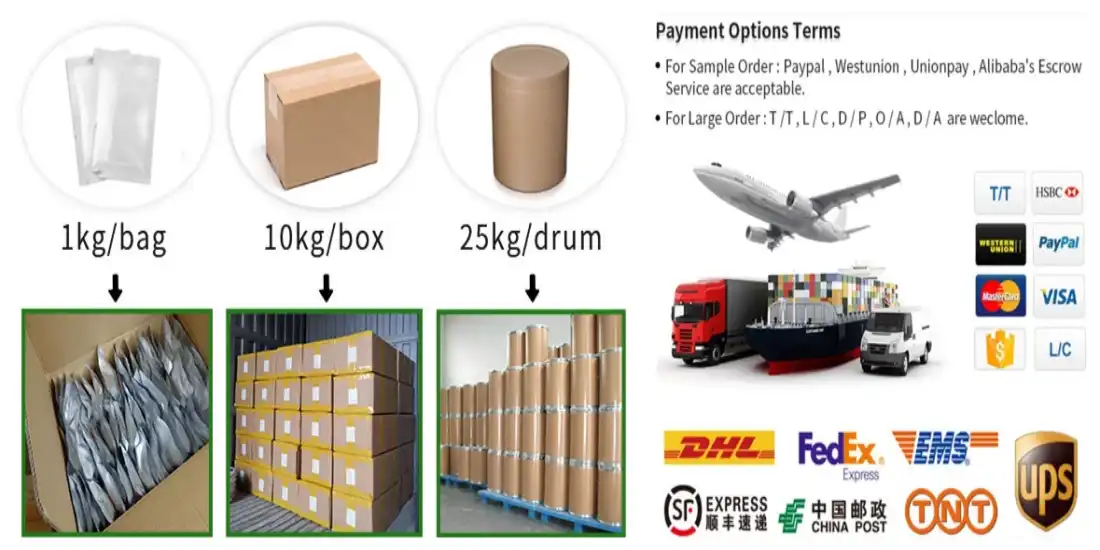
Payment methods, currencies and terms of trade for pyrroloquinoline quinone bulk powder are subject to the provider's current commercial policy and the specific transaction. EXW vs FOB vs CIF vs DDP: Who is Responsible? The Incoterm and the destination should be agreed between the parties before the order is finalised.
International shipping the customer is responsible for confirming import regulations for the destination country. The material should be appropriately described in product descriptions, invoices, packing lists, certificates and other supporting documentation supplied.
Packaging Innovation and Quality Preservation
The container for PQQ should be selected based on the ingredient’s stability profile and handling requirements. Buyers are advised to follow the stated packaging and storage guidelines of the provider. The quality of the material may be altered by exposure to moisture, light and incorrect storage conditions.
Packaging specifications should include the primary container, protective layers, net weight, closure mechanism, and any handling guidelines that apply. Should smaller packing units be necessary, the buyer has to ensure that the provider is able to deliver such smaller units and that repacking is done under adequate quality standards.
Stability information should be product-specific and support the reported shelf-life. Not all PQQ substances and container combinations are assumed to have a 24 month shelf life without evidence to support them. Manufacturers should keep records of batch identification and storage throughout the supply chain.
Ensuring Safe and Effective Use: Dosage, Side Effects, and Regulatory Insight
Evidence-Based Dosing Recommendations
The PQQ dosages employed in research vary by the nature of the study, the demographic of participants and by the desired result. Some human studies have looked at daily doses about 20 mg, although others have utilised alternative doses or experimental settings. The dosages used in this research should not be considered general guidelines or recognised therapy doses.
For formulators, the optimum ingredient amount relies on the chemical form, the completed product category, the planned serving size, and relevant legislation. The quantity employed in a research study does not always represent the amount authorised or appropriate for a commercial product. Manufacturers should consult the required safety evaluations and market-specific standards before to finalising a formulation.
Pyrroloquinoline quinone bulk powder is flexible, giving producers the opportunity to test various quantities in the formulation during product development. Dosage choices should be made on the basis of data and regulatory evaluation, not blanket assertions of enhanced cognition or energy improvement .
Safety Profile and Potential Concerns
Available safety assessments include animal toxicology studies and evaluations of PQQ disodium salt under specified conditions of use. EFSA concluded that the evaluated PQQ disodium salt was safe under the intended conditions assessed in its 2017 opinion. This conclusion should not be extended to every chemical form, dose, population, or product category.
The amount of human safety data remains limited compared with that available for many established nutrients. Manufacturers should avoid describing PQQ as completely risk-free or suitable for every consumer. Product developers should review the relevant safety data and applicable labeling requirements, especially when products are intended for specific populations.
For workplace handling, suppliers should provide a safety data sheet with appropriate precautions. Personnel involved in weighing and blending powders should follow the facility's dust-control, personal protective equipment, and material-handling procedures. Storage conditions should follow the product specification.
Regulatory Landscape Across Key Markets
PQQ regulatory requirements differ between countries and product categories. In the United States, GRAS notices apply to specified substances and intended food uses. FDA's response to a GRAS notice should be reviewed alongside its stated conditions of use; it does not establish unrestricted authorization for every supplement, food, or cosmetic product.
In the European Union, Regulation (EU) 2015/2283 provides the framework for novel foods. PQQ disodium salt was added to the Union list through Commission Implementing Regulation (EU) 2018/1122, with defined specifications and conditions for use in adult food supplements. The authorization includes an exclusion for pregnant and lactating women and a maximum daily level of 20 mg for the specified supplement use.
Other markets may apply different ingredient, product registration, labeling, and import requirements. Businesses selling PQQ-containing products should verify the applicable rules with the relevant authorities or qualified regulatory professionals. A supplier's quality certificates and technical documents can support this process, but they do not replace market-specific regulatory review.
Conclusion
PQQ is a redox-active compound that has attracted research interest in mitochondrial-related pathways, cellular signaling, and cognitive health. However, the available evidence should be interpreted carefully, particularly when distinguishing laboratory findings from established human health outcomes. For manufacturers, the value of pyrroloquinoline quinone bulk powder lies in its potential formulation flexibility and the ability to evaluate the ingredient as part of a clearly specified raw material supply program.
Successful procurement depends on confirming the chemical form, assay, batch documentation, packaging, and regulatory suitability for the intended market. Buyers should also review sample performance, supplier communication, and delivery conditions before placing commercial orders. Working with a supplier that can provide clear specifications and supporting documents helps procurement teams make informed decisions about PQQ ingredient sourcing.
FAQ
1. What distinguishes bulk powder from pre-encapsulated forms?
Bulk PQQ powder is supplied as a raw ingredient for further manufacturing, while pre-encapsulated products are already filled into capsules. Bulk powder gives manufacturers greater control over formulation, dosage form, and ingredient combinations. It is generally more suitable for businesses with the equipment and quality systems needed to handle and process raw materials.
2. How can we verify supplier quality and authenticity?
Request a product specification sheet, batch-specific Certificate of Analysis, and safety data sheet. Check that the chemical name, molecular formula, CAS number, and assay correspond to the supplied chemical form. Depending on the intended application, review relevant impurity, moisture, residual solvent, and microbiological results. Samples and available third-party testing can provide additional information during supplier evaluation.
3. What safety considerations apply to manufacturing environments?
Manufacturing teams should follow the supplier's safety data sheet and site-specific powder-handling procedures. Appropriate dust control, protective equipment, clean handling tools, and suitable storage conditions help reduce workplace and material-quality risks. PQQ should be stored according to its product specification, with attention to moisture and light exposure.
4. What is PQQ powder and how do manufacturers use it?
PQQ powder is the raw, non-encapsulated form of pyrroloquinoline quinone supplied for further formulation. Supplement and beverage manufacturers may evaluate it for use in capsules, tablets, and other suitable product formats. Before purchasing PQQ powder in bulk, manufacturers should confirm the chemical form, assay, batch CoA, packaging, and regulatory suitability for the intended market.
Partner with a Trusted Pyrroloquinoline Quinone Bulk Powder Supplier
NT Biotech supplies ingredients for businesses evaluating raw materials for supplement and related product development. Buyers interested in pyrroloquinoline quinone bulk powder can contact the company to confirm the current product specification, chemical form, HPLC assay, available quality documents, stock status, and order conditions.
For procurement planning, it is useful to provide the required quantity, intended application, destination market, and preferred packaging when requesting a quotation. This information helps clarify whether the available material and documentation match the project's requirements. Contact NT Biotech at info@newthingsbiotech.com to request product information, a CoA, sample availability, or a quotation.
References
1. Rucker R, Chowanadisai W, Nakano M. Potential physiological importance of pyrroloquinoline quinone. Alternative Medicine Review 2009;14(3):268-277.
2. Stites TE, Mitchell AE, Rucker RB. Physiological importance of quinoenzymes and the O-quinone family of cofactors. Journal of Nutrition 2000;130(4):719-727.
3. Harris CB, Chowanadisai W, Mishchuk DO, et al. Dietary pyrroloquinoline quinone alters indicators of inflammation and mitochondrial-related metabolism in human subjects. Journal of Nutritional Biochemistry 2013;24(12):2076-2084.
4. Nakano M, Ubukata K, Yamamoto T, Yamaguchi H. Effect of pyrroloquinoline quinone on stress-induced fatigue. Functional Foods in Health and Disease 2012;2(8):307-324.
5. Chowanadisai W, Bauerly KA, Tchaparian E, et al. Pyrroloquinoline quinone stimulates mitochondrial biogenesis through cAMP response element-binding protein phosphorylation and increased PGC-1alpha expression. Journal of Biological Chemistry 2010;285(1):142-152.
6. Zhang Y, Feustel PJ, Kimelberg HK. Neuroprotection by pyrroloquinoline quinone in reversible middle cerebral artery occlusion in the adult rodent. Brain Research 2006;1094(1):200-206.