- English
- French
- German
- Portuguese
- Spanish
- Russian
- Japanese
- Korean
- Arabic
- Greek
- German
- Turkish
- Italian
- Danish
- Romanian
- Indonesian
- Czech
- Afrikaans
- Swedish
- Polish
- Basque
- Catalan
- Esperanto
- Hindi
- Lao
- Albanian
- Amharic
- Armenian
- Azerbaijani
- Belarusian
- Bengali
- Bosnian
- Bulgarian
- Cebuano
- Chichewa
- Corsican
- Croatian
- Dutch
- Estonian
- Filipino
- Finnish
- Frisian
- Galician
- Georgian
- Gujarati
- Haitian
- Hausa
- Hawaiian
- Hebrew
- Hmong
- Hungarian
- Icelandic
- Igbo
- Javanese
- Kannada
- Kazakh
- Khmer
- Kurdish
- Kyrgyz
- Latin
- Latvian
- Lithuanian
- Luxembou..
- Macedonian
- Malagasy
- Malay
- Malayalam
- Maltese
- Maori
- Marathi
- Mongolian
- Burmese
- Nepali
- Norwegian
- Pashto
- Persian
- Punjabi
- Serbian
- Sesotho
- Sinhala
- Slovak
- Slovenian
- Somali
- Samoan
- Scots Gaelic
- Shona
- Sindhi
- Sundanese
- Swahili
- Tajik
- Tamil
- Telugu
- Thai
- Ukrainian
- Urdu
- Uzbek
- Vietnamese
- Welsh
- Xhosa
- Yiddish
- Yoruba
- Zulu
It has changed how makeup is made today because it is a strong form of hyaluronic acid. It's often found when formulators and buying managers are looking for soothing ingredients that work well. The best sodium hyaluronate stands out because its crystals are more solid, it can hold up to 1,000 times its weight in water, and it works better on the skin. This detailed guide talks about this important ingredient's science, the best ways to use it in recipes, its sources, and the latest trends. It tells B2B buyers useful things they can use to pick the best products for their lines. Companies can make great skincare goods that follow government rules and meet customer needs in very competitive global markets if they know about the business and technical side of sodium hyaluronate.

Sodium Hyaluronate in Skin Care: Why It Has Become a Formulation Standard
In skin care, sodium hyaluronate has gone from a luxury extra to a basic requirement for today’s moisturizing solutions. Brands now boast it in serums, creams, masks and nutricosmetic forms since the ingredient consistently offers quantifiable moisture benefits without the stability issues that restrict raw hyaluronic acid.
The reason sodium hyaluronate is so reliable in skin care products is because it is a salt that is stabilized. This type of salt is stable in manufacture and storage and it dissolves well in water-based systems unlike the parent acid which decomposes in light and air. That stability allows formulators to develop hydration and anti-aging claims that they can support.
Sodium hyaluronate in skin care is more than a performance ingredient for B2B buyers. Its low-irritation, non-comedogenic profile facilitates sensitive-skin placement, while its compatibility with other humectants simplifies formulation work. It has a higher molecular weight to create a film on the surface, and a lower molecular weight to penetrate deeper. A purchasing team may choose the grade that best matches the stated advantage of each product.
The tendency is reinforced by regulatory acquiescence. Sodium hyaluronate is a GRAS food ingredient that is approved in cosmetics under the main frameworks, facilitating the worldwide registration of sodium hyaluronate in skin care products with little paperwork. Suppliers providing CoA, SDS and regulatory status letters further reduces time-to-market of new lines.
Understanding Sodium Hyaluronate: Science and Skin Benefits
The Molecular Foundation of Hydration
You can get hyaluronic acid in the form of sodium hyaluronate. The disaccharide units are made up of D-glucuronic acid and N-acetyl-D-glucosamine over and over again. Skin, joints, and structural parts all have this glycosaminoglycan on their own. It makes these tissues moist, smooth, and bendable. The chemical structure of sodium hyaluronate is smaller than that of its parent molecule. This makes it very good at breaking down in water and not reacting with other things. This structured edge makes it easier for it to get into the top layers of skin, where it's needed most to provide wetness and keep formulations stable over time.
Key Differences Between Hyaluronic Acid and Sodium Hyaluronate
The words are often used interchangeably, but they mean different things. Pure hyaluronic acid breaks down quickly when it comes in contact with light and air. The best sodium hyaluronate dissolves easily in water-based systems and stays steady while it is being made and stored because it is a stabilized salt. For this reason, the best sodium hyaluronate is the best choice for uses in medicine and makeup that need to be stable and reliable. The fact that the best sodium hyaluronate doesn't stick to other ingredients makes it easy for formulators to mix into serums, creams, and oral supplements.
Molecular Weight and Its Impact on Performance
A lot of what makes sodium hyaluronate work well is found in its chemical weight. High molecular weight versions (above 1.5 million Daltons) protect the skin's surface by forming a film that moisturizes and softens it right away. Medium molecular weight grades (between 1.0 and 1.5 million Daltons) are good for a lot of different daily skincare products because they moisten the skin on the surface and don't go too deep into the skin. Sodium hyaluronate with a low molecular weight (less than 500,000 Daltons) goes deeper into the skin and helps make collagen. This helps the skin age more slowly over time. When buying teams know these differences, they can choose the right grade for each product goal, whether that goal is to fix skin over time or to add wetness right away.

Choosing the Right Sodium Hyaluronate Products for Your Business
Evaluating Product Grades and Purity Standards
If you want to get the right sodium hyaluronate, you need to pay close attention to the grade levels and purity levels. Pure sodium hyaluronate makes up 95–99% of cosmetic-grade items. This means that they can be used on the face for skin care and makeup. Medicinal-grade versions are made to stricter pharmacopoeia standards (EP, USP, JP), have protein levels below 0.1%, and keep nucleic acid levels very low. In other words, they can be used in medical tools, eye drops, and shots. Nutraceutical products are becoming more popular, and people want medicines that make them look better and drinks that are good for them. These things use sodium hyaluronate that is safe for food. Because each grade meets different end-use and legal standards, you need to make sure that the grade you pick is right for your product group and market.
Technical Specifications That Matter
There are a few important things that hiring workers should think about when they look at sources. It should say on the Certificate of Analysis (CoA) that the glucuronic acid amount is above 46.0% and the test percentage is between 95.0% and 105.0% when dry. The accuracy of amounts in finished goods depends on how well you can measure intrinsic viscosity and molecular weight. It's important how something breaks down. The best sodium hyaluronate should completely dissolve in water to make thick, clear solutions that don't have the "fish-eye" clumping that happens when the process isn't done right. If an ingredient's pH stays between 5.0 and 8.5, it won't break down when the formula is mixed or speed up hydrolysis when the product is kept.
Comparing Cost-Effectiveness and Performance
Glycerin and propylene glycol are less expensive ways to keep your skin moist, but sodium hyaluronate works better and is safer for your skin. In tests that measure how well a product moisturizes, one with 1% sodium hyaluronate can do better than one with 5% glycerin. The cost is low because of this, even though the raw materials are more expensive. Because less is needed to get better results, costs can be cut on formulation and chemical labels can be made cleaner, which will appeal to people who care about their health. Business-to-business buyers shouldn't just look at the price per kilogram. They should also calculate the cost-per-benefit ratio and think about how customers feel about the product, how well the marketing claims are backed up, and how the product fits in with other luxury market goods.
Procurement Guide: How to Source Sodium Hyaluronate Efficiently?
Navigating Global Supply Networks
Sodium hyaluronate production concentrates in several key regions. China dominates as largest producer through bio-fermentation technology offering competitive pricing with consistent quality. European suppliers command premiums due to strict GMP compliance and pharmaceutical-grade certifications, best suited for medical and premium cosmetic applications. Indian manufacturers expand food-grade output serving the growing nutraceutical market. Procurement must balance cost savings against supply chain reliability, lead times, communication responsiveness, and customs documentation accuracy.
Critical Certifications and Quality Verification
Reputable suppliers maintain internationally recognized certifications demonstrating reliability. ISO9001 indicates systematic quality management throughout production. KOSHER and HALAL certifications facilitate market access to specific consumer segments. COSMOS or Ecocert validates natural or organic claims for cosmetic positioning. Pharmaceutical suppliers require GMP licenses and pharmacopoeia monograph compliance. Request batch-specific test results including HPLC analysis, microbial testing, and heavy metal screening. On-site or third-party audits add verification layers, particularly critical when establishing new supplier relationships.
Strategic Sourcing Considerations
Effective procurement extends beyond identifying quality sources. Minimum order quantities typically start at 25 kg, though some suppliers accommodate smaller orders. Lead times vary: in-stock items ship within 2-4 business days; custom or large production runs require 3-10 days. Framework agreements locking pricing and guaranteeing supply during demand spikes protect against market volatility. Custom formulation support and private label capabilities enable brand differentiation. Technical support relationships provide formulation guidance, stability testing assistance, and regulatory documentation accelerating product development timelines.
Best Practices for Using Sodium Hyaluronate in Skincare Production
Formulation Techniques for Optimal Stability
Sodium hyaluronate incorporation requires attention to dispersion and compatibility. Pre-disperse powder by slow addition with high-shear mixing or pre-blend with humectants like glycerin before aqueous addition. Gentle heating (40-60°C) accelerates dissolution without polymer chain degradation. Maintain pH between 6.0-7.5 using buffers like phenoxyethanol or potassium sorbate for solution stability. Avoid combining with highly acidic ingredients (pH below 4) or strong oxidizing agents that degrade polymer chains and reduce viscosity.
Safety Profile and Sensitive Skin Considerations
Sodium hyaluronate's identity with skin constituents makes it exceptionally safe. Patch testing confirms low irritation potential, enabling use in sensitive skin formulations and dermatologist-tested product lines. Non-comedogenic nature ensures suitability for acne-prone individuals. Products containing sodium hyaluronate are generally considered safe for pregnant and nursing mothers. These safety attributes support broad-spectrum marketing claims while minimizing adverse reaction reports that could damage brand reputation across consumer segments.
Regulatory Compliance Across Markets
Proper regulatory adherence for the best sodium hyaluronate protects against costly recalls and legal actions. US FDA recognizes the best sodium hyaluronate as GRAS for food applications and lists it as an allowed cosmetic ingredient. EU Cosmetic Products Regulation (EC) No 1223/2009 governs usage of the best sodium hyaluronate, requiring safety assessments and proper labeling. Hydration or anti-aging claims for the best sodium hyaluronate require substantiation through clinical studies. Labeling must use correct INCI nomenclature "Sodium Hyaluronate." Reliable suppliers of the best sodium hyaluronate provide regulatory status letters, safety data sheets, and certificates of analysis supporting multi-country product registration.

Future Trends and Innovations in Sodium Hyaluronate Usage
Advanced Delivery Systems and Molecular Engineering
Researchers are continuously coming up with unused ways to utilize sodium hyaluronate as innovation makes strides. Materials that keep your skin sodden for 12 to 24 hours are made with cross-linked arrangements. With epitome advances, moo atomic weight pieces do not break down as well quick, and they can be given to key layers of skin. "Super Hyaluronic Corrosive" is a sort of item that has both hydrophilic and lipophilic properties. This keeps them from coming off when you wash your confront and lets them adhere to the skin's surface. Formulators can make their items stand out by saying they work way better, which can be supported up by changes in TEWL and skin adaptability measurements.
Market Growth and Demand Projections
The worldwide sodium hyaluronate advertise is still developing rapidly. This is since more individuals are getting to be more seasoned and more individuals are learning almost fixings that keep skin new. The advertise for skin care that moderates down maturing is rising truly rapidly. Specialists in the field say that the annually development rates will be over 8% until 2028. Beauty-from-within, which incorporates hyaluronic corrosive vitamins that you can eat, is one of the fastest-growing dietary bunches. This is since more and more individuals are looking for common ways to take care of their skin. Asian markets, particularly South Korea and Japan, are the to begin with to offer modern multi-molecular-weight items. These are made up of particles of diverse sizes that work together to offer assistance the skin in numerous ways. When the advertise is tight, B2B buyers ought to make plans for when request will go up and make beyond any doubt they have supply bargains that secure their capacity to get great products.
Sustainability and Ethical Sourcing Priorities
Going green and having an open supply chain are becoming more and more important in today's buying. When making bio-fermentation, it is better to use bacterial types instead of rooster combs, which come from animals. It makes raw materials that don't come from animals and are safe for vegans. Customers who care about the environment will like suppliers that invest in green science, lowering trash, and renewable energy. This shows that they are in line with the company's sustainability goals. Because officials are paying more attention to supply chain ethics, there needs to be paperwork that keeps track of raw materials from where they are fermented to where they are wrapped at the end. When brands say they only use sodium hyaluronate that comes from responsible sources, they have an advantage in markets where ESG (environmental, social, and governance) factors affect the choice of what to buy.
Conclusion
The best way for experts and customers to agree is that the best sodium hyaluronate is one of the most important ingredients in current skincare products because it keeps skin moist better than any other item. Companies can make goods that really help people and can stand up to tough market conditions if the people in charge of buying them know how to do little things like pick the right molecular weight and make sure the quality is good. Strategic ways of buying that balance cost, quality, and supply consistency are key to long-term success. It's important to keep up with new trends so that your product flow stays useful. For example, better transportation systems and efforts to protect the environment are always being made. There are many benefits to sodium hyaluronate. If business-to-business buyers know how to get it, the best ways to prepare it, and where it's going in the future, they can easily choose ingredients that will make their goods better and help their businesses grow.
FAQ
1. What is the optimal concentration of sodium hyaluronate in skincare formulations?
Most of the time, concentrations between 0.1% and 2% work, but it varies on the product and the results that are needed. As little as 0.1% to 0.5% is good for light serums and essences, but up to 2% is fine for creams that need more moisture. More of something doesn't always make it work better, and it can make your skin feel sticky, which you don't want. It is not only the quantity that matters, but also the shape of the molecules by weight. A lot of high-end solutions work on both surface and deep hydration at the same time by using a range of molecular weights.
2. How can I verify the authenticity and quality of sodium hyaluronate from suppliers?
A lot of information should be given to you, such as Certificates of Analysis that are unique to each batch and include HPLC test results, bacteria numbers, heavy metal screening, and molecular weight distribution data. Government compliance papers and ISO 9001, KOSHER, and HALAL approvals are given by suppliers with a good image. Before taking on big sales, you might want to have a third-party lab test some samples. If you need help with something specialized, ask the provider how quickly they can help you and if they are willing to give you cases from other customers in the same field.
3. Does sodium hyaluronate work differently when applied topically versus taken orally?
The good things about each way to get around work in different ways. It soothes and protects the skin right away when put on top of it, and low molecular weight forms get deep into the tissue. Hyaluronic acid is broken down and spread throughout the body by absorption and digestion. If you take it by mouth, it might help your joints, eyes, and skin stay moist from the inside out. A lot of brands now use both approaches together to make lines of products that work well with each other and care for skin health in different ways.
4. Why has sodium hyaluronate in skin care become such a common ingredient?
Sodium hyaluronate is a favorite in skincare because the salt form is stable during manufacturing and storage, dissolves cleanly into water-based solutions, and penetrates better into the higher layers of the skin than raw hyaluronic acid. That implies a longer shelf life, clearer labeling and less batch-to-batch variability for B2B customers, practical reasons for the ingredient’s appearance in serums, creams and oral beauty products.
Partner with NT Biotech for Premium Sodium Hyaluronate Supply
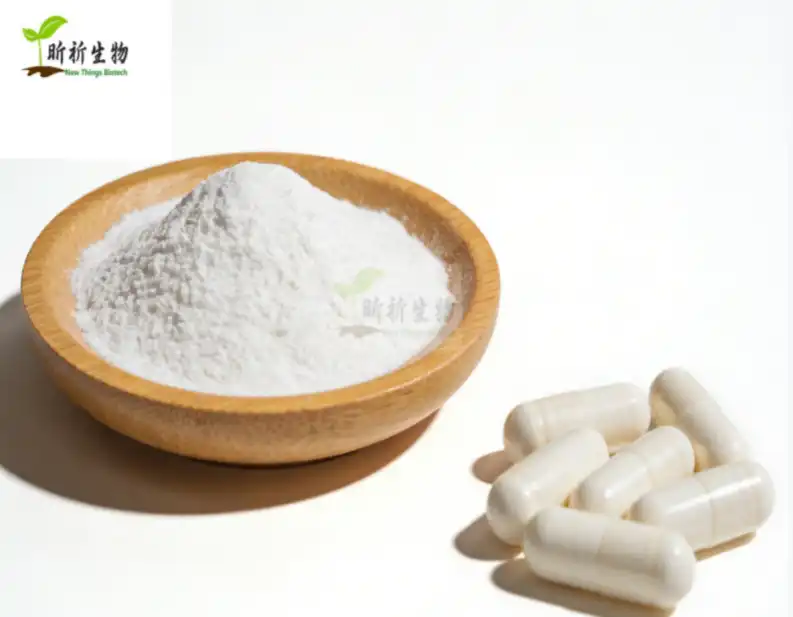
You can change how you make goods and place yourself in the market once you find a reliable best sodium hyaluronate provider. For more than ten years, NT Biotech (Shaanxi New Things Biotech) has worked with organic chemicals that come from plants. This company sells 99% pure sodium hyaluronate powder that is used in medicine. It has full ISO9001, KOSHER, and HALAL certificates. We have a white 80-mesh powder that is easy to mix into mixtures. You can get full CoA paperwork and help from experts to make recipes better for your R&D team. We keep items in stock that are ready to ship so that we can ship them within two to four days. We offer a range of packing options, with a minimum order size of 25 kg, and you can get free samples to see how good the quality is. Every question you have is answered within hours by our dedicated sourcing experts, and we offer clear export papers and fair prices that help with both small-scale production and trial development. Get in touch with us at info@newthingsbiotech.com to talk about your needs and find out how our high-quality, fast service, and deep technical knowledge can help you improve your supply chain and make it easier to come up with new goods.
References
1. Papakonstantinou, E., Roth, M., & Karakiulakis, G. (2012). "Hyaluronic acid: A key molecule in skin aging." Dermato-Endocrinology, 4(3), 253-258.
2. Keen, M. A. (2016). "Hyaluronic acid in dermatology." Skinmed: Dermatology for the Clinician, 14(5), 343-346.
3. Bukhari, S. N., Roswandi, N. L., Waqas, M., Habib, H., Hussain, F., Khan, S., Sohail, M., Ramli, N. A., Thu, H. E., & Hussain, Z. (2018). "Hyaluronic acid, a promising skin rejuvenating biomedicine: A review of recent updates and pre-clinical and clinical investigations on cosmetic and nutricosmetic effects." International Journal of Biological Macromolecules, 120, 1682-1695.
4. Juhlin, L. (1997). "Hyaluronan in skin." Journal of Internal Medicine, 242(1), 61-66.
5. Sudha, P. N., & Rose, M. H. (2014). "Beneficial effects of hyaluronic acid." Advances in Food and Nutrition Research, 72, 137-176.
6. Kogan, G., Šoltés, L., Stern, R., & Gemeiner, P. (2007). "Hyaluronic acid: a natural biopolymer with a broad range of biomedical and industrial applications." Biotechnology Letters, 29(1), 17-25.