- English
- French
- German
- Portuguese
- Spanish
- Russian
- Japanese
- Korean
- Arabic
- Greek
- German
- Turkish
- Italian
- Danish
- Romanian
- Indonesian
- Czech
- Afrikaans
- Swedish
- Polish
- Basque
- Catalan
- Esperanto
- Hindi
- Lao
- Albanian
- Amharic
- Armenian
- Azerbaijani
- Belarusian
- Bengali
- Bosnian
- Bulgarian
- Cebuano
- Chichewa
- Corsican
- Croatian
- Dutch
- Estonian
- Filipino
- Finnish
- Frisian
- Galician
- Georgian
- Gujarati
- Haitian
- Hausa
- Hawaiian
- Hebrew
- Hmong
- Hungarian
- Icelandic
- Igbo
- Javanese
- Kannada
- Kazakh
- Khmer
- Kurdish
- Kyrgyz
- Latin
- Latvian
- Lithuanian
- Luxembou..
- Macedonian
- Malagasy
- Malay
- Malayalam
- Maltese
- Maori
- Marathi
- Mongolian
- Burmese
- Nepali
- Norwegian
- Pashto
- Persian
- Punjabi
- Serbian
- Sesotho
- Sinhala
- Slovak
- Slovenian
- Somali
- Samoan
- Scots Gaelic
- Shona
- Sindhi
- Sundanese
- Swahili
- Tajik
- Tamil
- Telugu
- Thai
- Ukrainian
- Urdu
- Uzbek
- Vietnamese
- Welsh
- Xhosa
- Yiddish
- Yoruba
- Zulu
Pyrroloquinoline quinone (PQQ) is a naturally occurring redox-active molecule now under investigation for possible involvement in mitochondrial function, cellular metabolism, and control of oxidative stress. Its potential importance to cognitive function, cardiovascular health and healthy ageing has also been studied. Bulk PQQ powder provides flexibility to the ingredient purchasers and supplement producers in formulating tablets, capsules and other nutraceuticals. But ingredient choice isn’t just about pricing or purity. Buyers should analyse the chemical form, product specifications, batch testing, documentation and regulatory requirements for their target markets. NT Biotech offers a product inquiry channel for companies considering PQQ raw materials.

Enhanced Energy Production – Boosting Mitochondrial Function
The Science Behind Mitochondrial Biogenesis
Mitochondria are the fundamental organelles of cellular energy metabolism, creating adenosine triphosphate (ATP). There is scientific interest in PQQ because experimental investigations show that it may affect signalling pathways involved in mitochondrial biogenesis. One of the potential mechanisms is phosphorylation of cAMP response element-binding protein (CREB) and increased production of PGC-1α, which is a transcriptional coactivator controlling mitochondrial growth and energy metabolism.
Studies in cell and animal models give a platform for exploring these pathways. Some human research have also looked at PQQ supplementation and mitochondrial-related indicators. But these marker changes don’t show that PQQ boosts day-to-day energy dependably or reduces weariness in the general population. Therefore, its possible involvement in energy-related formulations should be discussed within the framework of current research, rather than as a guarantyd physiological impact.
Cost-Efficient Sourcing for Energy Formulations
The acquisition of ingredients impacts formulation flexibility, production planning and total manufacturing costs. Instead of just completed supplements, firms may buy bulk PQQ powder, manage their ingredient numbers and make their own custom formulas.
Buyers should verify the chemical identification, purity specification, appearance, packaging and batch documentation of the product prior to order placement. They should also examine the overall cost of raw materials, testing, processing, packing and storage, rather than presuming that bulk buying is cheaper. Pilot-scale study may assist firms evaluate if a certain PQQ grade fits their processing and end product needs.
Quality Assurance in Energy Product Development
Maintaining a consistent quality of raw material is vital to meet completed product criteria. A buyer may assess a PQQ batch by looking at its identification, assay result and relevant impurity or contaminant testing in a supplier’s Certificate of Analysis (CoA).
Manufacturers should verify which analytical procedures are being utilised and whether the findings presented are related to the particular batch bought. Microbiological and heavy metal testing may also be significant depending on product specification and intended market. Quality system certifications may give further insight into a supplier’s management procedures but are not a substitute for product-specific testing or regulatory evaluation. This recorded quality evaluation assists producers to make better selections when they build energy supplements.
Cognitive Health Improvement – Supporting Brain Function and Memory
Neuroprotective Properties and Antioxidant Capacity
The antioxidant and redox-related properties of PQQ have been studied. There is experimental evidence that it may affect pathways of oxidative stress and cell responses important to brain function . The results have led to further studies investigating its probable connection with brain health.
Some research have investigated PQQ in relation to nerve growth factor-related activities and cognitive ability. However, the findings from laboratory trials should not be taken as evidence that taking PQQ by mouth raises nerve growth factor levels in people or that it regularly enhances memory and mental clarity. Additional studies in humans are required to determine the significance of these suggested processes for long-term cognitive health.
Formulation Flexibility for Brain Health Products
PQQ is available in a variety of supplement formulations, including capsules, pills, and powder mixes. The appropriateness of a given grade will rely on its physical and chemical properties and the needs of the final formulation.
When formulating multi-ingredient nootropics for brain health, manufacturers may combine PQQ with substances such as CoQ10, phosphatidylserine and omega-3 fatty acids. But just mixing chemicals together does not always provide a synergistic effect. Before picking a combination, formulation teams need to consider ingredient compatibility, processing circumstances, serving size and end product stability.
When considering Bulk PQQ powder, buyers need to ask for the required technical parameters and carry out formulation testing under their own production settings. Don't presume solubility, dispersion and compatibility from the generic description of the substance. Check them.
Safety Profile and Regulatory Compliance
The safety and regulatory status of PQQ is dependent on its chemical form, intended application, product specifications and destination market. In the USA there are FDA GRAS alerts for PQQ disodium salt. A GRAS notification that gets a no-questions answer from the FDA is not the same thing as blanket FDA clearance for any PQQ ingredient, finished product, or planned usage.
PQQ disodium salt has been authorised as a new food in the European Union for use as a food supplement for certain foodstuffs. Authorisation is for adults, except pregnant and nursing women, at a maximum dosage of 20 mg per day and with a mandatory label statement. These requirements are not intended to be generalised to all forms or classes of PQQ.
Clinical studies have examined various amounts of daily ingestion, but study dosages are not general dosage recommendations. Manufacturers should ensure that the current standards for their target markets are verified and the relevant ingredient authorisation, labelling conditions and safety paperwork is reviewed prior to commercialisation.

Cardiovascular Support – Heart Health Benefits of Bulk PQQ Powder
Oxidative Stress Reduction and Heart Function
Oxidative stress is one of the biological processes that is examined in connection with cardiovascular health. PQQ is redox active and so effects of PQQ on oxidative stress, and cellular responses have been studied in experimental models .
These results offer a platform for additional study on PQQ and cardiovascular function. However, they do not show that PQQ prevents heart disease, cures cardiovascular diseases, or independently enhances endothelium function in individuals. Supplement makers should not be promoting these possible research links as therapeutic advantages that have already been validated.
For product producers, the way they describe ingredients, label and promote products is critical, and it boils down to distinguishing laboratory results from verified human consequences.
Strategic Ingredient Sourcing for Cardio Formulations
If you are a supplement manufacturer in the cardiovascular health space, then you should examine your raw material suppliers on product consistency, paperwork, packaging and supply agreements. These issues may affect production planning, and the ability to maintain consistent finished-product requirements.
Buyers wishing to purchase Bulk PQQ powder should seek a current Product Specification and a batch specific CoA. Additional paperwork like origin, stability or production information should be validated in accordance with the actual documentation from the provider. Packaging needs should also be assessed to verify that the chosen format is acceptable for shipping, storage and production handling.
A comprehensive supplier assessment method allows procurement teams to contrast items against objective quality and service standards, rather than relying just on generic marketing promises.
Meeting International Quality Standards
Buying ingredients internationally includes a number of various sorts of criteria. ISO 9001 is a standard for quality management systems . Kosher and Halal certification are for particular religious compliance criteria . However, none of these individual certifications can demonstrate that a PQQ ingredient is acceptable in all food supplement markets.
Importers and producers must differentiate between management system certifications and product certifications, analytical documentation and regulatory authorisation. They should also check the scope and validity of any certificate the vendor provides.
Before placing an order purchasers should consult with the seller to determine the necessary documentation, packing, delivery periods and any import regulations. This eliminates the danger of depending on certifications or commercial guarantees that do not fit the product or intended market.
Anti-Aging and Cellular Longevity – Extending Health Span with Bulk PQQ Powder
Countering Mitochondrial Decline with Age
Mitochondrial function is of great interest in the study of cellular ageing. Several aging-related biological processes have been connected with changes in mitochondrial function and cellular energy consumption. PQQ has been of interest to the scientific community due to experimental investigations suggesting its potential role in modulating mitochondrial biogenesis and oxidative stress-related pathways.
These results make PQQ useful to studies on healthy ageing and cellular function. But they do not show PQQ reverses biological ageing, cure mitochondrial dysfunction or lower the risk of age-related illnesses in people. These assertions need more solid and larger clinical proof.
As long as product descriptions are compatible with known scientific data, PQQ may be of interest as an ingredient to nutraceutical companies engaged in healthy-aging product research.
Cost-Effective Production of Longevity Formulations
Supplement formulating is a balancing act of quality of ingredients, performance of formulation and cost of manufacturing. Bulk raw materials allow businesses to have more control over ingredient choices, serving quantities and product forms.
For a Bulk PQQ powder, procurement teams need to analyse specs, analytical reports, packaging alternatives and order terms. The expenses of inbound quality control, formulation trials, storage and completed product testing should be taken into account.
Price of a supplier’s goods should be compared to the consistency of the product and quality of the paperwork. Direct purchase does not always equate to reduced overall costs, hence producers should assess the whole procurement process before picking a long-term supplier.
Regulatory Navigation in Global Markets
Regulatory requirements for PQQ differ by market and intended use. In the European Union, the authorisation of PQQ disodium salt states that it may be used in dietary supplements for adults only, excluding pregnant and nursing women, and that the maximum dose to be consumed daily is 20 mg. It also has a mandatory product identifier and warning message.
In the United States, GRAS judgements are linked to the identification, specifications, intended use and conditions in the notice involved. This should not be interpreted as a blanket approval for all PQQ products or dose forms.
Companies looking to expand internationally should examine the existing standards governing their completed product, including ingredient identification, legal usage, serving levels, labelling and supporting safety information. Supplier documentation may assist in this evaluation, but the manufacturer or responsible market operator is accountable for finished-product conformity.

Versatility in Sports Nutrition – Supporting Recovery and Performance
Exercise Recovery and Oxidative Damage Mitigation
Physical exercise may transiently modify indicators of oxidative stress and enhance metabolism. The redox characteristics of PQQ have made researchers consider its possible association with cellular responses to oxidative stress.
However, there is little data to support the claim that PQQ reduces exercise-related muscle damage or facilitates recovery in athletes. Research on mitochondrial function and oxidative stress may not always lead to improved endurance, strength or recuperation after exercise.
PQQ may be of interest as an ingredient for additional formulation studies for sports nutrition producers, however product claims should be validated by relevant human data. The use of PQQ with creatine, amino acids or protein also has to be supported by adequate formulation and compatibility testing rather than assumptions on performance enhancement.
Formulation Advantages in Performance Products
Sports nutrition solutions may be formulated in a wide range of forms, including capsules, tablets and powdered beverage mixes. The applicability of PQQ for a given format will rely on the specifications of the ingredient and its behaviour under real processing circumstances.
Teams involved in the formulation should consider solubility, dispersion, pH compatibility, processing temperature and interactions with other substances . The stability of the completed product should be checked over the anticipated shelf-life. Particle size may also influence blending and handling but a particular mesh value should only be utilised if it is supported by the supplier’s product specification.
These assessments assist producers to identify whether Bulk PQQ powder is acceptable for their planned sports nutrition product and manufacturing process.
Supply Chain Optimization for Sports Brands
Sports nutrition businesses generally have many different forms of products and varying manufacturing schedules. Therefore, it is essential that procurement teams and suppliers communicate clearly to ensure reliable raw material planning.
Buyers should specify quantity, type of packing, product specifications, paperwork, delivery schedule and transit circumstances before placing an order. If you are repeatedly purchasing the same product, you may decrease supply uncertainty by checking that the batches are consistent and keeping up-to-date records on the quality of the product.
The supplier’s assessment should also evaluate the effectiveness of communication and the capability to provide correct product information. If these parameters can be validated beforehand, then procurement and production planning may be more predictable.”
Conclusion
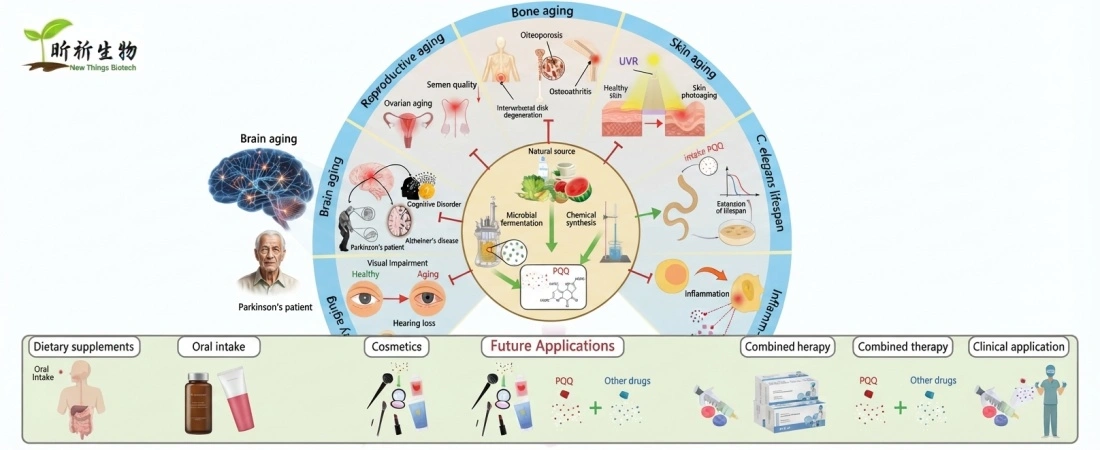
Pyrroloquinoline quinone is a redox-active compound with research potential in mitochondrial function, oxidative stress regulation, and several areas of cellular health. Studies have explored its possible relevance to energy metabolism, cognitive function, cardiovascular health, healthy aging, and exercise-related responses. However, the strength of evidence varies across these areas, and experimental findings should not be presented as proven clinical benefits.
For supplement manufacturers and procurement teams, selecting Bulk PQQ powder requires careful assessment of chemical identity, purity specifications, batch testing, regulatory status, and formulation compatibility. Supplier documentation and transparent purchasing conditions are also important when evaluating long-term sourcing options.
Working with a supplier such as NT Biotech can begin with a review of the available product specifications and documentation. Buyers should confirm that the selected material meets their formulation requirements and the regulations applicable to their intended market before proceeding with commercialization.
FAQ
1. What is the recommended daily dosage when formulating with PQQ powder?
There is no single daily dosage that applies to every PQQ product or market. Human studies have investigated different intake levels, including approximately 20 mg per day, but these research doses should not automatically be treated as universal recommendations.
In the European Union, the authorized use of PQQ disodium salt in specified adult food supplements has a maximum level of 20 mg per day. The authorization excludes pregnant and lactating women and includes a required label statement. Manufacturers should check the applicable regulations in each target market and determine serving levels according to the permitted use, product design, and relevant safety information.
2. How does powder purity impact bioavailability and product safety?
Purity is an important quality parameter because it helps indicate the proportion of the specified ingredient in a raw material. However, higher purity does not automatically mean higher bioavailability, better absorption, or fewer side effects.
Buyers should evaluate purity alongside ingredient identity, impurity profiles, residual solvents, heavy metals, microbiological results, and the analytical methods used. A batch-specific Certificate of Analysis can help verify whether a product meets its stated specification. Bioavailability should be assessed through appropriate scientific evidence rather than inferred from a purity percentage alone.
3. What advantages does bulk procurement offer compared to purchasing finished capsules?
Bulk procurement gives supplement manufacturers greater control over formulation design, ingredient combinations, serving sizes, and finished-product formats. It may also be suitable for businesses with established production facilities or larger ingredient requirements.
However, the total cost should include raw material testing, processing, packaging, storage, and quality control. Manufacturers should compare these expenses with the cost and convenience of purchasing finished capsules. The most suitable option depends on production capacity, order volume, formulation requirements, and business objectives.
Partner with NT Biotech – Your Trusted Bulk PQQ Powder Supplier
NT Biotech provides a contact channel for businesses evaluating PQQ raw materials for nutraceutical product development. Buyers interested in Bulk PQQ powder can contact the company to discuss product specifications, available quality documentation, packaging requirements, and order conditions.
Before making a purchasing decision, manufacturers should confirm the chemical form, assay specification, batch testing, and documentation needed for their intended application and target market. Product availability, minimum order quantities, delivery arrangements, and sample options should also be confirmed directly rather than assumed from general product descriptions.
For product inquiries and procurement discussions, contact NT Biotech at info@newthingsbiotech.com. Providing the intended application, target market, required quantity, and specification preferences can help clarify the information needed for a suitable Bulk PQQ powder sourcing evaluation.
References
1. Rucker R, Chowanadisai W, Nakano M. "Potential physiological importance of pyrroloquinoline quinone." Alternative Medicine Review, 2009; 14(3): 268-277.
2. Harris CB, Chowanadisai W, Mishchuk DO, et al. "Dietary pyrroloquinoline quinone (PQQ) alters indicators of inflammation and mitochondrial-related metabolism in human subjects." Journal of Nutritional Biochemistry, 2013; 24(12): 2076-2084.
3. Stites T, Storms D, Bauerly K, et al. "Pyrroloquinoline quinone modulates mitochondrial quantity and function in mice." Journal of Nutrition, 2006; 136(2): 390-396.
4. Nakano M, Ubukata K, Yamamoto T, Yamaguchi H. "Effect of pyrroloquinoline quinone (PQQ) on mental status of middle-aged and elderly persons." FOOD Style, 2009; 21: 13(7): 50-53.
5. Chowanadisai W, Bauerly KA, Tchaparian E, et al. "Pyrroloquinoline quinone stimulates mitochondrial biogenesis through cAMP response element-binding protein phosphorylation and increased PGC-1alpha expression." Journal of Biological Chemistry, 2010; 285(1): 142-152.
6. Akagawa M, Nakano M, Ikemoto K. "Recent progress in studies on the health benefits of pyrroloquinoline quinone." Bioscience, Biotechnology, and Biochemistry, 2016; 80(1): 13-22.