- English
- French
- German
- Portuguese
- Spanish
- Russian
- Japanese
- Korean
- Arabic
- Greek
- German
- Turkish
- Italian
- Danish
- Romanian
- Indonesian
- Czech
- Afrikaans
- Swedish
- Polish
- Basque
- Catalan
- Esperanto
- Hindi
- Lao
- Albanian
- Amharic
- Armenian
- Azerbaijani
- Belarusian
- Bengali
- Bosnian
- Bulgarian
- Cebuano
- Chichewa
- Corsican
- Croatian
- Dutch
- Estonian
- Filipino
- Finnish
- Frisian
- Galician
- Georgian
- Gujarati
- Haitian
- Hausa
- Hawaiian
- Hebrew
- Hmong
- Hungarian
- Icelandic
- Igbo
- Javanese
- Kannada
- Kazakh
- Khmer
- Kurdish
- Kyrgyz
- Latin
- Latvian
- Lithuanian
- Luxembou..
- Macedonian
- Malagasy
- Malay
- Malayalam
- Maltese
- Maori
- Marathi
- Mongolian
- Burmese
- Nepali
- Norwegian
- Pashto
- Persian
- Punjabi
- Serbian
- Sesotho
- Sinhala
- Slovak
- Slovenian
- Somali
- Samoan
- Scots Gaelic
- Shona
- Sindhi
- Sundanese
- Swahili
- Tajik
- Tamil
- Telugu
- Thai
- Ukrainian
- Urdu
- Uzbek
- Vietnamese
- Welsh
- Xhosa
- Yiddish
- Yoruba
- Zulu
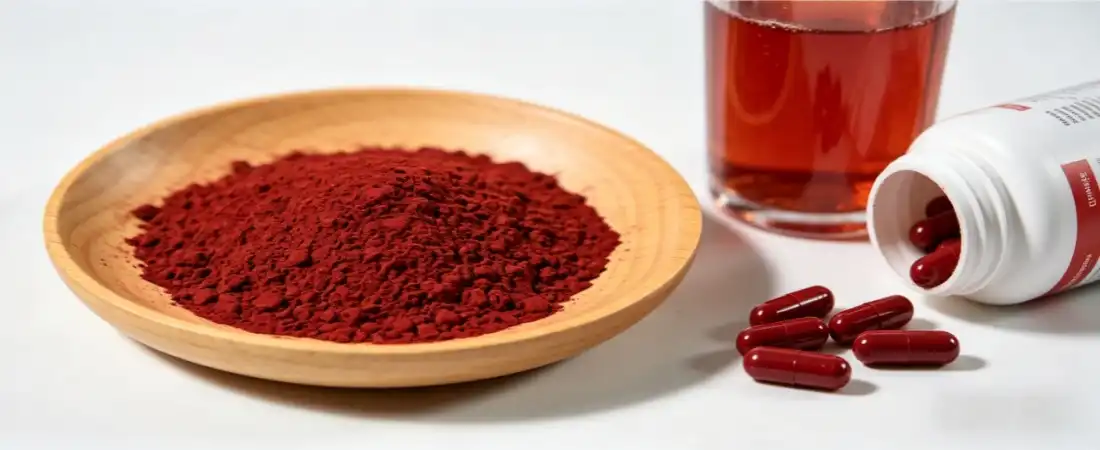
Business-to-business buyers looking for high-quality useful ingredients will have a lot of options in the astaxanthin powder wholesale market in 2026. Finding trustworthy sources of natural astaxanthin powder from Haematococcus pluvialis becomes very important for sourcing workers who work with global supply chains. This guide looks at confirmed providers that work with the food, cosmetics, and animal feed businesses and offer reasonable bulk prices, high quality standards, and quick service. This powerful antioxidant is becoming more popular in functional foods and dietary supplements. If you want to make sure your products meet both legal requirements and market differentiation goals, you need to know how to buy in bulk.
Understanding Astaxanthin Powder Wholesale: Essentials for 2026 Buyers
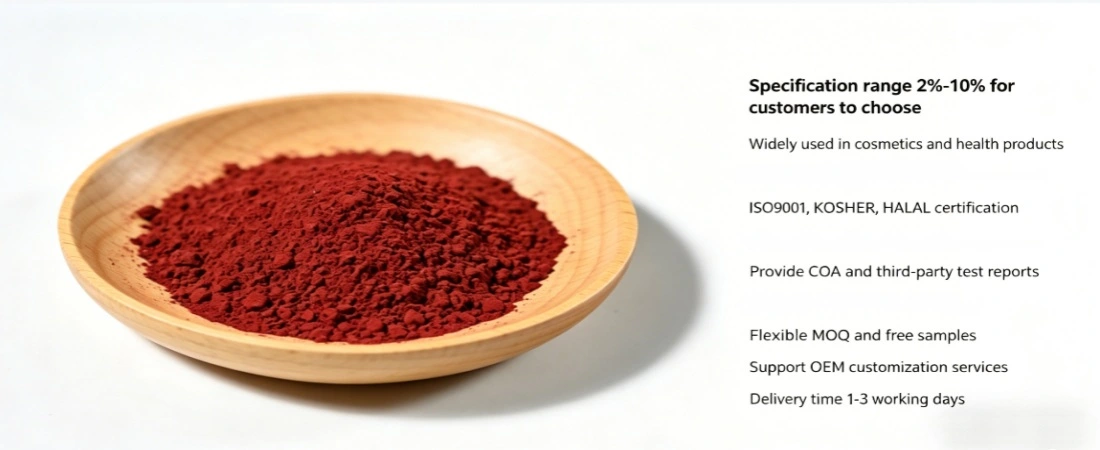
Astaxanthin powder, usually from Haematococcus pluvialis, is one of nature's greatest defenders. This antioxidant keto-carotenoid molecule (CAS: 472-61-7) scavenges singlet oxygen 6,000 times better than vitamin C and 550 times better than vitamin E. This makes it beneficial in many domains. The wholesale industry has evolved, and currently there are typical standards from 2% to 10% concentration for a variety of formulas.
Natural Versus Synthetic: Critical Purity Considerations
B2B purchasers must distinguish between natural and synthetic astaxanthin before buying in bulk. Astaxanthin from Haematococcus pluvialis is predominantly the (3S, 3'S) stereoisomer, which has superior bioavailability and antioxidant efficacy than produced choices. Purity depends on extraction process. Supercritical CO2 extraction and microencapsulation protect molecules against oxidation and photodegradation. Buyers should request HPLC analytical records of stereoisomer ratios, which affects final items' biological activity. According to the beadlet combination, natural astaxanthin powder is a dark red to violet-brown fluid with 40–100 mesh particles. This capsule matrix, commonly modified starches or gum arabic, protects the lipophilic molecule from environmental degradation and allows for water-soluble formulations for more applications.
Industrial Applications Driving Market Demand
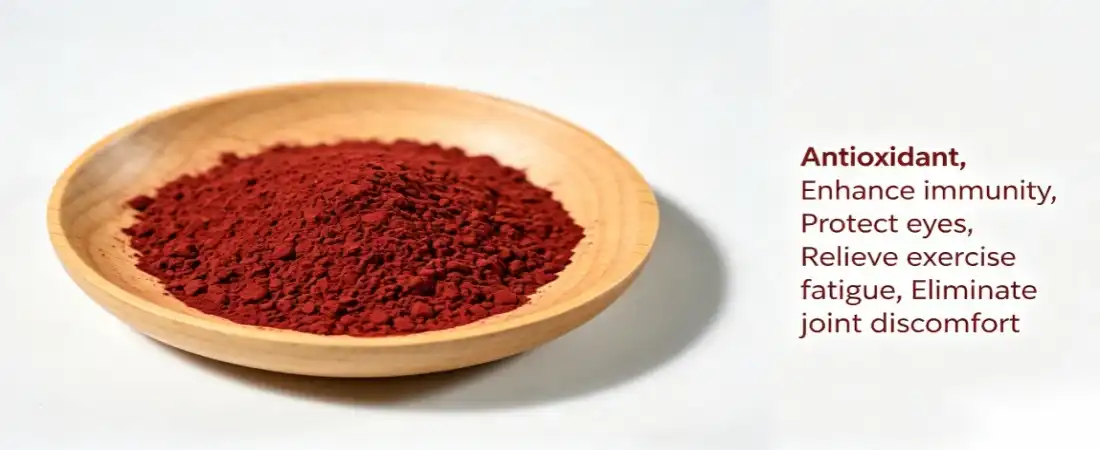
Many sectors utilize astaxanthin powder, each with its specific production demands. Standardized extracts are added to food supplement softgels, pills, and beverage powders. These products aid heart, eye, and exercise recovery. The beauty industry favors astaxanthin because it inhibits UV-induced aging. Serums, lotions, and sunscreens made with it enhance skin tone and eliminate fine wrinkles. Animals are fed astaxanthin. It serves as a natural colorant in poultry and fish feeds while boosting immunity. Applications need varied technological requirements. Beauty grades must have little bacterium contamination, whereas feed-grade products must be affordable without sacrificing quality.
Shelf Life Management and Storage Parameters
Keeping bulk astaxanthin powder properly affects its usefulness. Good-quality materials survive 24–36 months in sealed containers below 15°C away from light and moisture. Peroxide and acid values should be examined immediately upon receipt and often while kept. Procurement staff should employ first-in, first-out inventory management and temperature-controlled storage to keep items safe throughout the supply chain. Astaxanthin powder contains mixed tocopherols and lipid carriers. Know this to assist buyers realize how crucial good handling is. High temperatures or humidity accelerate breakdown, turning brilliant red to yellow-brown and reducing antioxidant effectiveness. Due to technological constraints, evaluating nitrogen washing and multi-layer barrier film packaging needs is crucial when purchasing in bulk.
Comparative Guide to Selecting the Best Astaxanthin Powder Wholesale Supplier
To find the best astaxanthin powder wholesale provider, you need to carefully consider a number of factors that have an effect on both the performance of the product and its compliance with regulations. High-quality astaxanthin powder providers stand out by having clear paperwork, a steady supply of powder, and proactive technical help that goes beyond business relationships.
Evaluating Product Quality and Extract Types
The finest vendors deliver a thorough CoA with every batch. You get HPLC-verified test results, ICP-MS heavy metal screening, and comprehensive microbial panels. The testing should ensure lead, arsenic, mercury, and cadmium levels are below international safety requirements. They should also search for polycyclic aromatic hydrocarbons, which may accumulate during algal drying. Based on their intended usage, plate count, yeast/mold, E. coli, and Salmonella testing ensure items satisfy food-grade or pharmaceutical-grade requirements. Buyers should inquire about extraction procedures since they affect product qualities. Supercritical CO2 extraction yields cleaner profiles than solvent-based techniques. It eliminates chemical concerns while preserving heat-sensitive chemicals. Encapsulation technology—spray drying, beadlet creation, or cold water dispersible formulations—should match your product and processing instruments.
Pricing Models and Volume Economics
Wholesale costs vary on concentration, certification, and order volume. Whether you purchase it all at once or sign a long-term contract, Haematococcus pluvialis 2% to 5% natural astaxanthin powder prices vary. Volume deals are available for purchases above 100 kg, and tiered pricing rewards long-term collaborations. Organic accreditation raises product prices by 15% to 25% but helps firms reach health-conscious customers. The investment research should compare certification costs to target market location. North American and European markets want more organic evidence, whereas other markets favor inexpensive pricing above certification. Transparent vendors offer detailed quotations that include raw material, processing, testing, and packaging expenses to make price comparisons easy.
Case Study: Supplier Performance Comparison
New medium-sized supplement producer purchase data displays interesting tendencies. For 18 months, a European nutrition company evaluated three Asian suppliers for quality, delivery, and technical support. Assay results changed less than 2% for the winning supplier in twelve shipments. They also met delivery deadlines within 48 hours and aided the manufacturer with formulation, which saved product development time by three weeks. The comparison demonstrated how initial pricing gains were lost as quality issues required goods reformulated and openings delayed. Procurement personnel increasingly realize that they must consider unit economics and total cost of ownership when assessing suppliers. This includes professional assistance, regulatory compliance, and supply chain stability that prevents production stops, which are costly.
The Procurement Process Simplified: How to Buy Astaxanthin Powder Wholesale
Streamlining the buying process makes transactions smoother while protecting financial and product quality interests. Sourcing teams can set up efficient processes from the first question to the final delivery by understanding how bulk purchases work.
Minimum Order Quantities and Bulk Structures
Most reliable astaxanthin powder wholesale providers set a minimum order size of 25 kilos. The powder is shipped in fiber drums with polyethylene liners inside to keep dampness out. This level strikes a good mix between production efficiency and accessibility for mid-sized companies starting new product lines. Larger agreements usually unlock tiered pricing. Orders over 100 kilograms often qualify for savings of 8 to 12 percent, and annual contracts over 500 kilograms allow negotiated prices that reflect the value of the supply partnership.
Sample Evaluation and Quality Verification
Another consideration is packaging flexibility. Custom packaging suppliers may suit handling or branding demands. For trial manufacturing or multiple product lines, some companies require smaller units. Sellers of 1-kilogram foil pouches with bulk orders are handy. During initial discussions, specifying the wrapping type helps minimize misunderstanding and ensures that supplies arrive ready for manufacturing. Smart buyers study samples before making significant purchases. Free samples of 50–100 grams are sufficient for lab testing and small-scale recipe experiments from reputable vendors. The review strategy should include third-party tests to verify the assay, searches for unlisted additives or adulterants, and accelerated stability experiments that simulate storage circumstances.
Payment Security and International Transactions
If possible, request samples from many batches. This demonstrates production and quality control consistency. A lot of sample variation indicates poor process controls, which might affect major orders. Buyers should establish acceptance criteria immediately. These should include minimal assay accuracy (typically within 10% of the reported concentration), moisture content (below 5%), and microbiological contamination levels adequate for the usage. When buying abroad, financial risks must be considered. Famous vendors offer bank wire transfers, letters of credit, and other secure B2B payment solutions that safeguard buyers. Letters of credit ensure first-time transactions are secure by delaying payment until shipping paperwork and product details are verified. Many forward-thinking vendors accept purchasers' currencies. This eliminates foreign currency risk, making planning easier. Payment conditions vary on relationship age. After building confidence, existing relationships may negotiate 30-day terms, whereas new consumers normally pay upfront or when products are supplied. Clear payment standards communication in the beginning meetings helps both parties understand and minimize transaction delays.
Building Trust with Reliable Astaxanthin Powder Wholesale Brands
Long-term procurement success relies on relationships with astaxanthin powder wholesale suppliers that are based on openness, steady performance, and creating value for both parties. If you want to find reliable sources, you need to look at more than just marketing claims.
Certification Standards and Compliance Documentation
Reputable suppliers maintain their certificates, demonstrating their commitment to quality and compliance. ISO 9001 accreditation verifies systematic quality management. Kosher and Halal certifications help niche products reach more buyers. Independent certification bodies must regularly audit these certificates to keep them valid. For North America, suppliers must exhibit FDA-compliant building registration and cGMP. European purchasers appreciate Novel Food license status and Commission Regulation for plant extracts compliance. Forward-thinking suppliers that inform clients of new legislative requirements defend your market access.
OEM Capabilities and Private Label Options
Buyers gain from vendors that operate as regulatory intelligence partners rather than ingredient suppliers since regulatory environments change. This collaborative strategy speeds up product registration in new markets and keeps recipe adjustments affordable when laws change. Private label manufacturing enables businesses distinguish out while using suppliers' formulation and production expertise. Experienced sellers provide OEM services including bespoke concentration creation, delivery system encapsulation, and co-packaging designs that reduce the cost of new equipment and structures.
Supplier Verification and Testimonial Research
Customizable packaging includes big barrels tailored to your specifications and consumer-ready packaging with your own labels. This vertical integration streamlines supply chains, reduces contamination risks, and accelerates product launch. Ask suppliers for private label collaboration examples and bespoke recipe minimum order volumes. These values vary widely across suppliers. Formulation benefits from OEM partners' usage expertise to increase absorption, stability, and cost. This collaboration converts suppliers into development partners that supply physical and intellectual capital. This makes relationship investments beneficial due to competitive advantages. You need several sources to verify a provider's legitimacy. Third-party B2B platforms gather buyer feedback and ratings, but they should be verified. Ask for direct client references, ideally from organizations in your area with formulation issues. Conversations with existing customers may reveal ways to communicate, address issues, and be consistent that written documentation cannot. Although physical facility inspections are most trustworthy, they are frequently impossible during the initial evaluation due to distance. Buyers may watch how items are created, tested for quality, and stored easily using facility videos. Open suppliers frequently accept these demands. However, evasive replies may indicate issues that need attention.
Maximizing Value and Avoiding Risks in Astaxanthin Powder Bulk Purchases
Strategic buying strikes a balance between lowering costs and reducing risks to make sure that large astaxanthin powder wholesale purchases give the expected value over their entire lifecycle. Several important things must be thought about to protect investments and improve operating efficiency.
Purity Standards and Common Supplier Pitfalls
Adulteration has long troubled botanical extract markets, including astaxanthin. Some dishonest dealers blend natural astaxanthin with unlisted synthetic forms or carriers to minimize costs and maintain test results. This technique reduces product efficacy and labeling compliance, putting businesses at risk of regulator penalties and consumer distrust. Food must be tested thoroughly to prevent tampering. HPLC stereoisomer discrimination distinguishes natural (3S, 3'S) astaxanthin from racemic mixtures. The true costs of manufacturing create price floors below which quality can't be maintained, therefore prices below market means should be scrutinized rather than commended. Sellers that follow their supply chains down to algae farming sources boost transparency and prevent substitution. Poor storage and sealing may lead to low oxygen stability, another typical error. Buyers should restrict peroxide value and test items routinely while storing. Products that lose color or scent too fast may have oxidative damage, which reduces antioxidant activity and may produce undesirable byproducts.
Regulatory Compliance Across International Markets
Cross-border commodities have intricate, country-specific restrictions. North American imports need business invoices, packing lists, and Certificates of Analysis proving product safety and composition. The FDA's Prior Notice guidelines require electronic notification before shipments arrive at U.S. ports. If not, shipments may be held or refused entrance. Health certifications and Novel Food authorizations are required for European markets. Although documentation is still required, astaxanthin from Haematococcus pluvialis is already controlled in most key markets, making compliance simpler. Experienced suppliers anticipate final market demands and submit papers ahead of time, reducing clearance delays that disrupt manufacturing schedules.
Building Strategic Supplier Partnerships
Keeping your regulatory knowledge up to date saves you against sudden problems with getting into markets. Suppliers who keep an eye on changes in regulations and let customers know about them before they happen show the relationship attitude that leads to long-term buying success. Transactional relationships are fine for buying common goods, but strategic partnerships built through mutual investment are better for buying specialized ingredients like astaxanthin powder. Long-term supply deals guarantee a certain amount of goods, which lets sellers plan production and get raw materials more efficiently. They can share these savings by offering better prices or giving priority to certain items when supplies are low. Think about ways to work together, like doing technical development projects together, marketing together, or signing exclusive sales deals that help both the buyer and the seller. These stronger connections often lead to more benefits, like getting better technical help, seeing new products before anyone else, and being able to be flexible when demand changes or supply problems arise out of the blue. Regular performance reports help establish frameworks for ongoing improvement. Talking about measures like on-time delivery rates, quality consistency, technology responsiveness, and competitive positioning helps everyone stay on the same page about what is expected and finds ways to create more value.
Conclusion
In 2026, to get around the astaxanthin powder wholesale market, you need to carefully evaluate suppliers, know the technical details of quality standards, and build smart relationships with them. Purchasing professionals who take the time to learn about the differences between natural and synthetic materials, the right way to store them, and legal compliance issues set their companies up for long-term economic edge. When it comes to sourcing, the best methods combine cost with overall value, knowing that a reliable supply, consistent quality, and quick expert help are worth the extra money. Buyers can get the functional ingredients their formulas need while lowering the risks that come with foreign supply chains by putting in place strong verification processes, setting clear quality standards, and building relationships with certified suppliers. This guide gives sourcing teams useful information for looking at trade possibilities and putting together buying plans that will help them come up with new products and stand out in the market until 2026.
FAQ
1. What are typical minimum order quantities for wholesale astaxanthin powder?
For natural astaxanthin powder from Haematococcus pluvialis, most reputable astaxanthin powder wholesale sellers require at least 25 kilograms of an order. This standard works for medium-sized producers and keeps output running smoothly. Tiered volume savings running from 8% to 15% are usually unlocked for promises over 100 kilograms, and annual contracts offer even better prices. Buyers who need smaller amounts for test production can usually get sample numbers of 50 to 100 grams for very little money. This lets them try out different formulations before they commit to buying in bulk.
2. How can I verify astaxanthin powder purity and authenticity?
For verification, testing procedures with many levels are needed. Ask for Certificates of Analysis from third-party labs that have been approved by the government and can show HPLC results that back up the concentrations and stereoisomer ratios that are typical of natural sources. In real Haematococcus-derived goods, the (3S, 3'S) isomer should be more common. ICP-MS heavy metal screens and full bacteria panels make sure that safety rules are followed. A close look should show a constant dark red coloration that doesn't turn yellow too quickly, which is a sign of oxidation. If you're using new suppliers or products that seem too cheap, you might want to hire independent testing labs to check each batch.
3. What payment methods work best for international astaxanthin transactions?
Safeguard your foreign payments amount and speed up transactions. Letters of credit offer the highest level of security for first-time purchases by making sure that payment is only released after all paperwork and requirements have been checked. Once a business relationship is established, it's common for payments to be made through bank wire transfers or safe B2B payment systems that protect buyers. A lot of forward-thinking sellers will let buyers pay in their own currencies, which takes away the risk of fluctuations in foreign exchange. No matter which way you choose, check the supplier's business licenses and export certificates before sending money. To make sure the supplier is real and lower the risk of scams, use business verification services.
Partner with NT Biotech for Premium Astaxanthin Powder Wholesale Supply
When purchasing managers need a reliable astaxanthin powder wholesale provider, NT Biotech (Shaanxi New Things Biotech Co., Ltd.) is a great choice. Our Quality Astaxanthin Powder comes from Haematococcus pluvialis and has been tested and found to have amounts of 2% to 10%. It also has ISO, Kosher, and Halal standards to back it up. We keep stock on hand so that we can ship within two to four days of receiving an order, and items as little as 25 kilograms can be shipped right away. As proof of our dedication to quality, we include free samples and proof of testing from a third party with every batch. In addition to reasonable prices, we offer full technical support, flexible OEM customization, and our own extraction methods that guarantee purity levels above 98% for key uses. You can email our purchasing team at info@newthingsbiotech.com to ask for large samples, get personalized quotes, and find out why top companies in the nutrition, skincare, and feed industries choose NT Biotech as their astaxanthin powder wholesale supplier.
References
1. Capelli, B., Bagchi, D., & Cysewski, G.R. (2013). Synthetic astaxanthin is significantly inferior to algal-based astaxanthin as an antioxidant and may not be suitable as a human nutraceutical supplement. Nutrafoods, 12(4), 145-152.
2. Guerin, M., Huntley, M.E., & Olaizola, M. (2003). Haematococcus astaxanthin: applications for human health and nutrition. Trends in Biotechnology, 21(5), 210-216.
3. Higuera-Ciapara, I., Felix-Valenzuela, L., & Goycoolea, F.M. (2006). Astaxanthin: A review of its chemistry and applications. Critical Reviews in Food Science and Nutrition, 46(2), 185-196.
4. Shah, M.M.R., Liang, Y., Cheng, J.J., & Daroch, M. (2016). Astaxanthin-producing green microalga Haematococcus pluvialis: From single cell to high value commercial products. Frontiers in Plant Science, 7, 531.
5. Ambati, R.R., Phang, S.M., Ravi, S., & Aswathanarayana, R.G. (2014). Astaxanthin: Sources, extraction, stability, biological activities and its commercial applications—A review. Marine Drugs, 12(1), 128-152.
6. Yuan, J.P., Peng, J., Yin, K., & Wang, J.H. (2011). Potential health-promoting effects of astaxanthin: A high-value carotenoid mostly from microalgae. Molecular Nutrition & Food Research, 55(1), 150-165.