- English
- French
- German
- Portuguese
- Spanish
- Russian
- Japanese
- Korean
- Arabic
- Greek
- German
- Turkish
- Italian
- Danish
- Romanian
- Indonesian
- Czech
- Afrikaans
- Swedish
- Polish
- Basque
- Catalan
- Esperanto
- Hindi
- Lao
- Albanian
- Amharic
- Armenian
- Azerbaijani
- Belarusian
- Bengali
- Bosnian
- Bulgarian
- Cebuano
- Chichewa
- Corsican
- Croatian
- Dutch
- Estonian
- Filipino
- Finnish
- Frisian
- Galician
- Georgian
- Gujarati
- Haitian
- Hausa
- Hawaiian
- Hebrew
- Hmong
- Hungarian
- Icelandic
- Igbo
- Javanese
- Kannada
- Kazakh
- Khmer
- Kurdish
- Kyrgyz
- Latin
- Latvian
- Lithuanian
- Luxembou..
- Macedonian
- Malagasy
- Malay
- Malayalam
- Maltese
- Maori
- Marathi
- Mongolian
- Burmese
- Nepali
- Norwegian
- Pashto
- Persian
- Punjabi
- Serbian
- Sesotho
- Sinhala
- Slovak
- Slovenian
- Somali
- Samoan
- Scots Gaelic
- Shona
- Sindhi
- Sundanese
- Swahili
- Tajik
- Tamil
- Telugu
- Thai
- Ukrainian
- Urdu
- Uzbek
- Vietnamese
- Welsh
- Xhosa
- Yiddish
- Yoruba
- Zulu
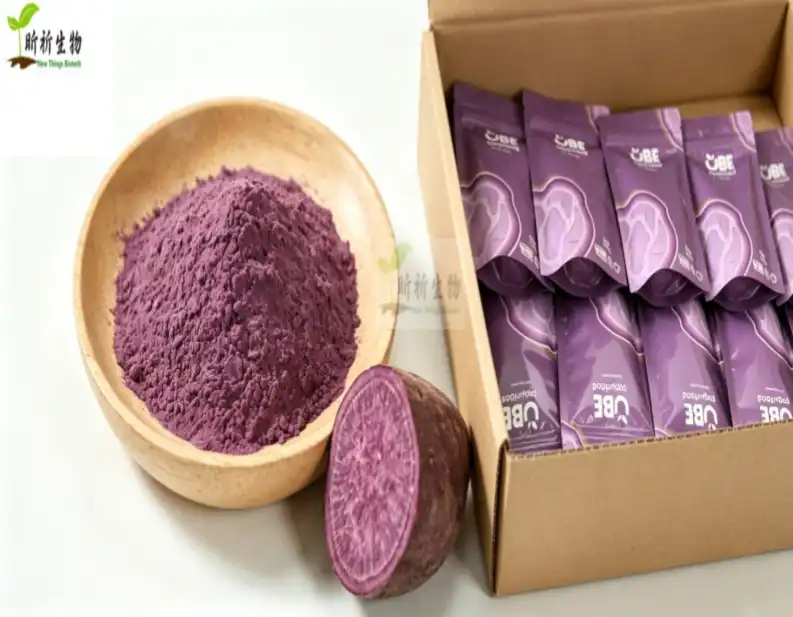
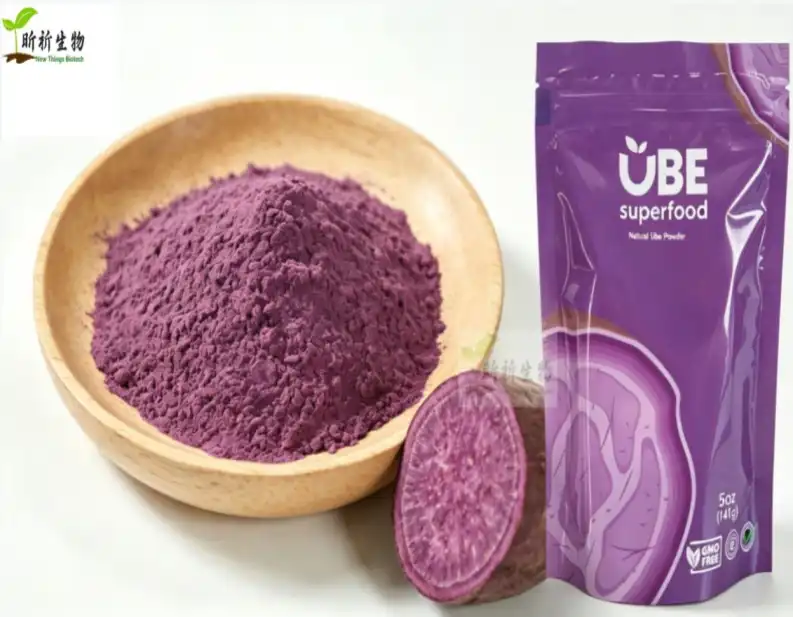
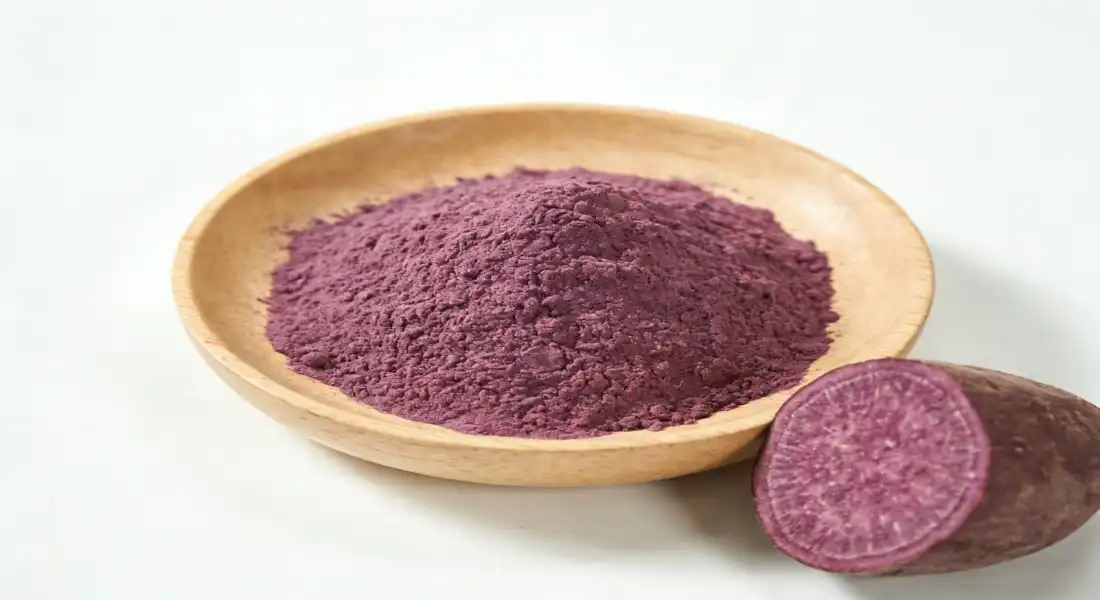
Procurement professionals quickly learn that the best distributors of ube powder bulk are in Shaanxi province, particularly NT Biotech (Shaanxi New Things Biotech), which combines more than a decade of experience extracting plants with ISO 9001, Kosher, and Halal certifications. These well-known companies sell purple yam powder that is 100% pure and comes from hand-picked roots. The powder is made using a special low-temperature milling method that keeps the anthocyanins and other useful chemicals. Leading distributors keep stock that can be shipped within two to four days, accept orders as low as 10 kg, and send full technical documentation, including Certificates of Analysis, with every batch. This directly meets the needs of food manufacturers, supplement makers, and cosmetics formulators around the world.
Introduction
B2B customers in the beauty, nutritional supplements, and food-making industries use China's purple yam powder market to obtain naturally coloured plant-based products as the globe progresses towards them. Real purple yam powder has anthocyanin, resistant starch, and bioactive carbohydrates, giving it vibrant natural colour and health benefits. Purchasing managers are under increasing pressure to locate clean label products within cost restrictions and obeying all rules in several overseas markets. This article examines how China's leading sellers have become specialists in plant extraction, quality control, and flexible supply chain solutions. Working with reliable partners that emphasise transparency and technical aid throughout the purchasing process makes it simpler to grasp bulk powder forms, verify supplier credentials, and figure out purchase logistics.
Understanding Ube Powder Bulk: Essential Information for B2B Buyers
What Defines Industrial-Grade Purple Yam Powder
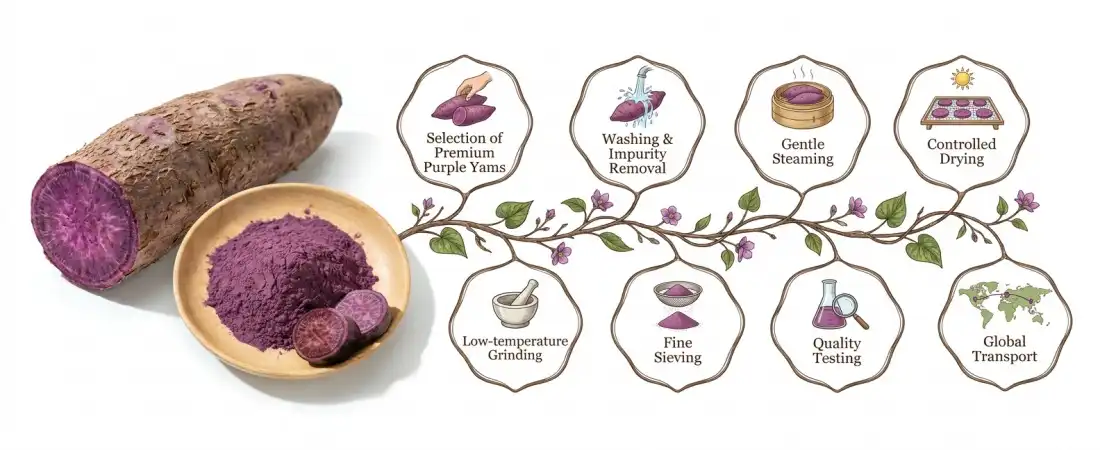
Dioscorea alata L. root is dried and coarsely crushed to make natural ube powder bulk. Cleaning, drying at low temperatures, and grinding to 80 mesh are the stages. Asians call this plant-based substance "Purple Ginseng". Its violet colour and moderate sweetness come from careful processing to preserve heat-sensitive anthocyanins and vitamin C. Industrial-grade products must be 100% pure without fillers or additions. This ensures formulae operate properly. Because the mesh sizes are uniform, the moisture level is below 5%, and the product has been microorganism-tested to satisfy food-grade safety requirements, the bulk format differs from consumer-packaged versions. Real purple yam powder includes naturally occurring resistant starch (which digests more slowly than typical starches), 3–5% dietary fibre, and polysaccharides that provide value beyond nutrition.
Nutritional Profile and Functional Compounds
Good purple yam powder is becoming increasingly popular for functional food and nutrition due to its biochemistry. Purple foods are coloured by water-soluble anthocyanins. Their determined antioxidant content remained constant across a pH range suitable for most baking and drink recipes. These compounds and vitamin C (15–20 mg per 100g) boost cellular defence traits that health-conscious clients are increasingly interested in. The resistant starch element gives food colour and ferments in the large intestine, supporting gut microorganisms. Dioscorea species naturally produce steroidal sapogenin diosgenin. Its immune-modulating properties have been examined, but regulators must consider commercial claims based on target markets. Purple yam powder offers fibre without rendering goods gritty like grain-based choices. Formulators enjoy it. This smooths protein drinks, meal replacements, and dairy.
Storage Requirements and Shelf Life Considerations
Weather restrictions must be followed during storage and shipping of bulk purple yam powder to maintain functional purity of ube powder bulk. For colour brightness, anthocyanin pigments must be kept in a climate-controlled environment between 15°C and 25°C due to high temperatures and long-term light exposure. Despite properly processed powder starting with a moisture content below 5%, relative humidity should stay below 60% to prevent moisture absorption that could cause clumps or microbe growth. Industrial packaging employs food-grade metal foil bags flushed with nitrogen or vacuumed to preserve food for 18–24 months. B2B purchasers rotating inventory should adopt first-in, first-out and preserve detailed batch records. Older stock may have little colour fading that impacts the completed product, even if it fulfils all criteria. Temperature variations during international shipment constitute a quality concern. This is why supplier certification requires selecting the correct freight methods and safe packaging.
Top Wholesale Ube Powder Distributors in China: Market Leaders and Trusted Partners
Key Selection Criteria for Reliable Suppliers
Purple yam powder suppliers must be reliable beyond low prices. Important to evaluate manufacturing capacity. Famous manufacturers have processing units that can handle 500 kg to several tonnes per month. They can scale up repeat orders without affecting quality. Certifications show quality system maturity. ISO 9001 certifies process controls, while Kosher and Halal enable you to sell to ingredient-restricted markets. Supply chain transparency is essential for regulatory inspections and consumer queries that need proof of crop batches and production sites for the final powder. Technical support differentiates advanced sellers from commodities traders. Skilled teams should address extraction, food matrix, and formulation while producing new goods. Payment in customers' native currency simplifies transactions and shows you care, which mature business-to-business interactions demand.
NT Biotech: A Decade of Botanical Ingredient Excellence
Research facilities and quality assurance have set Shaanxi New Things Biotech apart in China's botanical extract business. The company can customise particle size distribution, moisture needs, and anthocyanin concentrations for any application because to its significant research and development. Generic commodity providers lack technical adaptation. Extraction techniques conserve as many heat-sensitive chemicals as feasible while meeting North American and European food law microbiological safety standards. The quality control department checks for heavy metals (lead concentration below 0.5 mg/kg), pesticide residues, and microbiological profiles (Total Plate Count < 1,000 cfu/g, substantially lower than the industry requirement of 5,000). This strict process quickly eliminates buyer arrival check rejections and ingredient formulation difficulties. NT Biotech ships ordinary specifications in two to four days after payment verification, while unique specs take three to ten days. It expedites orders via FedEx and UPS direct shipment. Freight forwarders handle container-load marine freight for the company.
Private Labelling and OEM Capabilities
Innovative distributors know that purchasing managers want materials packed to brand requirements or developed to proprietary standards to make finished goods stand out. NT Biotech offers OEM packaging from 1 kg foil bags for small-batch trial production to 10 kg boxes for established manufacture. Custom packaging may meet brand branding requirements and include multilingual regulatory information. The technology infrastructure allows the firm to modify processing factors like mesh size refinement, moisture targeting, and blending with complimentary components like fruit powders or protein isolates to offer turnkey solutions that speed up product launch. To meet clients' quality system requirements, professionals organise specification papers, allergy declarations, and Certificates of Analysis. These linkages help access new markets with local ingredient lists and nutrition data. NT Biotech's global sales knowledge goes beyond components to strategy.
Comparing Ube Powder Bulk with Other Forms: Making Informed Procurement Decisions
Bulk Powder Versus Liquid and Granular Alternatives
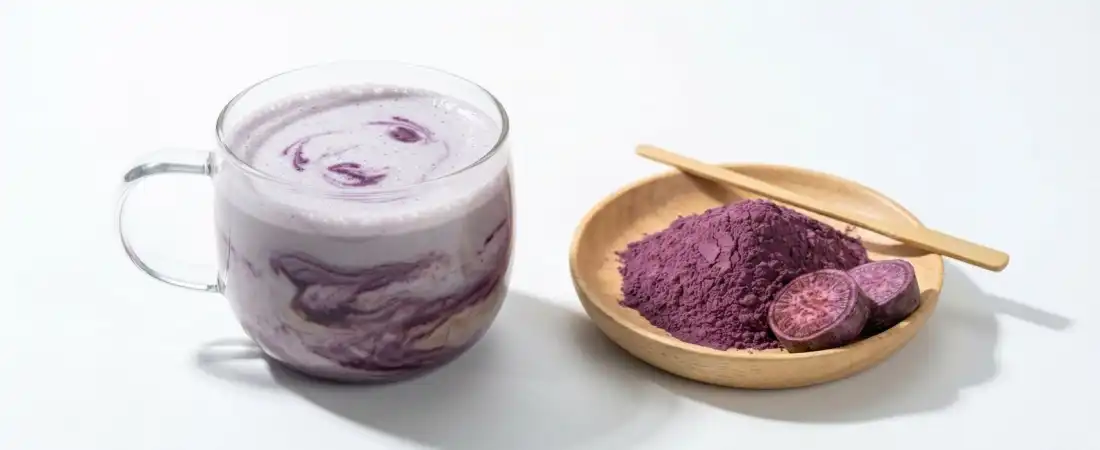
Purple yam concentrates have strengths and limitations that impact their suitability for various production setups. Liquid extracts combine quickly with water, speeding up drinkmaking. However, they must be refrigerated and may include additives that contradict a "clean label" image. It can only be utilized for 6 to 12 months instead of 18 to 24 months, provided the powder is properly stored due to its greater water content. Volumetric dosing devices allow granular forms to go through high-speed automated filling machines. Granulation commonly uses binding agents to reduce active chemical concentration per gram. Ube powder bulk has the maximum ingredient density without fillers or additions. Formulators have complete control over powder reconstitution and water content. Powder concentrates the active compounds, which lowers the cost of freight per functional unit and the need for storage space compared to liquid versions. Higher output yields greater economic advantages. With its reconstitution flexibility, bulk powder may be used for dense pastry fillings or thin drinking bases. This reduces the need to stock several product variations.
Organic Certification Considerations and Pricing Implications
Procurement teams must consider marketing positioning, cost structures, and supply reliability against their product plans when choosing organic or conventional sourcing. Organic purple yam powder costs 30–60% more. This is because it takes more work to get organic farms certified, set up separate processing systems, and conduct third-party checks to make sure the products are safe. This investment will allow you to place organic certification markings on completed goods labels, which is a terrific way to stand out in the premium natural products sector, where customers pay extra for purity. Organic purple yam growth is confined to locations with well-established organic agricultural infrastructure, causing supply issues. This may increase lead times and slow response to rapid demand spikes. Conventional high-purity powder from dependable businesses like NT Biotech isn't organic, but it's tested for heavy metals and pesticide residues to fulfil food safety regulations in all major overseas markets. Many popular businesses promote ube powder bulk's health advantages and natural processing above its organic certification. This enables them to leverage more dependable and cost-effective supply lines while maintaining clean-label appeal.
Economic and Operational Benefits of Bulk Purchasing
Strategies for buying ube powder bulk can improve operating efficiency in more ways than just lowering the cost per unit, which is what volume savings are for. Concentrated powders are cheaper to transport since a 20-foot container may store more active material than liquid extract. This means each kilogram of powder cuts freight costs and end product carbon impact. Smaller powder containers may carry more than liquid or ready-to-use solutions, making greater use of warehouse space. A single bulk powder stock may create various final product SKUs using alternative reconstitution and formulation procedures, making inventory management more flexible. This frees up operating cash for ingredient purchases and reduces the risk of running out of rare ingredients. Fewer supplier linkages and batch testing instead of managing numerous ingredient versions make quality control simpler. Production scheduling is also easier when ingredients stay stable on the shelf for longer, so they don't go bad during busy times. Advanced manufacturers usually acquire powder in bulk, even though it takes more handling than pre-dispersed liquid systems, due to these advantages.
How to Procure Ube Powder Bulk from China: A Step-by-Step Buying Guide
Supplier Identification and Preliminary Evaluation
Effective sourcing begins with supplier discovery. Take advantage of B2B platforms, industry trade shows, and industry connections that have completed similar procurement projects. Screening should start with manufacturing facilities with food safety protocols, export permissions for the markets they will visit, and technical staff that speak English and can explain standard requirements. Asking for product specifics shows vendor knowledge. Instead of marketing statements, technical data sheets should provide mesh size distribution, microbiological limits, typical anthocyanin content ranges, and storage advice. Check certificate portfolios for current ISO, Kosher, and Halal certifications for relevant goods. Industry networks and online evaluations might show a supplier's reliability. Even with superior IT skills, younger providers may have lower ratings. NT Biotech discloses facility information, gives English-speaking technical help with two-hour response times, and delivers free product samples to show confidence before significant purchases.
Sample Evaluation and Quality Verification
Sample testing lowers risk and often shows major differences sales presentations and specification sheets overlooked. You may rapidly assess colour strength, particle size regularity, fragrance profile, and reconstitution behaviour under your production process when you request samples from many sources. Have a lab test the product for heavy metals, fillers, and adulterants not on the seller's Certificate of Analysis to confirm quality. In-production application experiments indicate how the chemical works in your formulation matrix. Does it distribute without clumping, retain colour at processing temperatures, and provide the product the right taste? These practical assessments often identify deal-breakers before major purchases. Setting acceptance criteria before evaluating samples eliminates subjective assessments and provides objective documentation to assist quality management systems' supplier-qualifying decisions. Companies like NT Biotech promote comprehensive testing and provide skilled advice to help you get the best results for your applications. They don't believe thorough testing is pointless.
Pricing Structures and Order Negotiation
Understanding pricing helps procurement managers build long-term supplier relationships on value rather than cost. Purple yam powder minimum orders are usually 10 kilograms. They depend on production batch size and export paperwork expenses. You can usually get a discount for 100 kg, 500 kg, or a container load (usually 10-15 tonnes, depending on packing density). Tier prices range 8–15%. Payment intervals affect end costs since suppliers provide 2%–3% discounts for early payment, decreasing working capital. Letters of credit cost banks but protect new partnerships. Freight arrangements considerably affect landing costs. Compare FOB, CIF, and DDP Incoterms to get an accurate cost estimate since they allocate different insurance, customs clearance, and delivery obligations. When sources are few, long-term supply relationships with volume assurances may enhance price and distribution. Ensure the seller can meet your needs. Customers of varied maturity levels may work with NT Biotech. These 10-kilogram trial purchases are followed by scaled prices and customized logistics as relationships and numbers grow.
Storage, Shelf Life, and Handling Tips for Ube Powder Bulk
Optimal Storage Conditions for Maximum Shelf Life
For ube powder bulk to remain functional and appealing, extrinsic variables that accelerate decrease must be controlled. Total cold storage is less significant than temperature stability. Keeping the temperature between 15°C and 25°C prevents powder condensation as it cools. These cycles add moisture, clumping powder and supporting microbial development. UV light accelerates oxidative degradation, fading purple anthocyanin-rich compounds. Keeping them sealed or in dark warehouses preserves this quality. Controlling humidity via climate control or desiccant packets prevents powder from adhering together and absorbing water, which softens particles and promotes mould growth. Oxygen degrades sensitive compounds slowly. Nitrogen-flushed or vacuum-sealed packaging is superior for long-term storage. Industrial users who manage large amounts of inventory should consider using monitored environmental storage areas for ingredients instead of putting them on shelves in general stores where temperature and humidity change with the seasons. These safety measures extend premium-grade products' shelf life to 24 months, the longest. This preserves ingredient investment and ensures product consistency across manufacturing batches months apart.
Quality Monitoring and Issue Prevention
Regular quality inspections during storage prevent costly ingredient manufacturing surprises. Regular visual inspection may detect moisture (clumping or black areas), packing damage that makes it less environmentally friendly, or bugs that can alter plant ingredients even with measures. You may detect slight variations that may go undetected until final batches of items breach the deviation limits by monitoring colours monthly using colorimeters or conventional visual scales. Microbiological testing every six months shows that storage conditions prevent microorganism development. This is crucial for items nearing expiry or stored poorly. Clearly defining permissible colour differences, moisture content increases, and other variables allows for objective signals to separate dubious material before it impacts production runs. Batch monitoring, storage location mapping, and first-in, first-out rotation prevent older stock from lying idle while fresh orders are utilised. Suppliers like NT Biotech assist with quality control by providing explicit storage instructions, responding quality queries swiftly, and tracking batches so faults may be investigated months after shipment.
Conclusion
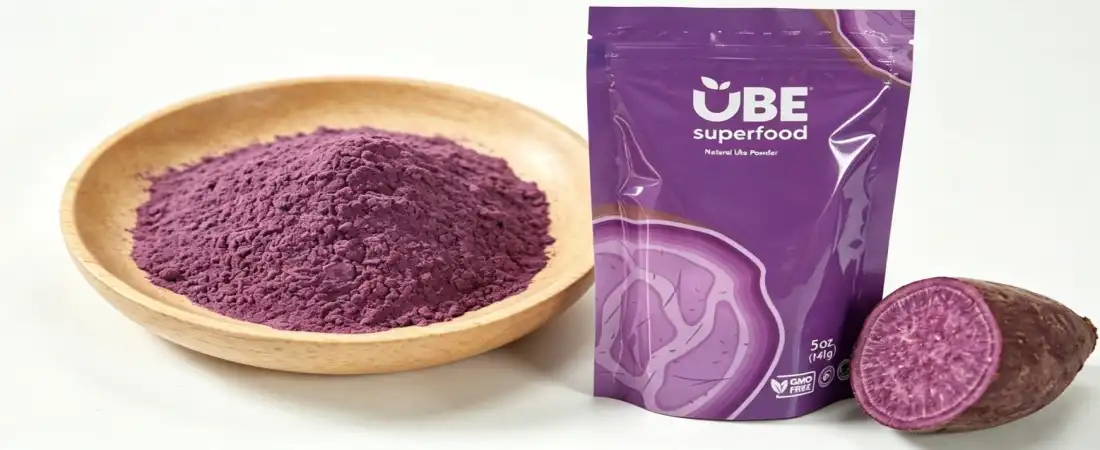
Through access to high-purity botanical ingredients backed by certified quality systems and flexible supply capabilities, sourcing ube powder bulk from well-known Chinese sellers gives procurement teams a strategic edge. This guide explained the technical details that make industrial-grade purple yam powder different, contrasted bulk sizes with other ingredient forms, and gave useful guidelines for evaluating suppliers and placing orders. NT Biotech is a great example of a supplier that can lead to long-term partnerships that work: they have all the necessary certifications to meet international standards, they offer responsive technical support, they keep an inventory that can be shipped quickly, and they can customize their products to make them stand out. Buyers can protect their investments in ingredients and make sure they work the same way every time by following the best practices for keeping and quality checks outlined here. China's knowledge of botanical extraction, low-cost production, and well-developed transportation infrastructure make qualified wholesalers useful partners for businesses making naturally colored, nutritionally improved goods that are in line with global clean-label trends.
FAQ
1. Is purple yam powder safe for use in food production across different regulatory jurisdictions?
Powder made from Dioscorea alata L. purple yams. In the US, it is generally recognized as safe (GRAS) as long as it is made under the right food safety controls. In the EU, it is not limited by novel food laws because it shows traditional food use. Suppliers who provide full testing records for heavy metals, chemical residues, and microbiological factors make it easier for businesses to follow the rules. Buyers who want to sell to certain markets should make sure that the certifications of the suppliers meet the standards of those markets. For example, Kosher and Halal certifications are important for certain groups of customers, and organic certification needs special proof of chain-of-custody.
2. What minimum order quantities should buyers expect when purchasing from Chinese distributors?
Most well-known purple yam powder sellers have minimum orders of 10 to 25 kg for first purchases. This lets you try out different amounts without having to commit too much inventory. NT Biotech can handle orders as little as 10 kg, and they offer free samples for you to try out first. Production numbers make things more efficient. Prices usually go down by a lot when orders are over 100 kg, and they stay low when orders are over 10 tons. When buyers plan on having ongoing needs, it's helpful to talk about expected volume during the first discussions so that agreements can be made with the right price levels and supply promises.
3. Can distributors provide private labelling or custom formulation services?
Leading providers like NT Biotech offer a wide range of OEM services, such as custom packing in 1 kg bags or bulk cases, the creation of new formulations by mixing purple yam powder with ingredients that work well together, and changes to specifications for particle size or concentration. By giving complete solutions instead of just basic ingredients, these services help products stand out and speed up entry into new markets. Talk to suppliers about customization needs early on to see how technical they are and to find out if there are any minimum order requirements for custom formulas.
Partner with NT Biotech for Reliable Purple Yam Powder Supply
For procurement experts looking for a reliable ube powder bulk provider, NT Biotech's mix of technical know-how and customer-focused service solves the common problems that come up when trying to source ingredients from other countries. Our ISO 9001-certified factory keeps a ready supply of 100% pure Dioscorea alata L. powder, so we can ship your order within 2 to 4 business days. In the meantime, our advanced research and development team can help you come up with the best formulas for your needs. Each batch comes with detailed Certificates of Analysis that show the amount of anthocyanin, microbial safety, and heavy metal screening that meet the strict rules in the European and North American markets. We're happy to have in-depth technical conversations with you about your product development goals, and we're happy to send you free samples to check the quality before you place an order for mass production. Get in touch with our helpful foreign sales team at info@newthingsbiotech.com to talk about your purple yam powder needs with a company that is dedicated to clear quality standards, easy customization, and a consistent supply that is necessary for a product to be sold. Finding the right plant ingredients can be hard at first, but working with an experienced expert can turn that into a competitive edge.
References
1. Chen, L., & Wang, Y. (2021). Anthocyanin Stability and Bioactivity in Purple Yam (Dioscorea alata): Processing Effects and Applications. Journal of Food Science and Technology, 58(4), 1321-1330.
2. International Trade Centre. (2022). Global Market Analysis for Natural Food Colourants: Supply Chain Dynamics in China. ITC Publications, Geneva.
3. Martinez, R., & Thompson, K. (2020). B2B Procurement Strategies for Botanical Ingredients: Quality Verification and Supplier Selection. Industrial Ingredients Quarterly, 15(2), 44-59.
4. National Food Safety Standards Committee. (2023). Safety Assessment of Purple Yam Powder in Food Applications: Regulatory Guidelines for International Trade. China Food Safety Press, Beijing.
5. Rodriguez, M., Singh, P., & Liu, H. (2022). Resistant Starch and Dietary Fiber from Tropical Tubers: Functional Properties for Food Formulation. Nutritional Biochemistry Review, 37(3), 287-301.
6. Zhang, W., & Anderson, J. (2021). Supply Chain Management in China's Botanical Extract Industry: Quality Systems and Export Compliance. Asian Journal of Industrial Economics, 29(1), 112-128.