- English
- French
- German
- Portuguese
- Spanish
- Russian
- Japanese
- Korean
- Arabic
- Greek
- German
- Turkish
- Italian
- Danish
- Romanian
- Indonesian
- Czech
- Afrikaans
- Swedish
- Polish
- Basque
- Catalan
- Esperanto
- Hindi
- Lao
- Albanian
- Amharic
- Armenian
- Azerbaijani
- Belarusian
- Bengali
- Bosnian
- Bulgarian
- Cebuano
- Chichewa
- Corsican
- Croatian
- Dutch
- Estonian
- Filipino
- Finnish
- Frisian
- Galician
- Georgian
- Gujarati
- Haitian
- Hausa
- Hawaiian
- Hebrew
- Hmong
- Hungarian
- Icelandic
- Igbo
- Javanese
- Kannada
- Kazakh
- Khmer
- Kurdish
- Kyrgyz
- Latin
- Latvian
- Lithuanian
- Luxembou..
- Macedonian
- Malagasy
- Malay
- Malayalam
- Maltese
- Maori
- Marathi
- Mongolian
- Burmese
- Nepali
- Norwegian
- Pashto
- Persian
- Punjabi
- Serbian
- Sesotho
- Sinhala
- Slovak
- Slovenian
- Somali
- Samoan
- Scots Gaelic
- Shona
- Sindhi
- Sundanese
- Swahili
- Tajik
- Tamil
- Telugu
- Thai
- Ukrainian
- Urdu
- Uzbek
- Vietnamese
- Welsh
- Xhosa
- Yiddish
- Yoruba
- Zulu
Oxidative stress never gives a warning. It shows up as a little lower weaning weight, a worse feed conversion ratio during a heatwave, a hatch rate that drifts down throughout a season. At the heart of it is a depleted antioxidant system, and glutathione is at the core of it. The tripeptide is obtained via Candida utilis fermentation, giving feed formulators a naturally produced, nutrient-dense element instead of an isolated manufactured substance. NT Biotech provides torula yeast glutathione manufactured by patented fermentation and extraction, confirmed by HPLC, with a certificate of analysis for each batch, and guaranteed by ISO 9001, KOSHER, and HALAL certification. Technical enquiries reach the team at info@newthingsbiotech.com, answered within two hours.
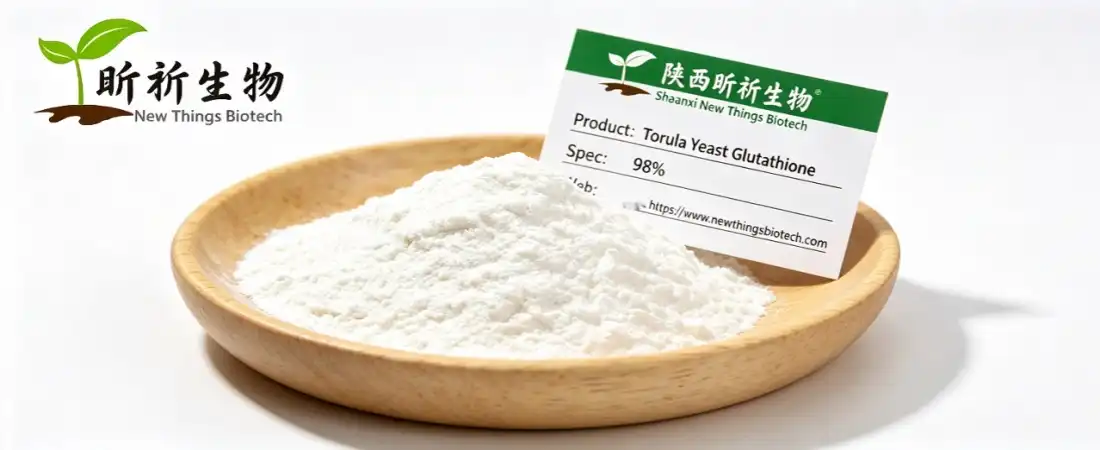
What Torula Yeast Glutathione Actually Is
The Organism Behind the Ingredient
Torula yeast, or Candida utilis, has been used in food and feed as a fermenting organism high in protein for many years. It grows well on many substrates, and it accumulates glutathione intracellularly to amounts that enable commercial recovery to be feasible. The yeast itself is a recognized feed item; therefore, the resultant torula yeast glutathione has a cleaner regulatory and consumer narrative than chemically synthesized equivalents. This is increasingly important in export markets and in branded animal protein programs.
Reduced Glutathione and Why Form Matters
Glutathione occurs in two forms, the reduced form (shown as GSH) and the oxidized form (shown as GSSG). Only the reduced form is physiologically active as an antioxidant. The ratio between the two is commonly utilized in research as a measure of cellular oxidative state. A good torula yeast glutathione is the reduced form, preserved by extraction and drying. Processing competence distinguishes providers. Material that has oxidized to a substantial extent during manufacture might seem comparable on total assay, but will behave differently in the animal.
More Than a Single Molecule
Yeast-generated material is not a pure isolation. Together with glutathione, it transports peptides, amino acids, nucleotides, and B-group vitamins typical of the yeast cell. For a nutritionist this implies that the ingredient has a wider nutritional profile than an additive that consists of a single chemical , and it acts as a natural feed material from the point of view of palatability , which is a practical benefit in species that are sensitive to taste and smell .
| Attribute | Synthetic Glutathione | Torula Yeast Glutathione |
|---|---|---|
| Origin | Chemical synthesis | Candida utilis fermentation |
| Label positioning | Synthetic additive | Naturally derived yeast ingredient |
| Accompanying nutrients | None | Peptides, nucleotides, B vitamins |
| Consumer perception | Neutral to negative | Aligns with natural feed programmes |
| Certification fit | Limited | ISO 9001, KOSHER, HALAL available |
How Glutathione Functions Inside the Animal
The Cell's Primary Redox Buffer
Glutathione is the most prevalent low molecular weight thiol in animal cells and acts as the major intracellular redox buffer. It contributes electrons to neutralize reactive oxygen species and subsequently cycles back to its reduced form via the action of glutathione reductase. When the need for production exceeds the capability of regeneration, the ratio changes toward the oxidized form and cellular function is impaired. Supplemental torula yeast glutathione aids that buffering mechanism at times when endogenous synthesis cannot maintain pace.
Enzymatic Detoxification Pathways
In addition to its direct radical scavenging, it also acts as a substrate for glutathione peroxidase (which lowers hydroperoxides) and glutathione S-transferases (which conjugate xenobiotics for excretion). These are the paths of mycotoxin metabolites, feed contaminants, and medication residues. In production settings where feed ingredient quality fluctuates seasonally, maintaining these enzyme systems has real-world implications for liver health and overall performance.
Protein Synthesis and Cellular Integrity
Glutathione is also involved in regulating the state of protein thiols and the proper folding of freshly synthesized proteins. This function is closely related to the growth efficiency of rapidly developing animals with high protein turnover. A feed client dealing with a torula yeast glutathione provider should be able to describe the mechanisms, not just quote an assay figure, since the application logic varies by species and manufacturing stage.
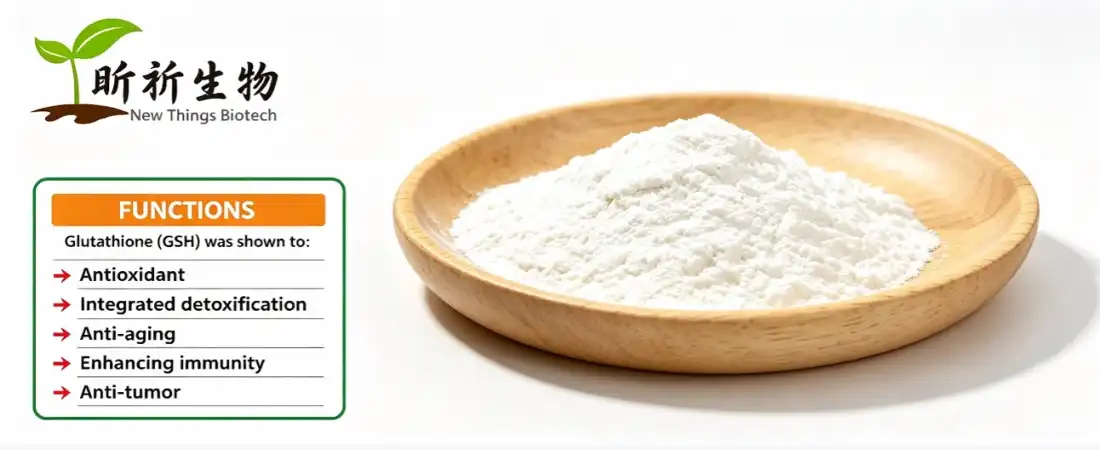
Where It Delivers Value Across Species
Swine: Weaning Transition and Sow Performance
Weaning is the most oxidatively stressful event in the early lives of pigs, including food change, mother separation, and pathogen exposure. At this point, piglets demonstrate detectable changes in their antioxidant status. That window helps the redox system by including torula yeast glutathione in creep and starter diets. The metabolic challenge faced by gestating and breastfeeding sows is maintained in breeding herds, and antioxidant assistance in the latter stages of gestation is an accepted dietary approach.
Poultry: Heat Stress and Breeder Flocks
Broilers under heat stress show an increase in reactive oxygen species, with implications reflected in a decrease in intake, worse feed conversion, and, in the most difficult situations, a rise in mortality. Antioxidant supplementation is a typical feature of hot-climate feeding programs. A second use is in breeding flocks where the antioxidant level in the hen affects egg quality and, via yolk composition, the oxidative resistance of the growing embryo.
Ruminants, Aquaculture and Companion Animals
The periparturient phase is a time of great metabolic and oxidative stress in dairy cows, an antioxidant diet is of particular concern during this period. In aquaculture, acute stress is caused by handling, grading, and shipping, and shrimp are under extra strain during molting. Torula yeast glutathione is used by companion animal formulators in senior and performance diets where natural positioning carries commercial weight with pet owners.
| Species | Critical Stress Window | Nutritional Objective |
|---|---|---|
| Piglets | Weaning transition | Support redox status during dietary change |
| Sows | Late gestation and lactation | Sustained antioxidant demand |
| Broilers | Heat stress periods | Maintain intake and feed conversion |
| Breeder hens | Full laying cycle | Egg quality and embryo antioxidant reserve |
| Dairy cows | Transition around calving | Metabolic and oxidative load |
| Shrimp and fish | Handling, transport, moulting | Stress tolerance and survival |
| Dogs and cats | Senior and performance diets | Natural-positioned antioxidant support |
Formulating With It: Practical Guidance
Inclusion Strategy and Premix Construction
The first technological problem is to provide glutathione at levels low compared to the overall food mass. The sure way is progressive dilution in a carrier before the main mixer, with no direct addition. Two or three dilution steps provide far greater homogeneity than one step. Torula yeast glutathione is a dry powder with excellent flow properties and may be conveniently included into normal vitamin and mineral premix systems without the need for specialized handling equipment.
Thermal Processing and Stability Considerations
Peptides are sensitive to heat, moisture, and shear; hence, the pelleting and extrusion conditions are key. Retention is affected by conditioning temperature, residence duration, and die pressure. Producers that do high-temperature extrusion usually monitor retention in their own process and include a predetermined tolerance in the calculation, versus assuming 100% survival. Reduced shape is better retained in post-pellet application in areas with especially harsh processing with liquid or coating systems.
Requesting Samples and Application Support
Deciding on an inclusion rate for a specific species and production stage is far easier with real material and real process data. To request a sample of torula yeast glutathione together with the batch Certificate of Analysis, HPLC documentation and an application recommendation for your species and feed processing route, write to info@newthingsbiotech.com. The technical team replies within two hours and can review conditioning temperature, premix sequence and target inclusion before you commit to a trial batch.
Storage and Handling Discipline
Simple warehousing management preserves more activity than any addition, since reduced glutathione is oxidized by air, moisture and heat. Store containers sealed, cold and dry, away from direct sunlight. After opening, reseal inner liners correctly and note date of opening. Purchasing in pack sizes that match the pace of use is better practice than purchasing a year's supply, which sits half-opened during a hot summer.

Sourcing: What Separates Suppliers
Batch Documentation Is the Baseline
A Certificate of Analysis is not a standard product specification. All lots from NT Biotech ship with batch-specific HPLC and UV documentation in addition to a CoA, which is the minimum a feed maker should accept from any torula yeast glutathione provider. Check against stated values the assay, analytical technique, contaminant screen, and batch number of the substance actually supplied. If you can't get lot-specific documents within a day of business, that's a supply chain you want to avoid.
Certification and Export Readiness
“Feed additive rules differ by jurisdiction, and the documentation is key to customs clearance and passing third-party audits.” Production is performed under ISO 9001 quality control. KOSHER and HALAL certification is available. Proprietary processing guarantees proven purity and higher stability, which means constant performance in the final feed, not the lot-to-lot fluctuation nutritionists have to adapt to after the fact.
Lead Times, Logistics and Commercial Terms
Feed mills are on track and experiencing costly delays in raw materials. Standardized extracts are stocked and sent within one to three working days after the order is confirmed, and manufacturing orders normally take three to ten working days to complete, including procurement, fermentation, extraction, laboratory testing, and packaging. For speed, packages are sent on the company’s own FedEx and UPS accounts, or via trusted freight forwarders for large air and sea shipments. Payment in local currency (LC) is acceptable. OEM customization caters to market-specific needs.
| Supply Factor | NT Biotech Provision |
|---|---|
| Initial response | Within two hours |
| Stocked material | Shipment in 1–3 working days |
| Production orders | 3–10 working days, full cycle |
| Documentation | Batch CoA with HPLC and UV data |
| Certification | ISO 9001, KOSHER, HALAL |
| Shipping options | Express, air or sea; own FedEx/UPS accounts |
| Customisation | OEM specification and packaging |
| Payment | Buyer's local currency accepted |

Conclusion
The importance of torula yeast glutathione in animal feeding is that oxidative stress is not an infrequent issue but a chronic aspect of intensive production. Glutathione is the main cellular redox buffer and substrate for the enzyme systems that cope with peroxides and pollutants. The tripeptide is a by-product of Candida utilis fermentation and provides the active tripeptide and peptides, nucleotides and B vitamins, with a natural placement that synthetic equivalents can’t match. NT Biotech backs up that standard with HPLC-validated batches, ISO 9001, KOSHER and HALAL paperwork, fast dispatch, and OEM flexibility.
FAQ
Q1: Why choose yeast-derived glutathione over synthetic?
Yeast-derived material carries natural positioning, arrives with accompanying peptides, nucleotides and B vitamins, and fits cleaner-label feed programmes more comfortably than a synthetic isolate.
Q2: Does it survive pelleting and extrusion?
Partial retention depends on temperature, moisture and residence time. Measure retention in your own process and build an appropriate allowance, or apply post-pellet where conditions are aggressive.
Q3: Which species benefit most?
Weaning piglets, heat-stressed broilers, breeder flocks, transition dairy cows, and aquaculture species during handling or moulting show the clearest application logic.
Q4: How should it be mixed into feed?
Through stepwise dilution into a carrier across two or three stages before the main mixer, rather than direct addition to a large batch.
Q5: What documentation ships with each order?
A batch-specific Certificate of Analysis with HPLC and UV data, supported by ISO 9001, KOSHER, and HALAL certification.
Partner With NT Biotech for Yeast-Derived Glutathione Supply
Building an antioxidant strategy that holds up through weaning, heat stress, or transition periods? NT Biotech supplies torula yeast glutathione produced from Candida utilis fermentation, each batch verified by HPLC and shipped with complete documentation under ISO 9001, KOSHER, and HALAL certification. Stocked specifications leave within one to three working days, production orders run three to ten working days, and shipments travel on our own FedEx and UPS accounts or through trusted freight forwarders for bulk volumes. OEM customisation and local-currency payment are both available. Send your species, production stage, and target inclusion to info@newthingsbiotech.com for a sample, CoA, and quotation.
References
1. Wu, G., Fang, Y. Z., Yang, S., Lupton, J. R., & Turner, N. D. (2004). Glutathione metabolism and its implications for health. The Journal of Nutrition, 134(3), 489–492.
2. Meister, A., & Anderson, M. E. (1983). Glutathione. Annual Review of Biochemistry, 52, 711–760.
3. Li, Y., Wei, G., & Chen, J. (2004). Glutathione: A review on biotechnological production. Applied Microbiology and Biotechnology, 66(3), 233–242.
4. Surai, P. F., Kochish, I. I., Fisinin, V. I., & Kidd, M. T. (2019). Antioxidant defence systems and oxidative stress in poultry biology: An update. Antioxidants, 8(7), 235.
5. Lykkesfeldt, J., & Svendsen, O. (2007). Oxidants and antioxidants in disease: Oxidative stress in farm animals. The Veterinary Journal, 173(3), 502–511.
6. Bertolo, R. F., & McBreairty, L. E. (2013). The nutritional burden of methylation reactions. Current Opinion in Clinical Nutrition and Metabolic Care, 16(1), 102–108.