- English
- French
- German
- Portuguese
- Spanish
- Russian
- Japanese
- Korean
- Arabic
- Greek
- German
- Turkish
- Italian
- Danish
- Romanian
- Indonesian
- Czech
- Afrikaans
- Swedish
- Polish
- Basque
- Catalan
- Esperanto
- Hindi
- Lao
- Albanian
- Amharic
- Armenian
- Azerbaijani
- Belarusian
- Bengali
- Bosnian
- Bulgarian
- Cebuano
- Chichewa
- Corsican
- Croatian
- Dutch
- Estonian
- Filipino
- Finnish
- Frisian
- Galician
- Georgian
- Gujarati
- Haitian
- Hausa
- Hawaiian
- Hebrew
- Hmong
- Hungarian
- Icelandic
- Igbo
- Javanese
- Kannada
- Kazakh
- Khmer
- Kurdish
- Kyrgyz
- Latin
- Latvian
- Lithuanian
- Luxembou..
- Macedonian
- Malagasy
- Malay
- Malayalam
- Maltese
- Maori
- Marathi
- Mongolian
- Burmese
- Nepali
- Norwegian
- Pashto
- Persian
- Punjabi
- Serbian
- Sesotho
- Sinhala
- Slovak
- Slovenian
- Somali
- Samoan
- Scots Gaelic
- Shona
- Sindhi
- Sundanese
- Swahili
- Tajik
- Tamil
- Telugu
- Thai
- Ukrainian
- Urdu
- Uzbek
- Vietnamese
- Welsh
- Xhosa
- Yiddish
- Yoruba
- Zulu
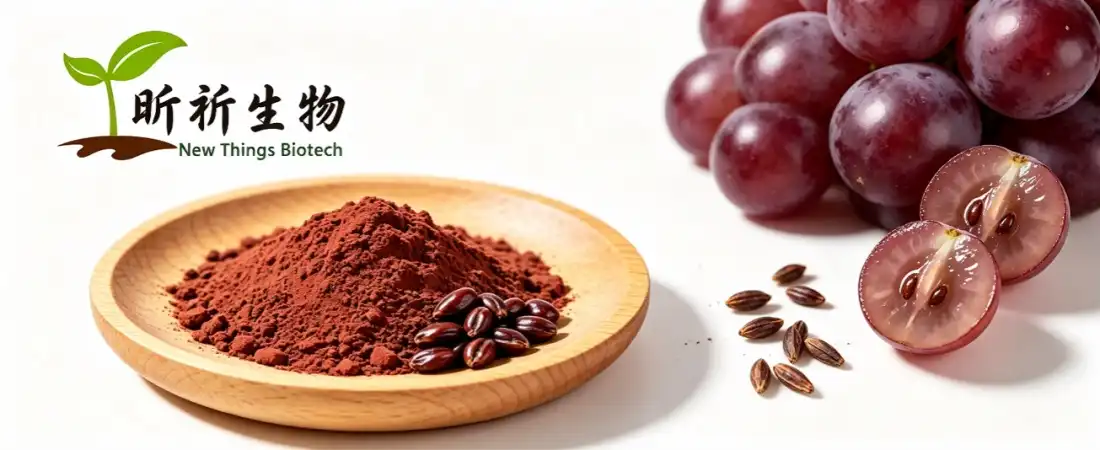
Open up any supplement catalogue and you will discover grape seed extract with a bold percentage next to it, generally 95% OPCs. But what does that number truly mean, and why do formulators care so much? In this article we break down the label, from chemical to source. Our grape seed extract 95% OPC is derived from carefully chosen Vitis vinifera seeds with patented low temperature extraction. This yields excellent purity, reliable stability and a smooth, uniform powder for purchasers. HPLC/UV data are included with every batches sent, along with a Certificate of Analysis, so you always know precisely what you are receiving. Please contact us at info@newthingsbiotech.com for specs, samples or a custom price.
Decoding the Label: What 95% OPC Really Tells You
The percentage on a grape seed extract label is a guarantee concerning concentration. A grape seed extract 95% OPC includes at least 95% oligomeric proanthocyanidins, the family of polyphenols that gave grape seed its reputation among nutrition experts. Grape seed is loaded in oligomeric proanthocyanidins, short chains of catechin and epicatechin molecules, so a little dose may pack a powerful antioxidant punch. A well-standardized grape seed proanthocyanidin extract allows marketers to know an accurate daily quantity vs. crude seed powder, maintain batch-to-batch consistency and make confident label claims. Therefore, the number is not a marketing adornment, but a practical instrument for everyone who formulates.
The Chemistry Behind the Number
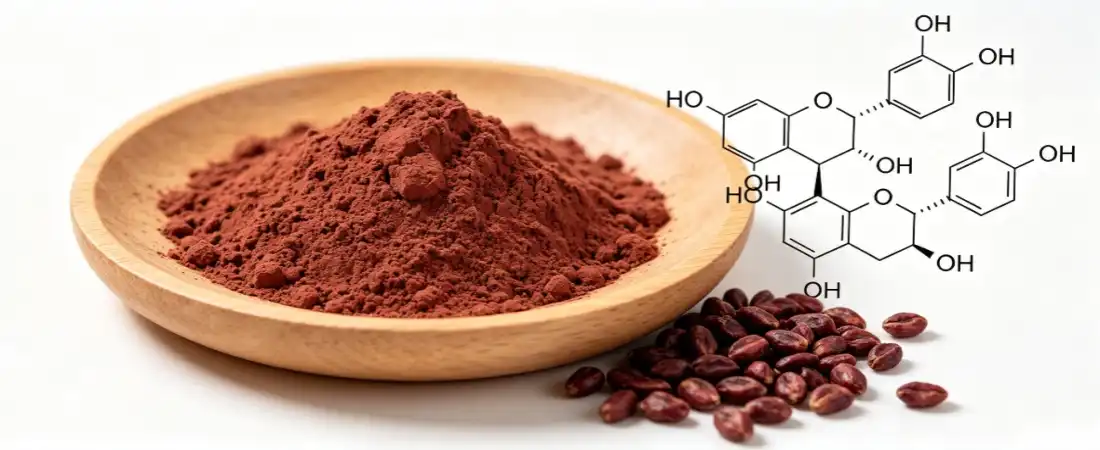
Grape seeds include a mixture of monomers such as catechin and epicatechin as well as dimers, trimers and bigger polymers as described by Shi and colleagues (2003). The OPC percentage is in the center of that range: tiny enough to be investigated for absorption yet abundant in the hydroxyl groups that neutralise free radicals. That balance is why formulators love it.
One Number, Different Test Methods
Here’s a fact that many customers fail to notice: a percentage is meaningful only in context of how it was assessed. UV colorimetric techniques provide an estimation of total proanthocyanidins, while HPLC separates and quantifies specific chemicals. Hümmer and Schreier (2008) explain why no one methodology provides the complete picture. Ask for both and you may compare vendors on a like-for-like basis.
Reading a Specification Sheet Like a Pro
A specification sheet is the résumé of a provider. As well as the OPC value, look for appearance, moisture, heavy metals and microbiological restrictions, as they indicate how well a batch was produced. Table 1 Typical characteristics of grape seed extract 95% OPC.
Table 1. Typical Specifications of Grape Seed Extract 95% OPC
| Parameter | Typical Specification |
|---|---|
| Botanical source | Vitis vinifera L. (seed) |
| Appearance | Reddish-brown fine powder |
| Total OPC | ≥95% (UV) |
| Loss on drying | ≤5.0% |
| Heavy metals | ≤10 ppm (ICP-MS) |
| Total plate count | ≤1,000 CFU/g |
What the Science Says: Benefits Worth Building a Product Around
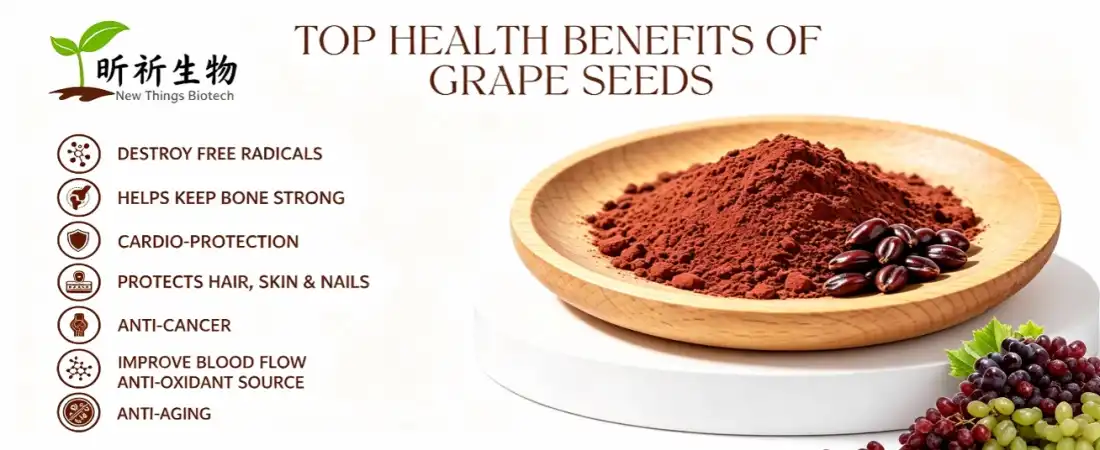
Consumers don’t purchase an ingredient, they buy how that ingredient makes them feel and look. Published science allows marketers a number of believable tales to tell from the same chemicals, starting with cardiovascular support, antioxidant defense and skin health. Much of the study has been on the oligomeric proanthocyanidins that are found in concentrated form in grape seed, and how grape seed proanthocyanidin extract enhances vascular comfort, antioxidant defence and skin. Grape seed extract 95% OPC supplies this fraction in a highly standardised powder format, making it easier to match a researched dosage to an actual pill, gummy or drink. Stick with the local restrictions on your claims and let the proof speak for itself.
Circulation and Heart Health
A meta-analysis of randomised controlled trials (Feringa et al., 2011) found that grape seed extract was related with small reductions in systolic blood pressure, heart rate, and C-reactive protein. Circulation formulae are a perfect match as Sivaprakasapillai and colleagues (2009) demonstrated reduced blood pressure and oxidised LDL in persons with metabolic syndrome after four weeks at 300 mg daily.
Antioxidant Defense From Head to Toe
Rasmussen et al. (2005) evaluated dietary proanthocyanidins and noted their free radical scavenging activities and possible function in vascular protection. For wellness companies, it promotes messaging around good ageing, active lifestyles and resistance against oxidative stress caused by pollution, sun and daily living.
Beauty From Within
Skin is a liked tale. Yamakoshi et al. (2004) revealed that women who consumed 105 mg of a proanthocyanidin-rich grape seed extract daily for six months had improvement in chloasma. Proanthocyanidins bond to collagen and elastin, therefore you’ll see them in nutricosmetic capsules and skincare serums. Not sure what dosage matches your idea? Email info@newthingsbiotech.com and our technical staff will advise you on a grade and deliver samples to test before you go forward.
Table 2. Selected Human Research on Grape Seed Extract
| Study | Design | Daily Amount | Reported Outcome |
|---|---|---|---|
| Feringa et al., 2011 | Meta-analysis of randomized trials | Varied | Modest gains in blood pressure, heart rate, CRP |
| Sivaprakasapillai et al., 2009 | Four-week trial, metabolic syndrome | 300 mg | Lower blood pressure, oxidized LDL |
| Yamakoshi et al., 2004 | Six-month study, women with chloasma | 105 mg | Improved chloasma |
Behind the Powder: How Quality Is Built, Step by Step
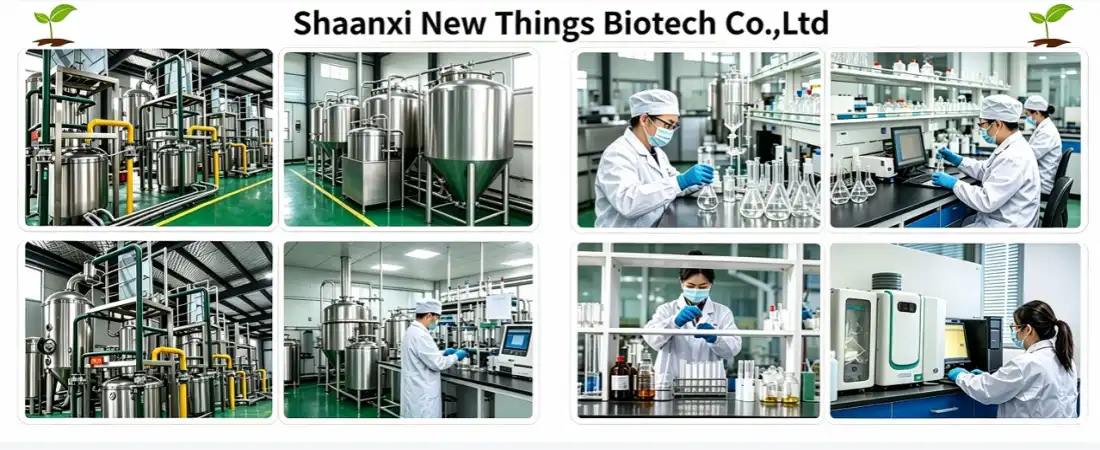
amazing judgements on the floor and in the plant provide the foundation for amazing statistics on paper. A grape seed extract 95% OPC is only as good as the seeds, solvents and controls behind it and here is where conscientious makers set themselves apart from the rest. The oligomeric proanthocyanidins in grape seed are susceptible to heat, light and oxygen, thus all steps from washing to drying must preserve them. A good grape seed proanthocyanidin extract will be stable in colour, solubility and potency month after month on the shelf. Quality is planned in, not inspected afterward, as parent firm Shaanxi New Things Biotech builds autonomous planting, sophisticated R&D and intelligent manufacturing into one value chain at NT Biotech.
Seed Selection and Gentle Extraction
It all starts with clean, dried seeds from black grape types. We use innovative extraction processes that are designed to maximise the output of active chemicals, and keep the temperatures low so that fragile oligomers do not break down or brown during processing.
Purification, Drying, and Stability
The liquid is then filtered, condensed and purified to eliminate sugars, fibres and other undesired substances. Careful drying next yields a fine reddish-brown powder with low moisture content, which makes it free-flowing and stable in storage. We offer a purity of over 98% on major standardised items via our processes.
Batch Proof: HPLC, UV, and Certificates
Each batch of oligomeric proanthocyanidins grape seed is analysed in our facility and sent with HPLC/UV documentation and a Certificate of Analysis. ISO9001, KOSHER and HALAL certificates provide further reassurance to customers selling into regulated or faith-sensitive areas and uniform documentation helps your quality team accept orders quicker.
Putting It to Work: Formats, Dosing, and Choosing Your Supplier
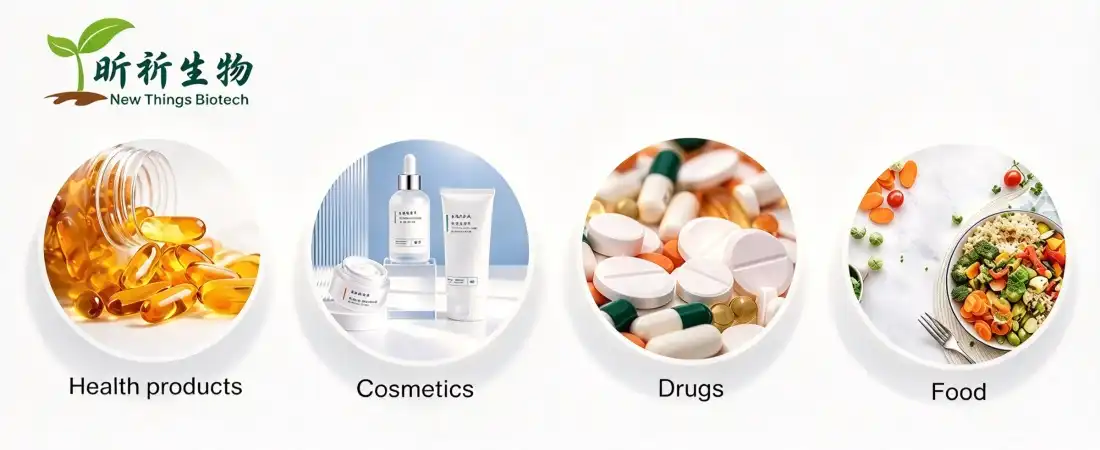
Once you know the constituent, practical issues arise: what form, what amount, who supplies? Grape seed extract 95% OPC is quite flexible to use, since its potency enables for tiny serving quantities that may suit practically any format. Grape seed contains oligomeric proanthocyanidins, which formulators may find in capsules, pills, gummies, sachets, cosmetics and even pet nutrition. One ingredient might be the basis of multiple product lines. Either way, a consistent grape seed proanthocyanidin extract makes scale-up simpler and reformulation less probable. A good provider of grape seed extract 95% OPC will also assist with paperwork, timeframes and market specific needs, converting a potential concept into a launch-ready product.
Capsules, Gummies, and Drinks
The original grape seed extract 95% OPC supplements are capsules or pills, usually taken at a dose of 50 to 300 mg per day. The gummies and stick packs appeal to younger buyers who seek heart and beauty support in a handy format and the fine powder readily mixes into ready-to-mix beverages.
Skincare and Animal Nutrition
Cosmetic chemists have included grape seed polyphenols into serums, creams and masks (often 0.2%–2.0%) that claim to protect against environmental stress. The same antioxidant proposition is behind the pet supplements and feed premixes in the animal nutrition.
A Supplier Checklist That Saves Headaches
When comparing a grape seed extract 95% OPC provider , don’t only compare price, consider evidence, quickness and flexibility. As seen in Table 3, what we have to offer at NT Biotech is a convenient barometer for any partner you could pick.
Table 3. Buyer Checklist and What NT Biotech Provides
| Factor | What to Ask | What We Provide |
|---|---|---|
| Documentation | Data for every batch? | HPLC/UV data and CoA |
| Certifications | Recognized standards? | ISO9001, KOSHER, HALAL |
| Response | How fast do they reply? | Initial reply within two hours |
| Delivery | Stock and lead time? | Stock 1–3 working days; production 3–10 |
| Flexibility | OEM and payment options? | OEM/ODM; local-currency payment |
Conclusion
Understanding grape seed extract 95% OPC comes down to three ideas: know what the number means, know how it was measured, and know who made it. When the oligomeric proanthocyanidins grape seed contains are concentrated, tested, and documented batch by batch, the resulting grape seed proanthocyanidin extract becomes a versatile ingredient for supplements, foods, cosmetics, and animal nutrition. Shaanxi New Things Biotech is a trustworthy plant derivatives supplier, offering autonomous planting, advanced R&D, ISO9001, KOSHER, and HALAL certifications, rapid delivery, and flexible OEM solutions. Our technology-based approach connects plant source to product application, so your formulas stay pure, active, and consistent. Every batch reflects the gift of nature and the commitment of science. Contact us today and develop your next product naturally and reliably.
FAQ
1. What does 95% OPC mean on a grape seed extract label?
It means the powder contains at least 95% oligomeric proanthocyanidins, typically measured by UV, which allows precise dosing.
2. Why ask for both HPLC and UV data?
UV estimates total proanthocyanidins, while HPLC profiles individual compounds, so together they confirm purity and consistency.
3. What daily amount do supplements typically use?
Capsules and tablets commonly use 50–300 mg of grape seed extract 95% OPC per day, adjusted to local regulations.
4. How fast can NT Biotech deliver?
We reply within two hours, ship stock in 1–3 working days, and finish production orders in 3–10 working days.
5. Does NT Biotech offer OEM and quality documents?
Yes. We provide OEM/ODM solutions, a CoA with every batch, ISO9001, KOSHER, and HALAL certifications, and local-currency payment.
Partner With NT Biotech for Premium 95% OPC Grape Seed Extract Today!
Ready to bring premium grape seed extract to your next launch? NT Biotech combines proprietary extraction, purity above 98% on key standardized products, and full HPLC/UV documentation to give your brand a dependable competitive edge. Whether you need grape seed extract 95% OPC for high-potency capsules, a custom blend under your own label, or fast stock shipment by express or air freight, our team is ready. Enjoy replies within two hours, delivery from stock in 1–3 working days, flexible OEM/ODM solutions, and payment in your local currency. Send your target specifications, quantities, and destination market to info@newthingsbiotech.com today, and let us build a supply solution that helps your product stand out with confidence.
References
1. Shi, J., Yu, J., Pohorly, J. E., & Kakuda, Y. (2003). Polyphenolics in grape seeds—biochemistry and functionality. Journal of Medicinal Food, 6(4), 291–299.
2. Hümmer, W., & Schreier, P. (2008). Analysis of proanthocyanidins. Molecular Nutrition & Food Research, 52(12), 1381–1398.
3. Rasmussen, S. E., Frederiksen, H., Struntze Krogholm, K., & Poulsen, L. (2005). Dietary proanthocyanidins: Occurrence, dietary intake, bioavailability, and protection against cardiovascular disease. Molecular Nutrition & Food Research, 49(2), 159–174.
4. Feringa, H. H. H., Laskey, D. A., Dickson, J. E., & Coleman, C. I. (2011). The effect of grape seed extract on cardiovascular risk markers: A meta-analysis of randomized controlled trials. Journal of the American Dietetic Association, 111(8), 1173–1181.
5. Sivaprakasapillai, B., Edirisinghe, I., Randolph, J., Steinberg, F., & Kappagoda, T. (2009). Effect of grape seed extract on blood pressure in subjects with the metabolic syndrome. Metabolism, 58(12), 1743–1746.
6. Yamakoshi, J., Sano, A., Tokutake, S., Saito, M., Kikuchi, M., Kubota, Y., & Kawachi, Y. (2004). Oral intake of proanthocyanidin-rich extract from grape seeds improves chloasma. Phytotherapy Research, 18(11), 895–899.