- English
- French
- German
- Portuguese
- Spanish
- Russian
- Japanese
- Korean
- Arabic
- Greek
- German
- Turkish
- Italian
- Danish
- Romanian
- Indonesian
- Czech
- Afrikaans
- Swedish
- Polish
- Basque
- Catalan
- Esperanto
- Hindi
- Lao
- Albanian
- Amharic
- Armenian
- Azerbaijani
- Belarusian
- Bengali
- Bosnian
- Bulgarian
- Cebuano
- Chichewa
- Corsican
- Croatian
- Dutch
- Estonian
- Filipino
- Finnish
- Frisian
- Galician
- Georgian
- Gujarati
- Haitian
- Hausa
- Hawaiian
- Hebrew
- Hmong
- Hungarian
- Icelandic
- Igbo
- Javanese
- Kannada
- Kazakh
- Khmer
- Kurdish
- Kyrgyz
- Latin
- Latvian
- Lithuanian
- Luxembou..
- Macedonian
- Malagasy
- Malay
- Malayalam
- Maltese
- Maori
- Marathi
- Mongolian
- Burmese
- Nepali
- Norwegian
- Pashto
- Persian
- Punjabi
- Serbian
- Sesotho
- Sinhala
- Slovak
- Slovenian
- Somali
- Samoan
- Scots Gaelic
- Shona
- Sindhi
- Sundanese
- Swahili
- Tajik
- Tamil
- Telugu
- Thai
- Ukrainian
- Urdu
- Uzbek
- Vietnamese
- Welsh
- Xhosa
- Yiddish
- Yoruba
- Zulu
Astaxanthin enhanced krill oil is a blend of marine omega-3 lipids, phospholipids and the naturally red-orange carotenoid astaxanthin in one premium nutritious ingredient. This blend is gaining interest in cardiovascular, eye, skin, active-aging and sports nutrition products. Yet for manufacturers, a winning recipe is much more than a good ingredient narrative. Source traceability, EPA and DHA levels, phospholipid content, astaxanthin standardisation, oxidation control, and batch documentation are all important. NT Biotech provides standardised natural ingredients, flexible OEM/ODM services, quality-oriented processing and worldwide logistics. Its astaxanthin-enriched krill oil is intended for companies looking for a consistent, traceable, and formulation-ready material from a dependable astaxanthin-enriched krill oil provider.
The Science Behind the Marine Combination
What astaxanthin contributes
Astaxanthin is a xanthophyll carotenoid that is naturally synthesised by specific microalgae and passed down the marine food chain to krill, shrimp and salmon. The unusual red-orange colour makes it very conspicuous, but the economic value is due to its molecular makeup and studies on antioxidants. As astaxanthin is fat-soluble, an oil-based delivery mechanism makes sense for supplement development. In krill oil supplemented with astaxanthin, the carotenoid is bound to the marine lipids to create a multi-component ingredient, rather than a single, isolated nutrition. The actual product profile is dependent on the krill source, extraction procedure, enrichment method, stabilisation technology and final specification. Buyers should thus look at analytical data rather than make quality judgements on colour alone.
The role of krill oil
Krill oil is a marine oil that contains omega-3 fatty acids (EPA and DHA) as well as phospholipids and other minor components. Krill oil is typically promoted as having a phospholipid associated omega 3 structure compared to many standard fish oils. Phospholipids are significant constituents of biological membranes, and may also alter the physical qualities of an oil ingredient. Thus, astaxanthin-enriched krill oil might give marketers a wider narrative than a traditional omega-3 concentrate: marine lipids, phospholipids and a standardised carotenoid in one packaging. But the real nutritional value has to be verified by product testing. A professional specification should explicitly define EPA, DHA, total lipid, phospholipid, astaxanthin, oxidation and contaminant requirements.
Why enrichment improves formulation control
Natural krill oil may include astaxanthin , however astaxanthin content might vary with species , harvest circumstances , processing and storage . Enrichment or standardisation might provide a more predictable level which makes it simpler for a producer to determine serving size and create a uniform label. It might also help a business carve out a more unique product positioning in a congested omega-3 marketplace. NT Biotech is dedicated to the use of standardised natural resources and provides laboratory testing, HPLC/UV documentation on applicable items and Certificates of Analysis. These capabilities allow buyers to assess astaxanthin-enriched krill oil on quantitative properties rather than general promises like “premium” or “high strength.” Buyers should verify if the astaxanthin is natural, added from another permitted source or delivered via a defined enrichment procedure.
| Quality attribute | Why it matters to product developers |
|---|---|
| Astaxanthin assay | Establishes the declared carotenoid concentration |
| EPA and DHA | Defines the omega-3 contribution of the ingredient |
| Phospholipid level | Supports formulation differentiation and product positioning |
| Oxidation indicators | Help evaluate freshness and storage stability |
| Heavy-metal testing | Supports marine-ingredient quality review |
| Origin and traceability | Helps document the supply chain and source controls |
Where Astaxanthin-Enriched Krill Oil Fits in Wellness
Cardiovascular and omega-3 products
EPA and DHA are familiar components in nutritional science and are often included to products for cardiovascular and general wellbeing. The inclusion of astaxanthin is enriching the krill oil with astaxanthin and provides a fuller story on antioxidants and marine nutrition. It may be used as softgels or capsules in a brand aimed at adults who want to stay healthy as they age, for daily nutrition or premium omega-3 supplementation. The last claim, however, relies on the quantity of EPA and DHA given per serving, the restrictions of the target market and the specific phrasing used on the label. Manufacturers cannot assume that the existence of an ingredient supports every plausible health assertion. A proper regulatory assessment should check that the completed product fits local regulations.
Eye and skin wellness
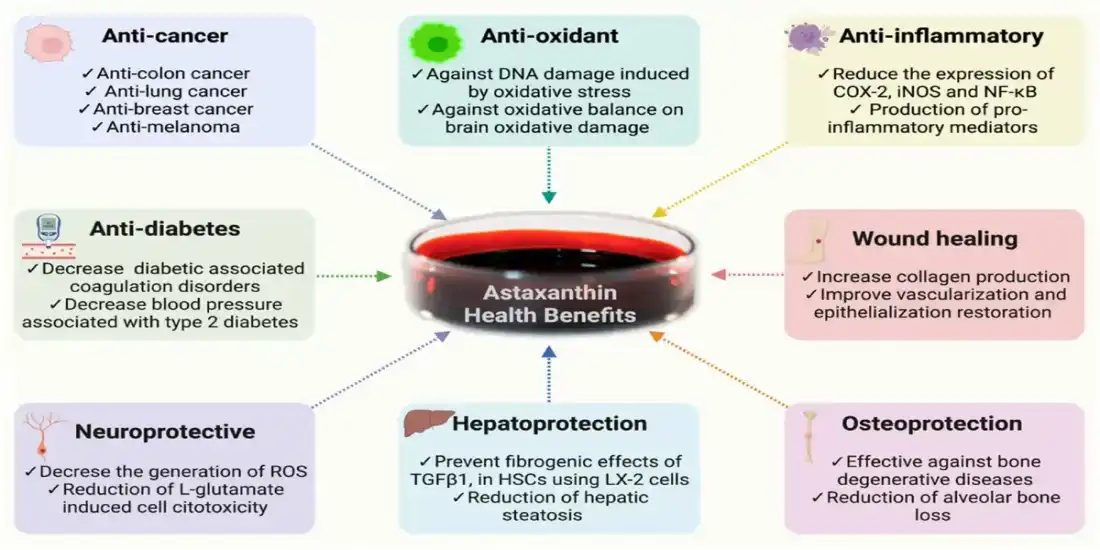
Astaxanthin has been examined for ocular comfort, skin appearance, oxidative balance and protection against environmental stress. These regions make it ideal for beauty-from-within goods, eye health formulations and healthy ageing supplements.” Krill oil has omega-3 and phospholipid placement for a more complete notion than a simple carotenoid one.Krill oil that is high in astaxanthin may appeal to customers who like marine ingredients and premium, multi-functional compositions. That said, product producers should link claims with acceptable data and avoid implying a supplement addresses eye illness or fixes skin damage. The best marketing, however, talks about the nutritional contribution of the substance and urges people to see it as a component of a balanced lifestyle, not a silver bullet.
Active lifestyles and exercise nutrition
Sports nutrition has taken an interest in astaxanthin as researchers have investigated its association with oxidative stress, exercise recovery, endurance and muscle function. Krill oil is a marine omega-3 narrative that might work for goods targeting active people, recreational sports and healthy-aging customers looking for nutritional assistance for mobility and performance. Astaxanthin-enriched krill oil may be made as softgels or mixed with other nutrients, but the product should not provide guarantyd strength, endurance or recovery effects. The best posture for the product would be one that emphasises on nutritional support, consistent quality and a reasonable serving schedule. Also, formulators should consider the overall lipid content, capsule size, taste, oxidation stability and compatibility with other sports-nutrition additives.
Beauty-from-within opportunities
Astaxanthin’s powerful natural colour may make a beauty product stand out visually, and its antioxidant research offers a science-based skin-health message. Krill oil, enhanced with astaxanthin, may be marketed as a premium marine ingredient for skin attractiveness, healthy ageing, and daily antioxidant nutrition when mixed with krill oil. The product format, however, is still significant. Softgels are easy to take and can shield the oil from air, but emulsified powders or drinks need more formulation science. Brands should evaluate odour, capsule integrity, colour stability and customer approval. They should also check if the shell, transporters and other ingredients in the completed product satisfy vegan, allergy or sustainability claims.
| Application concept | Main development focus |
|---|---|
| Premium omega-3 softgel | EPA, DHA, phospholipids, astaxanthin, and oxidation control |
| Eye-wellness product | Evidence-based claims and finished-product dosage |
| Beauty-from-within formula | Skin-related communication, stability, and sensory quality |
| Active-lifestyle supplement | Serving size, capsule convenience, and claim compliance |
| Healthy-aging product | Clear positioning and compatibility with supporting nutrients |
Formulating the Ingredient for Commercial Success
Softgels and capsules
Softgels are a suitable delivery vehicle for astaxanthin-enriched krill oil since they can hold oil in a sealed, handy packaging. Fill weight, viscosity, leakage resistance, shell compatibility, oxygen exposure and long-term capsule stability should be evaluated by manufacturers throughout development. Consumers may know gelatine softgels from their own experiences, but marketers targeting a vegetarian or special-diet audience should ensure an alternative shell is physically feasible. Light-protective packaging might assist maintain the quality of astaxanthin and oil, particularly during transit and retail display. Pilot batch should be evaluated for odour, colour migration, look of capsule, Disintegration and Assay retention. NT Biotech’s OEM/ODM assistance may aid businesses with ingredient sourcing, package selection, private labelling, and completed product manufacture.
Powders and emulsified systems
Oil-based krill constituents are not water dispersible thus beverage and powder applications may need emulsification, microencapsulation or an appropriate carrier. Astaxanthin-enriched krill oil may be generated for sachets, nutrition powders or functional beverages but the final system must be evaluated in terms of dispersion, particle size, sedimentation, taste, colour and oxidation. The vivid red-orange colour may be a visual plus for certain drinks, but it also influences the taste and the container design. Manufacturers should evaluate the substance in the real formula, not only in laboratory water. Pilot testing should encompass processing temperature, pH, exposure to oxygen and humidity during storage before the product is ramped up.
Combining it with other nutrients
The substance may be mixed with vitamins, minerals, plant extracts, collagen, phospholipids or other sources of omega-3. A combination formula may provide a more powerful consumer offer but also requires more compatibility testing. Some minerals and botanical extracts at high amounts may have an effect on oxidation, flavour, capsule fill or shelf life.All active compounds, excipients, transporters and processing aids should be tested in combination with astaxanthin enhanced krill oil. First, formulators should identify the core product objective – omega-3 nutrition, eye health, skin support or active ageing, for example – and then pick supplementary ingredients that reinforce rather than obscure the aim. Short formulas are usually simpler to explain and check.
Protecting freshness and stability
Marine oils need careful management of oxygen and heat and light and moisture. Astaxanthin may have antioxidant qualities, but it does not substitute appropriate production processes, correct packaging or stability testing. A comprehensive stability programme may include a monitoring of astaxanthin test, EPA and DHA, peroxide value, anisidine value, total oxidation, odour, colour and capsule integrity. The raw material for astaxanthin-enriched krill oil should be kept according to the current specification of the supplier and safeguarded from improper environmental conditions. NT Biotech can provide batch information, packaging coordination and logistical assistance. Shelf-life in the final container and under the intended circumstances of distribution remains the responsibility of the maker of the completed product.
Evaluating Your Ingredient Partner
Documentation should be specific and current
A trustworthy vendor of astaxanthin-enriched krill oil should be able to give a current specification, lot-specific CoA, statement of source, processing details, storage instructions, allergy statement, and relevant data on contaminant testing. Where relevant, buyers should ask for EPA, DHA, phospholipid, astaxanthin, oxidation, heavy-metal, pesticide and microbiological data. NT Biotech outlines a technology based supply model for the nutritional supplement, functional food, cosmetics and animal nutrition markets. It claims capabilities like standardised processes, quality documentation, HPLC/UV testing for appropriate items, ISO9001, Kosher and Halal support. Prior to accepting a commercial supply, buyers should confirm the scope, validity, issuing organisation and link of the certificate to the particular production location and product grade.
Ask how enrichment is achieved
The phrase “enriched” should be technically clear. Buyers should ask whether astaxanthin is naturally concentrated from the krill oil, added from a microalgal source, or incorporated through another controlled process. They should also confirm carriers, stabilization agents, assay range, source declarations, and label implications. These details affect regulatory review and consumer communication. A professional astaxanthin-enriched krill oil supplier should explain the process without relying on vague claims. NT Biotech highlights proprietary processing intended to improve active-compound yield, purity, and stability for key products. Customers should still request the exact product specification and analytical method for the particular grade they intend to purchase.
Lead times and supply planning
NT Biotech reports an initial response target of two hours, inventory for selected standardized ingredients, and shipment of available stock within one to three working days after order confirmation. Typical production orders may require three to ten working days, including sourcing, processing, laboratory testing, CoA preparation, and final packaging. Actual timing for astaxanthin-enriched krill oil depends on product grade, quantity, packaging, testing, and destination. The company offers express, air, and sea transportation, including direct FEDEX or UPS shipments and freight-forwarder support for larger orders. Buyers should confirm Incoterms, temperature conditions, insurance, customs documents, and import responsibilities before dispatch.
If you are developing a marine wellness, beauty-from-within, or active-lifestyle product, contact NT Biotech at info@newthingsbiotech.com. Share your target astaxanthin level, omega-3 requirements, dosage form, market, and estimated volume for a more focused technical recommendation.

Making the Final Buying Decision
Traceability and sustainability matter
Krill is a marine resource, so source transparency and responsible supply-chain management are important to modern consumers and retailers. Buyers should ask about harvest region, supplier records, catch documentation, environmental controls, and sustainability standards relevant to the intended market. These details can influence retailer approval and brand reputation. Astaxanthin-enriched krill oil should be evaluated not only for its nutrient profile but also for the credibility of its origin and handling. A supplier that maintains batch numbers, source records, testing documents, and shipping information can help brands answer questions more confidently. NT Biotech’s source-to-application model provides a framework for this type of documentation, although product-specific evidence should always be requested.
Compare total value, not only price
A low price may reflect lower astaxanthin content, different EPA and DHA levels, weaker oxidation controls, limited testing, or less protective packaging. When comparing astaxanthin-enriched krill oil quotations, buyers should request equivalent information from each candidate: assay basis, analytical methods, phospholipid level, oxidation data, packaging, minimum order quantity, lead time, certifications, shipping terms, and payment conditions. Technical assistance and OEM/ODM support may also reduce development costs by preventing reformulation and documentation delays. NT Biotech provides flexible payment solutions, including local-currency payment where available. The best supplier is the one that offers reliable quality, communication, delivery, and scalability—not simply the lowest initial quotation.
Establish a long-term quality agreement
For recurring orders, a quality agreement can define specifications, testing methods, batch release, packaging, change control, deviation handling, complaint procedures, retention samples, and notification timelines. It may also describe how the supplier will communicate changes to raw-material sources, processing methods, analytical procedures, or manufacturing locations. This is especially valuable for astaxanthin-enriched krill oil, where changes in enrichment, oxidation control, or carrier systems can affect the label and finished-product behavior. NT Biotech’s batch CoA process and technical support can provide a useful basis for long-term cooperation. A written agreement helps both parties maintain consistency as volumes grow and new markets are added.
| Final approval area | Question to ask |
|---|---|
| Identity and source | Is the krill origin fully documented? |
| Composition | What are the minimum EPA, DHA, phospholipid, and astaxanthin levels? |
| Oxidation control | Which indicators are tested, and what limits apply? |
| Packaging | Does the container protect against oxygen, heat, and light? |
| Compliance | Are certificates and technical documents suitable for the target market? |
| Supply continuity | Are lead time, stock status, MOQ, and shipping terms clear? |

Conclusion
Astaxanthin-enriched krill oil is a unique nutritional ingredient: it is a natural combination of marine omega-3 fatty acids and phospholipids with a naturally occurring red-orange carotenoid. It may help support premium claims in omega-3 nutrition, ocular health, beauty from within, active lifestyles and good ageing. But a catchy ingredient name is not enough to make a commercial success. Buyers should look for source traceability, EPA and DHA content, phospholipid content, astaxanthin standardisation, oxidation stability, packaging, certifications and delivery capabilities. NT Biotech offers standardised processes, batch documentation, OEM/ODM customisation, flexible logistics and worldwide support. Partnering with a reputable provider of krill oil high in astaxanthin may help firms build consistent, respectable goods ready for the market. Contact NT Biotech to discuss your supply and formulation needs.
FAQ
1. What is astaxanthin-enriched krill oil?
It is krill oil containing marine omega-3s and phospholipids with a defined or enhanced level of astaxanthin.
2. What is astaxanthin used for?
It is commonly included in products positioned around antioxidant nutrition, eye wellness, skin appearance, active lifestyles, and healthy aging.
3. What should buyers test?
Review astaxanthin, EPA, DHA, phospholipids, oxidation indicators, heavy metals, pesticides, microbiology, and shelf-life data.
4. Is krill oil suitable for softgels?
Yes. Softgels are a common format, but fill weight, shell compatibility, oxidation protection, and capsule stability should be evaluated.
5. Can NT Biotech customize the product?
Yes. NT Biotech offers OEM/ODM support, technical documentation, packaging coordination, and flexible delivery options.
Build Your Marine Wellness Product with NT Biotech
NT Biotech helps brands develop premium marine-nutrition products through standardized processing, laboratory testing, batch CoAs, packaging coordination, and flexible OEM/ODM services. Its astaxanthin-enriched krill oil can be evaluated for softgels, capsules, beauty-from-within products, active-lifestyle formulas, and omega-3 wellness concepts. Customers can discuss astaxanthin assay, EPA and DHA levels, phospholipid content, oxidation control, source traceability, certifications, logistics, and target-market requirements with one responsive partner. Express, air, and sea shipping options support both pilot projects and larger commercial orders. If you are preparing your next marine supplement, contact info@newthingsbiotech.com with your application, volume, market, and quality requirements. Let NT Biotech help transform astaxanthin-enriched krill oil into a consistent, well-documented, and market-ready product.
References
1. Fassett, R. G., and J. S. Coombes. “Astaxanthin: A Potential Therapeutic Agent in Cardiovascular Disease.” Marine Drugs, 2011.
2. Ambati, R. R., et al. “Astaxanthin: Sources, Extraction, Stability, Biological Activities and Its Commercial Applications.” Marine Drugs, 2014.
3. Guerin, M., M. E. Huntley, and M. Olaizola. “Haematococcus Astaxanthin: Applications for Human Health and Nutrition.” Trends in Biotechnology, 2003.
4. Tou, J. C., J. Jaczynski, and Y. Chen. “Krill for Human Consumption: Nutritional Value and Potential Health Benefits.” Nutrition Reviews, 2007.
5. Burri, L., et al. “Krill Oil and Its Effects on Cardiovascular Risk Factors.” Lipids in Health and Disease, 2012.
6. Fassett, R. G., and J. S. Coombes. “Astaxanthin in Cardiovascular Health and Disease.” Marine Drugs, 2011.