- English
- French
- German
- Portuguese
- Spanish
- Russian
- Japanese
- Korean
- Arabic
- Greek
- German
- Turkish
- Italian
- Danish
- Romanian
- Indonesian
- Czech
- Afrikaans
- Swedish
- Polish
- Basque
- Catalan
- Esperanto
- Hindi
- Lao
- Albanian
- Amharic
- Armenian
- Azerbaijani
- Belarusian
- Bengali
- Bosnian
- Bulgarian
- Cebuano
- Chichewa
- Corsican
- Croatian
- Dutch
- Estonian
- Filipino
- Finnish
- Frisian
- Galician
- Georgian
- Gujarati
- Haitian
- Hausa
- Hawaiian
- Hebrew
- Hmong
- Hungarian
- Icelandic
- Igbo
- Javanese
- Kannada
- Kazakh
- Khmer
- Kurdish
- Kyrgyz
- Latin
- Latvian
- Lithuanian
- Luxembou..
- Macedonian
- Malagasy
- Malay
- Malayalam
- Maltese
- Maori
- Marathi
- Mongolian
- Burmese
- Nepali
- Norwegian
- Pashto
- Persian
- Punjabi
- Serbian
- Sesotho
- Sinhala
- Slovak
- Slovenian
- Somali
- Samoan
- Scots Gaelic
- Shona
- Sindhi
- Sundanese
- Swahili
- Tajik
- Tamil
- Telugu
- Thai
- Ukrainian
- Urdu
- Uzbek
- Vietnamese
- Welsh
- Xhosa
- Yiddish
- Yoruba
- Zulu
Astaxanthin is a naturally occurring carotenoid (red-orange in colour) found in marine creatures, such as microalgae, salmon and krill . When blended with krill oil, it is a premium marine-nutrition component with a unique colour and a powerful antioxidant story.Krill oil is a source of marine omega-3 fatty acids like EPA and DHA, which are commonly connected with phospholipids. Astaxanthin-enriched krill oil may thus help businesses distinguish goods for the cardiovascular, eye, skin, joint and general wellness sectors. NT Biotech provides standardised natural ingredients, quality documentation, OEM/ODM services, flexible worldwide shipping. Its astaxanthin-enriched krill oil is ideal for organisations looking for a well-processed, traceable and formulation-ready ingredient from a dependable astaxanthin-enriched krill oil provider.
Astaxanthin and Krill Oil: A Natural Partnership
What astaxanthin actually is
Astaxanthin is a member of the carotenoid family, the same large group of natural pigments that includes beta-carotene, lutein and zeaxanthin. The deep red colour is a result of its molecular framework that interacts with lipid surroundings and provides marine animals their unique hue. Astaxanthin is created in nature mainly by microalgae that are subsequently passed up the food chain to animals such krill, shrimp and salmon. Its usage in supplements is generally linked to studies on antioxidants and its compatibility with oil-based formulations.Astaxanthin-enriched krill oil incorporates the carotenoid with marine lipids, which means that it is a multi-component substance and not just a single isolated nutrient. The final formulation is determined by the source, extraction technique, concentration, stabilisation procedure and the announced specification.
What makes krill oil different from ordinary fish oil
Krill oil is a marine lipid constituent naturally bound to omega-3 fatty acids and phospholipids. Fish oil usually includes omega-3s in the triglyceride or ethyl ester form, whereas krill oil often has a large percentage of omega-3s in the phospholipid form. In addition to omega-3s, krill oil also naturally contains astaxanthin, however the quantity is subject to source and processing.Astaxanthin enriched krill oil is generated when the astaxanthin content is enriched or standardised to a particular product specification. This may provide producers a more consistent formulation strategy and a better label narrative. Instead, buyers should ask for particular EPA, DHA, phospholipid, astaxanthin, oxidation and contaminant requirements instead of believing all krill oils have the same nutritional profile.
Why enrichment matters for product developers
Natural krill oil may include varying quantities of astaxanthin and this variation might make standardisation of the end product more challenging. Enrichment enables a provider to produce an ingredient that is more predictable and has a set range of astaxanthin. This is relevant for makers of capsules, functional food brands, and firms who provide luxury marine supplements. A continuous red-orange colour may also be part of the product identification. Colour alone should never be used to prove potency. NT Biotech focuses on standardised processes, lab testing, batch Certificates of Analysis and customised natural-ingredient solutions. These features may assist purchasers to assess krill oil supplemented with astaxanthin according to measureable quality attributes, not marketing talk. The actual enrichment level, carrier system and stability profile should always be checked in the current technical specification.
| Ingredient feature | Why it matters in a finished product |
|---|---|
| EPA and DHA content | Helps define the marine omega-3 contribution |
| Phospholipid level | Supports product differentiation and formulation positioning |
| Astaxanthin assay | Establishes the declared carotenoid concentration |
| Oxidation values | Helps assess freshness and storage stability |
| Heavy-metal and contaminant testing | Supports raw-material safety and market qualification |
| Source and traceability | Helps document origin and supply-chain control |
How Astaxanthin Works in a Marine Formula
Antioxidant activity and oxidative balance
Astaxanthin is intensively investigated for its antioxidant effects. Its molecular framework allows it to interact with lipid environments, which is important since cell membranes and marine oils contain considerable quantities of lipids. In the general nutrition debate antioxidants are connected with enabling the body to cope with oxidative processes. Effects of a final product rely on dose, formulation, absorption, research design and individual characteristics.Astaxanthin rich krill oil offers a convenient source of a carotenoid in combination with marine lipids in one ingredient. Brands should not, however, position it as a guarantyd therapy or as a replacement for medical care. A responsible product narrative may talk about the antioxidant research behind the substance, while also emphasising balanced eating, regular activity, sleep and general wellbeing.
Interaction with omega-3 lipids and phospholipids
Krill oil appeals not just for its EPA and DHA, but also for its phospholipid content and its natural marine matrix. Phospholipids may affect the structure of biological membranes and the behaviour of oil during digestion and formulation. Since astaxanthin is a lipid soluble compound, it makes technical sense to combine it with an oil-based substance.Astaxanthin-enriched krill oil is a more integrated formulation approach than adding a water-based carotenoid to a separate omega-3 product and may thus be beneficial. However, don't simply assume that "better absorption" is a fact without proper data for the precise product. Manufacturers should analyse the product’s fatty-acid composition, phospholipid content, astaxanthin concentration, oxidation stability and final dosage form before making performance claims.
Potential relevance to heart, eye, skin, and active-aging products
Astaxanthin and marine omega-3s are often used in products targeting healthy aging, cardiovascular wellness, eye support, skin appearance, joint mobility, and active lifestyles. Research has explored astaxanthin in relation to visual comfort, skin resilience, exercise recovery, and oxidative balance, while EPA and DHA are well known in nutritional science. These areas create several market opportunities for astaxanthin-enriched krill oil, especially in premium softgel and capsule products. Yet product claims differ by country, and evidence for one isolated ingredient cannot automatically support every combination claim. Brands should select a clear primary benefit, determine which claims are authorized, and ensure the finished product contains the amount required to support its label language.
Why the marine matrix needs protection
Marine oils are susceptible to oxidation which may alter odour, flavour, colour and nutritional quality. Astaxanthin may provide antioxidant protection in an oil system, but it is not a perfect replacement for adequate production and packaging regulations. Raw material freshness, extraction conditions, oxygen exposure, light, heat, barrier qualities of the container and storage duration all important. NT Biotech's processing and batch testing technique with an emphasis on quality might help customers develop an acceptable incoming-material programme. Relevant oxidation markers, astaxanthin assay, fatty-acid content, phospholipid information and storage recommendations should be included in the specification for astaxanthin-enriched krill oil. Stability should also be evaluated in the final packing and not only inferred from the raw material.
| Technical parameter | Recommended buyer question |
|---|---|
| Astaxanthin concentration | What is the assay range and analytical method? |
| EPA and DHA | Are values declared as minimum content or typical content? |
| Phospholipids | What method is used to determine the stated level? |
| Oxidation stability | Which peroxide, anisidine, or related values are controlled? |
| Packaging | Does the container limit light, oxygen, and moisture exposure? |
| Shelf life | Is the proposed expiry supported by stability data? |
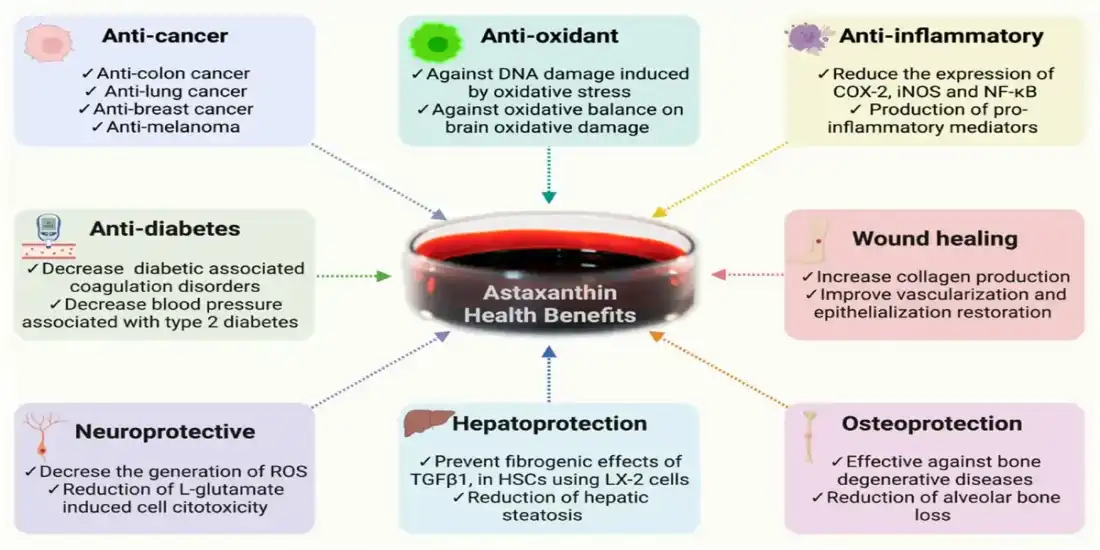
Designing Products Around Astaxanthin-Enriched Krill Oil
Softgels and capsules
Softgels are the natural shape for astaxanthin-enriched krill oil as the substance is oil-based and may be enclosed in a light resistant shell. Fill weight, oil viscosity, compatibility with capsule material, resistance to leakage, colour migration and long term stability should be considered by formulators. The shell of the softgel may also effect the vegan or allergy status of the final product, so marketers should check if the shell is produced from gelatine or some other substance. Powdered oil formulations may also be in hard capsules, but need carrier and flowability testing. NT Biotech is able to handle customised OEM and ODM projects, assisting brands in the coordination of ingredient requirements, packaging, private labelling and finished-product manufacture for multiple markets.
Functional beverages and nutrition powders
Oil-based substances provide specific issues for drinks, since they do not naturally disperse in water.If consumed as a drink, sachet or powder, the astaxanthin-enriched krill oil may need to be emulsified, encapsulated or have an appropriate delivery method. The product developer should examine particle size, dispersion, flavour, colour, sedimentation and oxidation under actual storage circumstances. A red-orange colour may add to the visual character of a product, but it can also interfere with flavours and package design. If the company wants a clear beverage, the ingredient may have to be processed more extensively than a softgel recipe. The ultimate format should be decided only after jointly considering technical feasibility, user experience and cost.
Sports and active-lifestyle formulas
Astaxanthin-enriched marine products might target the active consumer market interested in exercise recovery, endurance, mobility and general nutritional support. EPA and DHA feed into a more general omega-3 angle, and astaxanthin has been examined for benefits on exercise and oxidative stress. The recipe should nevertheless provide reasonable serving instructions and not promise guarantyd performance enhancements.Astaxanthin-enriched krill oil may be mixed with vitamins, minerals, botanical extracts and other sports-nutrition elements, but compatibility and total serving size should be confirmed. A good product should have one obvious advantage to the buyer, not a packed label with all sorts of irrelevant promises.
Beauty-from-within concepts
The interest in astaxanthin in nutricosmetic products for improving skin look and healthy ageing has also increased. Its antioxidant tale, marine origin and powerful natural colour may complement a premium beauty-from-within idea. Krill oil has its own unique phospholipid and omega-3 story, and astaxanthin-enriched krill oil is an ideal option for businesses looking for a more sophisticated alternative to traditional carotenoid or fish-oil solutions. But beauty claims have to be backed up with suitable data and considered under local rules. Packaging should express quality, freshness and traceability, particularly since customers may be sensitive to maritime odour or worries about sustainability. Supplier documentation is vital to gaining trust in this area.
How to Choose a Reliable Supplier
Begin with specifications and certificates
Key supplier papers include a current product specification, lot-specific Certificate of Analysis, source statement, processing description, storage suggestion, allergy declaration, and contaminant-testing information. For astaxanthin-rich krill oil, purchasers should additionally ask for EPA, DHA, phospholipid, astaxanthin, oxidation, heavy-metal, pesticide and microbiological data when appropriate. NT Biotech is a technology based provider to the nutritional supplement, functional food, cosmetic and animal nutrition markets. As per its claimed quality capabilities it provides ISO9001, Kosher and Halal assistance and standardised processes and laboratory documentation. Buyers should check the scope and validity of certifications and check that the documents pertain to the production site and the particular product grade.
Examine the supplier’s processing advantage
Raw-material supply, extraction method, concentration control, stabilisation, packaging, or testing may all provide product distinction. NT Biotech stresses innovative processing procedures to maximise active-compound yields, enhance purity and promote product stability. For astaxanthin-enriched krill oil, consumers should question how enrichment is done, whether the astaxanthin is natural or added from another source, what carriers are utilised, and how the finished product is protected against oxidation. These facts help to inform labelling, claims, sensory qualities, and regulatory appropriateness. A reputable astaxanthin-enriched krill oil source should be able to answer these questions explicitly, rather than using vague generalities such as “premium marine oil.”
Confirm lead times and logistics
NT Biotech provides answers to questions in 2 hours and holds stock of certain standardised substances and may despatch available items within 1 to 3 working days following order confirmation. Production orders usually take three to ten business days and include sourcing of raw materials, processing, lab testing, CoA preparation and final packing. Timing for astaxanthin enhanced krill oil is based on specification, order amount, packaging, testing requirements and destination. The firm also provides express, air and sea delivery, including direct FEDEX or UPS shipments and freight-forwarder help for bigger orders. Buyers should check Incoterms, temperature requirements, insurance, customs documentation and who is responsible for import clearance before despatch.
If you are developing a premium omega-3, beauty-from-within, or active-lifestyle formula, contact NT Biotech at info@newthingsbiotech.com. Share your target market, dosage form, astaxanthin level, expected volume, and documentation needs for a more focused product recommendation.

Making a Confident Commercial Decision
Consider traceability and sustainability
Responsible sourcing and traceability are crucial criteria for contemporary companies, since krill is a marine resource. Buyers should enquire about the area where the product was harvested, the supply chain, the catch paperwork, the environmental controls and any sustainability criteria applicable to the target market. Such difficulties might affect customer confidence and acceptance by retailers.The source and openness of the supply chain need to be taken into account when assessing the nutritional profile of astaxanthin enhanced krill oil. A supplier that can organise source information, batch numbers, testing documentation and shipping details makes it simpler to address client enquiries. NT Biotech’s source-to-application approach may assist businesses in building a fuller quality story, but buyers should seek product-specific data rather than relying primarily on broad corporate information.
Compare total value, not only price
A low quote may be concealing discrepancies in astaxanthin concentration, EPA and DHA levels, oxidation condition, packaging, carrier materials or scope of tests. When evaluating astaxanthin-enriched krill oil offers, buyers should ask every candidate for the same information: active specs, assay basis, test techniques, packaging, minimum order quantity, lead time, shipping terms, certificates and payment conditions. The supplier's capacity to provide technical help and customised OEM support may shorten development time and save expensive reformulation. NT Biotech also provides multiple payment options including local currency payment if applicable. Total commercial value encompasses quality, documentation, delivery dependability, technical communication and the capacity to scale-up production as demand increases.
Plan stability before launch
The testing of oil-based goods should be done in the final packaging and under anticipated storage circumstances. A raw ingredient may be stable in a sealed container at the plant, but behave differently after it has been filled into softgels, bottles, sachets or emulsions. Stability plans should track astaxanthin testing, EPA and DHA, oxidation markers, odour, colour, capsule integrity and microbiological quality if suitable. Light-resistant packaging and oxygen-barrier packaging may be better, but testing should guide the choice of final packaging. A source of astaxanthin-enriched krill oil that emphasises quality may advise on storage and batch information, but the producer of the final product must set its own shelf life and release requirements.

Conclusion
Astaxanthin is a marine carotenoid found naturally in krill oil, and offers a unique antioxidant and colour story. Astaxanthin-enriched krill oil, when properly standardised, may add value to premium goods with a focus on omega-3 nutrition, cardiovascular health, eye health, skin health, active lifestyles and healthy ageing. The value is about more than astaxanthin alone. EPA, DHA, phospholipids, oxidation stability, source traceability, packaging, testing and regulatory paperwork all need to be addressed. NT Biotech offers natural ingredient knowledge, standardised processing, batch CoAs, OEM/ODM services, certifications and flexible logistics to facilitate worldwide product development. Brands looking for a dependable source of astaxanthin-rich krill oil may contact NT Biotech to discuss requirements, applications and supply planning.
FAQ
1. What is astaxanthin?
Astaxanthin is a red-orange marine carotenoid naturally found in microalgae and aquatic organisms such as krill and salmon.
2. Why add astaxanthin to krill oil?
Enrichment can provide a more consistent astaxanthin level and strengthen the product’s antioxidant, marine-nutrition, and premium formulation story.
3. What should buyers test?
Buyers should review astaxanthin, EPA, DHA, phospholipids, oxidation values, heavy metals, pesticides, microbiology, and packaging stability.
4. Is krill oil suitable for capsules?
Yes. Softgels are a common format, but fill weight, oxidation protection, shell compatibility, and storage stability should be evaluated.
5. Can NT Biotech customize the product?
Yes. NT Biotech offers OEM/ODM support, customized specifications, packaging coordination, technical documentation, and flexible shipping options.
Build Your Marine Wellness Formula with NT Biotech
NT Biotech helps brands develop reliable marine-nutrition products through standardized processing, laboratory testing, batch CoAs, packaging coordination, and flexible OEM/ODM services. Its astaxanthin-enriched krill oil can be evaluated for softgels, capsules, functional blends, beauty-from-within products, active-lifestyle formulas, and other premium applications. Customers can discuss astaxanthin assay, EPA and DHA levels, phospholipid content, oxidation control, traceability, certifications, delivery schedules, and target-market requirements with one responsive partner. Express, air, and sea freight options support both pilot projects and larger commercial orders. If you are planning your next omega-3 or marine antioxidant product, contact info@newthingsbiotech.com with your application, volume, market, and quality requirements. Let NT Biotech help you transform astaxanthin-enriched krill oil into a consistent, credible, market-ready product.
References
1. Fassett, R. G., and J. S. Coombes. “Astaxanthin: A Potential Therapeutic Agent in Cardiovascular Disease.” Marine Drugs, 2011.
2. Ambati, R. R., et al. “Astaxanthin: Sources, Extraction, Stability, Biological Activities and Its Commercial Applications.” Marine Drugs, 2014.
3. Kidd, P. “Nutritional Study of Phospholipid-Bound Omega-3 Fatty Acids and Krill Oil.” Alternative Medicine Review, 2011.
4. Tou, J. C., and M. L. Jaczynski. “Krill Oil and Its Nutritional Properties.” Nutrition Reviews, 2013.
5. Sztretye, M., et al. “Astaxanthin as a Potential Antioxidant and Exercise-Recovery Ingredient.” Nutrients, 2019.
6. Tocher, D. R. “Omega-3 Long-Chain Polyunsaturated Fatty Acids and Aquatic Lipid Nutrition.” Marine Drugs, 2015.