- English
- French
- German
- Portuguese
- Spanish
- Russian
- Japanese
- Korean
- Arabic
- Greek
- German
- Turkish
- Italian
- Danish
- Romanian
- Indonesian
- Czech
- Afrikaans
- Swedish
- Polish
- Basque
- Catalan
- Esperanto
- Hindi
- Lao
- Albanian
- Amharic
- Armenian
- Azerbaijani
- Belarusian
- Bengali
- Bosnian
- Bulgarian
- Cebuano
- Chichewa
- Corsican
- Croatian
- Dutch
- Estonian
- Filipino
- Finnish
- Frisian
- Galician
- Georgian
- Gujarati
- Haitian
- Hausa
- Hawaiian
- Hebrew
- Hmong
- Hungarian
- Icelandic
- Igbo
- Javanese
- Kannada
- Kazakh
- Khmer
- Kurdish
- Kyrgyz
- Latin
- Latvian
- Lithuanian
- Luxembou..
- Macedonian
- Malagasy
- Malay
- Malayalam
- Maltese
- Maori
- Marathi
- Mongolian
- Burmese
- Nepali
- Norwegian
- Pashto
- Persian
- Punjabi
- Serbian
- Sesotho
- Sinhala
- Slovak
- Slovenian
- Somali
- Samoan
- Scots Gaelic
- Shona
- Sindhi
- Sundanese
- Swahili
- Tajik
- Tamil
- Telugu
- Thai
- Ukrainian
- Urdu
- Uzbek
- Vietnamese
- Welsh
- Xhosa
- Yiddish
- Yoruba
- Zulu
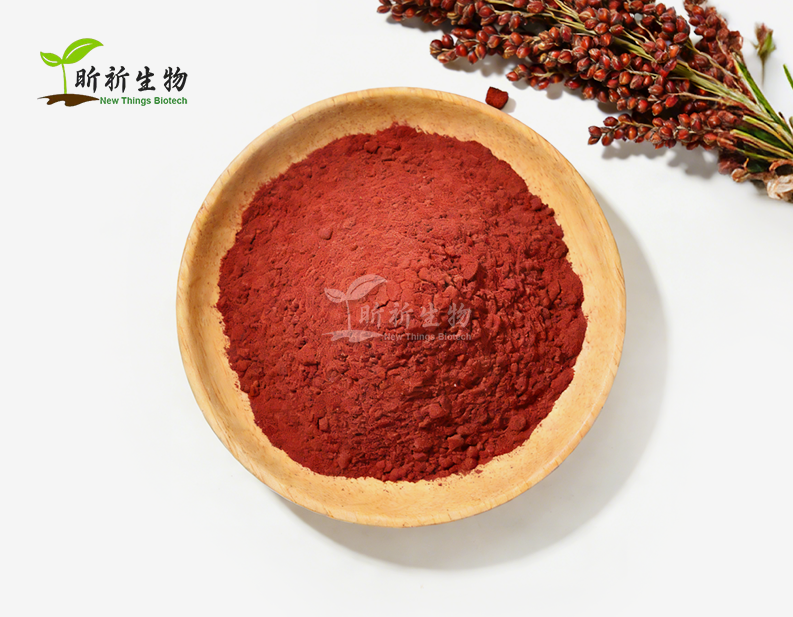
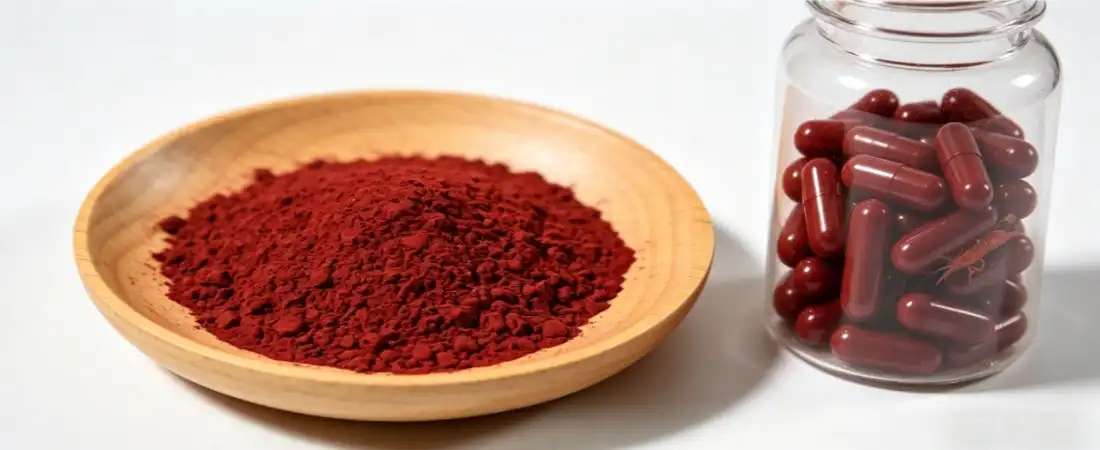
Astaxanthin powder bulk is one of nature's most powerful antioxidants. It is mostly made from microalgae called Haematococcus pluvialis. This dark red powder is very stable, bioavailable, and has useful properties that are important for the success of both food and beauty formulations. As a keto-carotenoid with proven anti-inflammatory and photoprotective qualities, it solves important industrial problems like color uniformity, oxidative stability, and regulatory compliance. More and more, procurement workers choose this ingredient to make their products stand out in markets with lots of competition.
Understanding Astaxanthin Powder Bulk and Its Core Benefits
Astaxanthin is a ketone carotenoid that can be told apart from other carotenoids because its chemical structure has conjugated double bonds, hydroxyl groups, and keto groups. According to peer-reviewed comparison studies, this shape makes it an antioxidant that is about 6,000 times stronger than Vitamin C and 100 times stronger than Vitamin E. Because it can cross cell walls and neutralize reactive oxygen species, the molecule works very well in a wide range of situations.
Sourcing and Extraction Methods
Astaxanthin's quality starts where it comes from. Growing Haematococcus pluvialis in controlled photobioreactor systems gives the purest samples, with fewer chances of contamination compared to growing it in open ponds. The delicate molecular structure is kept safe by supercritical CO2 extraction technology, which also doesn't leave behind solvent leftovers that could hurt food-grade and cosmetic-grade approvals. This way gets concentration levels between 2% and 10%, which meets the needs of certain formulations without adding extra steps to the process.
Antioxidant and Anti-Inflammatory Mechanisms
Astaxanthin has been shown in clinical studies to lower reactive stress markers and change the way inflammation works. The chemical gets into the skin from the blood and builds up there, where it guards against UV damage and helps collagen production. These processes have direct effects on products that can be seen and touched, like longer shelf life for functional drinks, better UV protection in sunscreens, and better skin tone in nutricosmetics.
Rising Demand in Functional Foods
As people become more aware of preventative health, more astaxanthin-enriched goods are being sold. It is used by sports nutrition makers to help with endurance and healing. Companies that make drinks like its natural coral-red color because it is a clean-label option to manufactured dyes. Because the molecule is stable in neutral pH settings, it can be used in protein shakes, energy drinks, and fortified waters, where synthetic options break down or add tastes that aren't good.
How to Effectively Use Astaxanthin Powder Bulk in Food and Cosmetic Formulations
When formulators work with carotenoids, they run into certain technical problems. Because astaxanthin is lipophilic and sensitive to external factors, it needs to be carefully formulated so that it stays effective from production to shelf life.
Overcoming Stability Challenges
Some common ways that food is made with heat, like pasteurization, retort treatment, and extrusion, can break down exposed astaxanthin by as much as 40%. To fix this problem, microencapsulation technology surrounds active molecules with modified starches or gums that work as barriers. This filter protects against heat stress and makes it easier for substances to mix in water. When you choose bulk powder, make sure that the method of packaging fits the way you will be processing it. Because they can handle high-shear mixing better than regular powders, beadlet forms are better for products that are based on emulsions. Light contact is another way that things break down. Amber glass or opaque cases keep the product's strength while it's being stored, but the formulation design needs to take into account what will happen after the product is bought. For astaxanthin powder bulk, which is particularly sensitive to light and oxygen, adding complementary antioxidants like tocopherols creates a combined preservation effect that keeps the product stable for 30 to 50 percent longer in tests that speed up the aging process.
Dosage Optimization for Safety and Efficacy
For overall health benefits, daily amounts of 4 mg to 12 mg of active astaxanthin are usually used in clinical studies. To convert this to bulk powder inclusion rates, you need to do an exact estimate based on the concentration. To reach safe levels, a 5% powder needs 80 mg to 240 mg per dose. When used in cosmetics, different rules apply. Topical amounts of 0.01% to 0.1% show photoprotective benefits without irritating or staining the skin.
Managing Ingredient Interactions
Because astaxanthin works well with omega-3 fatty acids, it is possible to make mixtures that improve both heart health and brain function at the same time. That being said, don't mix it with a lot of iron or copper salts, because they speed up oxidation processes that weaken astaxanthin. In drinking uses, it's important to keep the pH level between 3.0 and 7.0 so that the color doesn't change from bright red to dull brown. A European company that makes healthy drinks recently changed their product line to include astaxanthin powder that dissolves in cold water. Their scientific team added buffers that worked with the pH of 4.2 in their canning process. This fixed the sedimentation problems that had been happening in earlier versions. The end result was a shelf-stable product that lived up to its 92% label claim after 18 months, which was proven by HPLC tests.
Comparing Astaxanthin Powder Bulk Options: Supplier and Product Selection Guide
Choosing a seller depends on how well their skills match up with your application's needs and quality standards. There are many choices on the market, each with its own source material, processing technology, and licensing collection.
Natural Versus Synthetic Distinctions
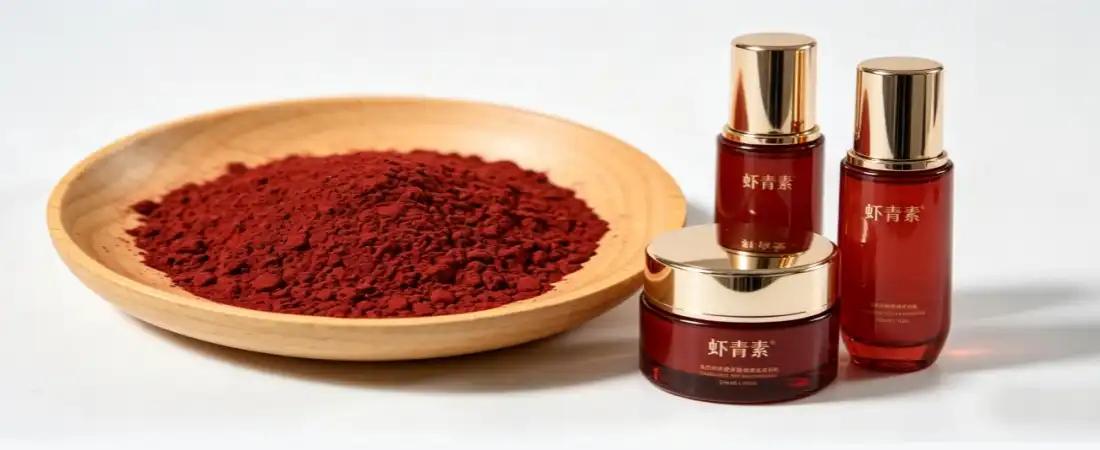
Astaxanthin naturally found in microalgae is mostly the (3S,3'S) stereoisomer, which has been shown to be more bioavailable in human studies. Synthetic versions made from petrochemical building blocks have racemic mixes that are less biologically active. Chiral HPLC analysis clearly shows where the substance comes from, but natural goods are more expensive—usually 3–5 times more than manufactured ones. Most of the time, cosmetic formulators who are trying to reach high-end customers prefer natural sources to back up marketing claims and messaging about clean beauty.
Critical Certifications and Documentation
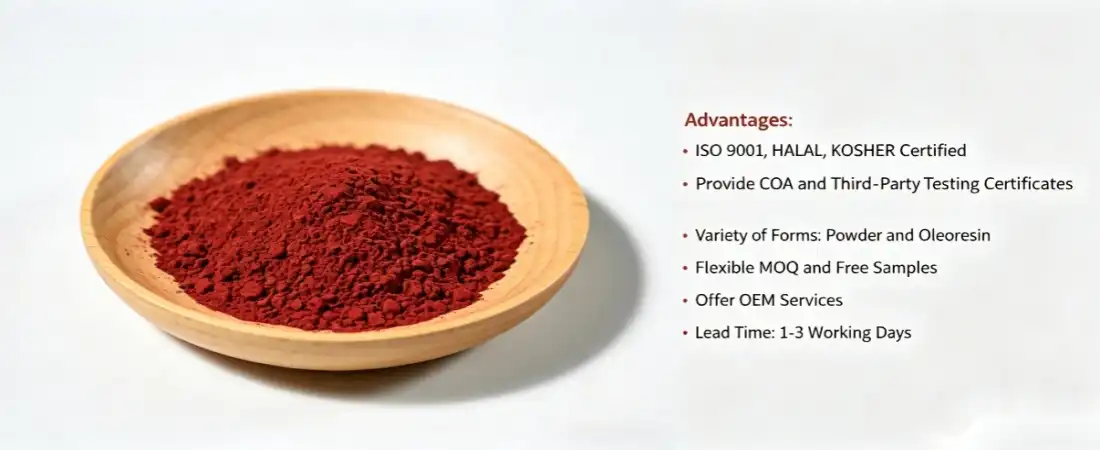
For apps that are meant to be used with food, area rules must be followed. Quality management systems are checked by ISO 9001 certification, and food safety management is checked by ISO 22000 certification. Kosher and Halal approvals make markets bigger, which is especially important for global brands. There should be a Certificate of Analysis for each batch that lists the maximum number of microbes, heavy metals, pesticides that were tested, and the concentration of active compounds that were confirmed using HPLC. The process of getting organic approval for astaxanthin powder bulk is more complicated. To be truly organic, the algae source has to be grown in a way that is approved organic. This is a standard that not many suppliers meet because of the high-yield production needs that require a lot of nutrients and strict steps to keep contamination from happening. Instead of depending only on what the seller says, check organic claims against USDA Organic or EU Organic paperwork.
Evaluating Minimum Order Quantities and Pricing
Minimum order quantities (MOQs) run from 25 kg to 1,000 kg, based on the size of the supplier and the specifics of the product. When R&D teams are testing new formulations, smaller MOQs help, while larger promises unlock 15–25% price breaks for buying in bulk. Pricing clarity separates trustworthy partners from shady sellers. Instead of taking one-line prices that don't make sense, ask for specific quotes that break down the costs of raw materials, processing fees, and shipping. Leading providers keep a steady supply of standard concentrations on hand, which lets them quickly complete orders for well-known goods and provide custom concentration services for unique uses. This flexibility is very helpful when going from small-scale test production to large-scale industrial production.
Procurement Process and Logistics for Astaxanthin Powder Bulk
Supply chain disruptions are kept to a minimum by using efficient buying processes that also protect the cold chain integrity needed to keep astaxanthin effective. Knowing the whole process, from placing an order to receiving it, helps sellers plan for problems and build strong ties with suppliers.
Streamlined Order Management
Within two hours of receiving an initial inquiry, professional suppliers reply with basic technical data and price. Before making big commitments, you should look at samples. Reliable sellers offer free samples that can be used in a lab to confirm the specs. You can build faith and make sure that the analytical results are consistent by comparing the given CoA values to those from your own testing. When a new customer places an order, they usually have to pay a 30% fee and the rest of the payment is due before the order is shipped. Once a client has shown that they consistently make purchases, they can often negotiate net-30 or net-60 terms. When sellers accept payment in the buyer's own currency, they don't have to pay foreign exchange fees, which add 2 to 4 percent to landing costs.
Protective Packaging and Transport Logistics
Aluminum foil bags inside fiber drums are standard packing. These create multiple shields against light, oxygen, and moisture getting in. Before being put in cushioned cases that can handle the stresses of foreign shipping, each 25 kg drum is vacuum-sealed. Monitoring the temperature during transport makes sure that the product stays within the 2–25°C range that keeps it stable. Shipping method choice strikes a mix between speed and cost-effectiveness. Express delivery services can send packages weighing 25 to 100 kg in three to five business days, which is great for keeping production going when there are supply gaps. Air freight can carry 100–500 kg of goods and can deliver them in 5–10 days at a reasonable cost. Sea freight is used for large needs that are bigger than 500 kg, but the 30- to 45-day transit times mean that accurate demand forecasts and keeping a safety stock is important.
Quality Assurance and Sampling Protocols
When it arrives, do an incoming check according to the set sampling rules. The HPLC test shows that the concentration of astaxanthin is the same as what the Certificate of Analysis says it is within a range of ±5%. Microbiological testing makes sure that the total plate count, the presence of yeast and mold, and the lack of pathogens meet the standards for food- or cosmetic-grade products. Heavy metal screening for mercury, arsenic, lead, and arsenic makes sure that you are following the rules for your target market. Put new materials in a quarantine area until the testing is done, and use the oldest compatible stock first by rotating the inventory using the first-in-first-out method. This organized method lowers the chance of making with broken-down materials while keeping the tracking needed for regulatory checks.
Practical Tips for Integrating Astaxanthin Powder Bulk into Your Product Line
Integration that works well includes more than just formulation chemistry. It also includes store management, following the rules, and coming up with new ways to package things. These practical factors decide whether astaxanthin gets the promised performance benefits or turns into an expensive formulation liability.
Optimizing Storage Conditions
If you keep unopened packages of astaxanthin powder bulk in a temperature-controlled space below 25°C with relative humidity below 60%, they will stay effective for 24 to 36 months. Opened packages need to be resealed in nitrogen-flushed bags to get rid of air, which is the main thing that breaks down the powder. Set up methods for clear labels that keep track of when the stores opened and when they are due for retests, which are usually every six months after the stores open. Keep astaxanthin storage away from reactive chemicals like peroxides, strong oxidizers, and flammable organic solvents that break down things faster. The best conditions are in cold storage facilities, but outdoor storage will do if temperature changes above 30°C are minor and uncommon.
Cosmetic Compatibility and Formulation Guidelines
Standard blending tools can easily mix astaxanthin into oil-in-water and water-in-oil emulsions. Before mixing the powder with the fatty phase, heat it slowly to 40°C to 50°C. Don't go over 60°C, because that could cause thermal degradation. Liposomal inclusion makes it easier for anti-aging serums to get into the skin and work on reducing deep wrinkles and improving flexibility. Levels suggested for cosmetic use are between 0.01% and 0.1% of the total weight of the mixture. Higher amounts don't add any extra value and raise the prices of raw materials for no reason. Following the ICH standards for stability tests at 40°C/75% RH for three months shows that the formulation is strong before it goes on sale.
Regulatory Compliance Across Markets
Natural astaxanthin is generally thought to be safe (GRAS) for use in food in the United States, and it is also okay to use as an ingredient in nutrition supplements. The FDA doesn't set exact dose limits, but sensible self-regulation follows the 12mg daily maximum that has been used in clinical trials. The FDA's Voluntary Cosmetic Registration Program lets people voluntarily register cosmetic uses. Astaxanthin can be used as a food colorant (E161j) and a new food ingredient in the European Union, as long as it is used in amounts that are safe. The EU Cosmetics Regulation 1223/2009 says that people who use cosmetics must follow certain rules, such as making safety assessments and allergy statements. China requires certain health food licenses for nutraceutical uses. This takes 12 to 24 months and includes a lot of testing paperwork.
Conclusion
The astaxanthin powder bulk is a scientifically proven and financially viable ingredient that meets the high standards of modern makeup and food production. Its high antioxidant capacity, proven stability in microencapsulated forms, and wide range of possible uses make it a valuable raw material for businesses that want to differentiate their products through functional innovation. It's important to pay attention to source selection, formulation optimization, and regulatory navigation in order to make adoption go smoothly. However, the goods that come out of it have real benefits for consumers that are backed up by strong clinical proof. More and more studies are showing that astaxanthin is good for your health and looks good. This means that the market will keep growing and the ingredient will be easy to get.
Partner with NT Biotech for Premium Astaxanthin Powder Bulk Supply
Pharmaceutical-grade astaxanthin powder bulk from NT Biotech comes from approved Haematococcus pluvialis sources and meets the strict ISO9001, Kosher, and Halal standards needed by formulators. Our special method of supercritical CO2 extraction makes uniform goods more than 98% pure, and we include full HPLC-verified Certificates of Analysis with every shipment to prove it. Because we keep inventory at our site, we can ship orders within two to four days of receiving payment confirmation. This keeps your production plans running smoothly. Our technical team can help you find the best inclusion rates and processing factors for your application through free formulation advice. The flexible MOQ, which starts at 25 kg, allows for both R&D trials and large-scale production. Custom packing solutions keep products safe while they're being shipped internationally, and our ability to accept payments in multiple currencies makes the process of buying things easier. Email our experienced astaxanthin powder bulk supplier team at info@newthingsbiotech.com to get samples, scientific information, and cheap volume price that fits your needs.
References
1. Ambati, R.R., Phang, S.M., Ravi, S., & Aswathanarayana, R.G. (2014). Astaxanthin: Sources, Extraction, Stability, Biological Activities and Its Commercial Applications—A Review. Marine Drugs, 12(1), 128-152.
2. Fassett, R.G. & Coombes, J.S. (2011). Astaxanthin: A Potential Therapeutic Agent in Cardiovascular Disease. Marine Drugs, 9(3), 447-465.
3. Higuera-Ciapara, I., Félix-Valenzuela, L., & Goycoolea, F.M. (2006). Astaxanthin: A Review of its Chemistry and Applications. Critical Reviews in Food Science and Nutrition, 46(2), 185-196.
4. Kidd, P. (2011). Astaxanthin, Cell Membrane Nutrient with Diverse Clinical Benefits and Anti-Aging Potential. Alternative Medicine Review, 16(4), 355-364.
5. Lorenz, R.T. & Cysewski, G.R. (2000). Commercial Potential for Haematococcus Microalgae as a Natural Source of Astaxanthin. Trends in Biotechnology, 18(4), 160-167.
6. Tominaga, K., Hongo, N., Karato, M., & Yamashita, E. (2012). Cosmetic Benefits of Astaxanthin on Humans Subjects. Acta Biochimica Polonica, 59(1), 43-47.