- English
- French
- German
- Portuguese
- Spanish
- Russian
- Japanese
- Korean
- Arabic
- Greek
- German
- Turkish
- Italian
- Danish
- Romanian
- Indonesian
- Czech
- Afrikaans
- Swedish
- Polish
- Basque
- Catalan
- Esperanto
- Hindi
- Lao
- Albanian
- Amharic
- Armenian
- Azerbaijani
- Belarusian
- Bengali
- Bosnian
- Bulgarian
- Cebuano
- Chichewa
- Corsican
- Croatian
- Dutch
- Estonian
- Filipino
- Finnish
- Frisian
- Galician
- Georgian
- Gujarati
- Haitian
- Hausa
- Hawaiian
- Hebrew
- Hmong
- Hungarian
- Icelandic
- Igbo
- Javanese
- Kannada
- Kazakh
- Khmer
- Kurdish
- Kyrgyz
- Latin
- Latvian
- Lithuanian
- Luxembou..
- Macedonian
- Malagasy
- Malay
- Malayalam
- Maltese
- Maori
- Marathi
- Mongolian
- Burmese
- Nepali
- Norwegian
- Pashto
- Persian
- Punjabi
- Serbian
- Sesotho
- Sinhala
- Slovak
- Slovenian
- Somali
- Samoan
- Scots Gaelic
- Shona
- Sindhi
- Sundanese
- Swahili
- Tajik
- Tamil
- Telugu
- Thai
- Ukrainian
- Urdu
- Uzbek
- Vietnamese
- Welsh
- Xhosa
- Yiddish
- Yoruba
- Zulu
If you use astaxanthin oil for skin every day for a few weeks, it will help lessen fine lines. This powerful pigment comes mostly from Haematococcus pluvialis microalgae. It is an antioxidant that is about 6,000 times stronger than vitamin C and fights free radicals that cause skin to age faster than it should. According to clinical studies, applying astaxanthin oil for skin makes it more elastic, less wrinkled, and smoother overall in four to eight weeks. This oleoresin is lipid-soluble, which makes it easier to get through the stratum corneum and send active substances straight to the dermal layers, where collagen breakdown happens.
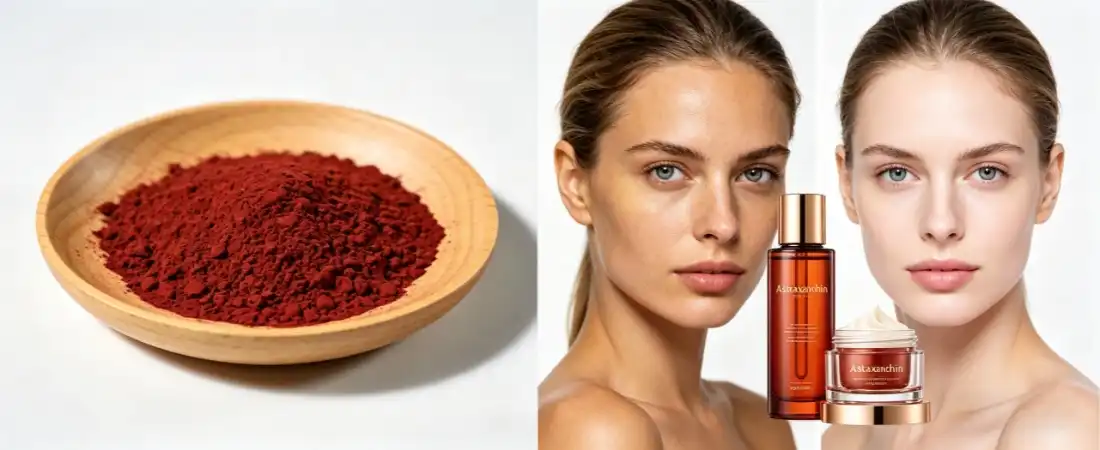
Understanding Fine Lines and Skin Aging
Fine lines show up as obvious signs of internal and external age processes that weaken the skin. Inside fibroblast cells, intrinsic aging happens over time and is marked by a slowing down of collagen production and hyaluronic acid production. These molecular changes make skin less flexible and less able to hold on to water, which sets the stage for obvious signs of aging.
The Role of Environmental Stressors
Outside aggressors speed up the aging process much more than genetic predispositions do. UV light creates reactive oxygen species that break up collagen fibers and elastic networks that support the structure of the skin. Pollution particles get through the skin's outer layers and cause inflammation, which makes reactive damage worse. Lifestyle choices like not drinking enough water, not eating well, and long-term worry all make these effects worse by hindering the repair processes of cells that are necessary for keeping skin looking young.
Why Early Intervention Matters for Product Formulation
Taking care of early-stage aging has better results than fixing deep wrinkles that are already there. Using preventative measures helps keep collagen stores healthy and supports the body's natural healing processes. When B2B sourcing workers are making anti-aging skincare lines, it's very important to choose ingredients that fight oxidative stress. Adding strong antioxidants like natural carotenoids makes product recipes more competitive in markets that are already very crowded. This meets customer demands for scientifically proven effectiveness. Prioritizing early intervention ingredients shows that a brand is dedicated to full skincare solutions, which improves the brand's image in the market and builds customer trust across all demographics.
Astaxanthin Oil: Skin Benefits and Anti-Aging Properties
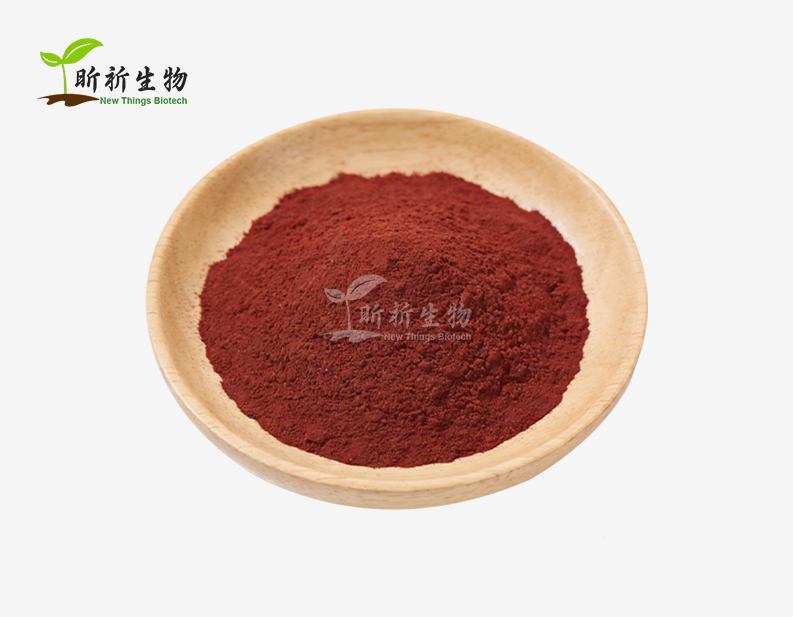
Astaxanthin oil for skin is a new type of ingredient that is revolutionizing cosmetics that aim to reduce the signs of age. This dark red, thick oleoresin comes from Haematococcus pluvialis and is extracted using supercritical CO2 fluid extraction. It has naturally esterified astaxanthin in the biologically active (3S, 3'S) stereoisomer configuration, which makes it very bioavailable in skin tissues.
Unmatched Antioxidant Defense
This carotenoid's chemical structure protects both lipid membranes and aqueous cellular regions at the same time. Researchers have found that it can reduce peroxyl radicals and stop singlet oxygen more effectively than other antioxidants. This two-part process stops lipid peroxidation in cell walls and protects DNA structures from oxidative damage, working on several aging pathways at the same time.
Moisture Retention and Barrier Enhancement
In addition to being an antioxidant, astaxanthin oil for skin is also moisturizing, which makes the skin's protection stronger. The lipid framework helps stop water loss through the skin's surface and makes it easier for active chemicals to get to their targets. Clinical studies show that constant use of astaxanthin oil for skin leads to measured changes in skin hydration levels within fourteen days, along with higher cutometer measures of increased elasticity.
Suitability Across Skin Type Profiles
This ingredient works really well on a wide range of skin types, even sensitive and reactive skin types that usually get irritated by other ingredients. Because it comes from nature and doesn't use harsh chemicals (thanks to supercritical extraction), it lowers the risk of allergic reactions. Formulations with this oleoresin successfully meet the needs of dry, mature, and environmentally damaged skin types, giving product makers a wide range of options for reaching a wide range of customers. A comparison of this ingredient to well-known options shows that it is better. Rosehip oil has important fatty acids and vitamin A precursors, but it doesn't have as much protective power as other oils. Vitamin E tocopherols guard against oxidative damage, but they are not as good at protecting collagen as this advanced carotenoid molecule. When B2B executives are thinking about investing in ingredients, these differences in performance back premium branding and higher formulation costs by showing clear benefits for customers.
Astaxanthin Oil vs Other Skincare Oils: Comparison for B2B Decision Makers
To choose the right ingredients strategically, you need to know a lot about the performance measures and sourcing issues that set premium ingredients apart from cheaper options. When sourcing workers look at natural oils for anti-aging products, they look at a number of factors that affect both how well the product works and how well it can be sold. When considering astaxanthin oil for skin, procurement professionals examine multiple parameters affecting both product efficacy and commercial viability.
Antioxidant Capacity and Anti-Aging Efficacy
The oxygen radical absorbance capacity (ORAC) numbers show that natural oils are very different from one another. Researchers have found that this carotenoid oleoresin can neutralize hydroxyl radicals much better than rosehip seed oil and 550 times better than alpha-tocopherol at removing singlet oxygen. These differences in amounts directly lead to lower levels of oxidative damage markers seen in clinical skin studies, such as lower levels of matrix metalloproteinase expression, which breaks down collagen. Rosehip oil has trans-retinoic acid precursors that help cells turn over, which is good for improving the appearance of the skin's surface but not so good at stopping deep structural damage. Vitamin E oils successfully neutralize free radicals at the boundaries between cells, but higher amounts are needed to achieve the same wrinkle-reducing effects seen with formulations based on carotenoids.
Natural Versus Synthetic Source Considerations
When making purchasing choices, people are thinking more and more about how the production method affects the quality of the ingredients. Natural astaxanthin that is taken from microalgae comes with other beneficial compounds, such as fatty acids and vitamins, that work together to make it more stable and effective. The esterified form that is naturally found in algae is more stable than manufactured free-form versions when it comes to oxidative breakdown during storage. In synthetic production, petrochemical ingredients are used to make mostly free astaxanthin, which doesn't have the protective ester bonds and phynutrient matrix that are found in organic sources. This difference in structure affects the security of the formulation, the ability to predict the shelf life, and the accuracy of the end product's performance. Clean-label consumers also prefer natural sources, which affects brand positioning possibilities for companies that focus on plant ingredient portfolios.
Formulation Parameters for Sensitive Skin Applications
Formulations for sensitive skin need to be carefully thought out in terms of the possible irritants that are introduced through extraction methods and carrier materials. Concerns about residual solvents that come with hexane or acetone-based methods are taken care of by supercritical CO2 extraction. This meets governmental compliance requirements in foreign markets and customer safety standards. Organic certification choices give extra peace of mind about chemical residues and environmentally friendly farming methods, which are great ways for high-end product lines aimed at people who care about the environment to stand out. These technical differences help buyers find providers who can show they have the extraction skills, analytical transparency, and consistent batch-to-batch quality controls that are needed to keep the formulation's purity throughout a product's lifetime.
Procurement Guide: Buying Astaxanthin Oil for Skin Products
To find high-quality natural carotenoid oleoresins, you need to carefully look at the skills of potential suppliers, make sure they follow quality control rules, and make sure the business terms are compatible with your needs. When purchasing astaxanthin oil for skin, structured assessment models help procurement professionals make sure that investments in ingredients deliver the expected performance results while handling the risks that come with global supply chains.
Identifying Reputable Manufacturers and Certification Standards
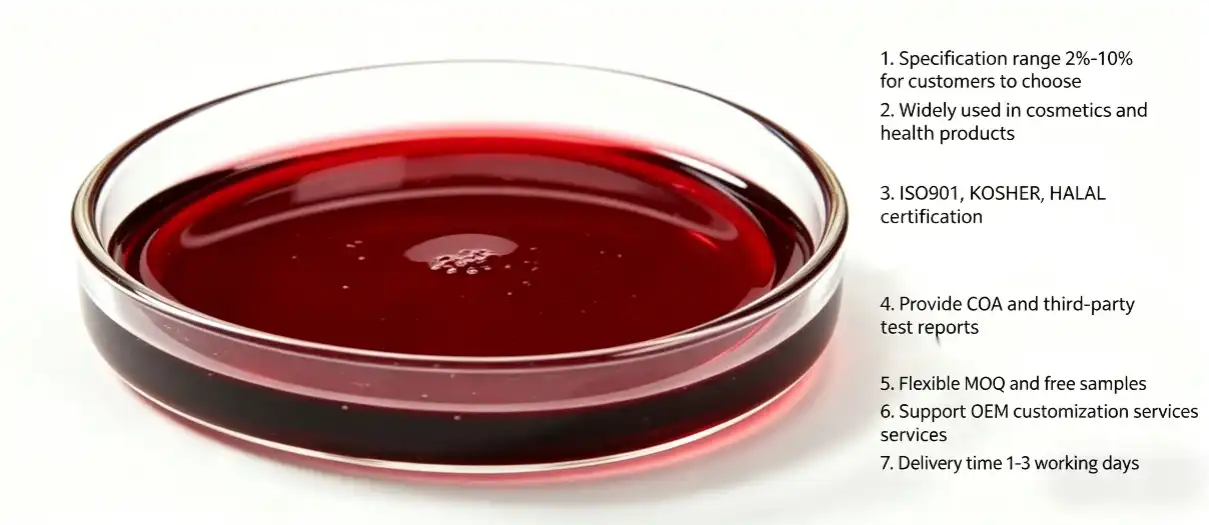
The first step in checking a supplier's trustworthiness is to look at third-party licenses that confirm their production standards and quality management systems. Getting ISO 9001 certification shows that you are committed to using consistent production methods and following protocols for ongoing growth. Kosher and Halal certifications make it easier for goods that are aimed at specific groups of people who have to follow certain food rules to reach more customers. Quality records should have batch-specific Certificates of Analysis (CoA) that show that the astaxanthin level was checked using High-Performance Liquid Chromatography (HPLC) or UV spectrophotometry and that the specifications were met. Reliable sellers use thorough testing methods that look for microbial pollution, heavy metals, and pesticide residues. This makes sure that all regulations are followed in the final markets, including FDA rules for makeup products.
Commercial Considerations and Sample Evaluation
Pricing models are very different depending on the required concentration, the way of extraction, and the certification fees. A study of the competitive market shows that the price of astaxanthin oleoresin varies from modest to high-end levels, based on how pure it is and whether it has an organic certification. Minimum order numbers usually start at 25 kilograms, which works for both new brands and regular production amounts. Before buying in bulk, it's important to be able to get samples for recipe development and stable testing. Top sellers give away free samples that can be used to see for themselves how the color, smell, and mixing properties work in specific formulas. This initial evaluation step lowers the chances of formulation failure and speeds up the time it takes to make a product.
Logistics and Delivery Reliability
The speed of the supply chain has a direct effect on the costs of managing stockpiles and planning production schedules. Suppliers who keep standard specs in stock make it possible to quickly fill orders; in-stock products can be delivered in two to four working days. Different handling needs can be met by customized packaging choices, such as bulk drums for high-volume production or smaller units that work for small-scale makers. Shaanxi New Things Biotech is a great example of operational excellence because it uses integrated logistics solutions and specialized FedEx and UPS accounts for fast shipments. This makes sure that the ingredients stay stable during travel by controlling the temperature. For bigger orders, established partnerships between freight forwarders make safe ocean transfer possible at low prices and on time. This adaptable transportation infrastructure can handle different levels of urgency and budgets that come up in different buying situations.
Integrating Astaxanthin Oil into Your Product Line: Practical Applications
To successfully integrate astaxanthin oil for skin into a finished product, you need to know how to balance the security of the ingredients with their looks and how well they work. Adding lipophilic pigments to emulsion systems is hard for development teams because they have to keep the color stable and stop oxidative decay during shelf life.
Formulation Synergy and Stabilization Techniques
When you mix natural antioxidants, the combined protective effects are stronger than the sum of their individual effects. When you mix this oleoresin with vitamin E tocopherols, you get two defense systems that work together. The tocopherols protect against lipid peroxidation chain reactions, and the carotenoids neutralize singlet oxygen. Adding chelating agents like EDTA stops oxidation pathways that are sped up by trace metals that would otherwise break down active ingredients faster. When making an emulsion, you need to be careful with the pH and choose the right stabilizer to make sure that the mixture stays stable in all the water phases. Liposomal carriers and nanoemulsion systems are two types of encapsulation technologies that help products get deeper into the skin while keeping the active ingredient safe from oxygen in the air during use. Astaxanthin oil for skin, for example, benefits greatly from such encapsulation to enhance its stability and delivery. Using vacuum processing during the production process lowers the reactive stress that happens during high-shear mixing.
Precautions for Irritation Prevention
Even though tolerance ratings are very good, best practices for formulation include preliminary compatibility tests across skin type panels that match target categories. Concentration optimization finds the best mix between safety margins and effectiveness goals. In leave-on skin care applications, this usually means a range of 0.5% to 2%. Patch testing procedures find possible sensitization risks before the product goes on sale. This protects the brand's image and makes sure it follows the rules.
Marketing Claims and Regulatory Compliance
In order to talk about the benefits of antioxidants and wrinkle reduction, you have to follow the local advertising rules that say how to prove beauty promises. There is evidence to back up marketing claims from clinical studies that show statistically significant changes in skin elasticity measures and wrinkle depth readings. Transparency about how studies were done and when results could be seen builds buyer trust and meets legal requirements. Consumer groups that care about ingredient purity will be interested in educational material that focuses on natural sources, sustainable production methods, and scientific validation. Certification marks on boxes let customers know that the quality has been checked by a third party, which sets the product apart in stores where competition is high. These elements of strategic positioning turn the choice of ingredients into interesting brand stories that support high-priced strategies and keep customers coming back.
Conclusion
In conclusion, there is strong scientific proof that using natural carotenoid oleoresins in anti-aging skin care products meets important market needs for effective, naturally derived ingredients that have been shown to work in clinical trials. When purchasing professionals look at this group of ingredients, they can find high-quality astaxanthin oil for skin that reduces wrinkles, fights against free radicals better, and works with a wide range of skin types. The technical differences between high-quality natural extracts and cheaper options, such as the way they are extracted, the stereoisomer configuration, and detailed quality paperwork, have a direct effect on how well the finished product works and how satisfied customers are with it. Strategic partnerships with certified suppliers that show analytical transparency, flexible logistics, and quick technical support lay the groundwork for long-term formulation success in markets that are always changing and need scientific validation and clean labels.
FAQ
1. How quickly can astaxanthin oil reduce fine lines?
After steady daily use for four to eight weeks, most people can see changes. Within two to three weeks, the skin will start to show changes like better hydration and a more refined appearance. Between weeks six and twelve, you can see a measurable decrease in the depth of wrinkles. This varies depending on your skin type, the quantity of the formula, and any other skincare routines you may be using. Clinical tests show that improvements keep getting better even after sixteen weeks of continued use.
2. Is astaxanthin oil safe for sensitive skin types?
Natural carotenoid oleoresins that were removed using supercritical CO2 have great tolerance for all kinds of sensitive skin. The risk of irritation is low because there are no harsh chemical solutions and safe lipid structures are present. People who are known to be allergic to chemicals made from algae or who are very sensitive should still get a preliminary patch test.
3. What factors determine how reliable a provider is?
Suppliers you can trust keep their ISO, Kosher, and Halal certifications up to date and keep lots of paperwork about their batch testing. Professional activities are shown by the fact that samples are available, technical questions are answered quickly, and extraction methods are clearly explained. Established logistics relationships that guarantee temperature-controlled transport and regular arrival times add to the proof of operating dependability.
Partner with NT Biotech: Your Trusted Astaxanthin Oil for Skin Supplier
The integrated value chain at NT Biotech helps procurement managers and brand creators find complete solutions when they need high-quality astaxanthin oil for skin uses. We offer natural carotenoid oleoresins and uniform powder forms that come from Haematococcus pluvialis. These are made using a special method called supercritical extraction, which leaves no solvent leftovers and keeps as many of the bioactive compounds as possible. Our ISO-certified production sites keep ready-to-ship inventory that lets you ship within two to four business days. We also offer custom packaging choices to fit the needs of both new brands and established makers. Request free samples to check out our high purity standards—exceeding 98% for key specifications—and see for yourself how our better stability supports recipes with longer shelf lives. Email us at info@newthingsbiotech.com if you have any questions about buying in bulk, getting specific concentrations, or getting help with technical formulations. At xinqishengwu.aixdb.cn, you can look at detailed product paperwork and information about certifications. This is where transparency meets technical excellence in every batch provided.
References
1. Tominaga, K., Hongo, N., Karato, M., & Yamashita, E. (2012). Cosmetic benefits of astaxanthin on human subjects. Acta Biochimica Polonica, 59(1), 43-47.
2. Yamashita, E. (2013). Astaxanthin as a medical food. Functional Foods in Health and Disease, 3(7), 254-258.
3. Camera, E., Mastrofrancesco, A., Fabbri, C., Daubrawa, F., Picardo, M., Sies, H., & Stahl, W. (2009). Astaxanthin, canthaxanthin and beta-carotene differently affect UVA-induced oxidative damage and expression of oxidative stress-responsive enzymes. Experimental Dermatology, 18(3), 222-231.
4. Suganuma, K., Nakajima, H., Ohtsuki, M., & Imokawa, G. (2010). Astaxanthin attenuates the UVA-induced up-regulation of matrix metalloproteinase-1 and skin fibroblast elastase in human dermal fibroblasts. Journal of Dermatological Science, 58(2), 136-142.
5. Seki, T., Sueki, H., Kono, H., Suganuma, K., & Yamashita, E. (2001). Effects of astaxanthin from Haematococcus pluvialis on human skin. Fragrance Journal, 12, 98-103.
6. Ng, Q. X., De Deyn, L. L. Z. Q., Loke, W., Foo, N. X., Chan, H. W., & Yeo, W. S. (2022). Effects of astaxanthin supplementation on skin health: a systematic review of clinical studies. Journal of Dietary Supplements, 19(2), 203-219.