- English
- French
- German
- Portuguese
- Spanish
- Russian
- Japanese
- Korean
- Arabic
- Greek
- German
- Turkish
- Italian
- Danish
- Romanian
- Indonesian
- Czech
- Afrikaans
- Swedish
- Polish
- Basque
- Catalan
- Esperanto
- Hindi
- Lao
- Albanian
- Amharic
- Armenian
- Azerbaijani
- Belarusian
- Bengali
- Bosnian
- Bulgarian
- Cebuano
- Chichewa
- Corsican
- Croatian
- Dutch
- Estonian
- Filipino
- Finnish
- Frisian
- Galician
- Georgian
- Gujarati
- Haitian
- Hausa
- Hawaiian
- Hebrew
- Hmong
- Hungarian
- Icelandic
- Igbo
- Javanese
- Kannada
- Kazakh
- Khmer
- Kurdish
- Kyrgyz
- Latin
- Latvian
- Lithuanian
- Luxembou..
- Macedonian
- Malagasy
- Malay
- Malayalam
- Maltese
- Maori
- Marathi
- Mongolian
- Burmese
- Nepali
- Norwegian
- Pashto
- Persian
- Punjabi
- Serbian
- Sesotho
- Sinhala
- Slovak
- Slovenian
- Somali
- Samoan
- Scots Gaelic
- Shona
- Sindhi
- Sundanese
- Swahili
- Tajik
- Tamil
- Telugu
- Thai
- Ukrainian
- Urdu
- Uzbek
- Vietnamese
- Welsh
- Xhosa
- Yiddish
- Yoruba
- Zulu
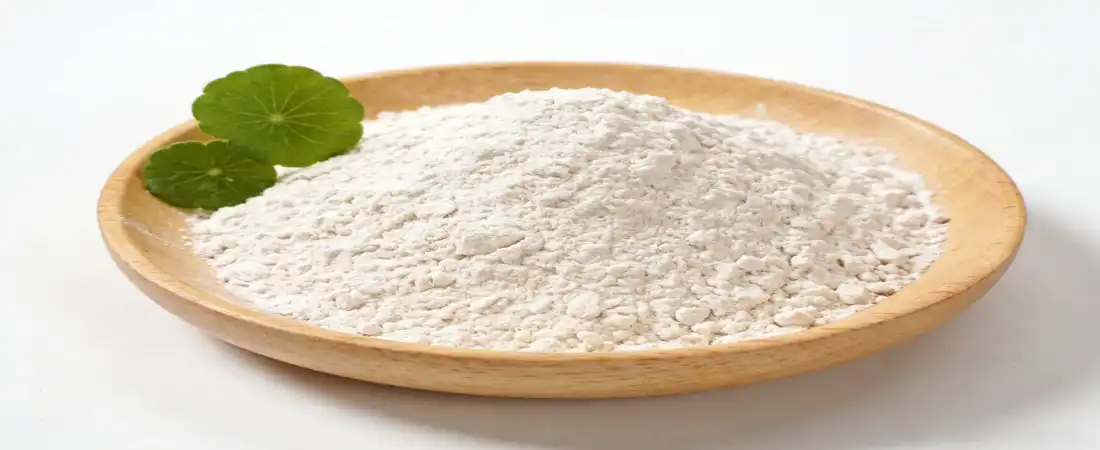
For sensitive skin formulas, gotu kola extract for skin is often regarded as a helpful botanical ingredient since Centella asiatica has a number of triterpenoid chemicals that are related to skin healing and soothing uses. The main compounds are asiaticoside, madecassoside, asiatic acid and madecassic acid. Researchers have studied how Centella affects collagen activity, inflammation, skin moisture and wound healing. But the proof relies on the kind of extract, its concentration and how it is administered. For cosmetic manufactures the goal is to pick a standardised extract with set specifications. Not all Centella items are interchangeable.
Understanding Gotu Kola Extract and Its Benefits for Sensitive Skin
Gotu kola extract is extracted from the plant, Centella asiatica, which has been long used for skin and wound treatment. The plant includes pentacyclic triterpenes, mainly asiaticoside and madecassoside, with asiatic acid and madecassic acid. These chemicals have been explored for their function in collagen formation, inflammation associated pathways and tissue healing.
This makes Centella a handy herb for formulators who are creating products for sensitive or quickly stressed skin. However, its efficacy relies upon the kind of extract, profile of active-compounds, formulation and testing of completed product.
Gotu kola is appreciated by skin care formulators for its skin sensitising qualities. Centella asiatica for its triterpenoid profile that promotes a recovery-oriented posture without harsh actives. The standardised extract with its garanty concentration of asiaticoside assures continuous performance from batch to batch and from product line to product line.
Bioactive Compounds and Their Mechanisms
One of the most investigated chemicals in Centella asiatica is Asiaticoside and madecassoside. These triterpenes have been connected to fibroblast activity, collagen-related activities and wound-healing responses. A comprehensive evaluation of Centella wound healing studies found effects on collagen, fibroblast activity, angiogenesis and re-epithelialization but called for greater clinical data.
That’s a difference that counts for cosmetic claims. A formulation may be placed around soothing, barrier care, hydration and skin-recovery support without assigning Centella as a medicine or therapy for a specified skin problem.
Centella has also been demonstrated to have antioxidant effects in experimental testing. However, the impact of a final cosmetic relies on the extraction process, the concentration, the stability and the remainder of the formulation . Therefore buyers should check the specificity of the genuine extract, not only the moniker ‘Centella asiatica’.
Skin Barrier Repair and Hydration
Centella is one of the most relevant applications for the development of cosmetics in the area of skin barrier support . The research on cosmetic formulations including Centella asiatica extract showed that the usage of formulations containing 2.5% and 5% extract improves the hydration of the stratum corneum, with the 5% formulation having the highest hydration effect of all the items evaluated.
This doesn't mean there's one universal suggested concentration for all skincare products. But it highlights why extract concentration and formulation design have to be studied simultaneously.
A good specification for procurement teams should specify botanical source, portion of extraction, marker chemicals, particle size (if appropriate), microbiological limitations, heavy-metal testing, and a current certificate of analysis. NT Biotech now offers Gotu Kola extract from Centella asiatica , whole herb source, 80 mesh spec and Asiaticoside from 10% to 90%.
Addressing Common Skin Issues with Gotu Kola Extract
Research on Centella asiatica has been done for several skin care applications including wound healing, redness, hydration and scar treatments. Cosmetic companies are better at tying these areas of study to concrete formulation targets rather than making illness cure claims.
Therefore, the use of gotu kola extract for skin may be considered in the formulation of products aimed at supporting a pleasant skin feel, barrier care and recovery-focused skincare positioning.
Managing Acne Scars and Eczema
Centella is a subject of many years of studies in wound healing and scar therapies. Research on asiaticoside and madecassoside has investigated fibroblast activity, collagen synthesis, epithelialisation and other tissue healing processes.
Some Centella formulations also have human investigations. One example is a randomised split-face study with a standardised Centella preparation following laser resurfacing showing improvement in numerous indices of erythema and wound appearance.
These findings are useful in the development of recovery focused cosmetics but should not be used as a blanket statement that Centella treats eczema or acne scars. Final products should be tested in their intended usage and supported by necessary safety and efficacy tests.
Hydration and Moisture Retention
Centella may also be used in moisturising compositions. Studies on cosmetic formulations including Centella extract showed increases in skin hydration and skin barrier parameters.
It may be used in combination with the usual moisturising agents like as hyaluronic acid, glycerin and ceramides. The combination is not meant to suggest that the chemicals are more potent, but to provide the formulation varied functional roles: humectants attract and hold onto water, while barrier-supporting compounds aid prevent water loss.
That makes Centella especially useful for those producing serums, lotions, masks and other treatments for dry or sensitive-feeling skin.
For sensitive skin, a gotu kola skin care program can include the extract together with humectants such as glycerin or hyaluronic acid, where each component is chosen for a particular function, not for a single therapeutic effect. This tiered strategy is ideal for businesses wanting a low-key, barrier friendly product narrative.
Optimal Formulation and Dosage
There is no unique Centella concentration that fits all cosmetic products. The right amount relies on the extract spec, active ingredient level, product format, target claim and overall formula.”
Cosmetic formulations with 2.5% and 5% Centella asiatica extract were tested in published studies. NT Biotech offers standardised extracts with various Asiaticoside specifications. These are separate criteria and should not be considered interchangeable.
For procurement, the more helpful issue is not just “How much Centella should we add?” but rather “What standardised extract will fit our formulation and target specification?” Buyers should ask for a COA, active-marker data, microbiological findings, heavy-metal information, and other necessary quality documentation before approving the raw material.
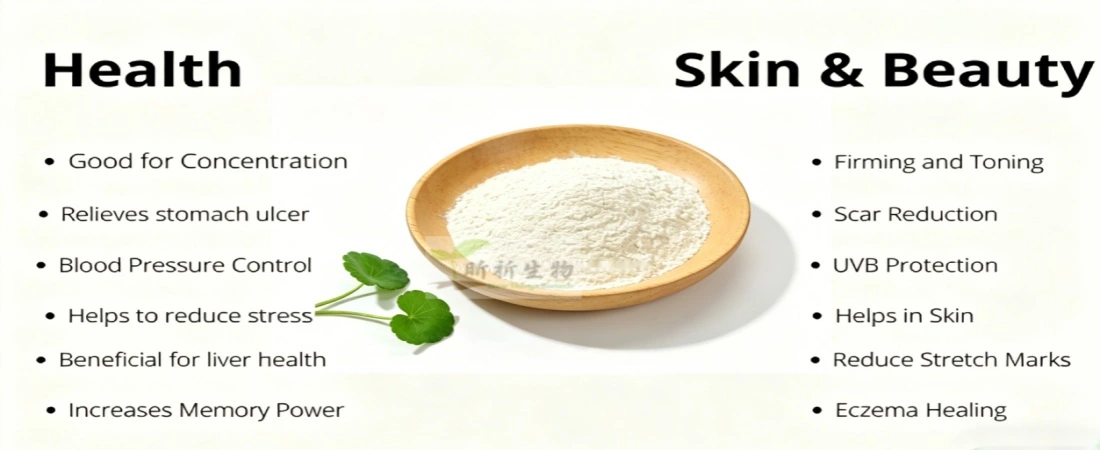
Comparing Gotu Kola Extract with Other Popular Skincare Ingredients
Plant extracts and traditional cosmetic actives may meet varied formulation demands. Product manufacturers compare Centella to aloe vera, niacinamide and hyaluronic acid to see where it fits within a whole mix.
Centella Asiatica vs. Aloe Vera
Centella asiatica and aloe vera are both popular ingredients in soothing skincare, however their chemical profiles vary.
Centella is well known for its triterpenoid chemicals, which include asiaticoside and madecassoside. These chemicals have been studied in terms of collagen production, wound healing, inflammatory pathways and skin recovery.
Aloe vera is well recognised for its gel and polysaccharides that are water rich. The choice of the formulation relies on the texture and sensory profile intended, as well as the claim strategy and supporting evidence for the completed formula.
Integration with Vitamin C and Hyaluronic Acid
If the whole recipe is chemically and physically compatible, Centella may be prepared with vitamin C or hyaluronic acid.
Vitamin C is the most widely used ingredient for antioxidant and brightening formulas, whereas hyaluronic acid is utilised mostly for hydration. Centella has a distinct plant profile and may help assist a recovery posture.
The combination should still be investigated rather than being called synergistic. The end product might be affected by the pH, preservative systems, packaging, stability and the shape of each activity.
Differentiating Efficacy for Sensitive Applications
Niacinamide is not the same as Centella. Niacinamide is a well-known cosmetic active used in barrier support, tone-related products and sebum-management products. Centella offers a more suitable botanical triterpene profile for skin-recovery and soothing research.
For companies targeting sensitive skin clientele, the whole recipe may be the most powerful positioning, not a star ingredient. Concentration, fragrance level, preservation procedure, pH, packaging and compatibility with other actives may affect end user experience.
Procurement Considerations: Sourcing Gotu Kola Extract for Skincare Product Development
To get gotu kola extract for skin takes more than just knowing the name of the plant. Buyers should compare botanical source, marker compound specification, extraction process, testing paperwork, packaging, MOQ, supply status and supplier quality system.
Extraction Methods and Purity Standards
Chemical composition of plant extract may be influenced by the extraction procedure. This is why procurement teams should ask suppliers how the extract is standardised and what analytical method they are using to verify the marker compounds.
HPLC data may be especially relevant when the product is standardised to chemicals such as Asiaticoside. The COA should also be examined for microbiological purity, heavy metals, moisture or loss on drying and other important characteristics for the intended use.
NT Biotech reports Gotu Kola extract with 10%–90% Asiaticoside specification. Its product description also states 80 mesh powder specification, 25kg packing, 25kg MOQ, free samples and stock available.
Buyers may use this information to better compare suppliers and to pick a grade for use in formulation studies.
Certification Standards and Compliance
The certification should be considered in relation to the target market and the needs of the completed product. Buyers may want paperwork for quality management, religious restrictions, pollutants, allergies, provenance or other customer-specific standards, depending on the project.
NT Biotech’s quality management system is based on worldwide standards and client needs and is registered to ISO 9001, Halal and Kosher standards.
Procurement teams should not assume that a generic corporate certification meets all requirements in all markets and should nonetheless obtain updated certifications and product-specific paperwork during supplier qualification.
Product Formats and Pricing Considerations
Since the forms and specifications of Centella extracts are diverse, customers should pick the form according to the manufacturing process. Powdered extracts are easy to use for many dry-blend and cosmetic production applications, whereas liquid solutions may be better suitable for other formulation procedures.
Pricing is based on active-compound specification, order volume, packaging, testing requirements and customisation. Procurement teams should examine the whole specification and documentation bundle, rather than only comparing providers on price per kilogram.
Gotu Kola, NT Biotech, has a current listing of 25 kilogram MOQ, 25 kg drum packing, free samples, stock, and delivery between 2-4 days after payment on its Gotu Kola product site.
Integrating Gotu Kola Extract into Your Skincare Line for Sensitive Skin
To use gotu kola extract for skin effectively, formulators need to consider the extract specification together with the complete formula. Centella should be seen as a part of the system, not a single remedy for sensitive skin.
Formulation Best Practices
The Centella asiatica extract is suitable for use in a wide range of cosmetic forms like as creams, serums, masks and other leave-on products. The correct processing conditions will depend on the extract and the final formulation.
Formulators should refer to the technical specification of the supplier and stability testing following inclusion, rather than a single processing temperature or pH range. This is especially crucial when the mix includes sensitive actives, such as retinoids or vitamin C compounds.
Compatibility tests should include appearance, odour, pH, viscosity, stability of active marker, microbiological quality, and packaging compatibility, when suitable.
Marketing and Positioning Strategies
For B2B brands, Centella is easier to position when the marketing message connects the botanical origin with measurable raw-material specifications.
Useful points include:
- standardized Asiaticoside content;
- clearly identified botanical source;
- batch-specific quality documentation;
- relevant certifications;
- flexible packaging or specification options;
- sample availability for formulation testing.
This approach is more credible than describing Centella as a universal treatment for sensitive skin. It also gives buyers information they can use when comparing raw-material suppliers.
Buyers looking for pieces for gotu kola skincare products or a more comprehensive gotu kola skin care line should see supplier paperwork as equally important as pricing, since it is a standardised Centella asiatica extract with certified Asiaticoside specifications that finally safeguards recipe consistency.
Conclusion
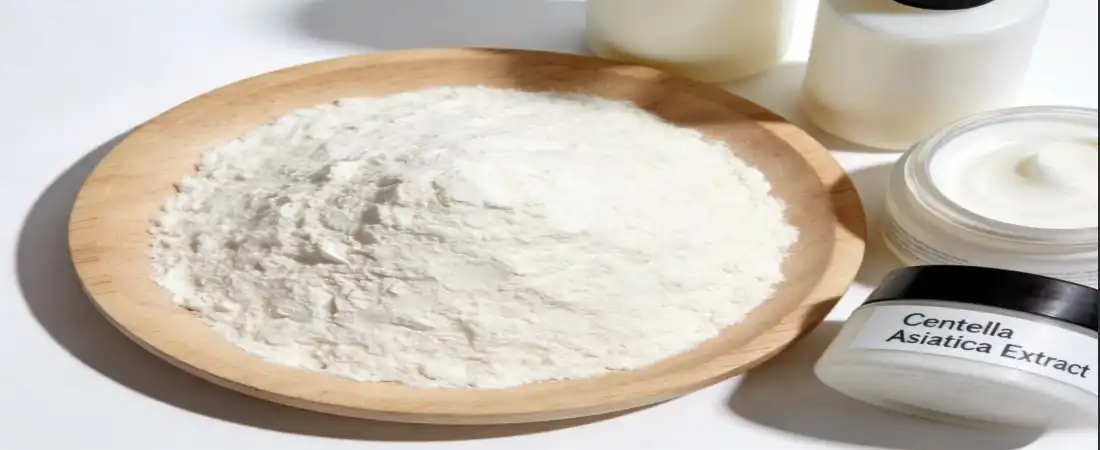
Gotu kola extract for skin is a diverse botanical ingredient with studies showing its applicability to skin hydration, recovery, collagen-related activities and wound healing applications. However, the evidence varies with extract and application and cosmetic makers should not treat all Centella products the same or make therapy claims outside of the evidence.
For procurement teams, the most pragmatic elements to evaluate are: active-marker standardisation, analytical documentation, product consistency, certifications, MOQ, packaging, and supply dependability. NT Biotech provides Centella asiatica Gotu Kola extract with Asiaticoside specs from 10% to 90%, with 25 kilogram packing, 25 kg MOQ, free samples, and stock availability.
FAQ
1. What are the potential side effects of gotu kola extract in skincare formulations?
Centella asiatica is a common component in cosmetic and topical preparations, although it should not be assumed that any botanical element would not irritate every consumer. Individual responses may occur. The performance of the completed product may vary with concentration and additional constituents. Manufacturers should carry out proper safety and stability testing before commercialisation.
2. How does gotu kola extract support collagen production?
The chemicals asiaticoside and madecassoside from Centella have been examined for their effect on fibroblast activity and collagen associated processes . The enhanced collagen related activity has been shown in wound healing models in experimental investigations however the efficacy of a cosmetic product is dependent on the particular extract and formulation.
3. Can centella extract be combined with retinol and vitamin C?
You may formulate Centella with retinol or vitamin C, provided that the whole composition is suitable and stable. But the mixture has to be tested in formulation and stability test. Centella should not be used as an excuse to say an otherwise unpleasant solution is automatically acceptable for sensitive skin.
Partner with NT Biotech for Premium Gotu Kola Extract Supply
If you are looking for gotu kola extract for skin for a cosmetic formulation then NT Biotech can supply you a standardised Centella asiatica extract with Asiaticoside requirements from 10% to 90%. Hot Products Product Specification: 80 mesh powder ISO/Kosher/Halal certification 25 kg package MOQ: 25 kg Free sample Stock: available 2-4 working days for delivery after payment
Buyers may request product specifications, quality data and samples for supplier qualification or formulation talks before they purchase in bulk.
Contact NT Biotech at info@newthingsbiotech.com to discuss your raw-material requirements and find a Gotu Kola extract specification suitable for your skincare development project.
References
1. Bylka, W., Znajdek-Awiżeń, P., Studzińska-Sroka, E., & Brzezińska, M. (2013). Centella asiatica in cosmetology. Postępy Dermatologii i Alergologii, 30(1), 46-49.
2. Gohil, K. J., Patel, J. A., & Gajjar, A. K. (2010). Pharmacological Review on Centella asiatica: A Potential Herbal Cure-all. Indian Journal of Pharmaceutical Sciences, 72(5), 546-556.
3. Hashim, P., Sidek, H., Helan, M. H., Sabery, A., Palanisamy, U. D., & Ilham, M. (2011). Triterpene composition and bioactivities of Centella asiatica. Molecules, 16(2), 1310-1322.
4. Ratz-Łyko, A., Arct, J., & Pytkowska, K. (2016). Moisturizing and antiinflammatory properties of cosmetic formulations containing Centella asiatica extract. Indian Journal of Pharmaceutical Sciences, 78(1), 27-33.
5. Somboonwong, J., Jariyapongskul, A., Thanamittramanee, S., & Patumraj, S. (2012). Therapeutic effects of Centella asiatica extract on wound healing. Journal of the Medical Association of Thailand, 95(Suppl 2), S18-S25.
6. Williamson, E. M. (2003). Centella asiatica (L.) Urban: Potential role in anti-aging therapy. Journal of Ethnopharmacology, 88(2-3), 117-119.