- English
- French
- German
- Portuguese
- Spanish
- Russian
- Japanese
- Korean
- Arabic
- Greek
- German
- Turkish
- Italian
- Danish
- Romanian
- Indonesian
- Czech
- Afrikaans
- Swedish
- Polish
- Basque
- Catalan
- Esperanto
- Hindi
- Lao
- Albanian
- Amharic
- Armenian
- Azerbaijani
- Belarusian
- Bengali
- Bosnian
- Bulgarian
- Cebuano
- Chichewa
- Corsican
- Croatian
- Dutch
- Estonian
- Filipino
- Finnish
- Frisian
- Galician
- Georgian
- Gujarati
- Haitian
- Hausa
- Hawaiian
- Hebrew
- Hmong
- Hungarian
- Icelandic
- Igbo
- Javanese
- Kannada
- Kazakh
- Khmer
- Kurdish
- Kyrgyz
- Latin
- Latvian
- Lithuanian
- Luxembou..
- Macedonian
- Malagasy
- Malay
- Malayalam
- Maltese
- Maori
- Marathi
- Mongolian
- Burmese
- Nepali
- Norwegian
- Pashto
- Persian
- Punjabi
- Serbian
- Sesotho
- Sinhala
- Slovak
- Slovenian
- Somali
- Samoan
- Scots Gaelic
- Shona
- Sindhi
- Sundanese
- Swahili
- Tajik
- Tamil
- Telugu
- Thai
- Ukrainian
- Urdu
- Uzbek
- Vietnamese
- Welsh
- Xhosa
- Yiddish
- Yoruba
- Zulu
Hyaluronate skin care products are always at the top of the list when it comes to new ingredients used in makeup formulations today. This naturally occurring chemical has changed the way that companies make products that moisturize, fight age, and fix barriers. Unlike many trendy ingredients that say they will do a lot but don't, sodium hyaluronate has benefits that have been proven by science and can be seen by the user. Because the substance can hold up to 1,000 times its own weight in water, formulators who want to make goods that really improve skin health can't do without it. Figuring out why this ingredient is now required in high-end skin care products can help purchasing professionals make smart choices about where to get it that will improve all of their products.
Understanding Hyaluronic Acid and Hyaluronate: Definitions and Benefits
The Chemical Distinction That Matters for Formulation Success
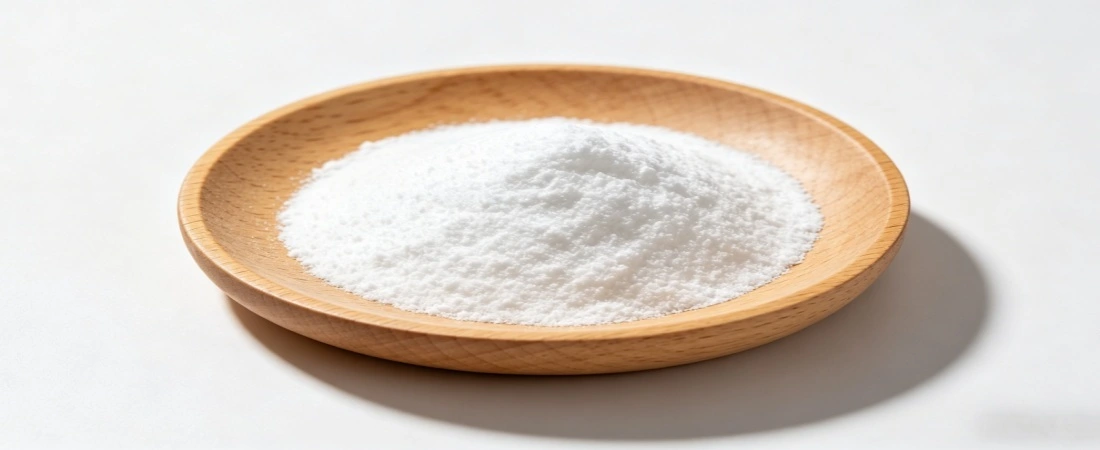
Sodium hyaluronate" and "hyaluronic acid" are often used interchangeably, but the difference matters. Hyaluronic acid is a natural polymer found in skin and joints. Sodium hyaluronate is its more stable sodium salt form. This salt form stays solid across temperatures and pH levels, making it the preferred ingredient in professional skincare for longer shelf life and consistent performance.
Core Skin Benefits Backed by Scientific Evidence
Clinical studies show sodium hyaluronate significantly improves skin hydration. A 2020 study found twice-daily application for two weeks increased hydration by 96% and reduced fine lines by 40%. It forms a breathable film to retain moisture while supporting the extracellular matrix below. This dual action provides both instant luxury and visible long-term results within days.
How Hyaluronate Works: Mechanisms and Application in Skin Care Formulations?
Molecular Weight: The Key to Performance Customization
In hyaluronate skin care, molecular weight above 1,800 kDa creates a surface film that stops water loss, giving instant plumping for moisturizing creams. The 500–1,800 kDa range penetrates upper skin layers, suiting firming serums. Low molecular weight (below 500 kDa) reaches deep skin, boosting collagen by up to 35% in eight weeks for barrier repair and sensitive skin.
Comparing Hyaluronate to Other Hydration Technologies
Glycerin pulls moisture but doesn't support collagen or barrier repair. Ceramides repair barriers but lack instant plumping. Sodium hyaluronate does both. It also pairs well with other actives. Testing shows stability with vitamin C, niacinamide, peptides, and even retinol. This lets brands create advanced multi-benefit products while leveraging the marketing power of "hyaluronic acid."
Choosing the Right Hyaluronate Skin Care Ingredients and Products for Your Business
Raw Material Sourcing: What Procurement Professionals Should Evaluate
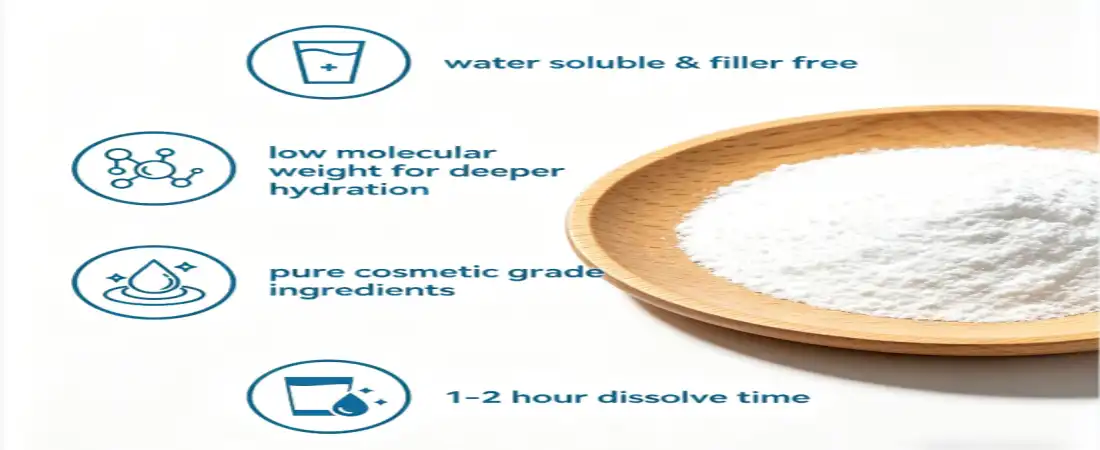
To minimize irritation, residual protein must stay below 0.1%. Molecular weight distribution should be narrow and well-documented, not just a single number. Dissolution time affects production speed. Quality materials dissolve fully in 30 minutes at room temperature with light shaking. These technical differences separate premium sodium hyaluronate from cheaper alternatives that often cause formulation failures.
Evaluating Supplier Capabilities Beyond Price Points
A cosmetics company and its raw material provider have a lot more in common than just buying things from each other. A supplier's real value is based on their technical help during formulation development, their quick contact when questions come up, and their reliable delivery schedules. We've seen brands have trouble because their cheap provider couldn't give them the molecular weight paperwork they needed for regulatory submissions, or because shipping schedules that weren't regular made it hard to plan their production.
When looking at possible hyaluronate suppliers for your hyaluronate skin care line, ask: Do they keep enough stock to ship normal specs immediately? Can they create unique molecular weight mixes for my formulations? What is their quality issue track record? How quickly do they answer technical questions? These operational factors reveal whether a partnership enables business growth or creates constant stress.
There are real ways that our dedication to being a trustworthy partner shows. We answer all questions within two hours because we know that formulation questions often come up during active development, which is a time when delays cost a lot. We keep common specs in stock, so we can ship within two to four days of receiving your order. Before committing to production numbers, clients can ask for free samples to see how well the product works in their own formulas.
Optimising Hyaluronate Skin Care Routine: Guidelines for Effective Results
Formulation Strategies for Different Skin Types and Concerns
To make hyaluronate-based goods that work, you need to know how different types of skin react to different molecular weights and amounts. Low molecular weight sodium hyaluronate works well in lightweight serum bases to hydrate deeply without making the skin feel heavy on top. This is especially true for people with oily or mixed skin. To keep the feel smooth, these mixtures should keep the total hyaluronate content between 0.5 and 1.5%. This is because higher concentrations in water-based goods can make them feel a little sticky.
Multi-weight hyaluronate mixes in heavier emulsion bases are good for dry and older skin types. A complete method for delivering moisture is made by mixing high molecular weight types (which moisturize the skin's surface right away) with medium and low weights (which support the deeper layers of skin). Concentrations can go up to 2% to 3% safely in creams that have emollients and occlusives that work with sodium hyaluronate's humectant effect.
Formulations for sensitive skin should put an emphasis on simplicity and cleanliness. Ultra-pure sodium hyaluronate (>99%) as the main ingredient, along with gentle helpers like allantoin and panthenol, makes goods that work well and don't cause skin discomfort very often. These items can help people who have trouble with most regular skin care because they keep the pH between 5.5 and 6.5 and don't contain typical skin sensitizers.
Ingredient Compatibility and Synergistic Combinations
Smart formulators use sodium hyaluronate's high flexibility to make goods that solve more than one problem at the same time. When combined with vitamin C, it protects against free radicals and improves hydration, but the pH needs to be carefully managed to keep both actives stable. When you mix sodium hyaluronate with peptides, you get strong anti-aging serums. The peptides help the hydration penetrate the skin, and the sodium hyaluronate stops collagen breakdown.
Sodium hyaluronate and niacinamide together have become very popular in new formulas that aim to improve barrier function and tone. It's easy to make this mixture because both parts dissolve in water and stay solid over a wide pH range. Clinical tests show that the mixture cuts transepidermal water loss by 45% more than either ingredient by itself. The niacinamide also helps the look of pores and skin tone.
Procurement and Market Insights: Where and How to Source Hyaluronate Products?
Strategic Sourcing: Raw Ingredients Versus Finished Formulations
When cosmetic companies add hyaluronate to their products, they have to make a smart choice: they can either get raw sodium hyaluronate powder to make their own formulations or buy finished formulations from contract makers. Depending on your business plan and skills, each method has its own benefits. Brands with well-established R&D departments and production facilities usually choose to source their own raw materials because it gives them the most control over the creation and placement of their products. This method lets you make custom mixes, molecular weight ratios that aren't found anywhere else, and full control over the texture and sensory properties.
Finished formulation services are often useful for smaller brands or brands just starting out in hyaluronate skin care. Experienced partners handle technical details while the brand focuses on marketing and distribution. Using pre-made hyaluronate mixes or extracts added to a simple base offers a middle ground: creativity with lower technical hurdles. Being honest about your internal skills helps determine which sourcing model achieves your growth goals without problems.
Market Trends Shaping 2026 Hyaluronate Procurement
A number of new trends are changing how forward-thinking brands look for sodium hyaluronate. Traceable and sustainable sources used to be nice to have, but now it's a must, especially for brands that want to reach high-end customers. Sodium hyaluronate made from fermentation and non-GMO bacterial cultures solves both the problem of sustainability and the rising demand for products that are vegan-friendly. Good sources now show proof that their hyaluronic acid went from being a fermentation medium to being completely cleaned.
Cross-linked and changed hyaluronate products are an area of innovation that is getting a lot of attention. Compared to regular sodium hyaluronate, these modified types stay on the skin longer and keep more wetness in. Even though they cost more now, using these new products early on can help you stand out from the competition as they become more common. Figuring out how these new technologies fit into your product plan is important for keeping your brand on the cutting edge of technology.
Regional differences in regulations continue to affect sourcing choices, especially for names that sell in more than one market. China's rules for NMPA approval are different from those set by the US Food and Drug Administration (FDA) and the European Union. Working with providers who know these regulatory landscapes and can provide the right paperwork for each market cuts down on the time and money needed for delays and new formulations when moving to new areas.
Conclusion
Thanks to decades of scientific proof and steady customer happiness, sodium hyaluronate has become an important ingredient in modern cosmetics. It can be used in almost all types of skin care products because it has instant sensory benefits, long-term effects that can be measured, and a great safety rating. By understanding the technical details of choosing the right molecular weight, setting quality standards, and formulating products, brands can make the most of an ingredient's potential and make products that stand out in a crowded market. Strategic buying from dependable sources who are both technically skilled and excellent at running their businesses gives you a competitive edge that goes far beyond the cost of the ingredients. As consumers become more knowledgeable in hyaluronate skin care, brands that fully understand and use sodium hyaluronate's benefits will continue to be at the top of the ever-changing beauty market.
FAQ
1. What causes skin irritation from hyaluronate products and how can it be prevented?
Since sodium hyaluronate is already found naturally in human skin, it is very rare for it to cause real discomfort. When people say they are allergic to "hyaluronic acid" goods, it's usually because of other ingredients in the recipe, like fragrances, preservatives, or plant extracts. Very high levels (above 3%) of low molecular weight sodium hyaluronate can sometimes make sensitive people feel tingly for a short time. To avoid problems with the recipe, you need to use ultra-pure sodium hyaluronate (>99%), keep the pH between 5.5 and 6.5, and avoid adding too many extra ingredients that raise the risk of sensitivity.
2. How does sodium hyaluronate differ from hyaluronic acid in procurement terms?
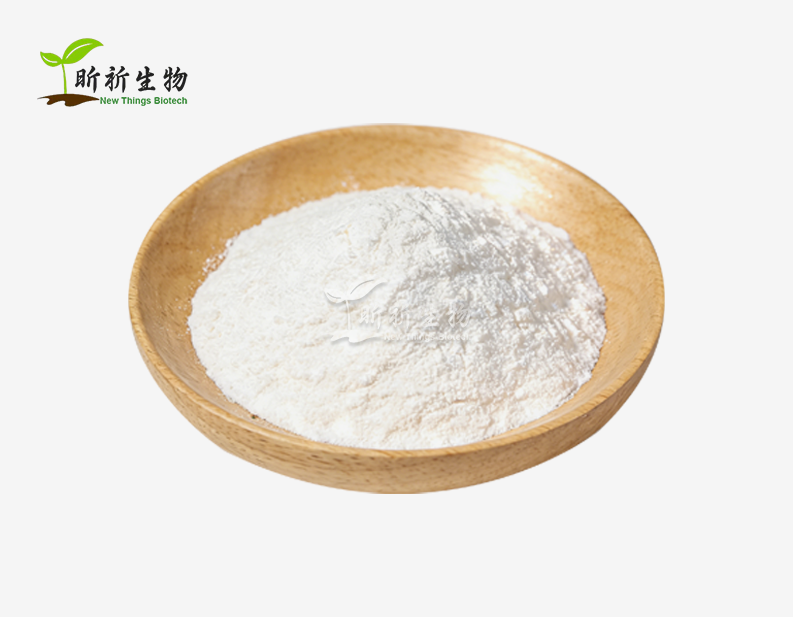
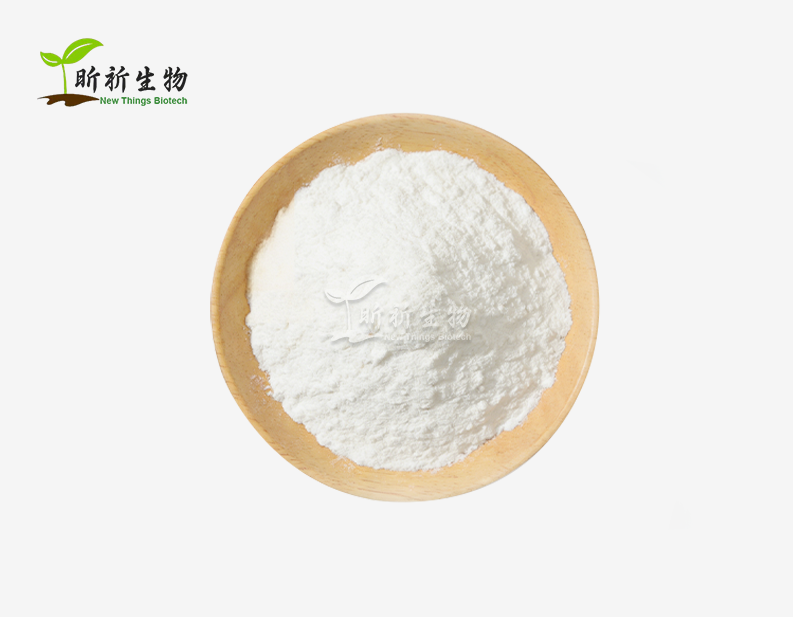
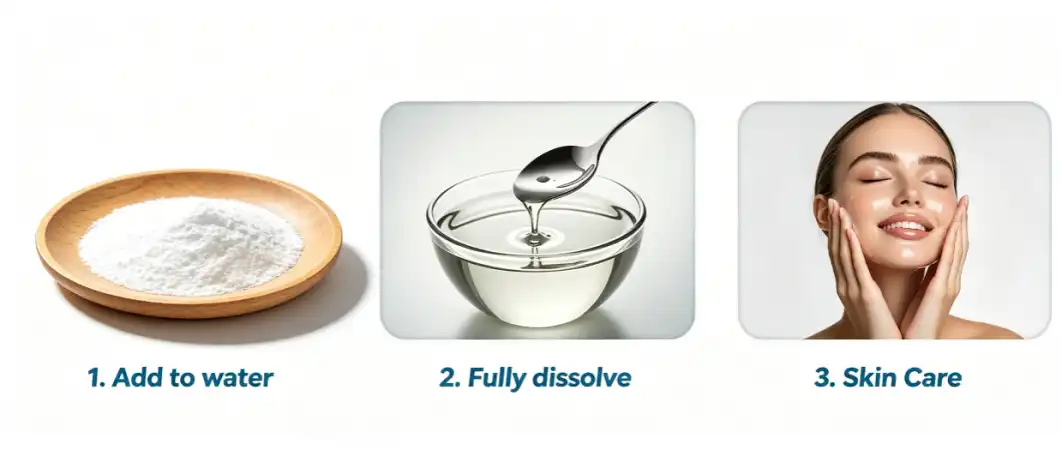
Even though they are chemically similar, sodium hyaluronate is much better for making cosmetics. The sodium salt form is more stable across a wider range of temperatures and pH levels, so the product will always work the same way throughout its shelf life. Because its molecules are smaller, sodium hyaluronate can get deeper into the skin than regular hyaluronic acid. When it comes to getting it, sodium hyaluronate usually comes as a white powder that dissolves easily in water. This makes it easy to add to different recipe bases without the need for special tools or processing conditions.
3. What criteria identify the best hyaluronate supplier for cosmetic manufacturing?
Superior hyaluronate suppliers have a few important traits: consistent batch-to-batch purity, which can be checked with detailed Certificates of Analysis; clear documentation of molecular weight distribution; the right certifications for your target markets (ISO, Kosher, Halal); helpful technical support during formulation development; and dependable inventory management that makes sure deliveries happen on time. The best partnerships are more than just business deals. They include real technical teamwork, where the seller gives you advice on how to make things and keeps you up to date on changes in the law that affect your business.
Partner with NT Biotech: Your Trusted Hyaluronate Skin Care Supplier
When you need to buy sodium hyaluronate, NT Biotech is ready to help. We have the technical know-how and practical dependability that great brands need. Our sodium hyaluronate powder is 99% pure and comes in a uniform 80-mesh format. It gives your products the performance they need and meets international quality standards thanks to our ISO, Kosher, and Halal certifications. We keep enough in stock to quickly deliver basic orders within two to four days, and our flexible packing choices, which range from 25 kg drums to custom formats, can be changed to fit your production needs.
As a hyaluronate skin care manufacturer with over a decade serving the international cosmetics industry, we know how hard it is for you to find the right suppliers. Our team answers technical questions within two hours, and we offer free samples so that you can make sure they work in your specific formulas before ordering large amounts. We offer a relationship model that turns finding ingredients from a transactional headache into a strategic benefit, whether you're making your first hyaluronate serum or adding to an existing skin care line. Get in touch with us at info@newthingsbiotech.com to talk about your needs and find out how our sodium hyaluronate options can help your business.
References
1. Chen, W. & Hu, Q. (2021). "Molecular Weight Distribution Effects on Hyaluronic Acid Skin Penetration and Hydration Efficacy." International Journal of Cosmetic Science, 43(2), 156-167.
2. Johnson, R.T., Martinez, L. & Park, S. (2020). "Clinical Evaluation of Sodium Hyaluronate in Anti-Aging Formulations: A Double-Blind Controlled Study." Journal of Clinical and Aesthetic Dermatology, 13(4), 34-42.
3. Nakamura, Y. & Schmidt, H. (2022). "Comparative Analysis of Humectants in Modern Skincare: Performance and Consumer Perception." Cosmetic Science and Technology Review, 18(1), 89-103.
4. Papakonstantinou, E., Roth, M. & Karakiulakis, G. (2019). "Hyaluronic Acid: A Key Molecule in Skin Aging and Dermal Repair Mechanisms." Dermato-Endocrinology, 4(3), 253-258.
5. Singh, M. & Anderson, P. (2023). "Fermentation-Derived Sodium Hyaluronate: Sustainability and Quality in Cosmetic Raw Materials." Green Chemistry in Cosmetics, 7(2), 112-128.
6. Williams, D.F., Zhang, X. & Thompson, K. (2021). "Formulation Strategies for Multi-Weight Hyaluronic Acid Complexes in Advanced Skincare Systems." Journal of Cosmetic Formulation Science, 25(3), 201-215.