- English
- French
- German
- Portuguese
- Spanish
- Russian
- Japanese
- Korean
- Arabic
- Greek
- German
- Turkish
- Italian
- Danish
- Romanian
- Indonesian
- Czech
- Afrikaans
- Swedish
- Polish
- Basque
- Catalan
- Esperanto
- Hindi
- Lao
- Albanian
- Amharic
- Armenian
- Azerbaijani
- Belarusian
- Bengali
- Bosnian
- Bulgarian
- Cebuano
- Chichewa
- Corsican
- Croatian
- Dutch
- Estonian
- Filipino
- Finnish
- Frisian
- Galician
- Georgian
- Gujarati
- Haitian
- Hausa
- Hawaiian
- Hebrew
- Hmong
- Hungarian
- Icelandic
- Igbo
- Javanese
- Kannada
- Kazakh
- Khmer
- Kurdish
- Kyrgyz
- Latin
- Latvian
- Lithuanian
- Luxembou..
- Macedonian
- Malagasy
- Malay
- Malayalam
- Maltese
- Maori
- Marathi
- Mongolian
- Burmese
- Nepali
- Norwegian
- Pashto
- Persian
- Punjabi
- Serbian
- Sesotho
- Sinhala
- Slovak
- Slovenian
- Somali
- Samoan
- Scots Gaelic
- Shona
- Sindhi
- Sundanese
- Swahili
- Tajik
- Tamil
- Telugu
- Thai
- Ukrainian
- Urdu
- Uzbek
- Vietnamese
- Welsh
- Xhosa
- Yiddish
- Yoruba
- Zulu
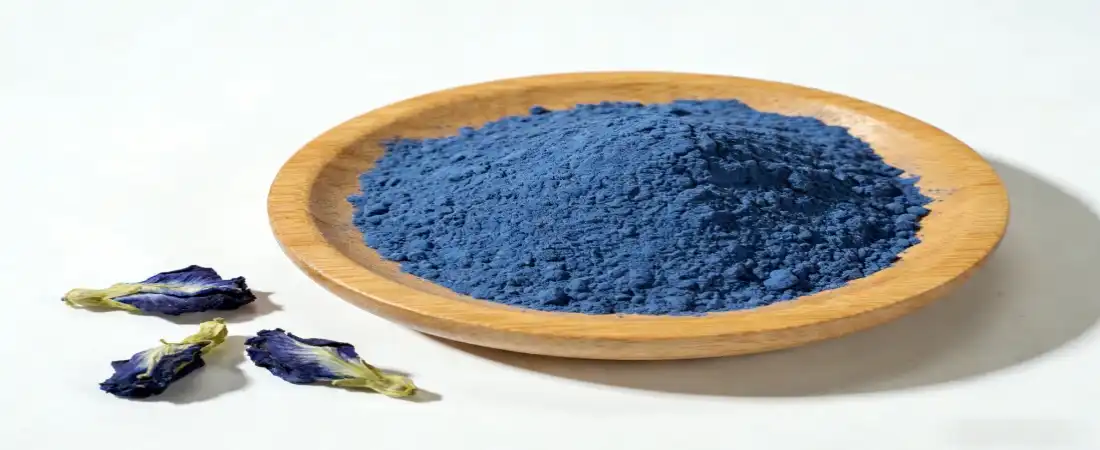
Blue Matcha Butterfly Pea Flower Powder can be used in a lot of different ways in makeup, health products, and food and drinks. For this natural colorant to work best, mix the powder straight into liquids at a dose of 0.5% to 2% by weight, based on how strong a color you want. The powder mixes easily in water-based systems and changes color based on pH, going from a bright blue in normal conditions to purple or pink when acidic ingredients are added. Keep the powder in containers that keep air out and light out to keep the anthocyanin stable and keep it working at its best throughout the production cycle.
Introduction
The plant-based fixings showcase is encountering surging request for characteristic colorants adjusted with clean-label patterns. Blue Matcha Butterfly Pea Bloom Powder, determined from Clitoria ternatea L. blossoms, addresses key acquirement challenges: engineered color flimsiness, strict directions on manufactured added substances, and customer inclination for plant-based choices. This direct covers testing, sourcing, and application for large-scale generation over nourishment supplements, utilitarian drinks, and individual care formulations—enabling educated acquiring choices through clear determinations and provider assessment criteria.
Understanding Blue Matcha Butterfly Pea Flower Powder
What Differentiates This Ingredient from Traditional Matcha?
Despite the shared title, Blue Matcha contrasts totally from green tea matcha (Camellia sinensis). Inferred from Clitoria ternatea blooms developed in Southeast Asia, its blue color comes from anthocyanins (particularly ternatins). Not at all like conventional matcha, it contains no caffeine—ideal for caffeine-sensitive customers or evening items. The fine molecule measure (80 work, 5–10 microns) guarantees smooth blending in refreshments, prepared merchandise, and restorative emulsions. This qualification things for obtainment groups selecting fixings adjusted with particular useful and administrative requirements.
Nutritional Profile and Functional Benefits
Laboratory testing reveals high levels of polyphenolic compounds and flavonoids in Blue Matcha Butterfly Pea Flower Powder. These bioactive molecules provide antioxidant properties that combat free radicals and support anti-inflammatory processes—aligning with wellness-focused product messaging. The powder also contains trace minerals, vitamins, and essential amino acids, strengthening nutritional claims without adding allergens or animal-derived ingredients. These properties make the ingredient highly valuable for plant-based and vegan product lines seeking functional differentiation in competitive markets.
Safety Considerations and Regulatory Status
Blue Matcha has a long history of safe use in traditional Southeast Asian foods and beverages, leading global food safety authorities to generally recognize it as safe. The absence of caffeine addresses stimulant concerns, while natural origin meets clean-label approval standards. Procurement teams should ensure suppliers provide complete documentation: Certificates of Analysis, heavy metal screening, microbial testing, and pesticide residue reports. ISO9001, Kosher, or Halal certifications demonstrate quality assurance and facilitate market access across different regulatory environments.
How to Use Blue Matcha Butterfly Pea Flower Powder in B2B Settings?
Food and Beverage Applications
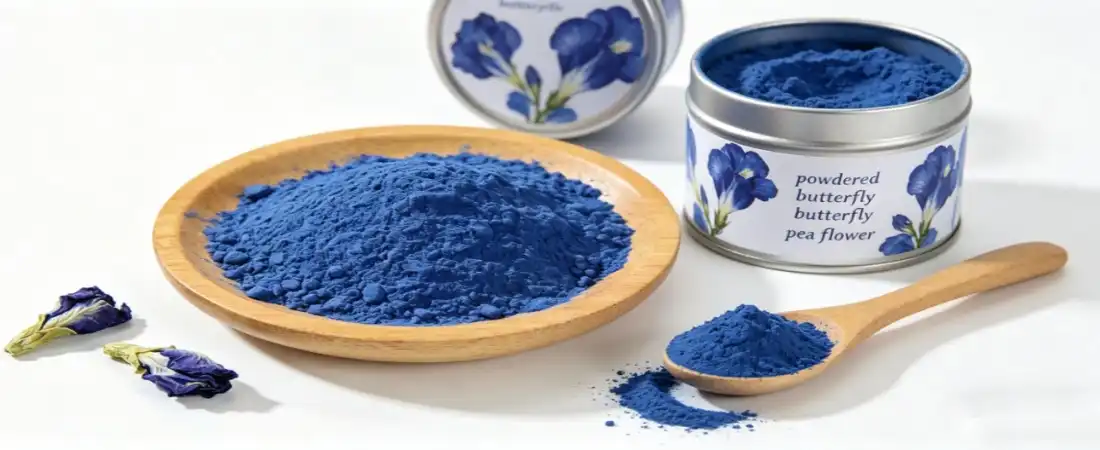
This powder creates visual interest through pH-dependent color change: deep blue in neutral/alkaline liquids; shifting to purple and pink when lemon juice, vinegar, or acidic ingredients are added. Recommended dosage: 0.5–2% by weight. The powder performs well in baked goods, confections, dairy-free alternatives, and beverages. Heat stability withstands standard baking temperatures, though prolonged high heat may gradually reduce anthocyanin vibrancy. In frozen products like ice cream and sorbets, color remains stable through freeze-thaw cycles for year-round reliability.
Cosmetic and Personal Care Integration
Butterfly pea extract’s antioxidant properties enable integration into skincare and personal care products. Cosmetic manufacturers use the powder in face masks, soaps, and bath items for visual enhancement and functional benefits. Anthocyanins support anti-aging claims by addressing oxidative stress, while natural blue pigment eliminates need for synthetic colorants facing regulatory scrutiny. For emulsion preparation, mix powder with water phase first, then add oils and emulsifiers. Typical usage rates: 0.1–1% depending on product type. Stability testing should examine color retention under light and pH variations.
Dietary Supplement Development
Nutraceutical applications leverage antioxidant and anti-inflammatory qualities documented in peer-reviewed studies. Blue Matcha is incorporated into capsules, tablets, and powdered drink mixes for health-conscious consumers. The powder blends easily with other botanicals, vitamins, and minerals. For encapsulation, the fine particle size facilitates direct compression, though formulators may add excipients for optimal tableting. In liquid supplements, the vibrant color serves dual purposes: shelf differentiation and visible proof of ingredient presence. Packaging type significantly impacts anthocyanin stability—light and air-blocking materials preferred.
Choosing the Right Blue Matcha Butterfly Pea Flower Powder Supplier
Quality Certifications and Manufacturing Standards
When sourcing Blue Matcha Butterfly Pea Flower Powder, the botanical extract industry must carefully evaluate each provider. First, ensure potential partners hold current ISO9001 certification, demonstrating quality management systems from raw material sourcing to finished product testing. For markets serving diverse dietary needs, confirm that Kosher and Halal licenses are available. These certifications expand market access and inclusivity for your Blue Matcha products.
Another important aspect of assessment is manufacturing ability. Suppliers should show that they can meet base order amounts, which are usually 10 kilograms for first trials, while also being able to scale up quickly to meet growing demand. Ask possible partners how much stock they have and how long it takes to make things. Reliable providers keep standard extracts in stock so that pressing orders can be filled quickly. They can also give tailored specs for proprietary formulations that need different particle sizes or concentration levels.
Supply Chain Transparency and Traceability
Clear conversation about sourcing methods is key to building good relationships with suppliers. Ask for specific details about where the raw materials come from, how they are grown, and how they are handled after they are harvested as these can affect the quality of the end product. Suppliers who use controlled growing conditions or work directly with farmer groups are more likely to provide regular high-quality raw materials than those who buy them on the open market.
Traceability tools let sellers keep track of individual batches from the time they are picked until they are packaged. When dealing with quality questions or legal exams, this skill comes in very handy. During the supplier review process, ask candidates to show how they handle traceability and give examples of batch paperwork. Full records should have times of harvest, handling conditions, analytical test results, and a history of marketing.
Technical Support and Customization Capabilities
In addition to the products they sell, possible partners should be judged on their ability to work with you on technical issues for a long time. During product development stages, suppliers who offer help with formulation, advice on stability testing, and application troubleshooting are very valuable. Companies with their own research and development (R&D) labs usually offer more advanced technical support than selling companies that don't have their own factories.
Brands that want to stand out in the market should pay extra attention to customization choices. Procurement teams can get the best deals on transportation costs and storing needs by using flexible packaging. Certain providers offer a variety of custom packing options, from 1-kilogram foil bags that are good for test production to 10-kilogram boxes that are made for mass production. Private labeling helps keep the brand's character, and contract manufacturing services let companies that don't have their own production facilities get full turnkey solutions.
Coordinating logistics has a direct effect on the total cost of ownership and the dependability of the supply chain. Check out the different shipping options that possible sellers offer, such as express services for quick restocking, air freight for regular foreign shipments, and sea freight for big orders that save you money. Suppliers who have accounts with big foreign carriers like FedEx and UPS can often offer better tracking information and solve shipping problems more quickly. Delivery times are a useful way to tell suppliers apart; those that can complete orders for stocked items in two to four days are more operationally efficient, which lowers the cost of keeping inventory and increases the freedom of production planning.

Maximizing Value: Quality Assurance and Outcome Evaluation
Laboratory Testing and Authentication Protocols
Verifying the authenticity of a product saves procurement investments and the image of the business. Reliable sellers include Certificates of Analysis with every batch. These show the results of tests to prove the identity, check for heavy metals, count microbes, and find pesticide residues. HPLC research measures the amount of anthocyanin present, which makes sure that the color works the same way in all production runs. UV spectroscopy provides more proof of the unique absorption patterns found in Blue Matcha Butterfly Pea Flower Powder products.
Testing by a third party that is not connected with the company adds another level of confirmation. This is especially helpful when finding new suppliers or putting goods on the market in places with strict rules. You might want to hire accredited labs to check incoming raw materials on a regular basis and compare the data from the seller with the results of the independent analysis. This method finds possible problems early on, which keeps production from being interrupted or products from being taken off the market because of quality problems.
Performance Monitoring and Customer Feedback Integration
Effective quality assurance goes beyond just making sure that the original specifications are met; it also includes evaluating performance on a regular basis. Setting up KPIs that track color uniformity, dissolution rates, and stable measures across multiple orders is important. Statistical process control methods help find patterns that could mean that the quality is going to change, which lets the source get involved before problems affect the finished goods.
Customer feedback is very helpful for the market because it tells us a lot about how a product works in the real world. By collecting and analyzing end-user experiences in a planned way, we can learn more about how to keep colors vibrant, how to change tastes in food apps, and how to make cosmetics feel on the skin. Sharing compiled feedback with sellers improves working relationships and helps with ongoing improvement projects, which is good for everyone.
Emerging Trends and Innovation Opportunities
The botanical extract business is always changing as new technologies make it easier to remove and process plants. Freeze-drying technology keeps heat-sensitive anthocyanins better than regular spray-drying, which makes goods with more intense color and better antioxidant activity. Using microencapsulation methods keeps active substances from breaking down while they are being stored or processed, which opens up new forms for use that weren't possible before.
Environmental responsibility claims can help businesses stand out in a market that is moving toward sustainable buying and regenerative farming. Suppliers that use organic certification, carbon-neutral operations, or fair-trade partnerships are in line with the values that consumers are increasingly using to guide their buying choices. It is better for businesses to have procurement workers who look at providers based on sustainability factors. This makes the businesses more competitive and helps the environment and people.
Conclusion
Blue Matcha Butterfly Pea Flower Powder is a smart ingredient choice for sourcing workers who have to deal with the needs of both consumers and businesses for a steady supply that can be scaled up or down. This guide has talked about the technical requirements, application protocols, and seller review factors that are needed for integration to work well in a variety of product categories. The ingredient can be used in a lot of different ways, like in food, drinks, cosmetics, and nutraceuticals. It also has health benefits and a clean label, which makes it a valuable part of innovation strategies that aim to attract health-conscious customers. Finding qualified suppliers with technical know-how, clear quality systems, and quick service is the first step to building long-lasting relationships that help your products stand out and help you succeed in foreign markets that are very competitive.
FAQ
1. What industries benefit most from butterfly pea flower powder?
Product companies that make color-changing drinks, healthy teas, and natural beers find Blue Matcha Butterfly Pea Flower Powder to be very useful. Nutraceutical companies use it in health vitamins, and the makeup industry puts it in skin care products to help with antioxidants. This ingredient can be used in any situation that needs plant-based blue colorants that don't contain caffeine.
2. How does caffeine content compare to traditional matcha?
Green tea matcha, on the other hand, usually has 25 to 70 milligrams of caffeine per dose, while Blue Matcha Butterfly Pea Flower Powder has none. This difference lets companies place their products for evening use, products for kids, or formulations made just for people who are sensitive to caffeine without losing their good looks or usefulness.
3. Which certifications should procurement teams prioritize?
ISO9001 certification proves that the quality management system is working properly, and Kosher and Halal certifications help you reach a wider range of customers. Check for USDA Organic or similar area approvals when positioning as organic. No matter what certification marks are used, third-party testing paperwork that covers heavy metals, microbial safety, and pesticide residues is an important part of quality assurance.
Partner with NT Biotech for Premium Blue Matcha Butterfly Pea Flower Powder
NT Biotech sells Blue Matcha Butterfly Pea Flower Powder that is safe for use in medicines. They back up their products with detailed quality reports and helpful technical support. As a well-known provider of Blue Matcha Butterfly Pea Flower Powder, we keep a steady stock that lets us serve orders within two to four days, as long as they are at least 10 kilograms. Our ISO9001, Kosher, and Halal certifications show that we follow world quality standards. Our special low-temperature handling keeps the most anthocyanins and color brightness. We provide free samples so that you can try the formulation before making a promise. We also offer flexible OEM customization to support private label efforts. Our expert team answers questions within two hours and helps with formulation, suggests stability tests, and provides regulation paperwork to help products enter global markets. Email us at info@newthingsbiotech.com to talk about your particular needs, get detailed specs, or set up shipping of samples.
References
1. Chusak, C., Thilavech, T., & Adisakwattana, S. (2018). Acute effect of Clitoria ternatea flower beverage on glycemic response and antioxidant capacity in healthy subjects: A randomized crossover trial. BMC Complementary and Alternative Medicine, 18(1), 6-14.
2. Lakshan, S. A. T., Jayanath, N. Y., Abeysekera, W. P. K. M., & Abeysekera, W. K. S. M. (2019). A commercial potential of butterfly pea (Clitoria ternatea L.) in health and food applications. Journal of Food Science and Technology, 6(2), 22-27.
3. Nair, V., Bang, W. Y., Schreckinger, E., Andarwulan, N., & Cisneros-Zevallos, L. (2015). Protective role of ternatin anthocyanins and quercetin glycosides from butterfly pea (Clitoria ternatea Leguminosae) blue flower petals against lipopolysaccharide (LPS)-induced inflammation. Journal of Agricultural and Food Chemistry, 63(28), 6355-6365.
4. Ponnusamy, S., Zinjarde, S., Bhargava, S., & Rajani, P. (2019). Discovering bisdemethoxycurcumin from Curcuma longa rhizome as a potent small molecule inhibitor of human pancreatic alpha-amylase, a target for type-2 diabetes. Food Chemistry, 267, 305-312.
5. Marpaung, A. M., Andarwulan, N., Hariyadi, P., & Faridah, D. N. (2017). Colour and antioxidant properties of natural food colorant from butterfly pea (Clitoria ternatea Linn) petal extract during storage. IOP Conference Series: Earth and Environmental Science, 102(1), 012057.
6. Srichaikul, B., & Bunsang, R. (2016). Antioxidant and antibacterial activities of extracts from different parts of Clitoria ternatea Linn. Agricultural Science Journal, 47(2), 53-58.