- English
- French
- German
- Portuguese
- Spanish
- Russian
- Japanese
- Korean
- Arabic
- Greek
- German
- Turkish
- Italian
- Danish
- Romanian
- Indonesian
- Czech
- Afrikaans
- Swedish
- Polish
- Basque
- Catalan
- Esperanto
- Hindi
- Lao
- Albanian
- Amharic
- Armenian
- Azerbaijani
- Belarusian
- Bengali
- Bosnian
- Bulgarian
- Cebuano
- Chichewa
- Corsican
- Croatian
- Dutch
- Estonian
- Filipino
- Finnish
- Frisian
- Galician
- Georgian
- Gujarati
- Haitian
- Hausa
- Hawaiian
- Hebrew
- Hmong
- Hungarian
- Icelandic
- Igbo
- Javanese
- Kannada
- Kazakh
- Khmer
- Kurdish
- Kyrgyz
- Latin
- Latvian
- Lithuanian
- Luxembou..
- Macedonian
- Malagasy
- Malay
- Malayalam
- Maltese
- Maori
- Marathi
- Mongolian
- Burmese
- Nepali
- Norwegian
- Pashto
- Persian
- Punjabi
- Serbian
- Sesotho
- Sinhala
- Slovak
- Slovenian
- Somali
- Samoan
- Scots Gaelic
- Shona
- Sindhi
- Sundanese
- Swahili
- Tajik
- Tamil
- Telugu
- Thai
- Ukrainian
- Urdu
- Uzbek
- Vietnamese
- Welsh
- Xhosa
- Yiddish
- Yoruba
- Zulu
Ube yam powder from Dioscorea alata can be used in many everyday cooking recipes. This fine 80-mesh powder is easy to mix into both wet and dry food. One way to use it is to add 1% to 3% by weight to cake and muffin mixes. On top of that, it can be whipped into smoothies and drinks to give them color and nutrition right away. It can also be mixed into oatmeal and cereal to make them look and work better. It tastes sweet and savory on its own, so it pairs well with both sweet and salty foods without being too strong. Because of this, it is a great clean-label ingredient for food companies that want to make new products.
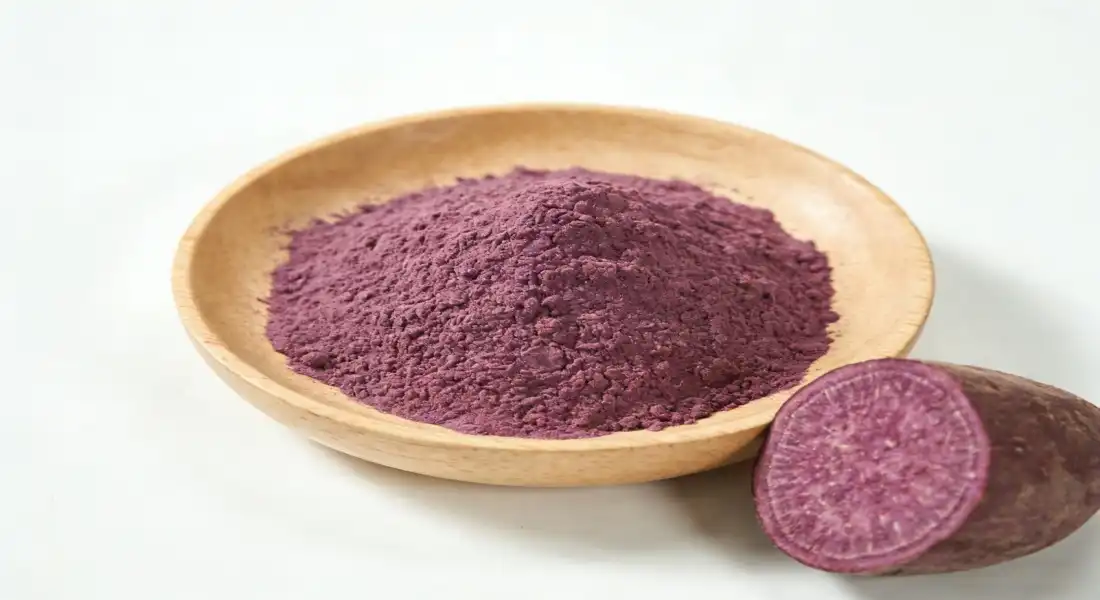
Understanding Ube Yam Powder: Properties and Nutritional Benefits
What Makes This Ingredient Unique
Ube yam powder is made from the root Dioscorea alata. This purple root was first grown in Southeast Asia. It is now famous all over the world for being very healthy and having a beautiful color. Unlike man-made colorants, this ingredient can be used for both how it looks and how it works. To make purple yams, old yams are picked. After being cleaned well, they are cooked in steam to make them easier to digest, dried at low temperatures to keep the medicinal compounds safe, and then ground up to an 80-mesh size. The quality is checked carefully before they are packed in a controlled environment. The powder has natural anthocyanins, tough starch, and mucilage that have been kept because of this careful processing. It can also be kept for a long time, which is good for business.
Nutritional Profile and Health Properties
A lot of health-related market trends are met by the nutrients in this part of the plant. Many types of fiber and resistant starch are found in it. These are good for your gut health and help your body take in carbs more slowly. Anthocyanins are chemicals that come from plants. So they help fight reactive stress since they are antioxidants. Chemicals and carbohydrates that work like diosgenin might be good for your body's health and protection. Businesses that make functional foods, clean-label goods, and plant-based nutrition lines that meet customer needs for health benefits and transparency without adding chemicals will gain a lot from having these features.
Addressing Common Misconceptions
Business people often wonder if this could make people sick or if there's a right way to handle it. Ube yam powder can be used in gluten-free foods since it doesn't contain gluten. Soy, nuts, and cheese are not in it, but the people who make it should always check with the source. There should be less than 60% humidity where the powder is kept for 24 months. It should also be cool and dry. Some plant-based foods need to be kept cold, but this one doesn't. This makes it easy to store in factories and saves people who buy in bulk money on storage costs.
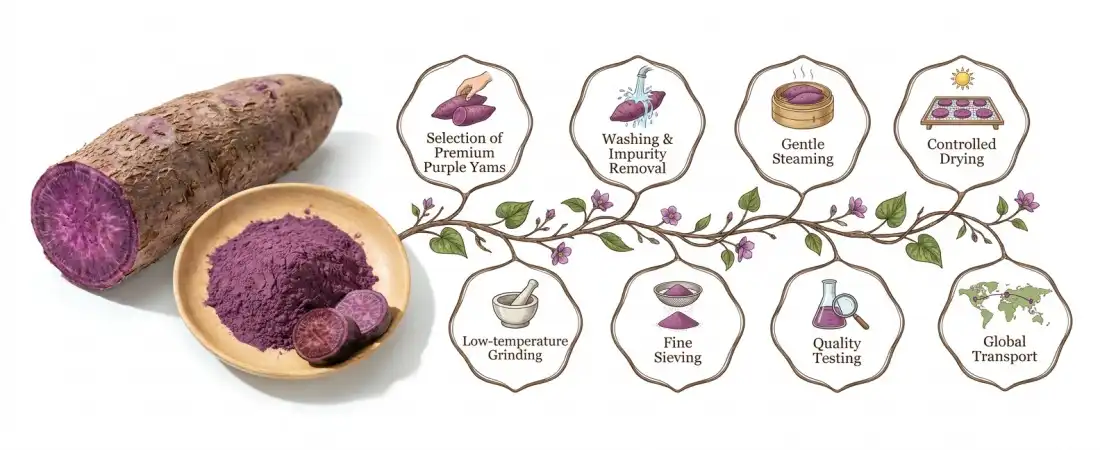
Practical Ways to Use Ube Yam Powder in Everyday Cooking and Food Manufacturing
Beverage Applications and Mixing Techniques
It mixes well and stays the same color, which makes it great for ready-to-drink drinks and drink mixes. This part should be mixed at a level between 2% and 5%, based on how strong of a color you want and how much protein you want to add. Feel free to use this for protein shakes, smoothie bases, or functional drink powders. The powder is easy to mix with both plant-based and dairy-based drinks. However, it doesn't work well when added to bigger amounts of liquid without first being mixed with a small amount. This kind stays mixed better and doesn't settle out as much when kept, so it's better for cold drinks. This ingredient's maker says it goes well with vanilla, coconut, and apple flavors and stays stable in pH ranges of 3.5 to 7.0, which are common in drinks.
Bakery and Confectionery Innovations
One business that buys ube yam powder the most quickly is the baking company. You can add between 1% and 4% of the flour to cake mixes, cookie doughs, bread recipes, and baked goods. If the powder was made right, low temps shouldn't change its color too much. Some of it might turn brown if it gets too hot above 200°C, though. People have made pancakes, donuts, and stacked cakes in purple that look so unique that they sell for more than they're worth. A little less extra sugar and fat can be used because it keeps the wetness in and adds a light sweetness. The food will still taste good. During the research and development steps, different amounts of water are tested to make sure the shape and structure of the crumb are perfect for each use.
Breakfast Foods and Instant Nutrition Products
It is being added to more and more protein bars, instant coffee, and breakfast foods to make them stand out. It will make grain-based foods healthy and look better on the shelf if you add 2% to 3% of it to them. Because this food has resistant starch, it fits with messages about whole carbs and backs up claims that it makes you feel full. It tastes smooth without adding any extra thickeners to quick breakfast recipes because the powder already has mucilage in it. It's easy to write down what's inside now. Many well-known brands have launched ube yam-flavored granolas and breakfast bowls that were only available for a short time. In shops, these things sold really well. People are open to trying new kinds as long as they are made from real plants and have a good story about where those plants came from.
Dosage Guidelines for Industrial Production
When going from lab tests to mass production, it's important to keep precise dose control. It is common for adding rates to be between 0.5% and 5% of the formula's total weight. These things depend on the application and the job that is being looked for. For drinks, use 2% to 4%, for baked goods, 1% to 4%, and for vitamin mixes, 5 to 15%. For the first tests, you should make several versions with different amounts of materials to see how the final result looks, tastes, and feels. Be very careful when writing down how much water the powder needs, as it needs three to four times its own weight in water. In the end, this changes how much water is there. If buyers give thorough Certificates of Analysis that show the range of particle sizes, color values (Lab*), and moisture levels, it makes each batch more regular. This lets people who make formulas take into account how different plant things are in the wild.
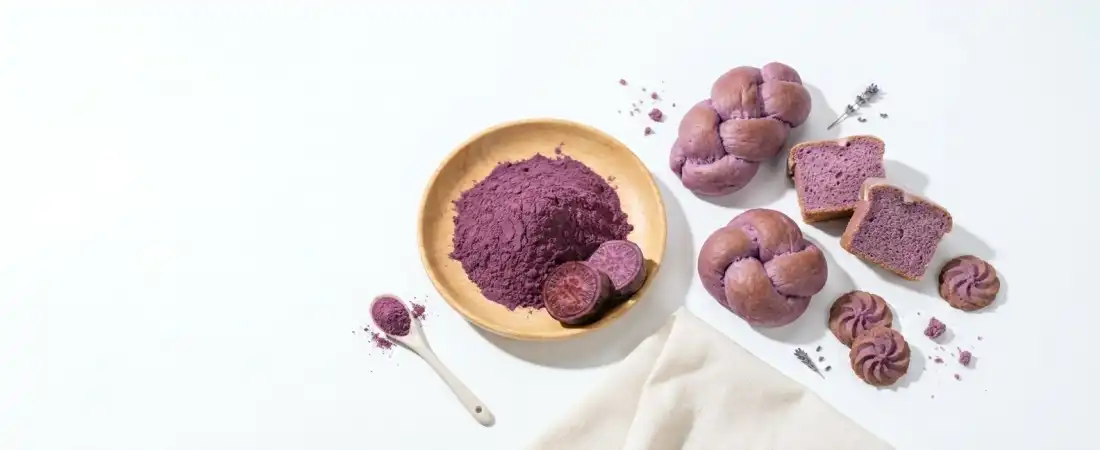
Comparing Ube Yam Powder with Other Root Powders: Making the Right Procurement Decisions
Functional Differences Between Purple Yam and Sweet Potato Powders
It's easy to choose the best root powder for you when you compare ube yam powder to others. They both turn food purple, but they are from different plants and do different things. Diosgenin, mucilage, and resistant starch are all chemicals that are found in ube yam powder (Dioscorea alata). Because of this, it's great for making things taste different and keeping gut health healthy. It is called Ipomoea batatas, and it comes from purple sweet potatoes. It has more anthocyanin, which makes it a better antioxidant and gives it a darker color in smaller amounts. Buyers need to be very careful when reading the specs because some sellers label their goods as "sweet potato" when what they really mean is "yam powder." Sweet potato powder tastes more balanced and sweet, while real ube yam powder tastes earthy and sweet. If you know these things, you can choose products that go better with the style and message of your product.
Organic Versus Conventional Sourcing Considerations
When you pick between normal ube yam powder and organic-certified powder, the price and market position of the product change. There is a 30–50% price increase for organic forms, but they let you sell natural and organic goods, which is where you can make more money and grow faster. What each market needs in terms of certification is different. In North America, USDA Organic is needed, EU Organic is needed in Europe, and JAS is needed in Japan. It is important to check the seller certifications to make sure they are valid in the places where the goods are meant to be sold. Conventional types are good for famous products and customers who want to save money because they are cheaper and the supply is often more stable. No matter what kind of approval a seller has, buyers should look for ones who grew their goods in a good way, kept track of them, and tested them for heavy metals, chemical residues, and microbial contamination. This will make sure the rules are always followed, and the quality stays the same.
Evaluating Supplier Quality Benchmarks
You need to know what the most important quality signs are to tell the difference between cheap and expensive plant goods. The particles in high-quality ube yam powder are all about the same size, and more than 95% of it can get through 80-mesh screens. That way, the powder will be spread out evenly in the mix. There should be no change in color from one batch to the next. To prove this, service providers should be able to show spectrophotometric data (Lab readings). Microbes and clumps can't grow when the amount of wetness is less than 8%. People you can trust will check for mercury, lead, cadmium, and arsenic, and make sure the total amount is less than 10ppm. Also, they check to see if there are any sulfur dioxide levels below 10ppm to make sure the product meets the terms for a clean label. Less than 10,000 cfu/g were found for total plate count. Less than 1,000 cfu/g were found of yeast and mold, and negative results for pathogens like Salmonella and E. coli*. Full Certificates of Analysis sent with every package make it easier to do new checks and keep quality control going smoothly.
Where and How to Buy Ube Yam Powder: Procurement Tips for B2B Buyers
Essential Supplier Evaluation Criteria
Selecting reliable ube yam powder suppliers requires thinking about a lot of things carefully to find plant ingredient sources you can trust. When you hire someone, make sure they hold the right licenses. In the food industry, Kosher, Halal, and organic standards are unique to the food market, while ISO 9001 is for quality management systems and HACCP is for food safety. Another important thing to think about is production capacity. They should be able to show you that they can keep quality high even as your business grows. Go over the farms they buy from, the places they gather their goods, and the labs that make sure the goods they sell are good. Sellers who have been in business for a while often belong to more than one business group, reducing vulnerability to regional disruptions. It's very important to get help from experts when making something. Ask possible partners if they can provide formulation guidance, stability testing, and regulatory documentation to support your submission processes in target markets.
Understanding MOQ, Lead Times, and Packaging Options
There is a big difference between sellers in how little you can buy. It can be as little as 10 kg or as much as 1,000 kg. When making a new product, test runs that aren't very big are usually good. Suppliers with an MOQ of 10–25 kg can help with the formulation steps because of this. People who buy a lot of things at once are better to work with when they need to get things for a show. Lead times change based on whether the things are in stock or being made when the order is placed. When you use stock programs, you can ship things in two to four working days. That way, you can stick to your production plans and keep your cash flow in good shape. With getting the raw materials, processing, checking, and packing, a special order can be made in three to ten days. Packaging should fit your handling systems—1 kg and 10 kg packages suit small to medium-sized businesses, while bags or drums that hold 20 to 25 kg optimize logistics for manufacturing. Discuss nitrogen flushing, moisture barrier bags, and other safe ways to pack food that keeps its quality while it's being shipped or kept and makes it last longer.
Why NT Biotech Stands Apart as Your Strategic Partner
The people who work at NT Biotech have all been specialized in botanical extraction and making sure they are all the same for more than ten years. Dioscorea alata gives us the best ube yam powder. It's safe for a lot of places to follow the rules of ISO 9001, Kosher, and Halal. Because we keep a lot of stock on hand, we can quickly finish orders in two to four days after they are approved. This keeps your supply steady, which helps you plan how much to make. Our professional team is here to help you with every step of the development process, from coming up with the first idea to making sure the process of scaling up goes smoothly and filing all the necessary paperwork with the government. Fully checked Certificates of Analysis prove that every batch is clean, germ-free, and stable. You can put your own name on the product, change the grain size, and get it certified as organic. This will help you stand out in the market.
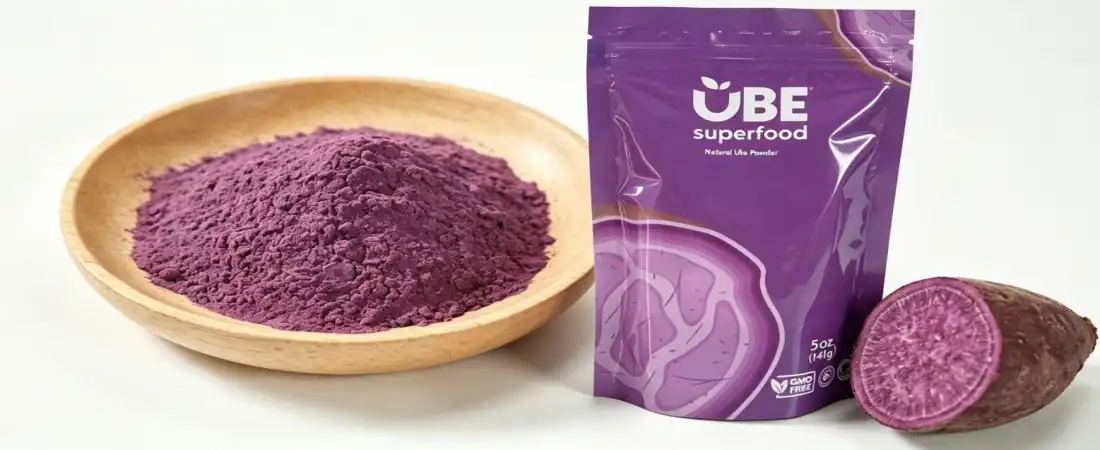
Conclusion
They love ube yam powder because it gives their food a natural color, better nutrients, and a clean label that makes it stand out. It can be put in drinks, baked goods, breakfast foods, medicines, and other things. This helps companies come up with new products and meet customer wants for plant-based, healthy foods. People who want to buy something should rate sellers based on how stable their supply chains are, how regular their quality is, and whether they have the right licenses. Understanding what makes this root powder different from others that are similar will help you make sure that the material choice fits with the goals of the product. The markets for natural goods and useful foods will grow, and businesses that work with skilled plant ingredient providers will be ready to seize the chances.
FAQ
1. Is purple yam powder suitable for gluten-free product lines?
It's great for celiacs because Dioscorea alata ube yam powder doesn't naturally have gluten in it. You can use it in gluten-free recipes and on product labels. Manufacturers should make sure that food service providers follow certain rules when they make and pack food so that gluten-containing items don't get mixed in. Most approval groups need proof that the gluten levels were less than 20ppm. Clean labels for gluten-free foods are possible with this plant-based ingredient, allowing products to still have color, nutrients, and function.
2. What storage conditions maximize shelf life?
The best places to store things are cool and dry (below 25°C and below 60% relative humidity). There is a lot of water absorption potential in the powder, so it soaks it up fast. It might stick together, and germs could start to grow if it stays wet for a long time. Lock up things that can't be opened to keep them safe for longer. The best containers have a barrier that keeps water and nitrogen from washing inside. If you store it right, you can use it up to 24 months after you made it. If a source says a product has a long shelf life, they should show stable data that shows how well it keeps its color, useful qualities, and ability to fight microbes over time.
3. Can this ingredient support vegan and allergen-free claims?
Vegans can eat ube yam powder because it doesn't contain any ingredients that came from animals that were used to get it, make it, or pack it. It naturally stays away from common allergens like soy, fish, nuts, shrimp, dairy, eggs, and shellfish. When a company makes allergy-friendly goods, they should make sure that their suppliers have plans to keep workers from coming into contact with allergens while the products are being made. It's okay to ask for allergen statements and facility certifications documenting segregation practices. This ingredient's clean allergen profile makes it easy to make things that people who are allergic to or can't eat certain foods can use.
Partner With a Trusted Ube Yam Powder Manufacturer for Your Next Innovation
People who buy from NT Biotech know that they will get fast customer service and strict quality control along with high-quality plant goods. All three of these groups have said that our purple yam powder meets all world standards through ISO 9001, Kosher, and Halal certifications. We always have stock on hand and keep our prices low. So, your work plans won't be thrown off, and we'll answer all of your questions in two hours. Along with that, we ship things that are in stock in two to four days. Our R&D team helps your formulators make better use by giving them science datasheets, stability studies, and regulatory support materials. Email info@newthingsbiotech.com right now to get a free taste. Then you'll be able to tell the difference in quality when you work with a trusted ube yam powder maker dedicated to your success.
References
1. Thompson, M. and Chen, L. (2021). Functional Properties of Purple Yam in Food Applications. Journal of Food Science and Technology, 58(4), 1245-1256.
2. Rodriguez, K. (2020). Natural Colorants in Commercial Food Production: Safety and Application Guidelines. New York: Academic Press.
3. Singh, P. and Nakamura, H. (2022). Resistant Starch and Digestive Health: A Comprehensive Review. Nutrition Research Reviews, 35(1), 89-104.
4. Williams, D. (2019). Plant-Based Ingredients: Sourcing, Quality Control and Supply Chain Management. London: Woodhead Publishing.
5. Foster, J. and Martinez, R. (2023). Anthocyanins in Food Systems: Stability, Functionality and Health Benefits. Critical Reviews in Food Science and Nutrition, 63(12), 2234-2251.
6. Anderson, S. (2021). Clean Label Ingredient Strategies for Modern Food Manufacturing. Chicago: Institute of Food Technologists Press.