- English
- French
- German
- Portuguese
- Spanish
- Russian
- Japanese
- Korean
- Arabic
- Greek
- German
- Turkish
- Italian
- Danish
- Romanian
- Indonesian
- Czech
- Afrikaans
- Swedish
- Polish
- Basque
- Catalan
- Esperanto
- Hindi
- Lao
- Albanian
- Amharic
- Armenian
- Azerbaijani
- Belarusian
- Bengali
- Bosnian
- Bulgarian
- Cebuano
- Chichewa
- Corsican
- Croatian
- Dutch
- Estonian
- Filipino
- Finnish
- Frisian
- Galician
- Georgian
- Gujarati
- Haitian
- Hausa
- Hawaiian
- Hebrew
- Hmong
- Hungarian
- Icelandic
- Igbo
- Javanese
- Kannada
- Kazakh
- Khmer
- Kurdish
- Kyrgyz
- Latin
- Latvian
- Lithuanian
- Luxembou..
- Macedonian
- Malagasy
- Malay
- Malayalam
- Maltese
- Maori
- Marathi
- Mongolian
- Burmese
- Nepali
- Norwegian
- Pashto
- Persian
- Punjabi
- Serbian
- Sesotho
- Sinhala
- Slovak
- Slovenian
- Somali
- Samoan
- Scots Gaelic
- Shona
- Sindhi
- Sundanese
- Swahili
- Tajik
- Tamil
- Telugu
- Thai
- Ukrainian
- Urdu
- Uzbek
- Vietnamese
- Welsh
- Xhosa
- Yiddish
- Yoruba
- Zulu
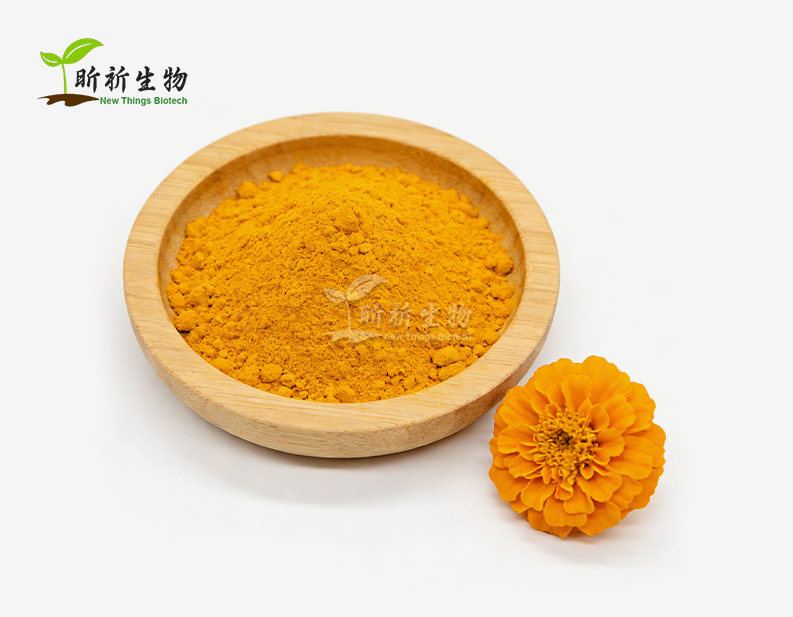
Marigold extract powder offers exceptional benefits in food coloring applications by delivering vibrant natural yellow to orange pigmentation while providing antioxidant properties that support clean-label formulations. Derived from Tagetes erecta flowers, this plant-based colorant addresses growing consumer demand for safe, sustainable alternatives to synthetic dyes. The extract's lutein and zeaxanthin content ensures stable color performance across diverse food matrices while contributing nutritional value that synthetic colorants cannot match. Procurement professionals increasingly prioritize this botanical ingredient for its regulatory compliance, health-supporting attributes, and alignment with market trends favoring transparency in ingredient sourcing.
Introduction
Manufacturers are responding to growing customer demand for clear and safe ingredient lists by completely changing the global food coloring market. Marigold extract powder is at the front of this change because it is a natural answer that has been proven to work by science and meets both government standards and consumer expectations. Instead of manufactured colorants, which are getting more attention because they might be bad for your health, this plant ingredient gives products bright colors and useful properties that make them better overall.
It is important for buying workers who have to deal with the complicated world of food ingredient sourcing to know about the technical details and uses of marigold extract powder. Because the extract can be used instead of fake colors without changing the way the product looks, it can help companies stand out in markets where competition is high. As rules around the world keep getting stricter on synthetic additives, forward-thinking makers are forming relationships with suppliers to make sure they always have access to high-quality natural colorants.
The effects on the economy go beyond just switching out ingredients. Companies that have successfully switched to natural colorants say that their brand image has improved, customer trust has increased, and they can reach higher-end customers who are willing to pay more for clean-label goods. Because of these changes in the market, technical sourcing experts need to carefully consider marigold extract powder as a key ingredient for reformulated products and new product development plans.
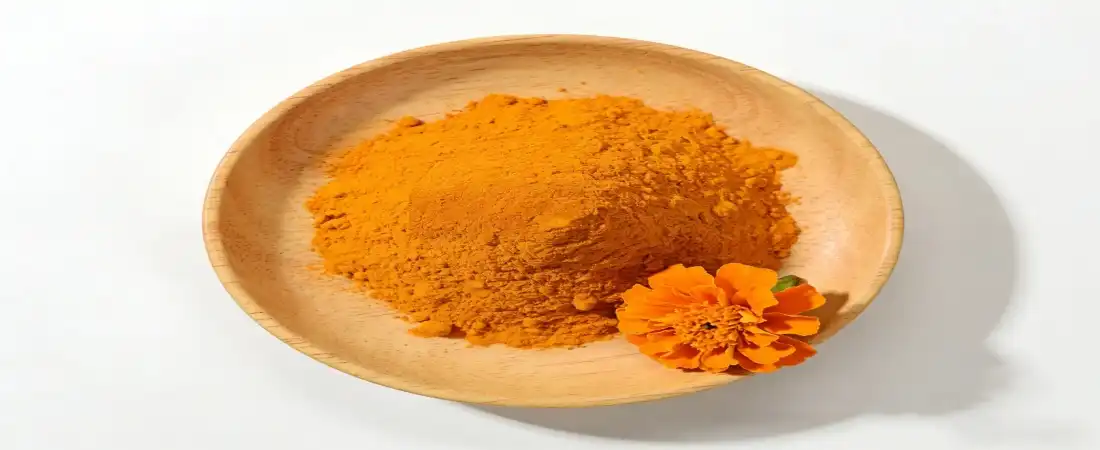
What is Marigold Extract Powder and Its Role in Food Coloring?
Botanical Origin and Extraction Process
The flower leaves of Tagetes erecta L., which is also called Aztec marigold or African marigold, are used to make marigold extract powder. Specialized extraction techniques separate carotene pigments by using solvents to remove them, cleaning them, and drying them in a way that keeps the bioactive compounds. The powder that is made stays stable under different working conditions and keeps its color, which is important for industrial tasks that need uniformity from batch to batch.
Chemical Profile and Active Components
The useful qualities of the extract come mostly from lutein, a xanthophyll carotenoid that gives the extract its characteristic yellow-orange color, and zeaxanthin, a structurally similar isomer that makes the color stronger and more stable. These naturally occurring carotenoids are more stable in light and heat than many manufactured substitutes. Technical standards usually cover lutein concentrations between 5% and 80%, which lets formulators choose types that meet the needs of different applications and stay within budget.
Functional Advantages in Food Manufacturing
In addition to being a colorant, marigold extract powder is an antioxidant that keeps food fresh longer and keeps nutrients safe while it is being processed and stored. Because it comes from nature, it can make clean-label claims that appeal to health-conscious customers, and it can work with organic certification programs, which opens up premium market outlets. The extract works effectively in both acidic and neutral pH settings, so it can be used in everything from drinks to baked goods.
Benefits of Using Marigold Extract Powder in Food Coloring Applications
Putting marigold extract powder into food recipes has many strategic benefits that go beyond just adding color. Procurement experts can make data-driven choices about where to buy things that meet both technical needs and business goals when they understand these many benefits.
Natural Pigmentation with Superior Stability
Many plant colorants break down quickly when they are processed, but marigold extract powder keeps its color even when it is heated, when the pH changes, and when it is stored for a long time. The structure of the carotenoids makes them naturally stable, which makes formulation easier and lowers the number of batches that are rejected. Manufacturers say that color values stay the same across production runs. This makes quality control easier and helps standardize product specs that meet customer needs.
Nutritional Enhancement Beyond Coloration
Marigold extract powder contains bioactive substances that are good for your health in many ways, including improving your eyesight by affecting the amount of macular pigment. Because they can do two things, product designers can market their mixtures as having health benefits in addition to their aesthetic value. Clinical study has found links between the amount of lutein you eat and a number of health outcomes. This backs up marketing claims that help goods stand out in crowded market segments.
Clean-Label Compliance and Consumer Preference
Market study shows over and over that people actively choose goods with familiar, plant-based chemicals over synthetic ones. These desires can be met by marigold extract powder, which also lets makers get rid of the words "artificial color" from ingredient lists. This change supports brand marketing strategies that stress openness, sustainability, and compatibility with natural living trends that influence the choices of key demographic groups when they buy.
Application Versatility Across Food Categories
Formulation freedom is a huge benefit for buying teams that are in charge of a wide range of products. When used in dairy products, baked items, sweets, drinks, and ready-to-eat foods, the extract works well. Because it works with many different processing methods and ingredient systems, you don't have to use as many different colorant solutions. This makes managing your supply chain and inventory easier while still meeting technical performance standards.

How to Use Marigold Extract Powder in Food Coloring: Best Practices for B2B Clients
Dosage Guidelines and Formulation Integration
Depending on the goal color intensity and the features of the food matrix, the best incorporation rates are usually between 0.5 and 3 percent by weight. Grades that dissolve in water make it easy to add them directly to liquid systems, while grades that dissolve in oil make it easy to use them in fat-based uses. Technical service teams should test stability in real-world working conditions to make sure it works and figure out the best levels of use that combine color delivery with cost-effectiveness.
Storage Requirements and Shelf Life Management
To keep the effectiveness of an extract, the surroundings must be kept under control. This means keeping it out of direct sunlight, keeping the temperature between 15 and 25 degrees Celsius, and keeping the humidity below 60% relative. Material that is kept properly will keep certain amounts of activity for twenty-four months after the date it was made. Putting things in sealed, opaque cases and filling them with inert gas keeps them stable and bioactive throughout the supply chain.
Quality Certification and Regulatory Compliance
For international trade to happen, proof that regional food safety standards are being met is needed. Suppliers you can trust will give you records of analysis that show the amount of lutein, heavy metals, microbes, and leftover solvents that were tested. ISO9001 certification makes sure that quality management systems are always the same, and Kosher and Halal licenses let you sell your products in places where religious food rules must be followed. These sets of paperwork help with regulatory applications and make it easier to clear customs at foreign borders.
Choosing the Right Marigold Extract Powder: Key Procurement Considerations
Evaluating Purity and Potency Specifications
The technical specs should make it clear what the lutein content is using an approved HPLC method, what the particle size should be, and what the standards for appearance are to make sure the right processing was done. Concentration levels between 5 and 80% make it possible to make changes that fit the needs of the program and the budget. Higher strength grades lower the amount that is used and have less of an effect on the texture of the product. Standardized mid-range doses, on the other hand, are cheaper for high-volume uses.
Certification Requirements and Quality Assurance
In addition to basic paperwork about food safety, more advanced procurement strategies encourage sellers to keep full portfolios of certifications. Organic approval lets you sell to high-end customers who are willing to pay more, and third-party testing verification gives you proof that the quality claims are true. Suppliers who show stability from batch to batch through statistical process control paperwork lower formulation risk and support lean production efforts by keeping ingredient variations to a minimum.
Comparative Analysis with Alternative Colorants
To put marigold extract powder in comparison to other natural colorants, you need to look at its reliability, color range, legal status, and total cost of ownership. Turmeric has a similar yellow color, but it doesn't hold up well to heat and has a different taste. Beta-carotene gives orange tones that are very stable, but it doesn't have the health benefits for your eyes that lutein does. A thorough technical comparison lets you choose the best colorant based on your product's needs and your market positioning strategies.
Pricing Models and Bulk Procurement Strategies
Understanding how prices change in the market helps buying teams get better deals while making sure there is a steady supply of goods. When buyers buy on the spot market, prices can change quickly. But when buyers make long-term supply deals with volume promises, they can often get better prices and a sure allocation during times when supplies are limited. Minimum order quantities usually start at 25 kilograms, but sellers who are flexible can handle sample requests and trial amounts that help with product development before committing to full-scale buying.
Trusted Suppliers and Brands: Where to Buy Bulk Marigold Extract Powder?
Supplier Evaluation Criteria
To find trustworthy production partners, you need to carefully look at their technical skills, quality control systems, and service infrastructure. Effective providers use vertical integration from getting the raw materials to delivering the finished goods. This makes sure that the products can be tracked and quality is checked at every stage of production. Analytical tools like in-house HPLC, UV spectroscopy, and microbial testing facilities show a dedication to quality assurance that goes above and beyond the bare minimum.
NT Biotech: Advanced Manufacturing Excellence
Traditional plant knowledge and current extraction technology are combined by Shaanxi New Things Biotech, which produces standardized marigold extract powder that meets strict international standards. Our special ways of processing allow us to get extremely high levels of purity—more than 98% for top grades—which supports better recipe performance and consistent batch quality. The company keeps a large stock of popular specifications, which lets them meet orders quickly. For stock items, shipping is guaranteed within two to four days of payment confirmation.
Our technical edge comes from the fact that every package comes with a lot of quality paperwork. This includes thorough certificates of analysis, HPLC chromatograms, and batch-specific testing data that help with regulatory compliance and internal quality verification processes. The building has ISO9001, Kosher, and Halal standards, which give it the paperwork it needs to sell its products on global markets. Different handling needs can be met by custom packing choices, which range from standard 25-kilogram drums to unique configurations made to fit the needs of the customer.
We know that relationships be successful in more ways than just delivering goods. Our expert support team helps with regulatory paperwork, formulation advice, and stability testing, which shortens the time it takes to make a new product. Being able to get free samples lets you do a full review before committing to large orders. This lowers the risk of procurement and makes sure that product specs and application needs are met. Flexible payment terms, such as choices to pay in the local currency, make international deals easier and lessen the stress of foreign exchange.
Partnership Strategies for Supply Chain Optimization
To build strong supply relationships, you need to stop negotiating based on price and start working together to reach your business goals. Modern providers offer private label choices, custom formulation services, and technical co-development programs that help new ideas while keeping supply safe. Regularly talking about inventory levels, work schedules, and market conditions helps both parties plan for problems and come up with answers before they happen.

Conclusion
Marigold extract powder is a smart ingredient choice for food companies that want to make the switch to natural, clean-label products. Its stable coloration, health benefits, and ability to follow regulations make it a better choice than manufactured colorants in a wide range of situations. Purchasing managers who carefully look at technical specs, source abilities, and overall value offers will be able to get premium natural colorants when they need them, giving their companies a competitive edge. As regulations change and customer tastes shift, botanical products become more popular. Companies that use marigold extract powder early on are ahead of the curve and set themselves up for long-term market success.
FAQ
1. What certifications should I verify before purchasing marigold extract powder?
Some of the most important certificates are ISO9001 for quality management systems, Kosher and Halal for religious dietary needs, and organic approval for getting into the best markets. You should ask for records of tests that prove the amount of lutein, heavy metals, microbes, and residual solvents. Third-party testing proof gives extra quality assurance over the supplier's own testing before I buy marigold extract powder.
2. How does marigold extract powder compare to synthetic food colorants?
Natural marigold extract powder has better clean-label positioning and extra health benefits that manmade options can't offer. Synthetic colorants may give a slightly stronger color at lower usage rates, but consumers are becoming more and more interested in plant ingredients, even though they cost a little more. Around the world, regulations are continuing to make it harder to approve synthetic colorants. This means that natural options are better for long-term product lines.
3. What storage conditions preserve extract potency during warehousing?
Keep the storage temperatures between 15 and 25 degrees Celsius in places with low humidity, less than 60% relative humidity. Use opaque containers to keep things from getting direct light, and make sure they don't get too much air contact by closing them properly. If you store marigold extract powder the right way, it will keep its activity levels for twenty-four months after the date it was made.
Partner with NT Biotech for Premium Marigold Extract Powder Supply
Shaanxi New Things Biotech provides high-quality marigold extract powder that is made using advanced, secret techniques that guarantee its purity and uniform performance across all of your product formulas. Our expert team is here to help you with everything from the first samples to integrating them into full-scale production. They respond quickly and offer a range of delivery choices to meet your needs. As a reliable marigold extract powder provider, we keep a large stock that lets us ship within two to four business days. We can also make custom formulations for specific uses that need specific details. We know that selection choices for purchases involve more than just price. They also have to do with dependability, professional support, and how well the partnership fits with the company's long-term goals. Email our team at info@newthingsbiotech.com to get free samples, talk about technical details, or look into unique solutions that are made to fit your particular needs. Our dedication to clear, quality paperwork, low prices for large orders, and quick service guarantees that your supply chain runs smoothly and delivers goods that meet the highest standards in the industry.
References
1. Rodriguez-Amaya, D.B. (2019). "Natural Food Pigments and Colorants." Current Opinion in Food Science, examining carotenoid stability in food applications.
2. Khoo, H.E., Prasad, K.N., Kong, K.W., Jiang, Y., Ismail, A. (2011). "Carotenoids and Their Isomers: Color Pigments in Fruits and Vegetables." Molecules, comprehensive review of carotenoid chemistry.
3. Agócs, A., Deli, J. (2019). "Bioactive Carotenoids from Marigold: Chemistry and Applications." Foods, technical analysis of lutein extraction and applications.
4. Piccaglia, R., Marotti, M., Grandi, S. (1998). "Lutein and Zeaxanthin Content in Different Types of Tagetes Patula and T. erecta." Industrial Crops and Products, botanical source characterization.
5. European Food Safety Authority (EFSA). (2010). "Scientific Opinion on the Re-evaluation of Lutein as a Food Additive." EFSA Journal, regulatory evaluation and safety assessment.
6. Breithaupt, D.E. (2007). "Modern Application of Xanthophylls in Animal Feeding and Human Nutrition." Trends in Food Science & Technology, applications across food sectors.