- English
- French
- German
- Portuguese
- Spanish
- Russian
- Japanese
- Korean
- Arabic
- Greek
- German
- Turkish
- Italian
- Danish
- Romanian
- Indonesian
- Czech
- Afrikaans
- Swedish
- Polish
- Basque
- Catalan
- Esperanto
- Hindi
- Lao
- Albanian
- Amharic
- Armenian
- Azerbaijani
- Belarusian
- Bengali
- Bosnian
- Bulgarian
- Cebuano
- Chichewa
- Corsican
- Croatian
- Dutch
- Estonian
- Filipino
- Finnish
- Frisian
- Galician
- Georgian
- Gujarati
- Haitian
- Hausa
- Hawaiian
- Hebrew
- Hmong
- Hungarian
- Icelandic
- Igbo
- Javanese
- Kannada
- Kazakh
- Khmer
- Kurdish
- Kyrgyz
- Latin
- Latvian
- Lithuanian
- Luxembou..
- Macedonian
- Malagasy
- Malay
- Malayalam
- Maltese
- Maori
- Marathi
- Mongolian
- Burmese
- Nepali
- Norwegian
- Pashto
- Persian
- Punjabi
- Serbian
- Sesotho
- Sinhala
- Slovak
- Slovenian
- Somali
- Samoan
- Scots Gaelic
- Shona
- Sindhi
- Sundanese
- Swahili
- Tajik
- Tamil
- Telugu
- Thai
- Ukrainian
- Urdu
- Uzbek
- Vietnamese
- Welsh
- Xhosa
- Yiddish
- Yoruba
- Zulu
Natural ube powder has become a game-changing ingredient for companies that make food and drinks and want to use plant-based ingredients that are safe for the environment. This bright purple powder comes from purple yam (Dioscorea alata L.) and has great colour, a mild sweetness, and healthy nutrition without any added chemicals. It can be used to make healthy drinks, baked goods, dairy alternatives, and meal replacement recipes, which is why R&D teams that are working on new products can't do without it. As people want more sincerity and openness in their products, natural ube powder gives companies a competitive edge thanks to its anthocyanin content, gluten-free profile, and supply lines that can be tracked and meet regulations in all global markets.
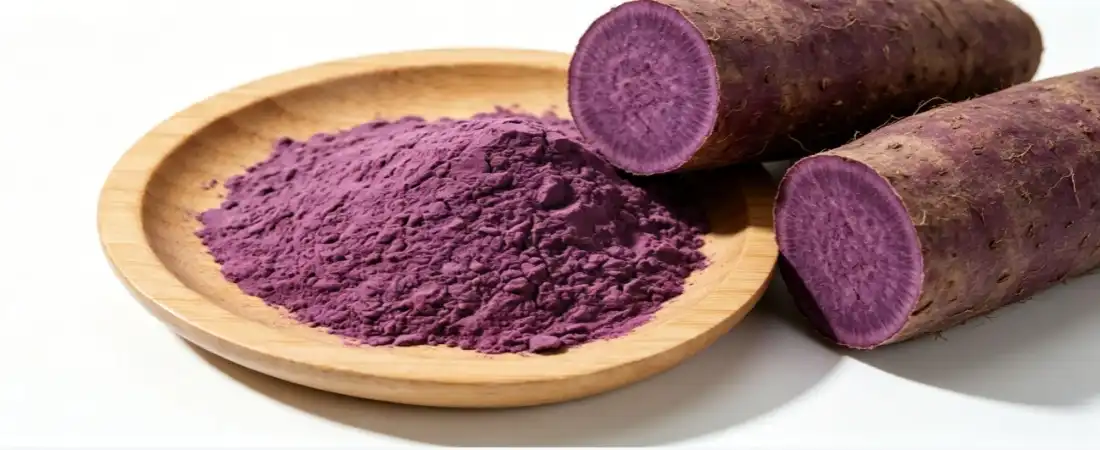
Understanding Natural Ube Powder and Its Benefits
What Defines Authentic Purple Yam Powder
Several regulated manufacturing procedures create purple yam powder, a complex plant ingredient. The procedure begins with hand-picked purple yams. These yams are called "Purple Ginseng" in Southeast Asia for their health benefits. Manufacturers clean raw potatoes multiple times, dry them at regulated temperatures, then grind them at low temperatures until the particles are 80 mesh or smaller to preserve their bioactive compounds.
This method preserves the flower's lilac color and delicate sweetness while concentrating nutrients for long-term storage. Fresh roots are short-lived and require cold storage. However, the powdered form has stable quality year-round, thus supply issues don't complicate production planning. Formulators use pure material because the substance is 100% pure, which ensures consistent outcomes in large-scale manufacture.
Nutritional Profile That Matters to Product Developers
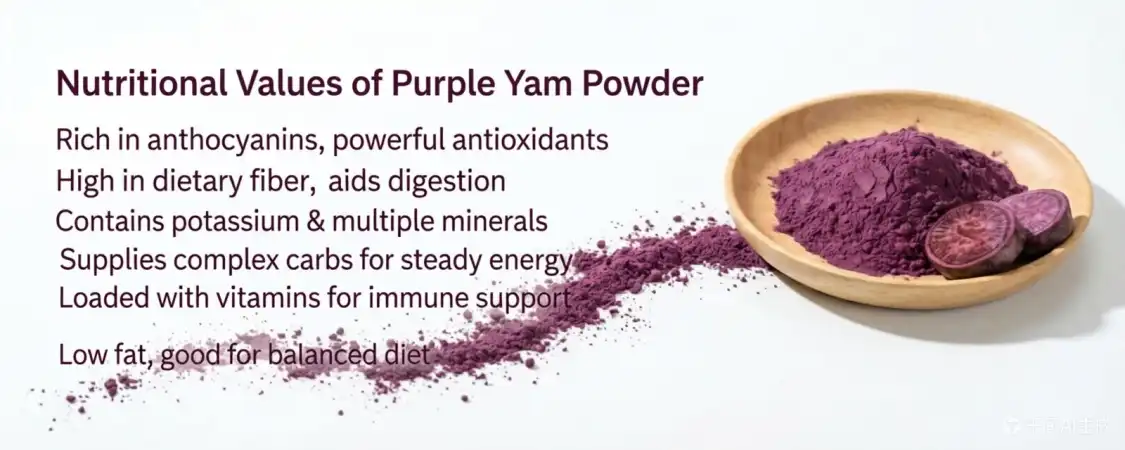
Purple yams' nutritional value goes beyond appearance. ORAC tests show that anthocyanins, the polyphenolic compounds that create deep purple color, are antioxidants. Though somewhat heated, these compounds remain stable. They may be used in 180°C baked items.
Its resistant starch distinguishes it from other carbohydrates. This fraction of the carbohydrate breaks down slowly without higher digestive enzymes. This may improve metabolic health by reducing glucose response. Increased dietary fibre makes meals more "functional food" that health-conscious consumers demand.
A full diet includes polysaccharide fractions, vitamin C, magnesium, and potassium. Researchers are interested in diosgenin-related substances detected in modest concentrations. Business uses the ingredient's known nutritious components, not its experimental bioactives.
Quality Assurance Through Certification
When buying, workers should choose vendors with well-known certificates. Quality is planned throughout the manufacturing process, from raw material inspection to packaging, with ISO 9001 certification. Kosher and Halal licenses expand the market, which is crucial for religiously dietary products and inclusive formulation brands.
Each production batch should come with a Certificate of Analysis that lists the moisture content, bacteria counts, heavy metal screening, and pesticide residue tests. When suppliers give makers consistent COA data that can be traced back to specific harvest batches, it's easier for them to keep the detailed quality records that regulators and retail customers who do supplier checks need. Natural ube powder allows manufacturers to maintain high standards of transparency.
Applications of Natural Ube Powder in the Food and Beverage Industry
Transforming Functional Beverage Formulations
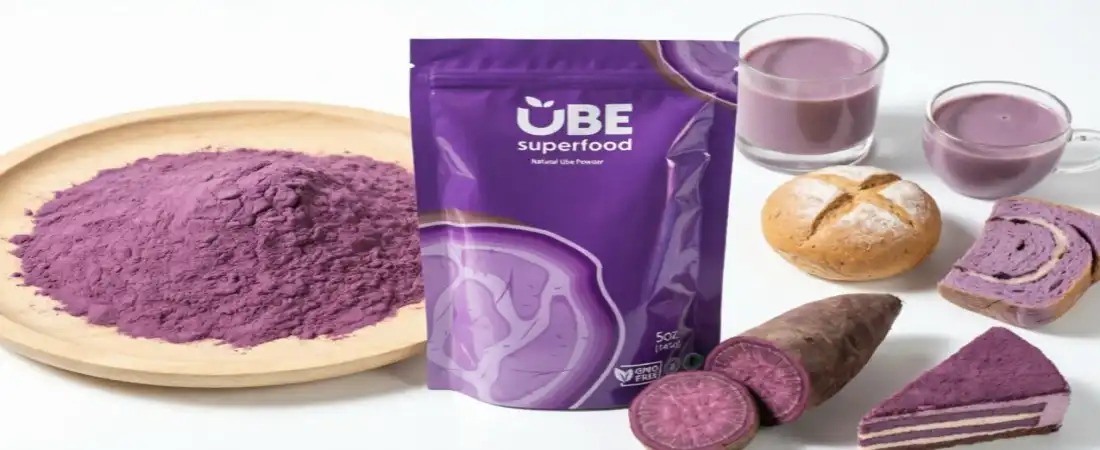
Food and beverages may use natural ube powder. Purple yam powder helps beverage producers with production issues. The powder colors protein shakes and other healthy drinks and adds nutritional value. The mild flavor profile supports complex flavour systems and doesn't dominate taste qualities, letting formulators be creative.
Diversity in milk systems appeals to plant-based drinkers. When blended properly, oat, almond, coconut, and pea protein powder mix well with water. The powder's fine grain size allows instantized health drink mixtures to mix quickly without settling.
Luxury smoothie mix makers use purple yam powder to distinguish out in shops. The purple color draws social media testers, and the healthy substance makes it seem to work, driving repeat purchases. Formulators may generate brilliant colors at 2–5% inclusion rates with intensity and appropriate materials.
Elevating Bakery and Confectionery Products
Baking shows the ingredient's heat stability and flexibility. When added to cake mixes, the powder evenly spreads throughout the crumb structure, generating lovely cross-sections and adding value. Normal baking preserves anthocyanins, however pH must be controlled. Neutral pH formulations remain purple, whereas acidic ones become red.
The powder's mild sweetness reduces sugar in biscuits and pastries without affecting taste. The chemical binds moisture, improving food shelf life when properly packaged. Purple yam-flavored products with clear labeling and Southeast Asian culinary history are popular, say artisan bakers and industrial producers.
Ice cream and frozen desserts use the powder's freeze-stability. Unlike other natural colorants, properly made purple yam powder preserves its color throughout storage and distribution. The substance's nutritional profile enables firms to write relevant benefits on the container, making poor treats acceptable for health-conscious customers.
Innovating Meal Replacement and Nutrition Products
More sports nutrition firms are introducing purple yam powder to recovery beverages and meal replacements. Resistant starch provides long-lasting energy without rising blood sugar like simple carbs. This follows sports nutrition guidelines. The powder produces physiologically balanced formulae with protein isolates that fulfill macronutrient targets and have excellent micronutrient density.
The ingredient's natural nature and convenient packaging improve breakfast replacement solutions. Purple yam powder is ideal for easy, nutritious morning goodies. Because it explains food origins and traditional diets. This ingredient's accuracy helps meal replacement firms pitch their goods as "real food in powder form" rather than phony nutrients.
Advancing Dairy and Plant-Based Food Categories
Yogurt companies are considering purple yam powder for limited-edition and regular line expansions. The powder combines well into cheese structures after culture, without delaying fermentation. The ingredient is also used in coconut, cashew, and soy-based yogurt alternatives, making them distinctive and expensive.
Puddings and dairy desserts thicken naturally due to the powder's starch. Although it's not the principal stiffening agent, this item may reduce the need for modified starches or gums, making ingredient lists more accurate. Traditional and plant-based product manufacturers favor versatile ingredients.
Comparing Natural Ube Powder to Alternatives: Procurement Considerations
Distinguishing Between Similar Ingredients
Procurement professionals must explain various linguistic usages. Various compounds like "natural ube powder," "purple yam powder," and "ube extract" have various qualities. This powder is created from dried, crushed whole tubers with all their nutrients. Anthocyanins are concentrated for colourant application without affecting their nutritional or functional properties.
Sellers offer "ube flavour powder" made from purple yam, maltodextrin, and natural flavoring. While not 100% purple yam powder, these mixtures may be employed for intense flavor at modest inclusion rates. To check suppliers, procurement teams should review specifications, ingredient declarations, and COA data.
These variants cost extra due to handling and material concentration issues. While pure powder is cheaper per kilogram than concentrated extracts, it needs higher inclusion rates to get the same color strength. Formulators must assess cost-in-use, which incorporates inputs beyond colouration, instead of merely comparing raw material prices.
Evaluating Organic Versus Conventional Options
Organic clearance complicates and costs the supply chain but opens high-end markets. Certified organic purple yam powder costs 30–50% more than conventional powder due to less agricultural inputs, alternate processing streams, and higher control and certification expenses. Companies that sell to natural food stores or stress sustainability need organic certification.
Traditional purple yam powder is cheap for growers owing to integrated pest management techniques that meet pesticide residue restrictions. Marketing claims are distinct from modern farming's high-purity, organic-looking ingredients. When evaluating organic premiums, procurement should consider target market and marketing channel needs.
Traceability is essential regardless of food purity. Suppliers who document farm-level purchases, processing facility inspections, and batch-level quality testing avoid brand harm. Quality checks and regulatory inquiries require tracing final product ingredients to harvest sites.
How to Source and Purchase Natural Ube Powder for Your Business
Identifying Reliable Supply Partners
Expert botanical ingredient providers provide more than supplies. Formulation support services help customers find the best inclusion rates and processing variables, lowering reformulation development time and cost. NT Biotech has extracted plants for over a decade and sells natural ube powder internationally with great service.
Consider production, inventory, and supply chain resilience when selecting a supplier. Inventory-holding organizations may ship urgent requests and typical goods in one to three business days. Custom orders are efficient and enable quality inspections in 3–10 days.
Certified sellers are knowledgeable and may enter new sectors. ISO 9001, Kosher, and Halal certifications show the company's quality management and cultural understanding for varied customers. These identities prove product application and label claim, making compliance easier for customers.
Optimizing Procurement Terms and Logistics
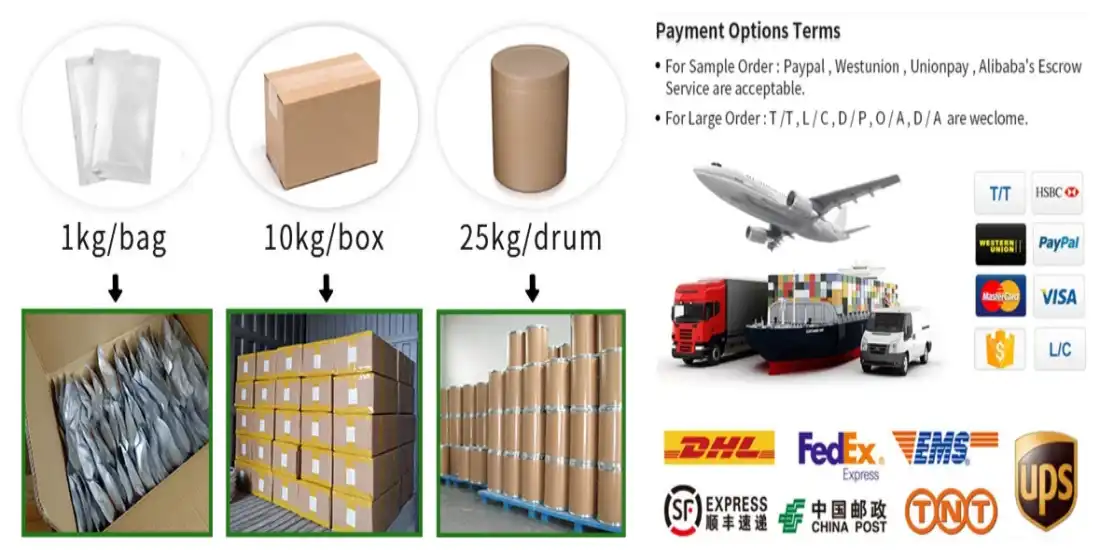
Minimum order amounts vary per source. The minimum order for first samples and smaller manufacturers is 10 kg. Negotiating container-load quantities gives bulk purchasers better prices and packaging options. Businesses may meet their needs with 1-kg paper bags for R&D samples or 10-kg boxes for mass production.
Samples boost product development but lower sales. Suppliers provide free samples to test the product's taste, mixability, and small-batch tests before mass production. This shows the seller trusts the information and helps buyers study.
Supply consistency and landing costs depend on shipping logistics. Suppliers with FedEx and UPS deliver reliably and trackably. International trade relies on bulk shipment via reliable goods forwarders to balance cost and safety. Delivery alternatives that meet client speed, volume, and cost needs show knowledge and concern.
Strategic Considerations for Long-Term Partnerships
Negotiating payment terms necessitates balancing cash flow and supplier relationships. When buyers use their own currencies, foreign currency risk is decreased and monitoring is easier. This shows the supplier values international customers' convenience and long-term partnerships.
Technical support companies excel in competitive markets. Using R&D teams for formulation, processing parameter optimization, and debugging accelerates product development and minimizes reformulation costs. Suppliers want long-term expert partners over transactional customers that merely buy supplies.
Scalability issues develop when a product is sold and gains market share. Supplying constant quality from research samples to multi-ton production orders eliminates the dangerous qualification processes needed when switching suppliers throughout expansion.
Ensuring Quality and Shelf Life in Natural Ube Powder Usage
Storage Best Practices for Ingredient Integrity
To keep its quality over time, natural ube powder needs to be stored in a controlled setting. Controlling the temperature is very important. The best temperature for storing foods to keep their flavour and nutrients is between 15°C and 25°C. Too much heat speeds up the breakdown of anthocyanins and can cause Maillard reactions between reducing sugars and amino acids, which can give foods off-tastes and change their colour to brown.
Water absorption by bacteria and caking is prevented via humidity control. Layered lamination bags of polyethylene and aluminum foil prevent dampness from entering the surroundings. To keep air and dampness out, containers should be reassembled immediately and utilized within a reasonable period.
Light-induced photooxidation degrades anthocyanin. Dark or opaque packaging preserves colors. Manufacturing operations need storage spaces free of direct sunshine and harsh artificial lights. Using ingredients in clear or transparent containers makes this particularly true.
Confirming Allergen Status and Safety Documentation
Purple yam powder is gluten-free, so persons with stringent diets or who like clean labeling may use it. Manufacturers must ensure suppliers handle materials in gluten-free facilities or utilize authorized food control methods to avoid contamination. Gluten-free products need this documentation to fulfill regulations and consumer expectations.
In addition to the eight primary allergens, allergy declarations should contain safety information. Despite purple yam's low allergen level, processing facilities that handle several plants must be cleaned between manufacturing cycles. Building allergen matrix and allergy statement letter suppliers assist clients with risk evaluations and labeling.
Implementing Quality Verification Protocols
Inspection protocols should include smell, sight, and scientific checks for incoming products. Up close, the desired purple color is seen without staining, foreign materials, or moisture caking. The aroma should be subtle, earthy, and somewhat sweet, with no foul aromas that indicate germs or oxidation.
Analytical testing procedures balance thoroughness and cost. Suppliers supply COA documentation, but clever manufacturers utilize independent laboratories for proof testing. Testing priorities include heavy metals for safety, moisture content for shelf life and germ growth, and microbial counts to assess cleaning effectiveness.
Purple yam powder is unlikely to be adulterated, but be cautious. Adulteration may include adding cheaper starches or artificial colors to water for economic reasons. HPLC examination of anthocyanin profiles or microscopic tissue structural features may reveal product tampering. Long-term supplier relationships and transparent supply lines are the greatest ways to prevent adulteration.
Conclusion
Natural ube powder is the best value for food and drink companies that want to come up with new, clean-label products because it looks good, is good for you, and can be used in a lot of different ways. This ingredient is important for brands that want to stand out in competitive markets because it has been shown to work well in beverage, bakery, nutrition, and dairy categories. It is also backed by strong supply chains and a full quality guarantee. Choosing experienced suppliers who offer expert partnership, clear quality documents, and scalable supply capabilities is key to successful procurement. For companies that care about accuracy, following the rules, and making great products, purple yam powder is a must-have for creating new formulas.
FAQ
1. How Does Purple Yam Powder Compare to Synthetic Purple Colourants in Stability?
Naturally occurring anthocyanins from purple yam change colour depending on the pH level. They look bright purple at normal pH levels but more red at acidic pH levels. Synthetic colourants may be more stable at a wider range of pH levels, but natural choices are more in line with clean label policies and regulatory trends that support botanical sources. When you optimize the formulation properly, taking into account pH, temperature, and light exposure, you can get great stability that is comparable to manufactured options in most situations.
2. Can Natural Ube Powder Replace Other Functional Ingredients in Formulations?
Natural ube powder has many useful qualities, such as adding natural colour, adding nutrients, making food mildly sweet, and keeping wetness in. Even though it can't totally replace thickeners, intense sweeteners, or protein sources, the fact that it can do more than one thing often means that other ingredients aren't needed, which makes recipes easier and helps make labels cleaner. Formulators should look at each recipe on its own to get the most out of how the ingredients work together and how much they cost.
3. What Shelf Life Should Manufacturers Expect Under Proper Storage?
When properly packed in materials that keep moisture out and kept in controlled conditions, high-quality purple yam powder usually stays at its best for 18 to 24 months after it was made. Colour strength may gradually fade after this time, but the material is still safe and useful. Manufacturers should use first-in, first-out inventory turnover and check sensory features on a regular basis to make sure that the quality of the end product stays the same throughout the ingredient's shelf life.
Partner with NT Biotech as Your Trusted Natural Ube Powder Supplier
NT Biotech is in a unique position to meet the manufacturing needs of procurement professionals looking for a dependable natural ube powder maker with a track record of technical success. Our purple yam powder (Dioscorea alata L. root, 80 mesh, 100% pure) is certified as ISO 9001, Kosher, and Halal, which means it meets the strictest quality and safety standards needed for both U.S. and foreign markets. We have been working with plant ingredients for more than 10 years and offer full R&D support, unique packaging solutions, and quick response times—we respond within two hours and ship stocked things within two to four days.
Our expert team helps you speed up the time it takes to develop your products by providing formulation optimization, application advice, and regulatory paperwork. Barriers to buying are removed by offering flexible payment terms in local currencies, an easy-to-reach MOQ of 10 kg, and free trials. Our natural ube powder gives your business the true colour, nutritional density, and constant quality it needs, whether it's for functional drinks, new bakery goods, or nutrition formulas. Email our foreign sales team at info@newthingsbiotech.com right now to talk about your unique needs and get full technical specs for your next clean-label product.
References
1. Champagne, E. T., & Thompson, J. (2019). Purple Yam Bioactive Compounds and Their Role in Functional Food Development. Journal of Food Science and Technology, 56(4), 1823-1835.
2. Rodríguez-García, M., & Silva-Espinoza, B. A. (2021). Anthocyanin Stability in Processed Purple Yam Products: Effect of pH, Temperature, and Storage Conditions. Food Chemistry, 338, 128067.
3. Patel, S. (2020). Purple Yam (Dioscorea alata): A Review of Its Phytochemistry, Pharmacology, and Industrial Applications. Journal of Food Biochemistry, 44(2), e13094.
4. Lee, J. H., & Kim, S. Y. (2018). Resistant Starch Content and Glycemic Response of Purple Yam-Based Food Products. International Journal of Food Sciences and Nutrition, 69(5), 591-602.
5. Morrison, T. A., & Chen, H. (2022). Natural Colorants from Root Vegetables: Extraction, Stability, and Application in the Food Industry. Critical Reviews in Food Science and Nutrition, 62(8), 2145-2164.
6. Williams, D. R., & Anderson, K. M. (2021). Clean Label Trends and Consumer Preferences for Plant-Based Ingredients in North American Food Markets. Food Technology and Innovation Review, 15(3), 412-429.