- English
- French
- German
- Portuguese
- Spanish
- Russian
- Japanese
- Korean
- Arabic
- Greek
- German
- Turkish
- Italian
- Danish
- Romanian
- Indonesian
- Czech
- Afrikaans
- Swedish
- Polish
- Basque
- Catalan
- Esperanto
- Hindi
- Lao
- Albanian
- Amharic
- Armenian
- Azerbaijani
- Belarusian
- Bengali
- Bosnian
- Bulgarian
- Cebuano
- Chichewa
- Corsican
- Croatian
- Dutch
- Estonian
- Filipino
- Finnish
- Frisian
- Galician
- Georgian
- Gujarati
- Haitian
- Hausa
- Hawaiian
- Hebrew
- Hmong
- Hungarian
- Icelandic
- Igbo
- Javanese
- Kannada
- Kazakh
- Khmer
- Kurdish
- Kyrgyz
- Latin
- Latvian
- Lithuanian
- Luxembou..
- Macedonian
- Malagasy
- Malay
- Malayalam
- Maltese
- Maori
- Marathi
- Mongolian
- Burmese
- Nepali
- Norwegian
- Pashto
- Persian
- Punjabi
- Serbian
- Sesotho
- Sinhala
- Slovak
- Slovenian
- Somali
- Samoan
- Scots Gaelic
- Shona
- Sindhi
- Sundanese
- Swahili
- Tajik
- Tamil
- Telugu
- Thai
- Ukrainian
- Urdu
- Uzbek
- Vietnamese
- Welsh
- Xhosa
- Yiddish
- Yoruba
- Zulu
Finding a natural blue colourant seems like it would be easy — until you get three bids for "spirulina blue" at drastically varying prices and realise you have no idea what makes a premium pigment different from a bad one. This guide was written to address that. We’ll walk you through what phycocyanin bulk really is, what specs to look at, how to determine true cost-in-use and how to vet a source before wiring a single dollar. Throughout, we will refer to the standards of NT Biotech (Shaanxi New Things Biotech), a certified phycocyanin bulk supplier whose proprietary water extraction process, >98% purity benchmarks for key products, and batch-level HPLC/UV documentation have made its phycocyanin pigment raw material a benchmark for serious buyers. Have questions as you go? You can contact their technical team at info@newthingsbiotech.com and they reply to queries in two hours.
Step One: Know What You're Actually Buying
You can’t compare quotes unless you understand the product itself — because “blue spirulina powder” on an invoice can mean five completely different things, and that gap determines whether your beverage shines sky-blue or turns a muddy grey-green on the shelf.
Phycocyanin, Defined for Buyers
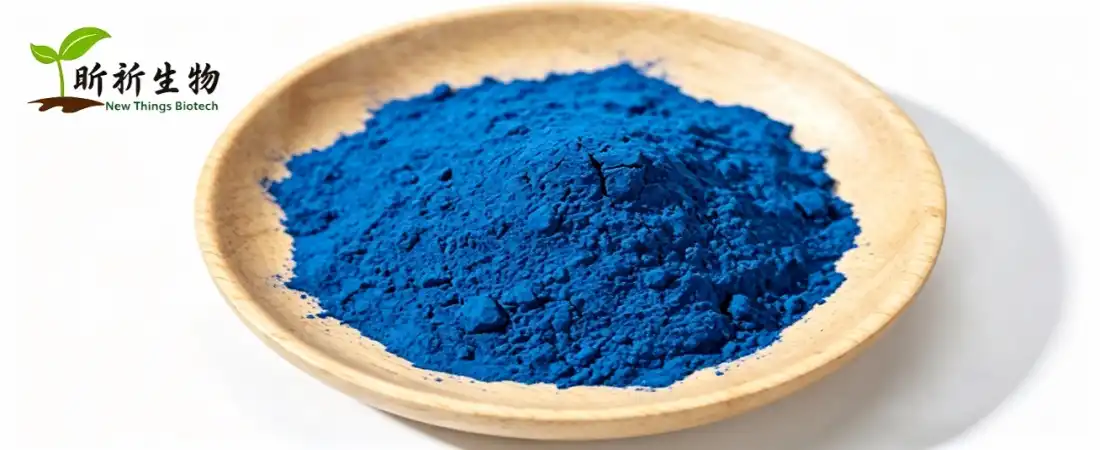
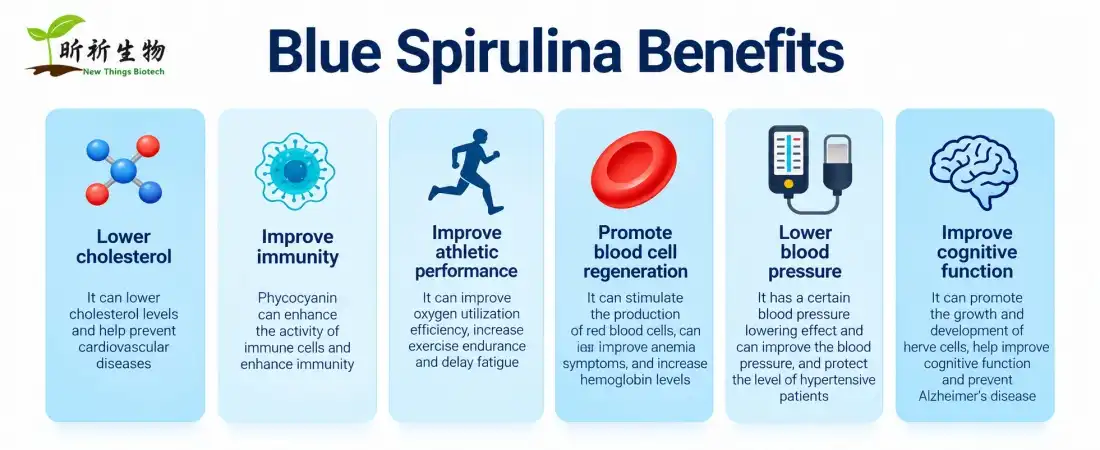
Phycocyanin is a water-soluble protein-pigment complex isolated from the microalga Arthrospira platensis (spirulina). It's a real food-derived substance, not synthetic Blue #1, where the chromophore phycocyanobilin combines with protein subunits, resulting in a strong cyan colour and a known antioxidant effect. This is big news for labelling purposes – in most places, natural blue food colouring phycocyanin can be listed simply as “spirulina extract,” which is just the sort of recognisable, pantry-style terminology that clean-label shoppers reward with their purchases.
Raw Material vs. Finished Colorant
This is a distinction that many first-time purchasers overlook: phycocyanin is sold as a raw material, phycocyanin pigment. Your team (or your co-packer) still has control over the dosage, blending and application. The pigment is extracted by reputable providers such as NT Biotech using a mild, water-based method without organic solvents and then spray-dried into a fine, instantaneously dispersible powder. This purity of procedure makes the raw material compatible with vegan, kosher, halal and clean label positioning across food, beverage, supplement and cosmetic markets.
Why Regulatory Status Is Your Starting Point
The first natural blue permitted by the U.S. FDA for food colouring usage, spirulina extract has been approved since 2013 and has since expanded to a wide range of categories. Natural blue food coloring phycocyanin is also allowed in EU, Japan and most major markets. Always check that your supplier’s product is made to food-grade standards, with microcystin, heavy-metal and microbiological testing done on each and every lot. NT Biotech provides those results in the Certificate of Analysis that comes with every batch.
Step Two: Read the Spec Sheet Like a Professional
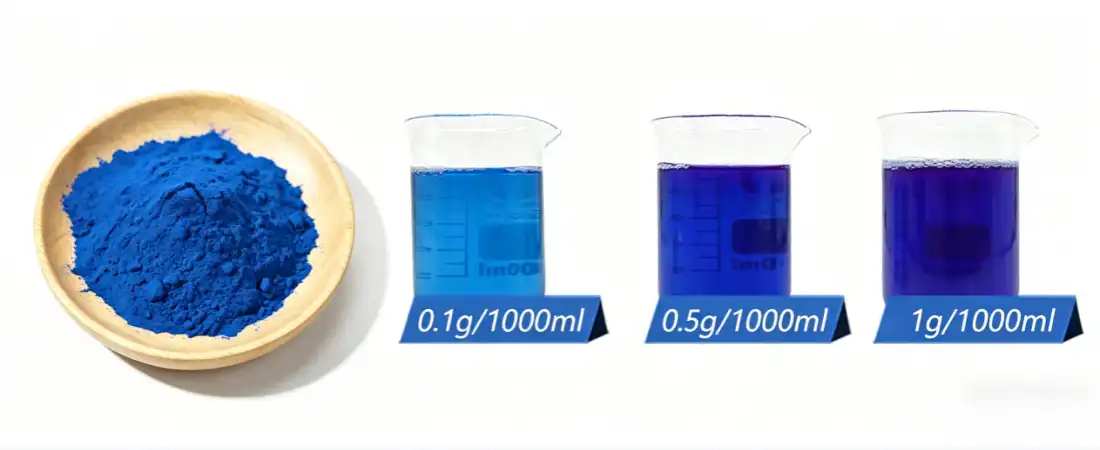
Good buying decisions are made (or lost) on a spec sheet. When buying phycocyanin in bulk there are four factors more important than all others combined. They are: colour value, solubility, purity documentation and stability data. Suppliers who are clear about all four are usually suppliers you can trust. Those who merely advertize pricing warrant a closer check. Each figure is confirmed by HPLC/UV analysis before to release. Specification sheets from NT Biotech define the E value at 620nm, solubility behaviour, loss on drying, ash content and comprehensive safety panels. That level of information is not bureaucratic decoration – it’s what lets your production team hit the same shade of blue in January that they hit in June, across different batches and different facilities.
Color Value (E-Value): The Number That Drives Everything
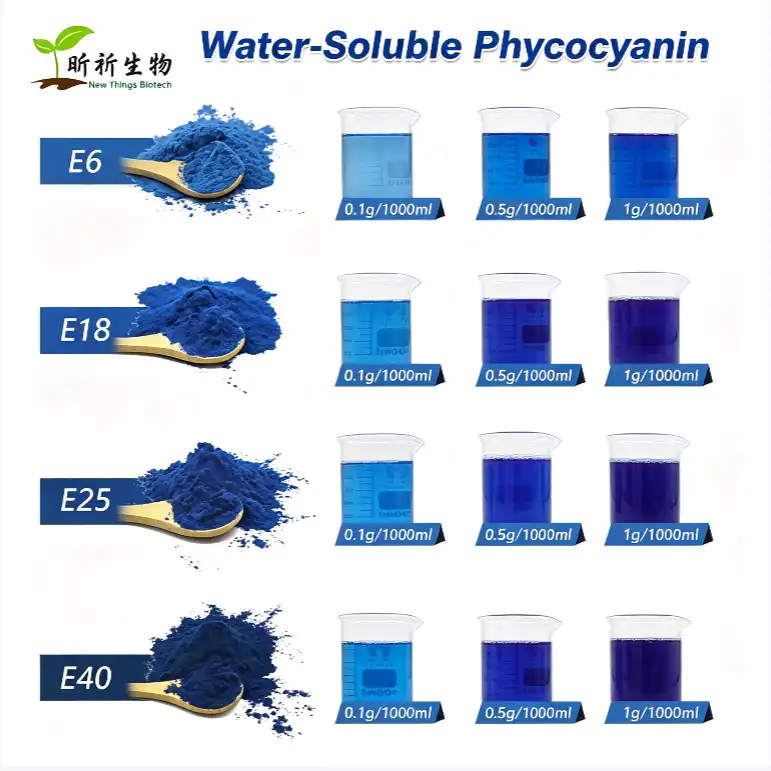
The E-value is a measure of the colour intensity, or how much blue each gram contributes. The most regularly used grades for food and beverage applications are E6, E10, E18 and E25. E18 is usually considered to be the sweet spot for solubility and cost-efficiency in drinks and frozen desserts.
| Specification | E-Value (620nm) | Best-Fit Applications | Typical Dosage |
|---|---|---|---|
| E6 | ≥60 | Superfood powders, smoothie mixes | 0.1–0.3% |
| E10 | ≥100 | Bakery, icings, snack coatings | 0.05–0.2% |
| E18 | ≥180 | Beverages, ice cream, gummies | 0.02–0.1% |
| E25 | ≥250 | Premium confectionery, cosmetics | 0.01–0.08% |
| E30+ | ≥300 | High-intensity color, nutraceuticals | 0.01–0.05% |
Purity and Testing Documentation
Before you buy, make sure you get three documents: a Certificate of Analysis for the precise lot you will receive, HPLC/UV chromatograms that prove phycocyanin content, and safety panels for lead, arsenic, mercury, microcystins, and microbiological counts. NT Biotech provides all three as normal practice and as a direct reflection of the company’s philosophy of proprietary extraction technology, with full quality transparency.
Stability Parameters to Verify
Phycocyanin is happy in its comfort zone: aqueous solutions have a steady, bright sky-blue between about pH 4.5 and 8.0, and the powder stores well for up to 24 months sealed and away from light and heat. If you have high acid or hot-fill applications, consult your supplier for application advise – a good partner will have formulation techniques under their sleeve, not a shrug.
Step Three: Calculate True Cost, Not Sticker Price
This is where the experienced purchasers separate themselves from the newbies. You have to dose the lower grade material so much higher that the cheapest price per kilogram is almost never the cheapest colourant in your finished product. A premium E25 powder, costing 40% more than an E10, can nonetheless decrease your cost-in-use by nearly half. Reducing the powder load in your recipe is critical for texture, clarity and labelling. When you are asking for an estimate for phycocyanin bulk, always ask the provider to model the cost per finished item at your chosen shade, not just cost per kilo. NT Biotech’s technical team routinely makes this calculation for customers, and pairs it with complimentary shade-matching advice so you know the true economics before you commit to a purchase order.
The Cost-in-Use Formula
The maths is simple: divide the price per kg by the E-value to get a rough 'cost per unit of colour'. Run this across every quote you get and the ranks often turn upside down. Higher E-value grades yield more blue per gram, which means less inventory, less storage space, less freight cost per unit of colour, and cleaner finished compositions.
Hidden Costs That Erode Savings
Add to that the costs that don’t show up on a quote: production delays due to irregular batches, rejected lots that don’t come with the required CoAs, reformulation work that needs to be done when colour shifts between shipments, and customs holdups with inadequate documentation. A disciplined phycocyanin bulk provider silently wipes these out. These invisible expenses are the very reasons for NT Biotech’s standardised production and batch-to-batch verification.
Ready to see the numbers for your own product? Share your application, target shade, and estimated volume with NT Biotech at info@newthingsbiotech.com, and you'll receive a tailored grade recommendation, cost-in-use comparison, and sample arrangement — typically within two hours of your message.
Step Four: Vet Your Supplier Before You Commit
The last stage in any sourcing selection is the one that safeguards all the others: picking a partner that will be reliable for your fiftieth order as well as your first. The growing global appeal of natural blue food colouring phycocyanin has brought in traders and resellers without a laboratory, factory or accountability. A quick vetting checklist shows us why phycocyanin pigment raw material matters – and also why technology manufacturers like Shaanxi New Things Biotech – which integrates autonomous planting, in-house R&D, intelligent production and adaptive supply chains into one value-chain system, from the plant source to the final application – always beat middlemen both in quality and total cost.
Certifications and Compliance Checklist
Make sure your supplier has the right certifications and can show proof of compliance for your market. NT Biotech is certified for ISO9001 quality management, KOSHER and HALAL certificates, which help to enter into the markets of North America, Europe, Middle East, and Southeast Asia.
| Vetting Criterion | What to Require | NT Biotech Standard |
|---|---|---|
| Quality system | ISO9001 or equivalent | ISO9001 certified |
| Religious compliance | Kosher / Halal certificates | Both certified |
| Batch documentation | CoA + HPLC/UV per lot | Included with every shipment |
| Inquiry response | Within 24 hours | Guaranteed within 2 hours |
| Stock lead time | Under 1 week | 1–3 working days |
| Production lead time | Under 3 weeks | 3–10 working days |
| Customization | OEM/ODM capability | Full OEM/ODM by market |
Logistics and Delivery Reliability
Ask how the product actually reaches you. NT Biotech ships smaller and urgent orders directly from its factory using its own FedEx/UPS accounts, while trusted freight forwarders manage large air and sea consignments securely and on schedule. Shipping method — express, air, or sea — is matched to your priorities of speed, volume, and cost rather than forced into a one-size-fits-all channel.
Partnership Beyond the Purchase Order
Good suppliers are an extension of your R&D team. NT Biotech also provides formulation support, application troubleshooting, customised OEM solutions to diverse nations and customer requirements, and buyer-friendly payment arrangements – including payment in your local currency. It’s the subtleties that turn a one-time purchase into a supply relationship you can develop a product line on.
Conclusion
Buying phycocyanin in bulk is a four-discipline process: understand the ingredient and its regulatory footing, read spec sheets with a focus on E-value and documentation, calculate cost-in-use rather than sticker price, and vet suppliers on certifications, speed, and technical partnership. NT Biotech, a phycocyanin bulk supplier, checks all the boxes with certified high purity phycocyanin pigment raw material, ISO9001/KOSHER/HALAL compliance, CoA backed batches, 1-3 day stock distribution, and flexible OEM assistance. In a market where demand is growing for phycocyanin, the natural blue food colourant, success comes to buyers who select partners, not just powders. You are one email away from your next step.
FAQ
Q1: Which phycocyanin grade offers the best value for beverages?
A: E18 typically delivers the best balance of solubility, color intensity, and cost-in-use; E25+ suits premium or low-dosage applications.
Q2: What documents should accompany every phycocyanin bulk order?
A: A lot-specific Certificate of Analysis, HPLC/UV verification, and safety testing for heavy metals, microcystins, and microbes — all standard with NT Biotech.
Q3: How should I compare prices between suppliers?
A: Divide price per kilogram by E-value to get cost per unit of color — higher grades often win despite higher sticker prices.
Q4: How long is phycocyanin pigment raw material shelf-stable?
A: Up to 24 months when sealed and stored cool, dry, and away from direct light.
Q5: Can NT Biotech customize specifications or packaging?
A: Yes — OEM/ODM services cover custom color values, packaging formats, and market-specific documentation for different countries.
Source Smarter — Get Your Phycocyanin Bulk Quote from NT Biotech
You now have the complete buyer's playbook — the only thing left is to put it to work. Send NT Biotech your application details, target shade, and order volume, and receive a grade recommendation, lot-specific documentation samples, and a transparent cost-in-use quotation, with every inquiry answered within two hours. With ISO9001, KOSHER, and HALAL certification, >98% purity standards on key products, stock shipping in 1–3 working days, direct FedEx/UPS factory dispatch, flexible OEM solutions, and payment accepted in your local currency, NT Biotech removes every obstacle between you and a brilliant, clean-label blue. Email info@newthingsbiotech.com today to request your free sample of phycocyanin bulk — and start formulating with a natural blue you can trust, batch after batch.
References
1. Eriksen, N. T. "Production of Phycocyanin—A Pigment with Applications in Biology, Biotechnology, Foods and Medicine." Applied Microbiology and Biotechnology, 2008.
2. U.S. Food and Drug Administration. "Listing of Color Additives Exempt from Certification; Spirulina Extract." Federal Register, 2013.
3. Newsome, A. G., Culver, C. A., & van Breemen, R. B. "Nature's Palette: The Search for Natural Blue Colorants." Journal of Agricultural and Food Chemistry, 2014.
4. Chaiklahan, R., Chirasuwan, N., & Bunnag, B. "Stability of Phycocyanin Extracted from Spirulina sp.: Influence of Temperature, pH and Preservatives." Process Biochemistry, 2012.
5. Martelli, G., et al. "Thermal Stability Improvement of Blue Colorant C-Phycocyanin from Spirulina platensis for Food Industry Applications." Process Biochemistry, 2014.
6. Sigurdson, G. T., Tang, P., & Giusti, M. M. "Natural Colorants: Food Colorants from Natural Sources." Annual Review of Food Science and Technology, 2017.