- English
- French
- German
- Portuguese
- Spanish
- Russian
- Japanese
- Korean
- Arabic
- Greek
- German
- Turkish
- Italian
- Danish
- Romanian
- Indonesian
- Czech
- Afrikaans
- Swedish
- Polish
- Basque
- Catalan
- Esperanto
- Hindi
- Lao
- Albanian
- Amharic
- Armenian
- Azerbaijani
- Belarusian
- Bengali
- Bosnian
- Bulgarian
- Cebuano
- Chichewa
- Corsican
- Croatian
- Dutch
- Estonian
- Filipino
- Finnish
- Frisian
- Galician
- Georgian
- Gujarati
- Haitian
- Hausa
- Hawaiian
- Hebrew
- Hmong
- Hungarian
- Icelandic
- Igbo
- Javanese
- Kannada
- Kazakh
- Khmer
- Kurdish
- Kyrgyz
- Latin
- Latvian
- Lithuanian
- Luxembou..
- Macedonian
- Malagasy
- Malay
- Malayalam
- Maltese
- Maori
- Marathi
- Mongolian
- Burmese
- Nepali
- Norwegian
- Pashto
- Persian
- Punjabi
- Serbian
- Sesotho
- Sinhala
- Slovak
- Slovenian
- Somali
- Samoan
- Scots Gaelic
- Shona
- Sindhi
- Sundanese
- Swahili
- Tajik
- Tamil
- Telugu
- Thai
- Ukrainian
- Urdu
- Uzbek
- Vietnamese
- Welsh
- Xhosa
- Yiddish
- Yoruba
- Zulu
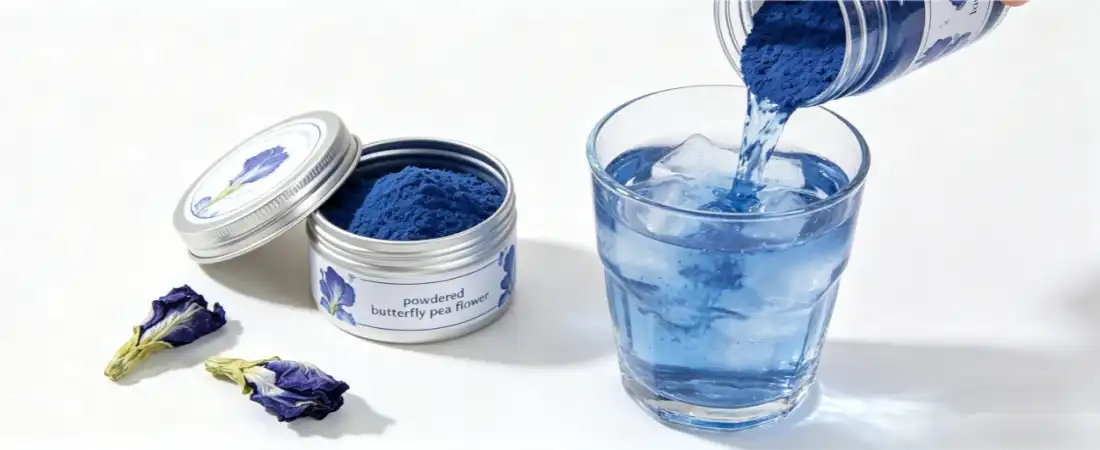
The formal name for powdered butterfly pea flower is Clitoria ternatea L. It has become very famous in the global B2B market because it is bright blue and has a lot of antioxidants. This useful powder comes from the petals of the butterfly pea plant. It has healthy compounds like anthocyanins, flavonoids, and polyphenols that stay true to their color longer than synthetic versions. The people who buy things need to know about this plant extract's properties and antioxidant strengths so they can choose wisely about where to get ingredients for food, makeup, functional drinks, and dietary supplements.

Understanding Powdered Butterfly Pea Flower: Properties and Nutritional Profile
Botanical Origins and Processing Methods
The butterfly pea blossom comes from tropical Southeast Asia, where it has been utilized for centuries. With current handling strategies, these fragile blossoms are turned into a steady powder that is still accommodating and has all of their organic properties. Portion of the generation handle is carefully picking the trim at its crest sprout and drying it gradually at controlled temperatures. Cutting-edge low-temperature pounding or spray-drying innovations are moreover utilized. These strategies are outlined to keep the heat-sensitive anthocyanins and other cancer prevention agents that make the item valuable and safe. Whole dried blossoms require to be soaks or extricated some time recently they can be utilized. Powdered butterfly pea bloom, on the other hand, breaks down right absent and can be dosed accurately each time. Since it comes in powder shape, it's simple to blend into numerous distinctive things without having to go through any additional steps. This keeps the sum of advantageous chemicals tall whereas making generation easier.
Nutritional and Phytochemical Composition
Butterfly pea powder is exceptionally valuable since it has a part of great phytochemicals in it. The profound blue color of the powder comes from ternatins, which are a sort of polyacylated anthocyanins. These chemicals illustrate surprising solidness over shifting pH levels. In unbiased conditions, they are blue, but when the corrosiveness increments, they turn violet-purple. The powder contains more flavonoids than fair anthocyanins. These flavonoids work with the anthocyanins to make the powder a way better antioxidant. Proteins are made up of amino acids, which are fundamental building squares. Follow minerals, such as press, calcium, and magnesium, include dietary thickness. In this comprehensive shape, the fixing is both a useful colorant and a bioactive component that improves the wrapped up product.
Antioxidant Properties and Health Advantages
One of the best things around butterfly pea bloom powder is that it can neutralize free radicals through numerous instruments. Anthocyanins work by giving electrons to unsteady particles. This keeps cell structures from being harmed by oxidative push. Inquire about appears that high-quality butterfly pea powder can have an ORAC esteem that is at slightest as tall as blueberries and acai, situating it among first class antioxidant sources. In the genuine world, B2B buyers can use these characteristics over different segments. Useful nourishment creators can make items situated as anti-inflammatory and neuroprotective. The fabric has been appeared to back cognitive and metabolic wellbeing, which is accommodating for nutraceutical formulators. Restorative companies esteem the powder since it can normally color items whereas ensuring skin cells from natural stressors. This multifunctional execution makes butterfly pea powder a vital fixing for item differentiation.
How to Evaluate the Quality and Safety of Powdered Butterfly Pea Flower?
Recognizing Premium Quality Indicators
Picky purchasers should evaluate a supplier's products using numerous key criteria. Premium powdered butterfly pea flower has a brilliant, uniform blue hue without brown or gray discoloration, suggesting good processing and fresh raw ingredients. Solubility and mixing depend on particle size consistency. An 80-mesh powder blends nicely into liquid formulas without settling or clumping. Standard goods differ from pharmaceutical-grade ones in purity. Quality butterfly pea flower powder is pure and free of fillers, maltodextrin, and silica flow agents. HPLC examination by a third party verifies anthocyanin content and screens for heavy metals, pesticides, and microbiological contaminants. Each batch has an international-standard Certificate of Analysis (CoA) proving transparent quality control.
Certification Standards and Regulatory Compliance
Botanical fixings require to be dealt with with awesome care with respect to administrative compliance. ISO 9001 certification demonstrates standardized quality administration frameworks all through generation. Merchandise focusing on particular customer portions can reach more extensive markets with the offer assistance of Legitimate and Halal certifications. These qualifications reflect a supplier's commitment to prepare keenness and traceability from the cultivate to the wrapped up powder. Shelf life administration is basic for bulk acquirement arranging. Legitimately prepared butterfly pea powder keeps up strength for 24 months when put away in cool, dry conditions absent from coordinate light. Dampness substance underneath 5% avoids microbial development and corruption of bioactive compounds. Bundling in food-grade aluminum thwart sacks with desiccants jam quality amid transportation and storage.
Risk Management and Safety Considerations
Butterfly pea flower has a long history of safety, but procurement experts must evaluate application-specific safety characteristics. In regular food and beverage proportions, the ingredient is well-tolerated. Since legume cross-reactivity is infrequent in this species, allergenicity concerns are low. To meet regulatory and customer due diligence requirements, suppliers should produce GMP and allergy control procedure paperwork.
Comparison and Procurement Insights for B2B Buyers
Product Form Comparisons and Selection Criteria
Procurement specialists often compare powdered butterfly pea flower against alternative forms and competitive natural colorants. Whole dried flowers offer authenticity appeal but require additional processing steps and produce inconsistent extraction yields. Encapsulated products provide convenience for dietary supplement applications but command premium pricing that may not align with bulk manufacturing economics. Compared to hibiscus powder, another natural colorant, butterfly pea delivers superior heat stability and a distinct blue shade that expands formulation possibilities.
Establishing clear purchasing criteria streamlines supplier evaluation. Antioxidant profile verification through standardized testing ensures consistent functional performance across production batches. Supplier reliability encompasses factors beyond product quality, including communication responsiveness, documentation accuracy, and supply chain transparency. Companies demonstrating vertical integration from cultivation through processing typically offer better lot-to-lot consistency than brokers sourcing from multiple origins.
The decision between organic and conventional options depends on target market positioning and budget parameters. Organic certification commands price premiums of 20-40% but unlocks access to premium product categories and conscious consumer segments. Conventional products meeting rigorous testing standards deliver comparable functionality at more accessible price points, suitable for mass-market applications where cost efficiency drives procurement decisions.
Market Landscape and Value-Added Services
Pricing benchmarks for butterfly pea powder shift based on determination and arrange volume. Standard-grade powder ordinarily ranges from $15-25 per kilogram at discount volumes, whereas certified natural or high-anthocyanin extricates reach $35-50 per kilogram. Volume rebates ended up significant at 100-kilogram edges, with extra cost breaks at 500-kilogram and ton-level commitments. Progressive providers separate through value-added administrations that diminish client grinding and quicken time-to-market. Private labeling capabilities permit brands to dispatch items without capital speculation in bundling operations. Custom bundling alternatives suit particular prerequisites for portion-control sachets, laboratory-grade holders, or mechanical bulk packs. These organizations amplify into collaborative advancement courses of action where providers contribute definition mastery and administrative guidance.
Practical Uses and Applications in Industry
Food and Beverage Applications
Natural colorant applications represent the most visible use case for powdered butterfly pea flower across the food industry. Beverage formulators create visually striking products ranging from color-changing cocktails to functional wellness drinks that leverage the powder's pH-sensitive properties. The ingredient performs exceptionally well in plant-based milk alternatives, energy drinks, and ready-to-mix powder beverages where synthetic Blue No. 1 faces increasing consumer resistance.
Bakery and confectionery applications benefit from the powder's thermal stability, maintaining color integrity through baking processes up to 180°C. Manufacturers produce naturally blue frosting, macaron shells, and decorative food elements that meet clean-label requirements without sacrificing visual appeal. The antioxidant contribution adds functional positioning to indulgent products, creating permission for consumption among health-conscious consumers.
Nutraceutical and Cosmetic Integration
Dietary supplement engineers join butterfly pea powder into antioxidant mixes, cognitive bolster equations, and beauty-from-within items. Suggested doses ordinarily extend from 200-500 milligrams per serving, conveying important anthocyanin levels without overpowering item financial matters. The powder mixes consistently with complementary botanicals like green tea extricate, resveratrol, and vitamin C to make synergistic details with broad-spectrum antioxidant coverage. Personal care applications misuse both the colorant and bioactive properties of butterfly pea powder. Formulators include it to facial veils, serums, and hair care items where anthocyanins give oxidative stretch security for skin and scalp tissue. The normal blue color empowers inventive item aesthetics in the competitive beauty care products commercial center whereas conveying substantiated useful benefits that back showcasing claims.
Formulation Guidance and Success Strategies
R&D groups ought to consider a few specialized variables when coordination butterfly pea powder into modern items. Solvency characteristics vary based on the fluid medium; the powder scatters promptly in water and alcohol-based frameworks but requires emulsification bolster in oil-continuous details. pH alteration significantly influences last color introduction, permitting formulators to dial in particular shades from shinning blue to profound purple by tweaking causticity levels. A outstanding case ponder includes a useful refreshment company that supplanted manufactured colorants with butterfly pea powder over its item line. The move required reformulation work to keep up color solidness amid the 18-month rack life target, eventually accomplished through pH buffering and the expansion of ascorbic corrosive as a co-antioxidant. Buyer testing uncovered a solid inclination for the normal form, supporting a premium estimating procedure that balanced the higher fixing fetched. This illustration illustrates how key fixing choice can improve both item execution and showcase positioning.

Conclusion
Forward-thinking firms should favor powdered butterfly pea flower for natural, multifunctional products that meet customer desires and regulatory developments. Its antioxidant profile and phytochemical composition rich in anthocyanins and flavonoids provide value to culinary, nutraceutical, and cosmetic applications. Purity criteria, certification standards, and supplier dependability affect quality assessment, while market dynamics and volume pricing structures aid purchase choices. Technical knowledge of formulation parameters and stability is needed to integrate this botanical ingredient, but the competitive advantages—clean-label appeal, functional benefits, and visual differentiation—justify the investment for innovative and market-leading manufacturers.
FAQ
1. How does the antioxidant capacity of butterfly pea powder compare to other natural sources?
Powdered butterfly pea flower has ORAC values equivalent to antioxidant superfoods, 20,000-30,000 mol TE/100g. It is a functional element with blueberries and ahead of many traditional fruits, not just a colorant.
2. What storage conditions best preserve product potency during bulk procurement?
Proper storage keeps temperatures below 25°C in low-humidity, sun-protected areas. Sealed food-grade aluminum bags with oxygen absorbers last 24 months. First-in-first-out (FIFO) rotation ensures supply chain product quality.
3. Which certifications should procurement managers prioritize for global market compliance?
Kosher and Halal certifications provide market access, whereas ISO 9001 certifies quality management systems. For seamless customs clearance and customer audits, third-party testing paperwork for heavy metal screening, microbiological limits, and pesticide residue analysis meets North American and European regulatory standards.
Partner with NT Biotech: Your Trusted Powdered Butterfly Pea Flower Supplier
NT Biotech stands ready to support your sourcing needs with premium powdered butterfly pea flower that meets the highest industry standards. Our 100% pure formulation, processed through proprietary low-temperature techniques, delivers exceptional anthocyanin retention and >98% purity levels verified through third-party HPLC testing. We maintain ready inventory for rapid fulfillment within 2-4 days, with flexible packaging options from 1kg bags to customized bulk configurations that match your production requirements. ISO, Kosher, and Halal certifications ensure global compliance, while our technical team provides formulation support, comprehensive Certificates of Analysis, and custom OEM solutions tailored to your specific application needs. Contact us at info@newthingsbiotech.com to request free samples and discover why discerning manufacturers choose NT Biotech as their long-term powdered butterfly pea flower supplier for quality, reliability, and partnership value.
References
1. Kazuma, K., Noda, N., & Suzuki, M. (2003). Malonylated flavonol glycosides from the petals of Clitoria ternatea. Phytochemistry, 62(2), 229-237.
2. Lakshan, S.A.T., Jayanath, N.Y., Abeysekera, W.P.K.M., & Abeysekera, W.K.S.M. (2019). A commercial potential of butterfly pea (Clitoria ternatea L.) in health and food applications. Journal of Food Science and Technology, 56(5), 2587-2596.
3. Oguis, G.K., Gilding, E.K., Jackson, M.A., & Craik, D.J. (2019). Butterfly pea (Clitoria ternatea), a cyclotide-bearing plant with applications in agriculture and medicine. Frontiers in Plant Science, 10, 645.
4. Neda, G.D., Rabeta, M.S., & Ong, M.T. (2013). Chemical composition and anti-proliferative properties of flowers of Clitoria ternatea. International Food Research Journal, 20(3), 1229-1234.
5. Chusak, C., Thilavech, T., Henry, C.J., & Adisakwattana, S. (2018). Acute effect of Clitoria ternatea flower beverage on glycemic response and antioxidant capacity in healthy subjects. BMC Complementary and Alternative Medicine, 18(1), 6.
6. Pasukamonset, P., Kwon, O., & Adisakwattana, S. (2016). Alginate-based encapsulation of polyphenols from Clitoria ternatea petal flower extract enhances stability and biological activity under simulated gastrointestinal conditions. Food Hydrocolloids, 61, 772-779.