- English
- French
- German
- Portuguese
- Spanish
- Russian
- Japanese
- Korean
- Arabic
- Greek
- German
- Turkish
- Italian
- Danish
- Romanian
- Indonesian
- Czech
- Afrikaans
- Swedish
- Polish
- Basque
- Catalan
- Esperanto
- Hindi
- Lao
- Albanian
- Amharic
- Armenian
- Azerbaijani
- Belarusian
- Bengali
- Bosnian
- Bulgarian
- Cebuano
- Chichewa
- Corsican
- Croatian
- Dutch
- Estonian
- Filipino
- Finnish
- Frisian
- Galician
- Georgian
- Gujarati
- Haitian
- Hausa
- Hawaiian
- Hebrew
- Hmong
- Hungarian
- Icelandic
- Igbo
- Javanese
- Kannada
- Kazakh
- Khmer
- Kurdish
- Kyrgyz
- Latin
- Latvian
- Lithuanian
- Luxembou..
- Macedonian
- Malagasy
- Malay
- Malayalam
- Maltese
- Maori
- Marathi
- Mongolian
- Burmese
- Nepali
- Norwegian
- Pashto
- Persian
- Punjabi
- Serbian
- Sesotho
- Sinhala
- Slovak
- Slovenian
- Somali
- Samoan
- Scots Gaelic
- Shona
- Sindhi
- Sundanese
- Swahili
- Tajik
- Tamil
- Telugu
- Thai
- Ukrainian
- Urdu
- Uzbek
- Vietnamese
- Welsh
- Xhosa
- Yiddish
- Yoruba
- Zulu
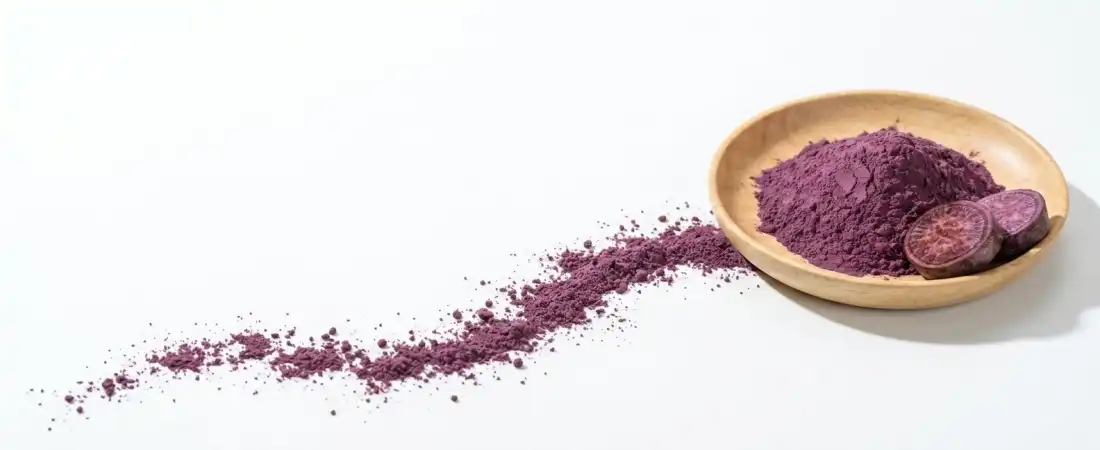
Pure purple yam powder is a plant-based substance manufactured from the purple flesh, starch, dietary fibre and naturally occurring anthocyanins and other phytochemicals of the Dioscorea alata L. species. For food and beverage makers, the value is more than just colour. The ingredient may provide a unique botanical character for bread items, drinks, functional foods, and other formulations where a plant-based ingredient is desired.
For the B2B purchasers, however, health-related claims should be distinguished from the nutritional and phytochemical features of the raw material. The content of purple yam varies according to cultivar and processing circumstances, and published research on its biological functions includes laboratory and preclinical trials. The choice of supplier depends on the identification of the ingredients, how they are processed, their requirements, testing and trial applications.
What Is Pure Purple Yam Powder and How Is It Made?
Understanding the Botanical Origin and Ingredient Differentiation
Purple yam (Dioscorea alata L.), often known as larger yam or ube. This should not be confused with purple sweet potato (Ipomoea batatas) or taro (Colocasia esculenta) since they are separate plant species with different compositions and functional properties.
Dioscorea alata reports have shown presence of anthocyanins, phenolic compounds, flavonoids, starch, dietary fibre and other phytochemicals in the tuber. The specific profile might vary a lot according on cultivars and growing circumstances.
This difference matters in B2B sourcing. Supplier specifications should be unambiguous on the Latin name, part of the plant, appearance and particle size and other quality factors. This information allows producers to be consistent in their labelling and not substitute purple yam for a look-alike.
The sample was identified as Dioscorea alata L. (purple yam roots) by NT Biotech. The product specification given is 100% pure, 80 mesh particle size, and purple in powder form.
The Production Process and Quality Assurance Standards
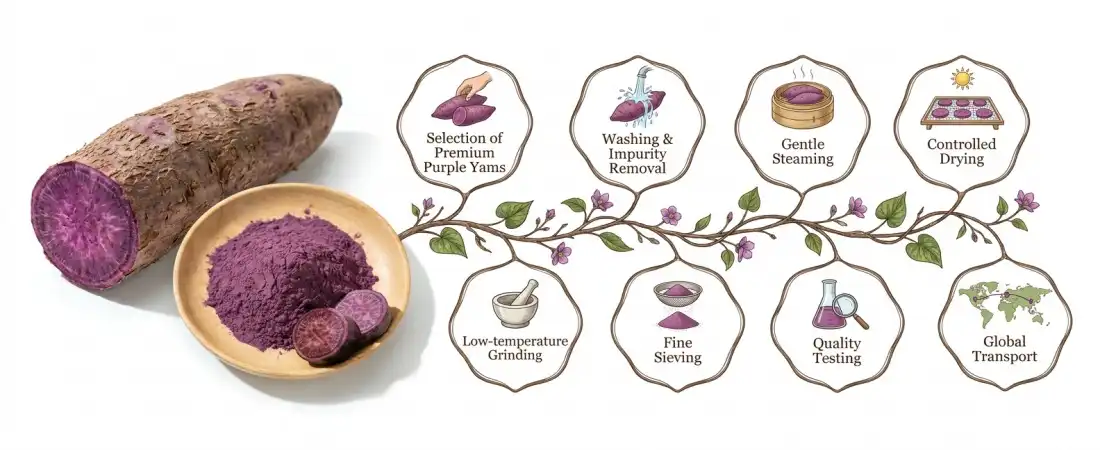
NT Biotech said its technique includes washing, heating, dehydration and low-temperature grinding. The final product is delivered as a fine powder for food and beverage applications.
The phytochemical profile of purple yam may be affected by heat, water, drying conditions and storage, thus it is worth paying attention to processing. Published research shows that the anthocyanin and phenolic content may fluctuate throughout processing, thus the best way to know the retention is to test each product, rather than assuming that each drying method would provide the same outcome.
The current NT Biotech product site provides ISO, Kosher, and Halal certifications for purchase. It also contains product specific technical information and quality testing data for the product described.
Organic Versus Conventional Sourcing Considerations
Purple yam powder organic and conventional are used for distinct purchase tactics. Organic sourcing may be critical for businesses whose positioning is based on the use of certified organic materials, while conventional material may suffice if the completed product does not need organic certification.
B2B buyers should not assume that "organic" and "natural" are synonyms. Instead the purchase specification should include the certification necessary, botanical identification, purity, testing criteria and destination market documents.
Ultimately, the best option for Pure purple yam powder will rely on the formulation, labelling approach, certification needs, and target market.
Health Benefits of Pure Purple Yam Powder for Consumers and Industries
Purple yam’s nutritional advantages are due to the natural makeup of the tuber, not one specific ingredient. Dioscorea alata L. imparts its nutritional character to the powder, including dietary fibre, anthocyanins, phenolic compounds and flavonoids, as well as carbohydrates. Actual numbers fluctuate with cultivar, processing and formulation but specification data such as starch and fibre content, anthocyanin level and purity should be used to tell purchasers the relevant purple yam nutritional advantages rather than general wellness language when comparing ingredients.
Health Benefits of Pure Purple Yam Powder for Consumers and Industries
Antioxidant Capacity and Immune System Support
The purple colour of Dioscorea alata is due to anthocyanin pigments. Purple-fleshed varieties have been reported to contain numerous anthocyanins and phenolic compounds and extracts from purple yam have shown antioxidant action in laboratory testing.
These results provide insight into the reason for the exploration of purple yam as a functional dietary component. But in vitro antioxidant activity should not immediately be touted as established immune health benefit in people. That similar difference applies when establishing consumer-facing claims for finished meals or supplements.
For producers, a more acceptable path is to explain the naturally occurring anthocyanins in the ingredient and apply proper regulatory assessment prior to making particular health claims.
Cardiovascular Wellness and Metabolic Health Applications
Purple yam is a source of starch and dietary fibre and its carbohydrate profile is of importance for functional food development. Resistant starch is also extensively explored for its impact on digestion and metabolic reactions.
However, the amount and type of resistant starch in a final purple yam powder might be influenced by raw material and processing technique. Therefore, it is not believed that all commercial powders would elicit the same glycemic or metabolic response.
This is important for product makers since lab analysis and testing of formulations becomes more useful than generic promises. The starch, fibre, colour and flavour qualities of purple yam powder match the recipe and exploration of nutrition-oriented dishes, bread items, drinks and other products may be done.
Digestive Health and Gut Microbiome Nourishment
Dietary fibre and resistant starch are essential in the scientific field of digestive nutrition. Resistant starch may reach the large intestine and provide a substrate for gut microbes, but the physiological response relies on the kind and quantity of resistant starch ingested.
The purple yam itself has been studied as a source of starch, fibre, and other plant components. Its possible relevance in the creation of a functional diet and gut related studies are also reported in recent reviews .
For producers, the practical possibility is to formulate around the nutritional profile of the ingredient, rather than to guarantee a particular microbiome result. The finished goods should be assessed for fibre content, texture, digestibility, and customer approval.
Purple yam nutritional benefits linked to digestive health come chiefly from its dietary fibre and resistant-starch content, which can support a fibre-oriented formulation; the final physiological response, however, depends on the finished recipe and should be confirmed by lab analysis rather than assumed.
Beauty Nutrition and Cosmetic Applications
Purple yam is intimately linked to collagen formation and skin-aging benefits, according to the original study. The link without product specific clinical proof is too strong.
A more pertinent application topic is that purple yam includes anthocyanins and other phytochemicals that have been of scientific interest, and its natural purple colour may also be significant to ingredient development.
For beauty nutrition products, the ingredient may be viewed as part of a larger plant-based mix. The viability of a food-grade purple yam powder for cosmetics should be evaluated independently since cosmetic formulations have various stability, safety, sensory and regulatory criteria.
How to Use Pure Purple Yam Powder Efficiently in Your Product Line
Functional Beverage Formulation Guidelines
Purple yam powder may contribute natural colour, unique flavour and plant-based solids to beverages and powdered drink compositions. Its behaviour will depend on the particle size, dispersion, formulation pH, processing temperature and the other chemicals employed in the recipe.
Rather of using a single set % for all drinks, producers should undertake bench experiments to identify the proper inclusion amount for each beverage. This is especially significant when the end product requires a certain colour intensity, mouthfeel, or suspension profile.
Powdered substances need moisture control as well. Packaging and storage conditions should follow the standards of the supplier and the needs of the completed product.
Baking and Culinary Application Techniques
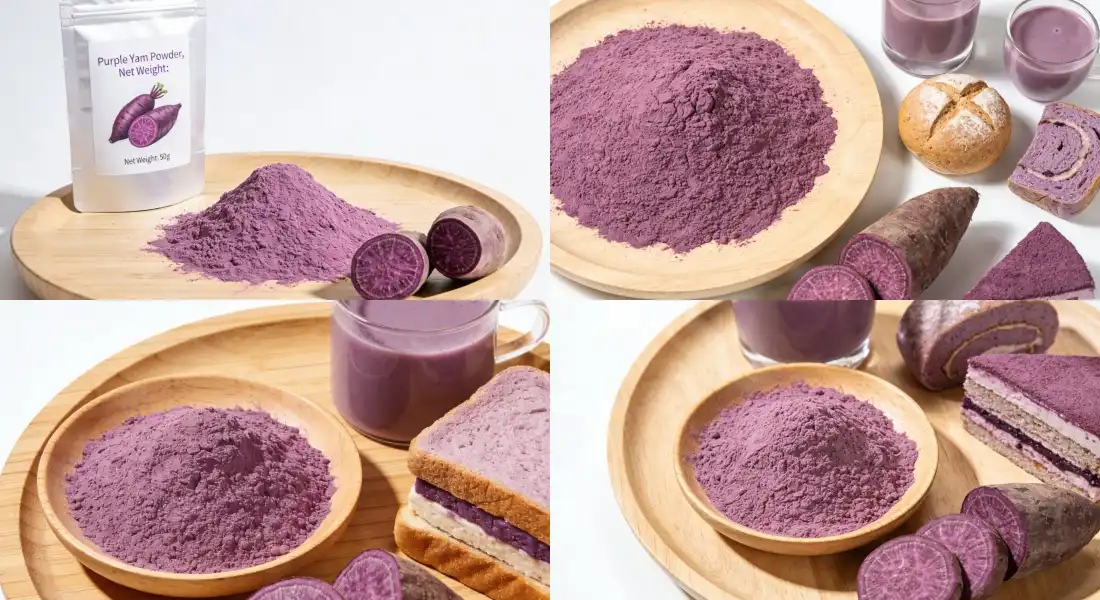
Pure purple yam powder may be used to baked dishes and desserts when the purple colour and unique yam flavour is desired. Potential uses include cakes, cookies, breads, ice cream, fillings, and other items.
The final colour may vary according on the source material, the processing circumstances, the formulation and the heating. Published study has shown a processing effect on the anthocyanin concentration of purple yam, indicating that evaluating the application is preferred to assuming a set colour performance.
For commercial development producers should test the powder at multiple inclusion levels monitoring colour, moisture, texture, flavour and end product stability.
Meal Replacement and Sports Nutrition Integration
Purple yam may be considered in formulation of meal replacement and sports nutrition as a source of carbohydrate and plant derived compounds. The starch and fibre composition of it might be advantageous for designing products focusing on whole-food or botanical constituents.
However, don’t think that pure purple yam powder is a weight loss substance or a substitute for traditional sports nutrition carbs. The ultimate nutrition profile relies on the whole recipe.
Instead, it may be tested with protein powders, fruit ingredients, cereals or other plant-based nutrients. Tests should include dispersibility, texture, taste, nutritional content and stability during storage.
Storage Optimization and Packaging Recommendations
Purple yam powder as a food component in powdered form must be kept in settings that are moisture-proof and protected from other environmental variables. The precise storage conditions are to be followed as per the supplier’s technical data sheet and packing directions.
2. Packaging Options: At present, NT Biotech has packaging options of 1 kg/bag and 10 kg/box, we also provide customised packaging as per client request. The product is displayed as in stock also.
For bigger projects, package configuration, shelf life information, batch paperwork, shipping and storage conditions should be confirmed by the customer before placing an order.
Making the Right Procurement Decisions: Selecting Quality Purple Yam Powder Suppliers
Essential Certification and Compliance Verification
Buyers are advised to confirm botanical identification, plant part, purity specification, particle size, microbiological requirements, contaminant limits and relevant documents for the target market prior to purchase.
NT Biotech now says Latin name as Dioscorea alata L., plant portion as root, particle size as 80 mesh and product specification as 100% pure. ISO Kosher and Halal certifications are also provided.
The Certificate of Analysis should be compared with the actual purchase specification. Buyers should also consider if extra testing is appropriate for their particular market or finished-product category.
Evaluating Supplier Technical Capabilities and Service Support
Supplier assessment should be more than certification logos. Buyers should ask whether the supplier can offer consistent specs, batch paperwork, samples, appropriate packaging, and communication throughout product development.
NT Biotech has more than 10 years’ expertise in providing botanical substances and offers R&D and quality-control assistance.
Sampling tests are still necessary for a new formulation. This allows a customer to test colour, scent, taste, dispersion, processing behaviour and compatibility with the completed recipe before committing to a bigger purchase.
Balancing Cost Efficiency with Quality Assurance
The unit pricing is only one aspect of the buying decision. A less expensive ingredient may not be cost-effective if it takes extra processing, gives uneven colour, or does not match the necessary quality criteria.
In addition to pricing, buyers should consider specifications, particle size, packaging, MOQ, paperwork, sample availability, lead times and testing needs.
MOQ for current NT Biotech listing is 10 kilogram, free samples are available, normal packaging is 1 kg bags and 10 kg boxes, and custom packaging is available.
Initiating Supplier Relationships and Sample Evaluation
A sample trial is one of the easiest strategies to decrease formulation risk. Buyers may evaluate the powder with their own specifications for colour, flavour, dispersability, texture and processing performance.
Especially for Pure purple yam powder, application test is helpful for it. The performance of a botanical powder is determined by the raw ingredient and completed formulation.
NT Biotech now has free samples and stock availability for the product. The delivery period shown is within 2-4 days following payment. Kindly clarify availability and shipping information before inquiring for price.
Conclusion
Pure purple yam powder is a combination of the natural purple colour and unique composition of Dioscorea alata L. with the convenience of a powdered ingredient. Anthocyanins, phenolic compounds, starch, dietary fibre and other phytochemicals have been found in purple yam and research is underway to explore its potential in functional food applications [12, 13].
For B2B purchasers the clearest selection criteria are not a general health promise, but rather an evaluation of botanical identification, purity, particle size, processing, quality certification, application performance and supply needs. This supports the development of food, beverage, nutrition and other plant-based products with credible technical and marketing claims.
FAQ
1. Is Purple Yam Powder Suitable for Gluten-Free Formulations?
Purple yam is a naturally root-based food ingredient (not a wheat-based ingredient). However, a completed product should be promoted as gluten-free only if the whole production and supply chain complies with the relevant regulations. Buyers should thus check allergy controls, cross-contact protocols, testing and destination-market laws with the supplier.
2. How Does Purple Yam Powder Differ from Purple Sweet Potato Powder?
Purple yam is produced from Dioscorea alata L., whereas purple sweet potato is derived from Ipomea batatas. They are various crops with varying starch, colour, flavour and phytochemical characteristics. Purple yam is well noted for its purple-fleshed varieties which are high in anthocyanins but the composition varies by cultivar and processing.
3. What Quality Standards Should B2B Buyers Verify?
Buyers should test for botanical identification, plant part, purity, appearance, particle size, moisture, microbiological characteristics, heavy metals, and any other criteria specific to the market and use.
The product under the current NT Biotech offering is specified as Dioscorea alata L., root, 80 mesh, 100% pure, purple powder appearance. Also included are ISO, Kosher and Halal certifications.
The final buying specification should be established with the provider prior to placing an order.
Partner with NT Biotech: Your Trusted Purple Yam Powder Supplier for Consistent Quality
NT Biotech supplies Pure purple yam powder made from Dioscorea alata L. roots. The current product specification lists 100% purity, 80-mesh particle size, and purple powder appearance, with ISO, Kosher, and Halal certification information. Standard packaging includes 1 kg bags and 10 kg boxes, while customized packaging is available. The listed MOQ is 10 kg, and free samples are available for evaluation.
For manufacturers evaluating Pure purple yam powder for food, beverage, nutrition, or other ingredient applications, NT Biotech can provide product information and sample support for initial formulation trials. Contact info@newthingsbiotech.com to discuss your required specification, packaging, sample evaluation, and purchasing requirements.
References
1. Chen, L., & Huang, G. (2019). Anthocyanins: Modifications, Degradation, and Bioavailability in Food Systems. Journal of Agricultural Chemistry, 67(21), 5839-5847.
2. Harakotr, B., Suriharn, B., Tangwongchai, R., Scott, M. P., & Lertrat, K. (2014). Anthocyanin, Phenolic Compounds, and Antioxidant Activity in Purple Corn. International Food Research Journal, 21(3), 1109-1115.
3. Nugent, A. P. (2005). Health Properties of Resistant Starch. Nutrition Bulletin, 30(1), 27-54.
4. Tetens, I., Bendtsen, K. M., Henningsen, A., Rohde, J. F., & Valsta, L. (2013). The Impact of Dietary Fibers on Dendritic Cell Function and Consequent Effects on Mechanisms of Immune Regulation. Critical Reviews in Food Science and Nutrition, 53(9), 917-926.
5. Truong, V. D., McFeeters, R. F., Thompson, R. T., Dean, L. L., & Shofran, B. (2007). Phenolic Acid Content and Composition in Leaves and Roots of Common Commercial Sweetpotato Cultivars in the United States. Journal of Food Science, 72(6), C343-C349.
6. Woolfe, J. A. (1992). Sweet Potato: An Untapped Food Resource. Cambridge University Press, Cambridge, United Kingdom.