- English
- French
- German
- Portuguese
- Spanish
- Russian
- Japanese
- Korean
- Arabic
- Greek
- German
- Turkish
- Italian
- Danish
- Romanian
- Indonesian
- Czech
- Afrikaans
- Swedish
- Polish
- Basque
- Catalan
- Esperanto
- Hindi
- Lao
- Albanian
- Amharic
- Armenian
- Azerbaijani
- Belarusian
- Bengali
- Bosnian
- Bulgarian
- Cebuano
- Chichewa
- Corsican
- Croatian
- Dutch
- Estonian
- Filipino
- Finnish
- Frisian
- Galician
- Georgian
- Gujarati
- Haitian
- Hausa
- Hawaiian
- Hebrew
- Hmong
- Hungarian
- Icelandic
- Igbo
- Javanese
- Kannada
- Kazakh
- Khmer
- Kurdish
- Kyrgyz
- Latin
- Latvian
- Lithuanian
- Luxembou..
- Macedonian
- Malagasy
- Malay
- Malayalam
- Maltese
- Maori
- Marathi
- Mongolian
- Burmese
- Nepali
- Norwegian
- Pashto
- Persian
- Punjabi
- Serbian
- Sesotho
- Sinhala
- Slovak
- Slovenian
- Somali
- Samoan
- Scots Gaelic
- Shona
- Sindhi
- Sundanese
- Swahili
- Tajik
- Tamil
- Telugu
- Thai
- Ukrainian
- Urdu
- Uzbek
- Vietnamese
- Welsh
- Xhosa
- Yiddish
- Yoruba
- Zulu
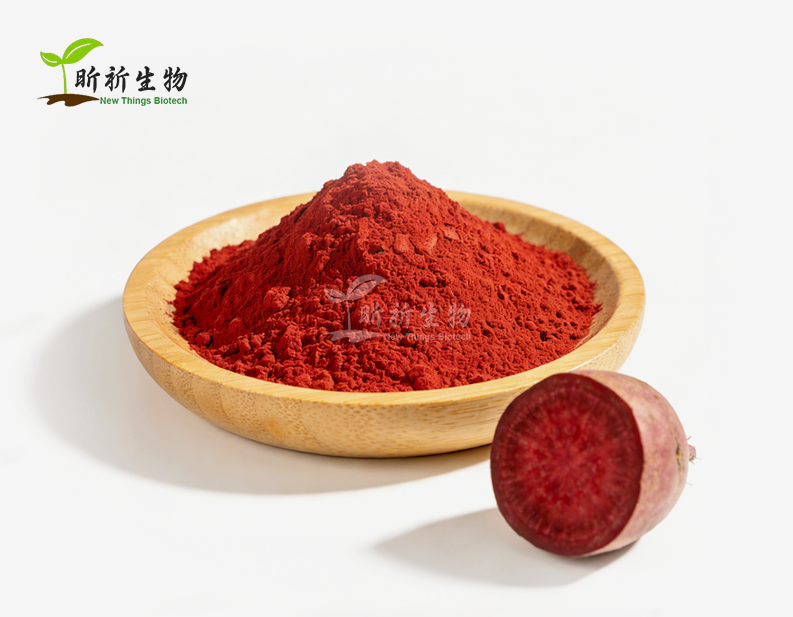
Pure Purple Yam Powder, which comes from the plant Dioscorea alata L., is full of good things for you, like fiber, anthocyanins, and resistant starch. There are about 3–4 grams of protein in every 100 grams of this root powder, which is 100% pure. Plus, it has a lot of minerals like iron and potassium, vitamin C, and complex carbs like resistant starches that break down slowly. More than 50 mg of anthocyanin are found in high-quality types per 100 g. This is what makes them purple. This makes them a useful item for clean-label recipes in the food, drink, and nutrition markets around the world, since they add natural color and are good for you.
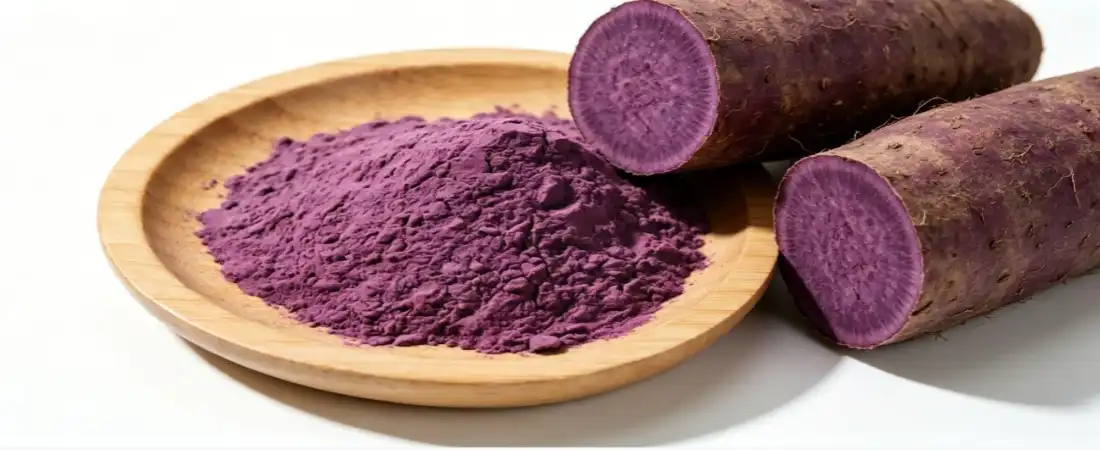
Introduction to Pure Purple Yam Powder
The seeds of Dioscorea alata, also called ube or purple yam, are where Pure Purple Yam Powder is found. Southeast Asia and the Pacific are where this plant is grown most of the time. Careful cleaning, low-temperature drying, and exact grinding to 80 mesh are all steps that NT Biotech uses in the production process. Bioactive chemicals are what make this element important, and this keeps them safe. Pure Purple Yam Powder is different from other sweet potato or taro flours because it is a deep purple color and has more anthocyanins. Anthocyanins are polyphenolic pigments that keep the color fixed and fight free radicals.
How food is cooked directly impacts how much nutrition it keeps. Up to 40% of heat-sensitive vitamins and anthocyanins can be lost when things are dried using traditional high heat. The unique low-temperature method we use, on the other hand, preserves more than 90% of the bioactive profile of the raw material. This difference is very important for business-to-business buyers who want to know how well ingredients work in finished goods. People who work in sourcing who want to reach health-conscious groups are learning more and more about how the details of an item affect not only following the rules but also how the customer sees the brand and how it stands out from others.
The global clean-label movement grew by 15% every year from 2020 to 2023. The plant-based food business is also growing quickly and is expected to reach $77.8 billion by 2025. Many people want to buy these foods. Pure Purple Yam Powder fits these trends perfectly because it is naturally colored without using chemical dyes, doesn't contain gluten so it's safe for people with allergies, and is high in nutrients, so it can be used in functional foods. When buying teams know about these changes in the market, they can make the case for working with sellers to meet quality standards that can be checked.
Detailed Nutritional Profile of Pure Purple Yam Powder
Macronutrient Composition and Functional Relevance
The carbs that make up 75% to 80% of Pure Purple Yam Powder are mostly complex starches, but there is also a lot of resistant starch. It makes up about 10 to 15 percent of all starch. It works more like soluble fiber because it doesn't break down in the small intestine but does break down in the colon. This makes it different from sources of simple carbohydrates, which makes it better for controlling blood sugar. It can be used in low-fat cooking because it has less than 1% fat and between 3 and 4 grams of protein per 100 grams.
There is both amylose and amylopectin in the carbohydrate makeup. Things that have a higher amylose ratio help glucose release more slowly than things that have a higher amylopectin ratio. When making foods that are good for diabetics or sports nutrition foods that need to release energy slowly over time, this building quality is very important. Scientists who study food like this kind of starch because it gives baked goods their shape and taste and also helps the body in ways that back up what the ads say.
Micronutrients and Bioactive Compounds
Pure Purple Yam Powder should have 15 to 20 mg of vitamin C per 100 g if it is made the right way. About 20% of the daily recommended amount is in this dose. This vitamin that dissolves in water helps antioxidants do their job better when it pairs with anthocyanins. Thiamine and riboflavin are two types of B-complex vitamins that help the body use energy. But the amounts in foods change based on how they were grown and made.
As much as 400–500 mg of potassium per 100 g helps the heart and keeps fluids in balance. As little as 1.5–2 mg of iron per 100 g meets the goals for adding iron to food. Anthocyanins are the most important chemicals that are good for you. In high-end powders, they usually add up to 50 to 150 mg per 100 g. There are a lot of cyanidin and peonidin in these polyphenolic colors. It's important for drinks and sweets that they don't lose their color when the pH changes.
Dietary Fiber and Digestive Health Properties
All together, every 100 grams has about 5 to 7 grams of fiber. There is both soluble and insoluble fiber in this. Like resistant starch, soluble fiber helps the body's good bacteria, mostly Bifidobacterium and Lactobacillus species, do their job by eating them. Butyrate and other short-chain fatty acids are made when food is fermented. These acids are good for your gut health and may help reduce signs of inflammation. Insoluble fiber keeps your stomach regular and makes you feel full, which are both good qualities for items that replace meals or help you lose weight. Herbalists have known for a long time that the mucilage in purple yam makes it feel calm and helps digestion.
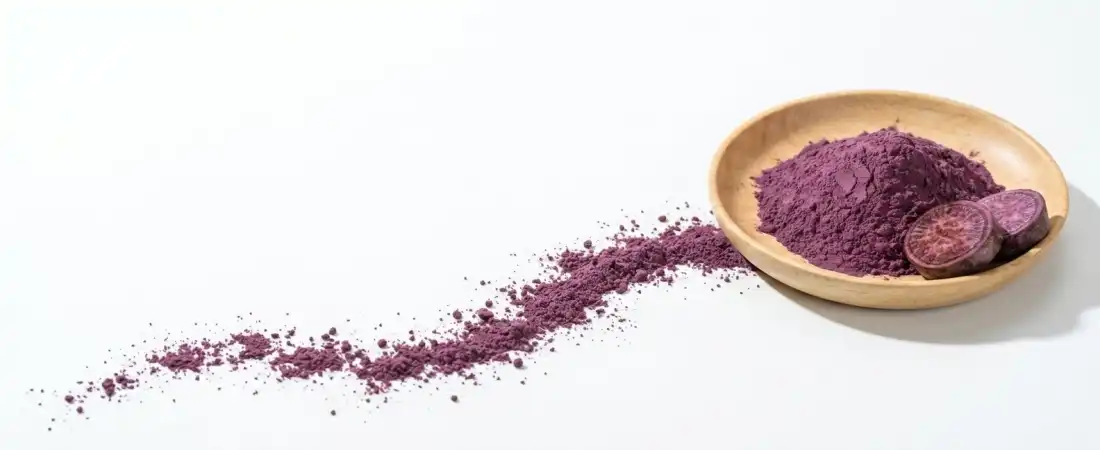
Health Benefits Linked to the Nutritional Components
Antioxidant Capacity and Chronic Disease Prevention
There are about 2,500 to 3,500 μmol TE of oxygen radical absorbance capacity (ORAC) in 100 g of Pure Purple Yam Powder. This is because of the anthocyanins that are in it. So, it's a food with a medium to high level of antioxidants. A study in the Journal of Agricultural and Food Chemistry found that the antioxidants in purple-fleshed potatoes are just as good at getting rid of free radicals as the antioxidants in blueberries. Blueberries are known to be the most antioxidant-rich food. Reactive oxygen species can cause heart disease, brain disease, and aging faster than you should. This skill helps get rid of them.
Polyphenolic chemicals work in more than one way. They get rid of free radicals directly, hold metal ions in place, and make natural antioxidant enzymes like superoxide dismutase work better. This means that people who make products that try to lower oxidative stress, improve skin health, or slow down the aging process can really change how those products are made. Because vitamin C can fix broken anthocyanins, these effects are better in living things where they are found.
Glycemic Management and Diabetic-Friendly Applications
The glucose reaction is different in a basic way when resistant starch is used instead of regular potato or rice flour. Resistant starch lowers blood sugar spikes after a meal by 20 to 30 percent in people. It also makes the body more sensitive to insulin over time. On a scale from 50 to 55, Pure Purple Yam Powder is a low- to medium-GI food that can be used in diabetic recipes or low-carb lines.
Pure Purple Yam Powder and sweet potato powder are not the same in some important ways. There is resistant starch in both, which is good for you. But Pure Purple Yam Powder has more anthocyanin, which blocks α-glucosidase and helps with blood sugar. This enzyme inhibitor makes it take longer for carbs to break down, which further limits the amount of glucose that the body can take in. Label claims that a food will lower blood sugar are backed up by this kind of proof when eaten as part of a healthy menu. This gives procurement teams placement tactics that are based on science.
Gluten-Free Certification and Allergen Safety
FDA rules say that gluten-free goods must have less than 20 parts per million of gluten. Pure Purple Yam Powder doesn't have any gluten naturally, so it meets those rules. There are $7.6 billion worth of gluten-free goods on the market around the world. These goods help people with celiac disease or gluten intolerance who are not celiac. We have ISO 9001, Kosher, and Halal certifications for our product. This means that it can be sold to a lot of different people and meets the food needs of many religions.
Tests have shown that there are no foods that contain milk, eggs, fish, shrimp, tree nuts, peanuts, wheat, or soya. As more and more people in North America and Europe want "free-from" products, this clean allergy profile lowers the risks of contamination and backs up that idea. When you put pollen safety and licensing together, there are more ways to follow the rules. This makes it faster to get new goods on the market.
Practical Applications: How to Use Pure Purple Yam Powder in B2B Contexts
Bakery Products and Confectionery Applications
When used in food, Pure Purple Yam Powder adds color naturally and health benefits as well. When 3 to 8 percent of it is added to bread, cakes, or cookies, it gives them a special purple to violet color and helps them keep their moisture by holding the starch together. Vanilla, chocolate, and tropical fruit all taste good with the mild, slightly sweet flavor. It doesn't overpower other flavors.
Anthocyanins change from purple (pH 3–4) to blue-violet (pH 7–8), so you need to think about how to deal with the pH. The best way for cooks to keep the color stable is to make the recipes slightly acidic with natural stabilizers like citric acid or cream of tartar. At a percentage of 2 to 5 percent, the powder spreads out evenly in frozen treats. This keeps the color from changing when the treats freeze and thaw, and it gives the treats more body. People who make ice cream like the clean-label appeal more than man-made colorants like FD&C Red 40 or Blue 1.
Functional Beverages and Nutritional Drinks
Pure Purple Yam Powder is being used more and more in health drinks, protein shakes, and juice mixes. Solubility goes up when emulsifiers or maltodextrin are added, and the mixture spreads out easily in cold liquids. Most ready-to-drink drinks use between 5 and 12 grams per serve. This food has a good amount of fiber (0.4 to 0.8 grams per serve), so it can help you reach your daily fiber goals.
People who make plant-based drinks will like that the powder works well with bases made of pea protein, rice protein, and oat milk. Because the anthocyanins can show the pH level, foods that change color when mixed with acidic drinks are more interesting to look at. Brands that make sports nutrition products use it in pre-workout goods because the vitamins help your body deal with oxidative stress caused by exercise, and the resistant starch gives you energy that lasts.
Nutraceutical Supplements and Meal Replacements
You can take 500 mg of Pure Purple Yam Powder as a supplement to improve the health of your gut or your body's antioxidant defenses. The powder is easy to mix into meal replacement mixes. It usually makes up 8–15% of the whole dry mix, along with functional carbs, protein isolates, and vitamin premixes. This mix supports many nutritional pathways, such as maintaining the balance of macronutrients, adding vitamins, and letting bioactive chemicals out into the body.
When handling supplements, it's very important to keep an eye on the quality. While we test each batch, we use HPLC to find out how much anthocyanin is present, germ testing to make sure there are fewer than 1,000 CFUs per gram, and heavy metal screens to make sure the product meets the requirements set by California Proposition 65. The quality promises are written down on Certificates of Analysis that are sent with every shipment. This gives makers the ability to track their products, which is needed by FDA cGMP standards and foreign export rules.
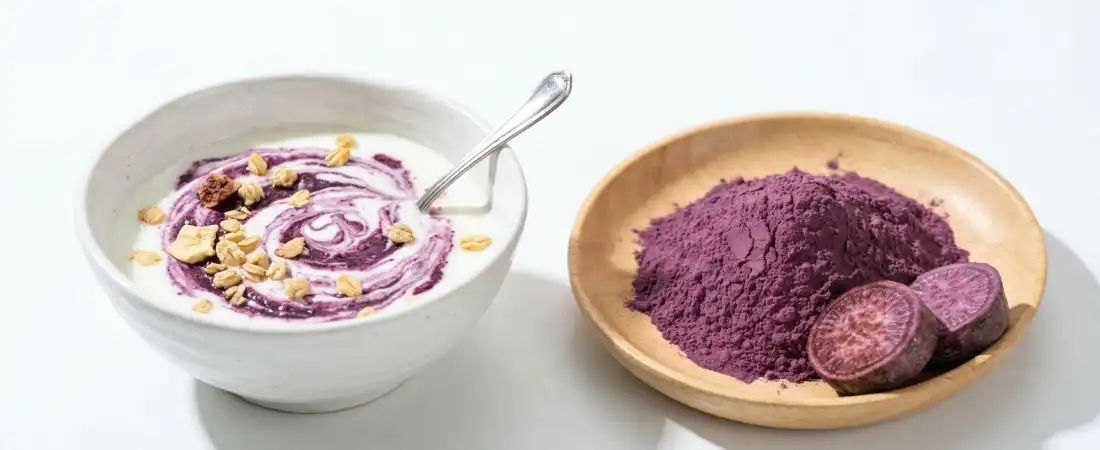
Procurement Insights: Choosing the Right Pure Purple Yam Powder Supplier
Organic Versus Conventional: Quality and Certification Considerations
Organic Pure Purple Yam Powder costs 30 to 50 percent more than regular Pure Purple Yam Powder, but it can have a place in the $220 billion organic food market around the world. Products must be grown without pesticides and processed in buildings that are approved as organic in order to be labeled USDA Organic or EU Organic. Buying managers who want to sell high-end natural goods often think that stores need to get this approval in order to sell the goods and buyers need to trust them. Conventional foods are less expensive, but they still have the same nutritional value as organic foods if they come from a reliable company that uses Good Agricultural Practices.
Tests done by a third party to show non-GMO status help the 63% of U.S. customers who choose to avoid genetically modified products. From our farm partners to the final packing, our supply chain makes it easy to track everything. You can see information that is special to a batch if you ask. Being open cuts down on risks in the supply chain and helps with the environmental reports that big CPG companies want more and more.
Critical Supplier Selection Criteria
Do a lot of different things to make sure you fully evaluate each possible service. In addition to measuring anthocyanin through HPLC, microbial load testing, and heavy metal screening, proximate analysis (moisture, ash, protein, and fat), there should also be microbial load testing and heavy metal screening. There are many different minimum orders. For instance, our 10 kg MOQ is fine for R&D samples and small production runs. Competitors, on the other hand, may expect 100–500 kg orders, which makes it hard for new brands to keep track of their working capital.
Pure Purple Yam Powder that is sold in bulk for more than 500 kg costs between $18 and $35 per kilogram. It costs between $30 and $45 per kilogram for smaller amounts. The differences between them show how the food was made, how good it was, and where it came from. How reliable a provider is can be seen by how often they deliver on time (we guarantee 98% of shipments arrive on time), how quickly they answer the phone (our team promises to answer within two hours), and how well they can help with technology issues. This is very helpful when there are issues with the plan. This is when our R&D team can help by making things more stable, hiding tastes, or making sure colors stay the same.
Logistics and Bulk Order Strategies
The logistics of shipping have a big impact on arrival times and prices. FedEx or UPS can ship orders up to 500 kg straight from our plant in two to four business days if we have enough in stock. Freight forwarders with a good reputation handle shipments of more than 1,000 kg. If you don't need to restock right away, sea freight is cheaper, but it takes 4 to 6 weeks to get to North American ports.
If you want to place a big order, you should talk about tiered price breaks, payment terms (we offer net-30 terms for long-term clients), and the options for unique packaging. Simple 1 kg paper bags and 10 kg boxes can meet your private-label needs. It's possible to get your own brand if you order more than 500 kg. Strategic buyers usually agree to yearly contracts that include packages every three months. This locks in prices while keeping inventory open, which is why we offer discounts of up to 15% on volume for orders over 5,000 kg per year.
Conclusion
Pure Purple Yam Powder is an important ingredient for business-to-business buyers who are producing goods that meet the needs of current customers who want natural, useful, and clean-label ingredients. Anthocyanins, resistant starch, dietary fiber, and important vitamins are all parts of its full nutritional makeup. These nutrients give the recipe many benefits, such as natural color, control of blood sugar, antioxidant activity, and support for gut health. The fact that the item is gluten- and allergen-free and can be used in drinks, vitamins, and baking makes it stand out in a crowded market. For procurement to go well, it's important to work with suppliers who have strict quality control, clear licensing, quick expert help, and reliable transportation. A lot of these things directly affect how well the product works and how well it does in the market.
FAQ
1. Can purple yam powder be used in diabetic-friendly product formulations?
Because it has resistant starch and a glycemic index of 50 to 55, Pure Purple Yam Powder is good for meals that people with diabetes can eat. Because it takes longer for resistant starch to break down than simple carbs, blood sugar levels don't rise as fast. By stopping the α-glucosidase enzyme, anthocyanins help keep blood sugar levels even more in check. This is done by making the breakdown of carbs take longer. For the best insulin response, it should be mixed with protein and healthy fats when it is added to diabetes foods. Tests in real people should also be done to back up what the signs say.
2. How does purple yam powder compare nutritionally to sweet potato powder?
It has resistant starch and dietary fiber, but Pure Purple Yam Powder has two to three times more anthocyanin than white yam powder. This makes it a better antioxidant and gives it a brighter color. There may be a small difference in the amount of beta-carotene in different types of sweet potato powder. While the glycemic index stays the same (50–60), purple yam's anthocyanins help keep blood sugar in check in more ways than one.
3. Is purple yam powder effective as a gluten-free baking ingredient?
In gluten-free baking, Pure Purple Yam Powder works well when mixed with xanthan gum or psyllium husk to make a paste. It helps the starch stay structured and holds water, but it's not as stretchy as gluten, so the recipe needs to be changed. To make it taste better and be healthier, it is often mixed with 20–30% rice flour, tapioca starch, or almond flour.
Partner with NT Biotech for Premium Purple Yam Powder Supply
NT Biotech is ready to give you Pure Purple Yam Powder when you need it. For more than ten years, they've worked with plant products and help people all over the world who make food, drinks, vitamins, and cosmetics. This ube powder is made from roots of the Dioscorea alata plant that we pick by hand. Over 90% of the plant's natural anthocyanins and other good chemicals are kept when it goes through a special low-temperature method. For proof of these scientific advantages, we test each batch fully with HPLC and UV. We keep our ISO 9001, Kosher, and Halal standards up to date. This means that your recipes will work in all sorts of places and follow all sorts of rules all over the world.
With a low minimum order amount of 10 kg, which can be used for both R&D sampling and production scaling, we offer fast shipping (two to four days) on things that are in stock. Our experienced R&D team also provides free technical help. If you're making functional drinks, clean-label baked goods, or advanced nutrition supplements, we can help you get them to market faster with our wide range of package options and OEM skills. You can get free samples, talk about prices for Pure Purple Yam Powder in bulk, or find out how our ingredient solutions can help your next product launch stand out by emailing info@newthingsbiotech.com.
References
1. Zhu, F. (2016). "Anthocyanins in Cereals: Composition and Health Effects." Food Research International, 109, 232-249.
2. Haub, M.D., Hubach, K.L., Al-Tamimi, E.K., Ornelas, S., & Seib, P.A. (2010). "Different Types of Resistant Starch Elicit Different Glucose Responses in Humans." Journal of Nutrition and Metabolism, 2010, Article ID 230501.
3. Tan, T.C., Cheng, L.H., & Pang, E. (2014). "Functional Properties and Bioactive Compounds of Purple Sweet Potato and Yam Flours." International Food Research Journal, 21(5), 1931-1937.
4. Bhandari, M.R., & Kawabata, J. (2006). "Cooking Effects on Oxalate, Phytate, Trypsin and α-Amylase Inhibitors in Various Dioscorea Tubers." Journal of Food Composition and Analysis, 19(6-7), 681-688.
5. Goda, Y., Shimizu, T., Kato, Y., Nakamura, M., Maitani, T., Yamada, T., Terahara, N., & Yamaguchi, M. (1997). "Two Acylated Anthocyanins from Purple Yam, Dioscorea alata." Phytochemistry, 44(1), 183-186.
6. Suda, I., Oki, T., Masuda, M., Kobayashi, M., Nishiba, Y., & Furuta, S. (2003). "Physiological Functionality of Purple-Fleshed Sweet Potatoes Containing Anthocyanins and Their Utilization in Foods." Japan Agricultural Research Quarterly, 37(3), 167-173.