- English
- French
- German
- Portuguese
- Spanish
- Russian
- Japanese
- Korean
- Arabic
- Greek
- German
- Turkish
- Italian
- Danish
- Romanian
- Indonesian
- Czech
- Afrikaans
- Swedish
- Polish
- Basque
- Catalan
- Esperanto
- Hindi
- Lao
- Albanian
- Amharic
- Armenian
- Azerbaijani
- Belarusian
- Bengali
- Bosnian
- Bulgarian
- Cebuano
- Chichewa
- Corsican
- Croatian
- Dutch
- Estonian
- Filipino
- Finnish
- Frisian
- Galician
- Georgian
- Gujarati
- Haitian
- Hausa
- Hawaiian
- Hebrew
- Hmong
- Hungarian
- Icelandic
- Igbo
- Javanese
- Kannada
- Kazakh
- Khmer
- Kurdish
- Kyrgyz
- Latin
- Latvian
- Lithuanian
- Luxembou..
- Macedonian
- Malagasy
- Malay
- Malayalam
- Maltese
- Maori
- Marathi
- Mongolian
- Burmese
- Nepali
- Norwegian
- Pashto
- Persian
- Punjabi
- Serbian
- Sesotho
- Sinhala
- Slovak
- Slovenian
- Somali
- Samoan
- Scots Gaelic
- Shona
- Sindhi
- Sundanese
- Swahili
- Tajik
- Tamil
- Telugu
- Thai
- Ukrainian
- Urdu
- Uzbek
- Vietnamese
- Welsh
- Xhosa
- Yiddish
- Yoruba
- Zulu
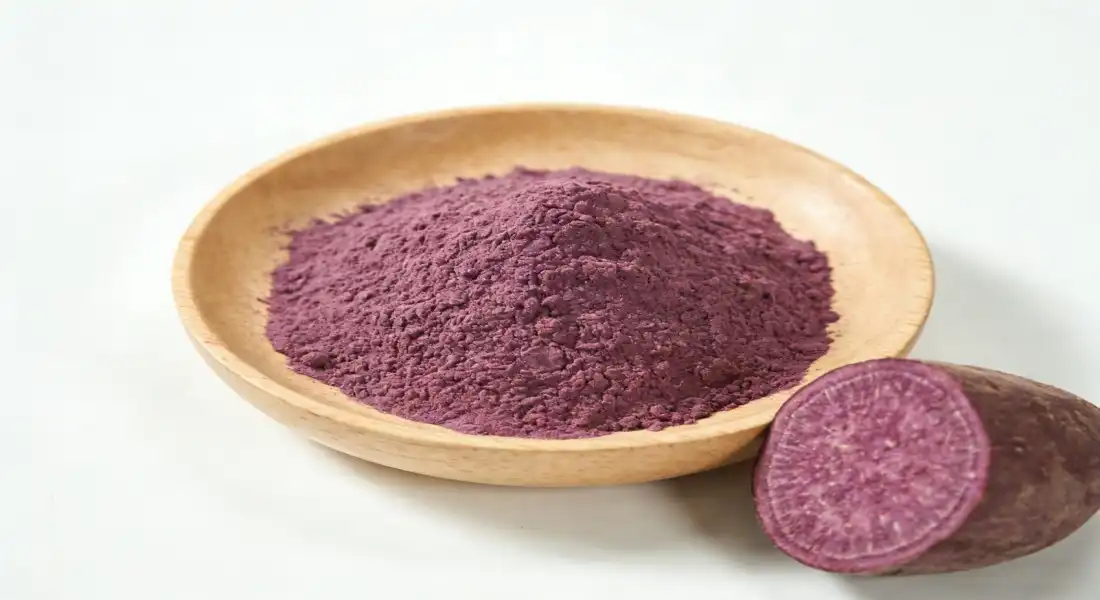
You need to know the quality standards, seller skills, and market trends of the ube powder bulk you're buying for your food, drink, or nutritional product line. Fresh ube powder made from Dioscorea alata L. (purple yam) has become very popular in U.S. markets because of its bright natural color, high nutritional value, and ability to be used in a variety of ways. If procurement workers and R&D managers are looking for solid plant-based ingredients, they should look at the suppliers' extraction methods, certifications, and how open their supply chains are. This way, they can make sure they work with suppliers who support both new product development and following the rules.
Introduction to Global B2B Procurement for Natural Ingredients
In today's globally connected market, buying plans must find a balance between cutting costs and maintaining high-quality standards. Finding botanical ingredients like ube powder bulk can be hard because you have to make sure the plants are real, keep the supply going, and meet stricter rules that are being made across foreign lines.
The Complexity of Supply Chain Management
Buyers in the food, cosmetics, and nutrition industries are under more and more pressure. Because of problems in the supply chain, changing prices for raw materials, and changing customer tastes for clean-label goods, procurement teams need to build networks of different suppliers. Strategic buying goes from being a transactional task to a competitive edge that helps businesses adapt quickly to changes in the market while keeping the quality of their products.
Why Procurement Expertise Matters
When businesses spend money on more advanced ways to buy things, they can get high-quality plant extracts, clear paperwork, and technology help that speeds up product development. This knowledge is especially useful when looking for unique ingredients like natural ube powder, because the way they are processed affects how well the recipe works, how stable the color is, and how well the nutrients are kept.
Understanding Client Needs and Market Trends
The food and drink industry is still changing because of the need for natural colorants and useful plant products. People who work in procurement look for sellers who understand how these needs are changing and can provide ube powder bulk that meet both customer standards and government rules.
Clean-Label Movement and Consumer Preferences
According to research, 73% of people in the U.S. actively look for goods that have natural chemicals that they can recognize. This need is perfectly met by purple yam powder, which gives a bright color without any artificial ingredients and also has useful properties. Buyers prefer sellers who can show that ingredients can be tracked from the farm to the processing plant. This is a very important factor for brands that want to be open and honest.
Regulatory Compliance and International Standards
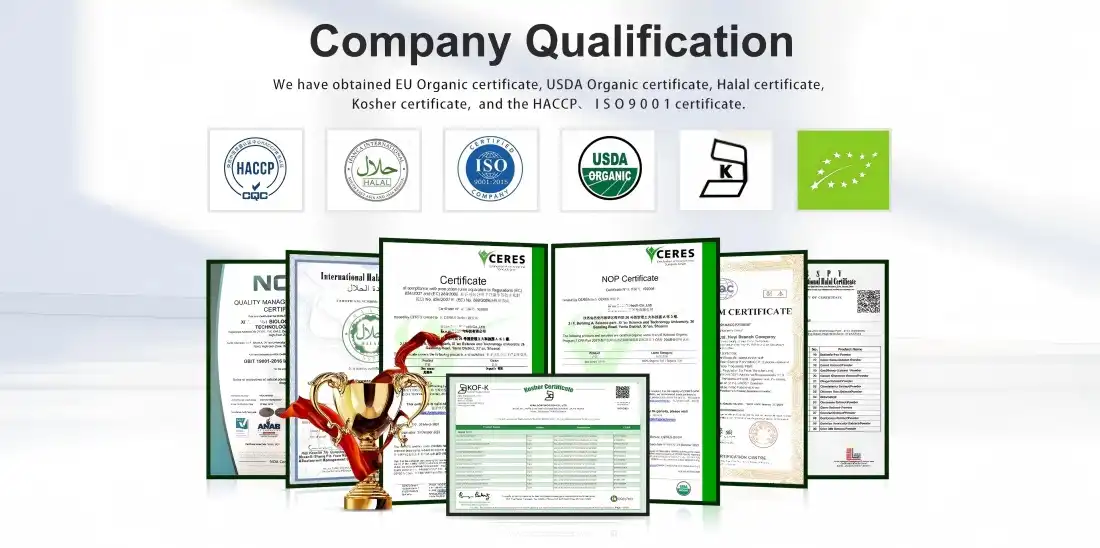
To do buying well, you need to be able to navigate a lot of different regulatory settings. The U.S. market requires suppliers to follow FDA rules, while buyers who want to sell need suppliers with foreign certifications. Getting ISO 9001, Kosher, or Halal certifications shows that you care about quality management and cultural diversity, which opens up more markets for finished goods. These qualifications lower the risk of not following the rules and speed up the approval process for new products.
Sustainability and Ethical Sourcing
Environmental awareness is becoming more and more important in purchasing choices. Suppliers who use responsible buying methods, like helping sustainable farming and reducing processing trash, are in line with companies' environmental goals. This thought goes beyond how the product affects the earth and includes social responsibility all along the supply line.
Optimizing Procurement Processes with Technology
Digital tools are used in modern procurement to make decisions more accurately and run operations more efficiently. Using technology together changes how buyers choose providers, keep an eye on quality, and keep track of supplies. When looking at ube powder bulk suppliers, these methods let you compare things like mesh size (80 mesh is normal), purity levels (100% pure formulations), and color stability from batch to batch.
Digital Supplier Evaluation Systems
Data-driven platforms are used by advanced procurement teams to evaluate seller performance measures such as quality consistency, response, delivery reliability, and certification status. Real-time analytics find trends that a manual review might miss. This lets you find possible supply risks before they affect production plans.
Transparent Communication Channels
Rapid reaction times set special sellers apart. Answering technical questions in hours instead of days speeds up the process of formulating new drugs and cuts down on project timelines. When suppliers offer direct lines of contact and expert advice, they stop being just vendors and become valuable partners. This flexibility is especially important when coming up with new uses or fixing problems with formulations.
Inventory Management and Lead Time Optimization
Efficient procurement strikes a balance between the costs of keeping supplies and keeping output going. Just-in-time buying strategies are possible because suppliers keep a ready supply of famous botanical ingredients. This cuts down on the need for working capital while still making sure materials are available. Knowing about normal production cycles helps buyers make good plans for when to buy things. For example, they can know that stock items ship within two to four days, while custom orders may take three to ten working days for full-cycle production.
Ensuring Quality and Compliance
Quality control is the most important part of buying ube powder bulk for businesses. Strict screening procedures and ongoing monitoring protect the image of the company and make sure that the product always works as it should.
Botanical Authentication and Purity Verification
To make real ube powder, you must first correctly identify the plant Dioscorea alata L. roots. Suppliers you can trust give you full details, such as the Latin name, the plant part used, and where the product came from. Advanced testing methods, like HPLC (High-Performance Liquid Chromatography) and UV spectroscopy, check the profiles of active compounds, especially the amount of anthocyanin that gives the fruit its purple color and protective qualities.
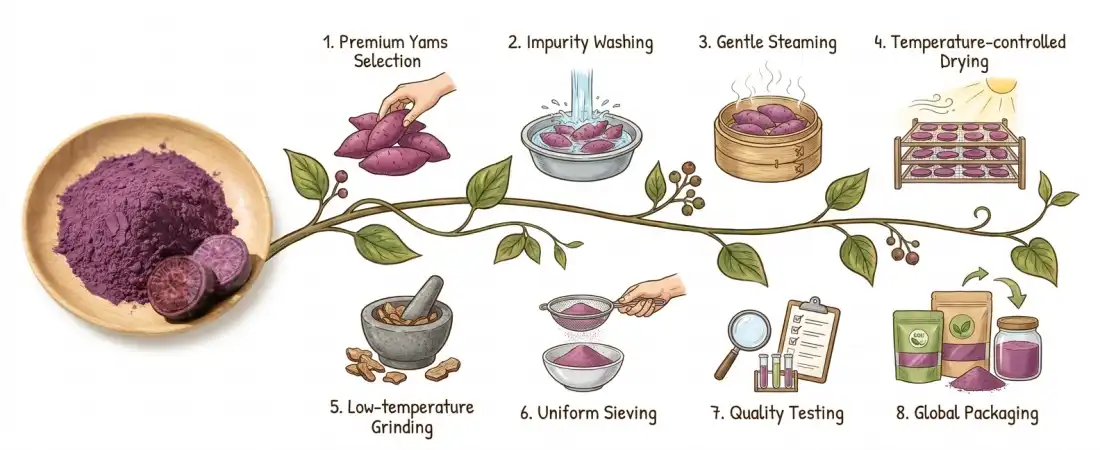
Processing Standards That Preserve Functional Compounds
The production method has a big effect on the quality of the ingredients. Heat-sensitive nutrients like vitamin C and polysaccharides are kept safe through low-temperature crushing, careful drying, and clean handling. Suppliers who use their own special extraction methods can often keep more of the nutrients in the product than generic makers, which means that your finished goods will work better.
Certification and Third-Party Validation
Multiple levels of certification offer peace of mind:
- ISO 9001 certification approval shows that quality is managed in a planned way throughout the whole production process, from receiving the raw materials to packing them at the end. This framework makes sure that all production batches are the same, which lowers the chance of differences that could affect how well the recipe works.
- Kosher and Halal certifications help brands reach more customers by accommodating religious dietary needs. This is especially helpful for companies that want to sell to a wide range of people or in foreign markets.
- Certificates of Analysis (CoA): Each batch comes with a Certificate of Analysis (CoA) that shows the real test results for heavy metals, chemical residues, microbiological safety, and active drug levels. These papers are the basis of your method for qualifying ingredients and help with regulatory applications.
Building Long-Term Supplier Partnerships
Strategic buying goes beyond business relationships to build agreements that help both parties succeed. Long-term ties with ube powder bulk suppliers can give you perks that buying on the spot market can't.
Collaborative Product Development
Suppliers who can do good research and development (R&D) work with your creativity team. When coming up with new ways to use purple yam powder, like making a plant-based protein shake, colorful baked goods, or useful drinks, working together technically speeds up the development process. Experienced sellers can tell you about the best amounts to use, how they work with other products, and how to process them so that the color and nutrients stay intact.
Supply Security and Risk Management
Having ties with both main and secondary suppliers lowers the risk of disruption. Suppliers who have a variety of raw material sources and flexible production capacity can respond to changes in demand or sudden shortages of raw materials. This toughness is especially useful during busy production times or when a product's sales go above and beyond expectations.
Performance Monitoring and Continuous Improvement
Regular performance reports that look at quality measures, service reliability, and responsiveness are part of relationships that work well. Open communication about problems and chances makes relationships stronger and encourages ongoing growth. Suppliers who are open to comments and ready to spend money to improve their services show that they want to work with you for a long time instead of just for a short time.
How NT Biotech Supports Your Procurement Goals
At NT Biotech (Shaanxi New Things Biotech), we know that buying teams need more than just ube powder bulk. They also need partners they can trust who understand their quality standards, the pressures of the market, and their goals for innovation.
Proven Experience in Botanical Ingredient Supply
We've learned more about what sourcing teams really value after more than ten years of providing botanical products to markets around the world. We work with companies in the food, drink, supplement, beauty, and animal feed industries. We are especially good at making useful ingredients from plants that meet the high standards of medium to large-sized companies.
Technical Specifications You Can Trust
Our dedication to quality is shown by our natural ube powder:
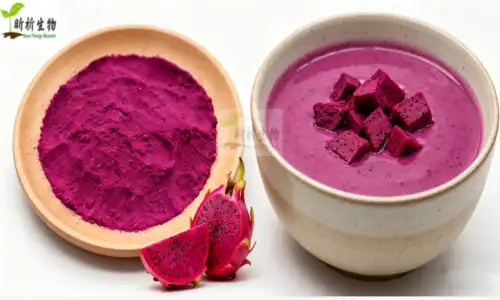
- Botanical Source: Dioscorea alata L. was picked by hand. The roots, which are usually called "Purple Ginseng" in Asian countries, were picked because they have the highest amount of anthocyanins and nutrients.
- Processing Excellence: Careful cleaning, controlled drying, and low-temperature crushing to an 80-mesh fineness during multiple stages of production protect the natural purple color, mild sweetness, and useful compounds such as resistant starch, dietary fiber, polysaccharides, and vitamin C.
- Purity Standards: The recipe must be 100% pure, with no fillers, additives, or fake colorants. This gives your marketing team the clean-label credentials they need.
- Appearance and Functionality: It's a consistent purple powder that mixes easily in both water- and fat-based mixtures. It can be used in functional drinks and protein shakes, as well as in baked goods, dairy options, ice cream, and meal replacements.
Comprehensive Certification Portfolio
Our production center is ISO 9001-certified and follows structured quality management practices that make sure stability from batch to batch. Our Kosher and Halal licenses show that we are dedicated to serving a wide range of customers and businesses. Each package comes with full CoA paperwork to support your ingredient approval and regulatory compliance needs.
Supply Chain Responsiveness
We know that the stability of suppliers affects how well buying works:
- Rapid Communication: Our foreign sales team answers questions within two hours because they know that waiting for information slows you down when you're trying to make a choice.
- Flexible Inventory Options: Standardized extracts that are in high demand, like ube powder, are kept in stock and can be shipped within one to three business days of proof of order. This stocking approach helps you reach your goals for just-in-time purchasing while also making sure that materials are always available.
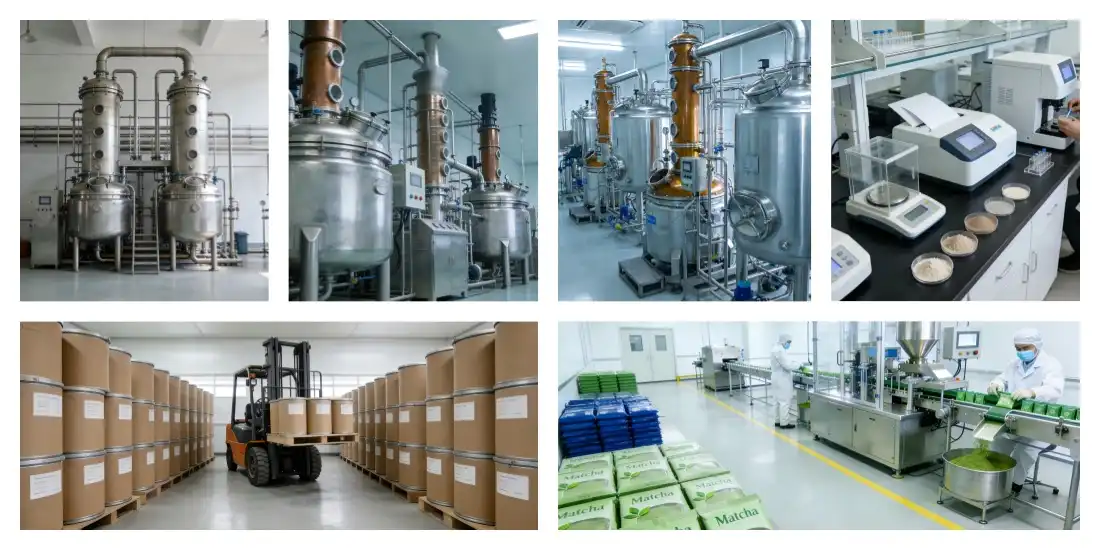
- Scalable Production: We can meet custom specs or needs for bigger quantities. Our full production cycle takes 3–10 working days, from getting the best raw materials to unique extraction, strict lab testing, and final packing.
- Logistics Expertise: We match the right shipping method for you, whether you need fast rush service through our direct FedEx/UPS accounts or cheap sea freight for large packages. Our long-term freight shipping relationships make sure that your goods are handled safely and delivered on time.
Customization Capabilities for Market Differentiation
Markets change quickly, and special ingredient solutions are often what make a product stand out. Because we can do OEM and ODM, we can meet your unique needs:
- Flexible Packaging: 1 kg bags and 10 kg boxes are standard choices, but you can also get unique package designs that work with your production processes or brand needs.
- Formulation Support: Our R&D team can help you figure out the best way to use the ingredient, how to process it, and how well it works with other useful ingredients. We can help you speed up the development process, whether you're making protein-rich drinks by mixing ube powder with collagen, making fruit-and-vegetable blends, or planning health drinks.
- Accessible Minimum Orders: A 10 kg MOQ lets you build a product and test it on the market without having to commit to a lot of inventory. Before placing a business order, free samples can be used to make a first assessment.
Payment and Transaction Flexibility
We accept buyer-friendly payment methods, such as deals in local currency that make your finances easier and lower the risk of foreign exchange.
Conclusion
Evaluation of supplier skills, quality control methods, and relationship possibilities are all necessary for successful ube powder bulk procurement. The botanical ingredient market rewards buyers who look at more than just price. They also look at technical know-how, certifications, the stability of the supply chain, and the willingness to work together. Ube powder is made from Dioscorea alata L. It has many great qualities, including bright natural color, clean-label appeal, nutritional value, and a lot of different ways it can be used. These qualities make it more useful in food, drink, and nutritional product categories. Procurement pros get ingredients that help new products come out while also meeting government standards and customer goals by working with experienced suppliers who show a commitment to quality, openness, and quick service.
FAQ
1. What makes ube powder suitable for clean-label products?
Pure ube powder bulk is made up of ground, dried purple yam (Dioscorea alata L.) and no other ingredients, chemicals, or artificial colors. This one-ingredient profile meets all clean-label requirements and has health benefits like dietary fiber, resistant starch, and antioxidant chemicals. The natural purple color comes from anthocyanins. The list of ingredients stays simple and easy for customers to understand.
2. How does resistant starch in purple yam powder benefit formulations?
Resistant starch breaks down more slowly than other carbohydrates, which helps keep blood sugar levels steady after a meal. This is a useful property for functional foods that aim to improve digestive health. Because this property also makes you feel full, ube powder is a good choice for meal replacements and healthy shakes that are meant to help you reach your weight management goals.
3. What quality documentation should buyers expect from suppliers?
Reliable sellers include full Certificates of Analysis with every batch. These include records of microbiological tests, heavy metal screens, pesticide residue analysis, and active chemical quantification. Expect scientific confirmation of Dioscorea alata L. ID and copies of any necessary certificates, such as ISO 9001, Kosher, and Halal. This paperwork helps your process for qualifying ingredients and meeting legal standards.
Partner with NT Biotech as Your Trusted Ube Powder Bulk Supplier
To help you reach your procurement goals, NT Biotech blends knowledge of plants, certified output excellence, and quick service. Our natural ube powder bulk gives you the quality, consistency, and documentation you need for product creation. We have been serving food, drink, and supplement makers around the world for ten years. Whether you're coming up with new drinks, interesting baked goods, plant-based dairy alternatives, or useful nutrition products, our team can help you with expert advice and reliable supply that will speed up your success. Contact us at info@newthingsbiotech.com to talk about your unique needs, get full specifications, or set up free samples. You'll be amazed at the difference a real partnership can make. Let's talk about how our ube powder bulk can help your next product launch.
References
1. Smith, J.L., & Chen, M. (2022). Natural Colorants in Food Innovation: Market Trends and Consumer Preferences. Journal of Food Science and Technology, 59(4), 1234-1247.
2. Rodriguez, A., & Kumar, P. (2021). Anthocyanins from Purple Vegetables: Stability, Bioavailability, and Applications in Functional Foods. Comprehensive Reviews in Food Science and Food Safety, 20(3), 2890-2915.
3. Williams, R.T. (2023). Strategic Procurement in the Natural Ingredients Industry: Best Practices for Quality Assurance. International Journal of Supply Chain Management, 12(2), 78-94.
4. Thompson, K., & Lee, S.H. (2022). Resistant Starch: Metabolic Effects and Applications in Health-Oriented Food Products. Nutrition Reviews, 80(6), 1567-1582.
5. Anderson, D.M., & Patel, N. (2021). ISO 9001 Certification and Quality Consistency in Botanical Extract Manufacturing. Quality Management Journal, 28(1), 45-61.
6. Martinez, C.L., & Wong, H. (2023). Clean Label Trends in North American Food Markets: Consumer Perceptions and Ingredient Selection. Food Quality and Preference, 103, 104701-104715.